Western Queensland’s Great Deluge: My Thoughts & Commiserations

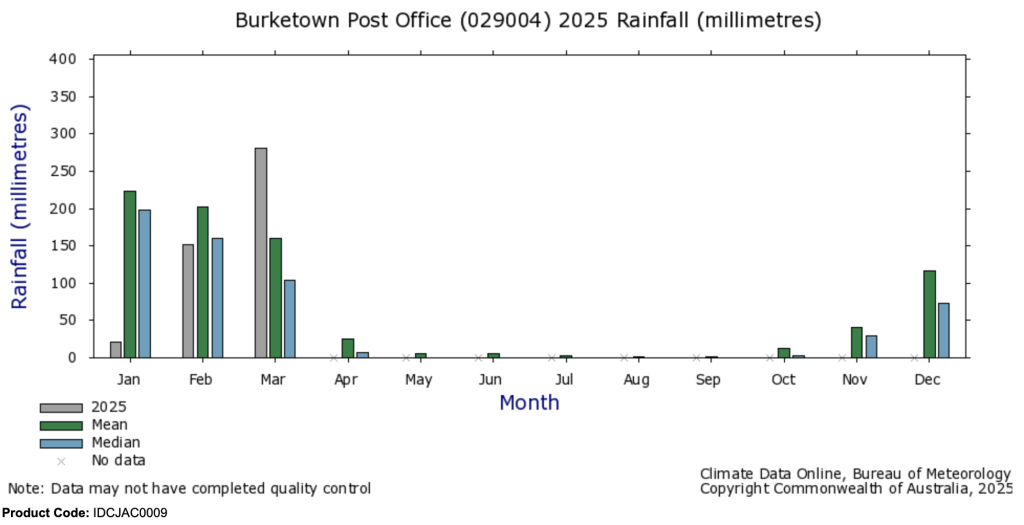
In March 2025, much of Queensland was lashed, drenched and then drown by torrential rains with downpours of 180 mm in a single day, breaking records for March, swelling rivers and flooding plains. From Burketown to Winton to Adavale to Thargomindah, graziers have been isolation and suffered tremendous losses, yet their resilience shines through. The water is now moving slowly to Lake Eyre, there will also be renewal.

As I comment on the deluge and the Bureau’s failure to forecast it—from the equatorial Pacific Ocean to Lake Ayre overland—I hold those still affected close, wishing them strength amid the heartache.

Where did this water come from? It began as water vapor over the western Pacific’s equatorial zone, a warm ocean expanse near Indonesia where sea temperatures above 28°C fuel intense evaporation. Think tropical convection and hot towers—cumulonimbus clouds with tremendous updrafts—drawing columns of water from the warm ocean’s surface to the very top of the troposphere.

The monsoon trough lingered at the wet season’s tail, moving this moisture inland, dumping it across Queensland’s Channel Country. Some, like Simon Turton, argue this wasn’t just La Niña but a warming world amplifying the water cycle, delivering what fell in Winton and Adavale. More likely the Bureau needs not only better tools for forecasting drought and flood cycles, but also to be monitoring volcanic eruptions in Indonesia that can seed the atmosphere with condensation nuclei.

The Bureau of Meteorology’s autumn forecast, released February 27, 2025, painted a misleading picture: warmer-than-average temperatures across Australia, with rainfall “likely to be in the typical range” and “drier than usual for most of Queensland” outside southern and southeast areas. Tropical lows and monsoon bursts were noted as possibilities, but few expected the scale of what unfolded. Western Queensland, pegged for below-average rain, instead saw its third-wettest March since 1900, with 207 mm statewide—124% above the 1961–1990 average. Winton recorded daily falls of 120–180 mm, breaking records from 1910, while Adavale’s Bulloo River surged, evacuating its 30 residents. The Bureau’s models missed the mark, underscoring a need for them to move to better tools.

In August 2011, John Abbot and I visited the Bureau of Meteorology keen to share output from our rainfall forecasting model built using commercially available AI on a laptop to forecast monthly rainfall. We wanted to work with the BOM suggesting artificial intelligence (AI) had great capacity for more skilful seasonal forecasts. That as before anyone much had heard of AI.

Oscar Alves, then the head of their long-range forecasting unit, did not dispute that our AI-based model was generating more reliable monthly forecast for 17 Queensland locations, up to 3 months in advance, but that because the climate, he claimed, was on a new trajectory, our method would not work for many more years.

Oscar Alves’s boss, Andrew Johnson, the current head of the Australian Bureau of Meteorology, also seems to understand very little about climate cycles and the application of AI. Johnson is a Malcolm Turnbull appointee. Back in 2011, John Abbot and I were affiliated with Central Queensland University and funded by the B. Macfie Family Foundation.

There are now many studies in applied mathematics and AI, already published in the scientific literature including by myself and John Abbot showing the potential application of AI for rainfall forecasting. Some of this technology is beginning to be adopted in Asia, including in Indonesia where I was part of a program with the Indonesian Bureau of Meteorology (BMKG). The first paper that Abbot and I got published was by the Chinese Academy of Science. They are leaving us behind for sure.
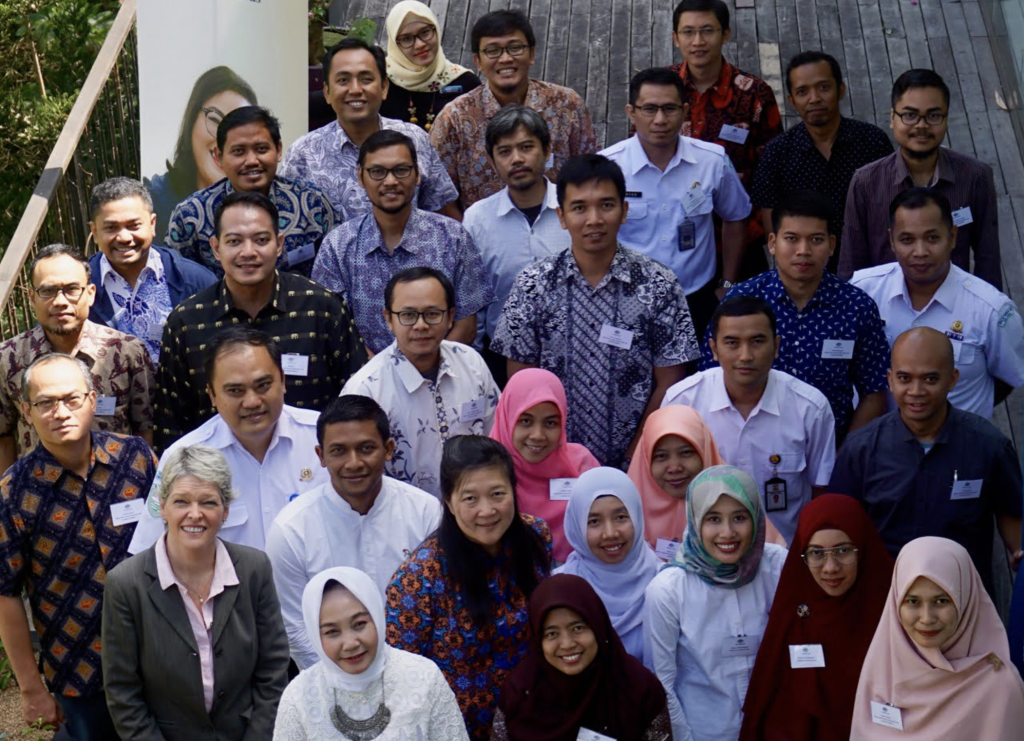
Can you see me, bottom left corner, in Bandung with Indonesian meteorologists some working with the Chinese on better seasonal rainfall forecasting using AI.

Since 2018, our work on monthly rainfall forecasting has been continued mostly by John Abbot, click here.

I quit mostly because of the extraordinary backlash when John Abbot and I began extending our rainfall forecasting work to climate change. Gavin Schmidt at NASA and others ran a campaign against us, not by way of coherent criticisms in the scientific literature, but as attacks on Twitter wanting the retraction of an article we had just got published. You can read my comprehensive defence of that article at climatelab.com.au, click here.

Oscar Alves and Andrew Johnson continue to fail to recognise that the world’s climate is always changing; there are cycles of different frequencies some spanning hundreds, others span thousands, even millions of years. Most importantly they can be described mathematically and forecast using AI, but it requires a new way of thinking. Even think tank employees often fail to understand that the climate has been changing, even before woolly mammoths, which are, I am told, the third-most depicted animal in ice age art, after horses and bison. Some of these people, running the institutions, would prefer to discuss ice age art than the application of AI to rainfall forecasting. Consequently, because those in charge mostly don’t seem to care, the little people, Australians attempting to earn an income independently of government suffer. When was it that Johnson before a Senate Committee claims surprise that anyone took the Bureau’s forecasts seriously.

A friend recently emailed me, awed by how this water vapour, unseen in the sky, became a flood of such magnitude. “A few days before,” he wrote, “it was just floating around until temperature and saturation made it fall to earth.” His point captures the wonder: the atmosphere holds vast reservoirs—billions of tonnes of vapour yet we only notice when it falls.

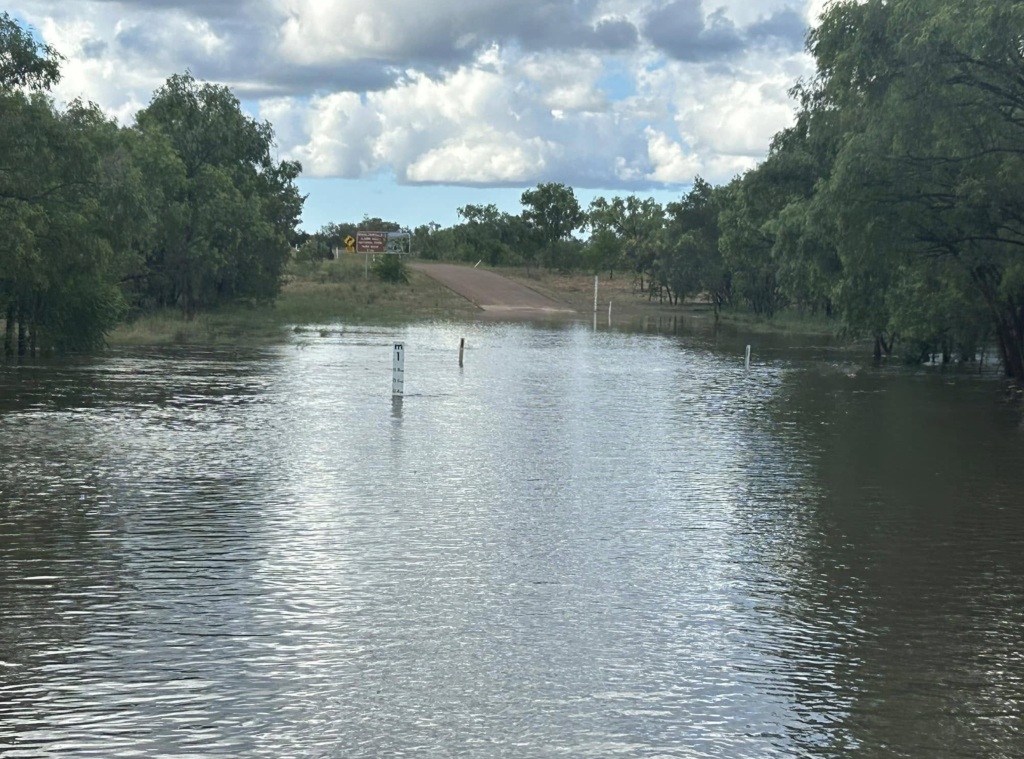
In western Queensland this last March, that falling was relentless, driven by low-pressure systems likely nudged by Rossby waves and volcanic eruptions, soaking already saturated soils. Rivers including the Georgina, Diamantina, and Cooper Creek have overflowed, submerging roads and homes drowning livestock, much of this flooding now continuing in slow-motion.

The water is on the move, heading west to Lake Eyre, Australia’s lowest point at 17 meters below sea level. The Diamantina River’s waters are already trickles into Lake Eyre North’s Warburton Groove. The main flood pulse, from Winton and Adavale, crawls through the Channel Country at 1 km/h, spreading over an area five times the size of the United Kingdom.

The prediction is the waters will reach Lake Eyre by late April, peaking from June to August, potentially rivalling fills from 2009–2011, though not 1974’s full basin flood. Evaporation and floodplains will claim much, but enough may linger to draw pelicans and tourists by winter.

For western Queensland, these rains were a paradox—life-giving yet also heartbreaking for many. Graziers welcomed dam refills, but not drown livestock and supplies. Adavale’s evacuation and Winton’s record-breaking deluge test endurance. To those still cut off, checking livestock through mud and awaiting road repairs, we see your struggle. Your stories—of neighbours helping neighbours, of facing this flooding cycle with grit—inspire us.

We care deeply and hope for brighter days as waters recede.

For individuals and communities rebuilding, the challenge is immense, yet the same water promises renewal at Lake Eyre—a rare spectacle of this land’s natural climate cycles.

May those affected by the flooding rains find strength to match the rivers’ flow and may we all carry more respect for the forces shaping our world the endless cycles of destruction and rebirth.
*******

Key technical papers detailing my method for monthly rainfall forecasting are listed at the Climatelab.com.au website, click here.

For Lake Eyre updates, to watch the water flow in, click in.

Bureau of Meteorology’s 2025 Autumn Long-Range Forecast
27/02/2025

The Bureau of Meteorology has released its long-range forecast for autumn 2025.

While autumn is often a time for cooler weather to begin, this season is very likely to be warmer than average across Australia and summer heat may persist into early autumn.

Rainfall is likely to be in the typical range for the season for most of Australia…

It’s also likely to be drier than usual for most of Queensland except for southern and south-east areas.

Tropical cyclones, tropical lows, storms and active monsoon bursts are still possible in the north over the coming months, which can bring particularly heavy rain.
via Jennifer Marohasy

https://ift.tt/fJTa6Ww

April 12, 2025 at 09:49PM

White House to Scrap Federal Climate Research Office as Part Of ‘Woke Ideology’ Cleanse

From THE DAILY CALLER

Daily Caller News Foundation

Audrey Streb
Contributor

President Donald Trump’s administration is gearing up to effectively cut the Office of Oceanic and Atmospheric (NOAA) Research by ending its primary research office, according to multiple reports.

The Office of Management and Budget (OMB) sent an internal memo that outlines huge changes to NOAA, according to Politico, Axios and The New York Times, who reviewed the memo. If the administration’s proposal makes it through Congress, NOAA’s climate change research will effectively cease, according to reports.

“Reaching balance requires: resetting the proper balance between Federal and State responsibilities with a renewed emphasis on federalism; eliminating the Federal Government’s support of woke ideology; protecting the American people by deconstructing a wasteful and weaponized bureaucracy; and identifying and eliminating wasteful spending,” the memo states, according to Politico. (RELATED: Trump EPA Reportedly Axing Obama-Era Greenhouse Gas Emissions Disclosure Rule)

NOAA has a history of supporting left-wing ideology, shelling out over $3 million on “Teek and Tom Explore Planet Earth,” an animated film featuring a space alien with “gender-neutral” pronouns, according to Daily Caller News Foundation reporting.

The White House, OMB and NOAA did not respond to the DCNF’s requests for comment and a copy of the internal memo reviewed by Politico, Axios and the NYT.

NOAA would receive roughly $4.5 billion in its 2026 budget, down from around $6.1 billion in its 2025 budget, according to Politico.

The OMB memo, referred to as a ‘Passback’, also reportedly said that the NOAA’s operations, research and facilities budget would be slashed from $4.8 billion in 2025 to $3.47 billion in 2016, a total of 38%.

“The Department should act now to align existing resources and activities to the direction of the Passback,” the memo reportedly reads, stating that it is necessary to cut “unsustainable costs” in NOAA’s satellite programs.

NOAA Research partners with other arms of the NOAA and the Department of Commerce, according to its website. Its research “provides the research foundation for understanding the complex systems that support our planet,” the site reads. “Our role is to provide unbiased science to better manage the environment, nationally, and globally.”

This memo comes after the admin’s cuts to dozens of climate policies — implemented by both the Obama and Biden administrations — in order to “unleash” domestic energy production and reduce taxpayer-funded programming.

All content created by the Daily Caller News Foundation, an independent and nonpartisan newswire service, is available without charge to any legitimate news publisher that can provide a large audience. All republished articles must include our logo, our reporter’s byline and their DCNF affiliation. For any questions about our guidelines or partnering with us, please contact licensing@dailycallernewsfoundation.org.


Discover more from Watts Up With That?

Subscribe to get the latest posts sent to your email.

via Watts Up With That?

https://ift.tt/WCMOmkN

April 12, 2025 at 08:00PM

Greening Without CO2? More Selective Science

In their lengthy and data-rich paper, Mishra et al. (2025) examine the notable “greening” of India’s Thar Desert from 2001 to 2023. They credit this transformation to a combination of increased monsoon rainfall and human-driven groundwater irrigation. Precipitation is said to contribute 45% to this greening, and groundwater pumping 55%​. While this allocation of credit is intriguing, what’s truly shocking is what’s not mentioned at all: CO2 fertilization.

Not once in the entire 11,000+ word document does the term “carbon dioxide,” “CO₂,” or even “fertilization” appear. This is despite the well-documented global evidence that increased atmospheric CO₂ boosts plant growth by enhancing photosynthesis and improving water-use efficiency. As Piao et al. (2019) noted in Nature Reviews Earth & Environment, “Vegetation models suggest that CO2 fertilization is the main driver of greening on the global scale”. That fact seems to have escaped the attention of this research team.

The Thar Desert, a dryland environment with historically marginal vegetation, is precisely the kind of region where CO2 fertilization effects would be most potent. Plants under water-limited conditions often respond more vigorously to elevated CO2 because they can photosynthesize more with less stomatal opening, reducing water loss. Yet somehow, in a paper that examines vegetation dynamics down to the pixel level, CO2’s role is invisible.

Graphical abstract

This omission is not an academic oversight—it is symptomatic of a broader trend in climate-related literature: selective attribution, where natural drivers that contradict apocalyptic narratives are ignored in favor of more ideologically aligned explanations like “renewable energy” and “adaptation.”

The other eyebrow-raising feature of the paper is its repeated, ritualistic invocation of renewable energy as a necessary solution for sustainability—without offering any empirical justification or economic rationale.

“Sustainable practices—efficient water management, drought-resistant crops, adaptation to rising heat stress, and renewable energy—must guide future development.”​

Must they? According to what economic model or energy systems analysis? No cost-benefit analysis is provided. No energy return on investment (EROI) data. No grid reliability assessments. No lifecycle impact comparisons. Just a declarative sentence.

Later, the authors write:

“Semi-arid and arid lands such as the Thar are ideal for capturing solar energy…highlighting the potential role of solar pumping for GW abstraction.”​

Yes, the sun shines in the desert. But this simplistic correlation completely bypasses the critical challenges: capital intensity, energy storage, intermittency, and the massive material and environmental footprint of solar installations in fragile desert ecosystems. There’s not a single mention of how renewable infrastructure will be maintained in remote, dusty, high-temperature areas notorious for degrading photovoltaic performance.

Rajasthan already sees groundwater depletion at unsustainable rates, much of it driven by energy-intensive tube well pumping. Replacing one energy source with another does nothing to fix the fundamental overuse of water. But it does serve the paper’s narrative function: renewables = good, fossil fuels = bad, evidence be damned.

The paper is a model case study in how environmental science papers often smuggle in ideological preferences under the guise of objective reporting. It tells us, for instance, that:

“Global drylands offer several options for climate mitigation, including carbon sequestration, modifying aerosol-cloud dynamics, preserving biodiversity, and enhancing renewable energy.”​

Again, there’s no quantification or evaluation of trade-offs. Solar panels will not sequester carbon. They won’t preserve biodiversity—they require clearing land. They do not modify aerosol-cloud dynamics (a pseudoscientific red herring if ever there was one). Yet these phrases roll off the page, reassuring readers that the correct moral lessons have been internalized.

Models, Monsoons, and Missing Science

The greening of the Thar Desert is a fascinating phenomenon. It is a counter-narrative to the prevailing doom-laden stories of desertification and ecological collapse. But this paper’s authors seem unwilling to follow the data where it leads. Instead, they cherry-pick their drivers (rain and pumping), ignore the most obvious one (CO2), and end with a sermon on renewables that’s completely disconnected from the empirical core of the study.

What could have been a strong observational study is instead marred by narrative conformity. In the world of environmental science today, saying “CO2 is helping” or “renewables might not be the answer” is apparently more taboo than failing to mention them at all.

For those seeking rigorous, reality-based environmental science, this paper is a cautionary tale—not a roadmap for sustainable development.

H/T Mumbles McGuirck


Discover more from Watts Up With That?

Subscribe to get the latest posts sent to your email.

via Watts Up With That?

https://ift.tt/0YmchyN

April 12, 2025 at 04:03PM

The Inflation Reduction Act

Three years ago the Biden administration confiscated hundreds of millions of dollars from taxpayers for the Green New Deal.  Since then atmospheric CO2 has grown at a record rate. https://ift.tt/EaCTiVc

via Real Climate Science

https://ift.tt/PN8k6XO

April 12, 2025 at 03:56PM