On social media, Christopher Nguyen gave praises for the retreat (surrender?) of Just Stop Oil, a development reported last week at MasterResource. He should know, being a UKer (Scotland).
No more roadblocks, no more anti-art actions, no more helping UN’s Net Zero “inspired” politicians legislate or promote: Clean Air Zones, (Ultra) Low Emission Zones (Anti-motorist Zones), 15 minute cities, 20 minute neighbourhoods, meat and dairy exclusionary contracts, flight shaming, shaming buying clothes, carbon taxes.
Praise God. Let us rejoice! ___________________________________ One leg down. More to come down. Do you comply with the Net Zero Carbon consumption targets? Absolute Zero dairy Absolute Zero meat 3 items of clothing per year 1 return flight per 3 years Absolute Zero private vehicles
Source:The Future of Urban Consumption in a 1.5°C World, 2019, c40 cities, p.78, 82, 86, 90 https://lnkd.in/ejhTfy8N
Christopher Nguyen warns that the other climate groups are secretly working to disrupt and vandalize the winning, normal ways of their opponents. Good citizens beware!
The founder of [Just Stop Oil] is [jailed] Roger Hallam. He is a serial poster on X specializing in fear. He is a Svengali who lured several to the cause and convinced them to block traffic on a major London-area highway. High-publicity arrest and trial.
He, and several of those who listened to his siren song, are in [jail] for the activity. He continues to fund raise from inside. The irony is no one can say if he used pounds from his slush fund to help with the defense of his followers.
Most of X has turned on him and his posts are now covered with protests. He destroyed his own movement with his misguided efforts. Won’t be missed.
Fifteen protestors with Just Stop Oil are in prison.
Are they reading the books to cure them of climate anxiety and futilism? Here are some suggestions:
“Large-scale solar farms, wind turbines, and associated infrastructure are touted as solutions to the climate crisis, but their development comes at the cost of native forests and critical habitats.”
“Until conservation charities disentangle themselves from government funding and corporate influence, they risk becoming complicit in the very destruction they were created to prevent.” – Kelly Jones (Carbon8 Fund) below
One of the great ironies of our age is the double standard of Big Environmentalism toward wind and solar, which commit numerous eco-sins that would not be tolerated otherwise. Dilute, intermittent, and thus inefficient? Yes. Energy sprawl requiring service roads and transmission lines in the wild? Yes. A threat to wildlife on land and in the water? Yes. And mining issues, even using child labor? Yes.
But it is “anti-CO2 or bust” for the foes of modern, prosperous living in a free society. They want a state of nature, a Garden of Eden, as if humankind did not matter. Deep Ecology is a religious cult—that is, in the area of energy, an enemy of Global Greening.
The Australian government’s aggressive push for renewable energy has created a significant moral dilemma for conservation charities. On one hand, these organisations are entrusted with protecting ecosystems and bziodiversity; on the other, they are increasingly reliant on public funding tied to government renewable energy initiatives. The result? A deafening silence in the face of environmental destruction, as raising concerns about habitat loss could jeopardise their financial stability. This isn’t conservation—it’s capitulation.
Renewable energy projects are a double-edged sword. Large-scale solar farms, wind turbines, and associated infrastructure are touted as solutions to the climate crisis, but their development comes at the cost of native forests and critical habitats. Vulnerable species like koalas are being pushed to extinction, yet conservation charities, aware of these impacts, find themselves in a compromising position: challenge the renewable energy narrative and risk losing funding, or remain silent and perpetuate the destruction.
Corporate influence further complicates the issue. Renewable energy companies, eager to greenwash their operations, channel significant donations into conservation initiatives. These partnerships create a façade of environmental responsibility while insulating companies from criticism. Conservation organisations, incentivised by these donations, turn a blind eye to the damage caused. In the race for renewable dominance, profit-driven alliances have reduced Australia’s biodiversity to collateral damage.
The erosion of public trust is a particularly stark betrayal. Australians contribute to conservation charities believing their donations will safeguard wildlife and ecosystems. Instead, those funds often bolster partnerships with industries that undermine conservation goals. Government funding and corporate donations have transformed many conservation groups from independent advocates into silent enablers of habitat destruction.
True conservation demands courage—speaking out even when it’s inconvenient and advocating for solutions that coexist with biodiversity. Until conservation charities disentangle themselves from government funding and corporate influence, they risk becoming complicit in the very destruction they were created to prevent. Transparency, accountability, and a commitment to real environmental protection are essential to restore trust and ensure Australia’s unique wildlife has a future.
So next time you support conservation in Australia, be sure to check what solutions your money is funding. If you are giving to protect the koala, make sure the organisation’s advocacy and solutions are genuinely aligned with biodiversity protection—and far removed from the destructive impacts of renewable energy projects.
I commented: “Consider this perspective.
The greenest fuels are the ones that contain the most energy per pound of material that must be mined, trucked, pumped, piped, and burnt. [In contrast], extracting comparable amounts of energy from the surface would entail truly monstrous environmental disruption…. The greenest possible strategy is to mine and to bury, to fly and to tunnel, to search high and low, where the life mostly isn’t, and so to leave the edge, the space in the middle, living and green.
– Peter Huber, Hard Green: Saving the Environment from the Environmentalists (New York: Basic Books, 1999), pp. 105, 108.
—————————
Appendix: Other Posts by Kelly Jones (Carbon8 Fund)
Kelly Jones asks the hard questions, such as “Please explain how destroying our native bushland to build wind and solar farms is going to reduce the temperature of the whole planet?” Her viewpoint is utopian— seeking the perfect energy—but she is on track with the illusion of wind and solar as “environmental.”
“While marketed as the solution to climate change, renewable energy has a dark side that is rarely discussed. The extraction of critical resources—such as lithium, cobalt, and nickel—essential for batteries, wind turbines, and solar panels, wreaks havoc on ecosystems and communities.”
Discover more from Watts Up With That?
Subscribe to get the latest posts sent to your email.
Picture this: it’s a hot day, and you grab a soda can that’s been in the sun. You crack it open—psssht—and CO₂ fizzes out, tickling your nose, maybe spraying your shirt if you’re slow. It’s a tiny chaos, a burst you can’t control. Now imagine that fizz across the ocean’s sun-warmed surface, covering 71% of Earth, bubbling CO₂ into the air we breathe. Wild, right? A bit mad. I reckon it’s a missing piece of the climate puzzle.
The IPCC pins it all on smokestacks—11 billion tonnes of carbon a year from fossil fuels. Even skeptics like the CO₂ Coalition echo this, leaning on guys like Ferdinand Engelbeen who do their maths by the consensus numbers on this issue of CO₂ origins.
But they might have it all back the front and be leaving out ocean chemistry and biology. In fact, I’m convinced they are.
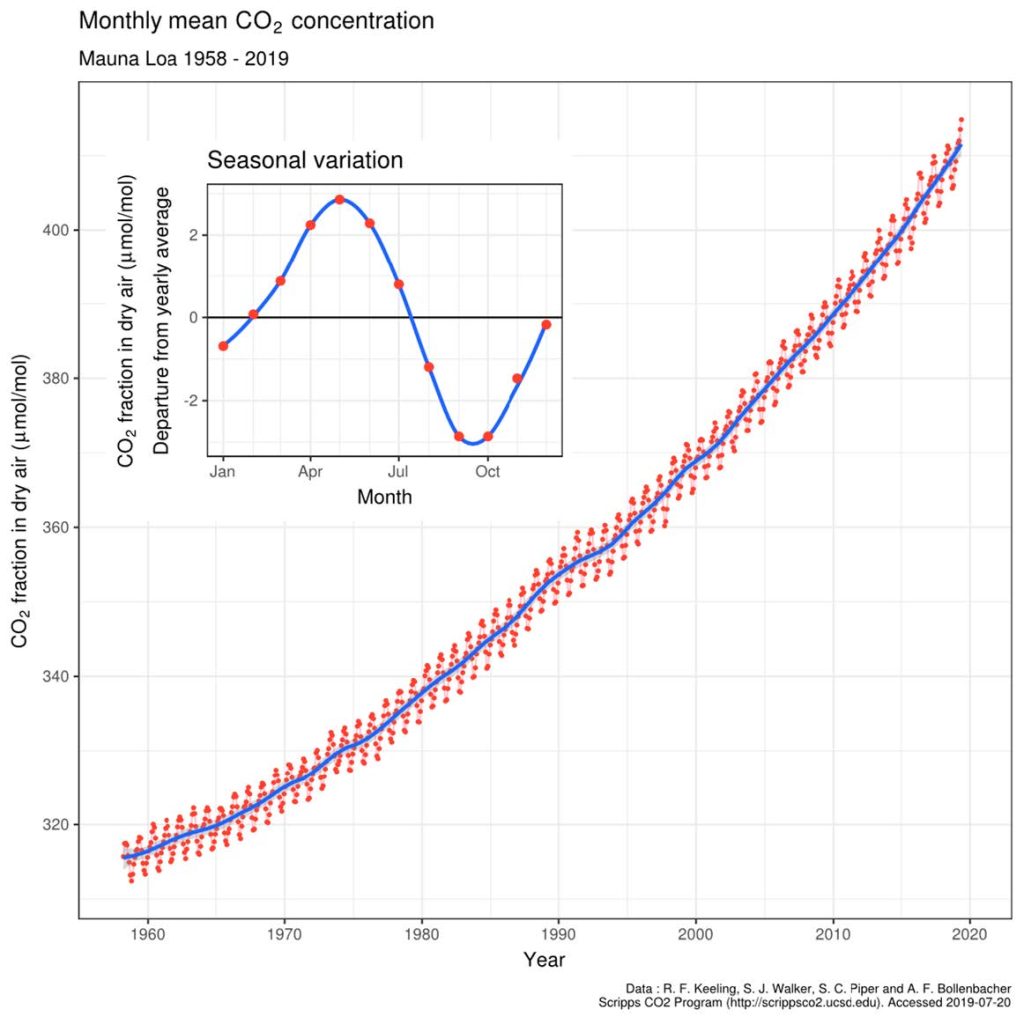
The Keeling Curve—CO₂’s climb from 280 to 420 ppm—carries their blame. But what if the ocean’s fizzing more than they think? Their rock-solid evidence could be mostly myth.
I’ve been digging into this with Ivan Kennedy, my second guest for the webinar series ‘Towards a New Theory of Climate Resilience’. That was back in February and I’m still to process the audio from this discussion.
Instead, my focus has been on writing technical papers. Ivan and I are working through a hypothesis that could perhaps flip the climate script.
Engelbeen claims fossil fuels’ isotopic fingerprint—light carbon-12 (isotope C12) dragging the air’s C13-to-C12 ratio from -6.5‰ (per mille)* to -8.5‰ since 1850—is proof of coal and oil’s guilt. Ocean CO₂, averaging 0‰ from deep waters, should nudge it up—not down. Case closed.
Except. That C12/C13 tale’s shakier than they admit. What if the ocean’s surface, warmed by the sun, fizzes CO₂ richer in C12 than the deep oceans 0‰?
Calcification—limestone forming in seawater—might churn out CO₂ at -10‰ or lower, diluting that delta 13 signal just like fossil fuels. It’s not the deep ocean I’m on about—it’s the top 65 meters, the mixed layer, where sunlight and warmth cause biological action. So much action that it has built the biosphere’s great carbonate deposits, even the White Cliffs of Dover.
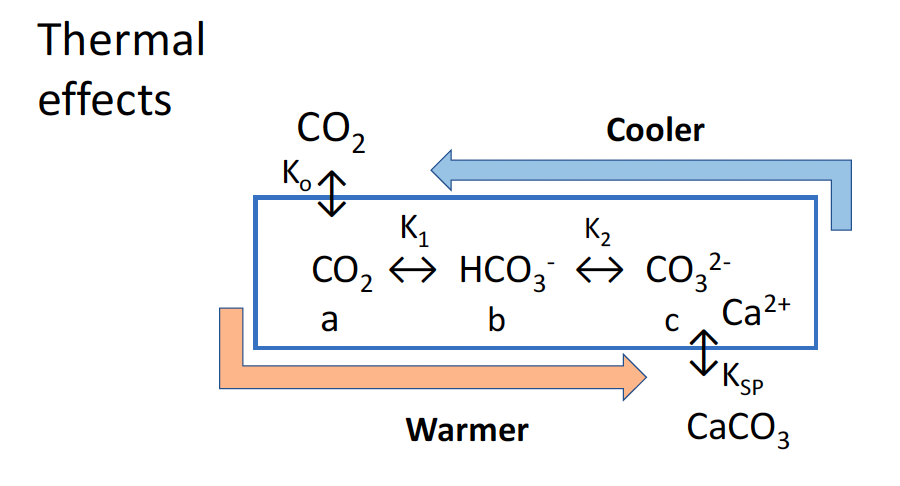
Ivan and I talked some of this over—Great Barrier Reef, North Pacific—during our webinar (soon my first podcast—thanks for waiting!). Calcification’s no sleepy trick; it’s a biological buzzsaw—corals, algae, phytoplankton like coccolithophores churning limestone. In summer blooms, they might pump out tonnes of CO₂, light on C13. Our Thermal Acid Calcification (TAC) hypothesis says nature’s pitching in more than you might think.
Ponder this next time you sip a soda: could the ocean be bubbling up a CO₂ twist?
TAC’s perhaps a second plank in my New Theory of Climate Resilience—subscribe for irregular updates: [https://ift.tt/p6neiEO]
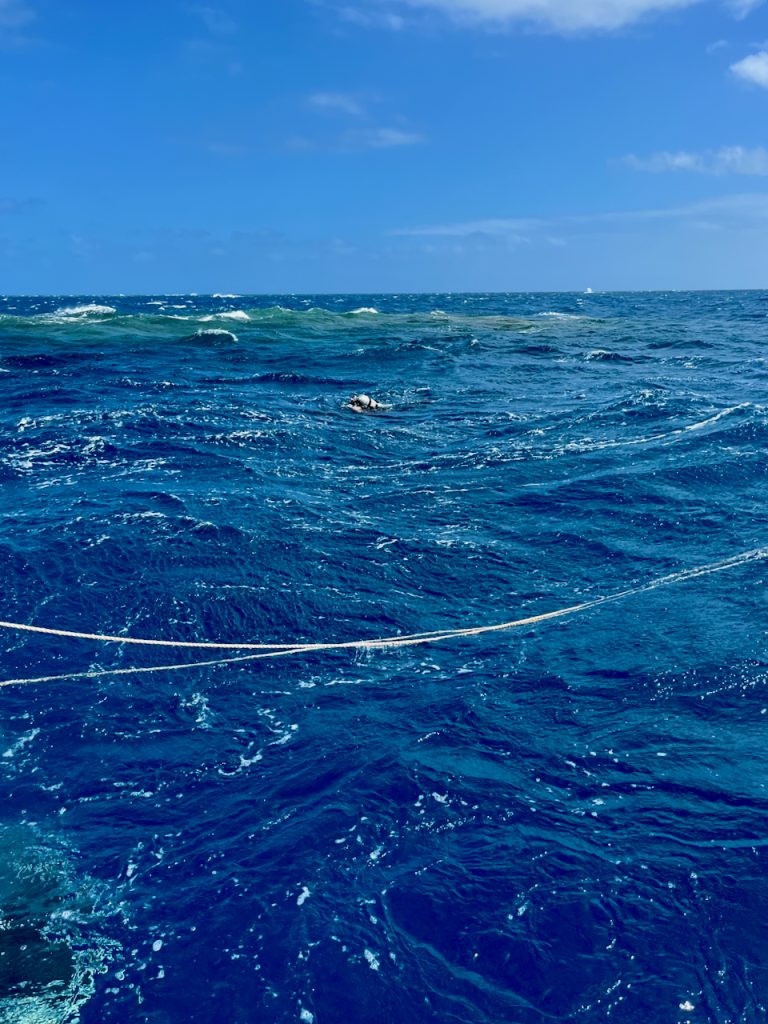
In churn and current, me with that silver scuba air tank at the surface above the mixing layer at the Great Barrier Reef.
This is Part 2 of How Climate Works. Part 1 was with Bill Kininmonth. I never properly processed the audio from Part 1, and I accepted the AI summary of our meeting click here.
************
When we say deep ocean carbon is 0‰ (per mille), we’re talking about its carbon isotope ratio, specifically the δ¹³C value. This is a measure of how much carbon-13 (¹³C) is present relative to carbon-12 (¹²C), compared to a standard reference.
In this case, 0‰ doesn’t mean there’s no carbon-13 in the deep ocean—it means the ratio of ¹³C to ¹²C in deep ocean dissolved inorganic carbon (DIC) is about the same as the standard reference, which is usually the Vienna Pee Dee Belemnite (VPDB). A δ¹³C of 0‰ indicates no enrichment or depletion of ¹³C relative to that standard.
Now, why is deep ocean carbon around 0‰? It’s because the deep ocean is a massive, well-mixed reservoir of carbon that’s been cycled through various processes over long timescales. Surface ocean carbon starts with a δ¹³C of about +1 to +2‰ due to photosynthesis, where phytoplankton preferentially take up ¹²C, leaving the surface water slightly enriched in ¹³C. But as organic matter sinks and decays, it releases carbon back into the deep ocean. This process, along with the mixing of water masses, balances out the isotopic signature. The deep ocean ends up with a δ¹³C close to 0‰ because it reflects a long-term average of all these inputs—biological, physical, and chemical—without much net fractionation.
In terms of carbon-13, this means the deep ocean has a pretty stable and “neutral” amount of ¹³C compared to the global carbon cycle. It’s not heavily skewed like surface waters or organic matter (which can be -20‰ or lower due to that photosynthetic preference for ¹²C). So, a δ¹³C of 0‰ tells us the deep ocean is kind of a baseline, a big pool where carbon isotopes have settled into equilibrium over thousands of years.
A story broke earlier this week concerning the bankruptcy filing of one of the largest carbon offset/credit trading start-ups in existence, Aspiration Partners, Inc.
CTN Holdings, as Aspiration Partners renamed itself, is carrying about $170 million in debt and wants to borrow $4 million to go through the filing process. My question is what the collateral would be for the $4 million, since the company has no productive assets, just credits on paper—paper which, it turns out, is likely worthless both from a fiscal and climate perspective.
Bloomberg notes that among Aspiration Partners’ investors/backers/promoters were some of the largest high-tech companies and billionaire tech moguls in the world, such as Microsoft and Meta and sports moguls like Steve Ballmer, owner of the Los Angeles Clippers and Kia Forum.
To be clear, it’s not just that the climate-woke billionaire boys club members invested in a bad business venture; they have probably been defrauded. The company collapsed shortly after the U.S. Department of Justice charged cofounder Joseph Sanberg with working to defraud two investor funds of at least $145 million. With elites possibly losing millions or billions of dollars to Sanberg’s allegedly shady business practices, he might best be thought of as the Michael Milken or Sam Bankman-Fried of the carbon offset/credit scheme.
If so, the elites had fair warning that the entire carbon trading/offset market was beset by fraud since climate alarmists first pushed it as a possible “market-friendly” way to fight climate change. Heartland Institute President James Taylor discussed fraud in the carbon offset/credit market way back in 2011. The Chicago Climate Exchange, North America’s first voluntary, legally binding trading system for carbon dioxide emissions, closed its doors in 2010, just seven years after opening, in part due to the inability to confirm the carbon credits sold were tied to actual carbon offsets or reductions.
Warnings of fraud, scams, and theft in the carbon market have been rife over the years as companies bought offsets for protecting forests and wildlands that were never threatened with development in the first place, or for carbon storage and technology shifts that never took place or didn’t, in fact, end up reducing carbon dioxide emissions. In addition, audits have shown that even in instances of projects where offsetting emissions did take place, those selling and purchasing the offsets or credits were sold credits for far more emissions reduction than actually took place.
Time magazine exposed serious problems with the sale of “bogus credits” in March 2023, and Science News and Climate Cosmos have both detailed the problems with tracking the carbon offset/credit markets, from difficulties tied to uncommon accounting practices to outright fraud, in articles in recent weeks.
Climate Cosmos describes the difficulties thus:
Carbon offsetting is a concept where companies and individuals compensate for their carbon emissions by funding projects that reduce greenhouse gases. This could involve initiatives like planting trees, investing in renewable energy, or enhancing energy efficiency. The market for these offsets is expanding rapidly, with projections suggesting it could reach a staggering $200 billion by 2030. However, this growth spurt has unfortunately attracted unscrupulous activities that threaten the market’s integrity. As more people and businesses turn to offsets as a means to mitigate their carbon footprint, the reliability of these projects remains a critical concern.
Fraudulence in the carbon offsetting market is a growing concern. A report by the Environmental Defense Fund suggests that up to 85% of offsets may be ineffective or fraudulent. Many projects overstate their carbon reduction, misleading buyers and creating a false sense of progress. This deception undermines genuine climate efforts and slows meaningful emission reductions. Stricter regulations and better transparency are essential to restoring trust in the market. Without accountability, carbon offsetting risks becoming a tool for greenwashing rather than real environmental change.
Though I think Climate Cosmos describes the problem aptly, I laugh at the claim it is a “growing concern,” fraud having been rife in the artificially created market superfluous to actually controlling climate since the first offsets and credits were offered. The fact that supposedly financially sophisticated elites continue to invest in these schemes nearly 20 years into this scam suggests they are more interested in green virtue signaling or magical wish fulfillment than a sober assessment of the actual functioning of the market and those entities operating in it, buying and selling offsets, and guaranteeing the offsetting projects are taking place and being accounted for properly.
Science News also details problems that have proven seemingly inherent to the carbon offset/carbon credit market:
[Taylor Swift] … has found herself in the middle of a media storm over her carbon dioxide emissions. Swift regularly hops aboard her private jet, as she did in 2024 to get from a concert in Tokyo to the Super Bowl in Las Vegas the next day. A spokesperson said that Swift purchases more than enough carbon credits to offset her jet-setting. But fans and haters alike want to know: Is it enough?
If you travel by plane, even in less-glamorous economy, you’ve probably faced a similar question. Airlines often offer passengers the option to pay a few extra dollars to offset their share of the flight’s emissions. It’s considered the climate-friendly thing to do. By purchasing carbon credits, you’re paying someone somewhere to take some action—probably saving an existing forest or perhaps planting trees—that reduces total global emissions enough to cover your contribution. You can take off without a guilty conscience. Supposedly.
How bad is the problem? Pretty bad, it seems:
Over the last few years, though, carbon credits have faced increasing scrutiny. A string of academic studies and media investigations have concluded that many credits do not represent genuine emissions savings. One investigation concluded that over 90 percent of carbon credits issued for rainforest protection by the largest carbon credit certification body “had no benefit to the climate.” Two reports published in 2023 found that credits for forest-based projects in North America, South America, Africa and Asia may in fact increase net emissions.
That same year, uncertainty over the validity of credits caused the voluntary carbon market to collapse; the market’s value dropped by more than 60 percent. Given the current situation, “it’s nearly impossible to be certain that what you’re buying is high integrity,” says Stephen Lezak, a researcher at the Berkeley Carbon Trading Project at the University of California, Berkeley.
Most carbon offset and credit transactions are voluntary and international in nature, with differing accounting practices and levels of scrutiny, and limited and varying means of enforcement, in a market that is largely unregulated by either local governments or international agreements. As such, the risk of fraud was crystal-clear from the start: anyone willing to take advantage of liberal guilt and loopholes one could pilot a supertanker through could make a fast buck on nothing more than Xeroxed certificates promising cool air.
A similar problem has been detailed in a critical study of the expensive carbon credits generated by EV manufacturers. Every EV sold gets 6.67 miles-per-gallon (mpg) in credits for every single mpg of actual fuel economy improvement or its equivalent above the CAFE average. In addition, EV manufacturers are given additional extra credits under the EPA’s banking system for meeting its bogus and legally unjustified GHG emission standards. EV makers are allowed to sell these credits to makers of internal-combustion vehicles to improve their fleetwide CAFE numbers and offset their carbon dioxide emissions.
The problem is the amount of credit assigned to EVs for greenhouse gas reduction compared to traditional gas- and diesel-powered vehicles was simply made up, not produced after a careful life-cycle comparison of the different types, much less models, of vehicles. This is a scam, created and run by governments.
EV makers have profited handsomely while the cost of vehicles powered by fossil fuels has gone up as manufacturers pass along the cost of the credits to buyers of non-EV cars and trucks. Anyone buying a car or truck that thought vehicle prices were suffering from inflation was right: inflation caused by the Biden administration’s EV carbon credit program.
Climate change does not pose an existential threat. It is not a real, clear, and present danger. There is no crisis! I can’t think of a clearer way to say it. As such, the whole carbon offset/carbon credit market was never necessary or environmentally or economically justified.
Billionaires and multimillionaires wasting money on such schemes might be amusing to some, if there weren’t real-world consequences for people not snookered by the scheme, in the form of higher costs, malinvestment of resources and opportunity costs, and less consumer freedom.
A recent study published in the journal Population and Environment examines the effect of rising temperatures and climate change on lifespans in Europe.
In the study, three researchers from different medical specialties at Poland’s Poznan University of Medical Sciences examined lifespan trend estimates and modeled and measured changes in ambient temperatures for the periods 1979 through 1982, 1990 through 2019, 2019 through 2022, and 1981 through 2010, and estimated results using the mid-range RCP 4.5 climate model scenario for 2041 through 2070, after adjusting for economic changes, especially examining disease and infection trends under different extreme-weather conditions.
The study confirmed what previous multi-country, large-scale research studies have found: “Colder-than-optimal temperatures had a greater effect on mortality than warmer ones.” In fact, in the coldest parts of Europe the researchers found that, on average, “harsh winters reduced life expectancy by up to 24 months, while warmer areas like the Azores saw reductions of just 2 months.”
Earth’s slight warming and reduced incidence of weather extremes have resulted in a ½-month net increase in average life expectancy across Northern Europe. In Southern Europe the effects were mixed, with people in the Atlantic region experiencing an increase in life expectancy of three months while the Mediterranean region saw life expectancy decline by about three months. On the whole, the study found,
The primary climate threat that reduces life expectancy in Europe continues to be low temperatures. The least favorable climate is the continental type, whereas the most favorable is the Mediterranean climate. The last four decades of global warming have led to a net gain in life expectancy. … The model also reveals a consistent increase in life expectancy for developed countries solely due to economic output growth. This suggests that prioritizing slowing down global warming over economic growth is unlikely to lead to maximization of life expectancy in the region. Moreover, considering the diverse impact of local climates on life expectancy, there is a potential benefit in encouraging retirees to migrate to warmer islands or coastal areas as a thoughtful policy.
In the United States, greenhouse gas emissions have declined even as the economy and energy use have grown (the latter at a slower rate). This is true despite the fact that relative to other countries committed to cutting emissions under various climate agreements, the United States has had limited legal impositions on fossil fuel use, with those that exist being primarily related to coal-fueled power plants and tied up in court since the Obama administration first imposed them.
A new study published in the journal Energy Economics explores why U.S. emissions have declined in the face of energy and economic growth despite limited government coercion in the form of laws, taxes, and regulations. The authors conclude the fracking revolution—the development of hydraulic fracturing and horizontal drilling—“significantly altered the U.S. energy landscape through a surge in shale gas production.” Natural gas became relatively abundant, and gas power plants were cheaper to build and maintain. In addition, back-and-forth battles over power plant emission rules made natural gas the go-to choice for new baseload and peaking energy (combined with the expansion of intermittent wind and solar power). Gas power plants can provide power on demand, like coal and nuclear, but are easier to turn on and off quickly to provide power as needed.
Because greenhouse gas emissions are lower from gas plants than from coal plants, the switch from coal to gas resulted in in a reduction of “average annual U.S. greenhouse gas emissions per capita by roughly 7.5 percent,” the authors write.
The researchers broke the causes and effects of the switch from natural gas to coal into three categories: “changes in the fossil fuel mix (the substitution effect), changes in the speed of the transition to non-fossil energy sources (the transition effect), and changes in overall energy consumption (the consumption effect).”
Although I question their referring to natural gas as a “bridge fuel,” a phrase common in the early climate alarm literature, they did find that the shale revolution powered continued economic growth and a simultaneous decline in emissions between 2007 and 2019.
H. Sterling Burnett, Ph.D., is the Director of the Arthur B. Robinson Center on Climate and Environmental Policy and the managing editor of Environment & Climate News.
Discover more from Watts Up With That?
Subscribe to get the latest posts sent to your email.


 Clean Air Zones, (Ultra) Low Emission Zones (Anti-motorist Zones), 15 minute cities, 20 minute neighbourhoods,
 meat and dairy exclusionary contracts,
 flight shaming,
 shaming buying clothes,
 carbon taxes.
 3 items of clothing per year