Net Zero Will Make Air Travel the Preserve of the Privileged, Airline Boss Admits

From THE DAILY SCEPTIC

by Will Jones

Air travel will soon be the preserve of the privileged, an airline boss has admitted, as Net Zero makes low-cost air travel a thing of the past. The truth the Net Zero is making us poorer is slowly leaking out, says Matthew Lynn in the Telegraph. Here’s an excerpt.

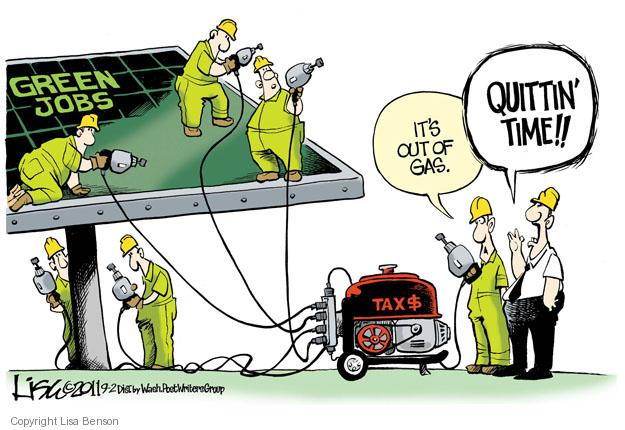
It would drive a new industrial revolution. It would create lots of ‘well-paid, green jobs’. And the wealth it would generate would lower prices, raise living standards and spark innovations that would transform whole industries.

For most of the last decade, corporate leaders have insisted that the transition to a carbon-neutral economy was win-win.

We would save the planet and get richer at the same time. But hold on. The Australian airline Qantas has just broken ranks, admitting that flying may soon be the preserve of only the privileged, while a wealth of research is making it clear that environmental goals have hammered the economy.

In reality, bosses are starting to admit what has been obvious for some time. Net Zero is making us poorer – and that means we have to rethink the way we go about reducing carbon emissions.

If you thought that summer flight to Malaga or Crete with the family was already looking eye-wateringly expensive, you have not seen anything yet. According to the data company Mabrian, budget – and the word “budget” is looking increasingly out of place for the no-frills aviation industry – flights to Spain will cost 26% more this year than last and those kinds of price rises are becoming the norm for many destinations.

But it will get a lot worse very soon. Vanessa Hudson, the Chief Executive of Qantas, admitted this week that flying may well become “so expensive that it’s something only for the privileged”.

It doesn’t stop there.

Chris Wright, Trump’s Energy Secretary, delivered some blunt truths on UK policy last month when he argued that our roll-out of wind farms and solar panels “had not delivered any benefits”. In fact, he said that British politicians were impoverishing citizens “in the delusion that this was somehow going to make the world a better place”.

Likewise, earlier this month, an analysis by Peel Hunt showed that the steep decline in electricity supply since the early 2000s had coincided with a sharp fall in the growth of living standards and that the two were inextricably linked.

There is no point in kidding ourselves any more. The Net Zero drive is making us poorer.

Let’s take aviation, for example. Vanessa Hudson’s point was that sustainable aviation fuel, which will soon be mandatory for at least 10% of an airline’s consumption, is far more expensive than the traditional fossil variety.

It can cost up to five times as much as kerosene and that increase means fares will have to rise prohibitively if airlines are to stay in business. We have only seen the start of the rise in ticket prices and there will be a lot more to come over the next few years. Very soon, only the wealthy will be able to fly and the rest of us will have to stay at home.

The trouble is, this is completely crazy.

Lynn goes on to explain how numerous industries, including tourism, exports and conferences, rely on affordable air travel. And manufacturing of course is already being hammered by high and rising energy costs.

“At least Qantas is being honest,” he says”. “So are a handful of other corporate leaders, even if the majority are still living in the la-la-land where there is no trade-off between hitting our environmental goals and maintaining our standards of living.”

Worth reading in full.


Discover more from Watts Up With That?

Subscribe to get the latest posts sent to your email.

via Watts Up With That?

https://ift.tt/L9BITks

March 29, 2025 at 12:01AM

EPA’s ‘Polluters’ Portal’? No—Just a Return to Pre-Zealotry Sanity

The Associated Press is sounding the alarm—again. This time, the horror is that the EPA, under the Trump administration and Administrator Lee Zeldin, is daring to invoke a long-standing clause in the Clean Air Act to allow temporary exemptions from newly minted Biden-era regulations on industrial emissions. The AP characterizes this as a betrayal of public health and an assault on the environment. In reality, it’s nothing more than a restoration of sanity.

What Actually Happened?

According to the AP, the EPA created an email inbox to allow companies to request exemptions from nine Biden-era regulations, including rules targeting emissions of mercury, ethylene oxide, and other chemicals. These exemptions are not automatic. They require presidential approval under the Clean Air Act, and only if two conditions are met: (1) the control technology is not widely available, and (2) continuing operations serve national security interests.

In short, the administration is using the Clean Air Act exactly as written. This is not deregulation by fiat—it’s a legal process spelled out in black-letter law. And it’s not even new. As the EPA itself pointed out, the Biden administration used the same exemption mechanism when issuing stricter rules on ethylene oxide last year​.

But facts, as usual, are optional for the climate narrative industry.

“Polluters’ Portal” or Lifeline to Reality?

Margie Alt, campaign director of the Climate Action Campaign, derided the move as a “gift to the fossil fuel industry” and claimed it represents a “polluters-first agenda.” Jason Rylander from the Center for Biological Diversity went further, calling the EPA’s legal mechanism “ridiculous” and “an invitation to pollute”​.

Let’s be honest: these activists would object if industries were granted even a five-minute reprieve from regulatory overreach. Their logic is theological, not scientific. In their view, any emission—no matter how minor, no matter how economically vital the source—is sacrilege. If it takes bankrupting communities to reduce hypothetical future risks derived from models with high uncertainty margins, so be it.

We are told repeatedly that mercury causes brain damage and ethylene oxide causes cancer, but these statements are made without the crucial context: exposure thresholds. Modern industrial controls already reduce these substances to extremely low levels. The question is not whether these chemicals are harmful at some level, but whether the incremental gains from ever-stricter standards justify the staggering costs—both financial and societal.

This is not “denial.” It’s cost-benefit analysis.

Weaponized Regulations, Not Public Health Protections

Much of the Biden administration’s climate agenda was never about measured improvements in air quality. It was about using the administrative state to crush politically disfavored industries. If that sounds extreme, consider this: the new rules targeted coal-fired power plants and over 200 chemical facilities—mostly in red-state America—despite little evidence that the existing controls were failing or that their emissions posed current, measurable risks​.

These rules were passed not to protect children, but to strangle American energy and manufacturing. Administrator Zeldin simply opened a lawful exit ramp for companies facing arbitrary new constraints that threaten their viability.

This is governance, not environmental nihilism.

“Abuse of Power” or Due Process?

Critics like Vickie Patton of the Environmental Defense Fund claim the exemption option is an “abuse of power.” Yet they never raised these objections when the Biden administration did the same thing. The selective outrage reveals what this is really about: power, not pollution​.

The Clean Air Act’s exemption clause exists for a reason. It recognizes that environmental idealism must sometimes give way to economic and strategic reality. Declaring that industrial capacity must shut down overnight to comply with sudden new mandates is not policy—it’s sabotage.

And let’s not forget: many of these plants serve critical national functions, from energy to materials supply. The exemption process offers a pathway to keep them online temporarily, while technological feasibility catches up. That’s not deregulation. That’s common sense.

The Bigger Picture: Bureaucratic Overreach vs. National Interest

The AP is also aghast that Administrator Zeldin is considering deep staffing cuts at the EPA and may eliminate its scientific research office. The horror! How will we survive without 1,000 federal employees reinforcing the same “scientific consensus” that props up every climate policy from here to Brussels?

The truth is, the EPA has become a political actor. Its “science” increasingly functions as a cloak for ideological policymaking. Reducing its budget and trimming its bureaucratic excesses is not anti-science—it’s anti-tyranny.

If the research office exists primarily to churn out justifications for more regulation, then yes, it should be shut down. Real science thrives under scrutiny. It doesn’t require 1,000 salaried activists and a billion-dollar budget to be persuasive.

Conclusion: Let’s Stop Pretending This is About “Health”

Every regulation has costs, and those costs matter. When new rules threaten jobs, increase consumer prices, or kneecap strategic industries, we must ask: is the benefit real? Is the risk immediate and quantifiable? Or is it another round of climate theatrics aimed at pleasing donor bases and ideologically motivated NGOs?

The EPA’s exemption portal isn’t a “get-out-of-jail-free card.” It’s a return to lawful, deliberate governance—a rare thing in the age of emergency mandates and bureaucratic crusades. If the Biden administration had pushed through these rules under normal democratic scrutiny, maybe there’d be less resistance.

Instead, what we have is a zealous regulatory machine colliding with the real-world limits of energy, economics, and common sense.

And for once, sanity is winning.

H/T Steve Milloy


Discover more from Watts Up With That?

Subscribe to get the latest posts sent to your email.

via Watts Up With That?

https://ift.tt/X7aJ5xz

March 28, 2025 at 08:00PM

Claim: Renewables are Cheaper Because of Fuel Volatility

Roger Caiazza

When questioned about affordability, New York Climate Leadership & Community Protection Act (Climate Act) proponents have claimed that renewable energy development can reduce costs.  This article responds to their argument that reduced fuel price volatility will make renewables cheaper.

The December 18, 2024 New York Assembly Committee on Energy public hearing enabled legislators to question New York State Energy Research & Development Authority (NYSERDA) and New York State Department of Public Service (DPS) staff about Climate Act progress. Jessica Waldorf, Chief of Staff & Director of Policy Implementation, DPS was asked what impact Climate Act GHG emission reductions would have given that New York emissions are smaller than the observed annual increases in global GHG emissions. Waldorf said that there are other reasons “to build renewable energy resources in New York that are not just related to emissions.”  She gave two reasons: energy security and price volatility. 

The other thing I would say about energy security is price volatility.  Customers are beholden to the whims of the fossil fuel industry and the up and down markets that we see from fossil fuels.  Localizing our energy production and renewables allows us for price stability.  That is definitely a benefit of building resources here. 

The claim was also made at an New York State Energy Plan Planning Board on March 3, 2025 to adopt the scope for the state energy plan the claim was mentioned.  The presentation by Jeff Freedman from the Atmospheric Sciences Research Center, University at Albany, Albany, New York included the following slide that makes the claim that renewable energy can reduce costs.

One characteristic of the NYSERDA documentation is lack of detail, so it is not surprising that the justification for the claim is not readily available. Table 6-1 was in New York State Climate Impacts Assessment Chapter 06: Energy.  That chapter does not address renewable energy costs specifically.  I searched for references for costs in the chapter and found only one relevant reference on page 370:

Energy costs: Fossil fuel prices are increasingly volatile, largely because they are traded on global markets. In contrast, a power sector composed of large volumes of renewable resources that have no fuel costs could lead to less volatile energy bills due to the elimination of this driver of variability in energy costs. The presence of distributed resources amplifies this effect. Whether the costs of a clean power sector are lower than, comparable to, or higher than the status quo, they will be more predictable and less likely to create indirect costs that arise from unexpected price changes.

The presumption in this article is that the basis of these claims that renewable energy will be cheaper and less volatile is that a renewable energy dependent electric system will have less unstable fuel costs resulting in cheaper and more secure energy.  This in turn is based on two presumptions: fuel prices are volatile because of global markets and renewables would eliminate this cost driver.

Fuel Volatility

The US Energy Information Administration (EIA) noted in June 2024 that fossil fuel price volatility has shown significant changes over time, with recent years experiencing particularly high levels of volatility: “In 2022, natural gas price volatility reached extreme levels, with historical volatility peaking at 171% in February 2022, the highest since at least 1994.”  Note that EIA is only discussing natural gas volatility which has become a much larger electric generating fuel source in recent years.  In my opinion, the increasing reliance on a single fuel could be the fundamental reason for the observed increase in volatility.

In any case, the New York agency global market argument picks just one driver for fuel price volatility.  The EIA  gave other reasons for natural gas variability in August 2022:

Increased uncertainty about market conditions that affect natural gas supply and demand can result in high price volatility. Events that have contributed to changing market conditions include:

  • Production freeze-offs
  • Storms
  • Unplanned pipeline maintenance and outages
  • Significant departures from normal weather
  • Changes in inventory levels
  • Availability of substitute fuels
  • Changes in imports or exports
  • Other sudden changes in demand

U.S. natural gas prices are typically more volatile during the first quarter of a year because of the fluctuating demand for natural gas for space heating as weather changes. Factors that contributed to heightened volatility in the first three months of this year include:

Of the eight events that contribute to changing market conditions and fuel volatility is the only one is related to global market conditions.

There is one other aspect of volatility.  In today’s electric system prices spike when load peaks during the hottest and coldest annual events.  When the electric grid becomes dependent upon weather dependent wind and solar resources, prices will also spike when there are resource lulls.  That effect will be exacerbated when the two coincide.  I believe that this volatility will be more frequent, just as severe, but for shorter periods than any fuel price volatility caused by global events.

European Experience

However, if the fuel volatility claim is true then proponents should be able to point to jurisdictions where wind, solar, and energy storage have make electric prices cheaper.  The best example of the claim that renewable energy is cheaper because it reduces fuel volatility should be Germany.  Oil, coal and gas prices spiked in the immediate aftermath of Russia’s invasion of Ukraine and have been volatile ever since. Germany’s Energiewende is the country’s planned transition to a low-carbon, nuclear-free economy and is often cited as an example of what New York should do. Enerdata reports that “According to the German Federal Network Agency, the installed renewable power capacity in Germany increased by nearly 20 GW (+12%) to nearly 190 GW in 2024.” If the proponent’s claim is true then prices should be trending down.  However, since 2000, electricity prices for German households have risen by 116%, from 13.94 to 30.43 cents per kilowatt-hour in 2019 .  As of April 1, 2024, households with basic supplier contracts were paying around 46 cents per kilowatt-hour, making it “the most expensive option compared to other providers or special contracts” .

Another way to look at the claim is to compare electricity prices within the European Union.  I highly recommend  the Nemeth Report for its coverage of European energy issues. The post EU Action Plan for Affordable Energy  includes just such a comparison.  It quotes Ursula von der Leyen, President of the European Commission, as saying: “We’re driving energy prices down and competitiveness up. We have already significantly reduced energy prices in Europe by doubling down on renewables. “

However, the data in the following figure do not support her claim. 

The analysis states that:

Note that the household price average shows a large difference between EU countries that use coal, nuclear, and gas vs those that have focused on wind and solar. For example, as shown in the chart above, according to Statista, using 2023 data, Hungary’s electricity price was 9.68 Eurocents/kwh (50% of their electricity is from nuclear, 38% coal & gas) and Bulgaria which relies mostly on coal and nuclear was around 11 Eurocents/kwh, whereas Germany, which has “doubled down on renewables” (and closed down its nuclear), was the highest at 44.97 Eurocents/kwh and Denmark which has a small population and a whole lot of windmills was at 39.44 Eurocents/kwh! 

Data sources and the year of the data matters. Eurostat uses numbers from the first quarter of 2024 which reorder some of the countries but the overall argument, that countries that “doubled down on renewables” and made other poor choices of shutting down nuclear power plants and/or coal experienced higher prices, remains supported. 

Discussion

Roger Pielke, Jr recently posted an article about the politicization of expertise that is relevant here.  He argues that society needs to depend on the expertise of specialists in many fields – “Nobody knows enough to run the government”.  As a result, society needs all of us.  He explains that “We do not have to agree on everything, but we do have to work together”.  Then he points out that “In recent years, credential expertise—like many things—has become pathologically politicized.” 

Such is the case shown by the politicization of the Climate Act implementation led by NYSERDA.   The presenters at the meeting were carefully chosen to further the Hochul Administration’s narrative that all is well with the Climate Act.  Consider, for example, the presentation by Jeff Freedman to the Planning Board.  His main research focus is on “renewable energy and atmospheric boundary layer (ABL) processes” so his bias is towards renewable energy virtues.  He has no energy sector experience that qualifies him to claim that “renewable energy can reduce costs” He was a spokesman because of his adherence to the narrative.

New York agencies are required to take shareholder comments into account for regulatory actions.  Unfortunately, they only go through the motions.  Rather than using the process as an opportunity to improve the product it is treated as an obligation.   My problem with this is that if anyone provides specific comments or raises specific issues with their work, there is no documentation that the submittal was addressed, and nothing included to respond to the issue raised.  For example, the claim that renewable energy can reduce costs was undocumented in Freedman’s presentation.  I have no doubts that NYSERDA will continue the charade that renewable energy can reduce costs and that costs of inaction are worse than the costs of action.  They have never responded to related issues raised and will continue to do so as long as they can get away with it.  In my opinion this is another instance of pathologically politicized expertise by NYSERDA because they are so arrogant that they don’t see any need to respond to stakeholder comments.

Conclusion

The biggest barrier to any net-zero transition away from fossil fuels is the inevitable extraordinary cost of implementation.  In New York, the Hochul Administration has ducked the issue since the Climate Act was passed.  They can only hide reality for so long.  The question is whether the issues associated with the net-zero transition will be addressed before New York’s economy is severely compromised.

In the meantime, if you ever hear anyone say renewable energy can reduce costs, please ask them why German electric prices are so high or to cite an example of any jurisdiction that is transitioning their electric system that has reduced ratepayer bill costs when using the renewable strategy to rely wind, solar, and energy storage resources to power the electric grid.


Roger Caiazza blogs on New York energy and environmental issues at Pragmatic Environmentalist of New York.  He has been a practicing meteorologist for nearly 50 years, was a Certified Consulting Meteorologist, and has B.S. and M.S. degrees in meteorology.  The opinions expressed in this post do not reflect the position of any of his previous employers or any other organization he has been associated with.


Discover more from Watts Up With That?

Subscribe to get the latest posts sent to your email.

via Watts Up With That?

https://ift.tt/JCxms2q

March 28, 2025 at 04:04PM

Fast Track to Poverty: Green Energy

At his blog, Matt Ridley explains How the Green Energy Transition Makes You Poorer.
Excerpts in italics with my bolds and added images.

Crony capitalism at work

A leaked government analysis has found that Net Zero could crash the economy, reducing GDP by a massive 10% by 2030. Yet the spectacular thing about this analysis is that it expects this to happen not if Net Zero fails—but if it succeeds. In effect, it is saying that if the government really does force us to give up petrol cars, gas boilers, foreign holidays, and beef, then there would be perfectly workable things left idle, such as cars, boilers, planes, and cows. Idling—or stranding—your assets in this way is an expensive economic disaster.

Even more intriguing was the government’s economically illiterate response to the leak. A spokesman said: “Net zero is the economic opportunity of the twenty-first century, and will deliver good jobs, economic growth and energy security as part of our Plan for Change.”

Do they really think that economic growth is the same thing
as spending money? Because it isn’t.

Imagine the government saying that it is going to require the entire population to throw out all their socks and buy new ones by next Thursday. Under the logic it espouses for Net Zero, this would result in a tremendous burst of economic growth. Think of all the jobs created in the sock industry and the shops! They would be better off. Ah, but you, the consumer, would be poorer. You would have as many socks as before but less money. This is the broken window fallacy, explained by Frédéric Bastiat nearly 200 years ago: going around breaking windows makes work for glaziers but does not create growth.

Net Zero is a project to replace an existing set of technologies with another set of technologies: power stations with wind farms, petrol cars with electric cars, gas boilers with heat pumps, plane trips in the sun with caravan trips in the rain, cows with lentils. The output from these technologies is intended to be the same: electricity, transport, holidays, food.

Suppose, for the sake of argument, that these new technologies and activities require exactly as much money to build and run as the old ones. What have you gained? Less than nothing because you have retired existing devices early, losing the latter half of their lives. It would be like replacing all the socks in your drawers long before they needed replacing but with identical socks. Does that make you richer? No, poorer.

If the new technologies are more efficient than the old ones, fine. LED light bulbs use about 90% less electricity than incandescent bulbs did. So yes, it does make sense to throw out your old bulbs before they expire, stranding those assets, to save electricity and money. Is the same true of a wind farm or a heat pump? No, they are demonstrably more expensive and less reliable at producing the same electricity than the devices they are replacing. They are worse, not better.

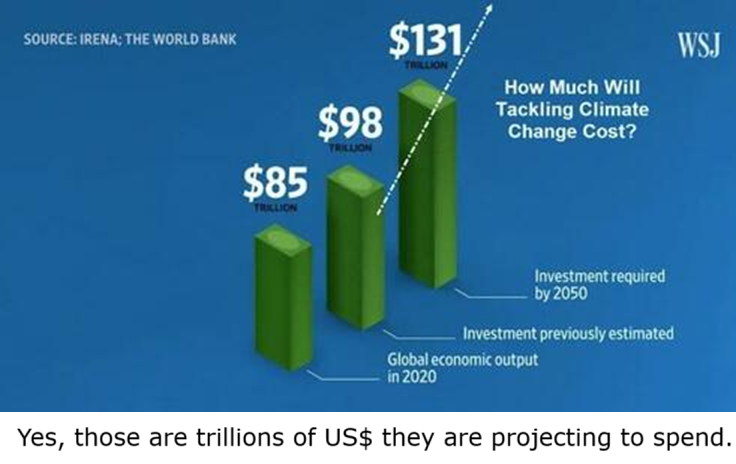
That’s why they need subsidies. We have spent £100 billion so far subsidising “green” energy in the past few decades, money we could have spent on something else: tax cuts, for example. So, the green energy transition has made us poorer, not richer. It has given us the most expensive electricity in the entire developed world.

It has made some people richer, for sure. Dale Vince, an eco-tycoon, has made a fortune out of building unreliable energy. So have lots of fat cats in the City of London, lots of big landowners in the Highlands of Scotland, and lots of manufacturers in China. I have lost count of the number of times wealthy people have told me I am wrong to criticise the unreliable energy industry because “my son Torquil’s fund has done rather well.”

Net Zero crony capitalism is efficient at one thing:
transferring money from poor people to rich people.

This government has forgotten that its job is not to champion the interests of producers, but consumers. So did the last government, though Kemi Badenoch’s speech on Tuesday showed a welcome return to thinking about consumers. Electricity is not an end in itself; it is a means to an end, an essential input allowing us to do the one and only thing that does, really does, represent growth—achieving more output with less input.

Right now, the Net Zero transition is doing the very opposite.

\


via Science Matters

https://ift.tt/PHynBZm

March 28, 2025 at 02:47PM