Alaska’s Proposed Climate Change Commission: Did Harris/Waltz Win?

From MasterResource

By Kassie Andrews

“Politicians and ENGOs gaslight the public into believing Alaska has a magic thermostat that can stop erosion, reverse damage to fisheries, and fix every other contestable issue—as long as they scream ‘CLIMATE CHANGE’!”

Climate alarmism is a tired way to get what you want—not unlike a kid throwing a tantrum in the cereal aisle. Except begging for Froot Loops, the panicking alarmists—backed by ENGOs desperate to push their mandates through—demand more bureaucracy, heavier regulations, and political energy “solutions” that serve their agenda, not the public.

Never mind that these schemes do little to actually “save the planet.” They’re really about forcing costly policies, expanding government control, and driving up energy prices, all while making people poorer for their warped vision of the future.

Here in Alaska, the opportunity is to ‘read the room’ and dial back climate exaggeration and forced energy transformation. Not so looking at Senate Bill 120, introduced this month by Senator Elvi Gray-Jackson, beginning with its 25-word title:

An Act establishing the Alaska Climate Change Emergency Response Commission; and relating to the powers and duties of the Alaska Climate Change Emergency Response Commission.

This bill begins by first adding a section of uncodified law proclaiming that the legislature finds that “a state of emergency exists because of the threat climate change poses on communities in the state, the state economy, traditional ways of life, fish and game populations, and natural ecosystems.”

While legislators do have the power to shape policy, they do not have the authority to declare an emergency—but that hasn’t stopped them from making dramatic proclamations they lack the legal power to enforce, hoping the theatrics will be enough to push their agenda forward.

The bill establishes a new 15-member commission under the governor, ensuring representation from municipal leaders across the state. The commission consists of six state departmental representatives serving by virtue of office and nine municipal representatives.

Per the sponsor statement:

It will be the goal of the commission to advance diverse energy options, adaptive infrastructure, and CO₂ reduction strategies; as well as monitoring climate impacts. The commission will work in harmony with rural and tribal organizations through grant writing and assistance programs.

Trying to regulate CO₂ in a state that contributes less than 0.1% globally is like banning spoons to stop obesity—completely missing the point, utterly ineffective, and guaranteed to impress only the most clueless. Yet, politicians and ENGOs gaslight the public into believing Alaska has a magic thermostat that can stop erosion, reverse damage to fisheries caused by destructive fishing practices (such as trawl), and fix every other issue happening outside—as long as they hit the easy button and scream “CLIMATE CHANGE!”

It’s the ultimate political cheat code: slap the label on any complex issue, ignore the real causes (or solutions), and pretend that more regulations, more bureaucracy, and more taxpayer money will magically control nature itself.

The Real Problem

The real unprecedented threat facing Alaskans isn’t climate change. It’s a rogue, unchecked legislature that is acting like squirrels on crack, scrambling to codify every last remnant of the Green New Deal before the political winds shift. Even with the Trump administration working overtime to dismantle the bureaucratic insanity, the Democrats, all Independents and even some Republicans legislators in Alaska are in full-blown panic mode, rushing to lock in radical climate policies while they still can.

To make matters worse, rabid climate alarmist groups such as the Alaska Venture Fund, Earthjustice, and the Alaska Center will be given a clear advantage in shaping new climate policies going forward. This is an especially troubling prospect given that Earthjustice’s stated goal is to “end the extraction and burning of fossil fuels”.

Senate Bill 120 gives the commission the power to “consult and cooperate with” “public or private persons, organizations, and groups” that are “interested in, affected by, or concerned with climate change effects and response.” That’s insane. It’s the green lobby’s dream come true—an unelected commission with the power to rubber-stamp whatever radical policies special interest groups demand, all under the guise of an “emergency.”

This isn’t policymaking, it’s outsourcing Alaska’s future to the loudest, most politically connected voices in the climate-industrial complex. It is as if Harris/Waltz beat Trump/Vance, and John Podesta’s shock troops were ensconced in Fairbanks.

Governor Dunleavy Must Reject

After two rounds of public testimony and overwhelming written testimony in opposition, the fate of SB 120 hangs in the balance. With continuing evidence of climate exaggeration (here), and the rest of the country (if not world) going in the opposite direction, will Alaska’s legislature respect the people or a climate elite?

And if the bill does pass, will Governor Dunleavy veto this blatant attempt to enshrine climate hysteria into state law? Such would be a far more rational choice than cementing his legacy as part of the climate cult, allowing bureaucrats to seize even more power under the guise of an “emergency” they have no authority to declare.

Conclusion

“It does not take a majority to prevail,” wrote the father of the American Revolution, Samuel Adams, in 1775, “but rather an irate, tireless minority, keen on setting brushfires of freedom in the minds of men.” These words define the opportunity to repel energy statism in Alaska today.


Discover more from Watts Up With That?

Subscribe to get the latest posts sent to your email.

via Watts Up With That?

https://ift.tt/FqwjoPv

March 27, 2025 at 12:11AM
Another Courtroom Clown Show: Bucks County’s Green Lawsuit Debacle

The Delaware Valley Journal Reports:

Judge Calls Out ‘Sneaky’ Bucks Commissioners Over Lawsuit Targeting Oil Companies

Did Bucks County Democrats try to sneak their nuisance lawsuit targeting major oil companies past county voters?

That’s the allegation made, not by the lawyers, but by Bucks County Judge Stephen A. Corr during a hearing on the case Monday.

https://delawarevalleyjournal.com/category/energy/

If you thought climate litigation couldn’t get more farcical, let Bucks County prove you wrong. In what can only be described as a political theater piece disguised as legal action, the Democrat-controlled Bucks County Board of Commissioners has embarrassed itself with a lawsuit that is equal parts stealth, spectacle, and strategic cluelessness.

The spectacle began in March 2024, with Democrat commissioners Diane Ellis-Marseglia and Bob Harvie flanking token Republican Gene DiGirolamo (who quickly backed away like someone who smelled the nonsense a mile away). They announced a lawsuit against BP, Chevron, ConocoPhillips, ExxonMobil, Shell, and the American Petroleum Institute, accusing them of violating local “nuisance laws” and, get this—failing to adequately warn Bucks County residents about the supposed dangers of climate change.

Yes, because nothing screams “legal clarity” like trying to treat a gallon of unleaded like secondhand smoke.

The cherry on top? These climate crusaders tried to sneak the whole thing past the public by embedding their lawsuit authorization under the vague term “environmental litigation” in a January 2024 consent agenda. This procedural magic trick was so flagrant that even Judge Stephen Corr, hardly a flamethrower by nature, called it out. Corr didn’t mince words: “You’ve got to be kidding me,” he snapped at the county solicitor. He then summarized the commissioners’ move for what it was—“a sneaky way of doing it.”

But wait—it gets better.

The lawyer for Chevron, Frederick Santarelli, called the maneuver “undemocratic” and lambasted the commissioners for violating Pennsylvania’s Sunshine Act. Corr, who actually used to sit on a school board and knows how transparency is supposed to work, seemed genuinely appalled. “How can the public ask an intelligent question?” he asked. A fair point—assuming intelligent questions haven’t already been outlawed by the climate litigation crowd.

So what exactly is this lawsuit aiming to do? Oh, just fund public works projects like stormwater management and bridge repairs by extracting cash from oil companies. That’s right—Bucks County thinks it can pave its roads with climate hysteria and Chevron’s legal settlements.

Ted Boutrous, an attorney for Chevron, didn’t hold back either: “Virtually identical lawsuits have been dismissed by multiple federal and state courts across the country, including in Delaware, Maryland, New Jersey, New York, and California.” The precedent is clear: this kind of political performance art doesn’t belong in a county courtroom. As Boutrous rightly pointed out, “The claims are based on interstate and international emissions and, therefore, are precluded and preempted by federal law under clear U.S. Supreme Court precedent.”

Translation: This isn’t just bad policy. It’s legally incoherent.

Naturally, Bucks County’s legal team is spinning harder than a turbine in a wind farm. County lawyer Dan Flynn alleged oil companies ran a “disinformation campaign,” because apparently no one in 2024 understands that cars run on gas unless Big Oil spells it out in skywriting. Judge Corr wasn’t buying it. “What about me? I drive a car that burns gas,” he pointed out. Flynn responded with an artful dodge: “The court was not telling everybody to go burn gas. The defendants were.”

This, in a courtroom, is what passes for a compelling legal argument in 2025.

As for the real world—where grown-ups reside—Judge Corr reminded everyone that “we’re talking about emissions from all over the world.” A point so obvious it hurts to hear it repeated, and yet apparently not obvious enough for the commissioners who think Shell owes them new rain gutters.

The entire fiasco reeks of political opportunism cloaked in legal jargon. Bucks County isn’t trying to stop climate change—they’re chasing a payout. And they’re doing it with all the ethical grace of a Vegas conman.

Let’s recap: A climate activist nonprofit (Center for Climate Integrity) coordinated with Bucks officials via email prior to the lawsuit. The suit itself hides behind “environmental litigation” on a consent agenda. The commissioners talk about “transparency” while clearly avoiding it. And their legal strategy has already been tried—and laughed out of court—across half a dozen states.

Bucks County’s crusade is a microcosm of the broader climate litigation absurdity: legally bankrupt, ethically dubious, and politically motivated. This is not governance. This is green theater—badly acted and poorly reviewed.

Let’s hope Judge Corr’s written ruling delivers the final curtain call this performance deserves. Preferably with a laugh track.


Discover more from Watts Up With That?

Subscribe to get the latest posts sent to your email.

via Watts Up With That?

https://ift.tt/V8cm32O

March 26, 2025 at 08:02PM

Climate Crisis Talk Obscures Reality

Edward Ring writes at American Greatness Challenging the Climate Crisis Narrative.  Excerpts in italics with my bolds and added images.

The climate crisis narrative ignores real issues like
poor infrastructure and overpopulation, pushing costly policies
that hurt economies while failing to improve resilience
.

According to the United Nations, “Climate change is a global emergency that goes beyond national borders.” From the World Economic Forum, “Urgent global action must be taken to reduce emissions and safeguard human health from the multi-pronged negative impacts of climate change globally.”

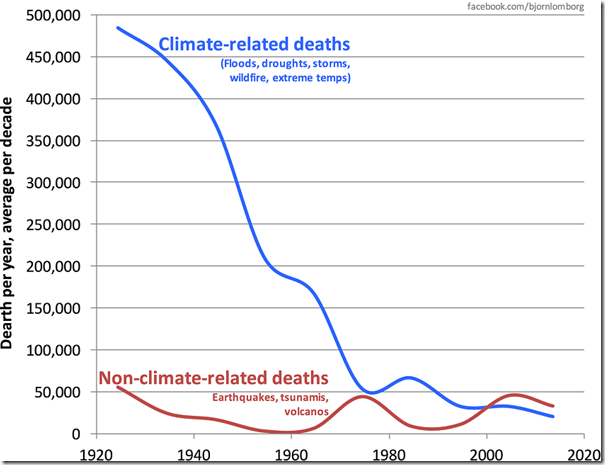
From every multinational institution in the world, we hear the same message. From the World Bank, “The world is battling a perfect storm of climate, conflict, economic, and nature crises.” From the World Health Organization, “Between 2030 and 2050, climate change is expected to cause approximately 250,000 additional deaths per year from malnutrition, malaria, diarrhea, and heat.”

A major problem with all this unanimity over this “emergency” is the fact that for at least half of all people living in Western nations in 2025, the UN, WEF, WHO, and World Bank have no credibility. We don’t want to “own nothing and be happy” as our middle class is crushed. We don’t want the only politically acceptable way to maintain national economic growth to rely on population replacement. And with only the slightest numeracy, we see apocalyptic proclamations as lacking substance.

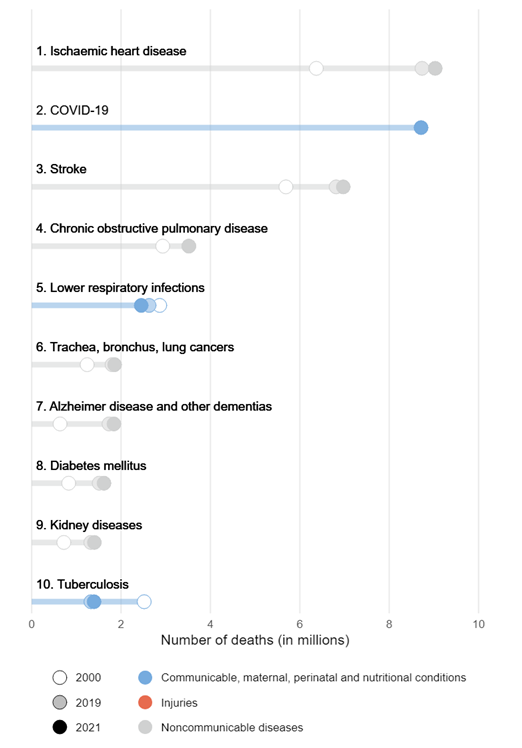
Top Ten Causes of Death Globally 

For example, while 250,000 “additional deaths per year” is tragic, worldwide estimates of total deaths are not quite 70 million per year. These “additional deaths” constitute a 0.36 percent increase over that baseline, just over one-third of one percent. Not even a rounding error.

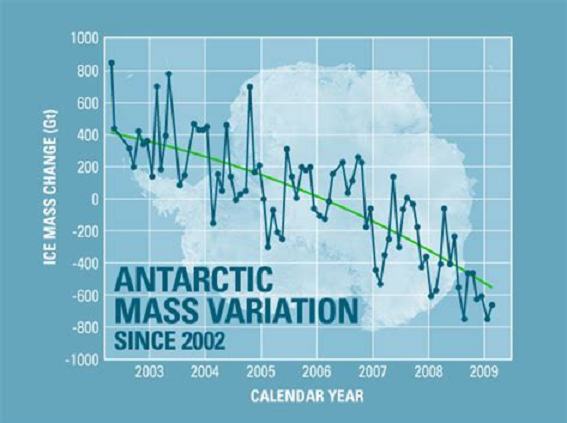
Source NASA

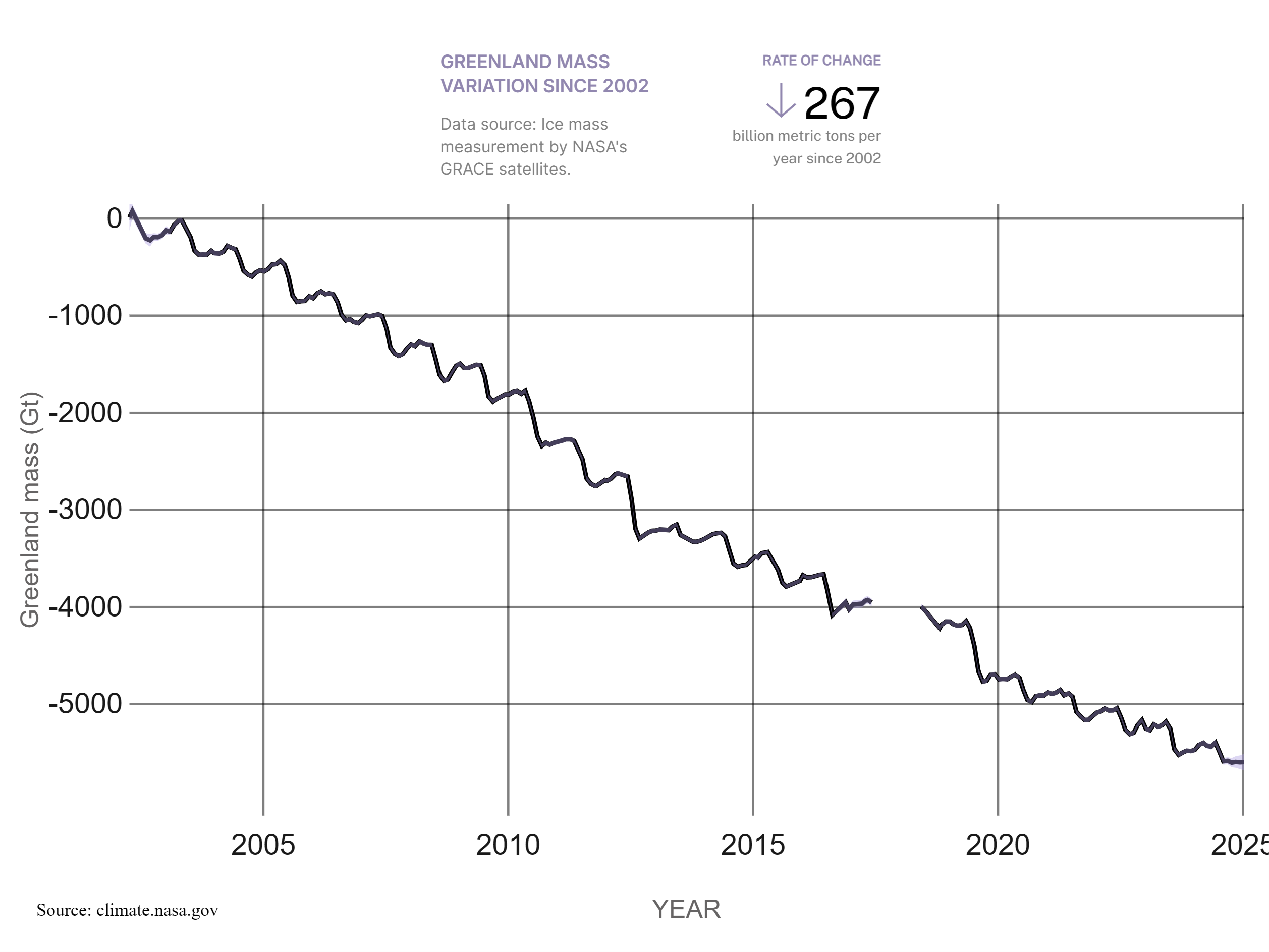
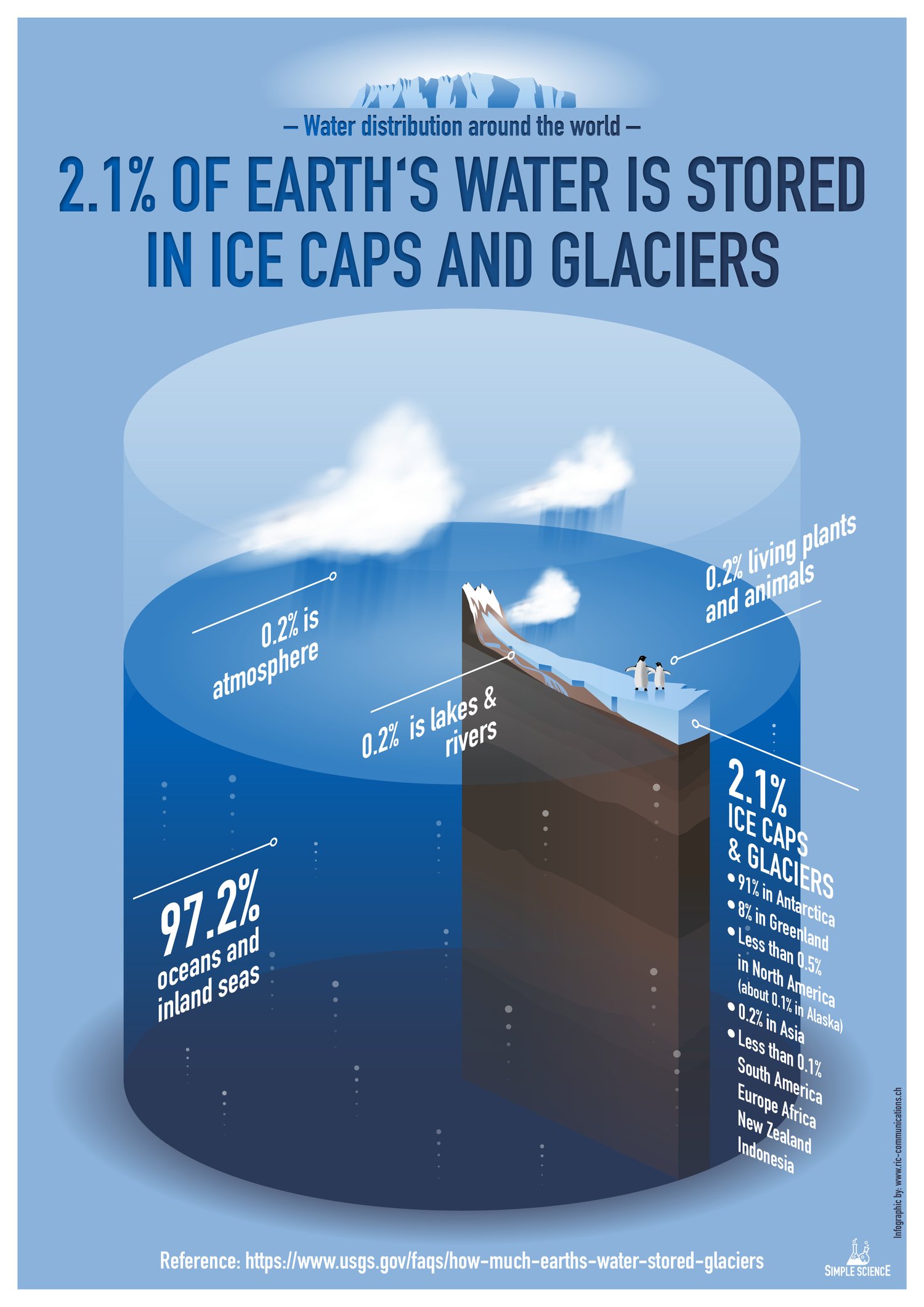
Similarly, an alarmist prediction from NASA is that “Antarctica is losing ice mass (melting) at an average rate of about 150 billion tons per year, and Greenland is losing about 270 billion tons per year, adding to sea level rise.” Let’s unpack that a bit. A billion tons is a gigaton, equivalent in volume to one cubic kilometer. So Antarctica is losing 150 cubic kilometers of ice per year. But Antarctica has an estimated total ice mass of 30 million cubic kilometers. Which means Antarctica is losing about one twenty-thousandth of one percent of its total ice mass per year. That is well below the accuracy of measurement. It is an estimate, and the conclusion it suggests is of no significance.

One may wonder about Greenland, with “only” 2.9 million cubic kilometers of ice, melting at an estimated rate of 270 gigatons per year. But that still yields a rate of loss of less than one one-hundredth of one percent per year, which is almost certainly below the ability to actually gauge total ice mass and total annual ice loss.

What about sea level rise? Here again, basic math yields underwhelming conclusions. The total surface area of the world’s oceans is 361 million square kilometers. If you spread 420 gigatons over that surface (Greenland and Antarctica’s melting combined), you get a sea level rise of not quite 1.2 millimeters per year. This is, again, so insignificant that it is below the threshold of our ability to measure.

These fundamental facts will turn anyone willing
to do even basic fact-checking into a cynic.

What’s really going on? We get at least a glimpse of truth from the above quotation from the World Bank, where they ascribe the challenges of humanity to several causes: “climate, conflict, economic, and nature crises.” There’s value in the distinctions they make. They list “nature crisis” as distinct from “climate,” and at least explicitly, “climate” is not cited as resulting from some anthropogenically generated trend of increasing temperatures and increasingly extreme weather. They just say “climate.”

Which brings us to the point: Conflict and economic crises are far bigger sources of human misery, and we face serious environmental challenges that have little to do with climate change and more to do with how we manage our industry, our wilderness, and our natural resources. And we are face “climate” challenges even when catastrophic climate events have nothing to do with any alleged “climate crisis.”

A perfect example of how the climate “crisis” narrative is falsely applied when, in fact, the climate-related catastrophe would have happened anyway is found in the disastrous floods that devastated Pakistan in 2022. Despite the doomsday spin from PBS (etc.), these floods were not abnormal because of “climate change.” They were an abnormal catastrophe because in just 60 years, the population of that nation has grown from 45 million to 240 million people. They’ve channelized their rivers, built dense new settlements onto what were once floodplains and other marginal land, they’ve denuded their forests, which took away the capacity to absorb runoff, and they’ve paved thousands of square miles, creating impervious surfaces where water can’t percolate. Of course, a big storm made a mess. The weather didn’t change. The nation changed.

The disaster story repeats everywhere. Contrary to the narrative, the primary cause is not “climate change.” Bigger tsunamis? Maybe it’s because coastal aquifers were overdrafted, which caused land subsidence, or because previously uninhabited tidelands were settled because the population quintupled in less than two generations, and because coastal mangrove forests were destroyed, which used to attenuate big waves. What about deforestation? Perhaps because these nations have been denied the ability to develop natural gas and hydroelectric power, they’re stripping away the forests for fuel to cook their food. In some cases, they’re burning their forests to make room for biofuel plantations, in a towering display of irony and corruption.

In California, our nation’s epicenter of climate crisis fearmongering and the subsequent commercial opportunism, the emphasis on crisis instead of resilience has led to absurd policies. Instead of bringing back the timber industry to thin the state’s overgrown forests, the governor mandates exclusive sales of EVs by 2035. Instead of responsibly drilling oil in California’s ample reserves of crude, California imports 75 percent of its oil, and its economy still relies on oil for half the energy that the state consumes.

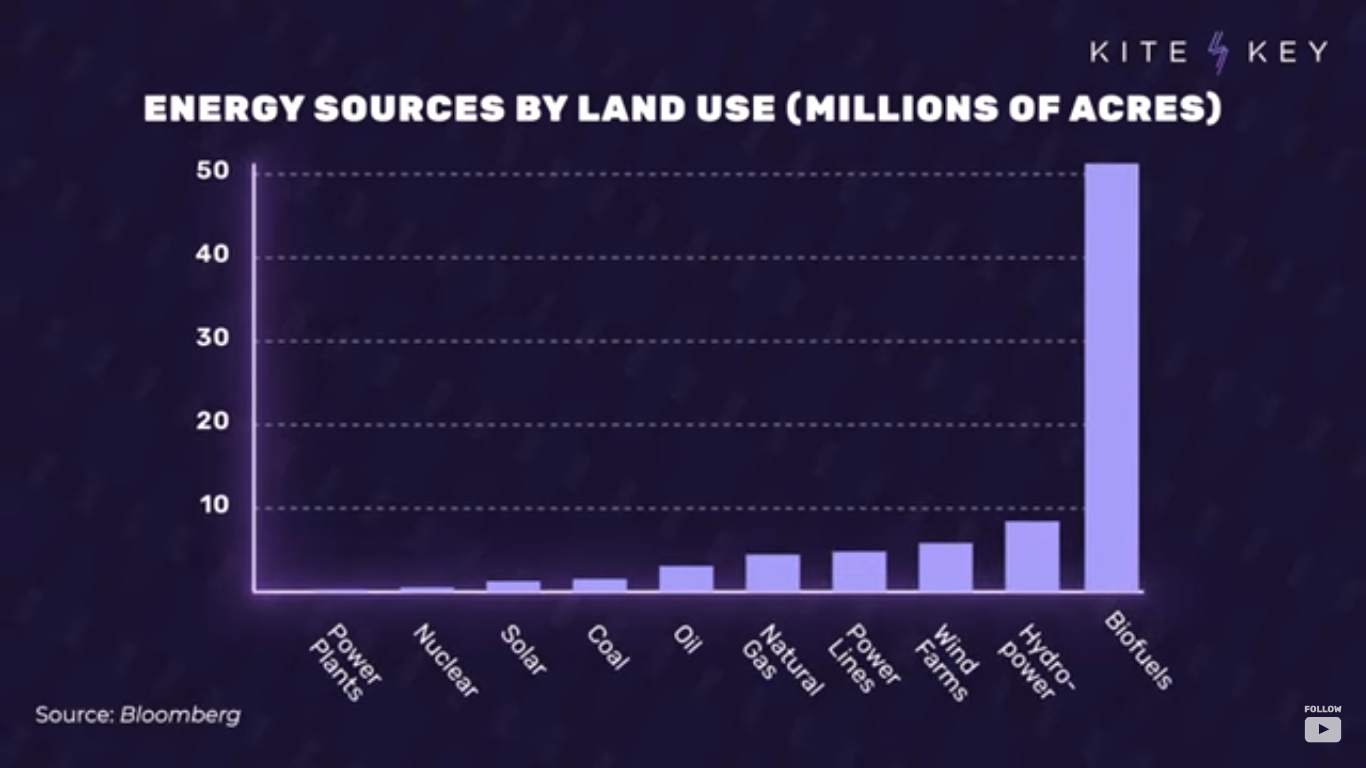
Worldwide, these mistakes multiply. Biofuel plantations consume half a million square miles in order to replace a mere two percent of transportation fuel. A mad scramble across every continent to increase mining by an order of magnitude to meet the demand for raw materials to manufacture batteries, wind turbines, and solar panels. Denial of funds for natural gas development in Africa, condemning over a billion people to ongoing energy poverty.

Simple truths are obscured by the climate crisis narrative. We need to rebuild our infrastructure for climate resilience because much of it is over a century old, at the same time as the US population has tripled. Floods and hurricanes cause more damage because there are more people, and more of them live in areas that have always been hit by floods and hurricanes.

The truths are as endless as they are repressed. We can’t possibly lift all of humanity into a middle-class lifestyle without at least doubling energy production worldwide, and we can’t possibly accomplish that while also reducing our use of coal, oil, and gas. Renewables aren’t renewable (here’s a must-read on that topic). Offshore wind is an environmental disaster, as is biofuel, as is the explosion of totally unregulated mining to feed the renewables industry. On the other hand, extreme environmental laws and regulations are harming economic growth, freedom, and, in no small irony, the innovation and investment that would give us the wealth we need to better protect the environment. And the prevailing economic, environmental, and cultural challenge in the world is not the climate but crashing birthrates among developing nations at the same time as the population of the world’s most undeveloped nations continues to explode exponentially.

We need climate resilience in order to properly protect a global population that has quadrupled to 8 billion in just the last century, spreading to every corner of the earth. That goal would be easier if once-trusted global institutions would allow for honest debate and practical infrastructure development. Instead, they continue to spew transparently misleading climate crisis propaganda, adhering to a mission that can only be described as repressive on all fronts—culturally, economically, and environmentally.


via Science Matters

https://ift.tt/A4astIE

March 26, 2025 at 04:55PM

The Social Cost of Carbon figures were all wildly wrong: One recalculation wipes half the cost or more.

By Jo Nova

Nearly every plea for carbon subsidies depends on “the Social Cost of Carbon”, and it’s wrong

Every ton of carbon dioxide we emit is supposedly going to cause $220 USD in losses in the future, which justifies throwing lots of money at efforts to reduce emissions — like subsidizing EVs and solar panels, and inventing cricket burgers. This is called the Social Cost of Carbon (SCC). But half of that imaginary cost was the devastation higher temperatures would theoretically wreak on agriculture — which doesn’t make sense given that plants eat CO2 for breakfast. But for years bureaucrats and scientists have been telling us the damage in crops was going to cost $102USD per ton of carbon, and investors and politicians have been feeding that into their cash registers, and it’s all wrong.

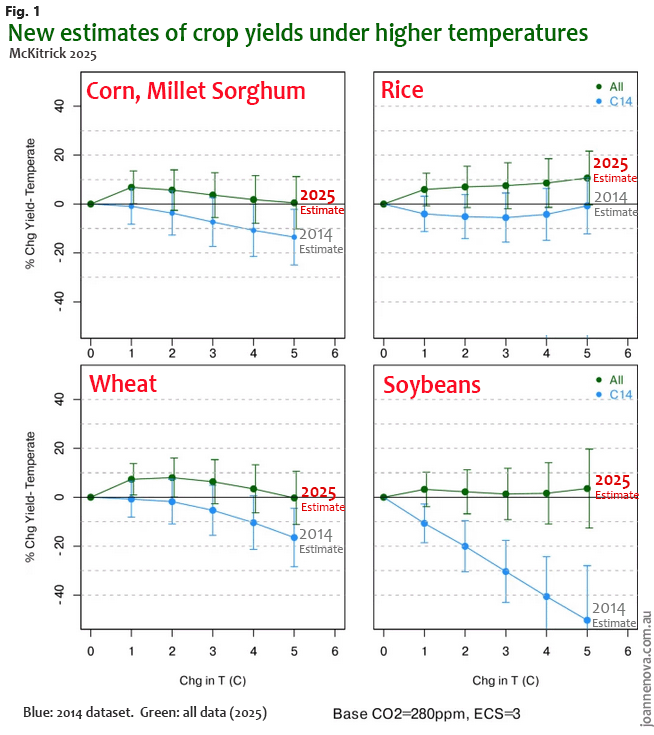
Ten years ago Challinor et al did a big meta-review of crop changes with temperature, using 1,722 records, but many of these records had no figures for CO2 itself. And the whole point of calculating the social cost of carbon really depends on calculating what happens when CO2 rises, and supposedly causes temperatures to rise too. In 2017 Moore et al took those numbers and simulated them into gloom and doom scenarios which the Biden team converted into a fivefold increase in the “cost of carbon”. So Ross McKitrick took the same data from 2014, and then used an estimate of Equilibrium Climate Sensitivity (ECS) of about 3 °C which is the standard IPCC type figure, and filled in a lot of the missing figures. After recalculating the crop yields at higher temperatures and higher CO2, he found that the benefits of the extra CO2 outdid any downsides of warmer temperatures.

Ross McKitrick shows that even in the unlikely (unbelievable) event that CO2 causes five degrees of warming — it is not going to reduce crop yields.

Billions of dollars has been spent based on the idea that all CO2 emissions are bad, and there is a “social cost of carbon”, but if CO2 increases crops (and  farmers already pump it into greenhouses because it does) — then there goes half the “social cost of CO2”. Indeed, increasing crops must add wealth, pushing the net cost figures down even further.

Indeed, if we could arrange another degree or two of warming we could increase corn, rice and wheat by 5 or 10%. It is inhumane to deny the hungry people of the world, so obviously, any responsible civilization should be emitting more CO2. Go forth and drive your pick-up truck, buy that SUV, the boat and the private jet. Do it for the children. 🙂


Crop yields will increase as temperature rises. Mckitrick 2025

McKitrick (2025). “Extended crop yield meta-analysis data do not support upward SCC revision”. Sci Rep 15, 5575.  Edits were made to the heading by me.

C3 crops like wheat, soybeans and rice ought to benefit the most from extra CO2. C4 crops, like corn and sorghum (top right graph) have evolved to make the most of lower CO2 levels already so will get less of an advantage if CO2 returns to it’s former higher levels. The newer C4 pathways give such a growth advantage, allowing plants to thrive in hotter and drier environments, that they independently evolved at least 45 times in the last 15 to 30 million years. The reason the C4 plants didn’t take over the world is that they need more sunlight and don’t thrive in cooler or shadier areas.


Willie Soon, Ronan and Michael Connolly discuss McKitricks paper below in the video. See also Vijay Jayaraj  at the Daily Signal.

REFERENCES

McKitrick (2025). “Extended crop yield meta-analysis data do not support upward SCC revision”. Sci Rep 15, 5575.

Challinor, A. J. et al. A meta-analysis of crop yield under climate change and adaptation. Nat. Clim Change 4(4), 287 (2014).

Moore, F. C., Baldos, U., Hertel, T. & Diaz, D. New science of climate change impacts on agriculture implies higher social cost of carbon. Nat. Commun. 8, 1607. https://doi.org/10.1038/s41467-017-01792-x (2017).


0 out of 10 based on 0 rating

via JoNova

https://ift.tt/1SKrxIj

March 26, 2025 at 04:13PM