
Yunus used the funds donated to his Grameen Bank enterprise to funnel somewhere between $125,000 and $300,000 back to the Clinton Global Initiative.
via CFACT
March 26, 2025 at 02:41AM
Yunus used the funds donated to his Grameen Bank enterprise to funnel somewhere between $125,000 and $300,000 back to the Clinton Global Initiative.
via CFACT
March 26, 2025 at 02:41AM
“Politicians and ENGOs gaslight the public into believing Alaska has a magic thermostat that can stop erosion, reverse damage to fisheries, and fix every other contestable issue—as long as they scream ‘CLIMATE CHANGE’!”
Climate alarmism is a tired way to get what you want—not unlike a kid throwing a tantrum in the cereal aisle. Except begging for Froot Loops, the panicking alarmists—backed by ENGOs desperate to push their mandates through—demand more bureaucracy, heavier regulations, and political energy “solutions” that serve their agenda, not the public.
Never mind that these schemes do little to actually “save the planet.” They’re really about forcing costly policies, expanding government control, and driving up energy prices, all while making people poorer for their warped vision of the future.
Here in Alaska, the opportunity is to ‘read the room’ and dial back climate exaggeration and forced energy transformation. Not so looking at Senate Bill 120, introduced this month by Senator Elvi Gray-Jackson, beginning with its 25-word title:
An Act establishing the Alaska Climate Change Emergency Response Commission; and relating to the powers and duties of the Alaska Climate Change Emergency Response Commission.
This bill begins by first adding a section of uncodified law proclaiming that the legislature finds that “a state of emergency exists because of the threat climate change poses on communities in the state, the state economy, traditional ways of life, fish and game populations, and natural ecosystems.”
While legislators do have the power to shape policy, they do not have the authority to declare an emergency—but that hasn’t stopped them from making dramatic proclamations they lack the legal power to enforce, hoping the theatrics will be enough to push their agenda forward.
The bill establishes a new 15-member commission under the governor, ensuring representation from municipal leaders across the state. The commission consists of six state departmental representatives serving by virtue of office and nine municipal representatives.
Per the sponsor statement:
It will be the goal of the commission to advance diverse energy options, adaptive infrastructure, and CO₂ reduction strategies; as well as monitoring climate impacts. The commission will work in harmony with rural and tribal organizations through grant writing and assistance programs.
Trying to regulate CO₂ in a state that contributes less than 0.1% globally is like banning spoons to stop obesity—completely missing the point, utterly ineffective, and guaranteed to impress only the most clueless. Yet, politicians and ENGOs gaslight the public into believing Alaska has a magic thermostat that can stop erosion, reverse damage to fisheries caused by destructive fishing practices (such as trawl), and fix every other issue happening outside—as long as they hit the easy button and scream “CLIMATE CHANGE!”
It’s the ultimate political cheat code: slap the label on any complex issue, ignore the real causes (or solutions), and pretend that more regulations, more bureaucracy, and more taxpayer money will magically control nature itself.
The Real Problem
The real unprecedented threat facing Alaskans isn’t climate change. It’s a rogue, unchecked legislature that is acting like squirrels on crack, scrambling to codify every last remnant of the Green New Deal before the political winds shift. Even with the Trump administration working overtime to dismantle the bureaucratic insanity, the Democrats, all Independents and even some Republicans legislators in Alaska are in full-blown panic mode, rushing to lock in radical climate policies while they still can.
To make matters worse, rabid climate alarmist groups such as the Alaska Venture Fund, Earthjustice, and the Alaska Center will be given a clear advantage in shaping new climate policies going forward. This is an especially troubling prospect given that Earthjustice’s stated goal is to “end the extraction and burning of fossil fuels”.
Senate Bill 120 gives the commission the power to “consult and cooperate with” “public or private persons, organizations, and groups” that are “interested in, affected by, or concerned with climate change effects and response.” That’s insane. It’s the green lobby’s dream come true—an unelected commission with the power to rubber-stamp whatever radical policies special interest groups demand, all under the guise of an “emergency.”
This isn’t policymaking, it’s outsourcing Alaska’s future to the loudest, most politically connected voices in the climate-industrial complex. It is as if Harris/Waltz beat Trump/Vance, and John Podesta’s shock troops were ensconced in Fairbanks.
Governor Dunleavy Must Reject
After two rounds of public testimony and overwhelming written testimony in opposition, the fate of SB 120 hangs in the balance. With continuing evidence of climate exaggeration (here), and the rest of the country (if not world) going in the opposite direction, will Alaska’s legislature respect the people or a climate elite?
And if the bill does pass, will Governor Dunleavy veto this blatant attempt to enshrine climate hysteria into state law? Such would be a far more rational choice than cementing his legacy as part of the climate cult, allowing bureaucrats to seize even more power under the guise of an “emergency” they have no authority to declare.
Conclusion
“It does not take a majority to prevail,” wrote the father of the American Revolution, Samuel Adams, in 1775, “but rather an irate, tireless minority, keen on setting brushfires of freedom in the minds of men.” These words define the opportunity to repel energy statism in Alaska today.
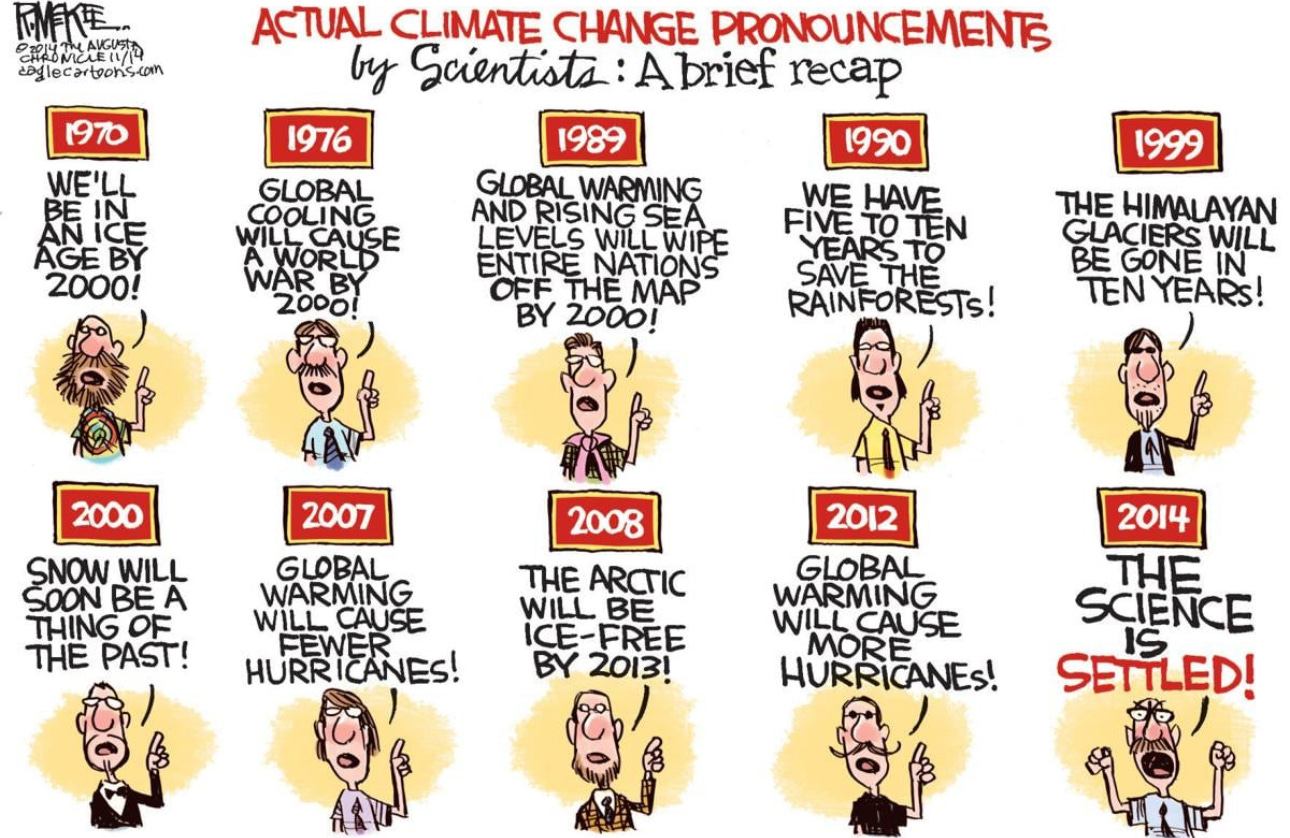
The post Alaska’s Proposed Climate Change Commission: Did Harris/Waltz Win? appeared first on Master Resource.
via Master Resource
March 26, 2025 at 01:03AM
By Paul H. Tice
As President Trump works with the Republican-controlled Congress to pass his big, beautiful tax bill, it is exposing some ugly truths about the policy conviction of certain GOP members.
Extending the lower tax brackets of the 2017 Tax Cuts and Jobs Act (TCJA) was already a challenge due to the razor-thin GOP margin in the House and the federal government’s unique budget math, which mandates spending cuts to offset the estimated $4.5 trillion “cost” of not raising tax rates over the next decade.
Complicating matters, several Republican Congressman from high-tax states have been publicly agitating since election day for the repeal of the state and local tax (SALT) deduction cap included in the TCJA, which would mean additional pay-fors must be found.
Now, a new fault line has developed with many of these same SALT Republicans over the 2022 Inflation Reduction Act (IRA), the deceptively named and structured climate legislation signed into law by President Biden.
In a public letter sent to the Chairman of the House Ways & Means Committee on March 9th, 21 Republican House members warned against repealing or reforming “current energy tax credits” as part of the reconciliation process. The letter does not mention the IRA by name, which is not surprising since no Republican—including the gang of 21 now defending it—voted in favor of the partisan climate law back in 2022.
In fact, Andrew Garbarino (NY-02), the ringleader of the breakaway Republican group, stated at the time of the IRA’s passage: “This bill is bad for Long Islanders and bad for the American people. Shame on Congressional Democrats for forcing through this irresponsible legislation to score a political win at the expense of American taxpayers.”
But that was before the free federal money started flowing.
Based on data compiled by E2, a climate advocacy group, approximately 62% of the $131 billion of clean energy projects announced since the passage of the IRA in August 2022 are located in Republican districts, along with the lion’s share of IRA energy tax credits and other subsidies dispensed to date. This is why 21 GOP members are now circling the wagons to protect the law ex post.
Making matters worse, many of the clean energy projects now being defended by these Republican guards have not moved past the approval phase or even broken ground on construction, including many greenlighted prior to the passage of the IRA. Moreover, the list of corporate sponsors includes large public U.S. companies (such as Dominion Resources and General Motors) and foreign owners, neither of which need or deserve U.S. government handouts.
In the latter case, Representative Nick LaLota (NY-01) is now going to the mattresses for a $3.8 billion offshore Long Island wind project backed by Orsted, the Danish developer that recently walked away from two offshore New Jersey wind farms after not receiving all the financial subsidies that it demanded from the Garden State.
From a spending perspective, any latter-day Republican support for the IRA is wholly indefensible given what we now know about the workings of the controversial climate law. The headline number of $369 billion in IRA clean energy spending over ten years was highly misleading. The actual figure is much higher because of the national emissions test used to sunset the law’s myriad tax credits, which effectively creates an open-ended liability for the federal government.
Recent studies by both the Breakthrough Institute and the Cato Institute have estimated the true budgetary cost of the IRA at close to $1 trillion in its first decade and upwards of $4.7 trillion by the year 2050. Basically, the IRA is a ticking fiscal time bomb for the U.S. government.
Apart from being fiscally irresponsible, promoting the continued subsidization of wind, solar and battery storage projects only abets bad energy policy at the state level. Contrary to the Republican group’s claim, cutting clean energy tax credits will not “increase utility bills the very next day.” Rather, it will do the opposite. It will help to lower energy and electricity costs for American consumers by reversing ill-conceived net-zero grid targets in blue states such as California, New Jersey and New York.
And for all the rationalization that these Republican dissenters represent swing districts and, therefore, must strike a bipartisan pose, the majority of the 21 won their current seats by five percentage points or more in November 2024. This fact should help to steel up their collective spine for making the right legislative call to repeal all the IRA’s energy tax credits with immediate effect.
The sausage-making aspect of making law is never a pretty sight, especially when unprincipled Republicans try to use green pork to clog up the machinery works.
Mr. Tice is a senior fellow at the National Center for Energy Analytics and author of “The Race to Zero: How ESG Investing Will Crater the Global Financial System.”
This article was originally published by RealClearPolicy and made available via RealClearWire.
Subscribe to get the latest posts sent to your email.
via Watts Up With That?
March 26, 2025 at 12:05AM
Essay by Eric Worrall
“… Funds must flow directly and predictably to developing nations …”
Mar 24, 2025
It’s time for shipping to launch first global tax on a polluting sector
Ambassador Ali Mohamed
Decarbonising the seas is a strategic imperative for a sustainable trade system that can also generate climate finance for vulnerable countries
Ambassador Ali Mohamed is Kenya’s Special Envoy for Climate Change.
Kenya is a frontline casualty of the climate crisis. Escalating temperatures, unpredictable rainfall, and prolonged droughts are slashing food production, depleting water resources, and destabilising our economy. Our coastal ecosystems, vital to the “blue economy”, are besieged by rising sea levels, coral bleaching, and accelerating erosion.
These are not abstract threats; they are dismantling the livelihoods of millions of Kenyans who depend on agriculture and marine resources. Yet Kenya’s plight is not self-inflicted. Industrialised nations, with their outsized historical emissions, bear primary responsibility for this crisis. Under the principle of common but differentiated responsibilities, those who fuelled climate change must lead in funding solutions.
A proposed carbon levy on the shipping industry offers a transformative opportunity, one Kenya urgently supports, to deliver climate finance where it’s most needed while decarbonizing a critical global sector.
The shipping industry, a linchpin of global trade, stands poised to pioneer a new era of climate finance. At the UN International Maritime Organisation (IMO), governments are nearing agreement on a carbon levy on shipping emissions, with a decision slated for April 2025 at the Marine Environment Protection Committee (MEPC) 83 summit in London.
If enacted, this would be the first universal tax on an international polluting sector, a precedent-setting move. The World Bank estimates this levy could raise $60 billion annually, channeling vital funds into climate adaptation and mitigation for vulnerable nations like Kenya.
…
Equity is equally critical. Funds must flow directly and predictably to developing nations, bypassing the bureaucratic quagmires that have long throttled Global South access to climate finance. …
…
Obviously this particular demand is a case of bad timing. But Kenya or some other African or “global south” delegate repeats this demand pretty much every year. You never know, if nations like Kenya keep begging, sooner or later someone might cave in and give them money.
Not that Kenya needs money. According to CIA World Facebook Kenya had a GDP of $314 billion in 2023, comparable to the economy of Finland. They can afford their own climate action.
Subscribe to get the latest posts sent to your email.
via Watts Up With That?
March 25, 2025 at 08:04PM

