Climate Change Racial Divide in the Australian Desert?

Essay by Eric Worrall

In Coober Pedy, white people live in comfortable dugouts, while Aboriginals swelter on the surface. But is this really a climate change racial divide?

In the Australian outback, climate change widens the racial divide

Story by Michael E. Miller

COOBER PEDY, Australia — From her front door, Sonya Crombie can see the sandstone hills where White men carved up the land in search of opal and then stayed, turning their mines into elaborate underground homes insulated from the desert heat.

But when Crombie’s air conditioner broke in November just as the scorching summer was about to set in, the ailing 60-year-old Aboriginal woman had no tunnel in which to take refuge. As the temperature in her state-run house topped 100 degrees Fahrenheit, Crombie struggled to breathe. Emergency workers flew her 500 miles to a hospital.

“I nearly died,” she said. “This heat can kill you.”

…

Belowground, the town’s mostly White residents live in “dugouts” — bought, sold and expanded in certain neighborhoods — where the temperature stays in the low to mid-70s and electricity bills are modest.

…

Aboveground, Aboriginal people, who make up 17 percent of the town, swelter without air conditioning or rack up enormous electricity bills. Crombie owes the district council almost $11,000, largely from using her now-broken air conditioner. Records show that 76 account holders, many Aboriginal and indigent, owe a total of $350,000.

…

Read more: https://www.msn.com/en-us/news/world/in-the-australian-outback-climate-change-widens-the-racial-divide/ar-AA1BdLc9

This has got to be one of the most fake climate stories I’ve ever covered.

I’ve never been to Coober Pedy, but I’ve been to Broken Hill in the summer, which has a similar climate. That place is hot. The satnav holder on my windshield melted in the desert sun.

But in winter temperatures in Coober Pedy are mild, with top temperatures in the high 60s or low 70s.

Why don’t the aboriginals have their fair share of dugouts?

Most of those dugouts started as mine shafts, miners searching for opal. The white people didn’t steal mineshafts from the aboriginals, they dug the mineshafts themselves, or used their own money to buy underground homes from those who built them.

I’m not expecting a 60 year old with ailing health to dig through a multiple tons of solid rock, but their younger and more athletic relatives could easily dig a few dugouts for their parents and grandparents, or dig homes for themselves and let the grandparents stay in the hotter months. Coober Pedy Summer daytime temperatures are insufferable, but as soon as you get a few feet underground temperatures drop dramatically, maintaining a comfortable 23-25C (73F – 77F) all year round.

The fact young people aren’t helping their distressed elders says more about social breakdown in the aboriginal community than climate change.

Let’s hope younger aboriginals take the initiative and start taking care of their old folk. You never know, while digging new homes they might even find a bit of opal.


Click here for an interesting article on the history of Coober Pedy.


Discover more from Watts Up With That?

Subscribe to get the latest posts sent to your email.

via Watts Up With That?

https://ift.tt/RwxqrBt

March 20, 2025 at 04:00PM

Greenpeace ordered to pay oil company $660m which may wipe them out in the US

Dakota Access Pipeline Protest

By Jo Nova

A jury in North Dakota has ordered Greenpeace to pay $660 milllion USD to a Texas pipeline company called Energy Transfer. Greenpeace will appeal, but the suit named Greenpeace USA, and also the international arm, and the damages are so large, if they survive the appeal they would bankrupt the US branch and prevent Greenpeace operating in the USA.

The payment is to compensate for damages and losses from protests in 2015 and 2016 that damaged and delayed the North Dakota Access Pipeline. The protests were so large and so out of control, the clean up bill cost North Dakota $38 million dollars.

Perhaps most importantly, this case may inspire other corporations to fight back. Kelcy Warren, the magnate who owns Energy Transfer, said in 2017 “Everybody is afraid of these environmental groups and the fear that it may look wrong if you fight back with these people,”. “But what they did to us is wrong, and they’re gonna pay for it.”  (– Wall Street Journal)

The 1,172 mile long pipeline did eventually start operation in 2017. It shifts about 5% of the daily oil production of the United States. Presumably every month it was delayed would have cost US customers money, time or a better choice, and there’s no compensation for them.

The sad thing is that it’s now nine years after the protests, justice still isn’t done yet, and the only guaranteed winners are the lawyers. But the message to Greenpeace and all the activist groups, is they no longer have a sacred social license to damage, trespass and interfere with law abiding operations. They can and will be sued, and that should take the wind out their egotistical sails around the world.

We’re living though an extraordinary era. The New York Times points out that among the environmentalists and celebrities who flocked to the site for the protest, were Robert F Kennedy Jr and Tulsi Gabbard. Who would have had any clue then that today they’d be the current Secretary for Health and Human Services and the Director of National Intelligence, and for a Republican President?

Court Slams Greenpeace With $660-Million Damages Order in Pipeline Suit

By Irena Slav, OilPrice

A North Dakota jury has ruled that Greenpeace must pay $660 million in damages to pipeline major Energy Transfer after the group was found guilty of defamation, conspiracy, and physical damage to the Dakota Access pipeline.

Greenpeace called the case an attack on free speech, but the company replied that “violent and destructive protest is unlawful and unacceptable.” (Are you listening Tesla-haters?)

The environmental group had said the lawsuit, over its role in a protest movement, could mean an end to its operations in the United States. — NYT

Greenpeace’s defense was that they didn’t organize much of the action:

The group has maintained that it played only a minor part in demonstrations led by the Standing Rock Sioux Tribe. It has portrayed the lawsuit as an attempt to stifle oil-industry critics.

But the American Energy Institute feels differently (and apparently the Jury in North Dakota too)

Greenpeace played a leading role, mobilizing activists who trespassed on private property, vandalized equipment, and disrupted lawful commerce. These protests, portrayed as peaceful by the mainstream media, caused millions in damages and left the state to shoulder over $38 million in law enforcement costs. Property owners faced destruction and intimidation, and vital energy infrastructure was attacked – all under the banner of environmental justice and free speech.

After the case they vowed not to stop with their legal battle

We absolutely believe in our legal defense. We believe the law is fully on our side. We believe in what we did at Standing Rock, and that ultimately we will prevail against this meritless lawsuit.

Sure.

Dakota Access Pipeline Protest

Protesters camping in North Dakota

The $660 million dollar bill is split between the three wings of Greenpeace:

Of the total damages of $USD666.9 million, the jury found Greenpeace USA must pay nearly $USD404 million, while Greenpeace Fund Incorporation and Greenpeace International would each pay roughly $USD131 million.

Taxpayers of the USA probably helped fund Greenpeace whether they wanted too or not. Only a few days ago it was reported that USAID gave about $25 million dollars to the Tides Center, which in turn funded radical organisations, including Greenpeace.

Who knows how much other money ultimately found its way from taxpayers through The Blob to Greenpeace. h/t RickWill.

Time Magazine LogoTime Magazine (does anyone still read it) posted the most incompetent coverage on the topic allegedly written  by one Hallie Golden/AP. Or maybe an AI just phoned it in. In “What to Know About Greenpeace, After it was Found Liable for $650M” someone or something wrote three paragraphs saying the obvious and then three pages reproducing a Greenpeace brochure they got in 1995 or something. Their softball questions were so soft it was more like throwing teddy bears — “How was Greenpeace Founded”, and “Where did the name Greenpeace come from” as if the chumpy chumpy promo stories from 50 years ago have any meaning at all in this case. It was so bad I wondered if the domain name was hijacked.

But Google still put the Time article as number 7 on it’s first page as “news”.

Thanks to Fuel Filter, David Wojik, RickWill, and David E

Protest photos:  Pax Ahimsa Gethen and Maligh.


0 out of 10 based on 0 rating

via JoNova

https://ift.tt/Q5Ddkm1

March 20, 2025 at 03:10PM

Low Energy-IQ Politicians, Be Gone!

Power Density Physics Trump Energy Politics

A plethora of insane energy policy proposals are touted by clueless politicians, including the recent Democrat candidate for US President.  So all talking heads need reminding of some basics of immutable energy physics.  This post is in service of restoring understanding of fundamentals that cannot be waved away.

The Key to Energy IQ

This brief video provides a key concept in order to think rationally about calls to change society’s energy platform.  Below is a transcript from the closed captions along with some of the video images and others added.

We know what the future of American energy will look like. Solar panels, drawing limitless energy from the sun. Wind turbines harnessing the bounty of nature to power our homes and businesses.  A nation effortlessly meeting all of its energy needs with minimal impact on the environment. We have the motivation, we have the technology. There’s only one problem: the physics.

The history of America is, in many ways, the history of energy. The steam power that revolutionized travel and the shipping of goods. The coal that fueled the railroads and the industrial revolution. The petroleum that helped birth the age of the automobile. And now, if we only have the will, a new era of renewable energy.

Except … it’s a little more complicated than that. It’s not really a matter of will, at least not primarily. There are powerful scientific and economic constraints on where we get our power from. An energy source has to be reliable; you have to know that the lights will go on when you flip the switch. An energy source needs to be affordable–because when energy is expensive…everything else gets more expensive too. And, if you want something to be society’s dominant energy source, it needs to be scalable, able to provide enough power for a whole nation.
Those are all incredibly important considerations, which is one of the reasons it’s so weird that one of the most important concepts we have for judging them … is a thing that most people have never heard of. Ladies and gentlemen, welcome to the exciting world of…power density.

Look, no one said scientists were gonna be great at branding. Put simply, power density is just how much stuff it takes to get your energy; how much land or other physical resources. And we measure it by how many watts you can get per square meter, or liter, or kilogram – which, if you’re like us…probably means nothing to you.
So let’s put this in tangible terms. Just about the worst energy source America has by the standards of power density are biofuels, things like corn-based ethanol. Biofuels only provide less than 3% of America’s energy needs–and yet, because of the amount of corn that has to be grown to produce it … they require more land than every other energy source in the country combined. Lots of resources going in, not much energy coming out–which means they’re never going to be able to be a serious fuel source.

Now, that’s an extreme example, but once you start to see the world in these terms, you start to realize why our choice of energy sources isn’t arbitrary. Coal, for example, is still America’s second largest source of electricity, despite the fact that it’s the dirtiest and most carbon-intensive way to produce it. Why do we still use so much of it? Well, because it’s significantly more affordable…in part because it’s way less resource-intensive.

An energy source like offshore wind, for example, is so dependent on materials like copper and zinc that it would require six times as many mineral resources to produce the same amount of power as coal. And by the way, getting all those minerals out of the ground…itself requires lots and lots of energy.
Now, the good news is that America has actually been cutting way down on its use of coal in recent years, thanks largely to technological breakthroughs that brought us cheap natural gas as a replacement. And because natural gas emits way less carbon than coal, that reduced our carbon emissions from electricity generation by more than 30%.

In fact, the government reports that switching over to natural gas did more than twice as much to cut carbon emissions as renewables did in recent years. Why did natural gas progress so much faster than renewables? It wasn’t an accident.
Energy is a little like money: You have to spend it to make it. To get usable natural gas, for example, you’ve first got to drill a well, process and transport the gas, build a power plant, and generate the electricity. But the question is how much energy are you getting back for your investment? With natural gas, you get about 30 times as much power out of the system as you put into creating it.  By contrast, with something like solar power, you only get about 3 1/2 times as much power back.

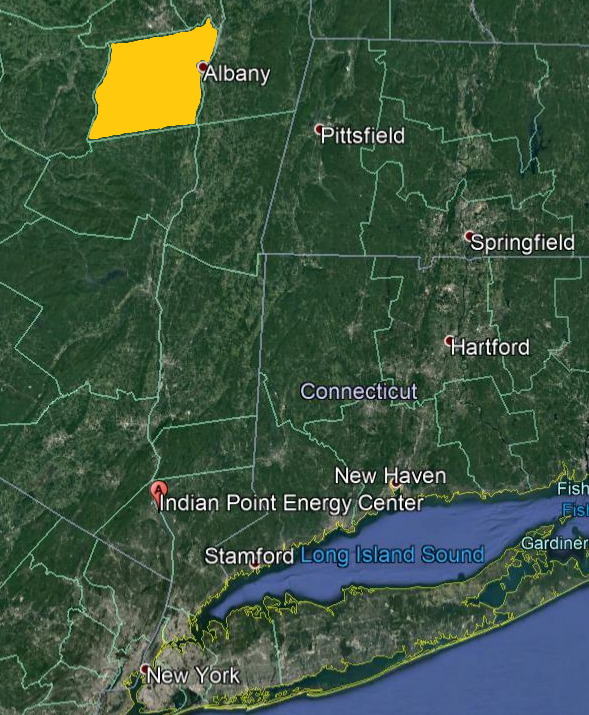
Replacing the now closed Indian Point nuclear power plant would require covering all of Albany County NY with wind mills.

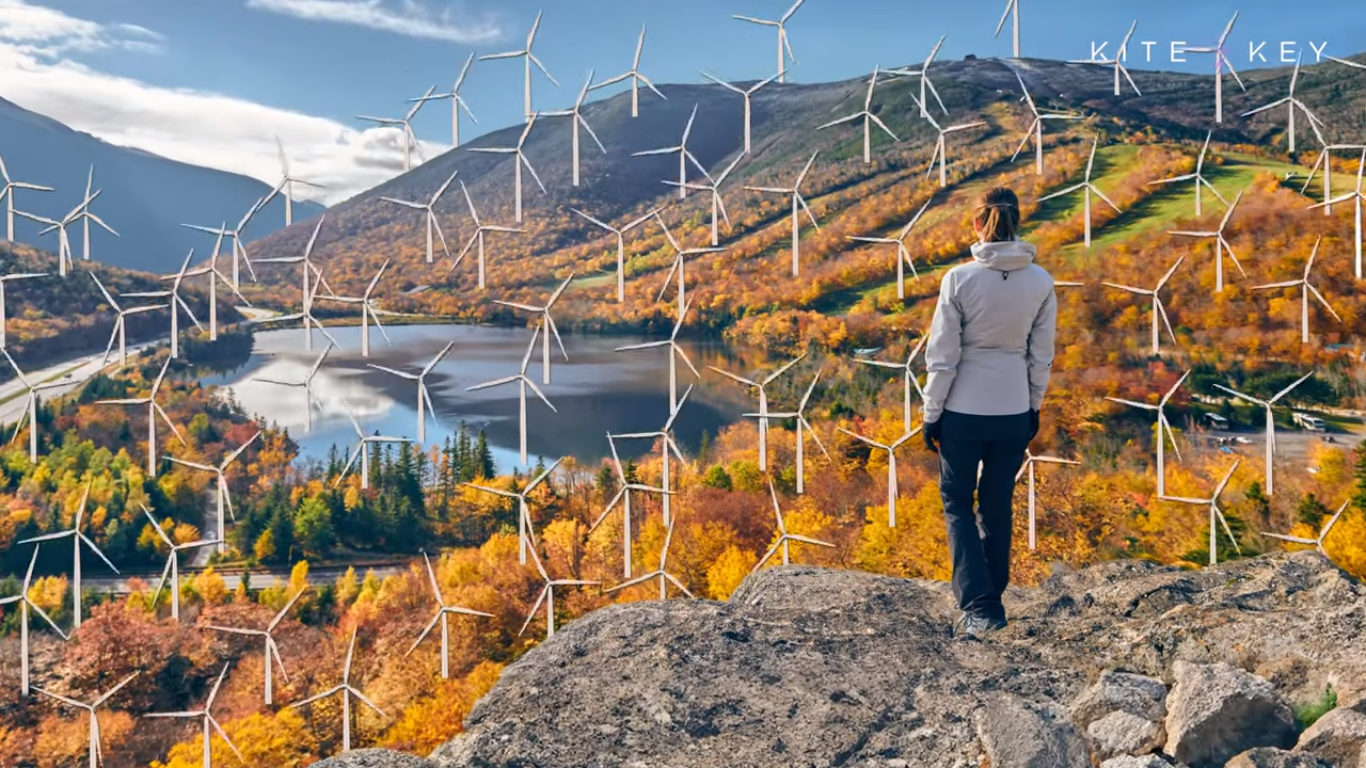
Hard to fuel an entire country that way. And everywhere you look, you see similarly eye-popping numbers. To replace the energy produced by just one oil well in the Permian Basin of Texas–and there are thousands of those–you’d need to build 10 windmills, each about 330 feet high. To meet just 10% of the country’s electricity needs, you’d have to build a wind farm the size of the state of New Hampshire. To get the same amount of power produced by one typical nuclear reactor, you’d need over three million solar panels, none of which means, by the way, that we shouldn’t be using renewables as a part of our energy future.
But it does mean that the dream of using only renewables is going to remain a dream,
at least given the constraints of current technology. We simply don’t know how
to do it while still providing the amount of energy that everyday life requires.

No energy source is ever going to painlessly solve all our problems. It’s always a compromise – which is why it’s so important for us to focus on the best outcomes that are achievable, because otherwise, New Hampshire’s gonna look like this.

Addendum from Michael J. Kelly

Energy return on investment (EROI)
The debate over decarbonization has focused on technical feasibility and economics. There is one emerging measure that comes closely back to the engineering and the thermodynamics of energy production. The energy return on (energy) investment is a measure of the useful energy produced by a particular power plant divided by the energy needed to build, operate, maintain, and decommission the plant. This is a concept that owes its origin to animal ecology: a cheetah must get more energy from consuming his prey than expended on catching it, otherwise it will die. If the animal is to breed and nurture the next generation then the ratio of energy obtained from energy expended has to be higher, depending on the details of energy expenditure on these other activities. Weißbach et al. have analysed the EROI for a number of forms of energy production and their principal conclusion is that nuclear, hydro-, and gas- and coal-fired power stations have an EROI that is much greater than wind, solar photovoltaic (PV), concentrated solar power in a desert or cultivated biomass: see Fig. 2.

In human terms, with an EROI of 1, we can mine fuel and look at it—we have no energy left over. To get a society that can feed itself and provide a basic educational system we need an EROI of our base-load fuel to be in excess of 5, and for a society with international travel and high culture we need EROI greater than 10. The new renewable energies do not reach this last level when the extra energy costs of overcoming intermittency are added in. In energy terms the current generation of renewable energy technologies alone will not enable a civilized modern society to continue!

On Energy Transitions

Postscript

via Science Matters

https://ift.tt/srZVX8B

March 20, 2025 at 02:42PM

How to stop being surprised by extreme weather? Stop making it about climate.

From the Weather is Not Climate unless we say it is department and the University of Reading, comes this press release about an inane study that tries to link tree rings and severe weather, while ignoring warning fatigue.


How to stop being surprised by extreme weather – study

Helping communities predict extreme weather events that have never been recorded in modern history is the focus of a new study published in Nature Communications.

A team from the Climate Adaptation Services Foundation, the University of Reading and other international institutions has brought together methods to see beyond the limitations of conventional weather records, which typically only cover the past century.

The study reveals how, for example, nature’s own archives – like tree rings – combined with forgotten historical documents can unlock centuries of climate data that modern instruments have missed.

Lead author Timo Kelder said: “We’ve been limited by thinking extreme weather is only as bad as what we’ve measured since weather stations were invented. But our research shows we can use weather models to look back hundreds or even thousands of years to discover what’s truly possible in our climate system.”

A toolkit for scientists and practitioners

The researchers identified four approaches that together create a more complete picture of possible extreme weather:

● Analysing conventional records

● Studying historical and natural archives like tree rings

● Creating “what-if” scenarios based on past events

● Using climate models to simulate physically possible extremes

Tree rings proved especially valuable, with each ring preserving a year’s worth of climate history. Researchers used these natural time capsules to reconstruct 850 years of drought patterns in northwestern China, revealing extreme events that would have been invisible in modern records.

The team also highlighted forgotten weather extremes by digging through historical archives. They found that June 1846 in Durham, UK was significantly hotter than any modern June temperature. Similarly, September 1774 in Oxford was wetter than any month recorded in the 250 years since.

Adapt, adapt, adapt

The study emphasises that with these methods to anticipate the unseen, communities can better prepare for unprecedented weather. The methods can support three layers of preparation:

● Improved early warning systems

● Upgraded infrastructure

● Transformative social changes to reduce vulnerability

The researchers conclude that by breaking free from the constraints of limited modern records, we can finally stop being surprised by “unprecedented” weather events.

Dorothy Heinrich, co-author at the University of Reading, said : “Unprecedented weather doesn’t just break records—it breaks communities, infrastructure, and lives. When the unimaginable happens, being unprepared is a disaster waiting to unfold. But science can help us to imagine the unimaginable, to uncover these risks, and prepare. Our future depends on how quickly and thoroughly we adapt today.”

Here’s the study if you want to read it: How to stop being surprised by unprecedented weather

Abstract

We see unprecedented weather causing widespread impacts across the world. In this perspective, we provide an overview of methods that help anticipate unprecedented weather hazards that can contribute to stop being surprised. We then discuss disaster management and climate adaptation practices, their gaps, and how the methods to anticipate unprecedented weather may help build resilience. We stimulate thinking about transformative adaptation as a foundation for long-term resilience to unprecedented weather, supported by incremental adaptation through upgrading existing infrastructure, and reactive adaptation through short-term early action and disaster response. Because in the end, we should take responsibility to build resilience rather than being surprised by unprecedented weather.


Discover more from Watts Up With That?

Subscribe to get the latest posts sent to your email.

via Watts Up With That?

https://ift.tt/Sym5dcE

March 20, 2025 at 12:05PM