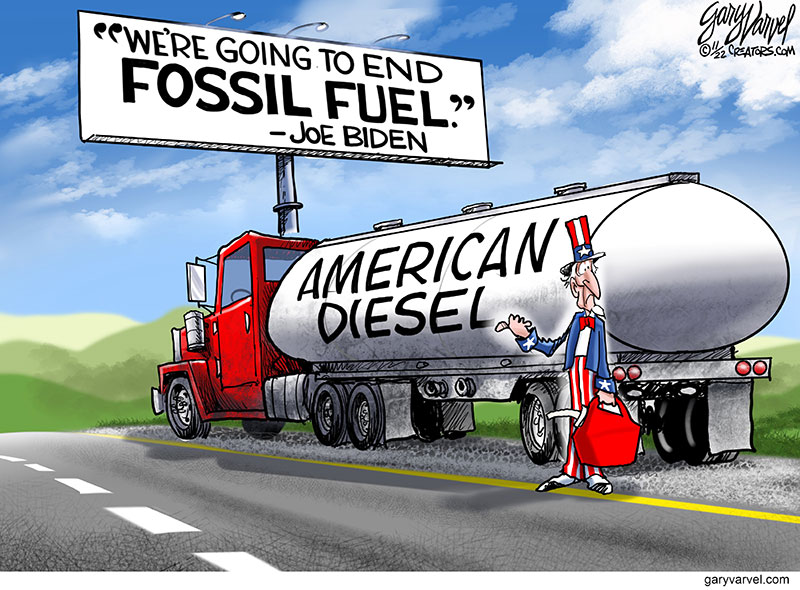
US House Targets Biden Climate Rules to Cancel

Maydeen Merino reports at Washington Times House leadership lays out target list of Biden climate rules to cancel.  Excerpts in italics with my bolds and added images.

House Republican leadership outlined a number of Former President Joe Biden ’s climate regulations that it will seek to overturn through a special legislative process in the coming weeks.

House Majority Leader Steve Scalise on Thursday released a list of the previous administration ‘s climate and energy regulations that Republicans will aim to reverse through the Congressional Review Act (CRA).

The CRA allows Congress to bypass the filibuster and take a simple majority vote in the House and Senate to overturn recently implemented rules. The process allows the vote to come to the floor in an expedited fashion, forcing all members to go on the record with their votes.

If Congress votes to undo a rule,
the agency cannot propose a similar regulation.

Scalise listed 10 regulations Republicans will look to undo, with the majority being climate-related.
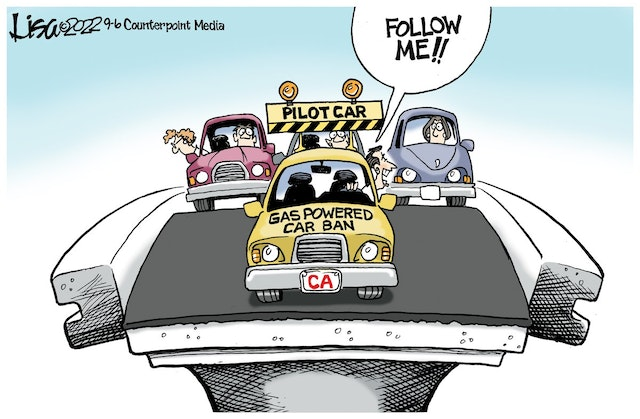
California Clean Air Act Waiver

At the top of the list is the California Clean Air Act Waiver granted by the Environmental Protection Agency, which allows the state to implement stricter vehicle emission standards than federal requirements. California has required all new car sales to be zero-emissions by 2035.  A number of states follow California’s auto emission standards. Republicans have vocally opposed California’s standards as a ban on gas vehicles, and Trump has promised to reverse the waiver.  The waiver has “resulted in higher vehicle prices for consumers, increased costs and manufacturing complexities for automakers, and a more complicated regulatory environment,” Scalise said in a press release .

Waste Emissions Charge

Another prominent target is the Waste Emissions Charge for Petroleum and Natural Gas Systems, which was implemented as part of the 2022 Inflation Reduction Act passed by Democrats and signed by Biden that included hundreds of billions of dollars in funding for clean energy projects. With the charge, the EPA imposed a fee on oil and gas facilities that exceed specific methane emissions thresholds. “The fee is a pass-through cost to consumers that will raise prices, reduce domestic energy production, and increase reliance on foreign energy sources,” Scalise said.
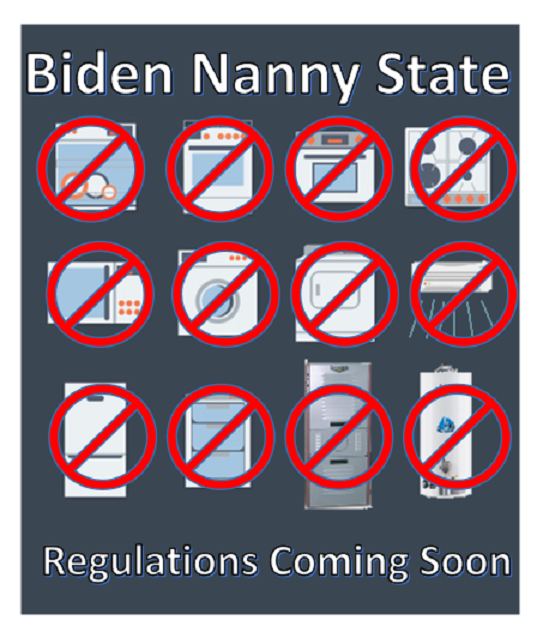
Standards for Gas-fired Water Heaters
Republicans will also look to overturn the Energy Conservation Standards for Consumer Gas-fired Instantaneous Water Heaters, which is a set of rules by the Energy Department requiring a minimum efficiency level for gas-powered tankless water heaters. The GOP said the rule places financial burden on consumers and limits consumer choice.


Energy Conservation-Appliance Standards

The GOP plans to cut the Energy Conservation-Appliance Standards for certification and labeling, by which appliances must meet specific standards to receive a label informing consumers that they are energy-efficient. Scalise noted that the rule slows the introduction of products to market, limits consumer options, and affects the supply chain.
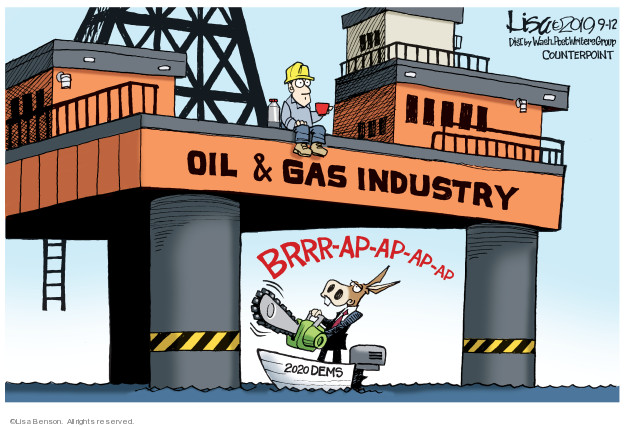
Off Shore Drilling Regulations

Other climate-related rules include the Oil and Gas and Sulfur Operations in the Outer Continental Shelf, which is a list of strict regulations on offshore oil drilling in high-pressure and temperature environments. Scalise said the regulations increase the burdens on energy operations and raise costs for consumers.

Rubber Tire Manufacturing Emissions Standards

The national emission standards for hazardous air pollutants for Rubber Tire Manufacturing, which addresses hazardous emissions from the rubber tire manufacturing process, is also targeted to be slashed by the GOP . The rule increases compliance costs for the industry and results in higher prices for consumers, the House majority leader said.

Protection of Marine Archaeological Resources,

Lastly, the GOP will look to overturn the Protection of Marine Archaeological Resources, which requires oil and gas lessees and operators to submit archaeological reports for exploration or development on the Outer Continental Shelf. Scalise said the rule blocks domestic energy production and weakens energy independence.

Listing of Voluntary Carbon Credit Derivative Contracts

The Commodity Futures Trading Commission’s Guidance Regarding the Listing of Voluntary Carbon Credit Derivative Contracts will also be on the GOP chopping block. The rule establishes standards to buy and sell carbon credits to offset emissions. The rule prioritizes “political activism goals like environmental, social, and governance (ESG) and Net Zero…” Scalise said.
Digital Payment and Sales Rules

The House majority leader also included the Consumer Financial Protection Bureau’s General-Use Digital Consumer Payment Applications rule and The Internal Revenue Service’s Digital Asset Sales rule on the list.

“In addition to these rules, the Leader will be looking at more potential CRAs as we continue to fight to undo the damage done by the Biden Administration,” Scalise added.


via Science Matters

https://ift.tt/ErcNKTi

February 23, 2025 at 02:42PM

Earth On Fire

The Guardian says the earth is on fire. Two-thirds of the Earth’s surface experienced record heat in 2024. See where and by how much – visualised | Climate crisis | The Guardian “Hottest January on record” This is different from … Continue reading →

via Real Climate Science

https://ift.tt/RzIaqUb

February 23, 2025 at 12:58PM

Moving Glacially

Guest Post by Willis Eschenbach

Gotta say, the endless drumbeat of climate alarmism is pretty boring. The latest salvo is from the Associated Press, with the headline Climate change is shrinking glaciers faster than ever, with 7 trillion tons lost since 2000.”

Now that sounds like a seriously huge loss. I mean, it is TRILLIONS of tons lost in a quarter century.

Being a suspicious kind of fellow, I went to the underlying study in Nature magazine entitled Community estimate of global glacier mass changes from 2000 to 2023.

And in that study, I find the following:

Glaciers separate from the continental ice sheets in Greenland and Antarctica covered a global area of approximately 706,000 km2 around the year 2000, with an estimated total volume of 158,170 ± 41,030 km3.

…

Here we show in an intercomparison exercise that glaciers worldwide lost 273 ± 16 gigatonnes in mass annually from 2000 to 2023.

So, first thing we have to do is convert the figures in cubic kilometers (km3) to metric tons. One cubic meter of glacial ice weighs 0.92 tonnes. One cubic kilometer of ice is 0.92 billion tonnes. So their total glacial ice volume of

158,170 ± 41,030 km3

converts to

146  ± 38 trillion tons

This means that the uncertainty of the estimated volume of glacial ice, not the volume itself but the uncertainty of the volume, is five times the calculated change in the last 23 years.

Doesn’t exactly inspire confidence.

It also means that by the year 2050, IF (and it’s a big if) glacial ice loss continues at the current rate, the glaciers will lose 3.5% to 6.7% of their volume … call me crazy, but I’m not seeing how a POSSIBLE predicted ~ 5% decline in glacier volume by the year 2050 is a big deal.

In closing, here’s your glacier story of the day.

In 1678, in the depths of the Little Ice Age, the good Swiss burghers in the villages of Fiesch and Fieschertal petitioned Pope Innocent XI to halt the advance of the Aletsch Glacier, fearing floods and destruction. The glacier was threatening to choke off the outflow of their lake, which would have caused the permanent inundation of their villages as the ice dam increased the lake level.

So the Pope prayed for the glacier to stop advancing … and miracolo di miracoli, as the world came out of the Little Ice Age, the Aletsch Glacier did stop advancing! Go figure.

Now fast forward to 2009, when glacier retreat due to post Little Ice Age warming was threatening the villagers’ revenue from the 400,000 tourists per year that came to see the Aletsch Glacier. The glacier was retreating by as much as 10 meters per year. YIKES! So they sought Vatican approval to reverse their prayer, asking Pope Benedict XVI to help stop the melting.

And in 2010, the Pope approved their petition.

To date the effect of the revised prayers is unclear … the Aletsch Glacier is still retreating. However, having said that, the Aletsch Glacier is 23,000 meters long. So if it continues losing 10 meters per year, by the year 2050 it will lose 1% of its length. Again, not seeing the huge downside here …

Now, there’s a curious hidden moral to this story. And it is one that has nothing to do with the fickleness of humans, or the warming since the Little Ice Age, or the prayers of the faithful.

Note that the advance of the glacier in 1678 would have meant the total destruction of the towns.

On the other hand, the retreat of the glacier in the 21st Century will only cost them some tourist bucks.

Here’s the moral I take from the story:

At any point in Earth’s geological history, glaciers are either a) advancing or b) retreating.

Given the known dangers and benefits of both advancing and retreating glaciers, I’ll take choice b), thanks, and over the long term, so would the Swiss people in the villages of Fiesch and Fieschertal …

My best to all, hug your kids, call your people, family is everything, vita brevis,

w.


Discover more from Watts Up With That?

Subscribe to get the latest posts sent to your email.

via Watts Up With That?

https://ift.tt/ZUwRrCe

February 23, 2025 at 12:07PM

For Those of You Watching in Black and White

Every now and again, someone on either side of the climate change debate will write an article bemoaning the futility of attempting to persuade the opposition. For example, here I cover the topic from the perspective of argumentation theory. And here is someone else doing the same but from the perspective of climate contrarians are all orcs theory. That there is an unfillable chasm between the alarmed and the sceptical is an established fact generously confirmed every time their viewpoints are exchanged. The reason why there is such an impasse is also readily explained: The debate is happening across a moral divide, and there is one side that seems reluctant to entertain the possibility that the other takes morality seriously.

This asymmetry is perhaps the only notable feature separating the two camps, since in all other respects a shared experience of the human condition unifies us all. For example, we are all subject to the same cognitive biases; although to listen to the likes of John Cook, with his FLICC taxonomy of flawed reasoning, you would be forgiven for thinking the problem of bias is exclusive to the climate sceptic. In fact, this assumption of exceptionality, running counter to all that is understood regarding the nature of intuitive thinking, can only be maintained by recourse to assumptions of a moral deficit. The sceptics are deemed serial victims of damaging cognitive bias, not just because of psychological impairment, but because their intuition is presumed to lack a guiding moral compass. Their thinking may be no more motivated than anyone else’s, but they are presupposed to be motivated by base self-interest rather than anything as noble as appreciatng the integrity of the scientific method. And it gets much worse for the sceptic, because their assumed lack of respect for science is seen to result in intuitive thinking that lacks a guiding factuality.

Such presuppositions have a number of consequences when it comes to debating the issues, the most serious of which is the failure to accept that the sceptic can be taken at face value. There is always the assumption that the sceptics are not arguing in good faith, that they are bad actors, and that they are not serious when they say they want to engage. You may think that this swings both ways, but I don’t see it that way. Whilst I have often witnessed — and been involved in — online disagreements between the sceptical and the climate pessimist, I have to say the first to accuse the other of being cynical and insincere is usually the one flying the pessimistic flag. Yes, the sceptic can be as uncharitable as the next man, but the accusation of bad faith argumentation does seem to be a favourite rhetorical tool of the sceptic’s antagonist.

Take, for example, my recent experience posting an article at Judith Curry’s site to cover the vexatious question of prosocial censorship. The article had previously been posted on Cliscep but, as is to be expected nowadays, it drew little widespread attention. The same cannot be said regarding its reposting. In particular, Professor Ken Rice was moved to post a response on his own website. He says of my own effort:

One issue I have with many who promote the idea of there being some kind of scientific censorship is that it often seems to be more aimed at deligitimising those who criticise people they agree with, than a genuine attempt to engage in a serious discussion about a complex topic. There’s also an element of irony; essentially trying to censor supposedly censorious people. The post that triggered this seems to mostly fall into this latter category. There are various examples of supposed prosocial censorship without any attempt to address any nuance.

This idea that I had made no ‘genuine’ attempt to seriously discuss a complex topic was echoed by one of those who commented against the Judith Curry article. Again, the problem seemed to be my lack of good faith:

I see no problem whatsoever with good faith and level-headed about discussions [sic] the pros and cons and reasonable boundaries of phenomena like self-censorship. In fact. I think it’s absolutely an interesting subject for serious discussion. But I see no reason to take it seriously when people seek merely to game these phenomena to push their ideological agendas.

As is the case with Professor Rice, the accusation is cloaked in a faux equanimity that is only possible when speaking from an assumed position of superior contemplation and morality:

I’m generally in favor of open expression of a diversity of views. I have been so as long as I have thought about these issues. I think that generally, society benefits from a balanced diversity. But I see a lot of what I consider unserious focus on that issue, where effectively the issue is leveraged for people to push ideological agendas.

Once more, it is the examples I had chosen to illustrate prosocial censorship that apparently betray my ulterior motivation:

One place to start might be if you consider the list of examples you referenced – each clearly intended to focus only on one side of the issue. It seemed to me no more, really, than a rhetorical flex of the muscles, not a real engagement.

However, all this talk of ‘unserious focus’ and lack of ‘real engagement’ is as nothing compared to this ATTP commenter who decided to go full orc-slayer on me:

Holy crap, that post by John Ridgway (cliscep.com/author/johnridgway4/) on Curry’s blog is nasty. If we didn’t know by his link what axe he’s grinding, we soon get the picture from his words. OMG, the smug truculence, the quote-mining, butthurt-victim-playing, false-equating, — whoa, gotta pace myself! If anyone deserves the pejorative label science denier, IMHO, it’s him. I for one would fully support a little anti-sociopathic censorship in his case.

More tea vicar?

I have to say that I am actually quite impressed by the almost superhuman perception these individuals have, enabling them to discern my true motives. Ostensibly, I had simply highlighted the existence of prosocial censorship and cited a paper that revealed just how prevalent it was within academia. Could it be that I have seriously considered the risk that prosocial censorship may result in intellectual monocultures within academia? By choosing the examples I had, could it be that I was simply anxious to use those that are most topical and most representative of the phenomenon? And was the lack of detailed exploration of my examples motivated by nothing more than a desire to avoid cluttering the article with unnecessary detail? No, apparently all I was doing was playing the victim card and indulging in a ‘rhetorical flex of the muscles’. From the dismissive Professor Rice through to the vitriol of the Orc-Slayer General, there is just a withering disdain coming from those who cannot entertain the possibility that I am just as earnest and as morally motivated as themselves.

The climate change debate surrounds the taking of decisions under uncertainty. The stakes are high and the issues, although informed by scientific enquiry, are still highly value-laden. It is no wonder, therefore, that the debate requires a moral framework. But morality is pluralistic; it isn’t a matter of black and white. Adopting a monochrome approach to morally complex issues is like trying to watch snooker in black and white*. So if you ever catch yourself thinking ‘we are the good guys here, and these sceptics are not acting in good faith’, then you need to sit back and reflect. What you may see as a reluctance to seriously engage may simply be a reflection of your own inability to see beyond personal prejudices.

* The full quote for the occasion is, “For those watching in black and white, the pink is next to the green“, Ted Lowe, BBC commentator.

via Climate Scepticism

https://ift.tt/xkAhWIQ

February 23, 2025 at 11:42AM