Month: June 2018

Carbon Dating Accuracy Called Into Question After Major Flaw Discovery

Though one of the most essential tools for determining an ancient object’s age, carbon dating might not be as accurate as we once thought.

When news is announced on the discovery of an archaeological find, we often hear about how the age of the sample was determined using radiocarbon dating, otherwise simply known as carbon dating.

Deemed the gold standard of archaeology, the method was developed in the late 1940s and is based on the idea that radiocarbon (carbon 14) is being constantly created in the atmosphere by cosmic rays which then combine with atmospheric oxygen to form CO2, which is then incorporated into plants during photosynthesis.

When the plant or animal that consumed the foliage dies, it stops exchanging carbon with the environment and from there on in it is simply a case of measuring how much carbon 14 has been emitted, giving its age.

But new research conducted by Cornell University could be about to throw the field of archaeology on its head with the claim that there could be a number of inaccuracies in commonly accepted carbon dating standards.

If this is true, then many of our established historical timelines are thrown into question, potentially needing a re-write of the history books.

In a paper published to the Proceedings of the National Academy of Sciences, the team led by archaeologist Stuart Manning identified variations in the carbon 14 cycle at certain periods of time throwing off timelines by as much as 20 years.

The possible reason for this, the team believes, could be due to climatic conditions in our distant past.

Full story

via The Global Warming Policy Forum (GWPF)

https://ift.tt/2xQPHbU

June 7, 2018 at 06:14AM

What Happens In The Arctic, Stays In The Arctic

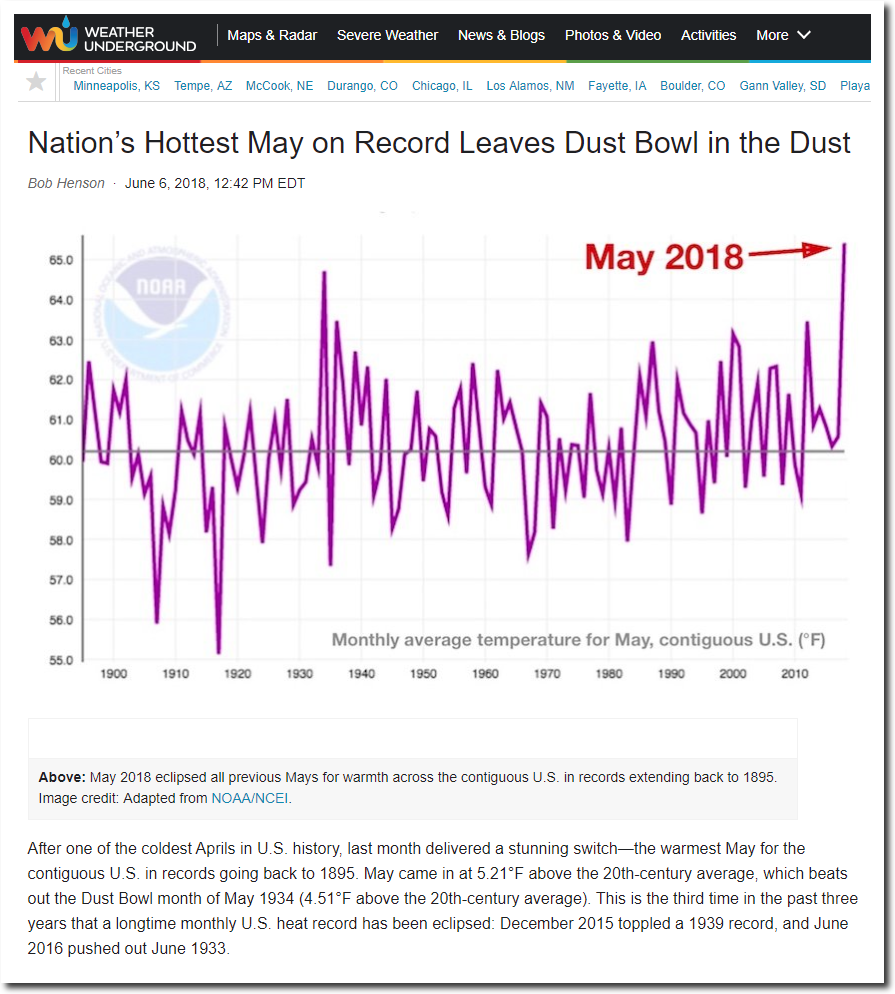
As I warned two weeks ago, the climate cult was going to declare May to be the “hottest ever.”  Weather Underground says it is hotter than the Dust Bowl!

Nation’s Hottest May on Record Leaves Dust Bowl in the Dust by Bob Henson | Category 6 | Weather Underground

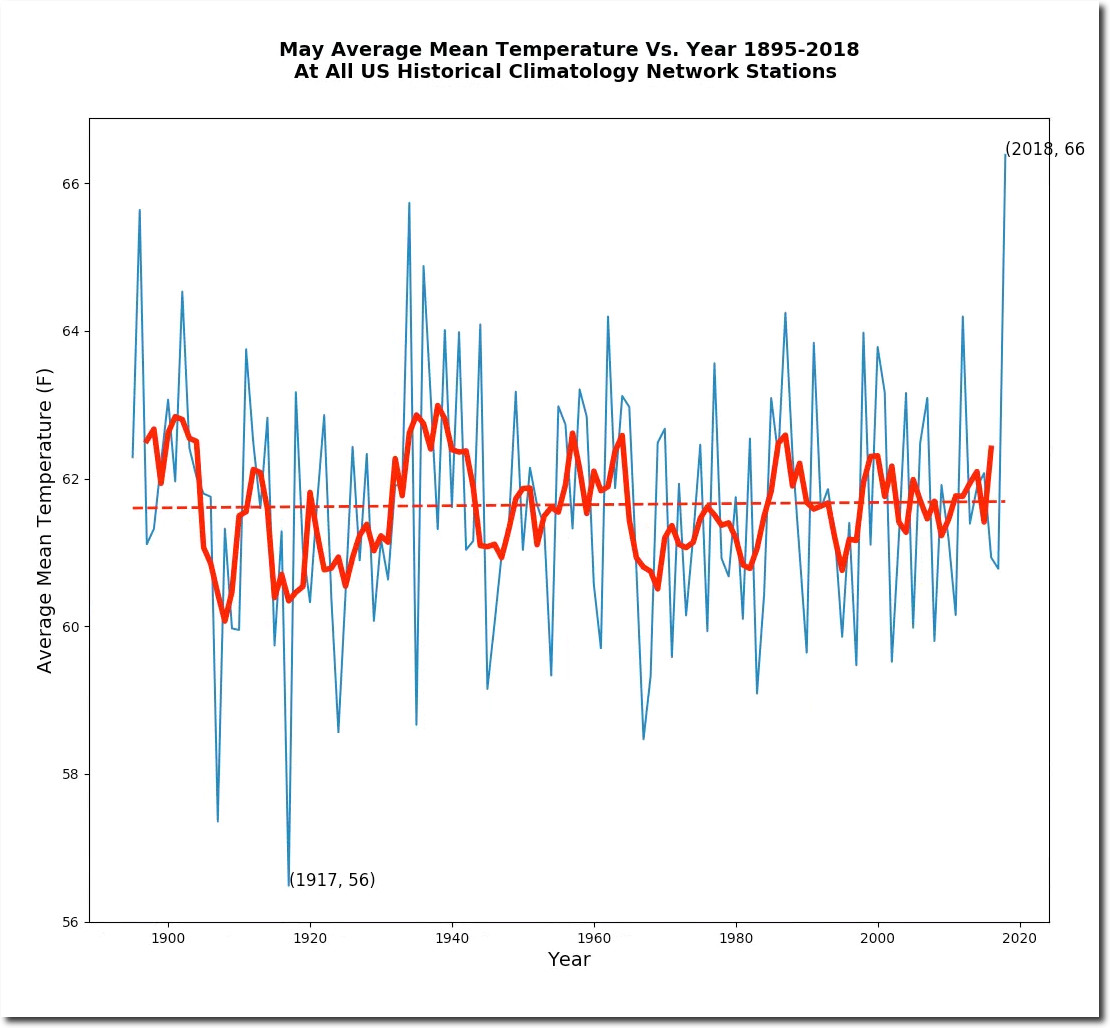
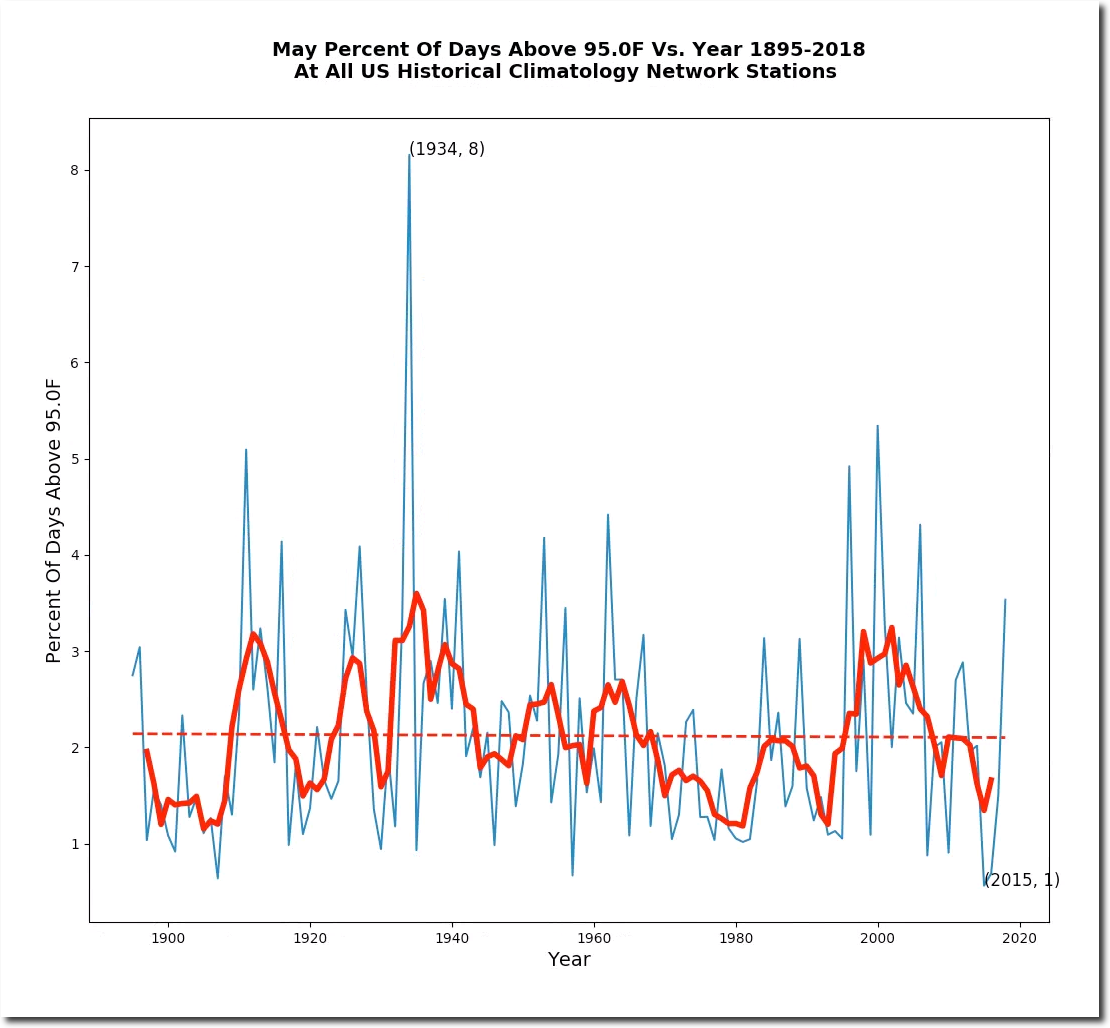
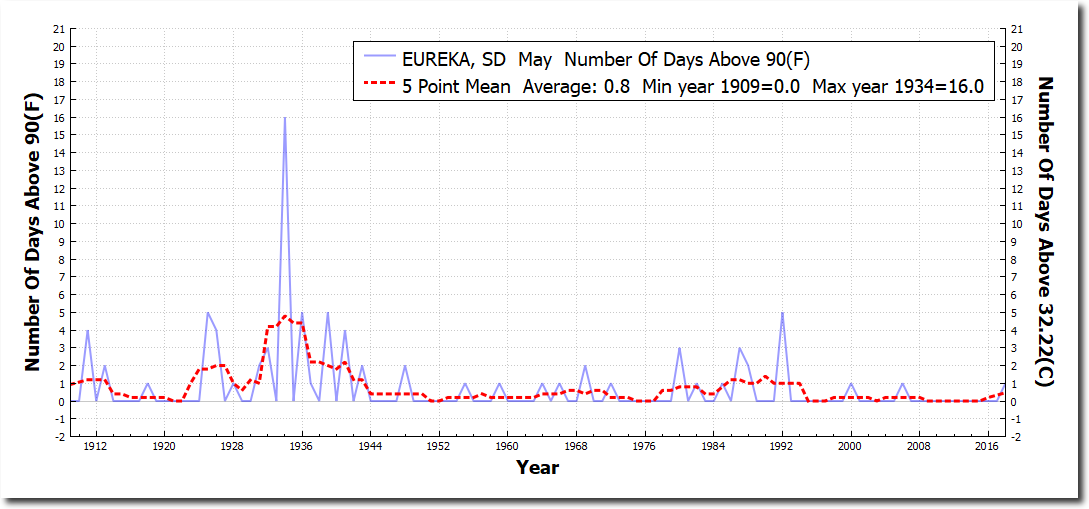
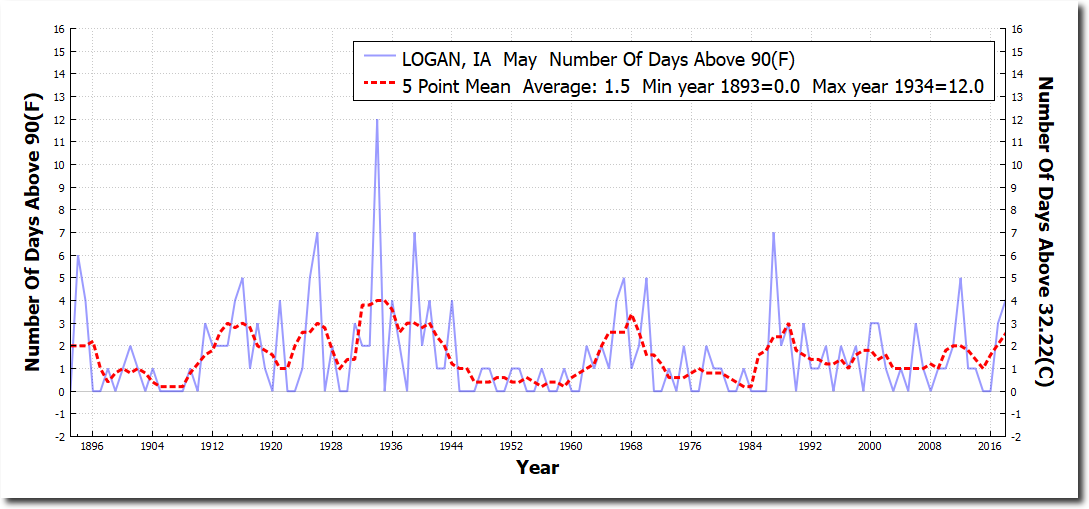
They must have forgotten their standard “the US is only 2% of the planet” line. May did have the highest average temperature on record in the US (a burning hot 66F or 19C) – but it didn’t rank in the top ten for the number of hot days.

May 1934 had more than twice as many hot days as May 2018. Also note that the previous three Mays were very cool, with May 2015 being the coolest.

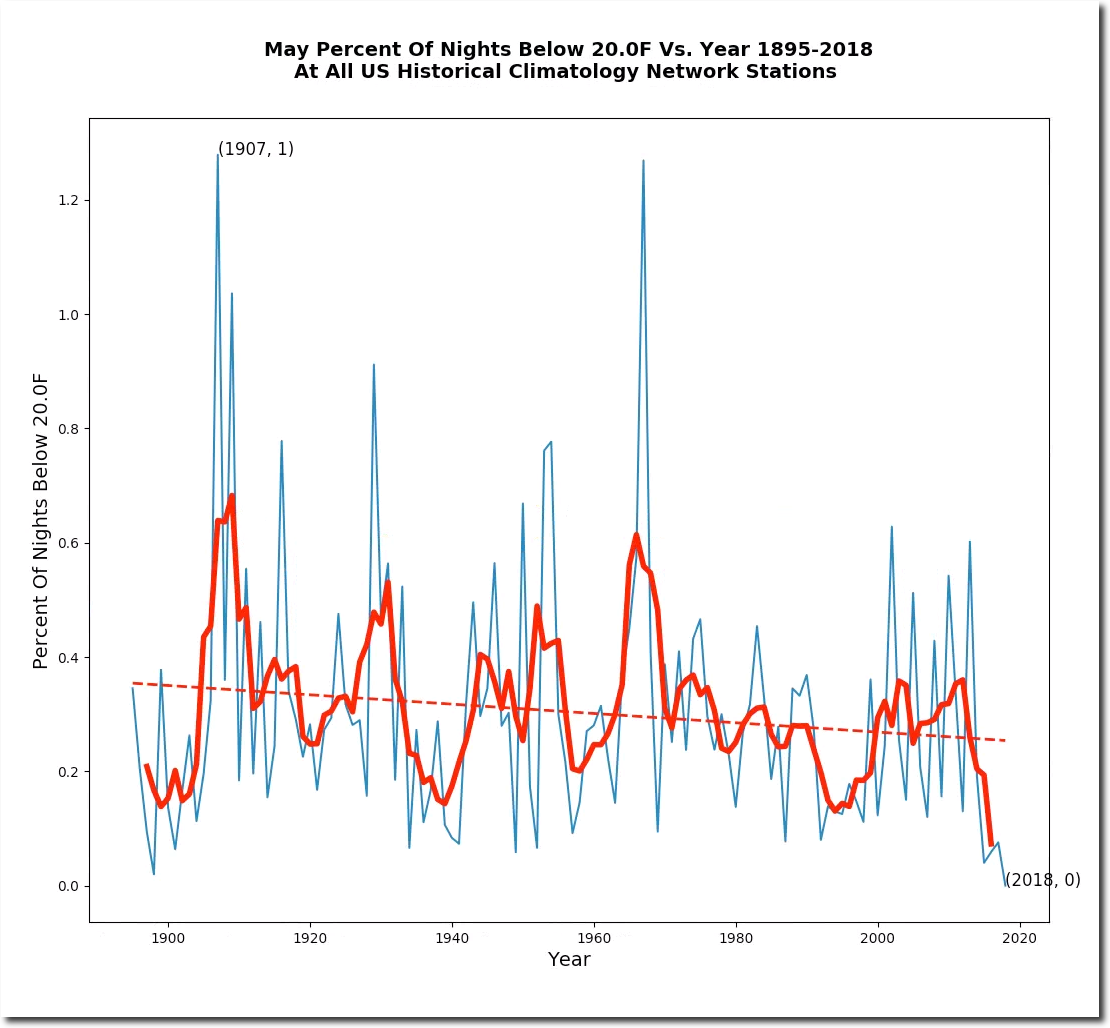
The reason for the warm average temperature, is that no Arctic air made it into the US during May, which led to a record low number of cold nights.

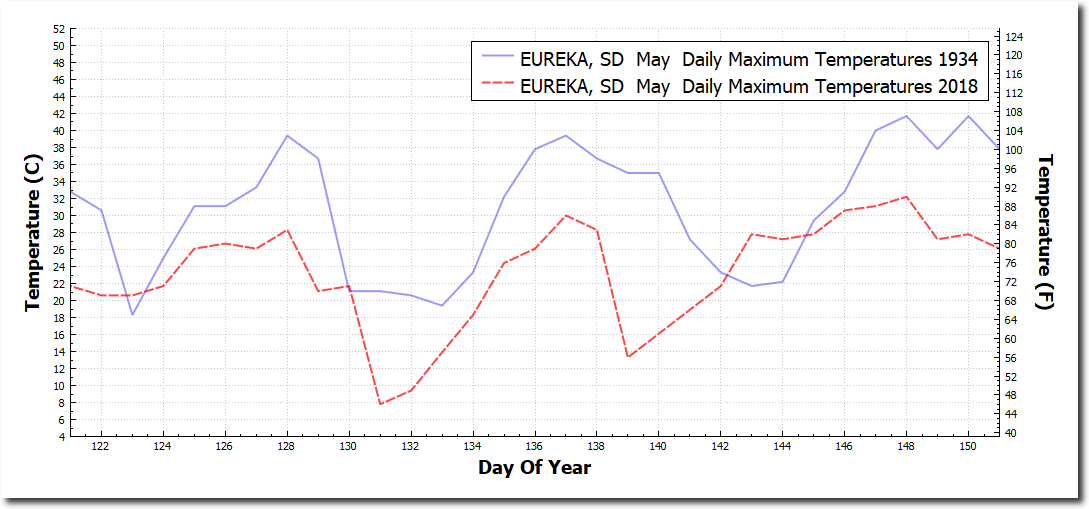
To see how ridiculous the comparison with the Dust Bowl is, compare 1934 and 2018 temperatures in the Midwest and Great Plains. May 1934 was fourteen degrees hotter at Eureka, South Dakota.

There is no comparison with the Dust Bowl.

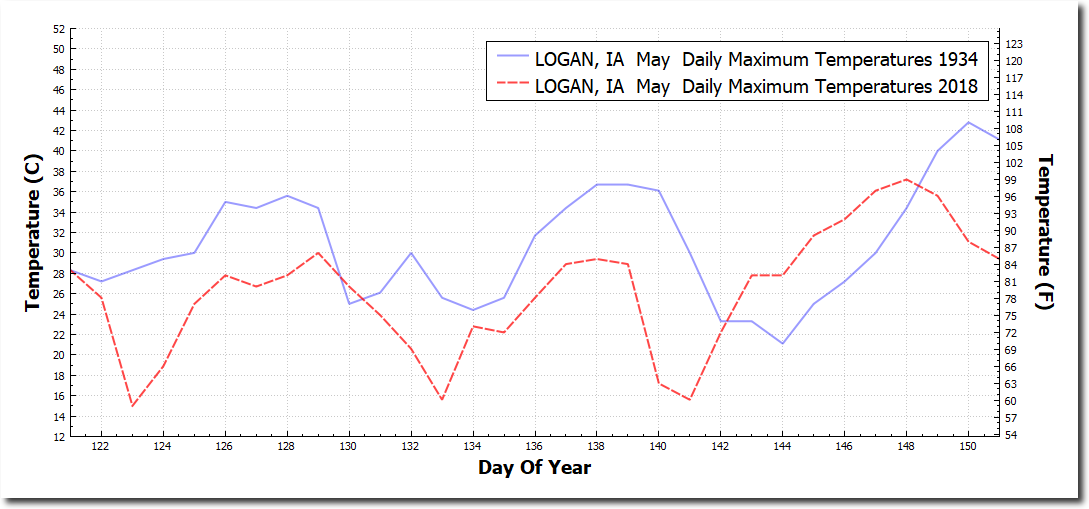
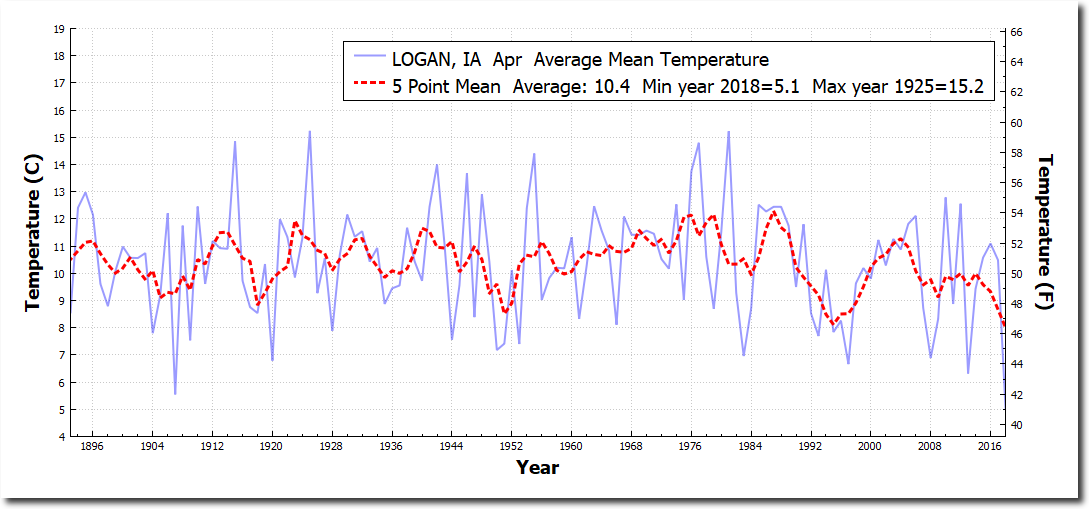
May 1934 was eight degrees hotter at Logan, Iowa.

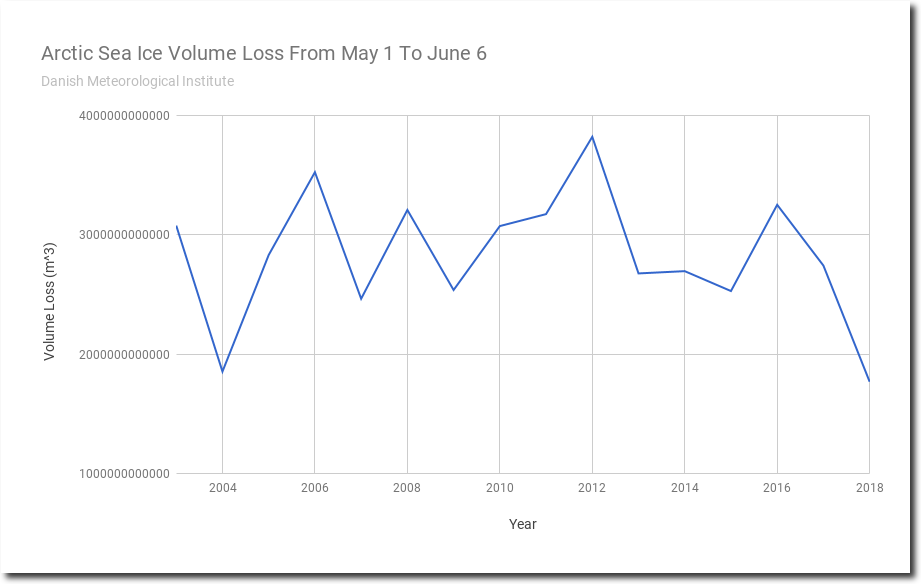
Because the cold air stayed in the Arctic and didn’t mix with mid-latitude air, May brought a record low melt rate of Arctic sea ice.

http://ocean.dmi.dk/arctic/icethickness/txt/IceVol.txt

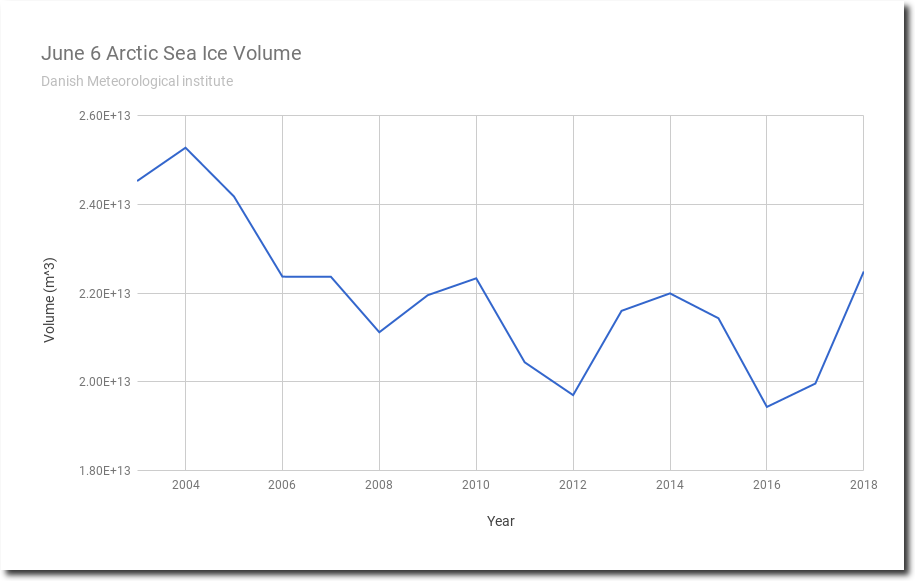
And Arctic sea ice volume is the highest in 15 years.

http://ocean.dmi.dk/arctic/icethickness/txt/IceVol.txt

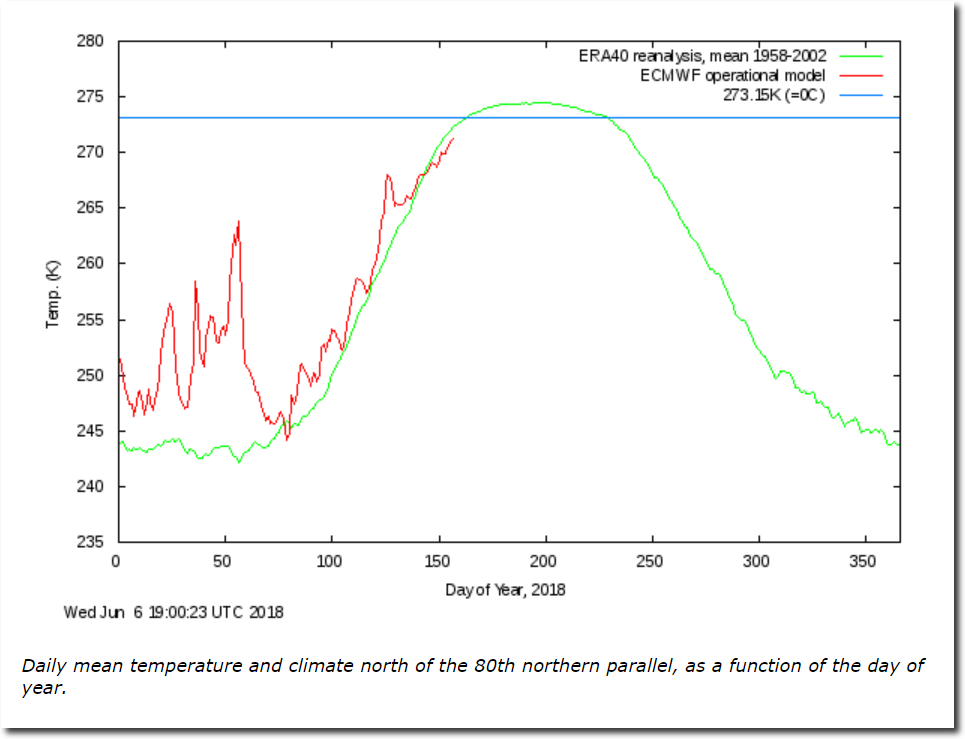
Temperatures are cold near the Pole and running far below normal.

Ocean and Ice Services | Danmarks Meteorologiske Institut

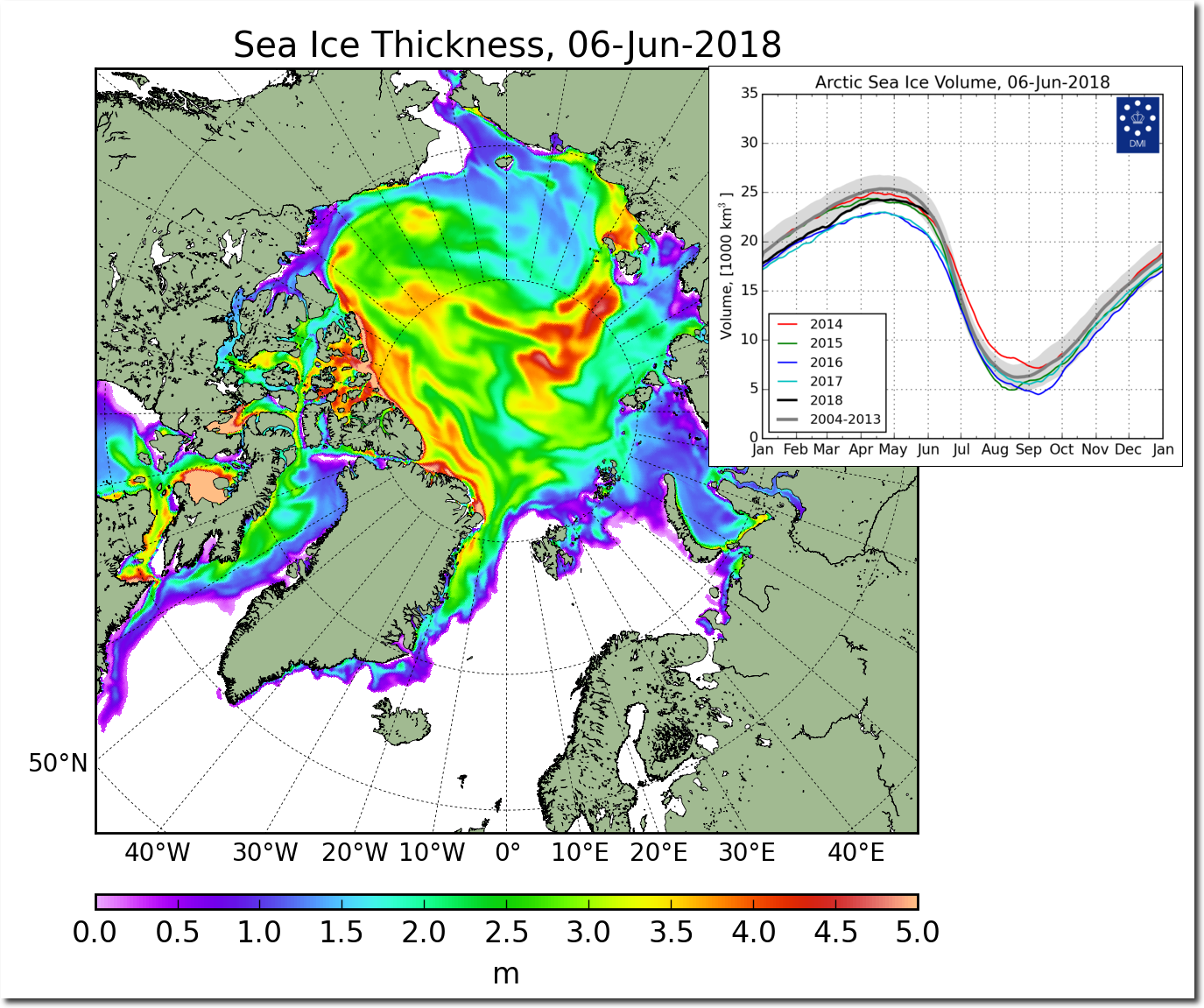
Climate alarmists are having fun today with their fake Hottest May Ever claims, but the big picture looks pretty bleak for them. Arctic sea ice volume has made a massive recovery and is “normal”

FullSize_CICE_combine_thick_SM_EN_20180606.png (1337×1113)

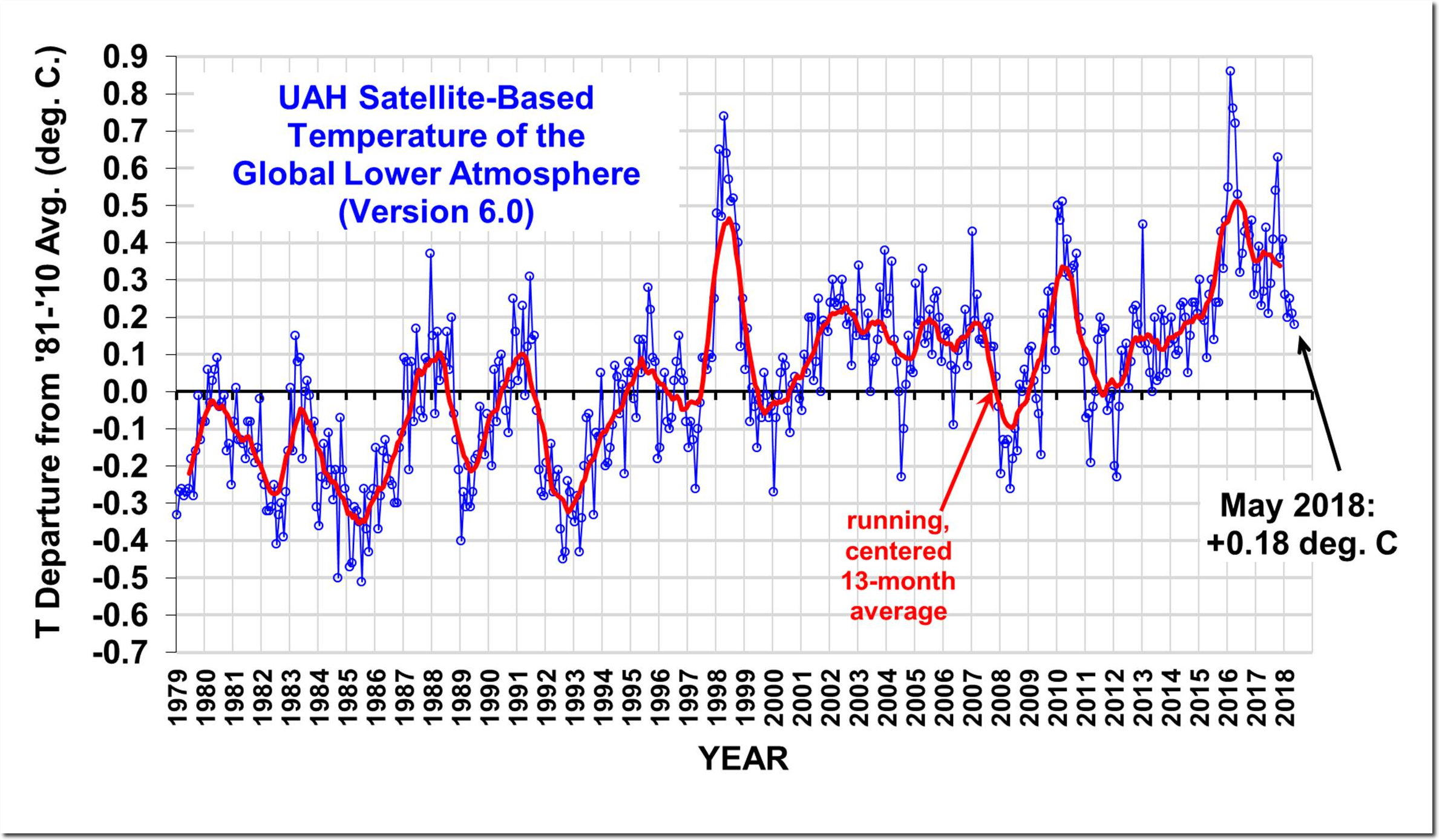
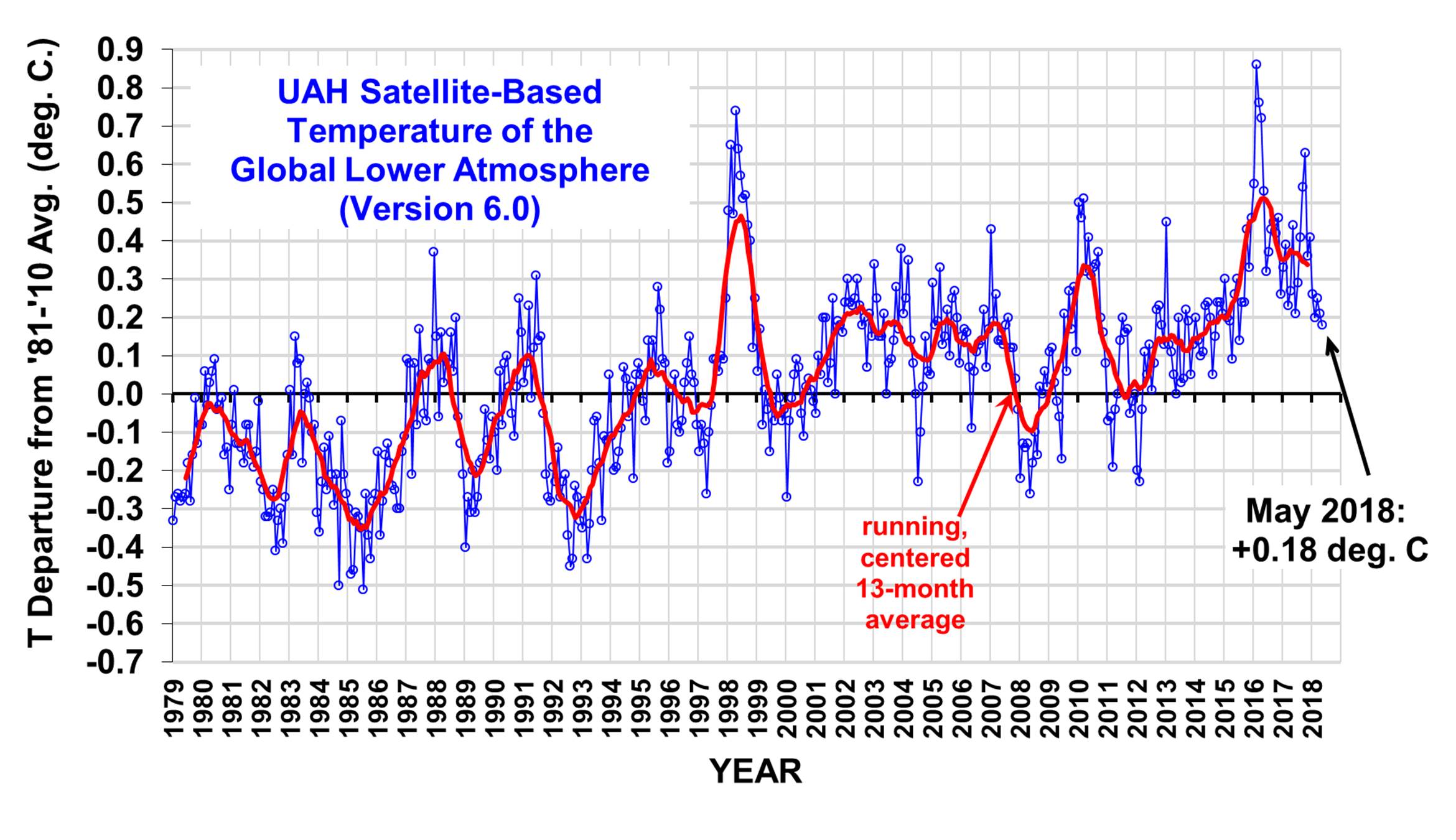
Global temperatures are plummeting, and are about the same as 30 years ago, when James Hansen started this scam.

UAH_LT_1979_thru_May_2018_v6.jpg (2340×1350)

Apparently 66 degrees is too hot for left-wing snowflakes. Weather Underground is named after Bill Ayers far left terrorist organization. How did they forget the record cold of the previous month so quickly?

via The Deplorable Climate Science Blog

https://ift.tt/2JgLiUS

June 7, 2018 at 05:36AM

Disappeared: Tide gauges showing negative absolute sea level rise removed from data base

Guest essay by Albert Parker

Today I was informed of an alarmist claim about the sea levels of Perth, Western Australia, Australia. It started with this story:

In the next eight years our water level is going to increase by about 25cm, which is much higher than the water level increase for the last 115 years,” Professor Pattiaratchi said.

As I examined the Fremantle tide gauge in a recent peer reviewer work (Parker, 2016), I immediately checked if there was any change in the measured data to motivate such a claim.

I therefore downloaded again the relative sea level data of Fremantle, in Australia, the best tide gauge of the Indian Ocean.

As shown in Figure 1, the PSMSL data downloaded today June 6, 2018 from https://www.psmsl.org/data/obtaining/stations/111.php, suggest about same rate of rise and about same acceleration.

clip_image002clip_image002a


clip_image004clip_image004 b

Figure 1 – (a) Fremantle relative mean sea level. Linear and parabolic fittings of the PSMSL RLR data, as it is or with gaps filled. (b) PERT (Perth) GPS dome. Image reproduced modified from SONEL.

With date range January 1897 to December 2016, the relative rate of rise is +1.67 mm/yr. and the acceleration is +0.006 mm/yr2 (the usual few micrometers per year squared).

As the completeness of the record is 92%, I decided to fill the gaps interpolating the data of same month in neighboring years. This way I computed a relative rate of rise of +1.70 mm/yr. and an acceleration of +0.005 mm/yr2.

Worth to mention, the rate of rise of the sea level in Fremantle is less than the likely rate of sinking of the instrument, as SONEL computes for the nearby GPS dome of PERT (Perth) a subsidence rate of -2.09±0.38 mm/yr. (analysis in www.sonel.org/spip.php?page=gps&idStation=812),

and in the similarly close-by GPS of HIL1 (Hillarys), where an even larger subsidence rate of -2.78±0.31 mm/yr. is measured (analysis in http://www.sonel.org/spip.php?page=gps&idStation=1918).

The Perth basin is indeed subjected to subsidence (Featherstone, Penna, Filmer, & Williams, 2015; Featherstone, Filmer, Penna, Morgan & Schenk, 2012), and the sea levels are rising here cause the land is sinking.

Therefore, nothing new from the measurements.

Which is therefore the novelty?

In performing todays’ analysis, I visited again the PSMSL and the SONEL web sites, and I discovered how the “adjustocene” progresses within intergovernmental projects.

  • PSMSL does not link any more the Fremantle tide gauge information to the SONEL page of the PERT GPS dome.
  • SONEL, that proposes the computed absolute sea level rises by correcting the relative rate of rise from the tide gauge with the subsidence rate from the GPS monitoring, does not propose any more the absolute rate of rise negative for Fremantle.

If you look at the images of Figure 2, with the same time window for the online graph, with reference to two years ago, the negative absolute sea level rise of Fremantle has disappeared, similarly to the negative absolute sea level rise of a Japanese tide gauge.

clip_image006clip_image006 a

clip_image008clip_image008b

Figure 2 – Absolute sea level rates of rise (relative sea level rate of rise from tide gauge, absolute vertical land velocity from satellite GPS) in the World Tide gauges with theoretically same data 1900 to 2013 before and after Fremantle was eliminated. Images reproduced modified from SONEL, www.sonel.org. (a) Image downloaded 6 June 2018. (b) Image from Parker (2016). The inconvenient result for Fremantle could not have been accepted by the intergovernmental scientists.

Other changes may be spotted, even if less evident.

In many regimes, dissidents disappear. In the climate change dictatorship, inconvenient data suffer the same treatment.

Within Australian universities, from Murry Shelby to Bob Cater, from Peter Ridd to myself, academics not supporting the narrative are simply forced to leave, in a way or another, or not even start, as Bjorn Lomborg. I do not believe anyone within Australian universities will declare that the sea levels in Fremantle have been rising since 1897 without any significant acceleration component, and in the next 8 years they may rise on average of not even 25 millimetres, but  16 millimetres  …..


References

Featherstone, W., Filmer, M., Penna, N., Morgan, L. & Schenk, A. (2012). Anthropogenic land subsidence in the Perth Basin: Challenges for its retrospective geodetic detection. Journal of the Royal Society of Western Australia, 95(1), pp.53-62.

Featherstone, W.E., Penna, N.T., Filmer, M.S. & Williams, S.D.P. (2015). Nonlinear subsidence at Fremantle, a long‐recording tide gauge in the Southern Hemisphere. Journal of Geophysical Research: Oceans, 120(10), pp.7004-7014.

Parker, A., (2016), The Sea Level Rate of Rise and the Subsidence Rate Are Constant in Fremantle, American Journal of Geophysics, Geochemistry and Geosystems, 2(4):43-50.

https://ift.tt/2JizVf9

via Watts Up With That?

https://ift.tt/2LwExLt

June 7, 2018 at 04:33AM

China Just Dealt a Massive Blow to the Solar Industry

The impact of China’s policy changes will be widespread, and no solar company will be spared.

The solar industry has had an impressive run over the past year on strong demand for solar panels around the world. No country has been more aggressive in growing solar installations than China. Out of 99 gigawatts (GW) of solar projects built in 2017, 53 GW were built in China.

That bullish streak came to an end on Monday when China took steps to slow its solar industry . Feed-in tariffs that provide set prices for electric power sent to the grid will be cut and distributed generation (DG) projects will be capped until further notice. Early estimates are that solar installations will fall to around 35 GW in 2018, with a lot of that already installed. The impact of the policy changes will be widespread, and no company will be spared.

China is undercutting its own solar industry

China’s solar cuts were widespread and will affect most of the downstream industry. China’s National Development and Reform Commission said there would be no more planned ground-mounted solar projects in 2018 and subsidies for future ground-mounted projects would be forbidden.

The feed-in tariff for solar projects was also reduced by 0.05 yuan per kilowatt-hour, a cut of 6.7% to 9% depending on the region, which will reduce the payback of solar project development. Those changes are effective June 1, 2018, so there was no notice of the cut.

Distributed solar farms were also capped at 10 GW for 2018, a level that may have already been exceeded.

Add it up and China’s solar installations are going to plunge in the second half of 2018. Analysts from Roth Capital are guessing that 35 GW of installations will be built in 2018, which seems about right given the cuts. But we know demand is going to fall given China’s reduced quotas and solar subsidies.

Full post

via The Global Warming Policy Forum (GWPF)

https://ift.tt/2JroDBr

June 7, 2018 at 04:13AM