Month: June 2018

Hudson Bay ice update: more thick first year ice habitat for polar bears in 2018 than 2004

Despite pronouncements from one polar bear specialist that “ice in Hudson Bay is in rapid retreat” a look back in time shows that there is more thick first year ice over the Bay this year for the week of the summer solstice than there was in 2004 – and much less open water than 1998.

Lunn et al 2016 EA cover image WH bear

Below, 2018, June 18 (the week of the summer solstice):
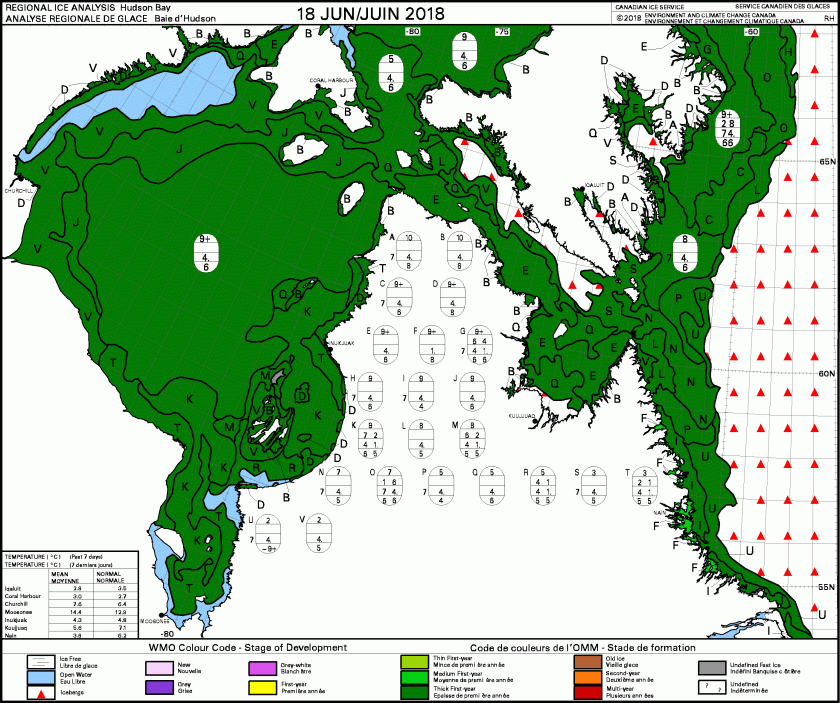
Hudson Bay weekly stage of development 2018 June 18

Compare the above to the same week coverage chart for 2004, below:
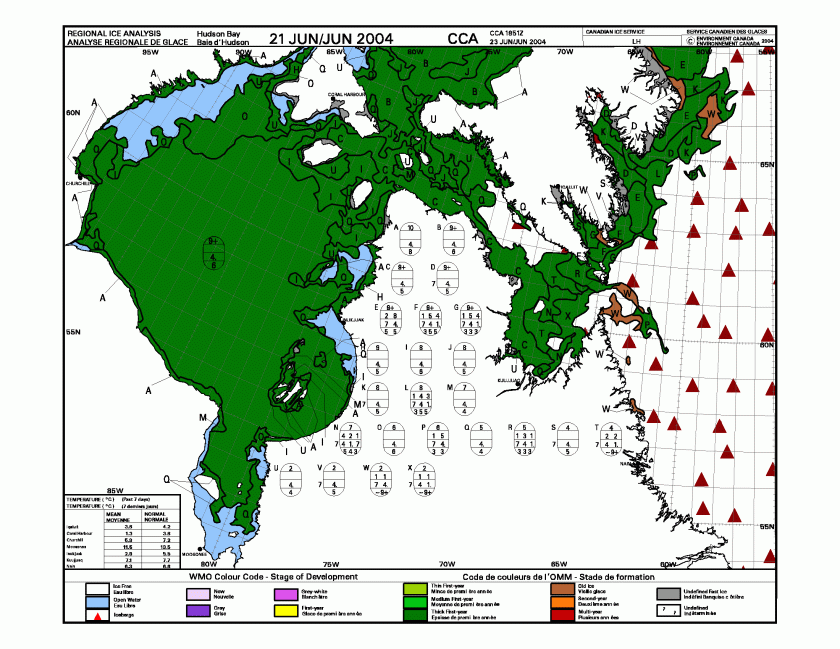
Hudson Bay weekly stage of development 2004_June 21

Ice coverage for some other recent years are shown below compared to 1998, the year the ice breakup pattern on Hudson Bay changed. Speed and melt sequences vary according to the amount of thick first year ice present, discussed previously here.

PS. If you’re wearing white today, flaunt it! Tell your friends and colleagues that you’re celebrating the success of polar bears despite such low summer sea ice since 2007 that 2/3 of them were predicted to disappear.

2005, June 20:
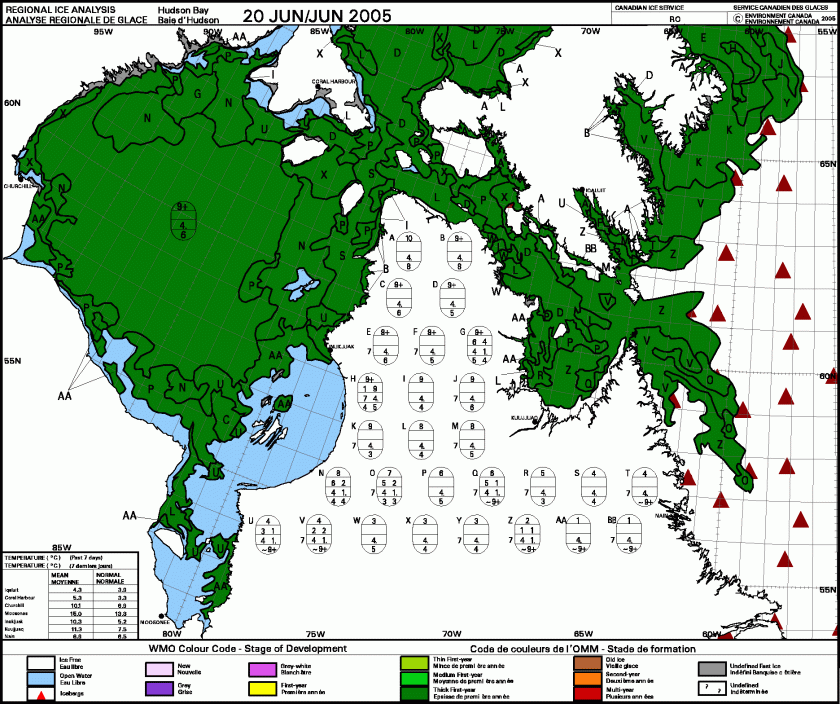
Hudson Bay weekly stage of development 2005_June 20

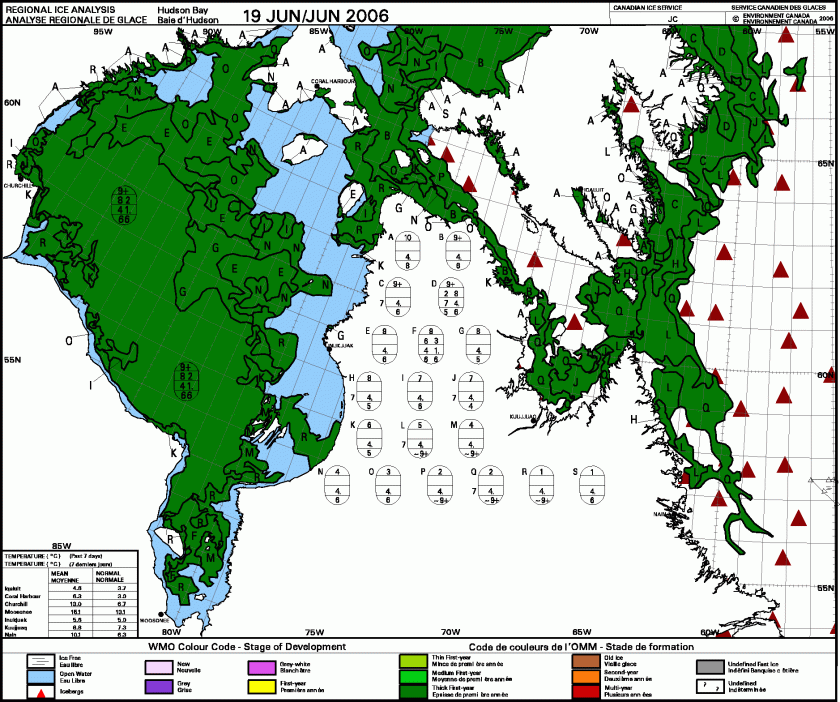
2006, June 19:

Hudson Bay weekly stage of development 2006_June 19

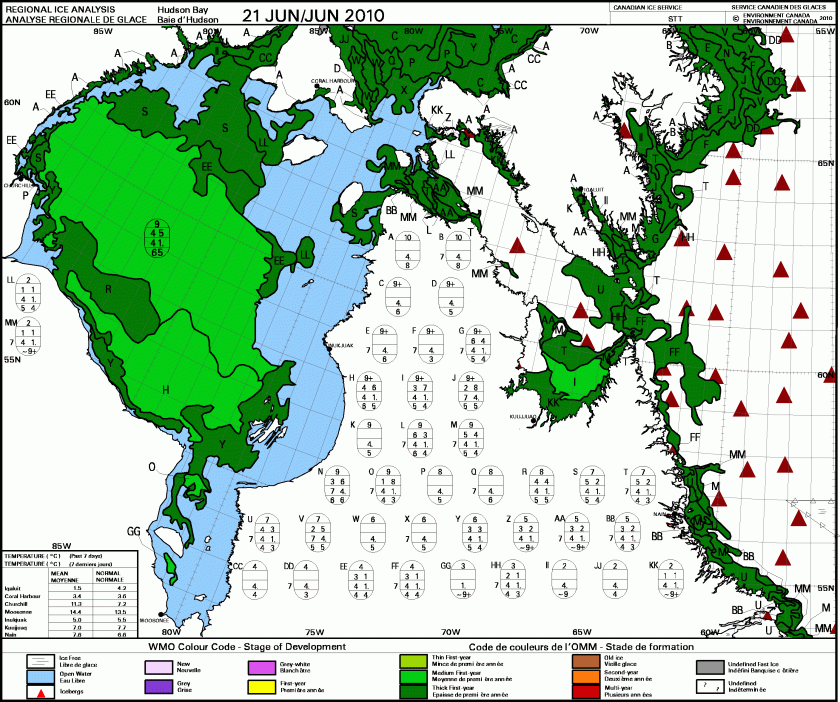
2010, June 21:

Hudson Bay weekly stage of development 2010_June 21

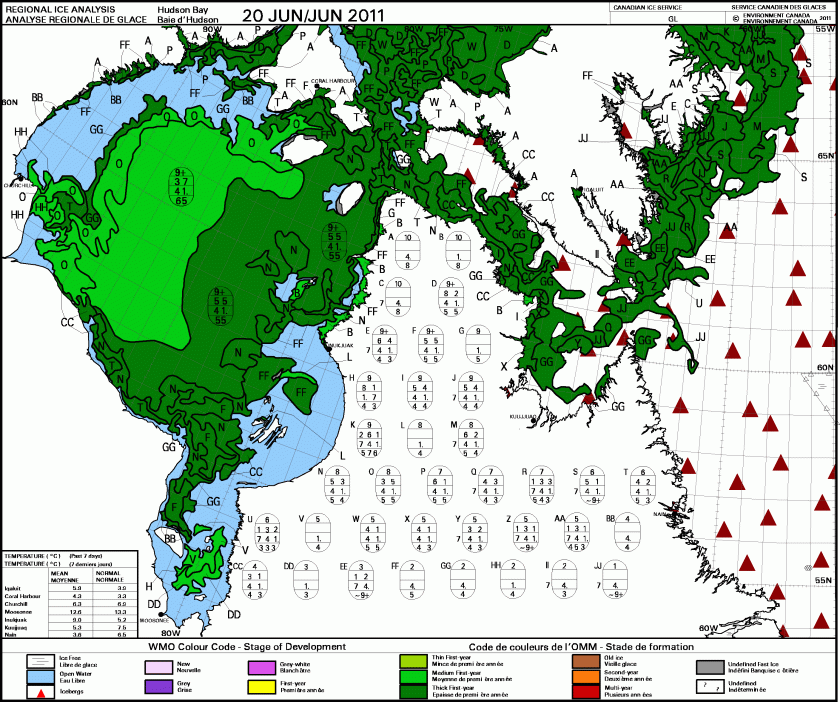
2011, June 20:

Hudson Bay weekly stage of development 2011_June 20

2015, June 15 (the year that Southern Hudson Bay polar bears suffered higher-than-usual loss of cubs but it wasn’t because of early breakup or late freeze-up):

Hudson Bay age_2015 June 15_CIS

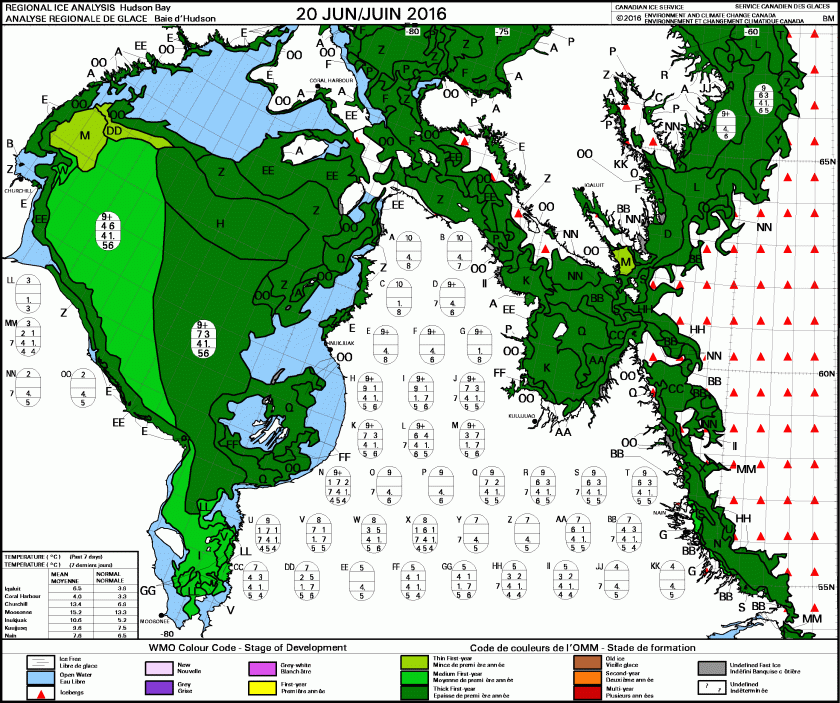
2016, June 20:

Hudson Bay weekly stage of development 2016_June 20

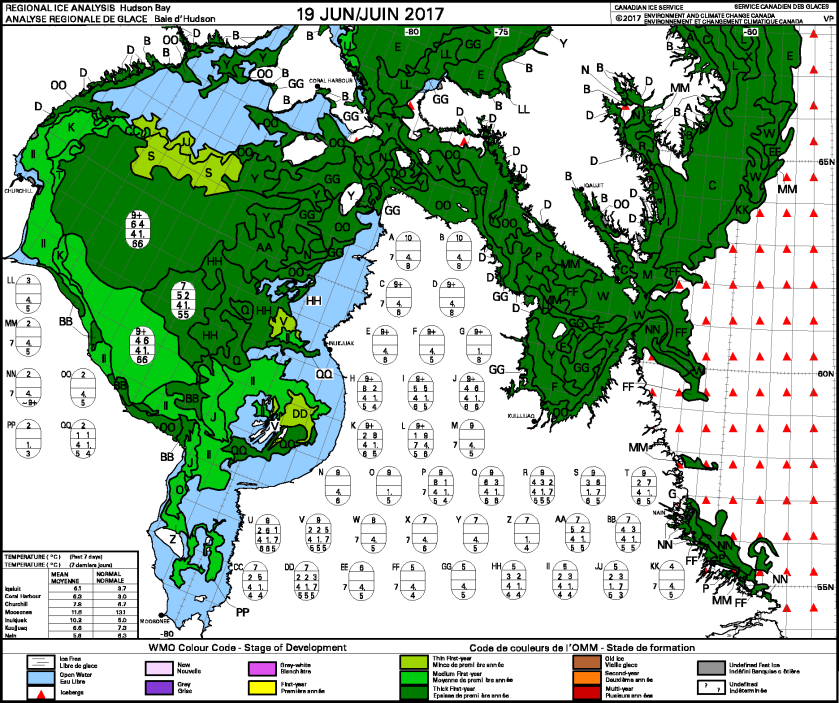
2017, June 19:

Hudson Bay weekly ice stage of development 2017 June 19

2018 again, including concentration:

Hudson Bay weekly stage of development 2018 June 18

2018, June 18 concentration:

Hudson Bay weekly concentration 2018 June 18

2004, 21 June concentration, showing the thick first year ice was more concentrated around the edges in 2004 than it is this year but the amount of clear open water was marginally greater:
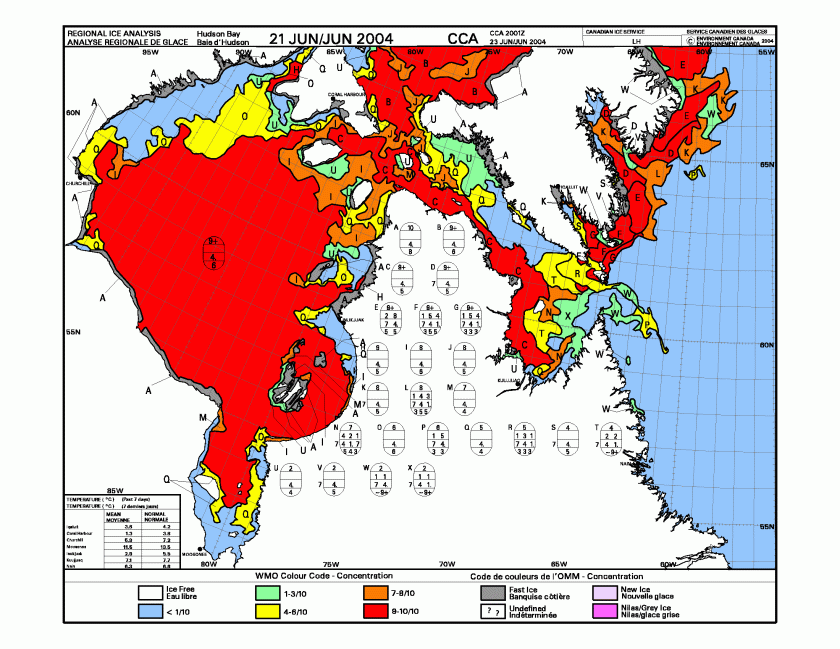
Hudson Bay weekly concentration 2004_June 21

Compare to 1998, June 22

This was the year the ice-free season in Western Hudson Bay was extended by about 3 weeks (Castro de la Guardia et al. 2017): the black and white chart is a bit harder to read but the presence of open water in the NW sector and along the east coast around the summer solstice is clearly evident, showing the pattern of sea ice breakup we’ve seen since then. Before this time, breakup usually came about 2 weeks earlier (and freeze-up one week later), with some wide variations year to year.
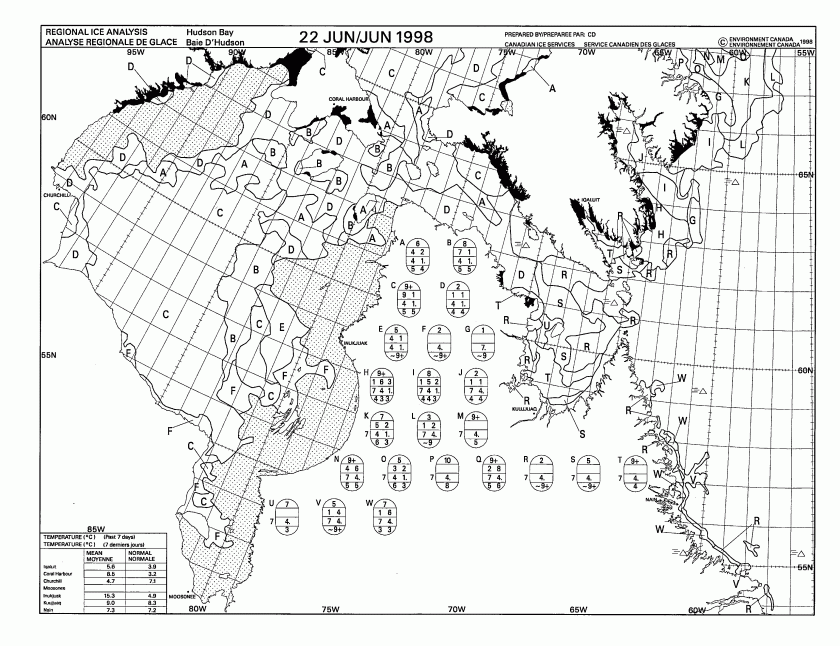
Hudson Bay weekly stage of development 1998_June 22

Bottom line: Sea ice coverage during breakup on Hudson Bay is not getting progressively worse each year. In fact, the last year with a much earlier than usual breakup date was 2010 (2011 was relatively early as well but there hasn’t been another one since).

References

Castro de la Guardia, L., Myers, P.G., Derocher, A.E., Lunn, N.J., Terwisscha van Scheltinga, A.D. 2017. Sea ice cycle in western Hudson Bay, Canada, from a polar bear perspective. Marine Ecology Progress Series 564: 225–233. http://www.int-res.com/abstracts/meps/v564/p225-233/

via polarbearscience

https://ift.tt/2MbdC8e

June 21, 2018 at 03:55AM

Shale Revolution Turns 10: U.S. Natural Gas Production Could Grow Another 60 Percent over Next 20 Years

Ten years since start of U.S. “Shale Gale,” pace of production growth is only accelerating and continues to reshape the energy, economic and geopolitical landscape, new report finds

A decade since the start of a shale gas revolution that unlocked new supplies and resulted in a “wholesale turnaround” in U.S. production, the overall size of recoverable gas reserves continues to increase and the pace of production growth is only accelerating, a new report by business information provider IHS Markit says.

IHS Markit expects natural gas production to rise by almost 8 billion cubic feet per day (Bcf/d) or more than 10 percent in 2018 alone. Altogether, U.S. production is expected to grow by another 60 percent over the next 20 years, the report says.

Additionally, IHS Markit now estimates that approximately 1,250 trillion cubic feet (Tcf) of U.S. supply is economic below $4 per MMBtu Henry Hub price today, up from a previous estimate of 900 Tcf in 2010.

The new report, entitled The Shale Gale Turns 10: A Powerful Wind at America’s Back assesses the impacts of the first 10 years of the unconventional gas revolution—unlocked through the combination of hydraulic fracturing and horizontal drilling technologies—and its future potential. When the shale revolution began a decade ago, the prevailing assumption was that the U.S. supply base was being exhausted and that the country would have to become a major importer of liquefied natural gas (LNG).

Instead, in what the report describes as a “wholesale turnaround,” U.S. output rose by more than 40 percent in that first decade (2007-2017) and real natural gas prices fell by two thirds during the same period.

In contrast to the assumption a decade ago, the United States is now on track to become one of the world’s major LNG exporters, the report notes. IHS Markit expects U.S. LNG export capacity to more than double in the next five years and rise to at least 10 Bcf/d by 2023.

“To say that the ‘Shale Gale’—as IHS Markit originally coined it in 2010—has been anything but a veritable revolution would be an understatement,” said Daniel Yergin, vice chairman, IHS Markit and co-author of the report. “It represents a dramatic and largely unanticipated turnaround that dramatically changed both markets and long-term thinking about energy. The profound and ongoing impacts on the industry, energy markets, the wider economy and the U.S. position in the world continue to unfold.”

The most dramatic effect has been on the U.S. electric power industry, the report says. Where coal and nuclear had previously dominated the growth in share of U.S. electric power generation, natural gas has become a “backbone of electric generation” and regularly competes with coal for the largest share of total electric generation. By 2040, IHS Markit expects natural gas’ share to grow from almost one-third to nearly half of all electricity generated in the United States.

The report observes that the Shale Gale, has also made a major contribution to reducing U.S. CO2 emissions. IHS Markit estimates that in 2017, CO2 emissions from power generation were down 30 percent from 2005. More than half of that emission decline was from gas replacing coal.

What started with natural gas would be extended to oil a few years later, with enormous global impact, the report notes. Between 2008 and 2018, U.S. oil output more than doubled and exceeded the previous height set in 1970. On a net basis, the United States went from importing 60 percent of its liquid fuel at the peak to below 16 percent in 2018—and the share is still falling. The United States is now on track to be the world’s largest oil producer, ahead of Russia and Saudi Arabia, by early next year.

The combined developments of unconventional oil and gas have had far-reaching impacts for the manufacturing sector and the U.S. economy as a whole, the report says.

IHS Markit estimates that more than $120 billion in new capital investments will be spent from 2012-2020 to expand U.S. petrochemical manufacturing capacity—a result of abundant and inexpensive natural gas and natural gas liquids providing advantages in terms of thermal energy, feedstock and electricity costs. “Ancillary” investments could double that number, the report says.

Full story

via The Global Warming Policy Forum (GWPF)

https://ift.tt/2ytDSsn

June 21, 2018 at 03:33AM

State of Delusion: Push to Kill-Off Arizona’s Nuclear Plant & Go 50% Wind & Solar

  Believing that wind and solar can power your economy means sacrificing our good friends, logic and reason. It also demands ignorance of the most basic of facts: eg, sunset and calm weather. The inevitable consequence of those daily occurrences on wind and solar power generation ought to be apparent to all but those suffering … Continue reading "State of Delusion: Push to Kill-Off Arizona’s Nuclear Plant & Go 50% Wind & Solar"

via STOP THESE THINGS

https://ift.tt/2I9KX0J

June 21, 2018 at 02:31AM

EPA – UN DEAL UNCOVERED, DESPITE PULLNG OUT OF PARIS ACCORD

CFACT uncovers EPA-UN climate deal

While President Trump is wisely withdrawing the United States from the UN’s ill-conceived Paris climate accord, there is another UN agreement that also needs to be scrapped.

CFACT Senior policy analyst Bonner Cohen uncovered a “side agreement” President Obama’s EPA Administrator Gina McCarthy made with the UN that could be used to resurrect UN climate policies here in the United States.

Cohen explains that a relatively unknown “Memorandum of Understanding,” (MOU) commits the EPA and UN to “achieve their common goals and objectives in the field of the environment.”

In other words, even though there’s no formal treaty or agreement, bureaucrats at EPA are given instruction to carry out radical UN environmental objectives like killing fossil fuel production, hammering auto makers with costly vehicle mandates, enacting carbon taxes, and letting subsidies for inefficient wind and solar run wild.

We asked Bonner how best to alert the Administration about the existence of this "MOU" and he suggested reaching out directly to EPA. 

We cannot let deep state bureaucrats undo all the hard work we have accomplished in convincing President Trump to withdraw from the Paris Accord.

The document was signed nine months after the adoption of the U.N.-sponsored Paris climate accord, and the wording of the MOU leaves little doubt that it was seen as an instrument to underscore America’s commitment to curtail its production and use of energy in the name of combating climate change. Thus, UNEP and the Obama EPA agreed to “cooperate on responses to climate change,” including mitigating greenhouse gas emissions, reducing short-lived climate forcers and supporting adaptation and resilience to climate change.

Taking these and similar steps, the MOU says, will enable the advance “toward green economies and resource-efficient societies through collaborative activities to promote and support sustainable consumption and production.” In truth, “green economies” are those with taxpayer-subsidized and government-mandated renewable energy (primarily wind and solar). And what constitutes “sustainable consumption and production” is in the eyes of the beholding bureaucrat, empowered either by the administrative regulatory state or by legislation adopted at the behest of deep-pocketed special interests.

Is the Trump Administration aware of this Memorandum of Understanding?  They need to be, so they can replace this document with a new "understanding" that the United States will not place its energy and economic futures in the hands of the UN! 

via climate science

https://ift.tt/2tmUkVy

June 21, 2018 at 01:30AM