
By Paul Homewood
Peter Stott thinks the BBC’s new guidelines are a good idea!

https://twitter.com/StottPeter/status/1038375743447855104
He would not be thinking about instances like this, would he?

Seeing satellite pictures from Greenland last month, scientists from Nasa at first couldn’t believe what the data was telling them. About 97% of the Greenland ice sheet was melting. The rate was unprecedented, with the thaw more widespread than ever as unseasonally warm weather across the Arctic took effect.
"It was so extraordinary that at first I questioned the result: was this real or was it due to a data error?" wondered Son Nghiem, one of the scientists responsible for the research at Nasa’s Jet Propulsion Laboratory in Pasadena. In a normal summer, some melting is observed over about half the island’s surface area. This new data – from three satellites – raised serious concerns over the progress of global warming and the likely consequences.
For scientists at the Met Office’s world-renowned Hadley research centre in Exeter, the question was not just how fast Greenland was melting, but something much trickier. They have been crunching through years of data from dozens of satellites, trying to establish whether the conditions in the Arctic circle are related to the record-breaking washout of a summer in the UK.
The news could be disconcerting for fans of the British summer. Because when it comes to global warming, we can forget the jolly predictions of Jeremy Clarkson and his ilk of a Mediterranean climate in which we lounge among the olive groves of Yorkshire sipping a fine Scottish champagne. The truth is likely to be much duller, and much nastier – and we have already had a taste of it. "We will see lots more floods, droughts, such as we’ve had this year in the UK," says Peter Stott, leader of the climate change monitoring and attribution team at the Met Office. "Climate change is not a nice slow progression where the global climate warms by a few degrees. It means a much greater variability, far more extremes of weather."
A series of unusually wet and cold summers has afflicted the UK for several years. Remember the devastating floods of 2007, when some areas received double their normal rainfall for June? Or the predictions of a "barbecue summer" in 2009 that backfired badly on the Met Office as the (correctly anticipated) high temperatures were accompanied by heavy clouds and rainstorms? The impression that many Britons have had that summer weather has been getting worse in recent years is borne out by the data – five out of the last six years (2007-2012), have shown below-average sunshine from June to August, and in some cases well below average. All have had above-average rainfall – in some cases more than 50% above the long-term average. "It is not just a perception – we have had a run of relatively poor summers," says Stott.
https://www.theguardian.com/science/2012/aug/08/shape-of-british-summers-to-come
In reality, British summers have always been highly variable, which any semi competent meteorologist could have told Mr Stott at the time:
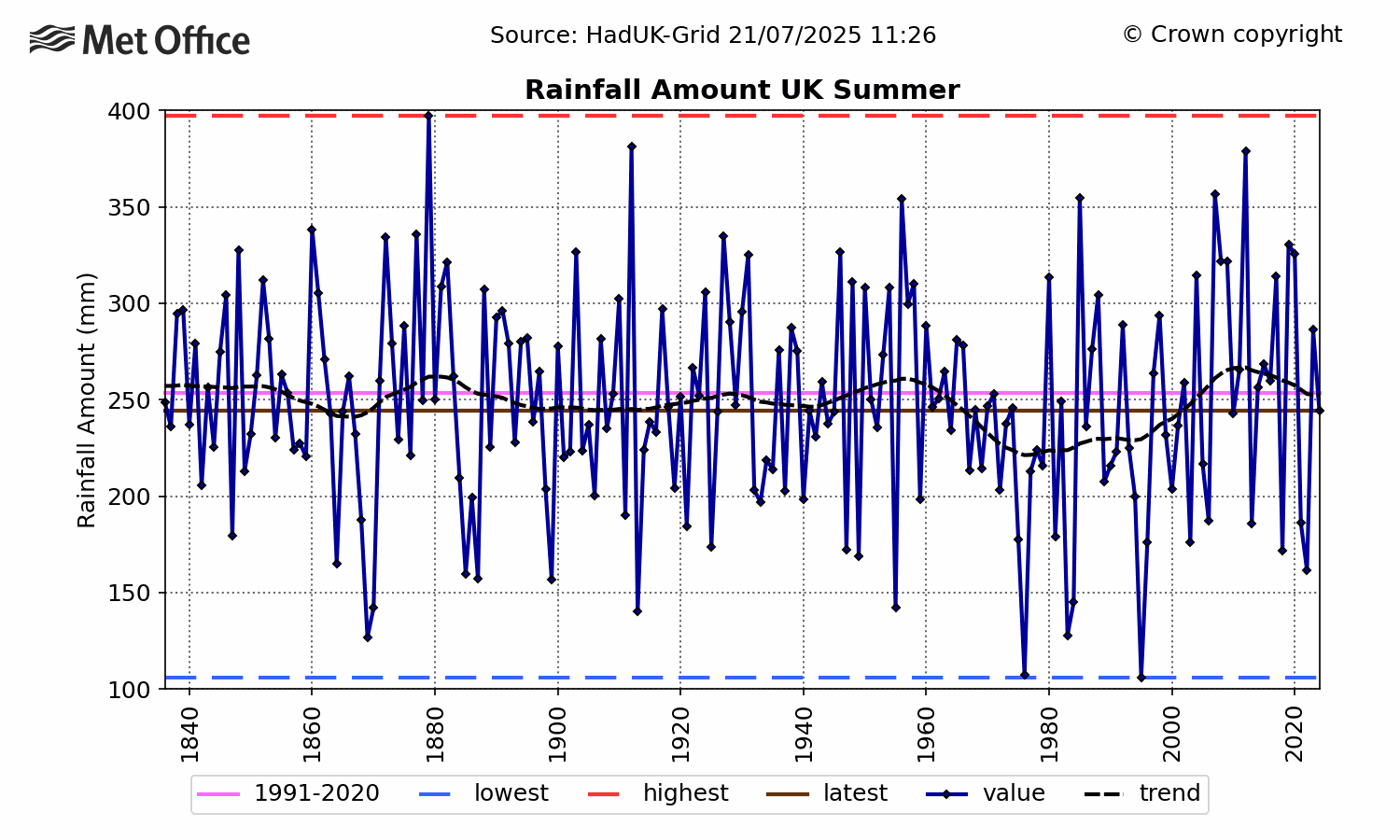
https://www.metoffice.gov.uk/climate/uk/summaries/actualmonthly
I look forward to Peter Stott toddling along to the BBC to correct the misleading statement he made back in 2012.
Or perhaps the new guidelines are really designed to save his blushes.
via NOT A LOT OF PEOPLE KNOW THAT
September 9, 2018 at 04:27PM

