
June 6th marks the 75rd anniversary of the D-Day invasion in Normandy, France during World War II and the weather forecast for that historic event makes for quite an interesting story in what turned out to be a pivotal moment in world history.

Years of detailed planning went into the D-Day invasion on June 6, 1944, but success hinged on one element that no military commander could control — the weather. Defying his colleagues, Captain James Martin Stagg advised General Dwight “Ike” Eisenhower to postpone the invasion of Normandy by one day from June 5th to June 6th because of uncertain weather conditions in a weather forecast that was arguably the most important of all-time.
Background
There were no computer forecast models, no satellites, radar was in its infancy and being used primarily for military purposes only, and yet General Dwight “Ike” Eisenhower wanted a definitive weather forecast for the planned invasion of Normandy, France with no “ifs”, “maybes” or “possibles” attached to the wording. With definitive forecast information required and thousands of lives on the line, it is an underestimate to say that the task was daunting for chief meteorologist, Group Captain James Martin Stagg, of the British Royal Air Force. Stagg ultimately persuaded General Eisenhower to change the date of the Allied invasion of Europe during World War II due to weather concerns from the 5th of June to the 6th of June in 1944. There were actually three different teams of weather forecasters involved with the Normandy invasion including the British Royal Navy, British Meteorological Office, and the US Strategic and Tactical Air Force, but Stagg was given the role as the chief meteorologist and the only meteorologist allowed direct contact with Eisenhower.
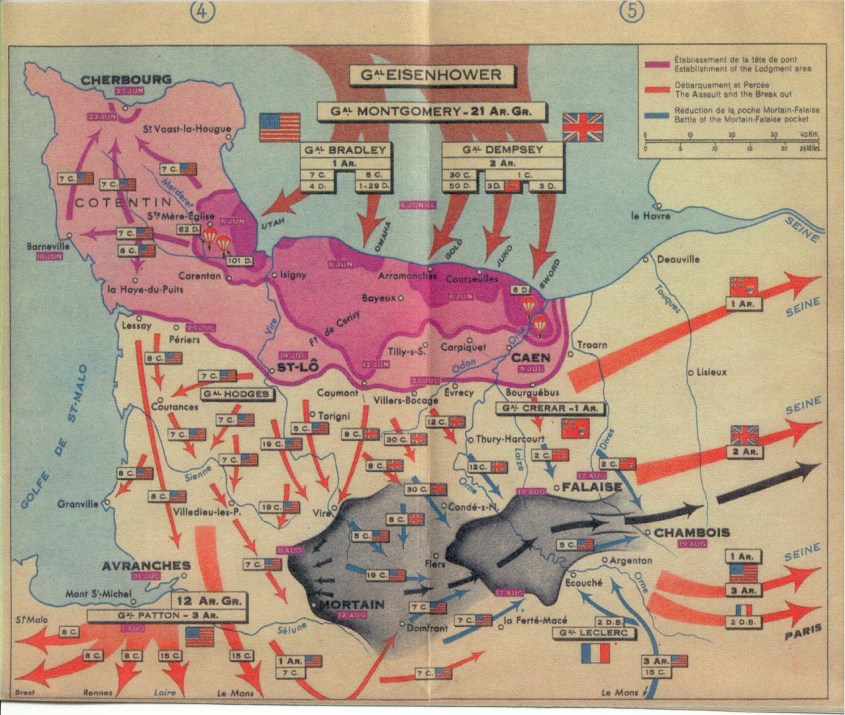
The opportunity for launching an invasion was limited to only a few days in each month to take advantage of the moon and tide. Darkness was needed when the airborne troops went in, but moonlight once they were on the ground. Spring low tide was necessary to ensure extreme low sea level so that the landing craft could spot and avoid the thousands of mined obstacles that had been deployed on the beaches. If this narrow time slot was missed, the invasion would have been delayed for two weeks. Eisenhower had tentatively selected June 5th as the date for the assault which was one of the few days in early June that met these criteria.
Saturday, June 3rd
By Saturday, June 3rd, the forecasts began to be highly unfavorable for a June 5th invasion. High pressure areas were over Greenland and the Azores, with low pressure centers moving east-northeast across the Atlantic. It seemed probable that the high winds and sea would rule out the 5th as D-day. Nevertheless, “Ike” pushed ahead for now with his plans for a June 5th invasion.

Sunday, June 4th
There were two official weather briefings given by weather forecasters on June 4th. At the early weather briefing on that day, the weather prospect seemed completely hopeless for a June 5th invasion. All weather experts predicted seas heavy enough to swamp landing craft and a low ceiling, which would prevent the air forces from carrying out their part of the assault. Under these circumstances, the air commanders were unwilling to take off, and Admiral Ramsey, after being advised that the winds would reach 25 to 30 miles per hour, feared that the channel would be too rough for small craft. Only “Monty” (General Montgomery of England) wished to still carry out the schedule. […]
Post D-Day
By D-Day plus 12 days, the flow of men and supplies over the beaches was running smoothly: 314,514 troops, 41,000 vehicles, and 116,000 tons of supplies had been landed on the American beaches, with almost identical figures for the British beaches. Had General Eisenhower postponed the invasion, the only option would have been to go two weeks later, and this would have encountered the “worst channel storm in 40 years” as Churchill later described it, which lasted four days between 19 and 22 June. In fact, Eisenhower sent a letter to Captain Stagg saying in reference to the major storm that occurred in the potential second time slot for the invasion, “I thank the Gods of war we went when we did.” For the rest of his life, in moments of stress, Group Captain Stagg would remember some words spoken to him by General Morgan, Eisenhower’s Chief of Staff, in the tension-filled days leading up to the postponement: “Good luck Stagg: may all your depressions be nice little ones, but remember, we’ll string you up from the nearest lamp post if you don’t read the omens right.”
Years later, during their ride to the Capitol for his inauguration, President-elect John F. Kennedy asked President Eisenhower why the Normandy invasion had been so successful. Ike’s answer: “Because we had better meteorologists than the Germans!”
Full post
The post The Most Important Weather Forecast Of All Time: D-Day, 6 June 1944 appeared first on The Global Warming Policy Forum (GWPF).
via The Global Warming Policy Forum (GWPF)
June 5, 2019 at 05:14AM
 Iowa Climate Science Education
Reblogged this on Climate- Science.
LikeLike