
Guest geological story-telling by David Middleton
One of the coolest things about WUWT is the enthusiasm that Anthony and many other regulars here have for the space program. As a life-long space junkie, I know that my enthusiasm for the space program pushed me toward the sciences in school. My career as a geologist/geophysicist in the oil & gas industry has even afforded me a few personal connections to the space program.
The 50th anniversary of the Apollo 11 Moon landing inspired quite a few great posts about this tremendous accomplishment. However, in almost every post about the Apollo program, comments about the missions being faked have cropped up. From my experience, nothing will convince these folks that the Apollo missions really happened. However, there is one irrefutable category of evidence that American astronauts landed on the Moon and returned to Earth six times from July 1969 to December 1972: The rock and regolith (soil) samples.
A little background
I have a few personal connections to NASA and the Apollo program. If these are of no interest, skip on to the section titled: “You first have to learn the language of this little rock here.”
My Dad’s cousin, Rear Admiral Roderick O. Middleton commanded the task force that recovered Astronaut John Glenn and the Friendship 7 spacecraft. He then went on to manage the Apollo program from 1967-1969. He left the Apollo program a couple of months after the Apollo 11 landing “to assume command of Cruiser-Destroyer Flotilla 12.”
Aug 1967 R.O. Middleton becomes Manager of Apollo Program
11 Oct 68 Apollo 7 Earth Orbiter
(Schirra, Eisele, Cunningham) First US 3-man space mission, commanded by CAPT Walter M. Schirra, Jr., USN. MAJ Ronnie Walter Cunningham (USMCR), served as Lunar Module Pilot. The mission lasted 10 days and 20 hours. Recovery was by HS-5 helicopters from USS Essex (CVS-9).21 Dec 68 Apollo 8 Lunar Orbiter
(Borman, Lovell, Anders) CAPT James A. Lovell, Jr., USN, was Command Module Pilot. During the mission, Lovell was one of the first 2 humans to see the far side of the moon. The mission lasted 6 days and 3 hours and included 10 moon orbits. Recovery was by HS-4 helicopters from USS Yorktown (CVS-10).03 Mar 69 Apollo 9 Earth Orbiter
(McDivitt, Scott, Schweikart)18 May 69 Apollo 10 Lunar Orbiter
(Stafford, Young, Cernan) dress rehearsal for first lunar landing mission.CDR John W. Young, USN, was the Command Module Pilot and CDR Eugene A. Cernan, USN, was the Lunar Module Pilot. During the 8 day mission, the craft made 31 lunar orbits in 61.6 hours. Recovery was by HS-4 helicopter from USS Princeton (LPH-5).16 Jul 69 Apollo 11 First Lunar Landing
(Armstrong, Aldrin, Collins) On 20 July former naval aviator and Apollo 11 Neil A. Armstrong, USN became the first person to set foot on the moon saying: “That’s one small step for man, one giant leap for mankind.” Armstrong was Commander of Apollo 11 which during its 8 day mission landed on the moon’s Sea of Tranquility. Recovery was by HS-4 helicopters from USS Hornet (CVS-12). (To see a YouTube video, click HERE.Oct 1969 R.O. Middleton leaves NASA
From 1981-1997 I was employed as a geophysicist with Enserch Exploration in Dallas, Texas. One of the geologists I worked with was James Reilly. Jim left Enserch in 1995 because he had a job offer he simply couldn’t turn down:
In graduate school, Reilly was selected to participate in the 1977–1978 scientific expedition to Marie Byrd Land, West Antarctica, as a research scientist specializing in stable isotope geochronology. In 1979, he started work as an exploration geologist with Santa Fe Minerals Inc., in Dallas, Texas. From 1980 to the time he was selected for the astronaut program, Reilly was employed as an oil and gas exploration geologist for Enserch Exploration Inc., in Dallas, Texas, rising to the position of Chief Geologist of the Offshore Region. At the same time, he was involved in applying new imaging technology for industrial applications in deep water engineering projects and biological research. Reilly spent approximately 22 days in deep submergence vehicles operated by Harbor Branch Oceanographic Institution and the U.S. Navy.[3] NASA selected Reilly for the astronaut program in December 1994. He reported to the Johnson Space Center in March 1995 and completed a year of training and evaluation, and qualified for flight assignment as a mission specialist. Initially, he was assigned to work technical issues for the Astronaut Office Computer Support Branch. Reilly flew on STS-89 in 1998 and STS-104 in 2001. He has logged over 517 hours in space, including three spacewalks totaling 16 hours and 30 minutes. He has worked both on the ISS and Mir space stations. Reilly was next assigned as the Astronaut Office lead on Shuttle training. In 2007 was a member of the crew of STS-117. Concurrent with his crew assignment he is designated as Payloads and Procedures Operations lead for the Astronaut Office ISS Branch.[4]
From January 2010 to May 2014 Reilly worked as the American Public University System‘s Dean of the School of Science and Technology.
In January 2018, U.S. President Donald Trump nominated Reilly to be the director of the U.S. Geological Survey.[5] This nomination was confirmed by the U.S. Senate in April 2018.[6]
The last time I had a chance to visit with Jim, it was at the 2011 American Association of Petroleum Geologists convention in Houston, Texas, where I had the great fortune of meeting Dr. Harrison “Jack” Schmitt.
Harrison Hagan “Jack” Schmitt (born July 3, 1935) is an American geologist, retired NASA astronaut, university professor, former U.S. senator from New Mexico, and, as a crew member of Apollo 17, the most recent living person to have walked on the Moon.
In December 1972, as one of the crew on board Apollo 17, Schmitt became the first member of NASA’s first scientist-astronaut group to fly in space. As Apollo 17 was the last of the Apollo missions, he also became the twelfth and second-youngest person to set foot on the Moon, and the second-to-last person to step off of the Moon (he boarded the Lunar Module shortly before commander Eugene Cernan). Schmitt also remains the only professional scientist to have flown beyond low Earth orbit and to have visited the Moon.[3] He was influential within the community of geologists supporting the Apollo program and, before starting his own preparations for an Apollo mission, had been one of the scientists training those Apollo astronauts chosen to visit the lunar surface.
My wife (also a geoscientist and space junkie) and I got to visit with Dr. Schmitt for a few minutes and he signed our copy of Return to the Moon. The book is basically a business plan for mining 3He on the Moon. How do we know there’s 3He on the Moon? It was measured in the regolith samples collected by the Apollo astronauts with sufficient accuracy to estimate resource potential. While 3He is fairly abundant on the Moon, there’s very little of it on Earth.
One of the geologists I currently work with grew up in the vicinity of the Manned Spacecraft Center (now Johnson Space Center) and his father was one of the technicians who crafted the flag poles and other unique items for NASA. He has a flag and flag pole that would have flown on Apollo 18, 19 or 20. He brought it into the office and set it up in our break room last year on the 49th anniversary of Apollo 11… very cool. Having grown up with the space program and currently being a neighbor of Apollo 13 astronaut Fred Haise, he has some great stories.
On to the geological story-telling…
“You first have to learn the language of this little rock here.”
You see the story yet? It’s all pretty much here.
In a language you can’t yet understand, but it’s here.
A tale of upheaval and battles won and lost.
Gothic tales of sweeping change, peaceful times, and then great trauma again.
And it all connects to our little friend.
That’s what we are, we geologists.
Storytellers.
Interpreters, actually.
That’s what you gentlemen are going to become.
And how does this relate to the moon? From 240,000 miles away you have to give the most complete possible description of what you’re seeing.
Not just which rocks you plan to bring back but their context.
That and knowing which ones to pick up in the first place is what might separate you guys from those little robots.
You know, the ones some jaded souls think should have your job.
You see, you have to become our eyes and ears out there.
And for you to do that, you first have to learn the language of this little rock here.–David Clennon as Dr. Leon (Lee) Silver, From the Earth to the Moon, Episode 10, Galileo Was Right, 1998
Dr. Silver trained the Apollo 15 crew to be field geologists. The Apollo 15 landing site, the Hadley-Apennine region, was selected because it was a good place to look for anorthosite, thought to be the primary component of the Moon’s primordial crust.
Genesis Rock
Published: September 22, 2017
On August 1, 1971, Apollo 15 mission commander David R. Scott relayed exciting news to Mission Control and the scientists in the back room.“Guess what we just found,” Scott said. “Guess what we just found! I think we found what we came for.”
That sample, nicknamed the Genesis Rock, sample number 15415, was an anorthosite, a piece of the moon’s primordial crust. Geologists, hoping to learn more about the moon and its origins, selected the Hadley-Apennines landing site for precisely this reason. While not the oldest lunar sample brought back from the moon, geologists at the Manned Spacecraft Center (now known as the Johnson Space Center) later concluded that this rock was about 4 billion years old.
Apollo 15 was the first of three J missions, often called the true scientific missions to the moon.
These missions featured the Lunar Rover equipped with a television camera, a redesigned Lunar Module (LM) that allowed the crews to stay for extended periods on the moon and long duration backpacks for the moonwalkers allowing astronauts to spend more time exploring the lunar surface. Engineers also made changes to the Service Module, filling it with remote sensing instruments designed to document the moon’s surface. During the crew’s three spacewalks, Scott and James B. Irwin spent almost nineteen hours exploring the moon and covered 17.5 miles of lunar terrain in the lunar rover.
To prepare for this historic flight, the crew trained for months. An important part of that training included geology field trips with geologists from universities and the center as well as the U.S. Geological Survey. Apollo 15, 16 and 17 crews dedicated much more time to these exercises than their colleagues on the earlier Apollo lunar landings.
Apollo 15 astronauts traveled to a different geological site each month, which amounted to about 18 trips, compared to five or six for the previous flight of Apollo 14. Scott and Irwin practiced in terrain similar to the conditions they would find on the moon and within the limitations they would face on the surface. Gary E. Lofgren helped train the Apollo 15 crew and now serves as the lunar curator.
[…]
In preparation for their landing in the Hadley-Apennine region, the instructors along with Scott and Irwin, visited volcanic sites like Hawaii and areas “where they would see the kinds of rocks we expected to find as part of that primitive crust,” Lofgren noted.
These sites included the San Gabriel Mountains, Ely, Minnesota, the Rio Grande Gorge and the San Juan Mountains. Their training paid off in spades. Leon T. Silver, an Apollo 15 instructor from Cal Tech, called the mission the “apotheosis of all the things we’d been planning to do… it was the coming together of developing the technical capabilities, preparing men to be explorers as well as many, many other things.”
He and others were confident that they would find a piece of the ancient crust. Why did these scientists place such faith in two former test pilots?
“Well,” he explained, “that’s because the human intention, well educated, well prepared, can squeeze things out, you understand?”
[…]
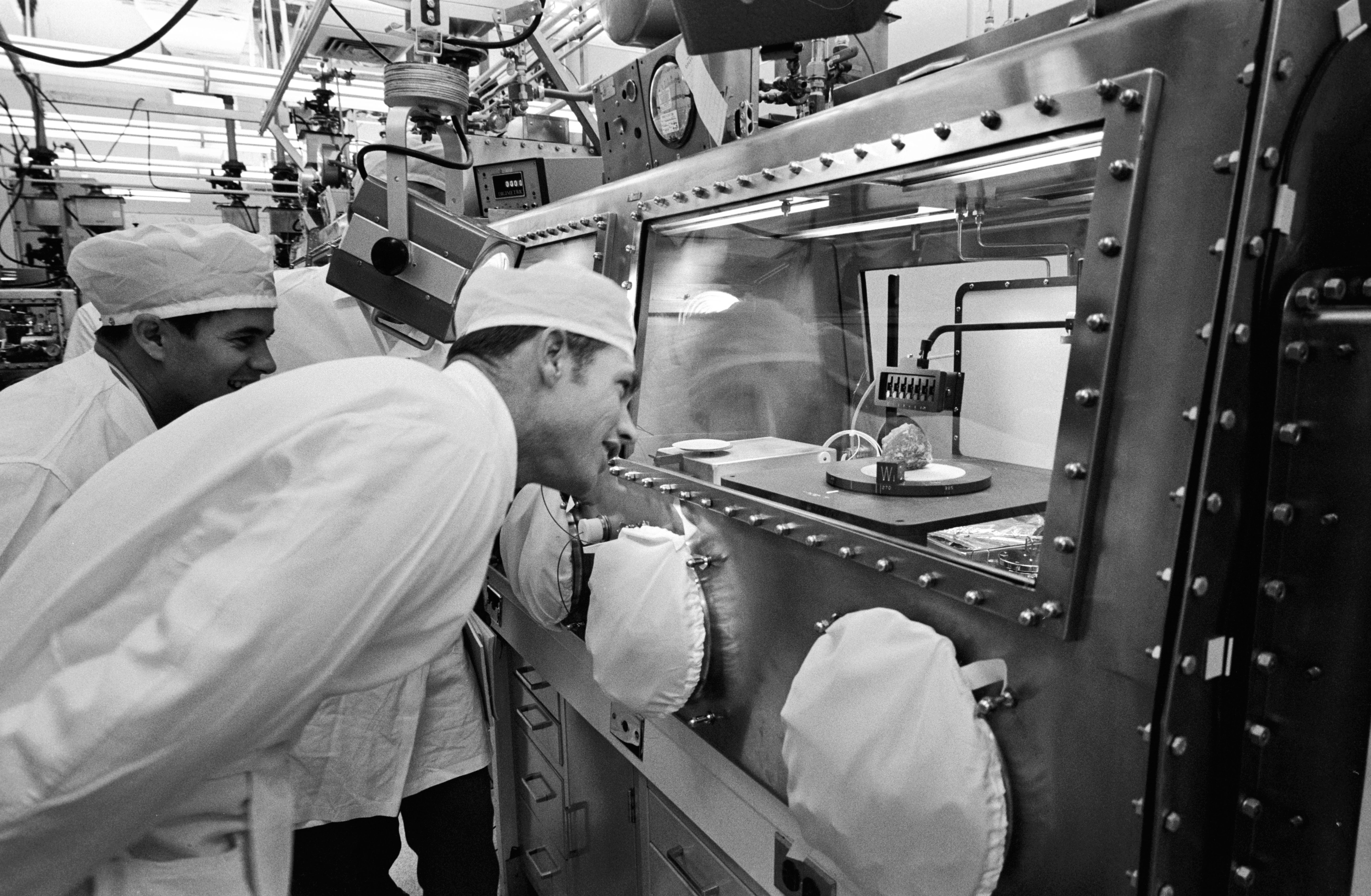
Anorthosite is much more common on the Moon than on Earth and there are significant differences between lunar and terrestrial anorthosite.
Lunar anorthosite
Anorthosite is a fascinating rock and sparks interest even among those who usually don’t care about rocks. The reason is simple. Anorthosite is often composed of mineral labradorite which is famous for an iridescent effect called labradorescence. You’ll find more in this article: anorthosite and labradorescence.The Moon highlands seem to be composed of anorthosite. We have both indirect and direct evidence for that. Measurements made recently by the Japanese lunar orbiter SELENE suggest that the lunar anorthosite may in many cases be almost totally monomineralic — composed entirely of plagioclase with very high calcium content. We have direct evidence also — American astronauts who visited Moon in the early 1970s brought back 61 rock samples that were found to be anorthosites.
It is wonderful to think that large portion of the Moons surface (highlands surrounding the basaltlowlands or marias) is schillering like anorthosites here on Earth often do. However, it is likely not the case. There are several differences between terrestrial and lunar anorthosites. Terrestrial anorthosites contain more sodium (sodium and calcium can replace each other in all proportions in the crystal structure of plagioclase). Plagioclase must have the composition of labradorite — one of plagioclase minerals. It means that 50-70% of the sites in the crystal structure which are occupied either by calcium or sodium ions are occupied by calcium. In the lunar anorthosites Ca-content is close to 100%. In order to have a labradorescence, the percent of calcium needs to be in the range of 48-58%. The effect of labradorescence is the result of a breakup of plagioclase crystals into many alternating lamellae of different (calcium and sodium rich) composition. If there is very little sodium present, such exsolution simply can not take place.
There are more differences between terrestrial and lunar anorthosites. Lunar anorthosites are light-colored, while some terrestrial anorthosites are dark. Here on Earth the cooling of anorthositic magma bodies took very long time. The crystals which show labradorescence are often very large, even pegmatitic (more than an inch in length). Lunar anorthosites, however, are quite fine-grained. Only very few crystals are larger than 1 cm.
Lunar anorthosite is very old. It is believed that it formed when the lunar magma ocean solidified which probably took place in the first 100 million years of the existence of the Moon. Lunar anorthosite is believed to be the result of a gravitational differentiation. Plagioclase is lighter than most other minerals found there and therefore rose to the uppermost part of the magma ocean. However, the details of this process are still hotly debated.
While the volcanic rocks found on the Moon are similar to those on Earth, there are major mineralogical differences.
Lunar Mineralogy
Only four minerals – plagioclase feldspar, pyroxene, olivine, and ilmenite – account for 98-99% of the crystalline material of the lunar crust. [Material at the lunar surface contains a high proportion of non-crystalline material, but most of this material is glass that formed from melting of rocks containing the four major minerals.] The remaining 1-2% is largely potassium feldspar, oxide minerals such as chromite, pleonaste, and rutile, calcium phosphates, zircon, troilite, and iron metal. Many other minerals have been identified, but most are rare and occur only as very small grains interstitial to the four major minerals.Some of the most common minerals at the surface of the Earth are rare or have never been found in lunar samples. These include quartz, calcite, magnetite, hematite, micas, amphiboles, and most sulfide minerals. Many terrestrial minerals contain water as part of their crystal structure. Micas and amphiboles are common examples. Hydrous (water containing) minerals have not been found on the Moon. The simplicity of lunar mineralogy often makes it very easy for me to say with great confidence “This is not a moon rock. “ A rock that contains quartz, calcite, or mica as a primary mineral is not from the Moon. Some lunar meteorites do, in fact, contain calcite. However, the calcite was formed on Earth from exposure of the meteorite to air and water after it landed. The calcite occurs as a secondary mineral, one that fills cracks and voids (see Dhofar 025). Secondary minerals are easy to recognize when the meteorite is studied with a microscope.
Randy L. Korotev, Department of Earth and Planetary Sciences Washington University in St. Louis
This leads to significant differences in the rocks.

Because of the simplicity of lunar mineralogy, lunar rocks have predictable chemical compositions. Nearly all the aluminum is in plagioclase and nearly all the iron and magnesium are in pyroxene, olivine, and ilmenite. Thus, on a plot of concentrations of iron (FeO) plus magnesium (MgO) versus the concentration of aluminum (Al2O3 in figure), all lunar meteorites (and nearly all Apollo lunar rocks) plot along a line connecting the composition of plagioclase and the average composition of the three iron-bearing minerals because these are the only four major minerals in the rock.
If the composition of a rock does not plot along this line, the rock is almost certainly not a lunar rock. Meteorites such as ordinary chondrites do not plot on the line because some of the iron is in iron-nickel metal as well as pyroxene and olivine. [To represent meteorites, the average composition of H-group ordinary chondrites is shown on the figure because H chondrites are the most common type of meteorite.] Earth rocks contain many more different kinds of minerals that Moon rocks. Most Earth rocks plot below the lunar line because they contain quartz or calcite, which have essentially zero concentrations of FeO, MgO, and Al2O3. Some Earth rocks do plot on the lunar line, but they are all rocks composed of plagioclase and pyroxene or olivine. [To represent Earth rocks, the average composition of the terrestrial continental crust and the range of tektites is shown on the figure.]
On Earth, the silica (SiO2) concentration of igneous rocks is used as a first-order chemical classification parameter because it varies widely among different kinds of rocks. On the Moon (1) there are no rocks rich in quartz or other silica polymorphs*, (2) in a given rock, particularly breccias, the average concentration of silica in the three main minerals, plagioclase, pyroxene, and olivine, are all about the same, and (3) in highlands rocks ilmenite is usually present only in small amounts (<3%), so silica concentrations of common lunar rocks vary by only a small amount. In lunar meteorites, SiO2 concentrations span the narrow range from 43% to 47%. Because aluminum varies by more than a factor of 3, however, aluminum is more useful as a chemical classification parameter. (Titanium is used in mare basalts.) Similarly, among nearly all common lunar rocks calcium concentrations vary by a factor of 2, from 10% to 20% as calcium oxide (CaO). This is much less than the range in terrestrial rocks. A rock with silica or calcium oxide concentrations substantially outside these ranges is almost certainly not a lunar rock.
Randy L. Korotev, Department of Earth and Planetary Sciences Washington University in St. Louis
How can we be certain that these rocks were brought back by astronauts and not robotic vehicles? A robot would not know how to look for the right rocks or explain their context. The astronauts were trained to collect a “suite” of rock samples.
The Suite
Now, we can, if we’re very clever, we can figure out a lot about an area like this by putting together what we call “the suite”. What the hell is he talking about? The suite. I’m talking about a dozen hand-sized rocks that tell the story of this place in all of its diversity from the typical, right to the exotic. You got ten minutes.
–David Clennon as Dr. Leon (Lee) Silver, From the Earth to the Moon, Episode 10, Galileo Was Right, 1998
No robot could have collected a suite of rocks and conveyed the context of those rocks the way the astronauts did, particularly during the J missions.
145:41:48 Scott: Okay, there’s a big boulder over there down-Sun of us, that I’m sure you can see, Joe, which is gray. And it has some very outstanding gray clasts and white clasts, and oh, boy, it’s a beaut! We’re going to get ahold of that one in a minute.
145:42:07 Irwin: Okay, I have my pictures, Dave.[The sample with the “white corner on the thing” is one of the best known of all Apollo samples, 15415, a 269 gram piece of pure anorthosite (185k). See, also, a red-blue anaglyph (0.5 Mb) of the ‘N’ face made from S71-44990 and 44991 by Erwin D’Hoore. Reporters covering the mission almost immediately named it the Genesis Rock. Interestingly, it was sitting up off the surface on a pedestal of soil. Readers should note that, during the drive back to the LM on EVA-1 at 123:56:52, Dave noticed another rock on a pedestal.][Jim’s down-Sun “before” pictures are AS15-90- 12227 and 12228. In 12227, Dave is standing quite close to the gnomon. Although the pedestal is a little washed out in this picture, the Genesis Rock, the white object, is quite obvious. Jim moved several steps to his right to take 228, which shows Dave holding the tongs in his left hand. The Station 7 boulder is in the background.][Dave’s cross-Sun “befores” are AS15-86- 11670 and 11671. David Harland has assembled a mosaic of Genesis Rock “befores” and “afters”.]
RealVideo Clip (40 sec) by Ken Glover from the NASA film Apollo 15: In the Mountains of the Moon145:42:10 Scott: Okay, let’s see. What do you think the best way to sample it (meaning the Genesis Rock) would be?
145:42:14 Irwin: I think probably…Could we break off a piece of the clod underneath it? Or I guess you could probably lift that top fragment right off.[Fendell has stopped to look at the rille and, now, zooms in on the near surface.]
145:42:23 Scott: Yeah. Let me try. (Pause) Yeah. Sure can. And it’s a…a white clast, and it’s about…
[Dave may have been about to call the rock a white clast breccia when he cleaned some of the dirt cover off and saw the predominant plagioclase. Jim sees the characteristic reflections almost before Dave does.]
145:42:41 Irwin: Oh, man!145:42:41 Scott: Oh, boy!
145:42:42 Irwin: I got…
145:42:42 Scott: Look at that.
145:42:44 Irwin: Look at the glint!
145:42:45 Scott: Aaah.
145:42:46 Irwin: Almost see twinning in there!
145:42:47 Scott: Guess what we just found. (Jim laughs with pleasure) Guess what we just found! I think we found what we came for.
145:42:53 Irwin: Crystalline rock, huh?
145:42:55 Scott: Yes, sir. You better believe it.
145:42:57 Allen: Yes, sir.
145:42:58 Scott: Look at the plage in there.
145:42:59 Irwin: Yeah.
145:43:00 Scott: Almost all plage.
145:43:01 Irwin: (Garbled)
145:43:02 Scott: As a matter of fact (Laughing) Oh, boy! I think we might have ourselves something close to anorthosite, ’cause it’s crystalline, and there’s just a bunch…It’s just almost all plage. What a beaut.
[NASA photo S71-43477 shows Dave examining the Genesis Rock in the Lunar Receiving Lab after the flight.]
145:43:18 Irwin: That is really a beauty. And, there’s another one down there!145:43:22 Scott: Yeah. We’ll get some of these.[Fendell is now looking at Dave and Jim. Jim has his back to the camera and Dave is standing at his right, facing south, as they examine the ground around their find. They are working inside the rim of Spur on a noticeable slope.]
145:43:24 Allen: Bag it up!145:43:27 Scott: Ah! Ah!
145:43:29 Irwin: Beautiful.
145:43:30 Scott: Hey, let me get some of that clod there. No, let’s don’t mix them. Let’s make this a special…Why (don’t)…I’ll zip it up.
145:43:36 Irwin: Okay.[Jim turns to his right to present his SCB.]
145:43:37 Scott: Make this bag, 196, a special bag.
It wouldn’t have even been possible to land where the Genesis Rock was collected.

This image from NASA’s Lunar Reconnaissance Orbiter shows the area surrounding Apollo 15’s landing site, annotated with the traverse plots of the mission’s first two moonwalks, abbreviated as EVAs (extra-vehicular activities). Numbers indicate elevations in meters above the landing site (indicated by the arrow labeled “LM” — lunar module). Astronauts David Scott and James Irwin ventured to the lower slopes of Mons Hadley Delta (center left). The distance they travelled from the lunar module to Elbow crater along the edge of Hadley Rille (EVA 1) is about 2.8 miles. Apollo 15 was the first mission on which the “lunar rover” was used.
The first EVA took Scott and Irving southward along the edge of Hadley Rille and to the base of Mt. Hadley Delta near St. George crater. This traverse took them to a height of just over 65 meters (or 213 feet) above the landing site on the mare plain. At this height, much of the surface material of the mountain comprises debris that, over eons, slid down the upper slopes. The area contains very few surface boulders, so materials collected in this area primarily consist of regolith: dusty, rocky debris.
The second EVA took the astronauts southeast to “South Cluster” and Spur craters. At Spur crater, a very old crystalline rock fragment was collected, containing evidence of geologic processes more than 4 billion years old and representing a piece of the original anorthositic crust of the moon. They also discovered an unusual green material composed of volcanic glass.This traverse ascended about 95 meters (104 yards) in elevation up the base of Hadley Delta. At times, the slope was so steep that the rover had difficulty getting traction, and the mountain peak loomed so high overhead, that the astronauts could not lean back far enough to get it in the frame of their cameras.
During this traverse, the astronauts commented that they thought they could detect a high-mark where lava might once have filled the basin at the base of nearby Mt. Hadley around a height of 85 meters (93 yards) above the current mare plain.
The Moon rocks were packed up on the Moon, loaded into the lunar module, transferred to the command module and brought back to Earth. They were unloaded from the command module after splash down and cataloged. Some were studied immediately. Others were set aside for future study.
While all of the rocks were collected on the Moon, at least one probably started out on Earth…
JANUARY 25, 2019
Moon rock recovered by astronauts likely originated on Earth
by Curtin UniversityIn findings published overnight in science journal Earth and Planetary Science Letters, a sample collected during the 1971 Apollo 14 lunar mission was found to contain traces of minerals with a chemical composition common to Earth and very unusual for the moon.
[…]
Professor Nemchin said the chemistry of the zircon lunar sample indicated that it formed at low temperature and probably in the presence of water and at oxidised conditions, making it characteristic of Earth and highly irregular for the moon.
“It is possible that some of these unusual conditions could have occurred very locally and very briefly on the moon and the sample is a result of this brief deviation from normality,” Professor Nemchin said.
“However, a simpler explanation is that this piece was formed on the Earth and brought to the surface of the moon as a meteorite generated by an asteroid hitting Earth about four billion years ago, and throwing material into space and to the moon.“Further impacts on the moon at later times would have mixed the Earth rocks with lunar rocks, including at the future Apollo 14 landing site, where it was collected by astronauts and brought back home to the Earth.”
Maybe Alan Shepard should have been paying closer attention to the geology than his golf swing.
Some, too many in my opinion, Moon rocks were given away by President Nixon.
Apollo moon rocks lost in space? No, lost on Earth
By TOBY STERLING, ASSOCIATED PRESS AMSTERDAMAttention, countries of the world: Do you know where your moon rocks are?
The discovery of a fake moon rock in the Netherlands’ national museum should be a wake-up call for more than 130 countries that received gifts of lunar rubble from both the Apollo 11 flight in 1969 and Apollo 17 three years later.
Nearly 270 rocks scooped up by U.S. astronauts were given to foreign countries by the Nixon administration. But according to experts and research by The Associated Press, the whereabouts of some of the small rocks are unknown.
[…]
The Rijksmuseum, more noted as a repository for 17th century Dutch paintings, announced last month it had had its plum-sized “moon” rock tested, only to discover it was a piece of petrified wood, possibly from Arizona. The museum said it inherited the rock from the estate of a former prime minister.
The real Dutch moon rocks are in a natural history museum. But the misidentification raised questions about how well countries have safeguarded their presents from Washington.
[…]
It’s a simple fact that the Moon rocks are not from Earth, are not meteorite fragments, nor were they manufactured by a Hollywood special effects department.
Any geoscientist (and there have been thousands from all over the world) who has studied lunar samples knows that anyone who thinks the Apollo lunar samples were created on Earth as part of government conspiracy doesn’t know much about rocks. The Apollo samples are just too good. They tell a self-consistent story with a complexly interwoven plot that’s better than any story any conspirator could have conceived. I’ve studied lunar rocks and soils for 45+ years and I couldn’t make even a poor imitation of a lunar breccia, lunar soil, or a mare basalt in the lab. And with all due respect to my clever colleagues in government labs, no one in “the Government “ could do it either, even now that we know what lunar rocks are like. Lunar samples show evidence of formation in an extremely dry environment with essentially no free oxygen and little gravity. Some have impact craters on the surface and many display evidence for a suite of unanticipated and complicated effects associated with large and small meteorite impacts. Lunar rocks and soil contain gases (hydrogen, helium, nitrogen, neon, argon, krypton, and xenon) derived from the solar wind with isotope ratios different than Earth forms of the same gases. They contain crystal damage from cosmic rays. Lunar igneous rocks have crystallization ages, determined by techniques involving radioisotopes, that are older than any known Earth rocks. (Anyone who figures out how to fake that is worthy of a Nobel Prize.) It was easier and cheaper to go to the Moon and bring back some rocks than it would have been to create all these fascinating features on Earth. [After writing these words I learned that virtually the same sentiments had already been expressed by some of my lunar sample colleagues.]
Randy L. Korotev, Department of Earth and Planetary Sciences Washington University in St. Louis
Does anyone still think that this could have been a grand conspiracy involving NASA, Hollywood, almost every aerospace contractor that ever existed… as well as the thousands of geoscientists from all over the world who have studied the lunar rocks?
QEDirt
If it was a conspiracy, it must have involved the Soviet Union too. The Russians very nearly beat us to the Moon and back. Luna 15 was an unmanned probe designed to land on the Moon, retrieve a core from the regolith and return to Earth. Luna 15 was launched three days before Apollo 11. It was scheduled to land 2 hours before Eagle. However, it didn’t begin its descent until about 2 hours before Armstrong and Aldrin left the Moon to rendezvous with Columbia and return home. Unfortunately for the Russians, Luna 15 crashed.
Luna 15
This robotic Soviet sample return mission raced the U.S. crew of Apollo 11 to the Moon, but fell silent during its descent. Engineers believe it crashed into the side of a mountain due to slight error in its descent angle.Results
Luna 15, launched only three days before the historic Apollo 11 mission to the Moon, was the second Soviet attempt to recover and bring lunar soil back to Earth.In a race to reach the Moon and return to Earth, the parallel missions of Luna 15 and Apollo 11 were, in some ways, the culmination of the Moon race that defined the space programs of both the United States and the Soviet Union in the 1960s.
[…]
However, Luna 16, 20 and 24 did manage to land and return cores of lunar regolith to Earth and guess what?

Below are charts I’ve made from data from dozens of literature sources and my own lab for what we geochemists call the “major elements” and “minor elements” in samples from those 6 Apollo mission and 3 Russian Luna missions that brought samples back from the Moon. To make it simple, I’ve stuck to just soil (regolith) samples. I’ve also included data for those lunar meteorites that are breccias because many to most of these rocks are composed of lithified soil. The lunar meteorites come from all over the Moon whereas the Apollo and Luna mission all come a small area of the nearside.
Randy L. Korotev, Department of Earth and Planetary Sciences Washington University in St. Louis
Here’s Dr. Korotev’s plot of FeOT vs Al2O3…

This confuses people. On Earth, iron exists in the 2+ (ferrous) and 3+ (ferric) oxidation states so in chemical analysis of rocks, Fe concentrations are usually stated as % Fe2O3 because the ferric oxidation state is more common than ferrous oxidation state. On the Moon there is (effectively) no oxygen-bearing atmosphere so there are no iron 3+ iron minerals. The iron in pyroxene, olivine, and iron-titanium minerals like ilmenite is all in the ferrous (2+) oxidation state. To complicate the issue, some of the iron in every lunar soil exists as metal. Up to 10% of the iron in some of these sample is metallic, usually as iron-nickel metal derived from meteorites. So, in analyses of lunar samples, results for iron are usually stated as “total Fe as FeO” or FeOT. The anticorrelation in this plot occurs because soils on the left (basaltic) are dominated by the Al-poor, Fe-rich minerals pyroxene, olivine, and ilmenite whereas those on the right (feldspathic) are dominated by the Al-rich, Fe-poor mineral plagioclase.
Randy L. Korotev, Department of Earth and Planetary Sciences Washington University in St. Louis
In almost every major and minor element cross plot, the lunar samples are distinctly different than Earth soils. The Apollo samples are consistent with lunar meteorites and with the Luna samples.
QEDirt… quod erat demonstrandum by the dirt.
Oh… I almost forgot this: Horst Schist!
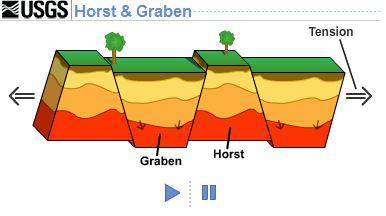

Sadly, there doesn’t appear to be any schist on the Moon. If there was schist on the Moon, there would have been mud on the Moon in the distant past… and possibly life.
How about that, geology fans?
–Brett Cullen as Apollo 15 Mission Commander Dave Scott, From the Earth to the Moon,Episode 10, Galileo Was Right, 1998
via Watts Up With That?
August 15, 2019 at 04:34AM
 Iowa Climate Science Education


Reblogged this on Climate- Science.press.
LikeLike