
Guest “sports commentary” by David Middleton
RISING RISKS
Climate change is threatening sports stadiums and arenas, and teams like the Yankees and Dolphins are battling backPUBLISHED MON, JAN 27 2020
Diana Olick
Miami’s Hard Rock Stadium will host about 65,000 fans on Super Bowl Sunday. While the biggest battle in football will last just one evening, the fight that stadium faces from the effects of climate change will go on indefinitely.
It is not alone. Teams and stadiums across country are dealing with flooding, extreme storms, excessive heat and smoke from wildfires.
“The last three years in September, we’ve had climate issues, whether they’re hurricane threats. We had to actually move a game,” said Tom Garfinkel, CEO of the Miami Dolphins football team. “We’ve had lightning strikes that we’ve never had in 30 years here, where we had to delay a game. It was the longest game in the history of the NFL.”
[…]
Hurricane season is not a “climate issue”.

And the “longest game in the history of the NFL” wasn’t a “climate issue.” Lightning isn’t climate. Oddly enough, that game was in September 2018. 2018 will come up again later in this post.
Back to the CNBC article prattling on about climate change…
[…]
American Airlines Arena, where the Miami Heat basketball franchise plays, sits right on the edge of Miami’s Biscayne Bay.
“The Arena will begin to flood with only two feet of sea level rise. I’m talking 20 years or less,” said Henry Briceno, a professor at Florida International University who studies the impact of climate change on water. He expects a similar fate for the Hard Rock Stadium at a three feet rise, and said he was appalled to hear that a Major League Soccer expansion team, backed by soccer icon David Beckham, is proposing a new stadium be built near the Miami airport.
“I don’t know if those guys know that they are building in the future Atlantis,” said Briceno.
[…]
“The Arena will begin to flood with only two feet of sea level rise. I’m talking 20 years or less,” said Henry Briceno…
According to Dr. Briceno’s LinkedIn page, he spent 10 years at the Colorado School of Mines… He beat Bluto Blutarsky by 3 full years.
American Airlines Arena, FL
American Airlines Arena is a Building in Miami-Dade County, Florida. It has an elevation of 1 meters, or 3 feet.


At 2.84 mm/yr, it will take 215 years for sea level to rise by 2 feet. For sea level to rise 2 feet in 20 years, it would have to rise at a rate of 30.5 mm/yr.
Short of Doctor Evil using a space “LASER” to instantly melt the Greenland and Antarctic ice sheets, it is physically impossible for sea level to rise that quickly. Just a couple of years ago, they were prattling about Miami Beach sea level rising by 2 feet in 40 years.
Miami Beach spends millions to hold back the sea
The city is installing powerful storm water pumps and raising some public streets by an average of two feet.
Sea levels in South Florida could rise up to two feet over the next four decades. That puts Miami Beach – an island three miles off the Florida coast – at risk.The city is already experiencing sunny day flooding – days when there’s no rain, but high tides push water up through storm drains and flood city streets.
[…]
And that wasn’t even physically possible.

Sea level rise in the Miami area is not accelerating and it is rising at a rate of about 1 foot per century. Even at 3.5 mm/yr, sea level would only rise by 14 cm (5.5 in) over the next 40 years.
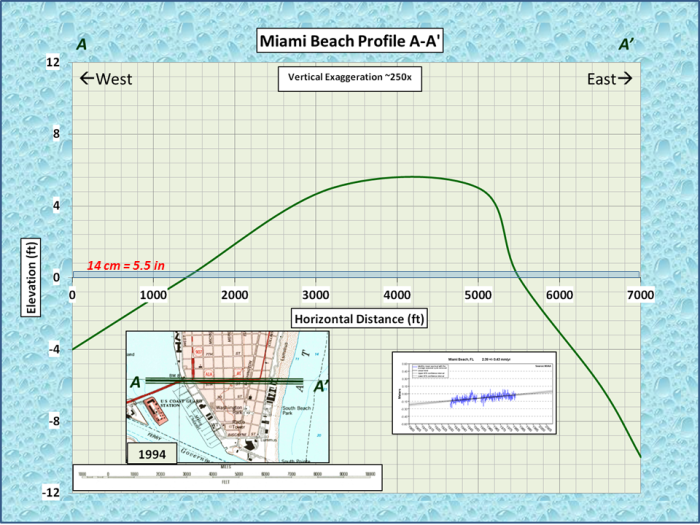
[…]
“Every community that hosts a professional sports venue, a sports stadium or arena, is going to be affected by global climate disruption, by climate change, whether through storm surges, more precipitation, stronger hurricanes, wildfires, droughts,” said Allen Hershkowitz, environmental science advisor to the New York Yankees, the first and only such known position in professional sports.
[…]
Can you believe that the New York Yankees are the only professional sports franchise to employ an environmental science advisor adviser?
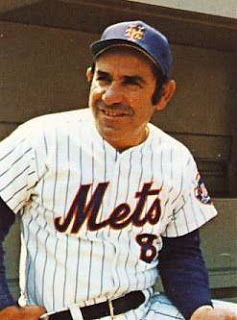
Yogi Berra must be rolling over in his grave. Although, Yogi was not only a catcher and outfielder, he was also a meteorologist…

Why don’t the New York Mets, New York Jets and New York Giants employ environmental science advisers? They play in the same climate change as the Yankees do. Is there something special about the Bronx Bombers?
“I mean, no one looks at the New York Yankees and thinks that they’re some kind of a left-wing radical organization,” added Hershkowitz.
I certainly did… I’m a life-long New York Mets fan!
Fortunately, this CNBC article ain’t over…
[…]
The initiative is especially imperative to the Dolphins’ owner, Stephen Ross, who is also chairman of The Related Cos., the developer behind Manhattan’s massive new Hudson Yards project, a retail, office and residential complex which sits on the edge of the Hudson River.
“There’s risk for everything. It’s not just sports,” said Ross. “That’s why I’m very active now in dealing with the climate, being upfront and doing things. You can’t wait to say, ‘Oh my God,’ and do it too late. If we don’t do something now, we are looking at extinction.”
[…]
Was that the mother-of-all non sequitur fallacies or what? He’s building the most expensive real estate development in the history of human civilization about 10 feet above sea level and he’s worried about human extinction if we don’t fix the weather right now.

Sea level rise at The Battery has been a steady 2.85 mm/yr since before the Confederacy fired on Fort Sumter.

A Little “Inside Baseball”
As I previously mentioned, I am a life-long New York Mets fan. I grew up in western Connecticut, about 90 minutes from New York City. As often as I could, I would make the trip to Shea Stadium to watch my beloved Mets and there were seasons when I would try to watch every game on TV… Even during the seasons when the Mets sucked (which were more seasons than when they were good). Two of the things that I really hated were:
- Rainouts
- Rain delays
If climate change is threatening baseball, we should see the effects of it in the number of rain outs and rain delays. But, baseball, the most statistically intensive sport on Earth doesn’t seen to have stats for this. Supposedly, the Commissioner’s Office has been keep records of rainouts and rain delays since 1986… But I haven’t been able to find them.
Mets-Braves rainout sets record for early season weather-related PPDs
Apr 22, 2018
ESPN News ServicesThe Braves announced that their game against the New York Mets in Atlanta has been postponed because of inclement weather, setting a record.
There have been 26 weather-related postponements this season, and according to The Associated Press, that’s the most through April since Major League Baseball began keeping records in 1986.
There were 26 postponements through April in 2007, but one was in response to the death of St. Louis pitcher Josh Hancock.
[…]
2018 must have been a bad year for sports weather.
MLB Must Consider Shortened Season as It Loses Attendance, Weather War
JACOB SHAFER
APRIL 19, 2018The MLB season is too dang long.
That’s not a universal truism, but it’s definitely the opinion of Chicago Cubs first baseman and three-time All-Star Anthony Rizzo. He has a point.
Here’s what Rizzo had to say Tuesday on Chicago’s ESPN 1000 (via ESPN.com’s Jesse Rogers):
“I think we play too much baseball. Yes, guys are going to take pay cuts. But are we playing this game for the money or do we love this game? I know it’s both, but in the long run it will make everything better. … In a perfect world, we’d start the season later and play a few scheduled doubleheaders going into an off day. As a fan you’re going to a baseball game in April, and it’s raining, snowing and [with] freezing rain. Is it really that much fun? That’s my question.”
Thus far, Mother Nature has bolstered Rizzo’s complaint. MLB initiated its season on March 29, the earliest Opening Day ever. On Sunday alone, there were six rainouts, bringing the season total to a whopping 21.
Partly, that’s an unavoidable act of God. Short of requiring all clubs to install retractable roofs, baseball’s powers that be can’t control the weather.
And even domes haven’t been able to escape the wrath, as freezing temperatures sent ice falling through a hole in the Blue Jays’ roof on Monday.
[…]
I somehow doubt that “raining, snowing and [with] freezing rain” and “freezing temperatures” sending chunks of ice through holes in the roofs of covered stadiums is the type of climate change the CNBC article was prattling on about.
Maybe the problem isn’t the weather…
MLB can’t change the weather, but starting the season earlier than ever makes no sense at all
By PAUL SULLIVAN
CHICAGO TRIBUNE
MAR 26, 2019Excluding the two-game series between the A’s and Mariners in Japan last week, baseball season starts in earnest on Thursday with 15 games, including the White Sox at the Royals and the Cubs at the Rangers.
The March 28 opening date is the earliest ever to kick off a baseball season in North America, one day earlier than last year’s slate of openers.
In its infinite wisdom, Major League Baseball decided in the last collective bargaining agreement to add an additional weekend at the start of the season, giving teams three or four additional off days in the 162-game schedule. This gives the players more time to rest over the course of the six-month schedule, and theoretically gives clubs more scheduling options.
But that also means many teams, including the Sox and Cubs, likely will be playing several games in cold and rainy weather, if they’re fortunate enough to get the games in at all. And with teams doing everything they can to play, even in inclement weather, fans will have to endure some miserable days at the ballpark.
[…]
Major League Baseball would be better, and less vulnerable to weather, with 142-game season
Nancy Armour USA TODAY SportsApril 16, 2018
The rash of postponements due to snow and cold in the Midwest and on the East Coast – 24 and counting, and the season is just 19 days old! – ought to accelerate consideration for shortening the season. Baseball isn’t meant to be played in balaclavas and parkas, and the only time fans should need a blanket at the ballpark is when there’s a movie night under the stars.
By doing away with interleague play, baseball could go to a 142-game season – and the schedule wouldn’t look all that different. The season could start April 15 and end Sept. 15, with the World Series ending by Oct. 15. There would even be room for additional off days.
[…]

Definitely not the sort of climate that the CNBC article was prattling on about.
After doing some digging, I did find some data on the number of rainouts from 2001-2018.

I also found a list of April rainouts for 2000-2011. Putting these two list together yields this…
| Rainouts | ||
| April | Full Season | |
| 2018 | 28 | |
| 2017 | 12 | 39 |
| 2016 | 11 | 25 |
| 2015 | 6 | 38 |
| 2014 | 18 | 35 |
| 2013 | 18 | 37 |
| 2012 | 8 | 21 |
| 2011 | 17 | 51 |
| 2010 | 2 | 21 |
| 2009 | 12 | 36 |
| 2008 | 10 | 34 |
| 2007 | 26 | 33 |
| 2006 | 8 | 32 |
| 2005 | 11 | 25 |
| 2004 | 12 | 50 |
| 2003 | 15 | 44 |
| 2002 | 10 | 32 |
| 2001 | 5 | 17 |
| 2000 | 18 | |
| Average | 13 | 34 |
| σ | 7 | 10 |
| +2σ | 26 | 53 |
| -2σ | 0 | 14 |
April 2018 was just a bad month for baseball.

I’ll just close with another Yogi-ism…

via Watts Up With That?
January 30, 2020 at 08:05PM


Reblogged this on Climate- Science.press.
LikeLiked by 1 person