Month: February 2020

Why Data Tampering Matters

I frequently post this animation showing how 1934 was erased as America’s hottest year.
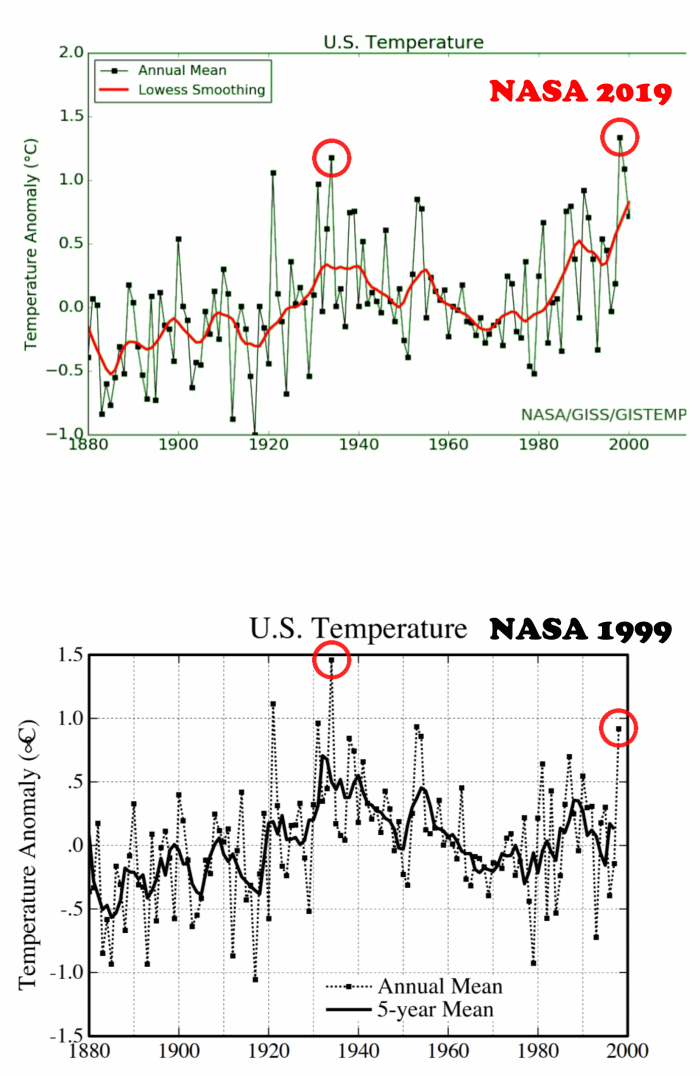
NASA 1999    NASA 2019

Here is a good example of how the tampered data is used for propaganda.
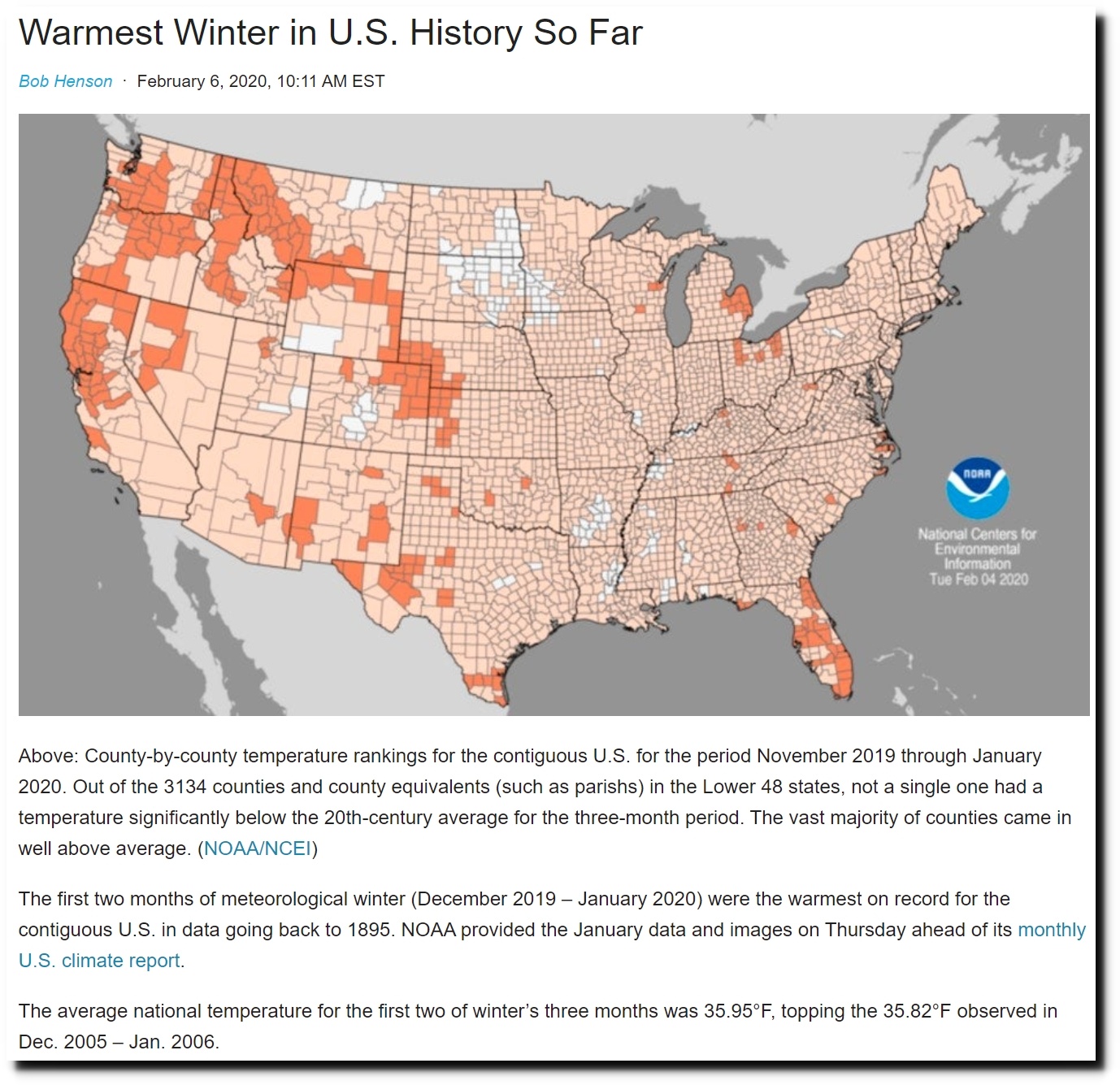
Warmest Winter in U.S. History So Far | Weather Underground

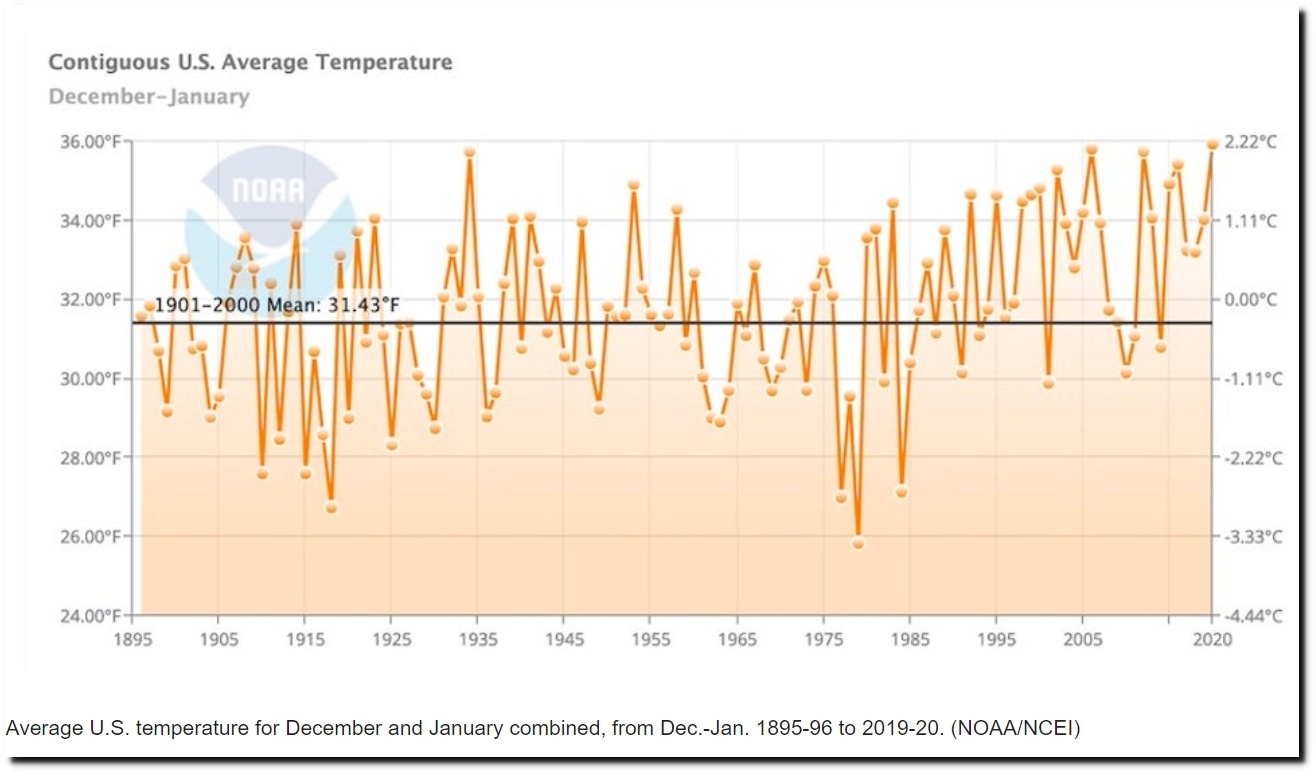
The raw data shows that 1934 was much warmer, and that this year was comparable to many other years.

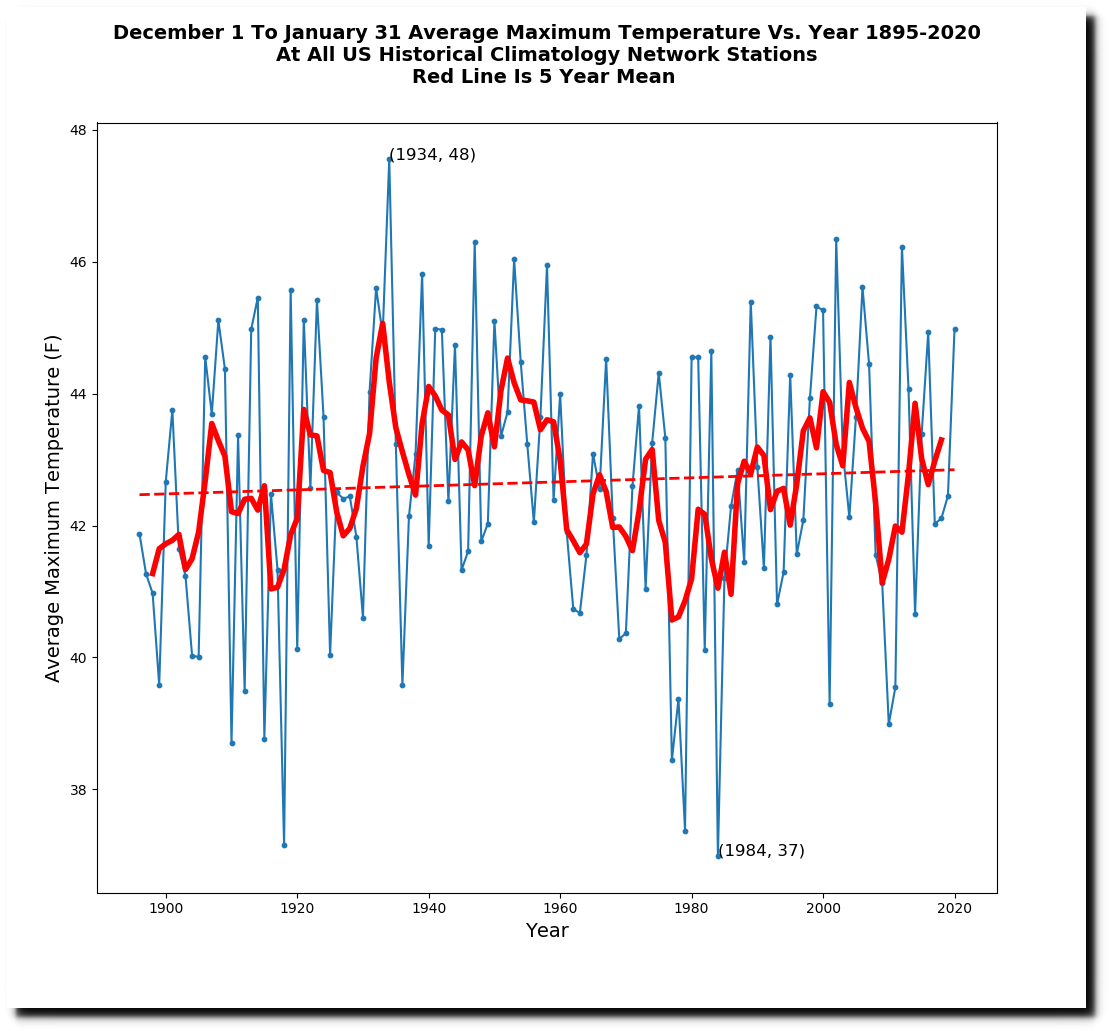
The number of warm days wasn’t in the top ten.

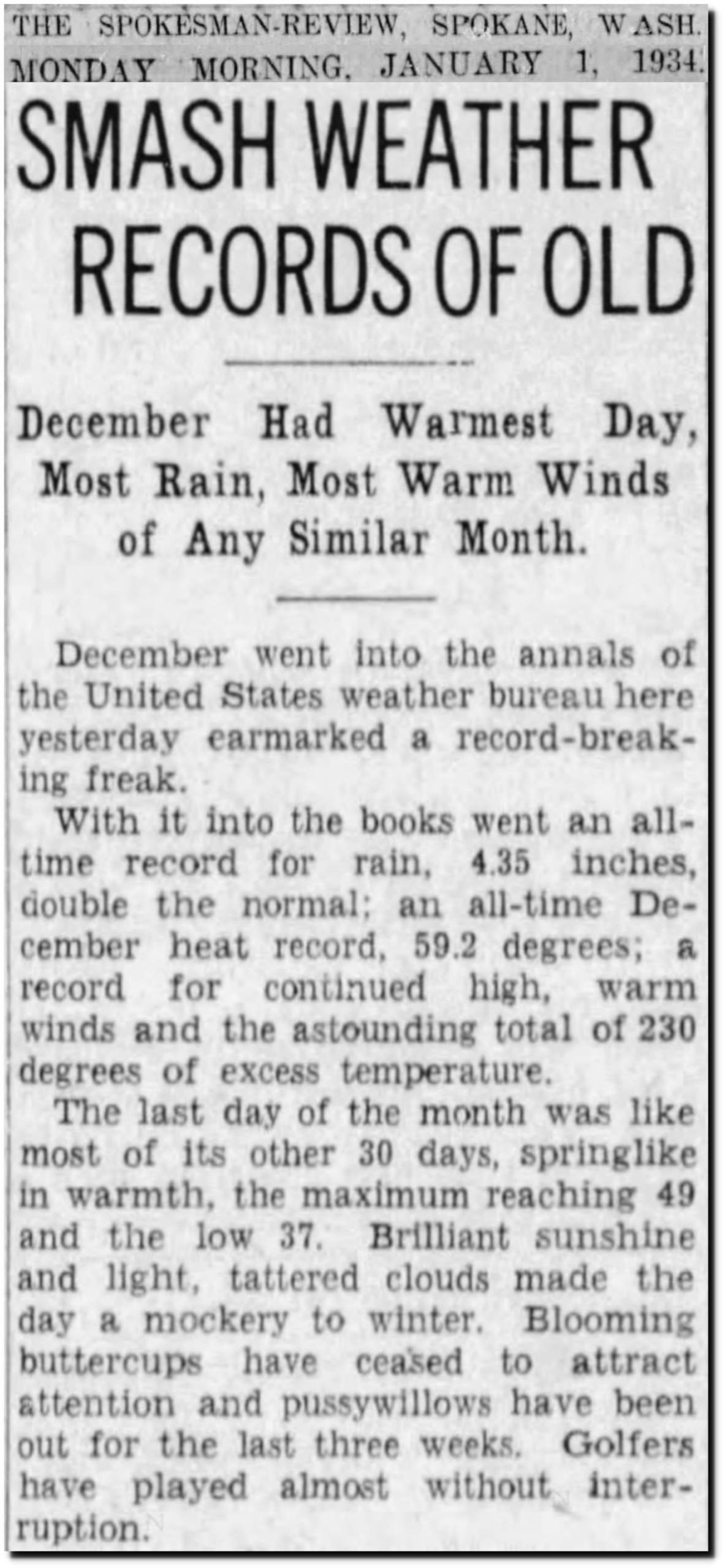
Weather Bureau maps from 1934 showed how warm the weather was, with twenty degree anomalies in the Pacific Northwest.
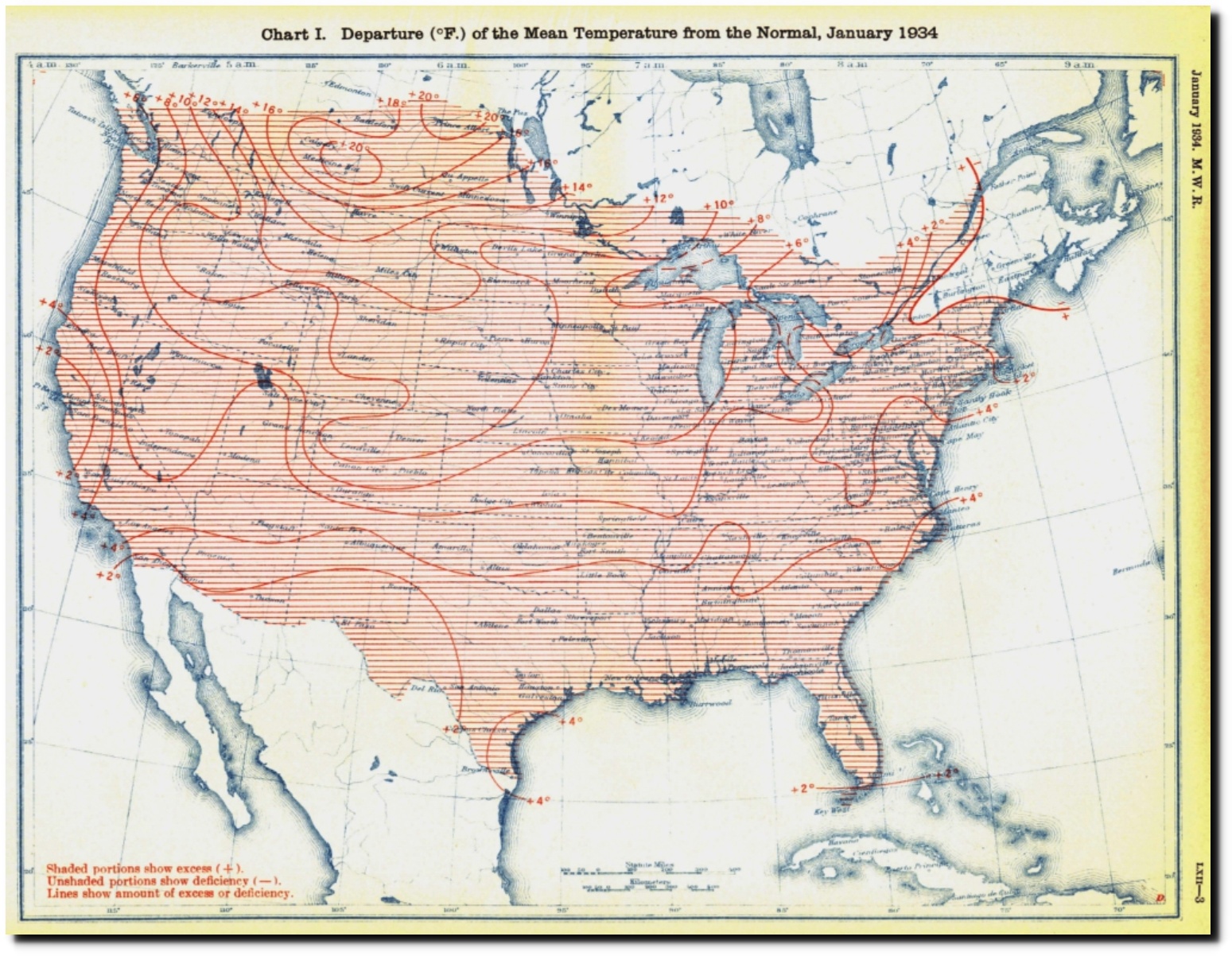
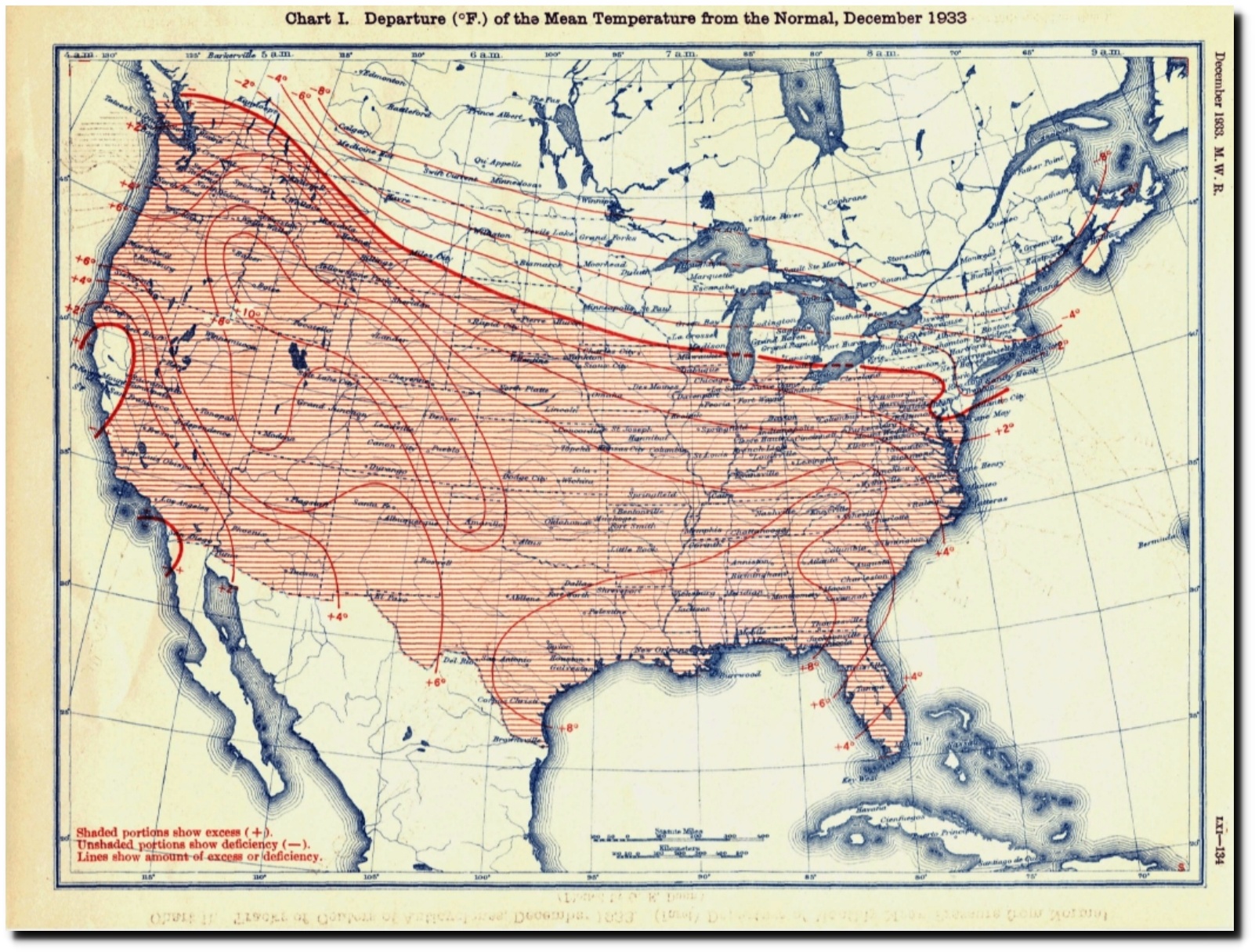
01 Jan 1934, 16 – The Spokesman-Review at Newspapers.com

The year 1934 brought heat and drought to the entire planet.
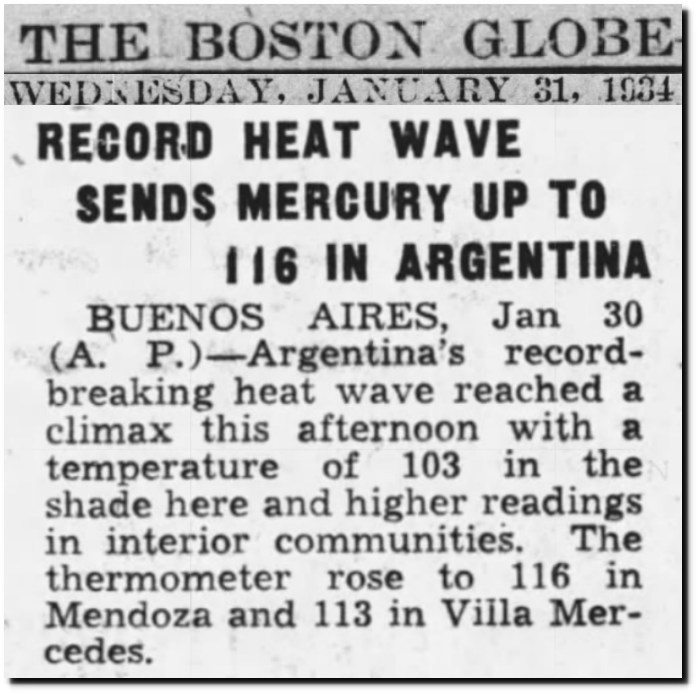
31 Jan 1934, 4 – The Boston Globe at Newspapers.com
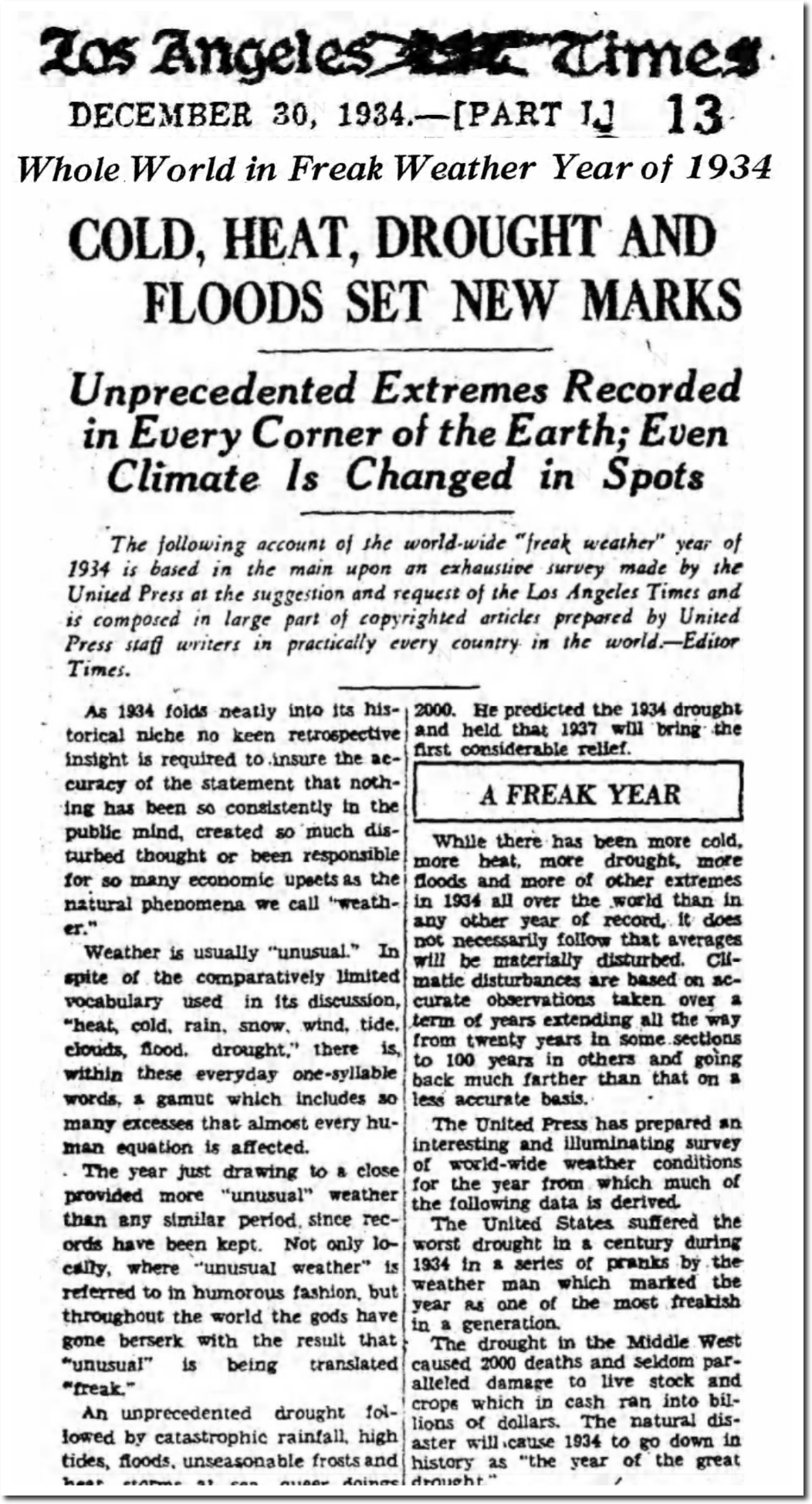
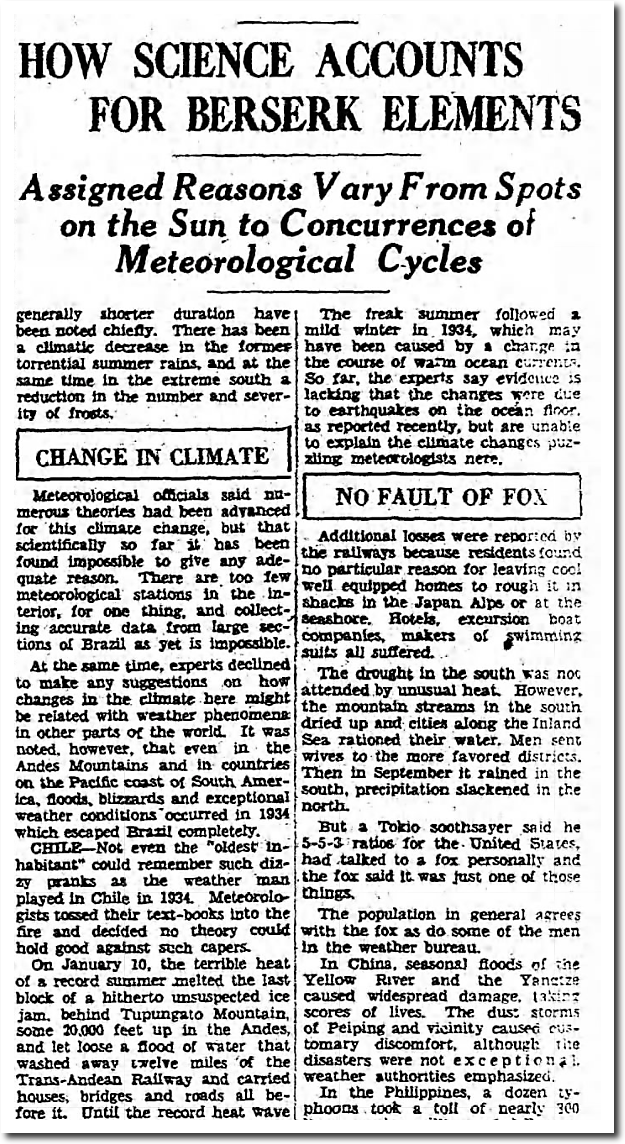
30 Dec 1934, Page 13 – The Los Angeles Times at Newspapers.com
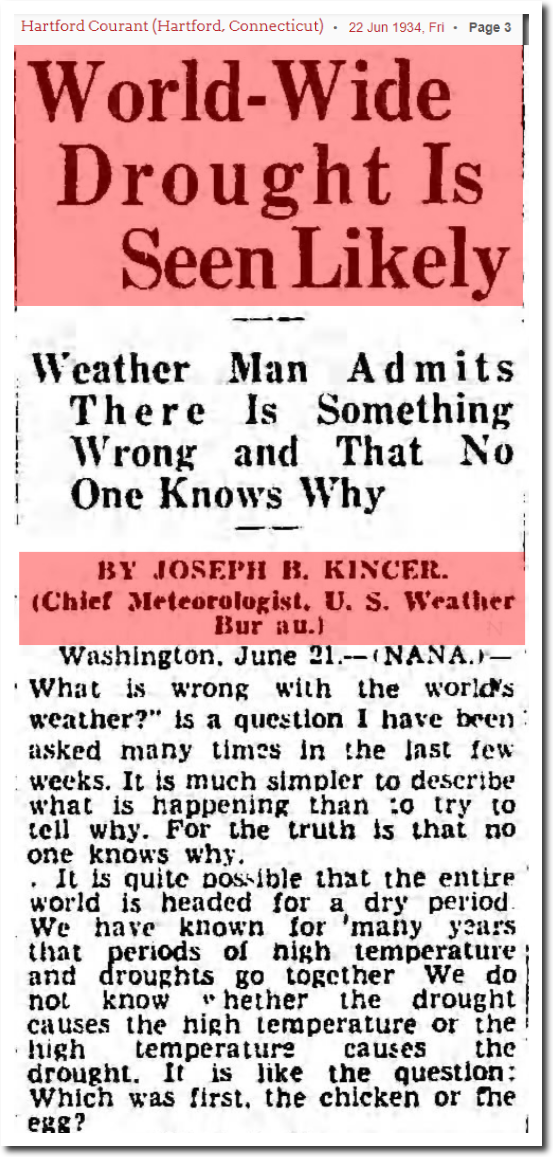

22 Jun 1934, Page 3 – Hartford Courant at Newspapers.com
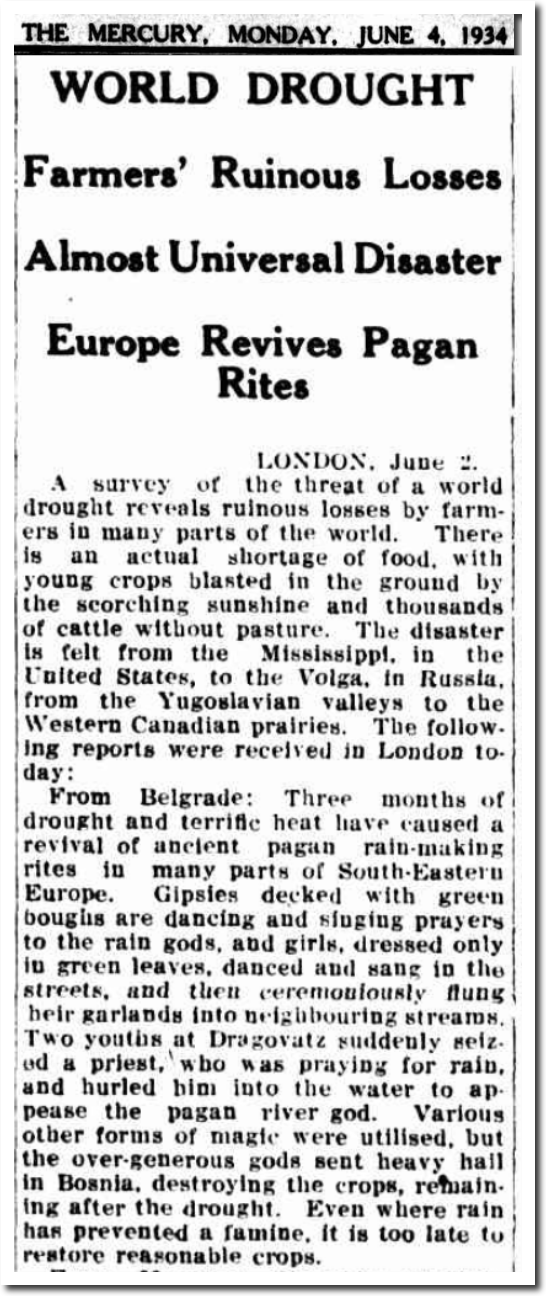
04 Jun 1934 – WORLD DROUGHT – Trove
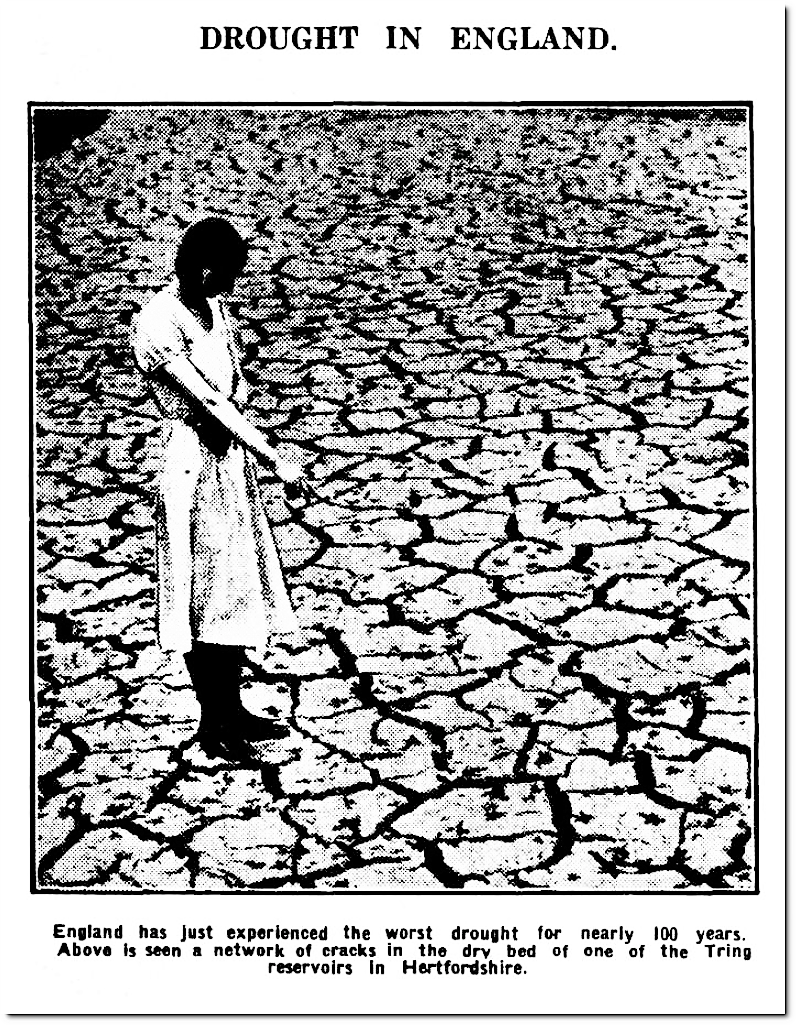
19 Jul 1934 – DROUGHT IN ENGLAND. – Trove
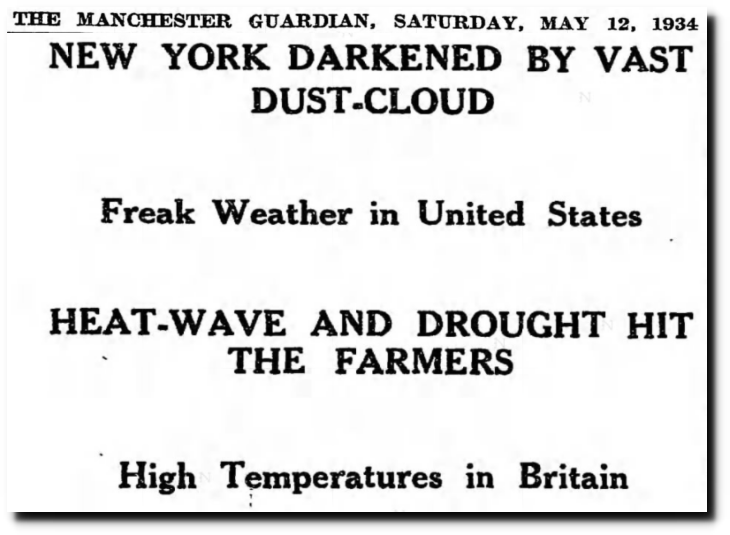
12 May 1934, 13 – The Guardian at Newspapers.com
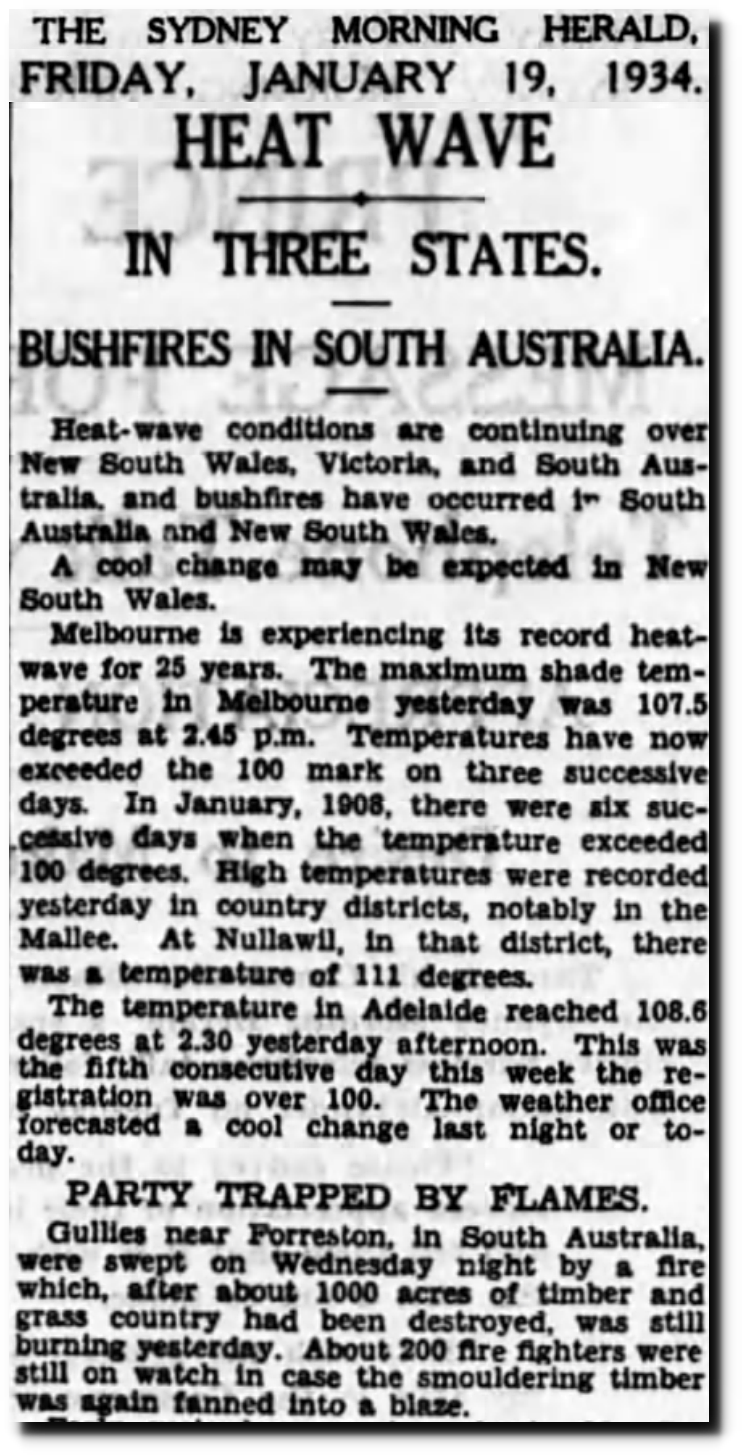
19 Jan 1934, Page 10 – The Sydney Morning Herald at Newspapers.com

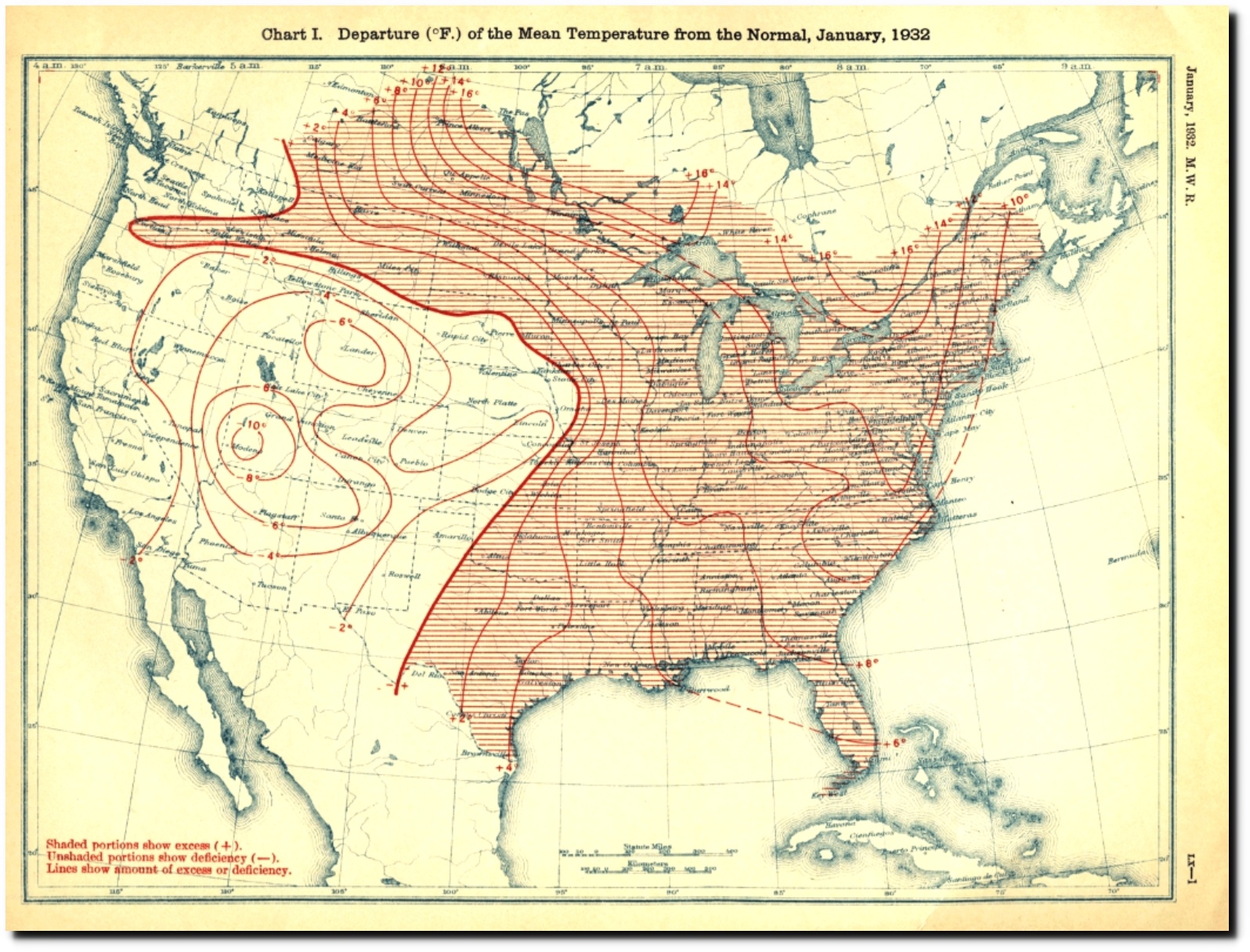
Similarly, 1932 was extremely warm – the Lake Placid Winter Olympics nearly had to be cancelled.
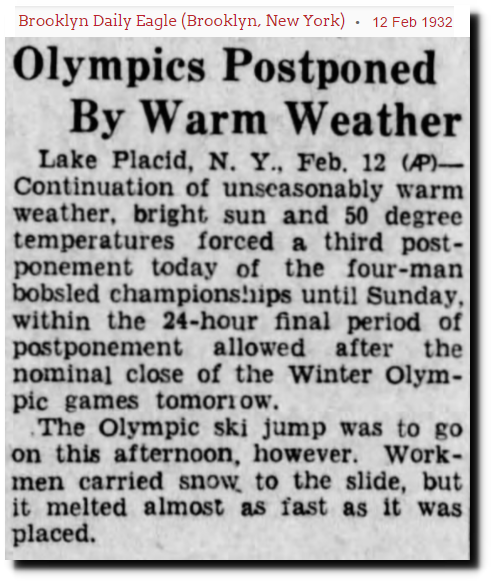
12 Feb 1932, Page 2 – The Brooklyn Daily Eagle at Newspapers.com
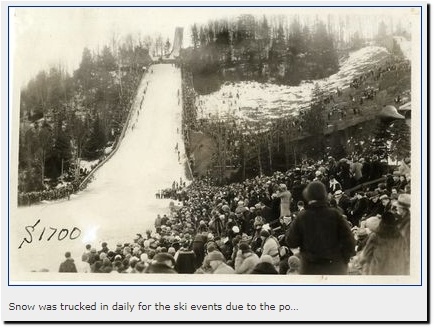
Ahead of the 1932 Winter Olympics in January, there was no snow at Lake Placid, and it was 70 degrees in New York City.
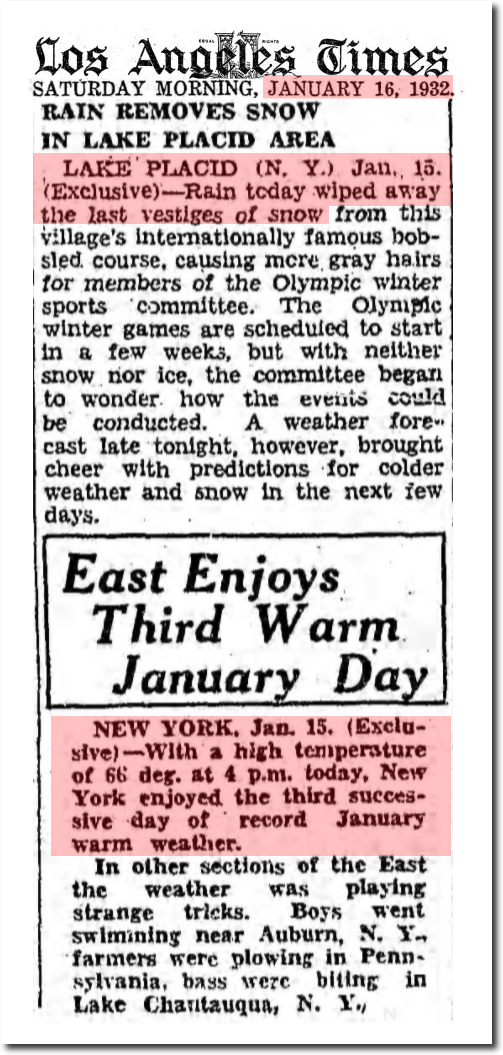
16 Jan 1932, Page 1 – The Los Angeles Times 
February is looking quite cold.
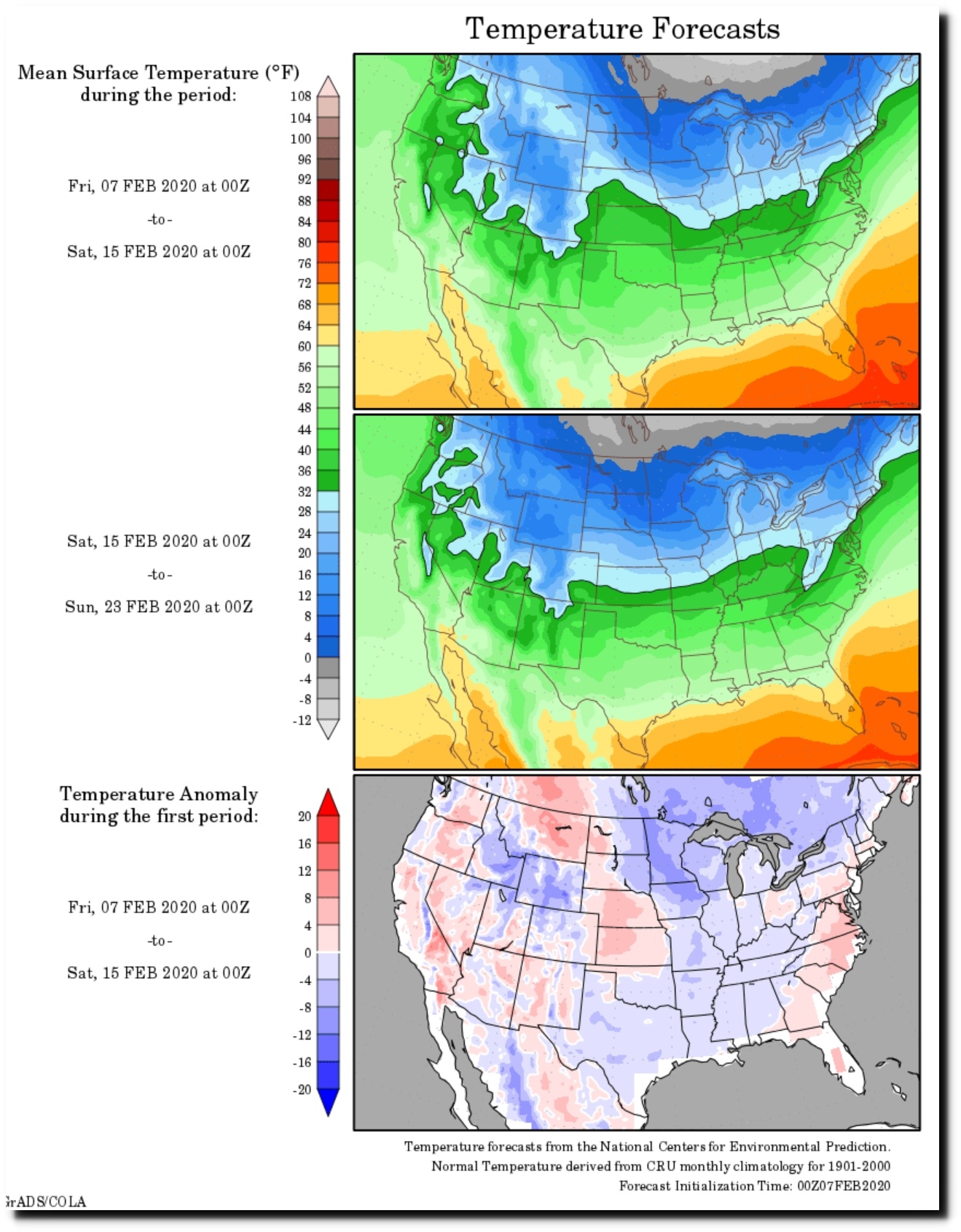
10-Day Temperature Outlook for the Conterminous U.S.

There is no truth to the claims that this winter has been record warm, but the big lie of a climate crisis is built on top of many smaller lies – which are being made at a fast and furious rate.

via Real Climate Science

https://ift.tt/2SrHORh

February 7, 2020 at 09:49PM

Understanding The Difference Between Global Warming And Climate Change

Understanding The Difference Between Global Warming And Climate Change

This entry was posted in

Uncategorized

. Bookmark the

permalink

.

via Real Climate Science

https://ift.tt/2OD3cC1

February 7, 2020 at 09:49PM

Climate Activist Plan to Use Dodd-Frank Banking Laws to Force Fossil Fuel Divestment

Guest essay by Eric Worrall

According to Vox, the Obama era Dodd-Frank banking laws will provide a future Democrat President with all the power they need to force banks to abandon fossil fuel companies, without needing approval from the other branches of government.

The next president can force the financial sector to take climate change seriously

With the help of Dodd-Frank, the president won’t need Congress.By David Roberts  Feb 7, 2020, 10:20am EST

growing chorus of voices is warning that the financial system — big banks, insurers, and other asset managers — is highly vulnerable to climate change. As Mark Carney, head of the Bank of England, explained in a 2018 speech, climate change threatens financial stability in three ways.

Existing Dodd-Frank authorities give the president wide latitude to address climate

This new school of thought, that regulators should take a more active role in systemic stability, is known as “macroprudential regulation.”

Notably, the major concepts involved in macroprudential regulation, like “systemic risk” and “stability,” were left almost entirely at regulators’ discretion to define. As with the Clean Air Act’s vague definition of “pollutant,” the idea was that regulators’ understanding of system risk and stability would evolve over time, as would regulations.

It would be straightforward for regulators to require that climate change be integrated into “risk weights,” such that investments in large emitters and industries vulnerable to the effects of climate change are rated as riskier, diverting capital.

An ambitious suite of executive actions to address climate change might not be an inspiring thing to campaign on, but every candidate should be thinking about one. Executive powers are broader than Democrats tend to appreciatebroader than Obama ever used, and broader yet in the wake of Trump. (See this package from the American Prospect on how the next president could use those powers.) 

Executive action could do a great deal to accelerate some of the social tipping points that will be necessary to trip the US into rapid action on climate change. The financial system already seems on the verge of such a tipping point. An ambitious president could push it over the threshold.

Read more: https://www.vox.com/energy-and-environment/2020/2/7/21127596/climate-change-financial-sector-dodd-frank-risk

A point the author overlooks is this apparently unconstrained Presidential power to dictate to the banking system works both ways.

On the basis of the argument presented, any President can unilaterally upend the banking system, including the current President. President Trump could use Dodd-Frank to rule that investments in renewables are high risk; the collapse of Solyndra and other large renewable failures provides ample evidence to back such a claim.

But should this Dodd-Frank power be used? Should it even exist?

President Trump does not support Dodd-Frank, and has no plan to abuse this power to bypass legislative oversight, even in the face of provocations from a Trump derangement syndrome obsessed Congress. In 2017 Trump pledged to dismantle the Dodd-Frank law, and in 2018 Trump signed an act to exempt “dozens of banks” from Dodd-Frank oversight.

President Trump appears to recognise Dodd-Frank for what it is – a grossly overpowered financial executive enabling act, a panic response to the 2008 GFC, which should never have been passed. Whatever short term gain could be achieved by exercising such power to achieve policy objectives, even policy objectives many of us support, would be more than offset by long term damage such an exercise of arbitrary executive power would cause to America’s reputation as safe place to invest.

via Watts Up With That?

https://ift.tt/38cfokW

February 7, 2020 at 08:07PM

Red code for Blizzard – România

Video – Roads and railways closed, trains canceled and hundreds of schools closed across the country after the recent snowfall and blizzard.


The A2 highway, linking Bucharest to Constanța, a city on the Romanian Black Sea coast, closed on the evening of February 5 because of the blizzard, G4media.ro reported.

In Buzău, Brăila, Ialomița and Tulcea counties, all national and county roads were closed between 22:00 and 08:00 for all vehicles, except rescue ones.

In Harghita and Covasna counties segments of national roads were closed for traffic after trees fell onto the roads, while the blizzard closed national roads in Constanța county (DN 2A Hârșova – Ovidiu and DN22 Ovidiu –Tulcea).

In Prahova county, traffic was blocked on the national road DN1A  Ploiești  – Cheia because of the trees that had fallen down, while the DN 71 Sinaia – Moroieni was closed because of the blizzard.

Similarly, roads were closed in Galati county (DN24 D Galați-Bârlad) and in Călărași county (DN 3  Călărași – Lehliu –Fundulea, DN3A Fetești – Lehliu, DN 31 Oltenița – Călărași, DN 21 Călărași – Slobozia and DN 3B Călărași- Borcea) because of the blizzard.

The situation on the country’s roads can be checked here.

The state-owned railway operator CFR Călători canceled over 30 train rides. The canceled rides are listed here.

In Bucharest, the blizzard caused more than 100 trees to fall over roads and cars, while 4 billboards and 29 construction elements also fell down, the Bucharest-Ilfov Emergency Inspectorate announced. A total of 19 interventions took place in Ilfov county, in places where trees or poles had fallen down.

Public transport in Bucharest was disrupted on the morning of February 6, when the circulation of trams was blocked. The tram line 41 was blocked after a bus skidded over the tram line in the Presei Libere Square. No trams were leaving from the square, while in the opposite direction trams were blocked in the Agronomie area. Trams running on lines 1, 8, 11, 25 and 47 were also blocked on Progresului Road, the Bucharest Public Transport Company (STB) announced.

Across the country, schools in four counties are closed. The Education Ministry announced that no classes will be held in schools in Brăila, Buzău, Călărași and Ialomița counties, where blizzard and strong winds are expected. As such, a total of 102 schools remain closed in Brăila, 155 in Buzău, 97 in Călărași, and 93 in Ialomița. Schools will also be closed in Tulcea county, except for those in the town of Tulcea.

https://www.romania-insider.com/snow-traffic-ro-feb-6-2020?amp

Thanks to Alexandru Tanase for this link

The post Red code for Blizzard – România appeared first on Ice Age Now.

via Ice Age Now

https://ift.tt/38chQb8

February 7, 2020 at 07:58PM