
Reposted from the Fabius Maximus Blog
By Larry Kummer, Editor / 6 March 2020
Summary: We’re ignorant about the world because we read the news. Here’s today’s example from the NY Times. The subject is the public policy debate about climate change, by a reporter deep into science denial. But it could be about COVID-19, our mad foreign wars, or many other subjects affecting the future of America. We cannot afford this low quality of news. But until we demand better, this is what we will get.
Sometimes a story perfectly captures the essence of a political movement, such as this in the New York Times (farcically still calling itself America’s “paper of record”): “A Trump Insider Embeds Climate Denial in Scientific Research” by Hiroko Tabuchi. It shows how “news” has become leftist propaganda. How smears have replaced debate. And how extremists’ denial of science has displaced the work of the climate science institutions, such as the IPCC and NOAA. This is why we are so ignorant about the world: we read the newspapers. Kip Hansen first flagged this.
Tabuchi names this “insider”: Indur M. Goklany, “a longtime Interior Department employee who, in 2017 near the start of the Trump administration, was promoted to the office of the deputy secretary.”
She neglects to mention that his actual title is the not-so-grand “Assistant Director of Programs, Science and Technology Policy in the Office of Policy Analysis. Which in turn is one of the six units of the Office of Policy & Environmental Management, which is one of the seven offices of the Office of Policy, Management, and Budget. Which is one of the eleven units of the Office of the Secretary. Which is one of the 17 operating units of the Department of the Interior (10 Bureaus and 7 Offices). Which is one of the 15 cabinet-level agencies, which are the largest components (but not the only ones) of the Executive Branch.
Goklanly is a bureaucrat in the middle of a gigantic machine. It is absurd to call him an “insider.” And Tabuchi has barely begun her “reporting.”
Who is Indur M. Goklany?
Before reviewing Tabuchi’s story, look at the subject of it. Goklany was “present at the beginning”, representing the US at the negotiations that produced the UN’s Framework Convention on Climate Change. He was one of the US government’s nine representatives with Working Group III of the IPCC’s First Assessment Report (1990). He has written three books and an impressively long and broad list of publications (including some in peer-reviewed journals, such as Science, Nature Biotechnology, and the Journal of Theoretical Biology). See them here. He has an H-index of 25 (impressive, since this isn’t his day job).
Looking at the indictment
Tabuchi claims that Goklany says many things. The body of her article gives neither quotes or examples. She does not mention any sources for her information or even describe the basis for her claims. She gives one quote.
“Samuel Myers, a principal research scientist at Harvard University’s Center for the Environment who has studied the effects of climate change on nutrition, said the language ‘takes very specific and isolated pieces of science, and tries to expand it in an extraordinarily misleading fashion.’”
Myers (bio here) is a Faculty Associate at Harvard, and appears to be a health care scientist doing research on the “consequences of large-scale environmental change to human nutrition and impact of food production systems on the environment.” That Myers disagrees with Goklany is interesting, but hardly definitive. Science is about disagreement.
More importantly, Myers does not say if he reviewed any of Goklany’s memos for the DOI, or if this refers to Goklany’s publications. This does not support for Tabuchi’s claims.
Tabuchi then transitions to a different article by the NYT that expresses their unhappiness that the President does things the NYT does not like with respect to climate change. That article does not mention Goklany.
Finally, some specifics.
Deep into the article, Tabuchi gives specifics. No dates, no titles, nothing that would allow a reader to find this offensive material.
“The misleading language appears in environmental studies and impact statements affecting major watersheds including the Klamath and Upper Deschutes river basins in California and Oregon, which provide critical habitat for spawning salmon and other wildlife.”
Tabuchi then quotes another person expressing dislike about Goklany’s statements. Did she attempt to find anyone who agreed with them? She then provides a photo of an excerpt from a document. Totally without context, since she does not mention its authors, date, title, or purpose.
“Ultimately, future conditions at any particular time or place cannot be known exactly, given the current scientific understanding of potential future conditions. Likewise, it is important to recognize that the risks and impacts are the result {sic} of collective changes at a given location. Warming and increased carbon dioxide may increase plant water use efficiency, lengthen the agricultural growing season, but may also have adverse effects on snowpack and water availability. These complex interactions underscore the importance of using a planning approach that identifies future risks to water resources systems based on a range of plausible future conditions, and working with stakeholders to evaluate options that minimize potential impacts in ways most suitable for all stakeholders involved.
This looks like standard due diligence boilerplate that is in most official reports (and should be in all of them). Since this is the core of her indictment, let’s examine it.
“Ultimately, future conditions at any particular time or place cannot be known exactly, given the current scientific understanding of potential future conditions.”
True. While global forecasts from models have some degree of accuracy (albeit still debated), regional forecasts remain problematic. There is much less validation of their skill.
“Likewise, it is important to recognize that the risks and impacts are the result {sic} of collective changes at a given location. Warming and increased carbon dioxide may increase plant water use efficiency, lengthen the agricultural growing season, but may also have adverse effects on snowpack and water availability.”
True. Climate changes create positive and negative effects, and both must be considered to produce accurate forecasts.
“These complex interactions underscore the importance of using a planning approach that identifies future risks to water resources systems based on a range of plausible future conditions, and working with stakeholders to evaluate options that minimize potential impacts in ways most suitable for all stakeholders involved.”
This is the consensus advice of reports by the IPCC and major climate agencies for at least two decades, as expressed in countless reports. She gives more of what she considers horrific evidence.
“The new documents show that, as early as September 2017, Mr. Goklany, newly appointed to the office of the deputy secretary, started directing scientists to add climate uncertainty language in agency reports.”
Tabuchi should read the reports of the IPCC. Every finding is expressed with a statement of confidence/uncertainty: very low, low, medium, high, and very high. That is a wise policy and good science. It has worked well for the IPCC
That Tabuchi finds these statements objectionable shows that she is deeply ignorant about the three decades of work by the IPCC and major climate agencies – or is a big-time science denier.
Office politics! Policy differences!
Tabuchi then reveals that some people in the Department did not like Goklany’s promotion. As if that is extraordinary. Not only are promotions often greeted by whines, this is especially so where the politics are fractious. People are policy. Promotions that advance one set of policies are often described as evil and ignorant by those who oppose those policies. That is life.
She then quotes many people who want aggressive policy action on climate change. They express dislike for Goklany’s adoption of policies standard for reports by the IPCC and in other fields (i.e., giving clear statements of uncertainty). That might not help their cause!
Conclusions
Nothing in Tabuchi’s articles support her claims of “climate denial” by Goklany. Rather, her own evidence shows that the aspects of it she quotes are in the best tradition of the IPCC and general good practice by government reports – and that the objections she quotes are based on policy differences. This is a disgraceful example of modern journalism. The NYT should issue a full retraction. But they probably won’t because their objective is propaganda – not journalism. This is why 38% of Americans had confidence in newspapers back in 1983 but only 23% today.
For More Information
Ideas! For some shopping ideas see my recommended books and films at Amazon. Also, see an inspiring story about the young women who flew biplanes in WWI and lived in a barn: Ballad of the Unknown Pilot.
If you liked this post, like us on Facebook and follow us on Twitter. For more information see The keys to understanding climate change, and especially these …
- The Extinction Rebellion’s hysteria vs. climate science.
- Climate activists attack climate science.
- After 30 years of failed climate politics, let’s try science! – A proposal to break the policy gridlock.
- The guilty ones preventing good policy about climate change.
- Toxic climate propaganda is poisoning US public policy.
- An obvious solution to the climate policy crisis.
- A demo showing our broken climate policy debate.
- Climate denial caused the losses from Australia’s fires.
Activists don’t want you to read these
Some unexpected good news about polar bears: The Polar Bear Catastrophe That Never Happened by Susan Crockford (2019).
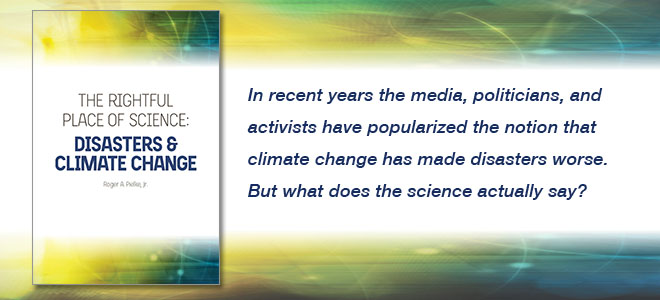
To learn more about the state of climate change see The Rightful Place of Science: Disasters & Climate Change by Roger Pielke Jr., professor for the Center for Science and Policy Research at U of CO – Boulder (2018).
via Watts Up With That?
March 7, 2020 at 08:16AM
 Iowa Climate Science Education

Reblogged this on uwerolandgross.
LikeLike