I’ve always wanted to capture this kind of cloud as a time lapse… these are altocumulus clouds with strong upward motion in them producing precipitation, in this case snow, falling in streaks and not reaching the ground (“virga”). They form when the upper troposphere is unstable, and warm advection (a warm air mass moving into a cool air mass) produces the uplift.
In response to this winter’s severe floods there have been some alarming claims about climate change and the impact it may be having on flooding throughout Britain.
But what does the evidence actually show?
Recent intense rainfall
Source: Met Office
Rainfall in February 2020 was the heaviest February rainfall on record for the UK as a whole, but also notably in both England and Wales, which suffered severe floods as a result.
This kind of event is very unusual. However, before drawing broader lessons, it is important to review the historical data, so we can place it in the context of longer-term trends.
Long-term precipitation trends
According to Met Office data, England, Wales and Northern Ireland have not seen any significant increases in annual rainfall since 1910. In Scotland however, precipitation levels have risen slightly since the 1970s. There also have been seasonal variations in rainfall trends, with winters becoming wetter in recent decades and summers becoming slightly drier.
Source: Met Office
Going back further, to 1766, the England and Wales precipitation series shows that annual rainfall has been remarkably consistent since that time.
Source: England and Wales Precipitation Series, Met Office
Looking specifically at the prevalence of sustained heavy rainfall, of the kind that can lead to flooding, a small positive trend of 0–3 mm/decade in maximum annual consecutive five-day precipitation has been identified over recent decades.
However, the trend was only statistically significant in parts of Scotland and during the winter. The period covered was 1960–2018.
Source: Commonwealth Scientific and Industrial Research Organisation (CSIRO)
It has been suggested that these modest changes are related to anthropogenic climate change, because of increased moisture in the air owing to warmer temperatures (the Clausius–Clapeyron relation). However, trend attribution is complicated by interference from cyclical drivers of natural variability. The North Atlantic Oscillation (NAO) and El Niño Southern Oscillation (ENSO), which are recognised drivers of natural climate variability, have been found to influence extreme rainfall in the UK.
Impact on flooding
Changes in precipitation levels do not necessarily equate to increases in the intensity, extent, or harmfulness of flooding. This depends on many factors, such as land management, investment in flood defences, population dynamics, as well as other physical processes.
A recent study showed that the percentage of the population in Europe exposed to river flooding has been falling since 1960, and that the UK specifically has seen a decline in the percentage of people at risk of flood over the period 1870–2016.
Source: Trends in flood losses in Europe over the past 150 years. Nat Commun9, 1985 (2018)
The study also looked at financial losses caused by flooding and found that between 1870 and 2016, after adjusting for demographic and economic growth, there were no significant trends in flood losses, both on European scale, and for individual countries. However, the biggest shift in financial losses occurs for the period between 1950 and 2016 where the negative trend (−2.6% per year) is statistically significant.
Source: Trends in flood losses in Europe over the past 150 years. Nat Commun9, 1985 (2018)
Conclusion
There appears to have been a modest increase in the frequency of sustained heavy rainfall, but this is only apparent in the winter, and it is largely centred on Scotland. Over most of the UK’s land area there appear to be no significant trends.
The share of the UK population exposed to flooding is not increasing, and if anything, economic losses from flooding are becoming less severe rather than more so. With appropriate land management and flood defences, there is every reason to expect and demand that flood risk can be contained and managed effectively.
by Paul Homewood and Harry Wilkinson
We will update our factsheets as new evidence emerges. Feel free to contact us with any new data or information.
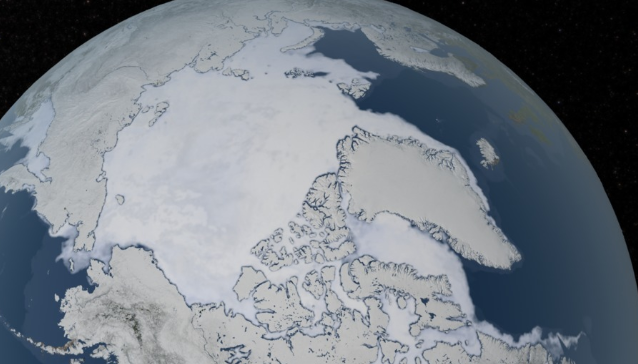
The Arctic is warming faster than the mid-latitudes. It’s the so-called Arctic amplification (AA). According to a study by Polvani et al. 2020, half of the Arctic warming is due to ozone-depleting substances – and not CO2. This was of course a great surprise, as we have already reported here. So no wonder that the climate models are going crazy, since they have so far attributed almost the entire warming to CO2.
CO2 has been hopelessly overbooked, as it now turns out.
In Nature Climate Change, a paper by Cohen et al. 2020 has been published and it shakes another myth. In the past, researchers were too happy to tell us that strong Arctic warming leads to harsh winters in mid-latitudes. However, there is a problem: the models are largely unable to reconstruct this presumed relationship: The paper finds:
Divergent consensuses on Arctic amplification influence on midlatitude severe winter weather
The Arctic has warmed more than twice as fast as the global average since the late twentieth century, a phenomenon known as Arctic amplification (AA). Recently, there have been considerable advances in understanding the physical contributions to AA, and progress has been made in understanding the mechanisms that link it to midlatitude weather variability. Observational studies overwhelmingly support that AA is contributing to winter continental cooling. Although some model experiments support the observational evidence, most modelling results show little connection between AA and severe midlatitude weather or suggest the export of excess heating from the Arctic to lower latitudes. Divergent conclusions between model and observational studies, and even intramodel studies, continue to obfuscate a clear understanding of how AA is influencing midlatitude weather.”
According to a study, higher sea levels / more inundation of salt marshes has softened the soil, allowing burrowing crabs to munch their way through cord grass which holds salt marshes together. But a 2012 study by the same group blamed overfishing of predators for the rise in the crab population, and dismissed climate change as a factor.


 Iowa Climate Science Education