Vermont is the most injected state and they have four times as many infections as a year ago – when very few people were injected. “Over the last seven days, cases in people who are not fully vaccinated have increased … Continue reading →
This year is a different story completely. It’s only early January and already there is abundant ice along the west coast of Novaya Zemlya; ice in the Barents Sea in general is well up over recent averages and the pack is already converging on Bear Island (Bjørnøya) to the south of the Svalbard archipelago. Ice this far south often brings polar bear visitors to the weather station there but that doesn’t usually happen until March or April.
You’ll find references in previous posts linked here.
Barents Sea ice
Compared to recent years, from NSIDC Masie, to 5 January 2022:
Sea ice concentration and extent in the Barents Sea from the Norwegian Ice Service at 6 January 2022:
Closeup of ice concentration and extent around Svalbard for 6 January 2020, showing the pack moving in on Bear Island (Bjørnøya) at the bottom of the chart.
Historical charts for this early in the year show how unusual this pattern is: it appears the last time the ice converged on Bear Island in early January was 2009, when there was little ice on the west coast of Novaya Zemlya.
Last year it wasn’t even close. ice cover was really low across the entire region except for Franz Josef Land, which is why it is so important for Barents Sea polar bears.
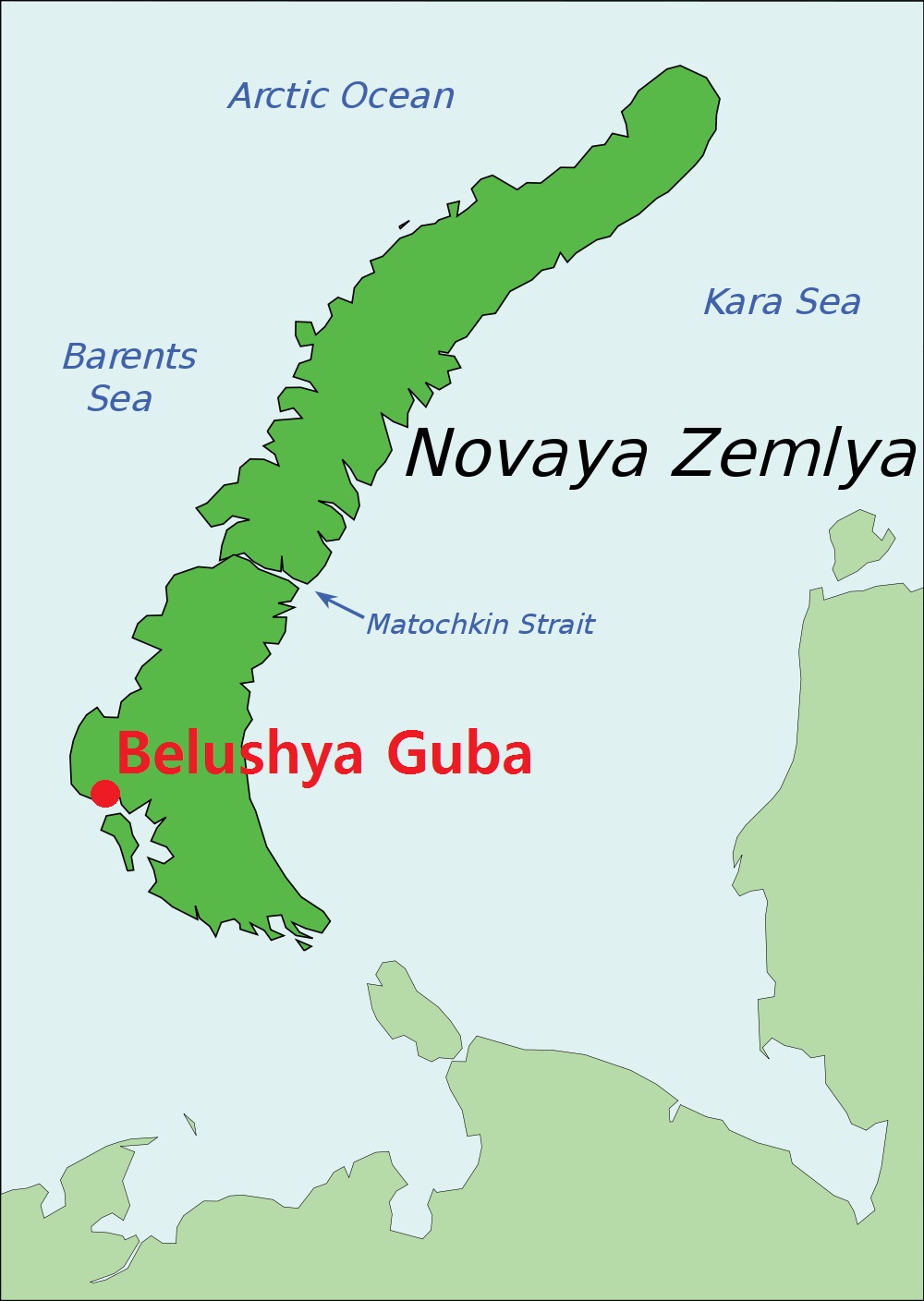
In 2019, the year of the Belushya Guba bear trouble (which actually began in December 2018 but didn’t get reported until February 2019), there was little ice on the west coast of Novaya Zemlya or even on the east coast of Svalbard:
Let’s look at this year’s chart again (below), against that from 2019 (above):
The trouble with polar bears at the dump in Belushya Guba was due to bears habituated to garbage, which can happen anywhere and which made them disinclined to leave to hunt on the sea ice when they were able. Something similar happened in Churchill Manitoba in 1983.
It seems that the problem with garbage bears in Belushya Guba has been solved.
However, if some Barents Sea polar bears around Novaya Zemlya are found struggling to find food this year, it can’t be blamed on lack of sea ice: instead blame high population numbers of bears with lots of adult males who bully younger/smaller bears and steal what food they can find.
Competition is one of the reasons that winter is such a hard time for polar bears: it’s hard to find food and sometimes even harder to keep it long enough to consume it. Spring, with its glut of newborn seals, can be a life-saver for some bears.
That said, biologist Jon Aars confirmed about a year ago that the bears around Svalbard at least are doing just fine, which the field research results from spring 2021 seem to confirm:
“It seems that they [polar bears] are quite resistant, and they are doing quite well despite the fact that they’ve lost a lot of their habitat.” Despite the odds, Svalbard’s polar bear numbers do not appear to have decreased in the last 20 years, he says.
h/t Dr. Willie Soon, Climate Depot – In the wake of Leonardo DiCaprio’s performance in “Don’t Look Up”, Michael Mann has gone all coy about whether DiCaprio’s portrayal fully corresponds with his life as a scientist whose warnings have been disregarded.
Words fail me.
[Prepublication addendum from Charles]
If Dr. Mindy is based on Mann, then we should note the description of Mindy by the character Peter Isherwell, who told Mindy:
You’re a Lifestyle Idealist.
You think you’re motivated by ideological beliefs, but you’re not.
Tim Flannery, who founded the Climate Council in 2013, once predicted “the rain that falls isn’t actually going to fill our dams”.
Global warming heats up Australia’s cool La Nina weather cycle
By Mike Foley January 6, 2022 — 5.52pm
Despite the La Nina weather pattern and other climate drivers bringing rain and the coolest temperatures for the past decade, the heating trend under climate change continued during the past year.
The Bureau of Meteorology’s Annual Climate Statement, released on Thursday, said 2021 was the wettest year since 2016 while last November was the wettest on record. Parched rivers and dams welcomed the rain that has rolled across much of Australia in the past two years, after three years of intense drought from 2017 to 2019.
But such is the underlying influence of global warming that despite two consecutive years of cooling La Nina weather patterns, 2021 had 9 per cent above-average rainfall and was also the 19th hottest year since records began in 1910.
…
Climate Council’s director of research Martin Rice said the current level of warming was spurring higher rates of natural disasters.
“In a more energetic climate we are experiencing Black Summer fires, more powerful storms, intense rainfall and major flooding, storm surges riding on higher seas, and unprecedented coral bleaching,” Dr Rice said.
The following is Flannery’s rain won’t fill our dams prediction, from the transcript of his ABC Australia interview in 2006;
…
SALLY SARA: What will it mean for Australian farmers if the predictions of climate change are correct and little is done to stop it? What will that mean for a farmer?
PROFESSOR TIM FLANNERY: We’re already seeing the initial impacts and they include a decline in the winter rainfall zone across southern Australia, which is clearly an impact of climate change, but also a decrease in run-off. Although we’re getting say a 20 per cent decrease in rainfall in some areas of Australia, that’s translating to a 60 per cent decrease in the run-off into the dams and rivers. That’s because the soil is warmer because of global warming and the plants are under more stress and therefore using more moisture. So even the rain that falls isn’t actually going to fill our dams and our river systems, and that’s a real worry for the people in the bush. If that trend continues then I think we’re going to have serious problems, particularly for irrigation.
Just remember folks, climate change is settled science. The miracle molecule can cause permanent drought and more intense rainfall, all right at the same time.




 Iowa Climate Science Education