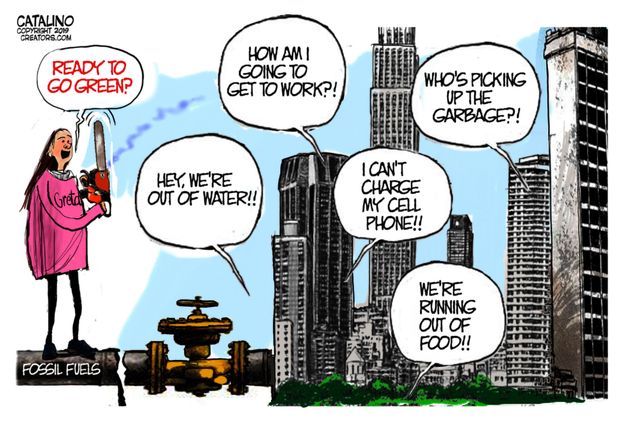
 Ayaan Hirsi Ali explains how Energy has become the first and foremost world public concern in his Spectator article Energy is the most important issue in the world. Excerpts in italics with my bolds and added images.
Gas prices are climbing, Russia is building pipelines, yet we’re focused instead on appeasing climate activists
One issue more than any other will dominate airtime and influence policy in 2022: energy. Americans are seeing the highest prices at the pump in seven years. Since Biden took office, average gas prices are up by more than $1 a gallon. In November, gas prices in Mono County, California hit more than $6 per gallon, forcing some residents to drive to Nevada (where gas taxes are lower) to buy fuel.

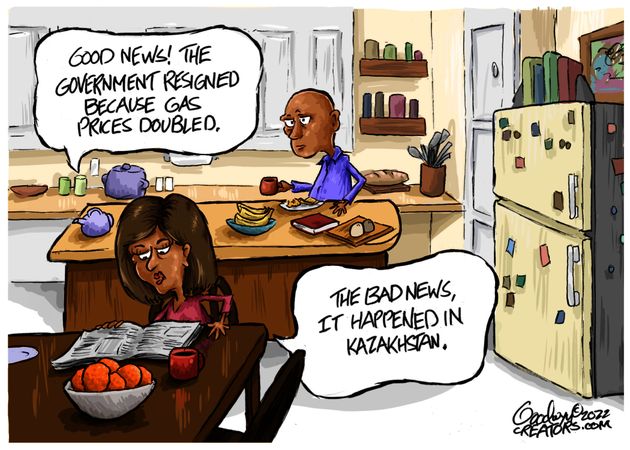
The price of natural gas in the US is at its highest in seven years, and up more than 180 percent in the last year alone. In Europe, the situation is even worse.
Europe’s gas reserves are at record lows. In Germany, which already had the EU’s highest energy prices, bills are up 30 percent in a year. If the European winter is harsh, supplies for heating homes and businesses may have to be rationed.

Domestic energy is a foreign policy issue. The threat of a Russian attack on Ukraine was one of the factors driving gas prices up in late 2021. In December, Annalena Baerbock, Germany’s foreign minister, warned that if Russia invaded Ukraine, the Nord Stream 2 natural gas pipeline from Russia to Germany “could not come into service.” That would mean serious shortfalls in Germany’s energy supply this winter, as Germany is dependent on Russian natural gas. Germany’s economic affairs minister, Robert Habeck, now calls Germany’s assent to Nord Stream 2 a “geopolitical mistake.” Days before Christmas, Russia reversed flows on Yamal, another pipeline to Germany. European energy prices reached new peaks. Russia claimed the reversal had no “political implications.”
Europe is splitting over nuclear power as the answer to secure supplies of green energy. France pushed to classify nuclear energy as “sustainable,” a move that would unlock billions of euros in state aid and private investment, earmarked for green energy. An EU proposal was recently put forward to do just that — despite opposition from Germany, which threw its lot in with Nord Stream 2 and Putin’s natural gas under Angela Merkel.
And don’t forget Iran. Its march toward acquiring nuclear arms creates severe vulnerabilities for the US and its allies — especially Israel, but also the oil-rich Gulf states. China continues to underwrite the regime in Tehran by purchasing Iranian oil and evading and ignoring US sanctions.

Energy will determine elections in Europe and the US in 2022 and beyond. It will determine foreign policy decisions. It will be an overarching and enduring theme for years to come. But energy has always been part of the conversation. What makes this year different? Wasn’t there an even bigger energy crisis in the 1970s?
The answer to both those questions is this: unlike in the past, our current energy crisis derives from our own mistakes. We’ve put all of our eggs into the basket of renewable energy, but its promise has been oversold. The costs of solar and wind power generation may have fallen, but they cannot provide stable energy sources because of fluctuations in the weather. That tends to reduce the overall efficiency of power grids.

The green movement also underestimates the true costs of renewable energy. As Michael Shellenberger explains, a wind farm requires 370 times more land than a nuclear plant does. If we shift away from nuclear energy and toward renewables as Joe Biden’s climate plan proposes, the impact on America’s natural environments would be devastating. Yet the Biden administration remains committed to renewables as a “green” solution.

After Angela Merkel phased out nuclear plants almost entirely, Germans now pay the highest energy costs in Europe, not least because a renewables surcharge of 20 percent is added to their bills. The various European and British decisions to ban fracking have had similar effects on the cost of heating a home. The effect of opposition in the US will be no different.
Fracking played a key part in the US’s transition from coal to natural gas, which led to significant reductions in American emissions of carbon dioxide. But some Democratic-run states are attempting to ban fracking entirely through legislation and, as in California, denying permits. Shale oil production barely grew in 2021, and we are unlikely to see a fracking revival in the near future. A return to energy dependence on other countries is becoming unavoidable. We’ve seen this already: in November, Biden appealed to OPEC to increase production.
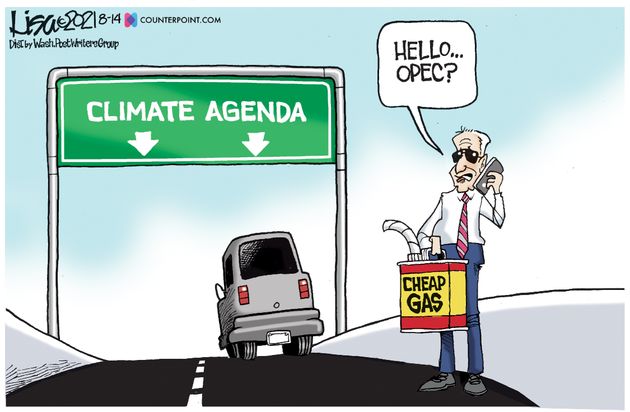
Americans and Europeans have become so focused on appeasing climate activists that they’ve forgotten the importance of power — in the sense of geopolitics, not kilowatts. While the West was debating ways to reduce emissions at the UN’s COP26 summit in Glasgow, Russia and China didn’t even bother to show up. While we fall over ourselves to acclaim Greta Thunberg, Russia builds strategic gas pipelines and China builds coal-burning power stations.

The politics of energy will impact the lives of everyone this year, the poor especially. To avoid a new self-inflicted energy crisis, unlike in the 1970s — the West must reassess the costs of the “green transition.” We need a strategy that generates power efficiently, and without handing geopolitical power to our strategic rivals.
via Science Matters
https://ift.tt/mMa8nGCJf
January 31, 2022 at 04:33PM

 Iowa Climate Science Education