
“Think of the press as a great keyboard on which the government can play.” – Joseph Goebbels
via Real Climate Science
January 25, 2022 at 01:45PM
“Think of the press as a great keyboard on which the government can play.” – Joseph Goebbels
via Real Climate Science
January 25, 2022 at 01:45PM
Earlier this week, Germany shocked the public when it reduced the time a person is regarded to have natural immunity after being infected: from 6 months to just 2 months (parliamentarians exempt!) – even when most experts say the natural immunity lasts a year or even much longer.
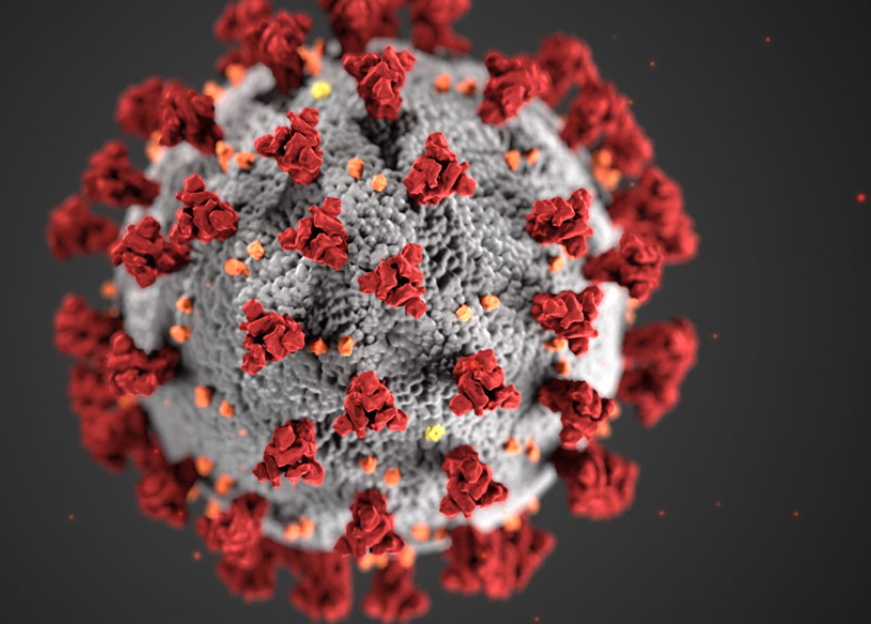
With just a stroke of a pen, suddenly hundreds of thousands of previously infected Germans were deemed to no longer have natural immunity.
This contradicts recent findings by the Paul Ehrlich Institute, which found antibodies in previously infected people even after more than 430 days:
==========================================
The Paul Ehrlich Institute, in cooperation with the University of Frankfurt am Main, examined the long-term antibody response after SARS-CoV-2 infection in 828 people with different degrees of COVID-19. The study measured binding antibodies against a range of SARS-CoV-2 target antigens, neutralising antibodies, and antibody binding strength (antibody avidity). Sensitivity, kinetics, and the duration of antibody detection depended on the detected antibody type, test design, target antigen of the anti-SARS-CoV-2 antibody test, antibody avidity, and COVID-19 severity.
The Journal of Clinical Virology reported on the results in its online edition from 4 December 2021.
The detection of virus-specific antibodies via antibody tests can assist in the diagnosis of both acute and previous SARS-CoV-2 (COVID-19) infections, whereby acute infections are known to occur with or without symptoms. SARS-CoV-2 antibody testing can identify individuals who have been previously infected with SARS-CoV-2, thus helping to determine the extent of SARS-CoV-2 infection amongst the population and to estimate the number of unrecorded infections.
However, SARS-CoV-2 antibody test results are difficult to interpret. First of all, because test results can vary greatly from person to person. In addition, SARS-CoV-2 antibody test results vary greatly in terms of methodology. It is also unclear how long specific antibodies are still detectable after an infection. Therefore, the use of antibody tests for SARS-CoV-2 requires an in-depth understanding of the variations in test sensitivity as well as the time dependence and duration of antibody detection. This was the subject of the present study.
430 days
The in vitro diagnostics (IVD) Testing Laboratory at the Paul Ehrlich Institute, headed by Dr Heinrich Scheiblauer, in cooperation with the University Hospital Frankfurt am Main, measured antibody responses over a period of more than 430 days after SARS-CoV-2 infection. 828 samples from 390 patients with different degrees of COVID-19 severity were examined using twelve different tests. These tests measured various antibody types (total antibodies, IgG, IgA, IgM), different SARS-CoV-2 target antigens (receptor binding domain (RBD), spike protein (S), and nucleoprotein (N)), neutralising antibodies, and the binding strength of antibodies to antigens (antibody avidity). Test specificity was determined on 676 pre-pandemic samples.
The results show that there is a distinct pattern to the sensitivity and detection duration of anti-SARS-CoV-2 antibody tests. This depended on the test design, the target antigen of the test, the antibody binding strength and the severity of COVID-19 in the period covered by the study. A characteristic feature amongst most patients was increasing antibody binding strength (antibody avidity) over time for the immunogenic SARS-CoV-2 antigens RBD and spike protein. These tests demonstrated high sensitivity and long detection times with increasing antibody avidity. Antibodies could be detected more than 430 days after infection without a foreseeable end point. Surrogate virus neutralisation tests, which were used to determine neutralising antibodies that inhibit the binding of RBD (which was also used in all currently authorised vaccines) to the ACE2 receptors, also showed a long detection duration of neutralising antibodies of over 430 days.
In comparison, RBD-based or spike-based antibody tests, which only detect the IgG, IgA, and IgM antibody types, showed lower baseline sensitivity and decreasing antibody titres over time, although IgG and IgA tests had maintained relatively high sensitivity (test positivity) up to 430 days.
In contrast, nucleoprotein-based tests showed a drop in antibody levels after just 120 days, which also led to a loss of sensitivity in the N-based IgG and IgM tests. This was shown to be related to a corresponding decrease in avidity for the non-immunogenic nucleoprotein.
With the exception of IgA antibody tests (96%), the specificity of the antibody tests was high for all tests at >99% and there was no cross-reactivity with endemic human coronaviruses.
This data can contribute to a more targeted application of antibody tests and to correct interpretations of SARS-CoV-2 antibody results in daily diagnostic work. In addition, it can help to determine the duration of potential immune protection against SARS-CoV-2.
Scheiblauer S, Nübling CM, Wolf T, Khodamoradi Y, Bellinghausen C, Sonntagbauer M, Esser-Nobis K, Filomena A, Mahler V, Maier TJ, Stephan C (2022): Antibody response to SARS-CoV-2 for more than one year − kinetics and persistence of detection are predominantly determined by avidity progression and test design. J Clin Virol 146: 105052.
Donate – choose an amount
via NoTricksZone
January 25, 2022 at 12:17PM
Guest essay by Eric Worrall
Share the pain of a deep green activist politician who desperately wants to attend a climate change rally, but misses out because of her useless electric vehicle.
SLO climate change activist Heidi Harmon’s electric car calamity
January 24, 2022
By KAREN VELIE
Former San Luis Obispo mayor and climate change activist Heidi Harmon attempted to “do the right thing,” and travel to a rally in San Francisco in an electric car. After multiple attempts to find a working charging station in San Jose, Harmon realized charging the car would take up to seven hours and there was no way she could make the rally.
…
Read more: https://calcoastnews.com/2022/01/slo-climate-change-activist-heidi-harmons-electric-car-calamity/
The video (h/t Cal Coast News):
I love this story, because it offers a microcosm of why green try to waste so much of your money.
“We need some transition support squads”.
If Harmon wasn’t such a deep green, it might have dawned on her that her experience is unequivocal evidence that EVs are useless.
But the green belief system does not seem to permit such thoughts.
Greens start from the assumption that their vision is inevitable. Then they try to work backwards, to figure out how much of your money they need to throw into the bottomless pit, to fund all the “transition support squads” and other useless green props they hope will help advance society towards their vision of a green nirvana.
Even if their green vision is an economic and engineering impossibility, they don’t hesitate to spend your money, because their belief system does not allow them to accept such negativity. So they just keep spending and spending, until someone cancels their ability to plunder your future financial security.
4.5
2
votes
Article Rating
via Watts Up With That?
January 25, 2022 at 12:13PM
By Paul Homewood

The extra amount the world must spend each year to create a “net-zero” emissions economy is equivalent to half all profits now generated by companies globally, consultancy group McKinsey estimates in a report on the energy transition.
It said its calculation was much higher than most other estimates by economists but emphasised such investments could be lucrative and the long-term costs of not doing enough to tackle climate change would be greater.
“We find that the transition would be universal, significant and front-loaded, with uneven effects on sectors, geographies and communities, even as it creates growth opportunities,” it said.
Though time is running out, reaching net-zero carbon emissions by 2050 would give the world a chance of capping temperature rises at 1.5°C above pre-industrial levels, avoiding the worst fallout from climate change.
The report’s main finding was that this would require spending on physical assets for energy and land-use systems of about $275-trillion, or $9.2-trillion per year on average — an annual increase of $3.5-trillion on current spending.
“The increase is approximately equivalent, in 2020, to half of global corporate profits, one-quarter of total tax revenue and 7% of household spending,” it calculated.
The amount of cumulative spending would be equivalent to about 7.5% of world output from 2021-2050, far higher than the 2%-3% of global output which climate economists polled by Reuters in 2021 estimated was needed each year.
UK GDP is around £2 trillion, so 7.5% works out at £150 billion a year. On top of this of course, the developed world would be expected to pay for the rest of the world’s transition.
via NOT A LOT OF PEOPLE KNOW THAT
January 25, 2022 at 12:03PM
 Iowa Climate Science Education