Month: January 2023

EPA And The Electricity Cost Crisis

From the MANHATTAN CONTRARIAN

Francis Menton

Over in Europe, the energy cost crisis, particularly as to electricity, proceeds apace.

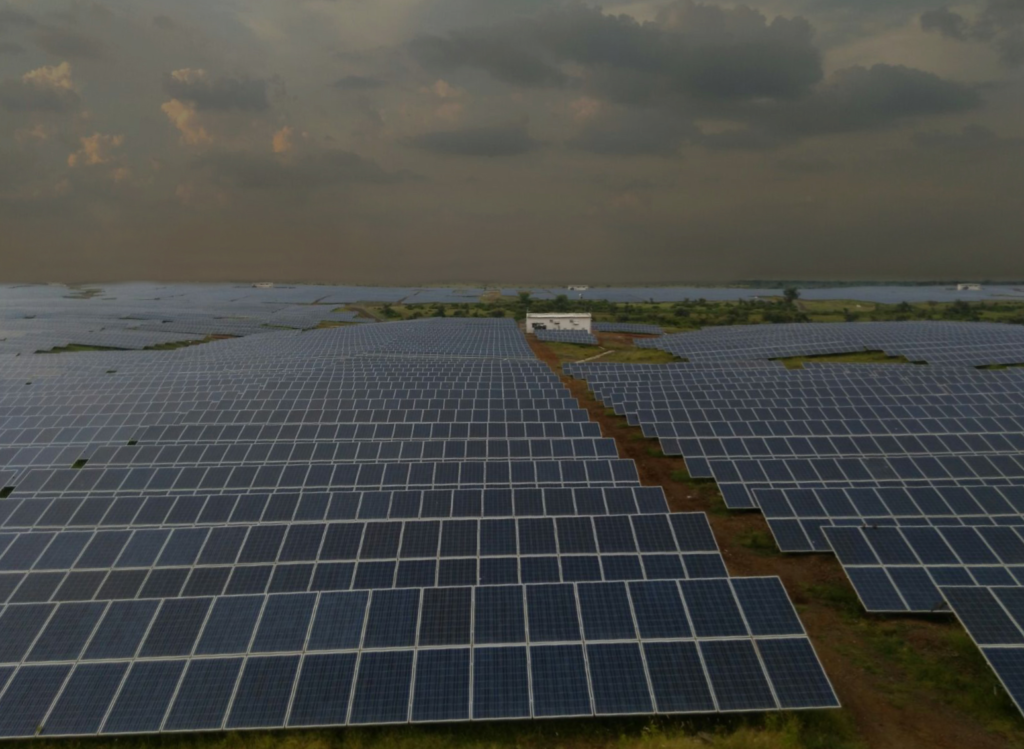
Germany, deep into its Energiewende (energy transition) that began in 2010, leads the way. Almost all coal and nuclear power plants have been closed in favor of a massive building plan for wind and solar facilities. After a decade of that, for the past couple of years, Germans have suffered consumer retail electricity prices of over 30 euro cents per kWh — close to triple average U.S. consumer rates. On November 25, a German news source called The Local (behind pay wall) quoted an energy market expert named Mirko Scholssarczyk for the proposition that “40 cents per kilowatt-hour was likely to be the new normal in 2023 and 2024, and that prices could even rise to 50 cents per kilowatt-hour after that.” Meanwhile, my own post from December 24 cited data from a Belgian think tank called Brueghel showing that Germany was in the process of spending some 260 billion euros, around an astonishing 7% of GDP, to subsidize consumers to keep their electricity bills from going beyond even these ridiculously high levels.

The UK, second after Germany in its rush to what they call “Net Zero,” has its own associated energy cost crisis. The basic policy prescription is the same as in Germany — massive building of wind and solar facilities and suppression of fossil fuels. Although consumer bills are capped by regulation, they went in October to a level approximately three times where they had been a year previously; and they were set to rise again in April, to some five times the previous level, although that may now be temporarily headed off by the UK’s own round of massive taxpayer handouts in the range of a hundred billion pounds or more.

Can we here in the USA learn anything from this folly before it is too late? The answer is, if it is up to our EPA, then no.

Readers may be interested in some back and forth on this topic that has recently occurred in the briefing in the case of Concerned Household Electricity Consumers Council v. EPA, pending in the Court of Appeals for the DC Circuit. CHECC is demanding that EPA reconsider the so-called Endangerment Finding of 2009, which is the bureaucratic edict by which those geniuses claimed to determine that CO2 and certain other “greenhouse gases” constitute a “danger” to human health and safety. The Endangerment Finding is the regulatory linchpin that underlies all U.S. government efforts to suppress fossil fuel infrastructure, whether power plants, pipelines, drilling, or anything else. You may recall that I am one of the lawyers for CHECC in this matter.

One of the things that you need to show to bring one of these cases is that the party you represent has what they call “standing.” That means that the party bringing the claim has or will suffer some concrete injury from the regulatory action in question. That’s why our client is a council consisting of electricity consumers. As we state in our Petition and in our Brief, “Each of CHECC’s members is a U.S. citizen and a member of a household that pays electricity bills.”

To demonstrate the effect on consumer electricity bills of the policy mix of wind and solar expansion plus fossil fuel suppression, we cite and describe the experience of Germany. Excerpt, from page 31 of the Brief:

In Europe, Germany began converting to renewables in 2010, and by 2015 30% of its electricity was from wind and solar. . . . The average German household’s electricity rate in 2021 was 32.16 cents per kWh, about triple the average U.S. rate. . . .

So what’s the answer to that, EPA? EPA filed its responsive Brief on December 20. From pages 20-21 of that Brief:

Petitioners’ extended discussion of electricity costs in Germany — involving a different country, market, currency, and regulatory regime — does not aid their efforts [to demonstrate standing]. . . . There is no effort to show that Petitioners or their members suffer “injury-in-fact” from electricity rates in Germany, or that any U.S. regulation (let alone the 2009 Finding or Denial) affected those rates.

That’s it. Hey, it’s a “different country”! Electricity prices in Germany don’t hurt you. Thus, says EPA, nobody has “standing” to challenge our Endangerment Finding.

I guess there’s just no way of knowing whether the hundreds of billions of dollars worth of damage being wreaked in Germany have anything to do with the forced energy transition. Anyway, it’s none of EPA’s business to try to figure that out. They are way too busy saving the planet.

Could the DC Circuit — supposedly one of our premier courts — fall for something this blindly ignorant? We shall see.

Read the full article here.

via Watts Up With That?

https://ift.tt/BGHSt7f

January 9, 2023 at 12:42AM

Climate Changed: Calm, Gloomy Weather Killing Europe’s Grand Wind & Solar ‘Transition’

In the mother of all ironies, Europe’s wind and sun cult are complaining about uncooperative weather. The Germans have even coined a word for it: ‘dunkelflaute’ – meaning a period of gloomy, windless weather. Which, in reality, means little or nothing by way of output from their more than 30,000 wind turbines and millions of solar panels.

The unimaginative Brit hasn’t coined a precise equivalent, yet, but they too are plagued by the same phenomenon, so expect another addition to the English weather dictionary soon enough.

For now, the closest is “wind drought”, which tends to suggest malevolence on the part of the wind Gods, apparently conspiring against our ‘inevitable grand transition’ by withholding the wind resource we’ve been supposedly ‘blessed’ with.

Or, here’s a thought, it could simply be the very nature of Nature itself.

In dozens of posts over the last decade, STT has documented the dozens of occasions each year when the combined output of every wind turbine connected to Australia’s Eastern Grid amounts to less than 5% of their combined notional capacity; including lengthy occasions when total output amounts to less than 2%, as in this post: Dead Calm: Australia’s Wind ‘Industry’ Suffering From Prolonged Wind ‘Drought’

Notwithstanding the well-documented renewables disasters playing out in Germany and Britain, and despite reams of Australian data to the contrary, Australia’s Federal Energy Minister, Labor’s hapless Chris Bowen, reckons that by spending trillions on mythical mega-batteries and extra transmission lines, he’ll soon have us all running on nothing but sunshine and breezes.

Bowen’s plan is, of course, utterly delusional, as The Australian’s Cater explains below.

Renewable dream yet to weather the storm of reality
The Australian
Nick Cater
12 December 2022

To hell with the naysayers. Australia is officially on track to be powered by 100 per cent renewable energy by 2025, the Australian Energy Market operator announced last week.

Naturally, the engineering road map to this hydro-carbonless nirvana comes with caveats, the most important of which is that 100 per cent instantaneous renewable generation will only be achieved “at times”.

“The output of solar and wind generation is as changeable as the weather itself,” AEMO concedes, a point some of us have been making for a while. Nonetheless, AEMO creates a credible picture of a “hypothetical future day” on which a notional weather pattern will permit the country to run for a full 24 hours without burning coal or gas. At midday, roughly 80 per cent of electricity will be generated by solar and 20 per cent by wind. At midnight, solar will generate zero per cent and wind a little over 80 per cent with hydro making up the rest. A smidgen of battery power will be needed to tide us through sunset, but otherwise we’re good to go.

In the introduction to last week’s report, AEMO boss Daniel Westerman says operating a gigawatt-scale power system on wind, solar and storage alone would be “a feat unparalleled worldwide”.

The challenge has proved too hard for Germany and Britain, where a heavy concentration of wind and solar has left them at the mercy of dunkelflaute, the German word for a period of gloomy, windless weather. Britain was blighted by a wind and solar drought at the weekend, heightening the possibility of blackouts just as the country was engulfed by an Arctic weather front. Yet Australia is committed to a precarious renewables-only path by the intransigence of our federal government. The Energy Minister doubled down last week by insisting coal and gas would be excluded from the capacity market, a type of dunkelflaute insurance policy that guarantees sufficient dispatchable power come rain, hail or sun.

Under Chris Bowen’s plan, we will insure against the variability of renewable energy by installing more wind turbines and solar panels linked by 10,000km of extra transmission lines and a modicum of extra storage. In other words, Bowen’s idea of a capacity market resembles a Monty Python cheese shop, low on stocks of dispatchable energy, the only product it purports to sell. It is worse than that, however. Excluding gas as a legitimate source of power to replace retiring coal-fired power stations will deter investment in the turbines, pipelines, terminals and LNG production that are our best hope in the medium term for firming wind and solar.

To its credit, AEMO’s report does not flinch at the complexity of what the government seems to think can be achieved with the stroke of a pen. It warns we are moving into uncharted territory. As the amount of non-synchronous electricity generation increases, the behaviour of the power system is less predictable and more complex. Synchronisation looms large among the many engineering challenges that must be addressed before the dream of renewable-only generation becomes a reality. Converting direct current from wind turbines and solar panels to the AC current on which the grid operates solves only part of the problem. The current must be synchronised with a 50-hertz cycle to the millisecond if the grid is to remain stable.

The installation of high-inertia synchronous condensers weighing 170 tonnes or more has begun in South Australia, adding tens of millions of dollars to the capital cost of renewable generation, which will find its way on to power bills. AEMO estimates 40 more of these beasts will have to be built around the country to stop the grid from collapsing.

Should the grid shut down in an emergency, it cannot be restarted using renewable energy alone. For that we must keep our fingers crossed that the emerging technology of grid-forming inverters lives up to its promise.

Australia’s relatively high penetration of rooftop solar arrays has increased the risk of unsynchronised energy contaminating the grid. Between 2010 and early 2022, the number of buildings with solar panels in Australia rose from 10,000 to about three million and AEMO expects the number to increase.

AEMO admits it has only the vaguest of data on where these systems are, let alone the ability to force them to manage their entry and exit to the system or enforce their synchronisation. The operator has responded to recent gluts of unmanageable power from roof-top solar by shutting them down remotely from the system.

If it seems as if the market operator is making this up as it goes along, it is because it is. The pace of the transition has been determined by political goals divorced from engineering reality. Those responsible for making the decisions wouldn’t know one end of a grid-forming inverter from another, nor do they appear to realise the capital costs of wind turbines, solar panels, batteries and transmission lines cannot simply be parked. Westerman opens the report with the incongruous proposition that Australia can rapidly shed its dependency on coal generation and move “towards an energy future based on low-cost renewable energy”. Even if the engineering challenge proves only half as complex as the report suggests, the notion that stable, renewable energy will be cheap is patently absurd.

Westerman is right that Australia is blessed with abundant wind, solar and hydro resources. Being blessed with resources is one thing. Mustering the ingenuity and capital to capture them is quite another. There is all the difference in the world between powering the grid with 100 per cent renewables “at times”, as AEMO claims we’ll be ready to do in three years, and powering it that way all the time.

Orville and Wilbur Wright proved in 1903 that the controlled, sustained flight of a powered, heavier-than-air aircraft could be achieved at times, for all of 12 seconds to be exact. It would be another 50 years or more until air travel began to be safe and reliable enough for most people to avoid thinking twice before stepping aboard a plane.
The Australian

Going nowhere fast: who would have thought, hey?

via STOP THESE THINGS

https://ift.tt/WwupM26

January 9, 2023 at 12:31AM

Monday Open Thread

Monday Open Thread

0 out of 10 based on 0 rating

via JoNova

https://ift.tt/X2lzVDo

January 8, 2023 at 09:51PM

What Does the Science Say? | Dr. Richard Lindzen | Jordan Peterson Podcast

The Dr Jordan B Peterson Podcast

Jordan B Peterson

Dr Jordan B Peterson and Dr. Richard Lindzen dive into the facts of climate change, the models used to predict it, the dismal state of academia, and the politicized world of “professional” science.

Richard Lindzen is a dynamical meteorologist. He has contributed to the development of theories for the Hadley Circulation, hydrodynamic instability theory, internal gravity waves, atmospheric tides, and the quasi-biennial oscillation of the stratosphere. His current research is focused on climate sensitivity, the role of cirrus clouds in climate, and the determination of the tropics-to-pole temperature difference. He has attained multiple degrees from Harvard University, and won multiple awards in his field of study such as the Jule Charney award for “highly significant research in the atmospheric sciences”. Between 1983 and 2013, he was the Alfred P. Sloan Professor of Atmospheric Sciences at MIT where he earned emeritus status in July of 2013.

Dr. Peterson’s extensive catalog is available now on DailyWire+: https://utm.io/ueSXh

For Dr. Richard Lindzen:

MIT Page: https://eapsweb.mit.edu/people/rlindzen

(0:00) Coming Up
(1:19) Intro
(4:40) Why you should listen to Dr. Lindzen
(13:00) How Ivy league hirings work
(16:00) Harvard or MIT?
(18:00) Emphasis on racism in the sciences
(19:22) Administrators outnumber faculty and students
(20:00) Wasting time on a broken grant system
(22:00) There is no money for questioning mainstream science
(24:00) 1800’s science papers shock students
(25:30) Scientific journals are not endorsements of the science they publish
(27:40) 1970’s, they notice an increase in Co2
(30:10) Classism and religious warping
(33:40) Impoverishing ourselves for no reason
(38:00) Objections to the narrative
(40:00) Coriolis effect
(45:48) Jordan plays devils advocate
(50:05) Politicians base their policy on scientific summaries written by politicians
(53:20) Bjørn Lomborg: even if they’re right, it’s not a big deal
(54:22) Tipping points, how they actually work
(57:00) Averaging anomalies
(1:03:00) Climate threat still five thousand years away
(1:08:00) Computer models, limitations and benefits
(1:12:13) Fluid dynamics
(1:14:45) Models on top of models predicting nothing
(1:17:45) Where scientists actually agree
(1:21:10) Money corrupts, “Climate Scientist” did not exist in the 90’s
(1:25:10) Speaking for your values without asking you what they are
(1:28:00) Gatekeepers holding back the world of science
(1:32:20) Stoking terror, stifling science
(1:38:30) You’ll falsify your own psyche if you falsify your words
(1:43:00) Standing your ground, living toward truth

via Watts Up With That?

https://ift.tt/j7OdD34

January 8, 2023 at 08:23PM