It is published by the East Riding of Yorkshire Council.
According to researcher Brian Williams, the coastline has retreated by about two to three miles since Roman times.which equates to about 1.5m a year.
The East Riding Council publication notes that the recent rate of erosion is similar.
Brian Williams’ website is well worth a look, with a lot more detail and plenty of links to maps and a book by Thomas Sheppard written in 1912 called “The Lost Towns of the Yorkshire Coast”. His website is:
The media, individuals, and policy makers are prone to serious misunderstanding of studies, reports and pronouncements coming from academic experts. It is important to carefully read and interpret academic publications to understand what has been studied and what is being claimed. Far too many dismiss the many wide-ranging formidable challenges inherent in green energy efforts due to their misreading and misunderstanding of academic publications.
This brings to top of mind a “joke” I once heard at a seminar for new power engineers. A Professor of Electrical Engineering was expounding on the differences between engineers and scientists. He explained:
Both engineers and scientists want to understand the world and both want to solve problems. Engineers worry about how much something costs. Scientists don’t worry about the cost; they just want the truth. So, the difference between an engineer and a scientist is that an engineer at least has some common sense.
There’s been a lot of discussion about the differences between scientists and engineers. The boundaries can get blurry and often are non-existent. In the energy power system arena, perhaps to my past professor’s chagrin, I’m afraid the more important boundary might be between academics and practicing engineers. Academics can approach the grid with some detachment while practicing engineers must keep it running 24/7/365. Practicing engineers have skin in the game and typically face consequences for errors and shortcomings, while academics and unfortunately many policy makers are more insulated. This brings to mind Thomas Sowell’s guidance, “It is hard to imagine a more stupid or more dangerous way of making decisions than by putting those decisions in the hands of people who pay no price for being wrong.”
As I like to say, the electric grid is the largest, most wonderful, most complex machine ever. Meeting the electric needs of our nation depends on many specialists and experts in far ranging efforts including generation, transmission, distribution, maintenance, and operations as well as within the many subfields encompassing these broad areas. The grid must operate seamlessly across a variety of conditions without pause. Recognizing the difference between what theory suggests and practical knowledge demonstrates is critical.
Academics have the luxury of focusing on one or a limited number of problems at a time. The traditional scientific method of hypothesis testing through experimentation is better suited to studies involving limited numbers of variables. Wicked complex systems full of all sorts of inconvenient interactions and feedback tend not to always work as might be suggested by theory from experimentations. As described in this posting, Balance and the Grid, focusing on just one problem can in the end cause net harm, and in many cases, the feedback can make the outcome of the problem attacked worse. I will leave it to readers to ponder recent events and see if they can come up with an example where experts focused too narrowly on a single problem and developed solutions which were later shown to have serious repercussions.
The grid and power supply arrangements are an extremely complex system. The interplay and interactions among the components are extensive and complicated. Change a puzzle piece and the entire puzzle changes. Actions taken to address one problem will typically create new problems and also aggravate other problems. The negative effects of such system “fixes” may or may not be visible for some time. It’s a rare academic who can successfully grapple with the great complexities of the power system. Specialization is an easier approach. While findings from academics and specialists can have great value, their findings should not be taken to extremes. The typical course for successful “revolutionary” ideas is that after some struggles to implement working applications they eventually make a modest improvement within some niche of the industry.
Many read academic papers and jump past all the hard work of assessment to the conclusion that whatever is proposed can be done in the near term on widespread level with great benefit. Initial promise is a necessary step but nowhere near a sufficient indicator of eventual success. But mis- readings of studies often lead to such conclusions. Consider what happens at the simplest level. An academic will look at a particular energy resource, or set of resources, and calculate how much power could they could theoretically provide. Comparing this capability to actual needs, it might be stated that this resource could provide X% (all) of an area’s power need. Although the actual “study” did not look at many of the major items of importance, such as timing of the energy relative to load needs, let alone issues around transmission or distribution of the energy, the paper may be quoted and cited as evidence that this substitution can be done. Just because a resource can produce enough megawatt hours of energy to replace another “less desirable” resource, does not mean it can be substituted as part of the power system. But the media and others may include that paper as evidence that renewable can replace conventional technology.
It is understandable that not everything can be studied at the same time. Also, there is always the possibility of raising near infinite objections as to what was not considered. That certainly is a ditch on the other side of the road that we could fall in. But the ditch of concern here is failing to consider the most basic fundamentals around energy provision. Before any large generating resource can be connected to the grid, detailed interconnections studies must be performed to make sure that single resource works adequately with the system. Assuming that the widespread adoption and integration of many new generating resources can easily be accomplished is naïve. One needs to remain skeptical and questioning around proposals for major change until a myriad of basic requirements of the power supply system have been given due consideration.
Many readers here may have noted the numerous times over the years when I’ve discussed grid concerns, and a reader in the comments had directed me to some article in a prestigious journal from a highly credentialed academic. I check out the articles and often they are quite good, but usually the article does not even address the concerns that I have raised. Readers will offer me as a rebuttal, some publication showing at some basic level how wind and solar resources may contribute to the grid.
Overwhelmingly the academic articles I read are good. Usually, the authors carefully describe the limitations of their findings and recommendations. Sometimes they hint as to what remains to be worked out. I’m afraid this does not stop individuals, the media, and some policy makers from ignoring the qualifications and limitations inherent in their findings. The situation is worse when they leave it to the reader to ferret out the limitations of their findings. In very rare instances some academics will go beyond what has been demonstrated with exaggerated claims. I don’t know if this is done through ignorance, accident, hubris or for purposes of self-advancement. I am afraid, that unfortunately, overstating findings can lead to greater publicity and personal gain. There is not much to be gained personally from being a cynic; optimism is a better path for self-advancement.
Potential enhancements to the grid are usually sold with great fanfare. Those of you who have had an interest in energy and the grid should think back over the years to all the articles you have read which touted some major breakthrough which was going to be a game changer. Such game changers at best are very slow to arise, if ever, in the energy industry. Thinking back a few decades, power electronics were becoming available in many applications that collectively were going to change the industry. Power electronics involve providing high voltage capability to semiconductor devices, combined with sophisticated computer controls. The technology was proven and in use on high voltage DC lines. Theoretically other applications could solve a lot of problem making the grid smarter, correcting voltages and controlling and directing flows on transmission lines.
The research papers looked good. While the touting of these technologies may have gone overboard, I did not read anything particularly dishonest or false. The problem was that many read of the potential and did not see anything to suggest that this technology should not be adopted immediately on a widespread manner to improve the system. Many bright capable people read up on the potential and foresaw near term change and benefit. My Board wanted a report on how we would be using this “new” capability. The devil was in the details, however. The challenges and costs associated with power electronic applications were more burdensome at that time than the problems they would solve in our area.
Years later I found it was worth tens of millions to install a large power electronic device called a Static Var Compensator (SVC) to have on standby to prevent a potential voltage collapse problem that had emerged on the grid. Today power electronics play many important roles in the grid. They are a major part of what makes a grid “smart”. They enable asynchronous wind and solar generation to be converted to alternating current on the grid. Power electronics support voltages and help keep the system stable in many ways in varying situations. But they did not take the industry by storm in a short time frame as envisioned by the early reports. They were first employed in niches where they provided particular benefits. As experience was gained and improvements made, they grew to become more and more important. They key to adoption was that installations were built on successive successes. I suspect top-down mandates to broadly use such devices might have actually hindered development and adoption.
The path for innovation for the grid is most likely to follow the model of power electronics. Academics propose and refine an approach for the enhancement of the grid and/or power supply. Detailed serious evaluations of the approach take place and maybe additional research is warranted. Engineers determine specific areas where the new approaches might be most successful and the approach can be employed or tested. Project successes will be followed by further improvements and refinements and led to greater expansion as warranted.
That model seems preferable to this one: Academics propose and refine an approach for the enhancement of the grid and/or power supply (or a complete transition of the grid). The media and policy makers determine it is worthwhile. Policy makers and the public push for sweeping changes that are mandated. Everyone struggles to implement the new approach broadly in a sweeping near universal manner.
Conclusions
Academic research that promotes improvements to the power greed needs to be evaluated carefully with the understanding that the grid is a complex system full of interactions. Changes to the grid involve numerous hurdles. Language is often imprecise. For instance, when readers see a statement stating “Solar and wind could attain penetration levels of X”. What the statement really means is “Based on the factors I looked at and ignoring a vast number of critical requirements I have not looked at, solar and wind may be able to replace fossil resources at a level of X. But probably not.” Unfortunately, the statement is often interpreted as “Solar and wind can attain penetration levels of X with no significant concerns.”
Similarly, when a study quotes a cost, it should be understood that unless specified differently, the cost is for the specific problem at hand, invariably there will be many other costs added to implement this approach often dwarfing the provided number. If a study quotes a figure in the billions to provide connections for infrastructure to connect distant wind and solar to load centers and/or allow for diversity, you can be fairly certain that additional improvements to the underlying systems will rival or exceed the reported cost.
For those without a strong technical background, it’s hard sometimes to tell what is meant by various terms. There are many definitions of capacity factor. The difference between power and energy is critical though not always grasped. It’s understandable that individuals might be confused by academic studies and articles concerning the grid. Media reporters should do better. The results may be tragic when exaggerated and misunderstood findings influence policy makers and impact policy.
Look for a follow up piece titled, Academics and the Grid: Part 2 Are they Studying the Right Things? It will provide additional context and support for the central ideas here.
Thanks to Roger Caiazza for review and helpful comments
Postscript: I decided to write on this topic when somebody sent me this link as evidence that wind and solar could “easily” be made reliable. Perhaps some of the readers may be interested in discussing in the comment some hurdles not brought out in the article. Similarly, it looks like some of the optimism as to near term Fusion might need some tempering as well.
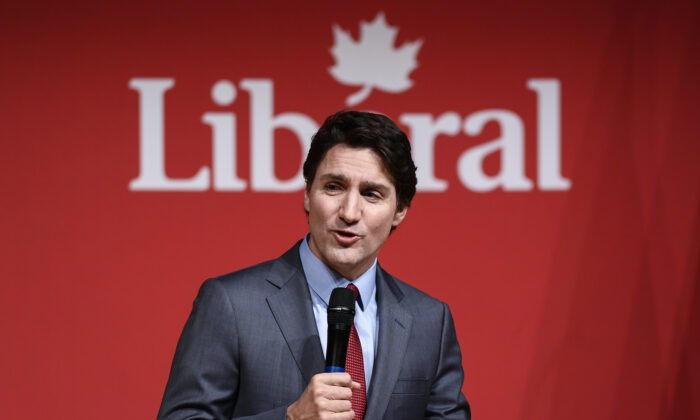
Prime Minister Justin Trudeau delivers an address at the Laurier Club Holiday Event, an event for supporters of the Liberal Party of Canada, in Gatineau, Que., on Dec. 15, 2022. (Justin Tang/The Canadian Press)
Nearly half of Canadians say they want a federal election in 2023, a new poll finds, and a slim majority indicate that Prime Minister Justin Trudeau should step down as Liberal leader in the new year.
Conducted by Ipsos on behalf of Global News, the poll shows that 49 percent of Canadians hope for a federal election next year, despite one not being legally mandated until 2025 and the NDP’s promise to keep the minority Liberal government in power so long as their “supply and confidence” agreement holds till then.
The desire for an election varies across provinces, with those living in Atlantic Canada (63 percent), Alberta (60 percent), Saskatchewan (55 percent), Manitoba (55 percent), B.C. (53 percent), and Quebec (60 percent) showing more interest than those residing in Ontario (46 percent), said the poll, released on Dec. 26.
Nationally, only 43 percent believe that a federal election will take place.
A majority of Canadians (54 percent) said Trudeau should step down as Liberal leader in 2023 and that the country should have a new prime minister, though just 27 percent believe he will do so.
This view is more widely held by men (58 percent) than women (49 percent), according to the online poll. Researchers noted a similarity in regional variation, with Alberta (65 percent) being most likely to hold this position. Atlantic Canada took the second spot at 57 percent, while Saskatchewan, Manitoba, and Ontario tied at 56 percent. B.C. followed closely behind at 54 percent whereas only 43 percent of Quebecers think Trudeau shouldn’t run in the next election.
The approval rating for Trudeau (45 percent) is higher than that of Conservative Leader Pierre Poilievre (41 percent), according to the poll.
Green Party Leader Elizabeth May, who recently returned to her role after a short hiatus, has an approval rating of 39 percent.
Yves-François Blanchet, leader of the Bloc Québécois, had the approval of 43 percent of Quebecers, while approval for People’s Party Leader Maxime Bernier was 26 percent.
NDP Leader Jagmeet Singh received the highest approval rating at 53 percent.
In an interview with Global News, Ipsos CEO Darrell Bricker said popularity doesn’t necessarily mean more votes.
“As we’ve seen in elections past with NDP leaders, they tend to do well in the polls and they don’t do so well on Election Day,” Bricker said. “So even though they might like him a little bit, they’re not necessarily prepared to vote for him unless something changes.”
The survey was conducted based on a sample of 1,004 Canadians aged 18 and over Dec. 14–16. It is considered accurate within plus or minus 3.5 percentage points 19 times out of 20.
Is Jordan Peterson about to lose his licence to practice psychology in Ontario? That’s what Peterson is claiming online and, so far, the College of Psychologists of Ontario (CPO) has not denied it.
Peterson took to Twitter on Tuesday to say that he was ordered to take social media training or face a disciplinary hearing.
“BREAKING: the Ontario College of Psychologists @CPOntario has demanded that I submit myself to mandatory social-media communication retraining with their experts for, among other crimes, retweeting @PierrePoilievre and criticizing @JustinTrudeau and his political allies,” Peterson tweeted Tuesday morning.
Peterson isn’t being asked to reconsider his actions towards a fellow psychologist online, he’s being asked to submit to social media training for political statements he’s made. None of the people who have lodged complaints are clients, Peterson said, nor are they connected to clients. They haven’t experienced personal harm from Peterson, but they want the good doctor to be punished.
In a series of tweets, Peterson said that many professions in Canada are now run by associations or colleges that are highly political and which impose fear on their members. He said this included physicians, lawyers, psychologists and among others.
“This means that your care and legal counsel has been rendered dangerously unreliable,” Peterson tweeted.
Canadians: your physicians, lawyers, psychologists and other professionals are now so intimidated by their commissar overlords that they fear to tell you the truth. This means that your care and legal counsel has been rendered dangerously unreliable.
There are currently about 1,300 graduates of this school, and the list of alumni includes several names of those who went on to become leaders of the health institutions of their respective nations:
How is it that more than 190 governments from all over the world ended up dealing with the COVID-19 pandemic in almost exactly the same manner, with lockdowns, mask mandates, and vaccination cards now being commonplace everywhere? Always vaccines, never therapeutics like vitamin D, zinc, ivermectin or — like Trump suggested — HCQ.
The answer may lie in the Young Global Leaders school, which was established and managed by Klaus Schwab of the World Economic Forum, and that many of today’s prominent political and business leaders passed through on their way to the top.
The German economist, journalist, and author Ernst Wolff has revealed some facts about Schwab’s “Young Global Leaders” school … in a video from the German Corona Committee podcast.
The story begins with the World Economic Forum (WEF), which is an NGO founded by Klaus Schwab, a German economist and mechanical engineer, in Switzerland in 1971, when he was only 32. The WEF is best-known to the public for the annual conferences it holds in Davos, Switzerland each January that aim to bring together political and business leaders from around the world to discuss the problems of the day. Today, it is one of the most important networks in the world for the globalist power elite, being funded by approximately a thousand multinational corporations. …
Wolff points out that very few graduates of the Global Leaders school list it on their CVs. He says that he has only seen it listed on one: namely, that of the German economist Richard Werner, who is a known critic of the establishment. …
Another thing that the Global Leaders graduates have in common is that most of them have very sparse CVs apart from their participation in the program prior to being elevated to positions of power, which may indicate that it is their connection to Schwab’s institutions that is the decisive factor in launching their careers. This is most evident when the school’s alumni are publicly questioned about issues that they have not been instructed to talk about in advance, and their struggles to come up with answers are often quite evident. Wolff contends that their roles are only to act as mouthpieces for the talking points that those in the shadows behind them want discussed in public debate. …