Month: January 2023

Enemy To Itself: Germany’s Green Power Grid Unable To Power Green Society!

Today we check in with Blackout News to find out the latest news on Germany’s green energy follies.

The latest is that the country’s increasingly green electric power grid is increasingly unable to handle the “climate friendly” electric mobility and heat pumps the German government is pushing. 

Transformer

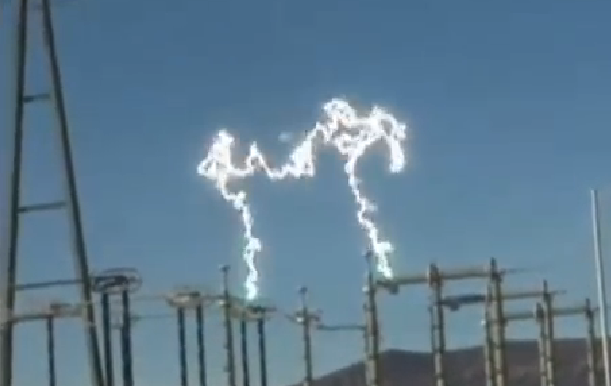
Germany’s green power grid can’t even sustain green society. Photo image cropped here (for illustration only).

It’s widely known that Germany’s electric power supply has the grid constantly on the brink power outages, even blackouts. This is in large part due to the rushed phasing out of baseload coal and nuclear power while installing mass capacities of unstable a wind and solar power.

As Germany pushes the ever greater burdens onto the power grid, its government continues taking measures to weaken the grid rather than to bolster it.

Since Germany’s natural gas supply disruption has caused energy prices to skyrocket, homeowners and motorists are looking for alternative heating sources and modes of mobility. Little wonder Germans are looking more and more to heat pumps for home heating and electric cars for their mobility.

But there’s a problem, Black News reports: “The President of the Federal Network Agency is now calling for the forced throttling of heat pumps and charging stations.” This is because the power grid cannot cope with the added load.

“The head of the network agency, Mr. Müller, sees new risks for the supply of electricity and gas. Private individuals installing charging stations or pumps could overload local grids,” according to Blackout News. “To prevent this, the power of these devices could be throttled.”

The government wants to push electric cars and heat pumps, but the agencies are warning it’s not possible – because over the past 20 years Germany has wrecked it’s once extremely stable electric power supply, which by the way was responsible for a tiny, inconsequential fraction of the world’s CO2 emissions.

According to Müller, “there could be overload problems and local power outages if we don’t act”.

“The authority in Bonn considers low-voltage local networks to be particularly susceptible to disruptions.”

Müller also told the Frankfurter Allgemeine Sonntagszeitung that in critical times, heaters and chargers should not be completely cut off from the power supply. He promised that there will always be a minimum supply.

“The CEO of Düsseldorf-based energy company E.on, Thomas König, described the current power grid as being inadequate and called for the “quick expansion and modernization of local and regional power grids”.

Donate – choose an amount

via NoTricksZone

https://ift.tt/YaiVlI6

January 28, 2023 at 11:08AM

Geologists’ Turn in Anti-Science Barrel

David Lewis Schaefer reports on the attempted political takeover of the profession in his American Mind article A Sad New Epoch.  Excerpts in italics with my bolds and added images.

Even the field of geology is rejecting science in the name of making political statements.

The Anthropocene Working Group of geologists, featured on the front page of the New York Times, is poised to announce the discovery/invention of a new epoch in the Earth’s history, beginning in the middle of the 20th century. Whereas seven previous epochs ranged from 4.6 billion to the most recent one, the “Holocene” (11,700 years since the end of the last ice age), during which homo sapiens evolved, scientists in the working group claim that no broad numbers are needed to date the Anthropocene since developments caused by humans, such as the increased use of nitrogen fertilizers, global warming, “the proliferation of plastics, garbage, and concrete across the planet,” and potential nuclear war, are directly visible to us. The group claims that the effects of the new age “will be discernible in the rocks for millenniums.”

The iconic Metronome clock in New York City was repurposed as an 80-foot-wide climate clock that shows our remaining time to take urgent action on climate change. (photo credit: BEN WOLF)

Certification of the new epoch will require a 60% vote by four committees. If it fails to receive such a vote from any of the committees, the Times warns it “might not have another chance to be ratified for years.”

But of course this isn’t how science develops, properly understood. As Stanley C. Finney, the secretary-general of the International Union of Geological Sciences, has observed, the notion of the Anthropocene has become a way for geologists to make a “political statement.” One advocate of the statement (a historian of science, not a geologist) explains that whereas she had once been taught “that geology ended when people showed up,” the Anthropocene designation signifies that “actually, the human impact is part of geology as a science.” Another expresses the fear that failing to recognize the Anthropocene would have “political reverberations,” as if the “geological community is denying” that human beings “have changed the planet drastically.” As another proponent of what we might term geological mission creep puts it, “I always saw [the designation] not as an internal geological undertaking, but rather one that would be greatly beneficial to the world at large,” as “a call to attention.” In other words, let’s mend our sinful ways!

The term “Anthropocene” is reported to have been coined and popularized by biologist Eugene Stormer and Nobel Prize-winning chemist Paul Crutzen in 2000. It has since been put to wider use by political activists as a way of indicating that humanity’s presence is just one more passing stage.

In fact, some even look forward to the end of that stage so as to restore
Mother Earth to her pristine, pre-human condition.

Instead of simply accepting widespread climate change dogma, shouldn’t geologists be aware of the transition from the sometimes devastating Little Ice Age, variously defined by scientists as running from the 14th or 16th centuries through the mid-19th century, to more moderate worldwide climates, which began long before the invention of the internal combustion engine? (The Little Ice Age, confined largely to areas of northern Europe, followed a preceding Medieval Warming period.) Scientists have attributed those changes to such causes as cyclical lows in solar radiation, heightened volcanic activity, changes in the ocean circulation, and variations in Earth’s orbit and axial tilt.

Have those forecasting devastation from a warming climate considered the significance of millennia-old corpses, like Ötzi, sometimes discovered under many feet of snow in areas like the Alps, suggesting a longer-term cooling trend? And why dismiss the likelihood that scientific research will uncover means of combating detrimental effects from excessive heat: should that occur, would the geologists have to reverse their announcement of the new epoch?

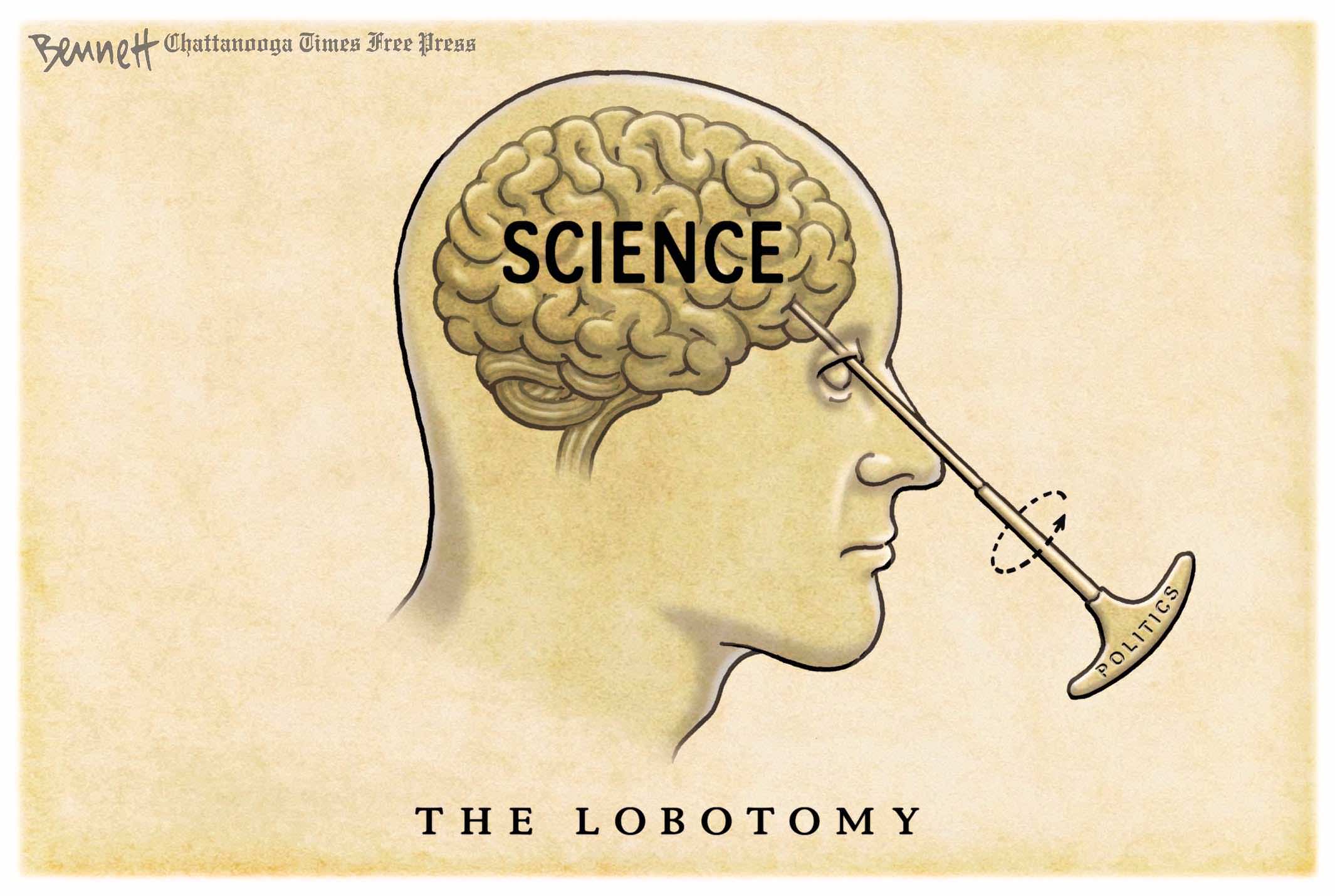
This politicization of science encourages an unjustified suspicion or rejection of real science.

Look no further than Anthony Fauci’s sometimes contradictory, and admittedly sometimes purposely misleading, pronouncements regarding the causes of and appropriate responses to COVID, which have eroded public trust in the institution of public health. Also, as politically appealing “discoveries” win the attention and respect of science educators, they will inevitably be integrated into science curricula, starting at the elementary or middle school level. Students will not only be indoctrinated into the latest, politically correct dogmas, but they will be misled as to the nature of the scientific enterprise.

Given their subject of expertise, geologists are probably less equipped than physicists, chemists, and biologists to conduct controlled experiments in the Baconian sense. That fact does not make their undertaking any less a science but only confirms the observation made by Aristotle that different objects of study require different sorts of scientific approaches. But it does not excuse them from the need to offer rebuttable hypotheses, always subject to revision or even refutation in light of further data or a more comprehensive explanation.

Yet how can they possibly document the prediction reported in the Times that the effects
of the human activities they cite will be discernible for millennia?

Announcing the “discovery” that the world has suddenly reached a new epoch, within living memory, resembles nothing so much as the pronouncements once issued by Christian millenarians that “the end is near.” In fact, one advocate quoted in the Times views the authorization of the new epoch as its “canonization.”

Note the ominous claim that the new era will
“bring the previous chapter of the Earth’s history to a close.”

But how can any human being, lacking divine guidance, be qualified to pronounce such a change? If we have just embarked on the Anthropocene era, what could follow it? If there is a post-Anthropocene epoch, there won’t be any human beings left to record it. Geologists, please curb your eagerness to grab the world’s “attention” or make it comply with your political-theological wishes, and stick to your cores and samples. The world will be the better for it.

via Science Matters

https://ift.tt/vJIa48j

January 28, 2023 at 10:40AM

India’s Uncompromising Commitment to Coal

By Vijay Jayaraj

This week, the UK scrambled to ready its coal plants as wind turbines froze in extremely cold weather. It is no surprise as coal is one of the most reliable, affordable and abundant energy sources in the world.

In fact, coal is still the largest contributor to global power generation. Leaders of Asian countries know this and are not inclined to risk their objective of economic liberty with overreliance on highly volatile and expensive “renewable” technology.

A country soon to become the world’s most populous, India faces a plethora of challenges, and it does not want to add to the troubles of a sometimes-fragile energy system. So it is that strategists are keen on increasing the country’s dependency on coal despite global calls to reduce emissions from the combustion of fossil fuels.

Coal’s Critical Role in 20th Century Poverty Alleviation

Abundant and economical energy is necessary to meet basic needs such as lighting, cooking, and powering appliances that can improve the quality of life for millions of the poor and even prevent early death. Hospitals, schools, water systems and industrial facilities need reliable access to electricity if they are to play a role in alleviating poverty and deprivation.

As a fuel, coal is plentiful and relatively cheap. Coal-fired power plants are a reliable and established technology for generating electricity. Technologies like wind and solar are inherently intermittent and relatively expensive. They rely on machines that have comparatively short life spans and require many times the materials and acreage to generate equivalent amounts of electricity. At best, these so-called green technologies are suitable for limited applications but certainly not for the baseload supplies of large populations.

In Asia, the need for sustained economic growth outweighs fanciful visions of a “carbon-free” utopia, making coal the obvious choice for at least several decades.

Coal Helped India Soar into Prominence; Will Continue to be the Go-To Fuel

India’s gross domestic product grew from $390 billion in 1990 to $2.6 trillion in 2020, representing a compound annual growth rate of 6.7 percent. This was possible only because of the rapid increase in the use of coal for electricity and industries. In 1971, just 50 percent of India’s electricity came from coal. By 2015, the share had grown to almost 76 percent.

This is a particularly steep increase given the concurrent rise in electricity demand from just 34.2 billion kilowatt-hours (kWh) in 1970 to a massive 1,236 billion kWh in 2020. The per capita consumption of electricity grew by around 10 times between 1974 and 2020, from 126 kWh to 1208 kWh, with coal meeting most of this demand.

“India’s coal consumption has doubled since 2007 at an annual growth rate of six percent – and will be the growth engine of global coal demand,” writes Jacob Koshy of The Hindu news outlet. It is because of this coal proliferation that India could supply the industrial sector with power and achieve electrification in all cities and villages by 2017. There simply is no good reason for the country to turn its back on coal.

“China has 1,000 gigawatts of coal power installed capacity. India has 200 gigawatts of coal installed capacity for the same amount of people. The scale of expansion is totally different,” says Aarti Khosla of Climate Trends. India wouldn’t stop scaling up its coal power sector, and it should not.

India’s current subsidies for fossil fuels are nine times more than that for so-called clean energy. “Energy security is my first priority…I will not compromise on the availability of power for this country’s development,” said India’s power minister, R.K. Singh, hinting at an uncompromising stance on coal use.

India expects its power plants to burn about eight percent more coal in the current fiscal year of 2023-2024 even as the country missed its 2022 renewable energy goal by more than 30 percent. As of January 2023, India’s coal production is up by 16.4 percent from the previous year. India’s thermal coal imports went up by 15 percent in 2022. India’s coal ministry has said that it plans to produce more than one billion tons of coal during the year 2023-24.

With all of that, India’s per capita electricity consumption is still 10 times lower than that of people living in countries like the U.S., Canada and South Korea. Indians are just as entitled as people of developed countries to use as much energy as they can produce to achieve the prosperity they deserve.

This commentary was first published at BizPacReview, January 26, 2023, and can be accessed here.

Vijay Jayaraj is a Research Associate at the CO2 Coalition, Arlington, Virginia. He holds a master’s degree in environmental sciences from the University of East Anglia, UK and resides in India.

via Watts Up With That?

https://ift.tt/pnQ0CcU

January 28, 2023 at 08:31AM

China’s North Pole – where record low temperatures plunge to -53C 

Originally posted on Tallbloke’s Talkshop:
Beiji Village in Mohe, China’s northernmost city [image credit : china.org.cn] The reporter here says it’s ‘so cold it feels uncomfortable in your lungs’ then goes on to speculate on possible/imagined links to global warming aka climate change. ‘Research suggests’…etc. The freezing cold air coming south from Siberia gets…

via Climatism

https://ift.tt/cl10Lsk

January 28, 2023 at 05:07AM