Month: January 2023

A quarter of the US believe they know someone who died from the Covid vaccines

By Jo Nova

Seeding the ground for a revolution?

Despite the censorship and the gagging of doctors, somehow, against the odds, nearly half of the US population believes it’s at least “somewhat likely” that Covid vaccines have killed people.  Astonishingly over a quarter said they personally know someone who has died and whose death may have been linked to vaccination.

CEmetary, death, mortality.

The population is now starkly divided. When someone dies unexpectedly, half the nation is wondering if it was caused by the vaccines, but another third think those people are just spreading conspiracies.

It follows (surely) that some significant slab of the West has had a profound loss of trust in our health institutions and the government. It is also an indictment of most of the legacy media which hasn’t mentioned vaccine side effects at all. Half the population know they are not telling the truth. How is this sustainable?

Rasmussen Reports

Twenty-eight percent (28%) of adults say they personally know someone whose death they think may have been caused by side effects of COVID-19 vaccines, while 61% don’t and another 10% are not sure.

The documentary Died Suddenly has been criticized as promoting “debunked” anti-vaccine conspiracy theories but has been seen by some 15 million people.

Forty-eight percent (48%) of Americans believe there are legitimate reasons to be concerned about the safety of COVID-19 vaccines, while 37% think people who worry about vaccine safety are spreading conspiracy theories. Another 15% are not sure.

How many lives have been touched by “unexplained deaths”?

Somewhere between one fifth and one half of the population may know of “an unexplained death”. Twice as many unvaccinated people say they do:

Similarly, while 45% of those who have not been vaccinated against COVID-19 think someone they know personally might have died from vaccine side effects, only 22% of vaccinated adults think so.

The unvaccinated may be overestimating the deaths just as the vaccinated may be underestimating them. Either way, if one in four people know someone who died unexpectedly, that’s still an awful lot of deaths.

About 7% of vaccinees say they had a major side effect

One month ago in a similar Rasmussen survey results came out suggesting a lot of the population can see the dark side of vaccines for the saddest of reasons:

Sixty-eight percent (68%) of adults say they’ve gotten a COVID-19 vaccination, and a majority (56%) of vaccinated adults report no side effects from the vaccine. Thirty-four percent (34%) say they had minor side effects and seven percent (7%) reported major side effects from the vaccine.

It’s not clear what “major” means. But if 7% of the 70% who are vaccinated had a major reaction, that’s 5% of the whole population. With a household size of three in the US, that means 15% of the population live with someone who had a bad reaction.

Concerns about vaccines is spread across both sides of politics

Coronavirus-vaccine. Photo

Photo by Hakan Nural on Unsplash

Concern about vaccines leans more to the right, but as many as 44% of Democrats now think there are legitimate reasons to be concerned about the safety of vaccines. Remember when “anti-vaccers” were a fringe minority? Not any more..

Forty-six percent (46%) of adults who have gotten vaccinated against COVID-19 believe people who worry about vaccine safety are spreading conspiracy theories, but just 15% of the unvaccinated share that belief. Sixty-nine percent (69%) of those who haven’t gotten the COVID-19 vaccine think there are legitimate reasons to be concerned about the safety of COVID-19 vaccines, as do 40% of those who have gotten vaccinated against the virus.

More Democrats (85%) than Republicans (63%) or those not affiliated with either major party (64%) have been vaccinated against COVID-19. More Republicans (60%) than Democrats (44%) or the unaffiliated (43%) think there are legitimate reasons to be concerned about the safety of COVID-19 vaccines. However, there is less political difference in the number who suspect someone they know might have died from vaccine side effects – 33% of Democrats and 26% of both Republicans and the unaffiliated.

The poor doubt the experts while the rich call the poor conspiracy theorists

The trend towards doubt of “expert advice” is spreading faster in lower income groups.

Voters with annual incomes below $30,000 are most likely to think there are legitimate reasons to be concerned about the safety of COVID-19 vaccines, while those with incomes above $200,000 are most likely to believe people who worry about vaccine safety are spreading conspiracy theories.

In the US 71% of adults say they are vaccinated, and 26% say they are not, and to state the bleeding obvious — the people who didn’t get vaccinated are also the most concerned about the health risks of vaccination.  Those who got vaccinated are only half as likely to think vaccines are linked to deaths.  Nonetheless, that’s nearly 4 in 10 people who are vaccinated that think injections can kill. That’s a lot of people.

h/t Matthew L


The survey of 1,000 American Adults was conducted on December 28-30, 2022 by Rasmussen Reports. The margin of sampling error is +/- 3 percentage points with a 95% level of confidence. Field work for all Rasmussen Reports surveys is conducted by Pulse Opinion Research, LLC. See methodology.

Photo by melsawm

0 out of 10 based on 0 rating

via JoNova

https://ift.tt/M26rcjY

January 3, 2023 at 12:13PM

Surprise! Carbon Dioxide Emissions Hit New Record In 2022

From NOT A LOT OF PEOPLE KNOW THAT

By Paul Homewood

Near the end of 2020, as the covid-19 pandemic continued to rage, a few climate scientists and energy experts made a prediction. They estimated that emissions from fossil fuels — which had just plummeted thanks to the global pandemic — might never again reach the heights of 2019. Perhaps, they speculated, after over a century of ever more carbon dioxide flowing into the atmosphere, the world had finally reached “peak” emissions.

They were wrong.

According to a report released last month by the Global Carbon Project, carbon emissions from fossil fuels in 2022 are expected to reach 37.5 billion tons of carbon dioxide, the highest ever recorded. That means that despite the continued fallout from the coronavirus pandemic — which caused emissions to drop by over 5 percent in 2020 — CO2 emissions are back and stronger than ever.

Scientists have reacted with dismay. For years before the pandemic, emissions appeared to be leveling off — sparking hope that the world was finally reaching the moment when emissions would start to come down. Then in 2020, “Covid came, there was a huge drop in emissions — and I guess we got a little overexcited,” said Glen Peters, a climate scientist at the Center for International Climate Research in Oslo.

Here’s why researchers were wrong about emissions peaking — and what it means for the future — in three charts:

https://www.washingtonpost.com/climate-environment/2022/12/05/carbon-emissions-peak-record-2022/?mc_cid=31685cb856&mc_eid=4961da7cb1

This statement is very telling, coming as it does from a climate scientist:

“Fossil fuels are still the cheapest way to provide reliable electricity,” said Ken Caldeira, a climate scientist at the Carnegie Institution for Science. (While wind and solar can be cheaper than fossil fuels in some cases, their intermittency — and the absence of cheap, big batteries — mean that it’s difficult to build an entire electricity system out of just renewable energy.) “It’s like Maslow’s hierarchy of needs,” Caldeira said. “Developing countries have to put climate concerns second to their economic concerns.”

If anything, the situation is worse than portrayed, as China’s economy has still been hamstrung by brutal Covid lockdowns during 2022.

Anybody with an ounce of common sense would have known this was going to happen. And that emissions will carry on rising while ever developing nations want to grow their economies, or until something better than fossil fuels comes along.

It shows just how divorced from reality those pushing Net Zero agendas really are.

via Watts Up With That?

https://ift.tt/7XjSwnP

January 3, 2023 at 12:10PM

Biden’s wind goals would destroy southern Idaho

Gabriella Hoffman welcomes "Stop Lava Ridge" activists Diana Nielsen and Dean Dimond onto the program to discuss why they oppose Lava Ridge Wind Project.

The post Biden’s wind goals would destroy southern Idaho appeared first on CFACT.

via CFACT

https://ift.tt/O8lahi0

January 3, 2023 at 11:13AM

Arctic Ice In Perspective 2022

When Arctic ice is melting in summer until mid-September, warmists stoke fears about ice disappearing in the North. In fact, the pattern of Arctic ice seen in historical perspective is not alarming. People are over-thinking and over-analyzing Arctic Ice extents, and getting wrapped around the axle (or should I say axis).  So let’s keep it simple and we can all readily understand what is happening up North.

I have noticed at some other blogs people complain about my monthly Arctic ice updates focusing on extents starting in 2007. This post will show why that time period is entirely reasonable as a subject for analysis. I will use the ever popular NOAA dataset derived from satellite passive microwave sensors.  It sometimes understates the ice extents, but everyone refers to it and it is complete from 1979 to present.  Here’s what NOAA reports (in M km2):

We are frequently told that only the March maximums and the September minimums matter, since the other months are only transitional between the two.  So the graph above shows the mean ice extent, averaging the two months March and September.

If I were adding this to the Ice House of Mirrors, the name would be The X-Ray Ice Mirror, because it looks into the structure of the time series.   For even more clarity and simplicity, here is the table:

NOAA NH Annual Average Ice Extents (in M km2).  Sea Ice Index v3.0 (here)

Year Average Change Rate of Change
1979 11.697
1996 11.353 -0.344 -0.020 per year
2007 9.405 -1.949 -0.177 per year
2022 9.728  +0.323 +0.022 per year

The satellites involve rocket science, but this does not.  There was a small loss of ice extent over the first 17 years, then a dramatic downturn for 11 years, 9 times the rate as before. That was followed by the current 15-year plateau with a slight gain comparable to the beginning loss.  All the fuss is over that middle period, and we know what caused it.  A lot of multi-year ice was flushed out through the Fram Strait, leaving behind more easily melted younger ice. The effects from that natural occurrence bottomed out in 2007.

Kwok et al say this about the Variability of Fram Strait ice flux:

The average winter area flux over the 18-year record (1978–1996) is 670,000 km2, 7% of the area of the Arctic Ocean. The winter area flux ranges from a minimum of 450,000 km2 in 1984 to a maximum of 906,000 km2 in 1995. . .The average winter volume flux over the winters of October 1990 through May 1995 is 1745 km3 ranging from a low of 1375 km3 in the 1990 flux to a high of 2791 km3 in 1994.

https://www.researchgate.net/publication/261010602/download

Conclusion:

Some complain it is too soon to say Arctic Ice is recovering, or that 2007 is a true change point.  The same people were quick to jump on a declining period after 1996 as evidence of a “Death Spiral.”

Footnote:

No one knows what will happen to Arctic ice.

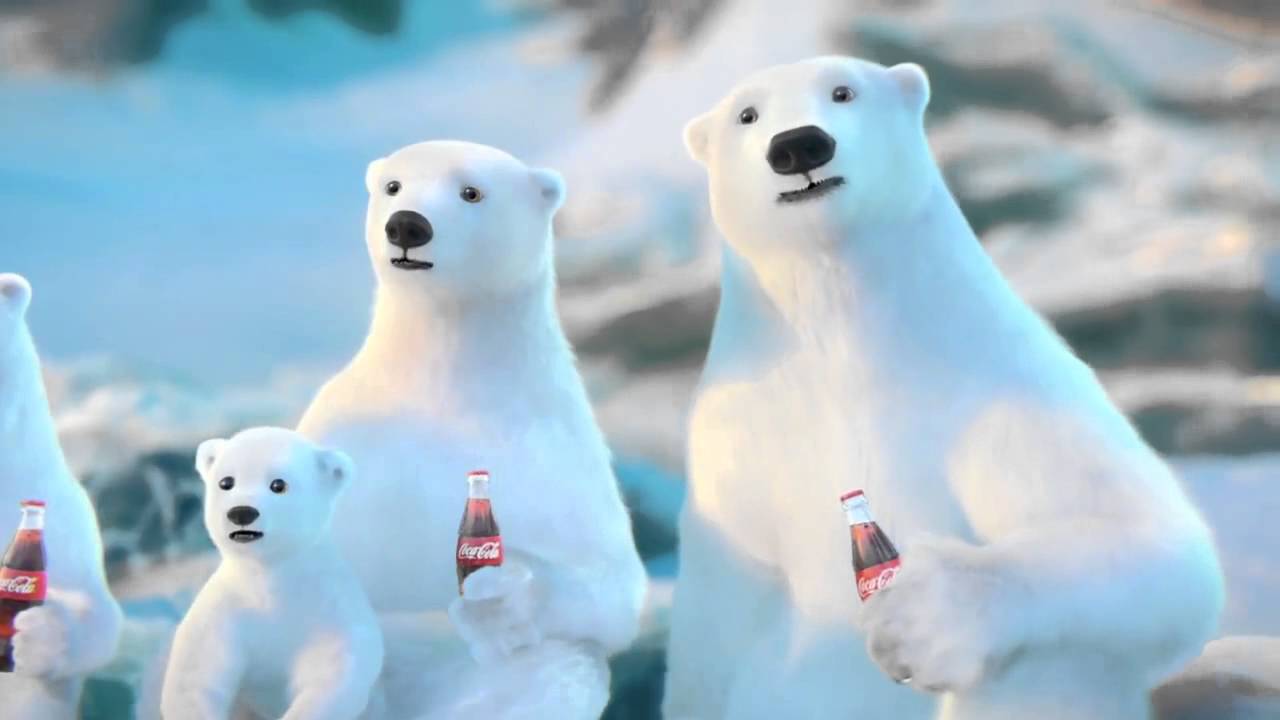
Except maybe the polar bears.

And they are not talking.

Except, of course, to the admen from Coca-Cola


via Science Matters

https://ift.tt/Rn1eMbP

January 3, 2023 at 09:49AM