Month: September 2023

Burn the Witch!

It is a long-established principle of scientific enquiry that if you want to understand the structure of something, then just give it a bang and see how it rattles. It is a technique that crops up in a number of different guises from seismography and spectography to magnetic resonance imaging; just excite something and stand back and enjoy the physics. But the same technique doesn’t have to be restricted to physical enquiry. Rattle any cage and the noises given off will tell you an awful lot about what you are dealing with. Take, for example, the recent cage-rattling of climate scientist Patrick T. Brown, formerly of John Hopkins University. Everything was just calypso and candy until he came along and caused a breach of the peace by suggesting in an article in The Free Press that journals such as Nature and Science were biased towards articles that are focussed upon a particular narrative. The accusations he was making suggested a problem with the structure, but it was actually the howling response that betrayed the structure of the problem.

The essence of Brown’s allegation is actually quite simple: Climate scientists are self-censoring particular details of their research because they anticipate that otherwise they may find difficulty in getting their studies published in the prestigious journals. In his particular case, Brown had deliberately omitted the key fact that 80% of wildfires were started by humans; an omission that facilitates the preferred narrative that wildfires are yet another indication that climate change risk is not just a concern for the future, but also one which is having a serious impact today. In his own words:

I knew not to try to quantify key aspects other than climate change in my research because it would dilute the story that prestigious journals like Nature and its rival, Science, want to tell. This matters because it is critically important for scientists to be published in high-profile journals; in many ways, they are the gatekeepers for career success in academia. And the editors of these journals have made it abundantly clear, both by what they publish and what they reject, that they want climate papers that support certain preapproved narratives—even when those narratives come at the expense of broader knowledge for society. To put it bluntly, climate science has become less about understanding the complexities of the world and more about serving as a kind of Cassandra, urgently warning the public about the dangers of climate change. However understandable this instinct may be, it distorts a great deal of climate science research, misinforms the public, and most importantly, makes practical solutions more difficult to achieve.

Readers of Cliscep will recognise this as a key concern of the sceptic. A great deal of trust is placed in scientific consensus, to the extent that its very existence substitutes for evidence. However, the way that communities work, scientific or otherwise, means that consensus can be a poor proxy for wisdom. In practice, scientists do not blindly follow where the evidence takes them. They undertake their journey of discovery within the constraints that society creates for them, whether that takes the form of peer pressure, financial inducement and support or outright censorship. And in many instances, the scientists are enthusiastic game players, since they will often sense the social value and importance of some narratives in preference to others. But the resulting focus can often be to the detriment of a fuller understanding. This particularly matters when deciding upon the best way of tackling a problem. For example, as Brown points out, a preoccupation with the climate change narrative and the push to reduce CO2 output in order to reduce fire risk may cause people to overlook the fact that the recent trend in wildfires could be entirely reversed by re-introducing sound forest management and addressing the social problems behind an epidemic of arsonists.

In any other field, Brown’s observations would be met with mild bemusement. There would be an admission that science operates within constraints, but there may be a counter-argument offered to the effect that any suggestion this leads to a damaging distortion is to exaggerate the extent of the problem. The editor of the journal concerned would probably respond with something along the lines of, ‘We are disappointed that we may be giving certain scientists the impression that we gatekeep narratives, and we are only too happy to reassure such individuals that all avenues of relevant study shall be considered for publication without prejudice. Indeed, promoting a broader knowledge for society lies at the very heart of our ethos’.

Whether true or not, the very tone of the response would reflect how relaxed the scientific community was in seeing their very human and unremarkable frailty highlighted. But no, this is not any other field, this is climate science we are dealing with here. And so this is what was actually said by Dr Magdalena Skipper, editor of Nature:

The only thing in Patrick Brown’s statements about the editorial processes in scholarly journals that we agree on is that science should not work through the efforts by which he published this [study]. We are now carefully considering the implications of his stated actions; certainly, they reflect poor research practices and are not in line with the standards we set for our journal.

Skipper added that Nature has an ‘expectation’ that researchers use the most appropriate data, methods and results:

When researchers do not do so, it goes against the interests of both fellow researchers and the research field as a whole. To deliberately not do so is, at best, highly irresponsible. Researchers have a responsibility for their research which they must take seriously.

Or to put it succinctly, she has come out all guns blazing with an accusation of scientific malpractice and a not-so-veiled threat that Nature will not be accepting any further work with Brown’s name on it. It is a gross over-reaction that speaks volumes. A rattled cage wouldn’t be making so much noise if its structure had the required integrity.

To start with, Brown had only talked about self-censoring regarding the scope of work. That is every scientist’s prerogative. Nowhere did he claim not to have used the most appropriate data, methods and results – that’s Skipper’s deliberate misrepresentation of the issues. He didn’t do anything that invalidated his results, as far as they went.

Secondly, she talks of work that did not meet the standards ‘we set for our journal’. This is very odd, because the study concerned had already been happily accepted by the journal despite the fact that the authors politely declined a peer reviewer’s suggestion that they widen its scope. It seems this insistence on maintaining the original scope was acceptable, and only became ‘poor research practice’ and ‘highly irresponsible’ after Brown had said his piece to the press. The implication is that his declared motives for wishing to restrict the scope were indicative of ‘poor research practice’. This is nonsense.

Thirdly, Skipper seems to have completely overlooked the fact that Brown spoke of not trying to ‘quantify key aspects other than climate change’. This is actually a key strategy that every climate scientists religiously abides by. If it is ‘poor research practice’ and ‘highly irresponsible’, then the whole climate science community is guilty as charged. To understand why this is the case, one has to reflect upon the nature of causal analysis and the policy position that climate scientists have taken. The matter is discussed in a paper partly co-written by Judea Pearl, the father of modern-day causal inference, and Friederike Otto, the public face of modern-day extreme weather attribution studies. In that paper a contrast is made between the probability of necessity (PN) and the probability of sufficiency (PS). PN is equated to the concept of culpability (the higher the PN, the higher the supposed levels of guilt). PN also happens to be the facet of causality that extreme weather event attributions are designed to calculate. Such studies are therefore focussed upon the extent to which blame can be attributed to AGW. What they can’t address is how such levels of culpability compare to other factors that lie outside the scope of the climate models. Consequently, even when such factors are mentioned, you rarely see them quantified and encapsulated in a full causal statement covering both PN and PS. This is precisely what Brown has accused the climate science community of doing. And, as it happens, that is precisely what that community sets out to do. The only issue seems to be the extent to which this is achieved through principled self-censorship rather than through a self-censorship that is running scared of editorial favouritism. There may be a bit of both, but in Brown’s experience, there is plenty of the latter:

When I had previously attempted to deviate from the formula I outlined here, my papers were promptly rejected out of hand by the editors of high-profile journals without even going to peer review.

Every time Otto publishes an attribution study that talks of the impossibility of something happening without climate change, she is referring only to a probability of necessity and in so doing chooses a deliberately narrow scope that fails to cover the probabilities of sufficiency and fails to ‘quantify key aspects other than climate change’. But is Skipper stepping forward to accuse her of ‘poor research practice’ or being ‘highly irresponsible’? Is Otto’s research failing to meet the standards of Skipper’s journal? Of course not. So what is the difference between Otto and Brown? As far as I can see, the difference is simply that Otto is keeping her mouth shut, because she knows that if she were ever to make this common practice of self-censorship public (and particularly if she were to point out its ramifications, as did Brown) then the self-protective mechanisms of the culture that such disclosures threaten would kick into place and suddenly the once golden girl of extreme weather attribution would become a pariah and a disgrace to science. Professor Otto may be many things, but foolhardy she is not.

Finally, it should not have escaped Skipper’s attention that Brown did not restrict his concerns to matters of editorial bias in journals. If anything, it is the bias shown by the media in reporting upon climate change that causes the most damage. In fact, his article leads with:

If you’ve been reading any news about wildfires this summer—from Canada to Europe to Maui—you will surely get the impression that they are mostly the result of climate change.

He goes on to provide examples of such reporting before adding:

I am a climate scientist. And while climate change is an important factor affecting wildfires over many parts of the world, it isn’t close to the only factor that deserves our sole focus. So why does the press focus so intently on climate change as the root cause? Perhaps for the same reasons I just did in an academic paper about wildfires in Nature, one of the world’s most prestigious journals: it fits a simple storyline that rewards the person telling it.

So Brown is making an important point about narrative and the need to keep it simple and focused. Again, this is a point that has been made on this blog, both here and here. It is very telling that a climate scientist cannot make the same point without generating so much noise and heat.

I am not quite sure what motivated Brown to say what he did. From where I am stood, it just looks like an act of breathtaking honesty and common sense. He said what needed to be said, but he must surely have known that his profession would immediately throw him under the bus and seek to reverse all previous plaudits bestowed upon him. As a consequence, he used to be a much-respected member of the scientific community, but now he’s just a guy they used to know. It’s the same old cultural kickback; if someone criticises the culture, the culture protects itself by vilifying the critic. It’s a defamation that is only to be expected from a system that protects itself through social sanction. You can’t accuse such a system of censorial behaviour without expecting it to be censorious in return. Society, (and the scientific community that acts on its behalf) seems to have settled upon an orthodoxy that drives and frames our courses of enquiry. It also demands a simple narrative both within the scientific journals and, more importantly, in the publications charged with reporting to the public.

I will be following this news item in the coming weeks since I fear cancellation may be around the corner. Dr Ken Rice of ATTP fame has already declared his position:

Given that there can be preferred narratives within scientific communities, it is always good for there to be people who are regarded as credible and who push back against them. Even if you don’t agree with them, they can still present views that are worth thinking about. In my view, Patrick used to be one of those people.

It can be of little comfort to Patrick T. Brown that Dr Ken Rice’s views of him carry next to no weight.

Footnote

If you have not already done so, you are advised to read Professor Brown’s article in full. I could have written several posts on the many important issues it raises.

via Climate Scepticism

https://ift.tt/GAWaLX8

September 9, 2023 at 06:59AM

UN Stocktake: Admits the Paris Agreement is Off Course

Essay by Eric Worrall

Before the stocktake process has even begun.

The following is transcribed from the visually annoying United Nations website.

About the Global Stocktake

Why the Global Stocktake is a Critical Moment for Climate Action

The global stocktake is a critical turning point in our battle against the escalating climate crisis – a moment to take a long, hard look at the state of our planet and chart a better course for the future.

“The global stocktake is an ambition exercise. It’s an accountability exercise. It’s an acceleration exercise,” said UN Climate Change Executive Secretary Simon Stiell. “It’s an exercise that is intended to make sure every Party is holding up their end of the bargain, knows where they need to go next and how rapidly they need to move to fulfill the goals of the Paris Agreement.”

What is the Global Stocktake?

The global stocktake is a process for countries and stakeholders to see where they’re collectively making progress towards meeting the goals of the Paris Climate Change Agreement – and where they’re not.

It’s like taking inventory. It means looking at everything related to where the world stands on climate action and support, identifying the gaps, and working together to chart a better course forward to accelerate climate action.

The stocktake takes place every five years, with the first-ever stocktake scheduled to conclude at the UN Climate Change Conference (COP28) at the end of this year.

But this is not just a routine check-up. Stiell calls the stocktake a “moment for course correction,” an opportunity to ramp up ambition to avoid the worst consequences of climate change. The stocktake itself isn’t the gamechanger – it’s the global response to it that will make all the difference.

Stiell’s ideal outcome from the stocktake? A roadmap with ‘solutions pathways’ that drive immediate action. Pathways that guide us sector by sector, region by region, actor by actor, to get to where we need to go during the next seven years.

The global stocktake will end up being just another report unless governments and those that they represent can look at it and ultimately understand what it means for them and what they can and must do next. It’s the same for businesses, communities and other key stakeholders. – Simon Stiell, UN Climate Change Executive Secretary

Why is this so urgent?

The global stocktake is unfolding in a critical decade for climate action.

Global emissions need to be nearly halved by 2030 for the world to limit global temperature rise to 1.5 degrees Celsius. In addition, transformational adaptation is also needed to help communities and ecosystems cope with the climate impacts that are already occurring and are expected to intensify.

Every day, we see the devastating impacts of climate change, from raging wildfires to catastrophic floods to more frequent and intense heatwaves, as well as food and water scarcity, sea level rise, and biodiversity loss.

In March this year, the UN’s Intergovernmental Panel on Climate Change (IPCC) published its latest Synthesis Report, which summarizes all the scientific reports it has published during its sixth assessment cycle. This marked the first comprehensive IPCC report in nine years.

It highlighted just how far off-track the world is, reinforcing last year’s UN Climate Change report, which stated the combined climate pledges of 194 Parties under the Paris Agreement could put the world on track for around 2.5 degrees Celsius of warming by the end of the century.

The science is unequivocal: a course correction is needed. And it needs to happen now.

In order to keep 1.5 within reach we need deep and immediate emission cuts across all sectors and regions. We know what we have to do. Now we must boost political will to make that course correction through action and support possible. – Simon Stiell, UN Climate Change Executive Secretary

The IPCC Synthesis Report clearly demonstrates that it is possible to limit global warming to 1.5 degrees Celsius with feasible, effective and low-cost mitigation and adaptation options to scale up across sectors and countries. This report underscores the urgency of taking more ambitious action and shows that, if we act now, we can still secure a liveable, sustainable future for all.

The next few years will be critical in determining whether we can make the necessary changes in time to prevent the worst impacts of climate change.

The success of the global stocktake will ultimately determine the success of COP28. It is the defining moment of this year, this COP and — as one of the only two stocktaking moments in this decisive decade of climate action — ultimately pivotal to whether or not we meet our 2030 goals. – Simon Stiell, UN Climate Change Executive Secretary

How does the stocktake tie into other key deliverables?

The global stocktake is not the only key deliverable of COP28. The conference also needs to make progress in several other workstreams: hammering out the details of the loss and damage finance facility, driving towards a global goal on finance, accelerating both an energy and a just transition, closing the massive emissions gap, just to name a few.

This will be no small feat.

According to Stiell, we already know we face enormous gaps in achieving the objectives and goals of the Paris Agreement: particularly in cutting emissions, adapting to the worsening effects of climate change, and providing finance and support to developing countries.

This is where the global stocktake comes in. Delivering a stocktake outcome at COP28 with specific pathways, as well as concrete milestones and targets, for each workstream can help narrow those gaps.

The stocktake will also lay the foundation for countries to update and enhance their national climate action plans (known as Nationally Determined Contributions), which they are required to do in 2025.

What happens next?

There are three components to the global stocktake process:

  • Information collection and preparation
  • Technical assessment
  • Consideration of outputs

The technical assessment and information collection and preparation components of the stocktake are currently running concurrently.

This is where the stocktake’s ‘technical dialogues’ come in. The dialogues are a forum for sharing the best-available science and assessments of mitigation, including response measures; adaptation, including loss and damage; and means of implementation (climate finance, technology transfer, and capacity building). They also showcase climate solutions and identify barriers that stand in the way of taking action.

The first dialogue took place at the Bonn Climate Change Conference last June, with the second dialogue taking place at COP27 in Egypt last November. The third and final technical dialogue will take place at the Bonn Climate Change Conference this June.

Although the dialogues centre on taking stock of past actions, they are also about forward momentum to unlock more ambitious climate action and support.

The last phase, consideration of outputs, will start following the June session and conclude at COP28 in 2023. That’s when the findings of the technical assessment will be presented, and their implications discussed and considered.

In addition, throughout the year, countries and stakeholders will gather at different times to begin shaping the outcome of the stocktake. This collaborative effort helps ensure that everyone’s voices are heard and that the resulting solutions pathways (to 2030 and beyond) reflect the needs and concerns of all involved.

Source (public domain): https://unfccc.int/topics/global-stocktake/about-the-global-stocktake/why-the-global-stocktake-is-a-critical-moment-for-climate-action

Of course, when the United Nations claim they are ensuring everyone’s voices are heard, they are not exactly being truthful.

The one significant group not adequately represented at the assessment and conferences are climate skeptics, anyone who argues against the need for any action. You know, the “vested interests” whom the UN blames for their complete lack of progress.

But we’ve seen this kind of liberal “inclusivity” many times over the years – inclusive, but only if you agree with them.

The funniest part, liberals and UN apparatchiks can’t even see why lack of inclusivity is the main reason they fail. Getting agreement is difficult, if you refuse to talk to the people whose actions you believe are blocking progress, and if you are not powerful enough to force them to stop.

Or maybe they do see, but don’t actually care if the process succeeds.

One thing for sure, the emissions reductions promoted by the United Nations cannot possibly succeed. As our Willis pointed out in Bright Green Impossibilities, simple math dictates that hundreds of square miles of new wind turbines or solar panels would have to be built every single day, to hit Net Zero by 2050 – along with a colossal build out of nuclear, battery backup, or whatever else was required to make intermittent wind and solar dispatchable. This simply isn’t going to happen.

via Watts Up With That?

https://ift.tt/odc5aRF

September 9, 2023 at 04:01AM

Wind & Solar ‘Transition’ Turns Trainwreck: Australians Face More Summer Blackouts

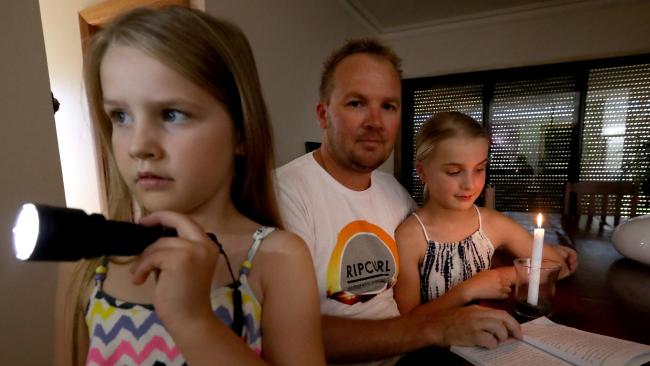
Dry spells, spell hot summers in Australia, which spell load shedding and mass blackouts, whenever the sun sets and/or calm weather sets in.

The summer of 2017/18 was a scorcher. Back then, load shedding caught power consumers short in South Australia, Victoria and NSW. Energy-hungry businesses such as aluminium smelters and even hospitals were forced to power down during a run of scorching days and nights, when temperatures soared and wind power output plummeted: Australia Closes Coal-Fired Power Plants: Hospitals Forced to Cut Power Use & Power Prices Rocket

5 years on, the situation is even more perilous, with the closure of several large coal-fired power plants and even more chaotic wind and solar added to the grid.

Pretending to rely on sunshine and breezes for power brings with it plenty of opportunities for freezing or boiling in the dark.

Once again, Australia is experiencing below-average rainfall; once again, Australians will feel the heat this summer; and, once again Australian power consumers and businesses will be chopped unceremoniously from the grid when temperatures rise and wind and solar output collapses.

Sky News’ Chris Kenny takes up the subject with the Federal Shadow Energy Minister, Ted O’Brien in the interview below.

‘Not surprising’: Warnings Australia could face power outages
Sky News
Chris Kenny and Ted O’Brien
31 Ausust 2023

Shadow Climate Change and Energy Minister Ted O’Brien says AMEO’s warning to the government that Australia could potentially experience blackouts over the upcoming summer isn’t surprising.

“I don’t think it should be surprising to anyone who has been following this to think that Australians are now paying among the highest electricity bills in the world, and they’re now being told that they have to brace for a very likely possibility of a blackout,” he told Sky News host Chris Kenny.

“I mean, it’s extraordinary to think we’re in Australia of all places, such a developed, wealthy, prosperous country, and we’re all saying, ‘I hope the weather is going to be okay, otherwise the lights will go out; it shouldn’t be like this.’”

Transcript

Chris Kenny: I spoke with shadow energy minister, Ted O’Brien, about how today’s warning was as predictable as it is worrying.

Ted O’Brien: It is, Chris. I don’t think it should be surprising anyone who’s been following this to think that Australians are now paying among the highest electricity bills in the world. And they’re being told now that they have to brace for a very likely possibility of a blackout. I mean, the light’s going out, it’s extraordinary, but it shouldn’t be a surprise.

Chris Kenny: No, it’s not a surprise. But we ought to be angry right around this country because so many people have been warning about this for so many years. In fact, we know the only reason we haven’t had widespread blackouts or brownouts over the past two summers is that we’ve had mild summers. We haven’t had those really hot days when there’s been high demand, and that’s what we’ve got to hope for again this summer, presumably.

Ted O’Brien: I think that’s right, Chris. And I think it was the same thing before the winter. People were saying, “Hopefully, it’s not going to be a bad winter.” And thankfully, winter didn’t bite anywhere as harshly as we thought it might, so we survived. I mean, it’s extraordinary to think we’re in Australia of all places, such a developed, wealthy, prosperous country, and we’re all saying, “Well, I hope the weather’s going to be okay, otherwise the lights will go out.” I mean, it shouldn’t be like this.

Chris Kenny: Not just a developed wealthy economy, but one that’s built on cheap energy. We are energy rich. This economy has been blessed with cheap energy in Australia, yet we’ve deliberately thwarted that. And that’s where you, as a Coalition, have got to take some of the blame. Of course, you were in government less than 18 months ago, and obviously you haven’t done enough to keep enough dispatchable energy generation in the system.

Ted O’Brien: Chris, a couple of things. Firstly, as I’ve gone around different countries and spoken to their energy ministers and experts, we are the envy of the world because we are so rich in our abundance of resources. We are the last country that should have the problems that we have now. As for the background in terms of how we get to this, I think there are three key drivers here. One, premature closure of base load power stations. Two, a restriction on gas. And three, with renewables, I mean, investment has stalled on that too. So demand exceeds supply and there’s a risk there of a shortfall, and here we are.

But the thing is, the more that Labour doubles down on this lunacy of driving to a renewables-only grid, saying that some technologies are bad, the worse this problem’s going to get. And I can’t believe that the response from the Energy Minister to this news from the market operator is saying, “Well, oh they’re doing a great job. We’ve got the right policies.” No, you don’t have the right policies when it’s getting worse. The market operator’s saying it’s getting worse. All the energy experts are saying it’s getting worse. But they need to address those three issues, of base load power and gas and the sovereign risk issue, which is holding back on investment.

Chris Kenny: Yeah, Chris Bowen just says they need more renewables, and more transmission to connect the renewables. That just costs more money and doesn’t give us the reliable supply that we need. And we’re in a country here now where we’ve subsidised renewables relentlessly for 20 years, deliberately to force out fossil fuel generation, deliberately to force out coal-fired generation. But now we’ve got Victoria and New South Wales looking to subsidise coal to keep it online because it’s being driven out by the renewable subsidies that were designed to force it out. I mean, it is that insane.

Ted O’Brien: The whole thing is in tatters, Chris. So to think that here we have the federal government saying it must be only wind and solar as the generating assets. Meanwhile, the state Labour in Victoria, well, they’re racing back to coal. We’re waiting for the New South Wales government to say the same thing to avoid Eraring close. So everyone’s going their own way. It’s an utter mess. But still to this day, Chris Bowen is saying, “Nope, we have to stick to 82% renewables by 2030.” There is no plan B. This is it. He’s racing us towards a cliff, which is why we need to keep calling it out.

Chris Kenny: I know you’ve been pushing hard on nuclear, and the Coalition ought to keep doing that. That’s a great medium to long-term solution, but obviously what we need in the interim is more gas fired generation because that won’t be a stranded asset. No matter whether you have renewables or nuclear, you’re always going to need some gas peaking generation around the country. Tell us what you think about Snowy Hydro 2.0 though. That was Malcolm Turnbull’s baby. We learned today, confirmation that its cost now is $12 billion, promised at 2 billion now 12 billion, and that doesn’t include the up to $10 billion of transmission to plug it into the system.

Ted O’Brien: And Chris, when you think of those big numbers, and then you hear Chris Bowen saying electricity prices will come down, he does not account for any of those expenses. And that was revealed only a week ago, a $60 billion black hole in his policy.

But as for Snowy 2.0, the thing that I just can’t get my head around here is it’s gone from 6 billion to 12 billion in just over 12 months. Now, I don’t doubt how complicated this is. I mean, this is one complex engineering feat. No criticism of very hardworking, sharp minds that are working on the actual project. But the Australian National Audit Office did a review of this, at the end of the Coalition’s term of government, and gave it a big tick for how it’s being managed, the governance being effective. And then I heard Paul Broad, the former CEO, on radio just yesterday, saying around that time the price tag was 6 billion. Well, now it’s 12 billion.

Now, I think it’s legitimate that some costs would’ve gone up. That’s fair enough. But to double it in over 12 months. And the only thing I can see changing is Chris Bowen signed off on a change in the deal construct. It’s no longer fixed fee, but rather cost plus. So instead of having the prime contractor responsible and holding their feet to the fire, he’s basically shifted responsibility to the taxpayer. All the risk and additional costs, that now falls on the taxpayer. So is it really 12 billion or is it going to go up even further? I think it’s uncapped.

Chris Kenny: No, we know it’ll be 20 billion at least when you bring in the transmission. That’s what experts have told us on this programme for many, many months. It’s a familiar story on this climate and energy policy. Lots of money going in, lots of costs going up, but not much energy around the place, which seems to be the opposite of what Australian taxpayers deserve. Thanks so much for joining us, Ted.

Ted O’Brien: Thanks very much, Chris.
Sky News

via STOP THESE THINGS

https://ift.tt/KiNcgun

September 9, 2023 at 02:36AM

ZERO BIDS FOR OFFSHORE WIND

Not net zero – just zero! This should be a wake up call for the government and for the people of the UK. Clearly offshore wind is simply much too expensive. 

Offshore wind auction fails to attract any bids – BBC News

via climate science

https://ift.tt/CUhrjBL

September 9, 2023 at 01:52AM