
0 out of 10 based on 0 rating
via JoNova
September 27, 2023 at 09:41PM
Susan Crockford
Just a heads-up that this week, PBS in North America will broadcast the “polar” episode of a new documentary called “Evolution Earth.” In my area, it’s scheduled for Wednesday, September 27 at 10:00 PM. It remains to be seen whether this is really about evolution or (given those involved in its production) simply more climate change propaganda similar to that promoted by Attenborough, but I intend to watch and report back.
About the Show: “Evolution Earth embarks on a global expedition to reveal the animals keeping pace with a planet changing at superspeed. Heading out across the globe to distant wilds and modern urban environments, five episodes track how animals are moving, using ingenuity to adapt their behavior, and even evolving in unexpected ways.
…We follow heart-warming tales of resilience that redefine our understanding of evolution, and hint at how nature can show us a path towards a sustainable future for Planet Earth. The series is narrated by Dr. Shane Campbell-Staton, who guides us through each episode in an intimate narrative style, drawing on his background as an evolutionary biologist.”
Episode 4 | Ice “At the planet’s frozen extremes, shifts in animal movement and behavior reveal vital information about our future world. Examine polar bears in the Arctic, penguins in Antarctica and other animals surviving in icy worlds.“
Find tips for watching outside the US here.
What to expect
Will evolutionary principles prevail? Hard to say but here are some hints. The film is produced by an outfit called “Passion Planet.” I have not seen anything else they have done in their 20 year history in the business but their name does not give me much confidence that the presentation of unadulterated science is their primary goal.
On top of that, the director of the “Ice” episode is Charlotte Lathane. Her name rings alarm bells for me because she was the director/producer of that cringe-worthy Attenborough-narrated BBC film aimed at scaring the pants off viewers, “Extinction: The Facts.“
I wrote about this film in Fallen Icon (Crockford 2022), edited a bit for brevity:
It featured the so-called Sixth Mass Extinction that had been a WWF hobbyhorse since 2016 and one Attenborough had eagerly climbed aboard from the beginning (Doyle 2021; Westcott 2016). However, this concept has few supporters and many critics: it is not something serious scientists espouse (Lomborg 2001; Steele 2013).
The film got well-deserved criticism as well as the usual, almost automatic, raves (Clark 2020; Jones 2020). However, Extinction: The Facts was different from the others in one important respect: it was the first time the Covid-19 pandemic entered Attenborough’s narrative.
Blaming the emergence of Covid-19 on declining biodiversity turned out to be the companion to a bizarre notion that climate change itself had been largely responsible for the Covid-19 epidemic, which Attenborough and the BBC now seemed to be actively promoting. This unsubstantiated claim provided the foundation for increasing pressure on nations and their citizens to ensure that a global agreement to deal with climate change was reached in 2020.
I’ve mentioned before that the story of polar bear evolution cannot be told with a thorough and rational discussion of natural climate change (Crockford 2023). I admit I don’t have high hopes but it will be interesting to see what approach this documentary takes on the critical issues of evolution and adaptation of polar bears.
References
Clark, R. 2020. ‘What David Attenborough’s ‘Extinction: The Facts’ didn’t tell you’. The Spectator Magazine (UK), 14 September. https://www.spectator.co.uk/article/what-david-attenborough-s-extinction-the-facts-didn-t-tell-you
Crockford, S.J. 2022. Fallen Icon: Sir David Attenborough and the Walrus Deception. Amazon KDP, Victoria.
Crockford, S.J. 2023. Polar Bear Evolution: A Model for How New Species Arise. Amazon KDP, Victoria.
Doyle, J. 2021. ‘Earth is doomed, probably, says David Attenborough in Extinction: The Facts’. The Globe and Mail (Canada), 30 March. https://www.theglobeandmail.com/arts/television/article-earth-is-doomed-probably-says-david-attenborough-in-extinction-the/
Jones, J.P.G. 2020. ‘‘Extinction: The Facts’: Attenborough’s new documentary is surprisingly radical’. The Conversation, 14 September. https://theconversation.com/extinction-the-facts-attenboroughs-new-documentary-is-surprisingly-radical-146127
Lomborg, B. 2001. The Skeptical Environmentalist: Measuring the Real State of the World. Cambridge University Press, New York. pg 249-257.
Steele, J. 2013. Landscapes and Cycles: An Environmentalist’s Journey to Climate Scepticism. CreateSpace Publishing.
Westcott, B. 2016. ‘Sixth mass extinction? Two-thirds of wildlife may be gone by 2020: WWF’. CNN, 28 October. https://www.cnn.com/2016/10/26/world/wild-animals-disappear-report-wwf/index.html
via Watts Up With That?
September 27, 2023 at 08:08PM

Mario Loyola explains at Real Clear Wire EPA’s Illegal Power Play. Excerpts in italics with my bolds and added images.
EPA’s Ambitious Gambit to Reorganize America’s Electricity
The U.S. Supreme Court’s ruling in West Virginia v. EPA last year was a historic defeat for the Environmental Protection Agency. Not only did the Court rule that the 2015 Clean Power Plan, President Obama’s signature climate regulation, was unconstitutional; it also dramatically limited EPA’s power to regulate carbon emissions under the Clean Air Act (CAA) moving forward.
That left the agency with two courses of action. It could take its lumps and focus on proposing regulations with a high chance of surviving federal court review. Or it could stake everything on a final desperate attempt to decarbonize America’s power sector, and go for the win in keeping with President Biden’s commitment to net zero carbon emissions.
On May 23, 2023, EPA chose the latter, proposing carbon emissions standards
for power plants far more ambitious than those
struck down by the Supreme Court last year.
Like other EPA climate regulations, the proposed emissions standards under Section 111 of CAA are not designed to reduce emissions from standard power plants, but rather to force a rapid transition away from reliable and affordable sources of dispatchable power—natural gas and coal—to intermittent renewables and new kinds of power plants that don’t even exist yet. Together with EPA’s electric vehicle mandates, the proposed rule would be a train wreck for the American electricity grid and society as a whole, endangering economic competitiveness and energy security while yielding no measurable climate benefit.
Those hoping for a dramatic finish to Biden’s climate action will not be disappointed: the proposal has so many legal vulnerabilities that it would be a miracle if the rule survives federal court review.
Under the proposed rule, which President Biden hopes to finalize by next summer, large new or modified natural gas plants and existing coal plants would be required to virtually eliminate carbon emissions by 2038, at the latest. Under Section 111(a) “New Source Performance Standards” (NSPS), large new or modified combined-cycle natural gas plants, which currently supply roughly 30% of the nation’s electricity, would be required to achieve close to zero carbon emissions, either by implementing carbon capture and storage (CCS) to capture 90% of carbon emissions by 2035, or by switching from natural gas to 98% “green” hydrogen co-firing by 2038. In addition, under Section 111(d) emissions guidelines, existing coal plants, which currently supply more than 20% of America’s electricity, would be required to virtually eliminate carbon emissions by implementing CCS by 2035.
Interestingly, EPA declined to promulgate NSPS for coal plants because, as it explains, there are no plans to build any new coal plants in the U.S. It declined to promulgate emissions guidelines for existing natural gas plants out of concern for feasibility. Even more interesting, when EPA sent the proposed rule to the White House for regulatory review under E.O. 12866, it contained no emissions guidelines for existing plants at all, and therefore would not have applied to coal plants at all. The White House reportedly sent it back to EPA with orders to put a Section 111(d) rule for existing coal plants in the proposal. This suggests that EPA itself is not very confident in the ability of the Section 111(d) rule to survive court review.
Section 111 of CAA, the same provision at issue in West Virginia v. EPA, authorizes EPA to mandate “the degree of emission limitation achievable through the application of the best system of emission reduction which (taking into account the cost of achieving such reduction and any nonair quality health and environmental impact and energy requirements) the Administrator determines has been adequately demonstrated.”
Section 111 sets a high bar, especially after West Virginia v. EPA. The proposed rule falls woefully short. It has at least three major legal vulnerabilities, any one of which would be sufficient for a court to strike the rule down.
First, neither CCS nor green hydrogen is anywhere near “adequately demonstrated” within the meaning of Section 111.
Second, EPA has systematically ignored crucial costs and impacts that it is required to take into account in setting emissions standards under Section 111.
Third, like the “best system of emission reduction” struck down in West Virginia v. EPA, the new rule would require sweeping regulatory action and infrastructure investments entirely outside the fence line of the regulated facilities, thereby raising the “major question” doctrine’s presumption against the agency’s interpretation of the law.
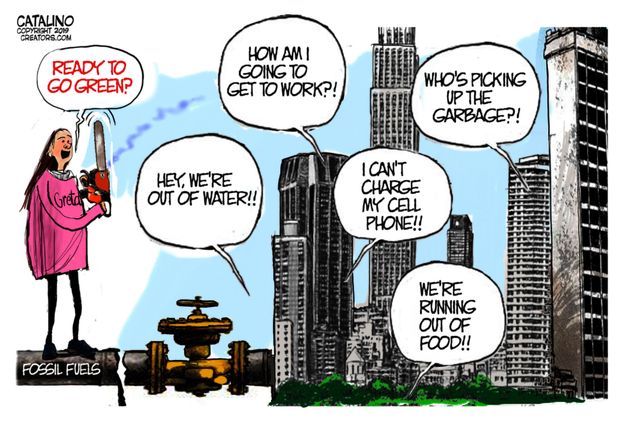
Contrary to the unambiguous pronouncements of the D.C. Circuit, EPA treats Section 111 as if it were a technology-forcing provision throughout the proposed rule. For example, EPA claims that CCS has been “adequately demonstrated” for natural gas plants based on small-scale demonstrations at coal plants. But the coal demonstrations cited involve only small slipstreams (carbon captured from a small percentage of the plant’s total emissions) for use in the food industry. Moreover, the coal plant demonstrations do not involve the sophisticated combined-cycle configurations of large natural gas plants—in which the exhaust from the primary combustion cycle is used to heat the steam generator of the second cycle—that the new standards focus on.
In the several hundred pages laying out the proposed rule, EPA provides just two examples of demonstrations at natural gas plants. One, at Bellingham, Massachusetts, captured only a 10% slipstream and closed in 2005 because it was not economical. That was a decade before the Obama-era Clean Power Plan, in which EPA correctly rejected CCS as inadequately demonstrated and too costly. The other, a project at Peterhead, Scotland, is still in planning and may not even be built. Neither can be used as the basis for an adequately demonstrated BSER.
Furthermore, EPA’s CCS mandate would require a massive buildout of carbon transport and storage infrastructure, which has not been adequately demonstrated and would require sweeping investments and regulatory changes by developers and government authorities unrelated to the entities subject to regulation under Section 111 of CAA. Like the measures “beyond the fence line” of regulated entities that were struck down in West Virginia v. EPA, this massive infrastructure buildout would be beyond the ability of EPA-regulated entities to implement.

Co-firing with low-carbon hydrogen is even further from being adequately demonstrated. Nearly all hydrogen today is produced using carbon-intensive methods. Indeed, electrolysis from renewable and nuclear power produces only trivial quantities, and EPA doesn’t even bother to estimate the cost, feasibility, or time it would take to build out the vast amount of new renewable and nuclear power capacity that would be needed to make the low-GHG hydrogen a practicable option for power plants.
In short, neither CCS nor “green” hydrogen co-firing meets the Section 111 legal standards of “adequately demonstrated” BSER.
In determining that a technology is “adequately demonstrated” under Section 111, EPA must take into account the costs of the rule, as well as the health, environment, and energy impacts of the rule. Courts have interpreted this as requiring that costs be reasonable. That poses a threshold problem for EPA’s proposed rule because EPA can point to no measurable environmental benefit that would result from compliance. EPA has based all its greenhouse gas regulations on the same original 2010 Endangerment Finding, which has serious problems of its own, as William Happer and Richard Lindzen note in their July 2023 comment letter to the proposed rule. It has not been demonstrated that the sources subject to the rule make a significant contribution to a condition of air pollution that endangers human health, and the finding mentions the 2021 Technical Support Document on Social Cost of Carbon only in connection with a regulatory impact analysis that is unrelated to the requirements of CAA. Under such circumstances, there is a threshold question of whether any significant costs could be reasonable.
There are other problems with EPA’s estimate of costs and impacts.
First, its estimate of costs is highly speculative. The rule would affect a host of entities and government authorities across the whole society, the vast majority of them not subject to regulation under CAA, and EPA has little clue as to how they will adjust to the rule. If its cost estimates are off by any significant amount, regulated entities could well react by shuttering, rather than attempting to comply, which would create a situation of dangerous energy scarcity with skyrocketing prices. In parts of the country where fossil energy is restricted as a matter of policy, such as California, the electricity grid is on the verge of dangerous blackouts almost every evening in the summer.

And those restrictions are modest, compared with those now contemplated by EPA.
EPA’s most egregious failure to properly account for costs is that it subtracts the amount of federal subsidies from the cost estimate, a nominal reduction of $369 billion based on CBO’s score. That figure will likely turn out to be much greater, given the subsidies’ lack of date-certain sunset.
As for the impact on electricity prices, EPA estimates that the rule would lead to a price increase of 13%. That is almost certainly a woeful underestimate. In California, where a much milder form of renewable energy mandate has been in place for years, end-user electricity costs are twice the national average. The costs of compliance with the new rules could be far more exorbitant. As further explained below, CCS would reduce the power output of the relevant plants by at least 30%, while green hydrogen would likely be three to four times more expensive to produce and deliver as current demonstrations using natural gas.

Given the number of factors outside EPA’s expertise and jurisdiction that would
determine how much time and money all that infrastructure would cost,
EPA’s estimates are little more than conjecture.
The Court held that EPA’s interpretation raised a “major question” and that, in the absence of clear congressional authorization, the claimed power exceeded EPA’s statutory authority. The Court noted that EPA’s approach to BSER allowed it to set emissions standards at whatever level the agency wanted, regardless of whether any regulated entity could feasibly comply with the new standards. The Court noted that the Clean Power Plan would result “in numerical emissions ceilings so strict that no existing coal plant would have been able to achieve them without engaging in [generation-shifting].”
EPA’s new power plant rule relies on a similarly expansive definition
of BSER to establish standards that can be met only
by shifting generation away from fossil sources.
The only way that regulated sources could comply with the rule would be if states or utilities (or other developers) would build a major interstate infrastructure for CCS and “green” hydrogen, including tens of thousands of miles of specialized pipelines, massive underground storage facilities for CO2, and large-scale facilities for the production and transport of hydrogen gas from renewable sources. Whether to develop such infrastructure is a decision totally beyond the control of regulated entities.

The claimed power would regulate a significant portion of the American economy,
entails political impact of great significance, and intrudes on matters
that are the traditional domain of the states.
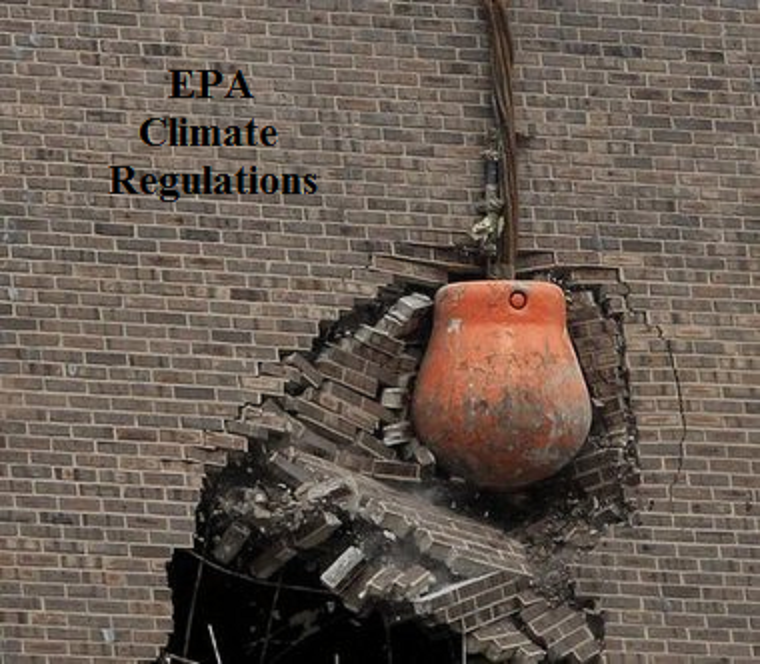
EPA’s efforts to restrict greenhouse gas emissions from power plants and other sources represent a dangerous overreach of executive power. Congress never authorized EPA to regulate greenhouse gases in this expansive manner. By trying to reorganize the country’s electricity-sector limits through executive fiat, rather than the legislative process, EPA is abusing its authority and circumventing democracy.
Net zero climate policy raises novel issues that affect every American citizen
in almost every aspect of modern life. Policy requiring such
transformative change should be left to Congress.

via Science Matters
September 27, 2023 at 06:07PM
Essay by Eric Worrall
Reuters is predicting the possible election of a right wing government on a platform of repealing climate policies which are devastating the countryside.
New Zealand farmers set for right-wing protest vote over climate change policies
By Lucy Craymer
September 27, 20234:49 PM GMT+10 Updated 13 hours agoWELLINGTON, Sept 27 (Reuters) – Rural voter anger at New Zealand’s environmental policies to tackle climate change and reduce carbon emissions may contribute to a return of right-wing parties to power at an Oct. 14 election, a shift that could diminish the country’s green image.
A flirtation with the New Zealand Labour Party in the 2020 election by rural voters, some for the first time in decades, has ended due to environmental policies such as planting pine forests on grazing land and taxing livestock methane burps.
Warning that livelihoods are at stake, farmers are looking to conservative candidates who will unwind or delay these Labour policies.
…
I wouldn’t get too excited. What passes for right wing in New Zealand is politically equivalent to a party of moderate democrats in the USA. The new party will possibly even support Net Zero, just at a slower pace.
But I suspect any relief from the green wrecking ball would be welcome, in a New Zealand economy which has seen pretty much every sphere of productive economic activity laid under siege from their current crop of far left greens.
via Watts Up With That?
September 27, 2023 at 04:05PM

 Iowa Climate Science Education