
Suction buckets are a wind turbine foundation design that eliminates the need for those incredibly loud giant monopiles.
via CFACT
March 11, 2024 at 03:45AM
Suction buckets are a wind turbine foundation design that eliminates the need for those incredibly loud giant monopiles.
via CFACT
March 11, 2024 at 03:45AM
Chris Stark,The head of the Government’s climate watchdog, the Climate Change Committee (CCC), told officials to “kill” a negative news story with “technical language”, The Telegraph can disclose
The article reported a claim by Sir Chris Llewellyn Smith, who led a recent Royal Society study on future energy supply, that the CCC had privately admitted that it made a “mistake” when it only “looked at a single year” of data showing the number of windy days in a year when it made pronouncements on the extent to which the UK could rely on wind and solar. farms to meet net zero targets.
In a presentation delivered on Oct 31 2023, Sir Chris said: “By looking at one year you underestimate storage and you grossly overestimate the need for everything else. That’s exactly what the Committee on Climate Change have done.”
He added: “The Committee on Climate Change, as I already said, looked at a single year and they have conceded privately that that was a mistake. But they are still saying they don’t differ that much from us. Well, that’s not quite true.”
via climate science
March 11, 2024 at 02:59AM

Freedom from wind turbine noise nuisance isn’t a “concern”; it’s a hard-won legal “right” based on the lawful entitlement to sleep comfortably in your own home – a right (not a privilege) that’s been upheld against the mighty, rich and powerful for close to 200 hundred years.
The grinding, thumping cacophony generated by giant industrial wind turbines delivers wholly unnecessary misery worldwide. Sleep deprivation is first among the list of adverse health effects caused by these things and the pulsing low-frequency noise they generate.
The wind industry has fought tooth and nail to avoid the consequences of the harm it dishes out, mostly with impunity. However, increasingly its victims are fighting back and winning.
In Ireland, two neighbouring couples have just landed a monumental victory for common sense and human decency. The plaintiffs, Margret Webster and her partner Keith Rollo and Ross Shorten and Joan Carty, fought tooth and nail to regain their ability to use and enjoy their own homes free from the perpetual racket generated by turbines a few hundred metres from their homes – the plaintiffs described the noise in evidence as “like a cement mixer, or an aeroplane flying overhead without ever landing.”
The action was based on the common law tort of nuisance. For a primer on nuisance see our post here.
This not the first time that the Irish have taken wind power outfits to court. The cases almost always settle, with the operators forking out serious cash to the people they torment, such as this case: Settling Up: Irish Wind Farm Operator Pays Three Children €225,000 Compensation For Suffering Caused by Turbine Noise
This time the plaintiffs went all the way and won. Here are a couple of articles on their grand Irish victory. Below that you’ll find a link to the High Court’s 195 page decision.
Noise from wind farm is ‘nuisance’ to neighbours, judge says in landmark ruling
Breakingnews.ie
High Court Reporters
8 March 2024
A High Court judge has found that levels of noise generated at certain times of the day by a wind farm constitutes a nuisance to the occupants of neighbouring properties.
In a landmark decision, which is understood to have implications for the operation of electricity-generating wind turbines, Ms Justice Emily Egan held that noise levels from the two-turbine Ballyduff Windfarm at Kilcomb, near Enniscorthy, Co Wexford, amounted to “unreasonable interference”.
The cases are the first private nuisance claim from wind turbine noise to run in either Ireland or the UK, the judge said.
The first action was taken by Margret Webster and her partner Keith Rollo whose home is close to the wind farm which has been operational since 2017.
A second action was taken by Ross Shorten and Joan Carty who had owned another property close to the turbines, but sold it after they commenced their proceedings in 2018.
Both couples had sued the wind farm operator Meenacloghspar (Wind) Limited seeking damages for nuisance.
The couples claimed they had been subjected to constant noise and nuisance from the wind farm that had damaged their lives, health and the value of the properties.
The claims were fully denied by the defendant, with a registered address at Stillorgan Road, Donnybrook, Dublin 4.
‘Unreasonable interference’
In her ruling on the first part of the case, which dealt with liability only, Ms Justice Egan said the noise amounted to an “unreasonable interference” with the enjoyment of their property, and they were therefore entitled to damages.
The hearing of the first module lasted for 51 days, far longer than what had been originally estimated by the parties’ lawyers, the judge noted.
The costs of the case to date have been estimated to be well over €1 million.
During the course of the hearing, the judge also physically visited the turbines and the properties.
Giving the court’s decision, the judge said that there are frequent and sustained periods of noise “widely acknowledged to be associated with high levels of annoyance” and have “a characteristic known to lead to adverse reaction in the community”.
The judge accepted that in this case such noise levels from the wind farm “occurs commonly and for sustained periods”.
Noise levels that exhibit these characteristics on a regular and sustained basis were “unreasonable and exceptional,” she said.
“I find that the plaintiffs’ complaints are objectively justified in that the noise interferes with the ordinary comfort and enjoyment of their homes. When it occurs, this interference is a substantial interference.”
While the noise is liable to annoy during the working day, higher prevailing background noise levels and the fact that the occupants are not trying to relax, or sleep means that the noise did not in general substantially interfere with the plaintiffs’ enjoyment of their property, she said.
However, the noise “poses a nuisance to the plaintiffs in the evenings and at weekends, when one could reasonably expect to be enjoying recreation in the garden or peace in one’s dwelling”.
“Demonstrably the noise also poses a nuisance at night and in the early morning when a quiet environment is at a premium,” she said.
Damages
The amount of damages to be awarded to the plaintiffs, the issue of whether an injunction ought to be granted and, if so, the terms of such injunction will be assessed by the court following the second module of the claim.
The judge also found that the defendant had not breached the terms of turbine’s planning permission, as alleged.
The court said that while the court was not satisfied that the wind farm complies with the noise condition of its permission, this had not been pleaded in the case.
The court also rejected claims that the defendant had been negligent towards the plaintiffs.
The court rejected the defendants’ claim that Mr Shorten and Ms Carty were not entitled to seek damages arising out of their disposal of their former property.
The judge said they were entitled to advance a claim to damages in nuisance for any unreasonable interference with amenity occasioned during the period of their ownership and potentially for diminution in the sale price.
The judge said the case was before the court when existing planning guidance regulating, the noise aspects of wind farm developments in Ireland, the Wind Energy Development Guidelines, 2006 are under review.
While draft revised Wind Energy Development Guidelines were published in 2019, these had been withdrawn, the judge said.
In the absence of clear policy guidance from the government on wind turbine noise, the assessment in an individual case “is a classic matter of degree on which the court must exercise judgment,” the judge added.
After giving her decision, the judge directed the parties to re-engage in mediation in an attempt to identify appropriate and proportionate mitigation measures.
The judge said she was requesting this in an attempt to resolve all outstanding issues between them.
In their actions, the plaintiffs sought various orders requiring the defendant to cease operating, decommission and dismantle the wind farm.
They also sought orders restraining the defendant from operating the wind farm until it is constructed in a way such as to not cause undue and excessive noise, vibration and shadow flicker at their home.
They further sought damages including aggravated damages for nuisance, negligence, breach of duty and breach of their Constitutional Rights, including their rights to family life and the quiet enjoyment of their home.
The couples, represented in the action by John Rogers SC, instructed by solicitor Philip Coffey of Noonan Linehan Carroll Coffey, claimed their lives suffered due to the impact of the noise, vibration and shadow flicker from the wind farm.
Their sleep had been disrupted, their anxiety levels increased, and their overall mental health had suffered due to the noise and vibrations generated by the wind farm.
They said the noise was like a cement mixer, or an aeroplane flying overhead without ever landing.
Mr Shorten and Ms Carty, with an address at Grange Road, Rathfarnham, Dublin 14, had claimed that their former house at Ballyduff was approximately 359 metres from the wind farm.
After delivering her decision, the judge agreed to adjourn the matter for several weeks to allow both sides to consider the judgment.
Breakingnews.ie
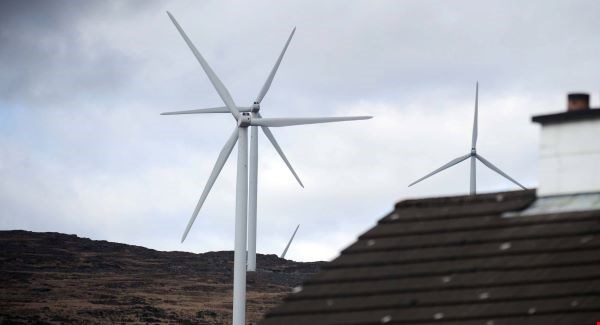
Wind farm noise constituted nuisance to nearby residents, High Court rules
Irish Times
Aodhan O’Faolain
8 March 2024
A High Court judge has found that wind farm noise levels at certain times of the day constitute a nuisance to nearby residents.
In a decision that is understood to have implications for the operation of wind turbines, Ms Justice Emily Egan held that noise levels from the two-turbine Ballyduff Windfarm at Kilcomb, near Enniscorthy, Co Wexford, amounted to an “unreasonable interference” with the enjoyment of two couples’ properties.
The cases are the first private nuisance claims from wind turbine noise to run in Ireland or the UK, the judge said.
The first action was taken by Margret Webster and her partner Keith Rollo, whose home is close to the wind farm that has been operational since 2017. A second action was taken by Ross Shorten and Joan Carty who owned another property close to the turbines but sold it after commencing their proceedings in 2018.
Both couples sued the wind farm’s operator, Meenacloghspar (Wind) Limited, seeking damages for nuisance.
The couples claimed they have been subjected to constant noise and nuisance from the wind farm that damaged their lives, health and the values of the properties.
The claims were fully denied by the defendant, with a registered address at Stillorgan Road, Donnybrook, Dublin 4.
The hearing of the first module lasted for 51 days, and the costs of the case to date have been estimated to be well over €1 million. Ms Justice Egan also visited the turbines and the properties.
Giving the court’s decision in the first module of the cases, dealing only with liability, the judge said the noise amounted to an “unreasonable interference” with the enjoyment of their property and were therefore entitled to damages.
There are frequent and sustained periods of noise “widely acknowledged to be associated with high levels of annoyance”, she said.
The judge accepted that in this case the noise level “occurs commonly and for sustained periods”.
Noise levels that exhibit these characteristics on a regular and sustained basis are “unreasonable and exceptional”, she said.
“I find that the plaintiffs’ complaints are objectively justified in that the noise interferes with the ordinary comfort and enjoyment of their homes. When it occurs, this interference is a substantial interference.”
While the noise is liable to annoy during the working day, higher prevailing background noise levels and the fact that the occupants are not trying to relax or sleep means it did not generally substantially interfere with the plaintiffs’ enjoyment of their property, she said.
However, she said, the noise “poses a nuisance” to the plaintiffs in the evenings and at weekends, when one could reasonably expect to be enjoying recreation in the garden or peace in one’s dwelling and at night and early morning when a “quiet environment is at a premium”.
The level of damages to be awarded, whether an injunction should be granted and, if so, in what terms, will be assessed by the court after the second module of the cases concludes.
The judge found the defendant had not breached the terms of the wind farm’s planning permission.
The court said that while the court was not satisfied the wind farm complies with the noise condition of its permission, this had not been pleaded in the case.
The court also rejected claims that the defendant was negligent towards the plaintiffs.
The judge said the case was before the court while existing planning guidance regulating the noise aspects of wind farm developments in Ireland (the Wind Energy Development Guidelines 2006) are under review.
Draft revised Wind Energy Development Guidelines published in 2019 have been withdrawn, the judge said.
In the absence of clear policy guidance from the Government on wind turbine noise, the assessment in an individual case “is a classic matter of degree on which the court must exercise judgment”, she added.
After giving her decision, the judge directed the parties to re-engage in mediation in an attempt to identify appropriate and proportionate mitigation measures.
In their actions, the plaintiffs have sought various orders requiring the defendant to cease operating.
They also seek orders restraining the defendant from operating the wind farm until it is constructed in a way such as to not cause undue and excessive noise, vibration and shadow flicker at their home.
They further sought damages including aggravated damages for nuisance, negligence, breach of duty and breach of their constitutional rights, including their rights to family life and the quiet enjoyment of their home.
The couples, represented by John Rogers SC, instructed by Noonan Linehan Carroll Coffey solicitors, claim their lives have suffered due to the impact of the noise, vibration and shadow flicker from the wind farm.
Their sleep has been disrupted, their anxiety levels increased, and their overall mental health suffered due to the noise and vibrations generated by the wind farm.
They said the noise was like a cement mixer or an aeroplane flying overhead without ever landing.
Mr Shorten and Ms Carty, with an address at Grange Road, Rathfarnham, Dublin 14, had claimed that their former house at Ballyduff was approximately 359 metres from the wind farm.
Irish Times
Full decision available here: 2024_IEHC_136

via STOP THESE THINGS
March 11, 2024 at 01:31AM
“But messages [against] … Lynne [Kiesling] … just serve to marginalize you. …. I’d encourage you to divert your efforts to re-establishing the reputation you have had, because your existing approach has tarnished and is tarnishing it.” (Michael Giberson, below)
“Lynne and Mike’s modus operandi is tweak, tweak and continue down the road of climate alarmism – forced energy transformation – centrally planned electricity.”
Keep your eye on the ball. In recent days, I have noted the irony of the “Queen of Power Markets” Lynne Kiesling presiding over a Public Choice conference where her central planning electricity model (Independent System Operators/Regional Transmission Organizations) is not teed up for some serious Public Choice application. That’s the situation going into the conference, judging from the scheduled panels and talks.
Such was my Friday post, “Public Choice and Electricity: Kiesling Ducks Again (Plano, Tx. meeting next week).” I sent this post out to dozens of classical liberals who I have known over the years/decades, as well as those associated with the conference that I have not ever met, with the note:
I write in hopes that you will share this communication with others and try to get (President) Lynne Kiesling to address the central topic of the Plano conference next week in regard to electricity, her area of specialty. She is simply ‘in denial’ about applying free market economics and public choice to her governmental central planning model of electricity.
A free market in electricity would avoid both the ‘knowledge problem’ of ISO/RTOs and the politics of governmental organization. And with electric reliability now a wild card (yes, government intervention did this), it is time for serious open debate (something Lynne has a studiously avoided).
Classical liberals of all stripes need to understand and debate the ‘virtual power plant’, which is open-ended wind/solar displacement of reliable generation with battery backup and ‘smart meters’ in the home that will surge-price to rescue the wounded supply side. And all (per Lynne) in the name of Hayek, Coase, Ostrom, etc.
No complaints, either. A lot of folks are suspicious of her techno-eco analysis but do not want to get into the intricacies of electricity. I am trying to change that, one step at a time.
Some Background
Classical liberalism has been hijacked by Lynne Kiesling and her faithful follower, Michael Giberson. Both purposefully bypassed a long tradition in free-market electricity thought in their writings, with Lynne substituting “my synthetic theory of regulation and technological change.”[1] They have resisted pushback (from me and others) against the theoretical and operational flaws of such a contrived market. Lynne and Mike’s modus operandi is tweak, tweak and continue down the road of climate alarmism – forced energy transformation – centrally planned electricity.
I have been following Lynne for decades and attended two of her electricity conferences as a last minute addition at the request of one of her major funders. I was told at one meeting that the conference premise of climate alarmism (thus forced energy transformation) was not to be debated. At the other, with a room of mostly left-of-center electricity specialists debating how to regulate/price power inside the home, I commented, “I want to just leave the temperature at 72 degrees and pretty much be done with it.” My point–which the large majority of Americans would have also uttered at the experts–was curtly dismissed by Lynne: “You can already do that.” (Transaction costs, anyone?)
I put up with Lynne’s peculiar technocratic approach to electricity until the Texas Blackout of February 2021, which she and Giberson blamed on record cold as an Act of God, a force majeure event. Except that wind and solar predictably disappeared. Except it happened despite on-the-shelf weatherization technology for thermal generation (yes, ruined margins and crowding out from $60 billion in wind/solar forcing was causal). Except that is happened within a government system (PUCT/ERCOT) with major planner error. Except ….
Giberson’s Complaint
My efforts on social media to get Lynne to frontally challenge her central planning (ISO/RTO) model with Public Choice resulted in this email to me yesterday from Michael Giberson:
I was asked about your email regarding Lynne Kiesling. My reply was to say I don’t know why you can’t see this is an unprofessional manner of engagement.
Keep writing your blog (but focus on the issues rather than attacking people you disagree with). Write a op-ed. Write a scholarly paper. Present at an academic conference. Write a policy paper, you have written for Cato in the past and the folks at TPPF share some of your concerns. Try them. These are reasonable ways to advance your concerns.
But messages like the email and your frequent Facebook “challenges” to Lynne in response to unrelated posts just serve to marginalize you. They make you seem like a tiresome and impotent outsider rather than an independent free-market scholar, long-time liberty proponent, and well-known energy expert.
I’d encourage you to divert your efforts to re-establishing the reputation you have had, because your existing approach has tarnished and is tarnishing it.
I answered Giberson as follows:
Keep your eye on the ball, Mike. The obvious opportunity here is to get a very reluctant Lynne to frontally address the obvious issue of politicized electricity markets via Public Choice analysis. Lynne, the ‘expert’ in both, should be challenged to address the obvious. And with a lot of folks in the audience eager to hear just this, tell Lynne to do so!
Second, I find it peculiar that you are more interested in my “reputation” than I am. I am about to enter my seventieth summer. For nearly a half-century, I have stated my views with a lot of history and theory–and nary considered what others (often the political majority or “establishment”) think. I am not a second hander. “Speaking truth to power” is an old refrain of classical liberalism, and Lynne is certainly at the throne of power.
I do realize, however, that there is a new generation that may be taken aback by my frontal challenges to a person they consider as a real classical liberal in the complex field of electricity. Problem is that she misinterprets (or, to be charitable, selectively interprets) different classical liberal literatures to justify central planning for electricity. It does not work.
If you were really concerned about my reputation, why didn’t you chime in to tell the audience (such as on a particular Facebook post) that I have expertise and represent the free market tradition in electricity? Why write an email to me rather than intervene at the point of engagement, if it concerns you?
Regarding your point about scholarly output, yes, I am building up to a major article–probably for The Review of Austrian Economics–on a praxeological, classical liberal view of electricity in theory and practice. But this is the article that you should write (should have written years ago)! You once thought for yourself without the hubris of defending political electricity. Instead, you have gone the other way.
Lynne Kiesling (and to a lesser extent you) have purposefully “raised rival’s costs” in my (and others) effort to understand synthetic regulation and political power. Lynne says she “hates monopoly.” Yet not unlike a political monopolist, she tries to protect her “synthetic theory of regulation” and pronunciation of the “grid [as] a common pool resource in which it is literally—literally—impossible to define and enforce property rights.” A real free market? She refuses to even define it and arrogantly dismisses her rivals.
But …. I have created a long, point-by-point evidentiary record to get to my future article. And other position papers are on their way. Stay tuned ….
Final Comment
The floor belongs to Lynne Kiesling starting this Thursday in Plano, Texas at 61st annual conference of the Public Choice Society. May the conference be great! And surely it would be greater if President Kiesling would share her expertise on the theory and practice of the second most regulated sector of the American economy next to money and banking. Go for it, Lynne!
—————
[1] Of the approximately 300 references in Kiesling’s major book, Deregulation, Innovation and Market Liberalization: Electricity Regulation in a Continually Evolving Environment (2009), there is a glaring absence of those in the free-market electricity tradition, including
Stigler, George, and Claire Friedland. “What Can Regulators Regulate? The Case of Electricity.” Journal of Law and Economics 5: 1-16, 1962
Demsetz, Harold. “Why Regulate Utilities?” The Journal of Law and Economics. Vol. 11, No. 1 (April 1968), p. 56.
Poole, Robert W. Jr. Unnatural Monopolies: The Case for Deregulating Public Utilities. Lexington, MA: Lexington Books, 1985.
Primeaux, Jr., Walter J. Direct Electric Utility Competition: The Natural Monopoly Myth. New York: Praeger, 1986.
Moorhouse, John, ed. Electric Power: Deregulation and the Public Interest (San Francisco, CA: Pacific Research Institute, 1986.
Bradley, Robert L., Jr. “The Origins of Political Electricity: Market Failure or Political Opportunism?” Energy Law Journal. Vol. 17, no. 1 (1996), pp. 59–102.
The post Electricity: Have I ‘Tarnished’ my Reputation and ‘Marginalized’ Myself? (Giberson’s huff) appeared first on Master Resource.
via Master Resource
March 11, 2024 at 01:07AM
 Iowa Climate Science Education