Month: March 2024

The Vast Right Wing Conspiracy

“Inside the right-wing conspiracy to thwart the clean energy transition” Inside the right-wing conspiracy to thwart the clean… | Canary Media “Climate-Science Deniers, Right-Wing Think Tanks, and Fossil Fuel Shills Are Plotting Against the Clean Energy Transition” Climate-Science Deniers, Right-Wing … Continue reading

via Real Climate Science

https://ift.tt/EQqGmjK

March 16, 2024 at 08:41AM

Report: Bill to End Colorado Oil, Gas Permitting Could Have $2B Impact on Tax Revenue

From ClimateREALISM

Guest essay via The Center Square, reprinted with permission.

A bill to substantially restrict oil and gas permitting in Colorado would result in widespread financial and environmental impacts, according to a new report by a research group.

The report, published by the Common Sense Institute, a free-enterprise think tank, says Senate Bill 24-159 would negatively impact the state’s economy as well as tax revenue at the state and local levels.

The legislation also would result in increased emissions, according to the report, which referenced the recently published Colorado Greenhouse Gas Pollution Reduction Roadmap 2.0 Report to support its point.

“More fuel would be imported to Colorado, primarily by heavy trucks carrying oil and gas products, which themselves produce local air pollution,” the state document says.

SB24-159 would mandate the Colorado Energy & Carbon Management Commission to adopt regulations ending the issuance of new oil and gas permits by Jan. 1, 2030. It would reduce the number new wells in 2028 and 2029 and require companies receiving permits after 2024 to stop operating by 2032.

The bill is scheduled for a hearing by the Agriculture & Natural Resources Committee on Thursday.

CSI found $1.9 billion in state and local tax revenue in 2022 from the oil and gas industry was the largest single source of revenue, an average of $321 per Colorado resident.

The $1.2 billion in property taxes paid by the industry was the largest source of revenue for local taxing districts, according to the report. Schools received $432 million in oil and gas property tax revenue, and fire and police departments, cities, counties and other local services received $768 million. It amounted to 6% of all property tax revenue and 7% of all school property tax revenue.

“The economic impact of banning oil and gas drilling in Colorado would be devastating and goes beyond lost production, tax revenue, and job losses,” CSI Energy Fellow Trisha Curtis said in a statement. “At a minimum at risk is $2 billion in state and local tax revenue, over $400 million which funds Colorado schools, and nearly 200,000 jobs.”

If the bill becomes law, CSI estimates a total of 34,700 jobs would be lost in Colorado during in the first year and 181,800 during the next 10 years. It projects 70% of the jobs lost will be in the metro Denver area. The state’s gross domestic product would be reduced by 5.4% or $48.5 billion in the 10th year and a total of $321 billion during the decade.

The report emphasized the proposed law would only shift where energy is produced.

“This action would likely result in more pollution, higher methane emissions, more air pollution in our neighboring states, increased transportation emissions from increased imports of fossil fuels for use in Colorado, increased risk of accidents and spills of oil and gas products through increased interstate trucking, and price disruptions and less certainty of supply for all Coloradans without a meaningful long-term impact on fossil fuel consumption,” the report stated, referencing Gov. Jared Polis’ roadmap.

Anthony Watts

Anthony Watts is a senior fellow for environment and climate at The Heartland Institute. Watts has been in the weather business both in front of, and behind the camera as an on-air television meteorologist since 1978, and currently does daily radio forecasts. He has created weather graphics presentation systems for television, specialized weather instrumentation, as well as co-authored peer-reviewed papers on climate issues. He operates the most viewed website in the world on climate, the award-winning website wattsupwiththat.com.

via Watts Up With That?

https://ift.tt/G1yezT5

March 16, 2024 at 08:07AM

Ice-Free Arctic Coming Soon

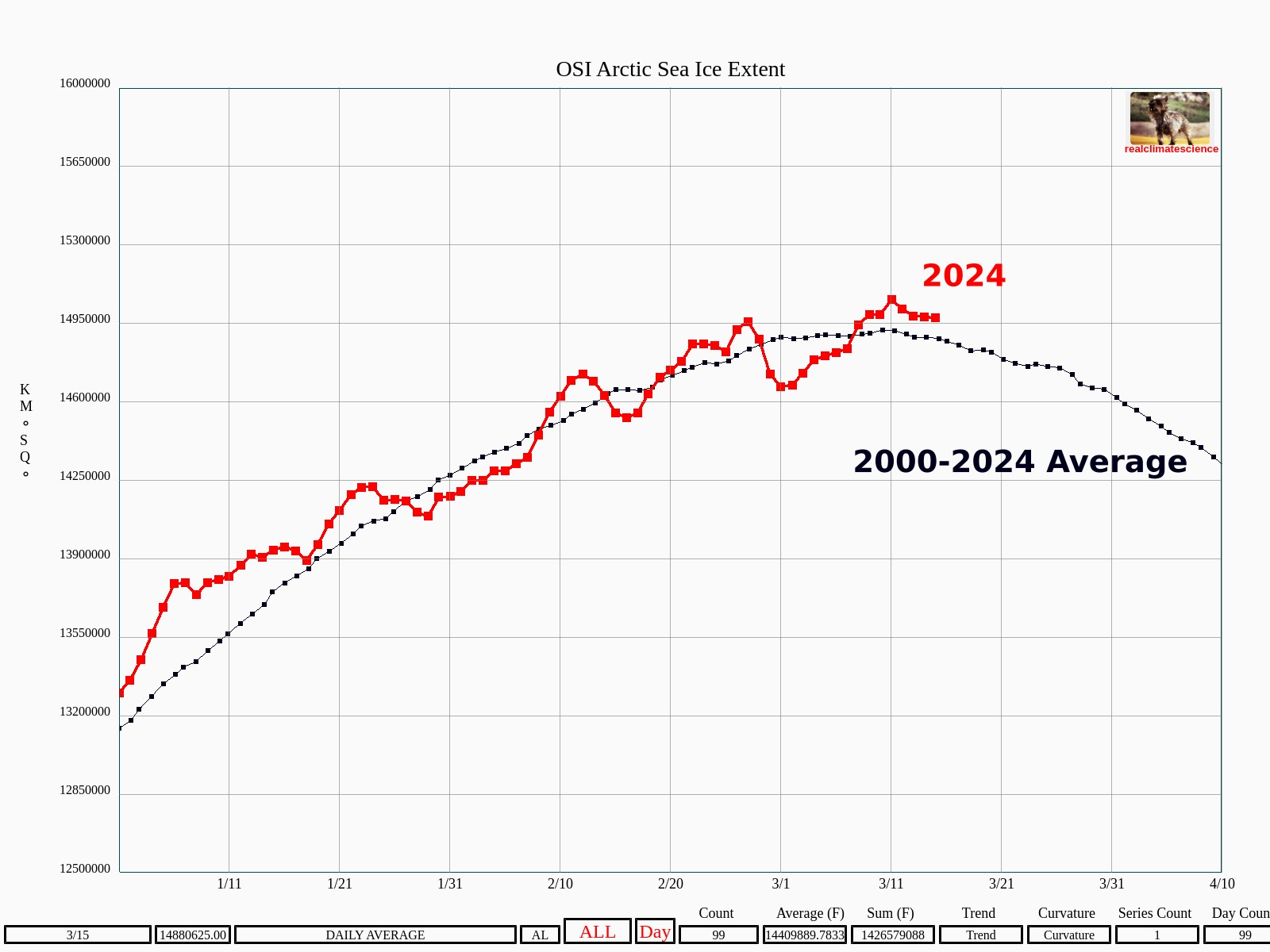
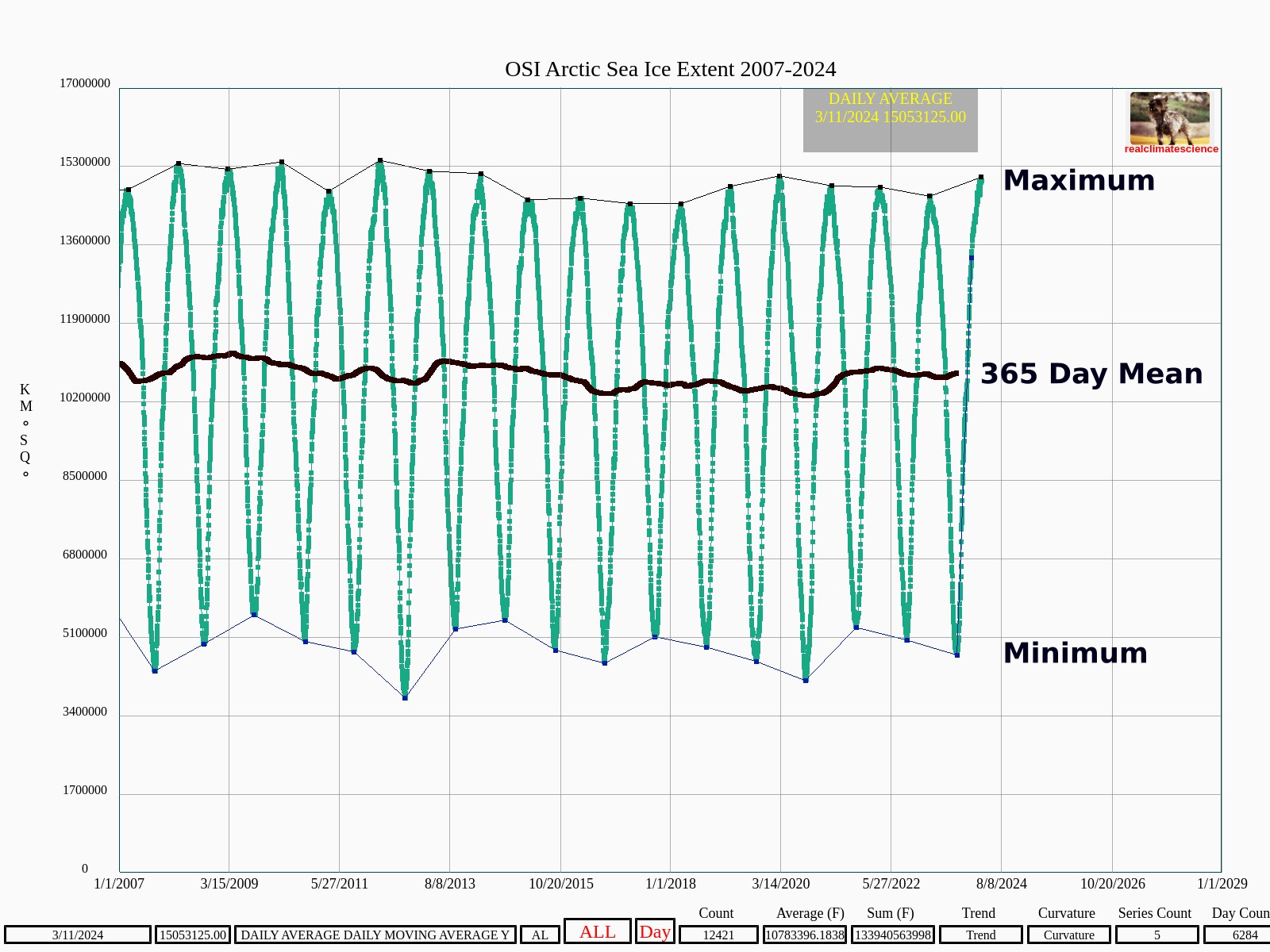
With ice extent above the 21st century average and little trend for seventeen years, experts have pushed their predictions of an ice-free Arctic out a few years.

“the earliest ice-free conditions (the first single occurrence of an ice-free Arctic) could occur in 2020–2030s under all emission trajectories and are likely to occur by 2050. However, daily September ice-free conditions are expected approximately 4?years earlier on average, with the possibility of preceding monthly metrics by 10?years. Consistently ice-free September conditions (frequent occurrences of an ice-free Arctic) are anticipated by mid-century (by 2035–2067)”

Projections of an ice-free Arctic Ocean | Nature Reviews Earth & Environment

https://ift.tt/0pCD7o3

Perhaps a more reasonable forecast would be 2380.

About Tony Heller

Just having fun

This entry was posted in Uncategorized. Bookmark the permalink.

via Real Climate Science

https://ift.tt/75yVQKa

March 16, 2024 at 07:02AM

Climate change: The ‘insane’ plan to save the Arctic’s sea-ice


Is this just another toytown publicity stunt to keep promoting the notion that there’s some climate problem, supposedly caused by human activities, requiring urgent corrective measures?
– – –
Perched on sea-ice off Canada’s northern coast, parka-clad scientists watch saltwater pump out over the frozen ocean.

Their goal? To slow global warming, says BBC News.

As sea-ice vanishes, the dark ocean surface can absorb more of the Sun’s energy, which accelerates warming. So the researchers want to thicken it to stop it melting away.

Welcome to the wackier side of geoengineering – deliberately intervening in the Earth’s climate system to try to counteract the damage we have done to it. [Talkshop comment – unsupported assertion].

Geoengineering includes more established efforts to lock up planet-warming gases, such as planting more trees and burying carbon underground.

But more experimental measures aim to go a step further, seeking to reduce the energy absorbed by the Earth.

Many scientists are strongly opposed, warning that such attempts distract from the critical step of cutting carbon emissions and risk doing more harm than good.

But a small number of advocates claim their approaches could give the planet a helping hand while humanity cleans up its act.

The ultimate goal of the Arctic experiment is to thicken enough sea-ice to slow or even reverse the melting already seen, says Dr Shaun Fitzgerald, whose team at the University of Cambridge’s Centre for Climate Repair is behind the project.

Will it work or is it, as one scientist put it, “quite insane”?

“We don’t actually know enough to determine whether this is a good idea or bad idea,” admits Dr Fitzgerald.
. . .
“The vast majority of polar scientists think this is never going to work out,” cautions Martin Siegert, an experienced glaciologist at the University of Exeter, who is not involved in the project.

One issue is that the saltier ice may melt more quickly in the summer.

And then there’s the huge logistical challenge of scaling the project up to a meaningful level – one estimate suggests that you could need about 10 million wind-powered pumps to thicken sea-ice across just a tenth of the Arctic.

“It is quite insane in my opinion that this could be done at scale for the entire Arctic Ocean,” says Julienne Stroeve, a professor of polar observation and modelling at University College London.

Full article here.
– – –
Image: Arctic sea ice [credit: Wikipedia]

via Tallbloke’s Talkshop

https://ift.tt/6opUMkX

March 16, 2024 at 04:25AM