Month: May 2024

Of Heat Engines: an Addendum

Figure-1-Its-a-great-day-for-heat-transfer
Figure-1. It’s a great day for heat transfer.

Kevin Kilty

In a recent guest blogger essay a side debate broke out between Nick Stokes and I over whether or not it is possible for thermal convection from a surface, such as Albuquerque on August 3, 1993, which was my boundary layer example, to reach high above, and produce substantive cooling of the surface.

The debate started thusly from Nick:

“The atmosphere is a heat engine/refrigerator, and it works like this. When the lapse rate is less than the DALR (about 9.8 K/km), when air is forced to rise by turbulence, it expands and cools adiabatically as pressure reduces. The cooling rate is basically the DALR. With this greater than the lapse rate, the air becomes cooler and denser than the neighboring air, and so work is done pushing it higher. That comes from the KE of the wind. Work is done to transfer “cold” upwards – ie heat downwards, against the temperature gradient. It is a heat pump….”

Continued thusly:

“If the lapse rate is 7 K/km, and DALR is 10 K/km, then air that leaves the surface 3K warmer than surrounds [sic] will lose that excess at height 1000m. Then it works against gravity to go higher, so slows down.

If the lapse rate is 9 K/km, it can rise to 3 km. It can happen, but such thermals are not easy to find.”

And ended here with my final reply:

“ I would agree with you if all there was was a parcel with a tiny bit of K.E. in an environment lapse rate of 7-10 C/km; but that’s not all there is, and I am sayin’ no more until I have thought it all out…”

Last night I went looking for data that I hoped to find which would make my point. I found it in several forms in several different places.

First, rather than reiterate all the examples I gave in the original essay, I will reference the paper by Renno and Williams from which the RPV data came, and point specifically to Section 6, the discussion, which is jam-packed with such, and which ends with this…[1]

“The observation that the air participating in natural moist convection originates in the surface layer is not surprising. More than half of the solar radiation energy absorbed at the surface is transferred to the atmosphere as both sensible and latent. This energy is vertically transported by the convective motions, and then radiated to space.”

I would only add that the same is true for dry convection as well.

In addition, a typical spring/summer fair weather day here as one that begins largely clear, by 10 am or so fair weather cumuli appear, these may grow to a steady state density covering a great deal of the sky by 4 pm some days. After midday the cumulus may attain vertical development but by 8 pm the cumuli become pancake shaped and may vanish completely. 

I would also ask readers to examine the video in a comment by David Dibbell found here. What this fascinating Band 16 timelapse of the western hemisphere shows is, repeatedly one day after another is this. The hottest portion of the day (brightest yellow) begins in the east and propagates across Argentina/Chile, then Mexico and finally across the U.S. Southwest. In between, in what is the Amazon basin, and in time order with all the other activity in the video, is the flaring up of thunderstorms with tops near the tropopause. Action follows the Sun. Surface heating organizes it all.

Now, regarding the RPV gathered data at Albuquerque on August 3, 1993, the story is told in a couple of atmospheric soundings, which I fetched from the archive at University of Wyoming. A sounding made at 6am local time and a second one made at 6 pm local time are shown in Figure 2.

Figure 2. Soundings at 6 am and 6 pm. Albuquerque. August 3, 1993

Overnight, the ground surface and air with a kilometer of the surface cooled, became mechanically stable. At 6 am (Figure 2A) the potential temperature (theta) is lowest near the ground surface, but the Sun begins heating the surface to a superadiabatic layer. This is soon unstable and begins to convect – at first in a shallow layer near the surface then step by step to increasingly higher levels. Radiation from the warming surface also contributes heat to this layer.

The atmosphere is not static. It is dynamic and it is bootstrapping its way into a deeper and deeper layer of instability. By 6 pm (Figure 2B) the entire atmosphere from ground to 4,200m (2,600 above surface) has uniform potential temperature and any parcel heated to as little as 1K higher theta will always be adequately buoyant to reach a high elevation. Recall that surface measurements at 1:00 pm showed a pool of superadiabatic air at the surface 6K or more warmer than rising parcels. Overnight something like Figure 2A re-establishes itself through radiation cooling, perhaps some subsidence and adiabatic warming, and contact with the ground surface.

MONEX

In the summer of 1979 a field experiment (MONEX) designed to study the South Asian monsoon had discovered this same scenario taking place in the atmosphere above the Empty Quarter of the Arabian peninsula.[2] Peter Webster devotes Chapter 12 in his textbook to desert climates and makes use of the MONEX results.[3]

Conclusion

Just to head-off one objection early, I admit that mesoscale conditions may contribute to lesser or more development of this boundary layer convection. I have, in fact, observed surface turbulence and even a hydraulic jump in the atmosphere downstream from wave clouds over the Front Range. But not in the warm season. Perhaps boundary layer convection draws occasionally on some pre-existing potential or kinetic energy. Yet, where did this potential energy or kinetic energy come from? My view is it is a fraction of remaining available work from heat transfer by many other, earlier regional weather events, some of which makes its way into the general circulation.

References:

1-Renno and Williams, Quasi-lagrangian measurements in convective boundary layer plumes and their implications for the calculation of CAPE, 1995, Mon. Weather Rev., September, 2733.

2-Eric A. Smith, 1986, The Structure of the Arabian Heat Low. Part II: Bulk Tropospheric Heat Budget and Implications, Mon. Weather Rev., v.114, p. 1084. Note: I can’t seem to find Part I of this publication, but Part II contains more than adequate data and commentary.

3-Peter Webster, Dynamics of the Tropical Atmosphere and Oceans, Wiley Blackwell, 2020.

via Watts Up With That?

https://ift.tt/dpG02Hn

May 29, 2024 at 12:08AM

Downplaying Light Stress To Hype Global Warming Misinforms The Public About Coral Bleaching

By Jim Steele

Why have major coral bleaching events occurred during EL Nino events?

During an El Nino, warm water stored in the Pacific Warm Pool of the Coral Triangle sloshes eastward. That lowers the ocean temperatures in the western Pacific and raises temperatures in the eastern Pacific  as seen in the temperature anomalies of illustration A.

It also shifts the centers of convection from the more westerly positions during La Nina and neutral conditions and moves them eastward. The resulting changes in atmospheric circulation cause downward air flow typical of heat domes and clearer skies over the western Pacific and Atlantic Ocean and Carribean. That causes more intense solar radiation and coral light stress those regions.

Due to the biochemistry governing photosynthesis, high light stress causes the increased production of dangerous oxidants (aka ROS: Reactive Oxygen Species). Dangerous oxidants damage living tissues, which is why all organisms naturally produce and ingest anti-oxidants. So, when corals’ symbiotic algae produce too much ROS and overwhelms a coral’s natural anti-oxidant systems, to prevent further damage, the coral eject their symbiotic algae and that causes bleaching.

As peer reviewed science explains,

“The most likely explanation to the commonest form of mass coral bleaching involves the production of Reactive Oxygen Species associated with Photosystem I of photosynthesis (and to some extent Photosystem II): namely superoxide (O2- ), hydrogen peroxide (H2O2) and singlet oxygen.”

See “A Review: The Role of Reactive Oxygen Species in Mass Coral Bleaching  Szabó (2020)

Alarmist scientists with a global warming agenda (i.e. Hughes, or Hoegh-Guldberg) always tell click-bait media the same narrative, that global warming is the main cause of bleaching. But increased solar radiation creates both high light stress and heat stress and heat stress can affect the efficiency of the corals’ antioxidant protection. So, both excess heat and light can increase the accumulation of ROS.

Which is the primary cause? Unfortunately rarely have studies satisfactorily separated the two factors. But those that have suggest light stress is the main factor. For example read:  Antioxidant responses to heat and light stress differ with habitat in a common reef coral Hawkins (2015). For the species Stylophora pistillata they state,

“Overall, changes in enzymatic antioxidant activity in the symbionts were driven primarily by irradiance rather than temperature, and responses were similar across depth groups. Taken together, our results suggest that in the absence of light stress, heating of 1C/day to 4C above ambient, is not sufficient to induce a substantial oxidative challenge”.

Thus, regions of reduced cloud cover during El Nino events correlate with the so-called “global” bleaching events that happened in 1998, 2010, and 2014-2017 and now 2023-24.  Accordingly major eastern-Pacific El Nino events happened in 1997–98, 2014–16, and 2023–24 and a Modoki El Nino 2009-2010. As seen in by the white circles in illustration B, the death rate from bleaching during the 2023–24 El Nino, are associated with regions, Carribean and Gulf of Mexico and the western Pacific, where El Nino induced atmospheric subsidence and reduced cloud cover which increased light stress.

The alarmists seeking power can’t control solar radiation, but they want to control the public’s use of energy. So, they unscientifically blame global warming for coral bleaching as evidence that rising CO2 is killing coral! Alarmists deny the science!

via Watts Up With That?

https://ift.tt/BKoqGik

May 28, 2024 at 08:06PM

Good and Bad Climate Models Simply Put

Thanks to John Shewchuk of ClimateCraze for explaining simply how climate models are evaluated and why most are untrustworthy in the above video. He also explains why worst performing model was prized rather than the one closest to the truth.  Below is a synopsis of a discussion by Patrick Michaels on the same point.

Background:  Nobel Prize for Worst Climate Model

Patrick J. Michaels reports at Real Clear Policy Nobel Prize Awarded for the Worst Climate Model. Excerpts in italics with my bolds and added images.

Given the persistent headlines about climate change over the years, it’s surprising how long it took the Nobel Committee to award the Physics prize to a climate modeler, which finally occurred earlier this month.

Indeed, Syukuro Manabe has been a pioneer in the development of so-called general circulation climate models (GCMs) and more comprehensive Earth System Models (ESMs). According to the Committee, Manabe was awarded the prize “For the physical modelling of the earth’s climate, quantifying variability, and reliably predicting global warming.”

What Manabe did was to modify early global weather forecasting models, adapting them to long-term increases in human emissions of carbon dioxide that alter the atmosphere’s internal energy balance, resulting in a general warming of surface temperatures, along with a much larger warming of temperatures above the surface over the earth’s vast tropics.

Unlike some climate modelers, like NASA’s James Hansen — who lit the bonfire of the greenhouse vanities in 1988, Manabe is hardly a publicity hound. And while politics clearly influences it (see Al Gore’s 2007 Prize), the Nobel Committee also respects primacy, as Manabe’s model was the first comprehensive GCM. He produced it at the National Oceanic and Atmospheric Administration’s Geophysical Fluid Dynamics Laboratory (GFDL) in Princeton NJ. The seminal papers were published in 1975 and 1980.

And, after many modifications and renditions, it is also the most incorrect of all the world’s GCMs at altitude over the vast tropics of the planet.

Getting the tropical temperatures right is critical. The vast majority of life-giving moisture that falls over the worlds productive midlatitude agrosystems originates as evaporation from the tropical oceans.

The major determinant of how much moisture is wafted into our region is the vertical distribution of tropical temperature. When the contrast is great, with cold temperatures aloft compared to the normally hot surface, that surface air is buoyant and ascends, ultimately transferring moisture to the temperate zones. When the contrast is less, the opposite occurs, and less moisture enters the atmosphere.

Every GCM or ESM predicts that several miles above the tropical surface should be a “hot spot,” where there is much more warming caused by carbon dioxide emissions than at the surface. If this is improperly forecast, then subsequent forecasts of rainfall over the world’s major agricultural regions will be unreliable.

That in turn will affect forecasts of surface temperature. Everyone knows a wet surface heats up (and cools down) slower than a dry one (see: deserts), so getting the moisture input right is critical.

Following Manabe, vast numbers of modelling centers popped up, mushrooms fertilized by public — and only public — money.

Every six years or so, the U.S. Department of Energy collects all of these models, aggregating them into what they call Coupled Model Intercomparison Projects (CMIPs). These serve as the bases for the various “scientific assessments” of climate change produced by the U.N.’s Intergovernmental Panel on Climate Change (IPCC) or the U.S. “National Assessments” of climate.

Figure 8: Warming in the tropical troposphere according to the CMIP6 models. Trends 1979–2014 (except the rightmost model, which is to 2007), for 20°N–20°S, 300–200 hPa. John Christy (2019)

In 2017, University of Alabama’s John Christy, along with Richard McNider, published a paper that, among other things, examined the 25 applicable families of CMIP-5 models, comparing their performance to what’s been observed in the three-dimensional global tropics. Take a close look at Figure 3 from the paper, in the Asia-Pacific Journal of Atmospheric Sciences, and you’ll see that the model GFDL-CM3 is so bad that it is literally off the scale of the graph. [See Climate Models: Good, Bad and Ugly]

At its worst, the GFDL model is predicting approximately five times as much warming as has been observed since the upper-atmospheric data became comprehensive in 1979. This is the most evolved version of the model that won Manabe the Nobel.

In the CMIP-5 model suite, there is one, and only one, that works. It is the model INM-CM4 from the Russian Institute for Numerical Modelling, and the lead author is Evgeny Volodin. It seems that Volodin would be much more deserving of the Nobel for, in the words of the committee “reliably predicting global warming.”

Might this have something to do with the fact that INM-CM4 and its successor models have less predicted warming than all of the other models?

Patrick J. Michaels is a senior fellow working on energy and environment issues at the Competitive Enterprise Institute and author of “Scientocracy: The Tangled Web of Public Science and Public Policy.”

via Science Matters

https://ift.tt/acjZQlC

May 28, 2024 at 06:09PM

Offshore Wind Turbines Could Mess With Ships’ Radar Signals

By Jo Nova

But who needs radar right?

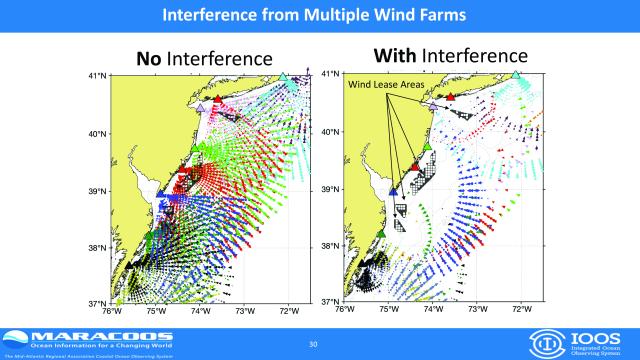
We found out last year that offshore wind turbines scramble Air Force Radars. RAF pilots already use the turbines in training exercises to help them hide. But ships also use radar and a new study quietly reported a couple of years ago that offshore wind will interfere with shipping radar, may cause collisions, and interfere with search and rescue. The 2022 report was from the National Academies of Sciences, Engineering, and Medicine in the US.

But it’s OK right, we just need to upgrade all the old radar systems, keep boats out of the area, or wrap the blades of the turbines in the same material we use on stealth aircraft. (That will add to the costs of wind power). No doubt GPS and AI systems can help, but radar adds an independent and well developed layer of safety. Who wants to purely rely on the satellite connection on a stormy night?

And after we’ve built all the wind towers, upgraded the boats and planes, then we can build the second and third generation of turbines and fill holes in the ground with the waste from the first. After we’ve paid for that and for the collisions and lives lost, and the whales killed, and the porpoised deafened, we hope that in one hundred years the rain will be more evenly spread, and the storms more well behaved. It’s like the neolithic raindances never ended.

You never know, maybe some groups will benefit from the radar noise —  like drug runners, pirates and people smugglers?

Unfortunately wind turbines are usually built close to shore, where our shipping lanes often are…

Eric Niiler, Wired, March 2022

It turns out that massive wind turbines may interfere with marine radar systems, making it risky for both big ships passing through shipping channels near offshore wind farms and smaller vessels navigating around them. While European and Asian nations have relied on offshore wind power for more than a decade, the big wind farms proposed off the US continental shelf are larger and spaced further apart, meaning that ships are more likely to be operating nearby. These farms are proposed along the East Coast from Massachusetts to North Carolina, as well as for a handful of locations off the California coast, according to data from the US Bureau of Ocean Energy Management.

A panel of experts convened by the National Academy of Sciences, Engineering, and Medicine concluded in a report issued last week that wind turbines can create two different problems. First, their steel towers can reflect electromagnetic waves, interfering with ships’ navigational radar systems in ways that might obscure a nearby boat.

The turbine’s rotating blades can also create a form of interference similar to the Doppler effect, in which sound waves shorten as a moving object approaches the observer. In this case, the spinning blades shorten and distort the radar signals sent from passing ships and can produce what’s called “blade flash” on a ship’s radar screen. These flashes can create false images that look like boats and could confuse a human radar operator on the bridge.

“If you have something that’s moving toward you and you are illuminating it with a radar signal, then the signal that is returned will actually have what’s called a phase shift. Essentially, it appears that you have the object coming closer,” says Jennifer Bernhard, professor of electrical and computer engineering at the University of Illinois Urbana-Champaign and a member of the National Academies panel that produced the report. Bernhard says that phenomena does not completely block the radar image, “but it does create clutter “…

There are no easy answers:

While the report offered some ways for mitigation, it noted that there is “no simple modification” that could allow marine vessel radar to operate in “the complex environments of a fully populated continental shelf wind farm.”

Deadly open-seas collisions and hampered search and rescue efforts

Disrupted radar systems are not mere hassles of dealing with cluttered displays. They can result in deadly open-seas collisions. The turbines can “cast radar shadows, obfuscating smaller vessels exiting wind facilities in the vicinity of deep draft vessels in Traffic Separation Schemes.”

The US Coast Guard wrote about this last year:

… offshore wind turbines have been shown to affect the capabilities of the Coast Guard’s Search and Rescue Optimal Planning System (SAROPS), which is used for drift modeling and search planning. The oscillating rotor blades and generator of a wind turbine emit high levels of electromagnetic interference that can affect high frequency radar capabilities around an [offshore renewable energy installation] (OREI).

The map suggests multiple wind plants could severely limit radar operation:

Offshore wind turbines and radar


Report: Wind Turbine Generator Impacts to Marine Vessel Radar

h/t David Maddison


10 out of 10 based on 1 rating

via JoNova

https://ift.tt/iPpnJ3l

May 28, 2024 at 04:20PM