Month: May 2024

No, Washington Post, Houston’s Mosquito Problem Isn’t New or Driven by Climate Change

recent article in the Washington Post (WaPo) linked recent heavy rain and an associated explosion of mosquitoes to climate change. Other media outlets such as Fox News, cited the WaPo story saying Mosquitoes swarm Texas town, officials blame climate change. Officials may be blaming climate change, but they are wrong. The WaPo and town officials are conflating weather and climate, and one exceptionally wet spring is not indicative of a long-term climate change trend. Further, history shows us that because of its geography, location, and climate, Houston has always been prime breeding grounds for mosquitoes.

Since the end of the last ice age, the south Texas coastal plain, where Houston lies, has always been hot, humid, and rife with mosquitos.

Still, WaPo’s article consists, in part, of an interview with the director of mosquito control for Houston who said:

“[A]s it gets warmer earlier, we see a larger amount of mosquitoes earlier,” said Max Vigilant, director of mosquito and vector control in Harris County, where Houston is located. “We are getting hotter temperatures earlier.”

“This is the impact that climate change has had on Harris Country,” Vigilant added.

If climate change was in fact a driver for increasing mosquitoes, you’d see it in long-term trend data for mosquito populations. However, just one year ago, Houston Public Media ran a story on a data-driven report showing the number of “mosquito days” in Houston has actually decreased since 1979:

The report showed that Houston has seen an average of 20 fewer mosquito days. According to the analysis, in 1979 Houston had 240 mosquito days. In 2022, it saw 182 mosquito days — a decrease of 58 days.

“Mosquito days” are days ideal for the bugs to thrive in: warm, humid weather. According to the study, mosquitos prefer climates that have an average relative humidity of 42% or higher and daily minimum and maximum temperatures between 50–95°F.

The data, graphed below, shows a distinct downward trend since 1979:

This data completely debunks the claim about the “impact that climate change has had” towards increasing the mosquito problem made by the director of mosquito control for Houston.

Interestingly, among the reasons for the declining mosquito days in the Houston area is actually warmer temperatures. Houston Public Media goes on to say in their story, Houston sees fewer days suitable for mosquitos due to increased temperatures, study claims:

Most of the locations that experienced a decrease in mosquito days are in the South, where summer temperatures frequently exceed the upper range that is suitable for mosquito conditions in the analysis.

Houston is built mostly on swampland, according to this Wikipedia entry:

Houston is located in the Gulf Coastal Plain biome, and its vegetation is classified as temperate grassland. Much of the city was built on marshes, forested land, swamp, or prairie, all of which can still be seen in surrounding areas.

The city has constructed reservoirs and channels to remove rainwater from the area into Galveston Bay and has about 2,500 miles of managed waterways. However, some say that Houston is now a “concrete island floating on top of a swamp.”

So, with that much water, it is no wonder that Houston has always been a mosquito breeding ground. The WaPo article even admits this:

Harris County, where it is warm enough to find the insects year-round, is home to more than 50 species of mosquito. “Houston is never completely mosquito-free,” said Sonja Swiger, an entomologist at Texas A&M.

So, why are the number of “mosquito days” decreasing in Houston?

The most likely reason for this is the rapid urbanization of Houston since 1979. According to Rice University in Houston,

The urban footprint of the Houston metropolitan area increased by 63% from 1997 to 2017. In other words, Houston’s impervious surfaces, like pavement and buildings, grew by about 1,000 km2 in 20 years.

An increased urban footprint does two things that affect the mosquito population over time:

  1. With more impervious surfaces, there’s less swampland and less breeding grounds for mosquitoes.
  2. The increased urban footprint causes an increase in the Urban Heat Island effect (UHI), and raises temperatures within the city, making it less conducive to mosquitos.

A look at satellite data on UHI from a data-driven study conducted by climatologist Roy Spencer, PhD., shows a very large UHI footprint for Houston as seen in the figure below:

Clearly, the combination of increased infrastructure and increased temperature due to UHI has reduced the number of mosquito days in Houston. The so-called climate change effects cited by WaPo and the director of mosquito control are completely false, as is shown by real world data.

WaPo and Vigilant conflated a short term weather event that created flooding in the Houston area, with long term climate change. Weather is not the same as climate change. The flooding from storms temporarily created more mosquito breeding areas. Because the area’s landscape is relatively flat, many streets are lined with ditches to capture and drain stormwater filled up and did not drain for days. This added plenty of places for ideal mosquito breeding grounds. The same thing happened though not as extreme in 20172018, and 2019.

This is just another instance of activist journalism at work that is tailored to fit a bought and paid for climate crisis narrative that is so often being pushed today in the media. If WaPo’s editors and fact checkers had bothered to do a modicum of research, they would have discovered that there is no merit whatsoever to the claim that climate change is causing an increase in Houston’s mosquito population, rather the problem has declined substantially during recent the period of modest warming.

via Watts Up With That?

https://ift.tt/ugRyXpn

May 24, 2024 at 04:04AM

Gravity Strikes Again: GE’s Mega-Turbine Collapse Kills Offshore Wind Industry

When your industry depends on mega-myths and hyped-up hubris, get ready for Armageddon-scale disappointment. GE’s rent-seeking wind power harm, Vernova pumped up its planned 18MW Haliade X offshore turbine with the kind of fanfare once reserved for NASA’s efforts to land men on the Moon.

These things have a predilection for plummeting to earth with seismic results. STT regularly reports on the phenomenon, noting a very significant increase in the number of collapses in the last 18 months – and that, accordingly, insurers are cranking up the premiums they charge their owners.

At a time when America’s offshore wind industry is in complete financial freefall, the last thing it needs is a super-expensive mega-turbine that can’t stand on its own pile-driven feet. With GE ditching plans to build its 18MW monster, rent-seekers are using the ‘loss’ of the promised giant as yet another excuse to explain away their financial woes, as this lament from EE News outlines below.

How the death of a mega-turbine rattled US offshore wind
EE News
Benjamin Storrow and Heather Richards
22 April 2024

The wind industry’s global race to make ever-bigger turbines stumbled to a sudden slowdown last week, jarring U.S. offshore wind projects, says E&E News.

When GE Vernova confirmed that it was canceling one of the largest wind turbines ever designed, it signaled a pause in an arms race that for years had led manufacturers to go higher, longer and wider when building towers, blades and other components. Now, that decision is reverberating across U.S. efforts to build wind projects in the Atlantic.

New York canceled power contracts for three offshore wind projects last week, citing GE Vernova’s decision to abandon its largest turbine model, a massive 18-megawatt machine. The timing could hardly be worse. Offshore wind is the keystone of New York’s plan to generate 70 percent of its power with renewable energy by the end of the decade.

The timing could hardly be worse. Offshore wind is the keystone of New York’s plan to generate 70 percent of its power with renewable energy by the end of the decade.

The canceled projects pushed New York further adrift of meeting its goal. Today, a little more than a quarter of New York’s power comes from renewable sources, the vast majority of it hydropower.

Offshore wind was supposed to help the state reach 70 percent, with New York officials targeting 9,000 megawatts of offshore wind capacity by 2035. Last week’s decision nixed almost half of it.

“It’s obviously a setback. I mean, there’s no way to sugarcoat it,” said Fred Zalcman, director of the New York Offshore Wind Alliance. “It was to be a big part of New York’s portfolio — and kind of the linchpin — in getting to nine gigawatts by 2035.”

The cancellations owe to a variety of factors. The offshore wind market is still adjusting to the effects of inflation and higher interest rates.

It also reflects New York’s push to link offshore wind projects with manufacturing facilities onshore. And it came just as GE Vernova emerged as a stand-alone company from General Electric, with a struggling offshore wind division that reported a $1.1 billion loss last year.

But many analysts and industry officials cited the push for ever-bigger turbines as the leading issue for the projects’ failure. GE announced last year that it intended to develop a supersize 18-MW version of its Haliade X turbine, in what would have been one of the largest pieces of wind equipment ever built outside of China.

GE was a leader in the industry trend to build larger and larger turbines. In theory, a bigger turbine could help developers deliver more power at lower costs. It means they could install fewer foundations or string less cable to bring power ashore.

But the reality is more complex. More port space is needed to assemble gargantuan turbines and larger boats with stronger cranes are required to haul and lift them. There’s also this: Bigger machines tend to break more, according to analysts.

A growing number of people in the industry had called for a halt in turbine race in hopes of allowing supply chains to catch up and enabling manufacturers to standardize their processes.
EE News

via STOP THESE THINGS

https://ift.tt/Dte2jOc

May 24, 2024 at 02:30AM

DUTCH RESETS POLICY ON CLIMATE

The Dutch elections have finally led to a new coalition government being formed which has listened to what the people said when they voted out the last government.

 Tell the world, the Dutch tractor protests and a War on Net Zero won « JoNova (joannenova.com.au)

via climate science

https://ift.tt/N5c9PHA

May 24, 2024 at 01:46AM

Happy Memorial Day Weekend! (Motoring to summer 2024)

Get happy. Summer beckons. Not only bike and hike but also drive to a better environment–your self-selected environment. And once there, grill, baby, grill.

MemorialDay.jpg

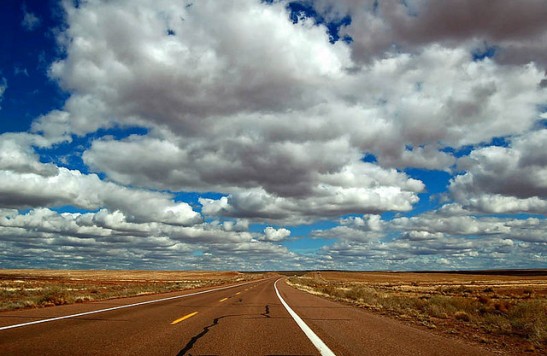
The automobile is environmentalism-on-wheels. The open road is freedom to escape the concrete for the great beyond. Mountains, rivers, hills, forests, even beautiful green golf courses–it is all a drive away. 

The old Marathon ads said it best …a full tank of freedom. And Shell: “Let’s Go!” And Exxon: “Happy Motoring!”

Don’t worry about the anti-travel crowd who fret about emissions of the trace greening gas, carbon dioxide. Forget the spin and go for a spin!

image

Each year, MasterResource celebrates the beginning of the peak-driving season knowing that our free-market philosophy is about energy abundance and affordability and reliability. There is so little to apologize for. When is the last time you got a bad tank of gasoline or diesel, anyway?

Oil, gas, and coal have been and continue to be technologically transformed into super-clean energy resources. Carbon-based energies are growing more abundant, not less. And energy/climate alarmism is losing steam on all fronts (except the shouting).

The real energy sustainability problem is statism, not free consumer choice. As Matt Ridley concluded: “There is little doubt that the damage being done by climate-change policies currently exceeds the damage being done by climate change.” As Alex Epstein is telling each one of us to tell our neighbors: I Love Fossil Fuels. And now, Fossil Future. So celebrate!

Energy is the master resource. Motorized transportation is freedom-of-movement. So, like that old Shell commercial said, Let’s Go!

The Open Road
Tips Before Hitting the Open Road - Travel, Events & Culture Tips ...
America's Fascination with 'The Open Road' - WSJ
Avis Self Drive Freedom of the open road. - Avis Blog
Joy
Roads trip tips - Driving fun - Your driving skills - GEARED
1000+ Engaging Happy Photos Pexels · Free Stock Photos

………………………………………………………………………………………………….

Enjoy your Memorial Day Weekend of Freedom

The post Happy Memorial Day Weekend! (Motoring to summer 2024) appeared first on Master Resource.

via Master Resource

https://ift.tt/u5X2F6D

May 24, 2024 at 01:14AM