Month: May 2024

12 Reasons to Not Believe in a Climate Emergency

Russell David writes his brief list in a Daily Sceptic article Twelve Reasons Why I Don’t Believe There’s a Climate Emergency.  Excerpt in italics with my bolds and added images.

I’m not a scientist. But I have reasons why I don’t fully trust the ‘climate emergency’ narrative. Here they are:

  1. Looking back through history, there have always been doomsday prophets, folk who say the world is coming to an end. Are modern-day activists not just the current version of this?
  2. I look at some of the facts – CO2 is 0.04% of the atmosphere; humans are responsible for just 3% of CO2; Britain is responsible for just 1% of the world’s CO2 output – and I think “really“? Will us de-carbonising really make a difference to the Earth’s climate?
  3. I have listened to some top scientists who say CO2 does not drive global warming; that CO2 in the atmosphere is a good or vital thing; that many other things, like the Sun and the clouds and the oceans, are more responsible for the Earth’s temperature.
  4. I note that most of the loudest climate activists are socialists and on the Left. Are they not just using this movement to push their dreams of a deindustrialised socialist utopia? And I also note the crossover between green activists and BLM ones, gender ones, pro-Hamas ones, none of whom I like or agree with.
  5. As an amateur psychologist, I know that humans are susceptible to manias. I also know that humans tend to focus on tiny slivers of time and on tiny slivers of geographical place when forming ideas and opinions. We are also extremely malleable and easily fooled, as was demonstrated in 2020 and 2021.
  6. I have looked into the implications of Net Zero. It is incredibly expensive. It will vastly reduce living standards and hinder economic growth. I don’t think that’s a good thing. I know that economic growth has led to higher living standards, which has made people both safer and more environmentally aware.
  7. Net Zero will also lead to significant diminishment of personal freedom, and it even threatens democracy, as people are told they must do certain things and they must not do other things, and they may even be restricted in speaking out on climate matters.
  8. What will be the worst things that will happen if the doomsayers are correct? A rise in temperature? Where? Siberia? Singapore? Stockholm? What is the ideal temperature? For how long? Will this utopia be forever maintained? I’m suspicious of utopias; the communists sought utopias.
  9. If one consequence of climate change is rising sea levels, would it not be better to spend money building more sea defences to protect our land? Like the Dutch did.
  10. It’s a narrative heavily pushed by the Guardian. I dislike the Guardian. I believe it’s been wrong on most issues through my life – socialism, immigration, race, the EU, gender, lockdowns and so on. Probably it’s wrong about climate issues too?
  11. I am suspicious of the amount of money that green activists and subsidised green industries make. And 40 years ago the greenies were saying the Earth was going to get too cold. Much of what they said would happen by now has not happened. Also, I trust ‘experts’ much less now, after they lied about the efficacy of lockdowns, masks and the ‘vaccines’.
  12. I like sunshine. I prefer being warm to being cold. It makes me feel better. It’s more fun. It saves on heating bills. It saves on clothes. It makes people happier. Far few people die of the heat than they do the cold.

via Science Matters

https://ift.tt/SRZzDgQ

May 18, 2024 at 01:34PM

Simple Truth vs. Cheap Green Energy Lie

Francis Menton asserts that the biggest disinformation (Lie) in public discourse is claiming that the cheapest source of energy comes from renewables, wind and solar power.  He provides a number of brazen media examples in his blog post What Is The Most Pernicious Example Of “Misinformation” Currently Circulating?

Why do I say that the assertion of wind and solar being the cheapest ways to generate electricity is the very most pernicious of misinformation currently out there? Here are my three reasons: (1) the assertion is repeated endlessly and ubiquitously, (2) it is the basis for the misallocation of trillions of dollars of resources and for great impoverishment of billions of people around the world, and (3) it is false to the point of being preposterous, an insult to everyone’s intelligence, yet rarely challenged.

In addition, Paul Homewood explains at his blog how recently this lie was repeatedly entered into testimony in the UK Parliament House of Lords:

In oral questions on Thursday, Lord Frost noted Whitehall claims that renewables are half the cost of gas-fired electricity, and asked for an explanation of why subsidies were still required, and why the strike prices on offer to windfarms this year are twice what Lord Callanan says they need to make a profit. As Hansard shows, Lord Callanan failed to answer the question, simply reiterating his false claims about levelized costs.

The responses from Lord Callanan demonstrate the typical ploy for disarming dissenters’ objections, i.e. getting the discussion entangled in details and cost minutae so that the big lie is lost in the weeds.  It occurs to me that previously David Wojick had put the key issue in a simple, useful way, reposted below.

Background Post: Just One Number Keeps the Lights On

David Wojick explains how maintaining electricity supply is simple in his CFACT article It takes big energy to back up wind and solar.  Excerpts in italics with my bolds. (H/T John Ray)

Power system design can be extremely complex but there is one simple number that is painfully obvious. At least it is painful to the advocates of wind and solar power, which may be why we never hear about it. It is a big, bad number.

To my knowledge this big number has no name, but it should. Let’s call it the “minimum backup requirement” for wind and solar, or MBR. The minimum backup requirement is how much generating capacity a system must have to reliably produce power when wind and solar don’t.

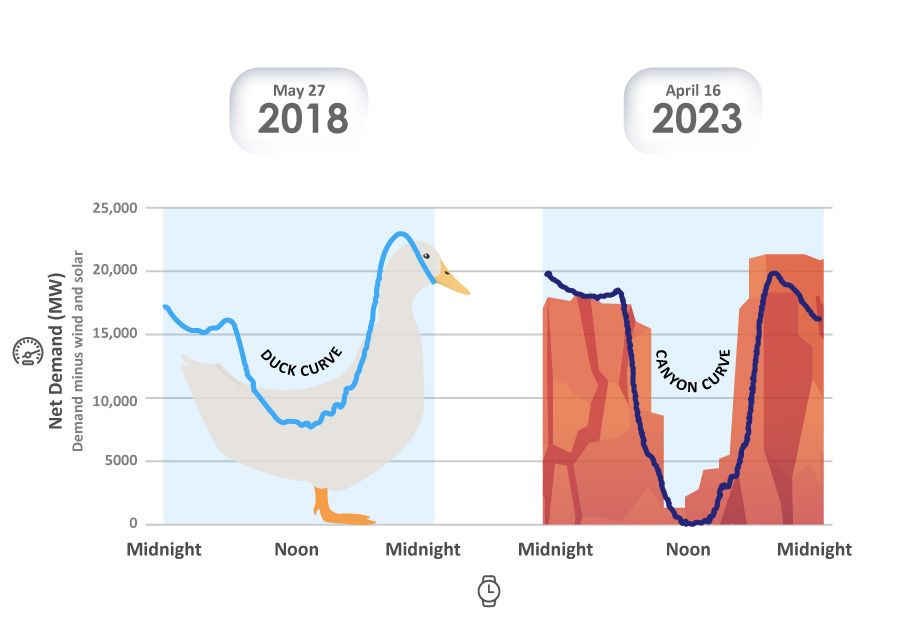
Duck Curve Now Looks Like a Canyon

For most places the magnitude of MBR is very simple. It is all of the juice needed on the hottest or coldest low wind night. It is night so there is no solar. Sustained wind is less than eight miles per hour, so there is no wind power. It is very hot or cold so the need for power is very high.

In many places MBR will be close to the maximum power the system ever needs, because heat waves and cold spells are often low wind events. In heat waves it may be a bit hotter during the day but not that much. In cold spells it is often coldest at night.

Thus what is called “peak demand” is a good approximation for the maximum backup requirement. In other words, there has to be enough reliable generating capacity to provide all of the maximum power the system will ever need. For any public power system that is a very big number, as big as it gets in fact.

Actually it gets a bit bigger, because there also has to be margin of safety or what is called “reserve capacity”. This is to allow for something not working as it should. Fifteen percent is a typical reserve in American systems. This makes MBR something like 115% of peak demand.

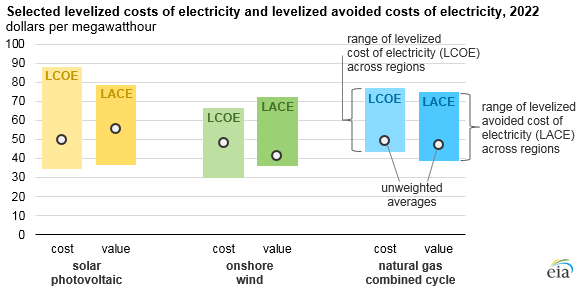
We often read about wind and solar being cheaper than coal, gas and nuclear power, but that does not include the MBR for wind and solar.

What is relatively cheap for wind and solar is the cost to produce a unit of electricity. This is often called LCOE or the “levelized cost of energy”. But adding the reliable backup required to give people the power they need makes wind and solar very expensive.

In short the true cost of wind and solar is LCOE + MBR. This is the big cost you never hear about. But if every state goes to wind and solar then each one will have to have MBR for roughly its entire peak demand. That is an enormous amount of generating capacity.

Of course the cost of MBR depends on the generating technology. Storage is out because the cost is astronomical. Gas fired generation might be best but it is fossil fueled, as is coal. If one insists on zero fossil fuel then nuclear is probably the only option. Operating nuclear plants as intermittent backup is stupid and expensive, but so is no fossil fuel generation.

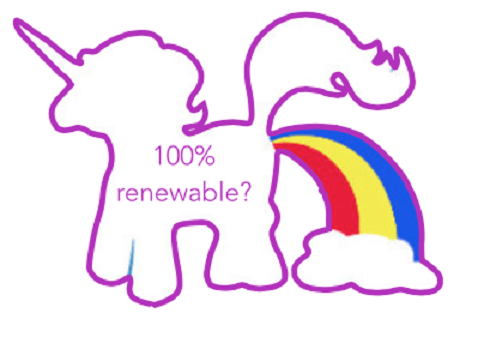
What is clearly ruled out is 100% renewables, because there would frequently be no electricity at all. That is unless geothermal could be made to work on an enormous scale, which would take many decades to develop.

unicorn

It is clear that the Biden Administration’s goal of zero fossil fueled electricity by 2035 (without nuclear) is economically impossible because of the minimum backup requirements for wind and solar. You can’t get there from here.

One wonders why we have never heard of this obvious huge cost with wind and solar. The utilities I have looked at avoid it with a trick.

Dominion Energy, which supplies most of Virginia’s juice, is a good example. The Virginia Legislature passed a law saying that Dominion’s power generation had to be zero fossil fueled by 2045. Dominion developed a Plan saying how they would do this. Tucked away in passing on page 119 they say they will expand their capacity for importing power purchased from other utilities. This increase happens to be to an amount equal to their peak demand.

The plan is to buy all the MBR juice from the neighbors! But if everyone is going wind and solar then no one will have juice to sell. In fact they will all be buying, which does not work. Note that the high pressure systems which cause low wind can be huge, covering a dozen or more states. For that matter, no one has that kind of excess generating capacity today.

To summarize, for every utility there will be times when there is zero wind and solar power combined with near peak demand. Meeting this huge need is the minimum backup requirement. The huge cost of meeting this requirement is part of the cost of wind and solar power. MBR makes wind and solar extremely expensive.

The simple question to ask the Biden Administration, the States and their power utilities is this: How will you provide power on hot or cold low wind nights?

Background information on grid stability is at Beware Deep Electrification Policies

More Technical discussion is On Stable Electric Power: What You Need to Know

cg4bbc1c620f5bf0

Footnote: Another Way to Assess Energy Cost and Value is LCOE + LACE

Cutting Through the Fog of Renewable Power Costs

via Science Matters

https://ift.tt/V8WPMhb

May 18, 2024 at 12:48PM

America’s Power Grid Could Buckle Under Sweltering Summer Heat, Watchdog Warns

From The DAILY CALLER

Daily Caller News Foundation

NICK POPE

CONTRIBUTOR

Considerable portions of the U.S. are facing heightened risks of blackouts over the summer months, according to a new report by the North American Electric Reliability Corporation (NERC).

Most of New England, Texas, the Midwest and the Southwest face “elevated risk” of electricity shortages this summer if demand peaks at levels above normal, according to NERC’s 2024 summer reliability report. While the specific challenges that each region may face this summer differ, several large swaths of the country could have to respond to blackout conditions if solar and wind power fail to produce as much power as expected during periods of tight supply and more extreme summer weather.

“NERC’s latest reliability assessment shows that our electricity grid is becoming increasingly reliant on weather-dependent sources of electricity, leaving one-third of the country at elevated risk of blackouts this summer,” Michelle Bloodworth, CEO of America’s Power, a pro-coal advocacy group, said of the NERC report and its findings. (RELATED: Biden’s Climate Agenda May Jeopardize Grid Reliability, New Report Suggests)

The Midcontinent Independent System Operator (MISO), which covers much of the Midwest, faces higher risks if solar and wind fail to deliver in key scenarios, NERC’s report states.

“MISO is expected to have sufficient resources, including firm imports, for normal summer peak demand. However, it can be challenging for MISO to meet above-normal peak demand if wind and solar resource output is lower than expected,” NERC’s report reads. “Wind generator performance during periods of high demand is a key factor in determining whether there is sufficient electricity supply on the system or if external (non-firm) supply assistance is required to maintain reliability.”

The report issued a similar warning about the Electric Reliability Council of Texas (ERCOT) region, which covers nearly all of Texas. ERCOT narrowly avoided blackouts in the summer of 2023, when a prolonged heat wave set in over the state.

“As a result of continued vigorous growth in both loads and solar and wind resources, there is a risk of emergency conditions in the summer evening hours when solar generation begins to ramp down. Contributing to the elevated risk is a potential need, under certain grid conditions, to limit power transfers from South Texas into the San Antonio region,” the report states. “These grid conditions can occur when demand is high and wind and solar output is low in specific areas, straining the transmission system and necessitating South Texas generation curtailments and potential firm load shedding to avoid cascading outages.”

NERC has previously warned that huge slices of the country face higher risks of blackouts in more extreme seasonal conditions.

The Biden administration has spent and regulated aggressively to push the American power grid away from fossil fuels and toward intermittent generation from sources like solar and wind. Electricity demand is also projected to grow rapidly in the coming years, due in large part to Biden administration policies driving electric vehicle (EV) adoption, building electrification and new semiconductor manufacturing facilities, according to Grid Strategies LLC, a power sector consultancy.

All content created by the Daily Caller News Foundation, an independent and nonpartisan newswire service, is available without charge to any legitimate news publisher that can provide a large audience. All republished articles must include our logo, our reporter’s byline and their DCNF affiliation. For any questions about our guidelines or partnering with us, please contact licensing@dailycallernewsfoundation.org.

via Watts Up With That?

https://ift.tt/zRoekXh

May 18, 2024 at 12:04PM

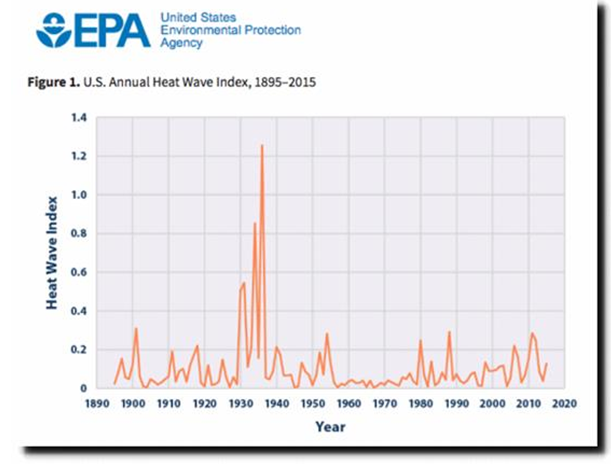
Data Reveal That US Heat Wave Index, Japan Drought Coincide With Solar Activity

Jet Stream Blocking and U.S. Heat Wave Index

By Kyoji Kimoto

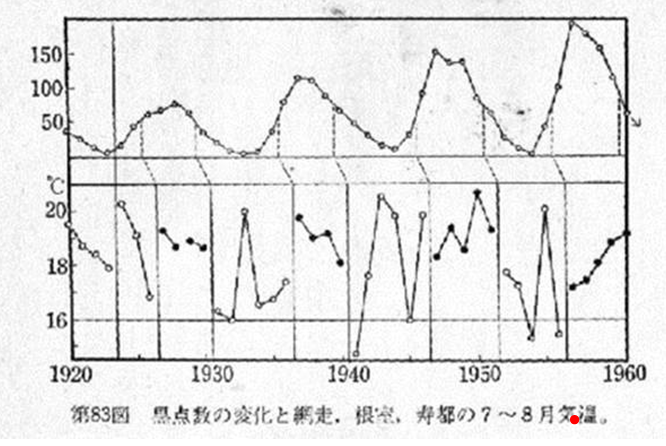
In 1962, Japanese meteorologist Hirohide Saito found the instability of summer temperature of Hokkaido (northern part of Japan) during the solar minimum as follows:


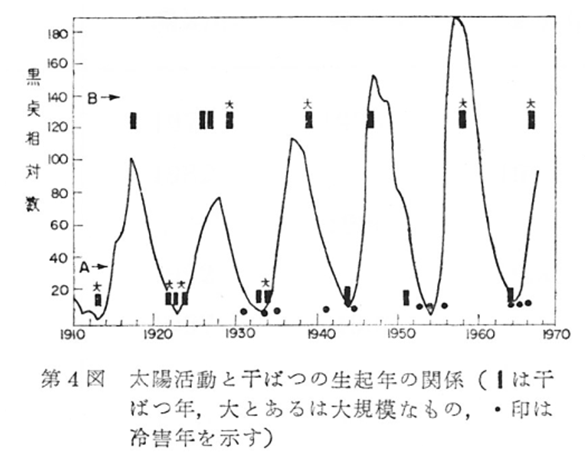
In 1967 Japanese meteorologist Junkichi Nemoto published the following graph, below, showing that drought in Japan occurs at the solar minimum as well as at the solar maximum. Further Nemoto showed the drought occurs with the crop failure due to the low temperature in the northern part of Japan at the solar minimum. This is coincident with Saito’s finding above showing the instability of summer temperature at the solar minimum in Hokkaido.

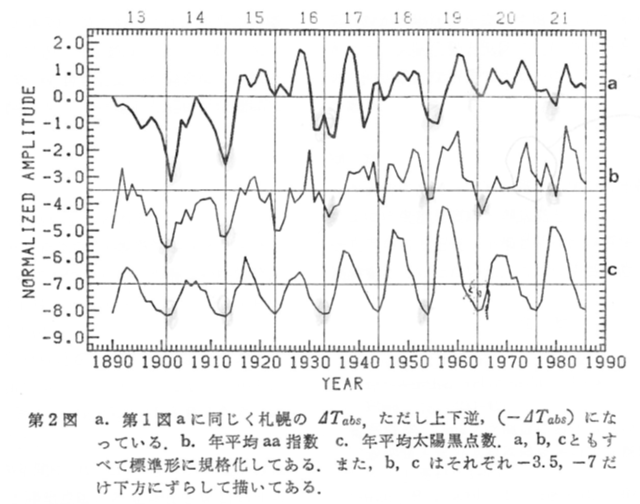
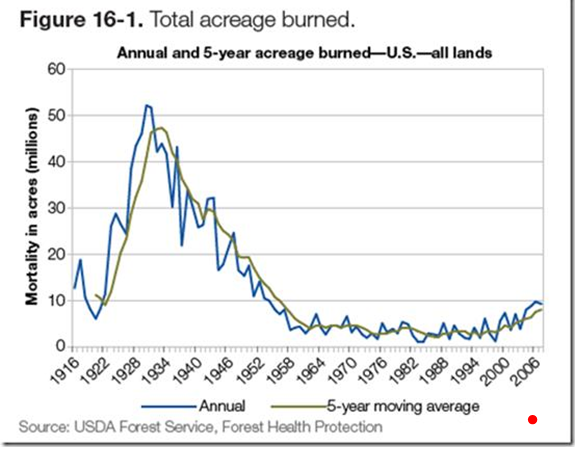
In 1988, based on the meteorological studies above, Japanese climatologist Kunihiko Kodera published the following graph showing the jet stream blocking frequency is higher at the sunspot minimum and the aa index minimum. The graph shows the highest frequency of the jet stream blocking during 1931-1936, which is coincident with the highest U.S. heat wave index and the highest burned forest area below.

a is the inverse of proxy for blocking days frequency; b is geomagnetic aa index of solar activity; c is sunspot data.

https://www.fs.fed.us/research/sustain/docs/national-reports/2010/2010-sustainability-report.pdf

(References)

Junkichi Nemoto, “Drought at the western area of Japan during summer to autumn in 1967 (in Japanese) “, Tenki (Weather in Japanese), Vol. 14, No.12, 1-7 (Dec.1967).

Kunihiko Kodera, “ Summer temperature at Sapporo area and solar activity (in Japanese) “, Tenki (Weather in Japanese), Vol. 35, No.5, 33-35 (May, 1988).

Donate – choose an amount

via NoTricksZone

https://ift.tt/iV7Wu6B

May 18, 2024 at 11:11AM