Month: June 2024

Code Red: Wind & Solar Rent-Seekers Suffer Full Nuclear Meltdown

The so-called wind and solar ‘industries’ turn apoplectic at the very mention of safe, reliable and affordable nuclear power.

The wind and sun cult claim wind and solar are the only way of producing power without emitting carbon dioxide gas. Leaving aside the benefits of naturally occurring plant food, let’s take them at their word for a moment.

While there’s not a shred of evidence that wind and solar introduced to a conventional power grid reduce CO2 emissions overall, there’s plenty that CO2 emissions actually increase, thanks to the use of diesel generators, fast-start open cycle gas turbines (sometimes running on kerosene or bunker fuel) and ramping up and down output from coal-fired generators – all of which is aimed at compensating for sunset and calm weather. That is, those occasions when the sum total of output from wind turbines and solar panels amounts to all of zero and grid managers have to scramble to keep the lights on. Because the owners of those conventional plants – particularly diesel generators and OCGTs – make out like bandits because they can charge a premium for power when wind and solar output collapse, as they naturally do.

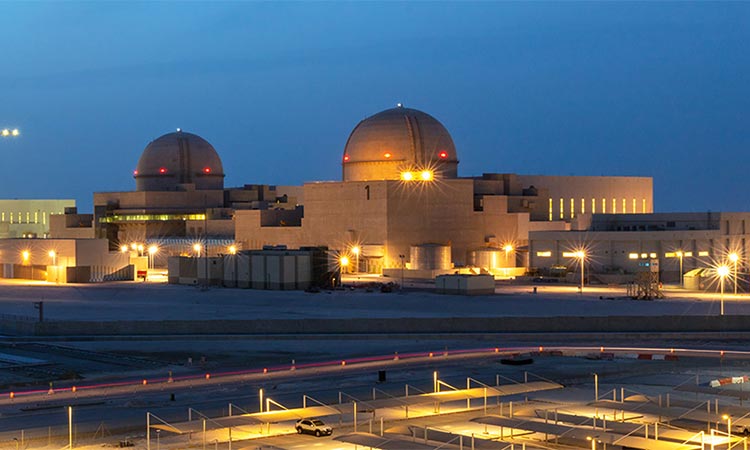
Which brings us back to nuclear power and the existential threat it poses to subsidised wind and solar.

First, nuclear power delivers: around-the-clock, whatever the weather, no need for batteries, no need for back up.

Second, nuclear delivers always-on power without generating carbon dioxide gas in the process.

Those 2 facts combined make plain just how pointless (chaotically and occasionally delivered) wind and solar really are.

Hence the present state of fear, terror and outrage exhibited by wind and solar outfits and their propagandists in the legacy press.

In the first article from The Australian, Ted O’Brien – the Liberal opposition energy spokesman – pokes the bear, pointing out the remarkable fact that Australia is the only place in the world where nuclear power can’t possibly work – at least according to Labor’s Chris Bowen, his opposite number.

Then Alex Bainton and Zoe Hilton lay down some more troublesome facts for the embittered and embattled climate industrial complex.

Labor fudges ‘facts’ as it powers up nuclear scare campaign
The Australian
Ted O’Brien
7 June 2024

George Orwell could have been speaking about Climate Change and Energy Minister Chris Bowen when he explained the meaning of doublespeak as “holding two contradictory beliefs in one’s mind simultaneously, and accepting both of them”.

At the COP28 climate change conference last year, Bowen was insisting that fossil fuels such as gas “have no ongoing role to play in our energy systems”, but back in Australia he has been spruiking that “gas will play an important role”.

As a member of the National Security Committee, Bowen is backing Australian submariners sleeping with nuclear reactors under water, but at the same time he is claiming the same technology on land is “risky”.

Bowen is demanding the costings and economic modelling behind the Coalition’s yet-to-be-released energy policy, while he keeps the economics of his own policies secret including the Capacity Investment Scheme.

Bowen is calling for the Coalition to announce locations for potential zero-emissions nuclear power plants, but he refuses to declare where Labor plans to build up to 28,000km of new transmission lines, along with 22,000 new solar panels a day and 40 wind turbines every month through to 2030.

Bowen dismisses small modular reactors due to one project in the United States running into financial difficulty, but fails to apply the same logic to hydro after Snowy 2.0 doubled in price, or to offshore wind, which industry estimates will cost up to five times the present wholesale price of electricity.

Writing on the use of doublespeak, American scholar Edward Herman defined it as “the ability to choose and shape facts selectively, blocking out those that don’t fit an agenda or program”.

Bowen again comes to mind. Take the claims the minister was peddling just this week on nuclear energy.

Firstly, Bowen is arguing the world doesn’t want zero-emissions nuclear energy by claiming Germany and Italy don’t use the clean energy source.

However, reports indicate these European powers have imported 16.52TWh of electricity from nuclear-dominated France so far this year, which is close to the amount of electricity generated by all of NSW’s coal plants combined. Secondly, Bowen is claiming nuclear energy is effectively dead in the United States, despite US Energy Secretary Jennifer Granholm opening two new nuclear power plants this week and calling for a tripling of nuclear capacity.

Thirdly, Bowen is arguing nuclear doesn’t stack up, asserting nuclear power plants operate only half the time and for only 30 years, despite nuclear plants being always on 24/7, and with an asset life up to 80 years.

As for suggestions of a 100 per cent cost premium for first-of-a-kind reactors. This is not true, as only next-of-a-kind reactors would ever be considered for Australia.

If there were a time for honesty in debate about energy policy, it is now.

Australia once paid among the lowest electricity prices of all advanced nations – now we pay among the highest.

Every week since Labor came to office, more than 500 families have plunged into hardship arrangements with their energy retailer.

The market regulator recently confirmed next year’s electricity prices, leaving families paying up to $1000 more than Labor had promised.

The market operator is warning of blackouts as early as this summer.

Australia is running out of energy as Labor’s renewables plan stalls, it continues to suffocate gas and it is forcing 90 per cent of Australia’s always-on 24/7 baseload power out of the system over the next 10 years, without replacement.

All this, and Australia’s emissions are also rising for the first time in years.

No other nation is attempting to run an electricity system almost entirely on weather-dependent wind and solar technology.

While there is an important role for renewables, it’s only as part of a balanced energy mix alongside gas and zero-emissions nuclear energy as coal exits the system.

This is the international experience.

Take Ontario, where nuclear constitutes up to 60 per cent of its energy mix. Ontario’s residents pay about 14c/kWh compared to up to 56c/kWh in Australia, and their electricity grid is 10 times cleaner.

Ontario is also investing in four GE-Hitachi SMRs because it knows zero-emissions nuclear energy is providing cheap, clean and consistent 24/7 power.

But, instead of learning these international lessons, Bowen has been practising the dark arts of politics in preparation for an old-fashioned Labor scare campaign.

The Prime Minister is getting in on the act too, releasing a tweet on Tuesday about cities and towns “under threat” due to nuclear energy forming part of Coalition policy – an extraordinary attack given he is yet to reveal which local community will host a permanent nuclear waste repository for AUKUS.

As everyday Australians become poorer and energy prices skyrocket, as household budgets squeeze and businesses close, the government of the day is focused on a scare campaign based on doublespeak and deception.
The Australian

Energy Minister’s arguments against nuclear riddled with errors
The Australian
Alex Bainton and Zoe Hilton
7 June 2024

Mark Twain famously quipped that facts “are stubborn things, but statistics are pliable”. Energy Minister Chris Bowen is certainly entitled to his facts, but he should be more careful with his statistics.

His opinion on this page on Tuesday argued that nuclear will mean more expensive electricity for consumers and that’s why a number of other G20 countries has already rejected it. He’s wrong.

Bowen claims CSIRO’s GenCost has found nuclear to be the most expensive form of energy every year since 2018.

In fact, it was only in 2024 – and just a few weeks ago – that GenCost finally included large-scale nuclear in its estimates. This cut costs by a factor of three over previous estimates for small modular reactors. Once realistic plant lifetime and capacity factors are included, the CSIRO’s numbers clearly show nuclear is competitive with renewables.

Bowen touts the CSIRO’s claim that nuclear plants will operate at as little as 53 per cent capacity. In reality, this will be closer to 90 per cent as the capacity factor of nuclear is driven by low marginal operating costs. For comparison, the average capacity factor for the US fleet is 93 per cent.

The 53 per cent figure assumes we will privilege wind and solar’s access to the grid over nuclear. The question remains as to why we would prioritise intermittent renewables that destabilise the grid over cheap, clean, reliable nuclear.

In California, a state with similar levels of renewables to Australia, the Diablo Canyon nuclear plant achieved a capacity factor of almost 90 per cent over the past five years.

Bowen claims expensive power plants can’t produce cheap power. However, the truth is that nuclear plants last 60 to 100 years, a much longer time frame than the CSIRO’s assumption of just 30 years. Their shorter time frame only considers how long investors are willing to wait to fully recoup upfront capital costs and does not consider the future benefits for consumers of having cheap, clean, reliable power for decades afterwards.

Transitioning to a grid dominated by “cheap” renewables is expensive.

Not only do taxpayers and consumers have to pay for expensive transmission and storage projects, but we also end up paying massive subsidies to the renewables industry too.

A Centre for Independent Studies report, released this week, found that these subsidies totalled $29bn over the past decade from federal government programs alone.

Bowen claims four G20 countries “are not considering nuclear”: Germany, Italy, Indonesia and Saudi Arabia.

In reality, aside from Germany, these countries are all eager to build a nuclear industry.

Italy’s Energy Minister recently said: “We must consider the use of nuclear in the short and medium term.” Saudi Arabia has established a company to develop nuclear power, and is building a 30kW research reactor.

Indonesia is planning to deliver 8GW of nuclear by 2035 and 35GW by 2060.

Why has Germany shut down its nuclear plants? Scandalous documents released by German courts revealed that anti-nuclear Greens apparatchiks rewrote expert reports that had said continued operation for several years was safe.

Germany is now on track to miss its 2030 emissions targets. Its electricity prices are so high the government is providing relief packages to the manufacturing industry worth $46bn over the next four years.

Three parties representing 41 per cent of Germany’s parliament are now calling for a return to nuclear, so it’s not even clear today’s policy will stand.

Yet Germany still relies on French electricity, which is 70 per cent nuclear.

It is more important than ever to ensure every dollar we spend on emissions reduction goes as far as it can.

The Australian government needs to take the nuclear option seriously, as the rest of the world is, and lift the ban so Australians will be able to enjoy cheap, clean, reliable electricity for decades to come.
The Australian
via STOP THESE THINGS

https://ift.tt/nx2ZNGu

June 9, 2024 at 02:30AM

Climate Change Weekly #508: On Extreme Weather, the More We Learn, the More We Know How Little We Knew Before (and Still Don’t Know)

H. Sterling Burnett

YOU SHOULD SUBSCRIBE TO CLIMATE CHANGE WEEKLY.

IN THIS ISSUE:

  • On Extreme Weather, the More We Learn, the More We Know How Little We Knew Before (and Still Don’t Know)
  • Video of the Week: Climate Change Is Not Making Hurricanes Worse
  • Carbon Dioxide-Induced Greening Blamed for Wildfires
  • Beepocalypse Not! Bees Are Doing Well Despite Previous Claims
  • The Netherlands Reverses Host of Climate Policies
  • Podcast of the Week: Climate at a Glance Videos Hit Social Media Near You: Linnea Lueken
  • Climate Comedy
  • Recommended Sites

Watch ALL the Presentations by the ALL-STARS of Climate Realism at the Archive of Heartland’s 15 Climate Conferences


On Extreme Weather, the More We Learn, the More We Know How Little We Knew Before (and Still Don’t Know)

In contrast to many climate scientists and writers with the mainstream media covering climate change, who in their hubris claim the science is settled, Albert Einstein expressed modesty with regard to his knowledge, reportedly saying, “The more I learn, the more I realize how much I don’t know.”

Eistein, a genius by any measure, was not the first to express such wisdom. Socrates, nearly 2,400 years ago, reputedly stated, “The only true wisdom is in knowing you know nothing,” and Aristotle expressed a similar sentiment, saying, “The only true wisdom is in knowing you know nothing.” Would that contemporary climate researchers displayed such a cautious, honest assessment of the state of knowledge in their field about the causes and consequences of contemporary climate change—but they rarely do.

Still, research comes out daily suggesting that far more remains unknown about climate change and the extent to which it drives extreme weather than is known by climate scientists and their journalist sycophants, and is assumed, and built into, climate models. Two recent studies provide examples showing this.

One recent study, published in the peer-reviewed journal Geophysical Research Letters, examines the correlations of tropical cyclone (TC) activity in the Atlantic and Pacific hurricane basins  to multi-decadal variations in sea-surface temperatures tied to shifts in Atlantic Multidecadal Variability (AMV). In analyzing two sets of climate model simulations, adding and subtracting AMV anomalies, researchers found the Atlantic and Pacific respond differently to warm AMV phases, which produce warmer temperatures:

Relative to cold or negative AMV anomalies, a warm AMV:

produces much more frequent TCs (including those making landfalls) over the North Atlantic. This is because AMV+ offers favorable conditions for TC development, including warmer SSTs, higher relative humidity, increased relative vorticity, and weaker vertical wind shear. By contrast, AMV+ causes less frequent TCs across the western North Pacific and South Pacific due to unfavorable conditions for TC occurrence (stronger vertical wind shear and less moist air). The contrasts in TC environment are due to increased zonal flow between the Atlantic and Pacific basins with AMV+.

What they didn’t find to be a factor in hurricane strength or formation was long-term global climate change. Rather, climate models suggest shifts in the Atlantic Ocean current oscillations are the forcing factor for tropical cyclones, or their absence. This study lends credence to the Intergovernmental Panel on Climate Change’s (IPCC) most recent AR6 physical science report, which confirms that there is no detection or attribution of any trend for either the number or strength of tropical cyclones tied to climate change. The IPCC’s assessment suggested that even under the most extreme emission scenarios, it could find no evidence climate change had or would affect tropical cyclones through 2100. (See chart below.)

Despite the IPCC’s clear statements and the findings in this new research, I’d bet money that this year when tropical storms and hurricanes form, especially when one or the other makes landfall and causes damage, mainstream media outlets will publish stories claiming climate change is to blame, citing “studies” from bogus climate science outfits like World Weather Attribution as evidence supporting their claim.

And, of course, hurricanes are only one type of extreme weather event we are only beginning to understand, and, as a result, show how little we know about their formation and cause. Tornados are another such type of event.

Every year, some scientists and reporters in the mainstream media try to tie climate change to the frequency or strength of tornados. Climate Realism has debunked such claims on dozens of occasions, citing research demonstrating there is no trend in increasing numbers or strength of hurricanes. Now the UPI is reporting the same fact.

One recent article published by UPI noted that no EF5 tornado, “one of the most catastrophic weather events on Earth … [which can] grow to be more than a mile wide and pack winds over 200 mph—stronger than any Category 5 hurricane on record across the Atlantic basin,” has struck the United States in more than 11 years—the longest such EF5 drought since consistent records have been maintained. And this is despite billions of additional tons of carbon dioxide being emitted into the atmosphere over that 13-year period. Commenting on this blessed severe tornado drought, UPI writes:

On May 20, 2013, an extremely powerful tornado destroyed a huge part of Moore, Okla. Eleven years later, it remains the most recent tornado to be rated EF5, the strongest possible rating on the Enhanced Fujita Scale. The 11-year gap is the longest since official U.S. records began in 1950.

Before the Moore tornado, the blockbuster tornado season in 2011 led to the confirmation of five EF5 twisters, including the Joplin, Missouri, EF5 that killed 161 people. A total of 50 tornadoes have been rated F5/EF5 since records began in the United States in 1950.

Meteorologist Bob Henson said in 2023 that the current EF5 “drought” is hard to explain since damage estimates can be subjective. Damage to a “well-constructed building” is the most common factor that helps the National Weather Service (NWS) confirm an EF5, yet many homes in the U.S. do not meet that criteria.

During this busy tornado season, think back to how many stories you’ve already seen that mentioned climate change as a factor—modifying their timing, number, behavior, and power. Then, remember  mainstream media column inches and broadcast air-time to the contrary, there is no evidence whatsoever that climate change has, will, or can, even in climate models, impact tornados.

Sources: No Tricks ZoneGeophysical Research Letters;  UPI


NEW: Get Climate at a Glance on your mobile device!


Video of the Week

Heartland Institute Research Fellow Linnea Lueken answers the question: “Is climate change making tropical cyclones, meaning hurricanes and tropical storms, worse around the world?” The answer is, “No.”


Read the brutal truth about how battery production for electric vehicles cause immense environmental destruction and human tragedy.


Carbon Dioxide-Induced Greening Blamed for Wildfires

New research published in the journal Nature, Communications & Environment suggests the greening induced by higher carbon dioxide concentrations may contribute to an increase in wildfires.

Fuel is one of the three necessary components of wildfires: fuel, an ignition source, and oxygen. Weather can play a role in their spread or in our ability to contain a wildfire once one has begun, but it is neither a necessary nor a sufficient condition for wildfires to ignite and/or to burn.

What’s interesting about this paper is that its authors basically admit increased carbon dioxide is causing a greening of the Earth, normally considered a good thing, but that greening is simultaneously providing additional (potential) fuel for fires once begun. This is true, but what the data shows is that, at present, despite millions of acres of additional fuel and no shortage of oxygen or ignition sources, wildfires have declined dramatically during the period of recent modest warming, as data from NASA and the European Space Agency, presented in Climate at a Glance: Global Wildfires, confirm.

As dozens of posts at Climate Realism discuss, the main cause of the recent spike in wildfires in some locations, primarily the western United States, is a change in forest management philosophy, to one of “hands off, let nature take its course.” This has resulted in densely packed forest areas with an abundance of dead and dying timber left to rot. In addition, forest roads have been ripped. The former has created tinder box conditions and the latter made it difficult to fight fires when they start, before they’ve grown into major conflagrations. Even then, the recent fires have not been as large as those experienced in the region historically.

Aside from the concern that the global greening caused by CO2 is providing additional fuel for wildfires, theNature study is interesting because of what its authors conclude is not contributing to wildfires: carbon dioxide-induced warming and drying, about which they state, “carbon dioxide radiative impacts, including warming and drying, yield a negligible response of fire carbon emissions.” In short, when it comes to wildfire, the CO2 fertilization effect dominates any climate impact of drying and warming.

In addition, the authors note that although climate models seem to agree that climate change should be causing, and will cause, an increase in wildfires, this is refuted by observational data in the Global Fire Emissions Database version 4.1 with small fires (GFED4.1s). When compared to the GFED4.1s data, models tend to overestimate wildfires.

Sources: Nature Communications;  The New American


Beepocalypse Not! Bees Are Doing Well Despite Previous Claims

The Washington Post (WP) and Reason magazine have recently run articles debunking an oft-used climate crisis talking point: that climate change is causing a steep decline in honey bee populations. To appropriate the quote widely attributed to Mark Twain, this time in relation to bees, “The assertions about bees’ demise have been greatly exaggerated.”

Climate Realism has repeatedly, here and here, for example, responded to claims climate change is causing a beepocalyspse, showing that despite the losses created by colony collapse disorder, bees and honey production both are doing just fine. We recently produced a Climate at a Glance video discussing the topic.

Although colony collapse disorder did destroy thousands of hives, killing millions of bees, this wasn’t due to climate change, and it wasn’t universal.

A recent article in Reason  pointed to headlines from NBC News, “Bees are dying at an alarming rate,” and CNN, “Bee Population is Dying [putting] the food we eat … at risk,” and Time  magazine, “A World Without Bees,” in an article discussing how the much bemoaned pending extinction of bees was misleading from the start.

“Beekeepers adjusted to colony collapse,” reported John Stossel in Reason. “They divided remaining colonies to make new hives. Bee numbers increased by millions.”

He went on to quote Jon Entine, a science journalist who operates the Genetic Literacy Project, who stated, “We’re not in any way facing an apocalypse.”

“Things have never been better in terms of the numbers of bees,” Entine said.

A recent article in the WP confirms Entine’s statement as fact. Citing data from the National Agricultural Statistics Service Census of Agriculture, the WP writes:

America’s honeybee population has rocketed to an all-time high.

We’ve added almost a million bee colonies in the past five years. We now have 3.8 million, the census shows. Since 2007, the first census after alarming bee die-offs began in 2006, the honeybee has been the fastest-growing livestock segment in the country! And that doesn’t count feral honeybees, which may outnumber their captive cousins several times over.

To sum up, the next time an alarming headline proclaims the end of bees and the danger the loss of these key pollinators pose to agricultural production, check the data, which should make you feel secure that neither bees nor food are going anywhere anytime soon.

Sources:  The Washington Post;  Reason


Heartland’s Must-read Climate Sites


The Netherlands Reverses Host of Climate Policies

The Netherlands recently elected a new right-of-center government which is downplaying climate alarm and European Union (EU)-driven climate policies that harm the country’s residents and agricultural producers.

“Geert Wilders, a prominent figure in Dutch politics, has led a coalition that marks a decisive shift in the Netherlands’ approach to climate policy. Wilders, often dubbed the “Dutch Trump,” formed a new government that includes the Farmer-Citizen Movement (BBB),” writes Charles Rotter at Watts Up With That. Rotter quotes a report in The Telegraph on the political right’s rise in the Netherlands and what it means for climate policy:

The Netherlands will tear up rules forcing homeowners to buy heat pumps as part of a war on net zero by Geert Wilders and the Dutch farmers’ party. Six months after his shock election victory, Mr. Wilders this week struck an agreement to usher in a Right-wing coalition government of four parties. “We are writing history,” he said as he announced the program for the new government.

Among the EU-endorsed climate policies Wilders’ coalition government is rescinding is the heat pump mandate, which would have forced homeowners to switch to expensive, inefficient hybrid heat pumps  from traditional air conditioning and heating systems.

The EU had established a goal of installing a minimum of 10 million new heat pumps by 2027 as part of its 2050 net-zero ambition, a plan the previous Dutch government had endorsed and imposed. As The Telegraph reported, the Dutch government’s heat pump mandate was intended to drive “down Dutch household use of natural gas for heating, which is the largest source of its gas consumption, equivalent to about 30 percent in total.”

Commending the new coalition government’s reversal, Caroline van der Plas, leader of the BBB,  cheerfully said, “Thanks to BBB’s efforts, the mandatory heat pump will be abolished.”

Agriculture-focused polices the new government is reversing include the previous government’s forced buyout and retirement of farms to cut fertilizer use and associated nitrogen emissions. In its place, the new government will establish a series of voluntary incentives to reduce emissions and offer interested farmers voluntary buyouts to end production.

Wilders government is also set to end subsidies for electric vehicles by 2025, which, as Rotter notes, is “a departure from the EU’s blanket approach to climate policy. These subsidies have been criticized for benefiting the wealthy who can afford electric vehicles while doing little to address broader environmental issues.”

Source: Watts Up With That


Podcast of the Week

In the new Climate at a Glance video series various climate crisis claims are debunked by Linnea Lueken in an eminently watchable, short, fact filled format. The goal is to reach younger audiences, being mislead on social media about climate change, with quick climate facts. The video’s readily accessible on The Heartland Institute’s YouTube channel address topics ranging from the so called climate change consensus to the fact that increased CO2 is leading to a beneficial global greening.

Subscribe to the Environment & Climate News podcast on Apple PodcastsiHeartSpotify or wherever you get your podcasts. And be sure to leave a positive review!


Climate Comedy


Recommended Sites

via Watts Up With That?

https://ift.tt/WQDoRy2

June 9, 2024 at 12:01AM

L A Times Editorial on How to Fight “Skyrocketing Electric Bills” Conceals Hugely Failed California Government Electricity Market Debacles

L A Times Editorial on How to Fight “Skyrocketing Electric Bills” Conceals Hugely Failed California Government Electricity Market Debacles

Essay by Larry Hamlin

The L A Times is proposing that the Government of California take further control of how Californian needs to address its decades long faltering electric energy policies with the absurd claim that additional new state government “Transmission agencies” can provide benefits to the people of California versus investor-owned utilities as described in their editorial shown below.

The Times offers the following “solution” as summarized below.

“You’re not alone if it seems like your electric bill is getting too damn high.

Californians pay some of the highest electric rates in the country. In the last decade households have seen their electricity rates nearly double even while their budgets are squeezed by inflation and rising temperatures from climate change mean they have to use more energy to cool their homes.

And it’s only going to get worse. State greenhouse gas reduction policies are pushing residents to adopt electric cars and appliances that will only increase their electricity consumption. Rate hikes have become bigger and more frequent, rising even faster than inflation for customers of the big three monopoly utility companies whose rates include costs for expensive wildfire mitigation, grid infrastructure projects and disaster-related payouts.”

The Times brilliant solution is that California government be mandated by the states politicians to fix the problems of the state’s chaotic electric system as addressed below.      

“Don’t make customers pay for everything”

“Much of what Californians are charged on their electric bills isn’t for the cost of the power but for other purposes including the operation and maintenance of the grid, projects to reduce wildfires (power lines have sparked some of the state’s worst ones) and energy efficiency programs.

If investor-owned utilities were stripped of their responsibility for much of the spending not directly related to the generation and delivery of electricity, it would reduce the amount they could collect from customers and thus lower electric rates for everyone. One idea proposed as recently as 2022 by state Sen. Josh Becker (D-Menlo Park) is to create a state authority to publicly finance transmission line projects at lower cost.”

Exactly how these on-going and growing necessary costs are to be paid for by the people of California is left completely unaddressed by the Times. Apparently, these costs will just disappear through use of government hidden magic and/or taxes on those businesses, organizations and citizens politically out of favor and expendable to the state’s Democratic party.   

The Times proposal has now transported us back to the nightmare era of AB 1890 known as “The Electric Utility Industry Restructuring Act” which provided for the creation of the “generation of competitive electricity” in California as of March 31,1998 through the development of a California government designed “new electricity market structure”.

This was achieved by mandating investor-owned utilities to sell their reliable cost-effective generation to “independent power producers” who, according to the geniuses in the state legislature, could “lower generation costs” (as hyped by the Times editorial for new “state transmission agencies”) through the “new electricity market structure.”            

The California AB 1890 government designed “new electricity market structure” was in full effect by the year 2000 (meaning that dozens of scheduled and unscheduled rolling blackouts occurred throughout the state impacting millions of people and businesses, that massively higher energy costs were occurring daily and that a completely out of control energy electricity market was in place) with these government driven electricity policy incompetent and disastrous results addressed in ugly detail in the California State Auditor report shown below that was unaddressed by the Times.

The California Department of Water Resources (a state agency with statutory authority to purchase and sell power for the state) was forced to take control away from the California government designed “new electricity market structure” and obtain emergency electrical power for state with the outcome summarized in the audit as follows:

“The new power-purchasing role was an immense challenge that would have been difficult even for an organization with the needed infrastructure in place. Through September 2001 the department had spent nearly $10.7 billion to purchase energy under contract or in the spot market to meet the daily needs of the ratepayers of the three investor-owned utilities. When implementing AB 1X, the department-along with its consultants and the energy advisers appointed by the governor-undertook an effort to sign long-term contracts with power generators in an attempt to calm power prices. Subsequently, the department entered 57 long-term power contracts at a total value of approximately $42.6 billion over the next 10 years.”   

The unplanned for energy spot market increased costs of $10.7 billion dollars and unplanned long-term power contract ten-year commitments of an additional $42.6 billion dollars that were required to bring control to the state of California’s electricity energy debacle represent and reflect the proven incompetent track record of the state of California government actions regarding its role in dealing with the state’s electricity energy market

The government of California has been incompetently meddling in the electricity markets in California since 1998 always with the promise of lowering costs or presently falsely hyped as fighting “climate change”.  

As described above the state government energy electricity meddling started with the failed “new electricity market structure” experiment and then evolved into the states mandated use in the year 2006 of nondispatchable and unreliable “renewable energy” as part of the states globally irrelevant “global warming solutions act” which further increased electricity prices and degraded electric system availability and reliability.

The Times proposes that California government once again intervene in the state’s electricity markets and “fix” the problems that it created in the first place. What could possibly go wrong – this time.

Provided below are the detailed records of California governments abysmal results and impact on the states average electricity prices (unaddressed by the Times) which have grown from being the 11th highest in the U.S. in year 2000 (based on EIA data presented below) to being the second highest in the U.S. in 2022 (based on EIA data presented below) and the highest by far in the contiguous U.S. with only the electricity prices in Hawaii (another state experiencing the magic of renewable energy increased costs and lowered reliability) being greater

This dismal record of California’s ever rising electrical energy costs (with more to come) was not created by the states investor-owned utilities but by the state governments incompetent mandated energy policy decisions and actions that allowed the states government agencies to dictate and control the state’s energy policy and supply markets during this 22 year-period.

U.S. Energy Information Administration (EIA) year 2022 average electricity price data for California, all 50 states and the U.S. average are shown below.

The EIA U.S. average electricity price in year 2022 was 12.36 cents/kWh compared to California average electricity price of 22.33 cents/kWh with the state’s electricity price 80.6% greater than the U.S. average electricity price.

The EIA U.S. average electricity price in year 2000 was 6.81 cents/kWh compared to the California average electricity price of 9.47 cents/kWh or just 39.06% greater than U.S. electricity price average as shown in detailed EIA average electricity price data obtained here and shown below (average price for each of the 50 states and U.S. average contained in the right most column).

Therefore, between the year 2000 to 2022 California’s average electricity price growth was 2 times greater than the U.S. average electricity price growth during this period while also becoming the highest in the contiguous U.S. 

Additionally, in year 2000 California’s average electricity price was only the 11th highest in the U.S. but in year 2022 California was the 2nd highest in the U.S. with only Hawaii being higher.

Looking at the Western U.S. states (shown below) the comparison of California average electricity prices and these states is even worse than for the contiguous U.S. 

To make comparisons of average electricity prices with the western states easier to view the EIA chart below for the year 2012 is used which presents a single table showing all of the 50 states and U.S. average electricity prices.

The U.S. average electricity price in year 2022 is 12.36 cents/kWh and 9.84 cents/kWh in 2012 with the California average electricity price in these years being 22.33 cents/kWh and 13.50 cents/kWh respectively.

This data establishes that California’s average electricity price growth was 2.5 times greater than the average electricity price growth experienced across the U.S. during this period.

EIA data shows California’s average electricity price grew from 13.5 cents/kWh to 22.33 cents/kWh during this period while the average electricity price of the other 10 Western states only grew from 8.23 cents/kWh to 9.78 cents/kWh during the 2012 to 2022 period.

This data establishes that California’s average electricity price growth was 3.47 times greater than the average electricity price growth experienced by the other 10 western U.S. states during this period

The California governments mind boggling “new electricity market structure” turned a promise to deliver lower costs to customers into a reliability and cost debacle requiring $10.7 billion dollars in unplanned for increased short term power purchases.

Even more significant was the unplanned need for additional firm capacity contracts to restore reliable power amounting to increased costs of $42.6 billion dollars in long term power contracts required for reliability and predictability of the state’s electric system. Californians are still paying off these costs even today.

Further, even after the state governments year 2000 cost and reliability electricity system debacle the state government again decided in 2006 (AB 32 Global Warming Solutions Act) to further meddle in the electric system by mandating unreliable, nondispatchable and costly renewable energy further driving up the state’s electricity costs and jeopardizing electric system reliability once again.

EIA average electricity pricing data for years 2006 (shown below) to 2022 establishes that California’s average electricity price growth climbed by 1.9 times greater growth increase than occurred for the U.S. average electricity price during this same period.

EIA electricity price data for California and the U.S states clearly shows how California’s government meddling in electricity markets has for decades been systematically driving up the state’s electricity prices hugely beyond increases being experienced elsewhere across the U.S.

Yet despite this incredibly flawed California government track record in “fixing” the state’s electricity markets (described above) the Times recommends rewarding the states decades long government massively costly incompetent interference in the California energy and electricity markets by mandating even more government energy and electricity incompetent shenanigans in our future while falsely maligning and scapegoating the state’s “investor-owned” utilities.

via Watts Up With That?

https://ift.tt/4yWhUOq

June 8, 2024 at 08:06PM

Drill, baby, Drill: Trump Raises $12 Million in Silicon Valley, by Promising Cheap Energy to Power the AI Revolution

Essay by Eric Worrall

Big Tech is openly rebelling against Biden’s roadmap for energy destitution.

Inside Silicon Valley’s $12M Trump fundraiser with Winklevoss twins and venture capitalists

By Lydia Moynihan
Published June 7, 2024, 5:11 p.m. ET

Silicon Valley insiders told The Post they were impressed by “eloquent and articulate” Donald Trump at Thursday night’s presidential fundraiser in the posh, stereotypically progressive San Francisco neighborhood of Pacific Heights.

More than 100 people paid as much as $300,000 a head to attend the fundraiser hosted by venture capitalist David Sacks at his multimillion dollar home, sources confirmed.

The Post is told that Trump opened his nearly 45-minute speech by talking about his late uncle John G. Trump — an engineer who was an MIT professor for nearly four decades — and joking that he should’ve followed in his uncle’s footsteps as a way to connect with the largely techie crowd.

But he quickly turned to serious topics like the importance of unleashing artificial intelligence innovation and why the US needs to be prepared to provided the massive energy AI will require.

“Fossil fuel is the only way to do it … solar and wind just can’t cut it,” the source said of Trump’s remarks.

Read more: https://nypost.com/2024/06/07/us-news/inside-silicon-valleys-12m-trump-fundraiser/

A CNBC video about the fundraiser;

WUWT predicted this shift in tech company support from Biden to Trump two weeks ago. But I underestimated big tech’s desperation for affordable energy. I expected something more covert, I didn’t expect any of them to go so public before the 2024 election.

What is driving this sudden tech industry panic, what is stampeding tech giants into turn their backs on President Biden?

The CNBC video above offers some insight. Trump is seen as more business and tech friendly. The Biden administration has strained relations with Silicon Valley since 2020 with regulatory crackdowns on AI and cryptocurrency.

But I believe there is another threat helping to drive this switch in big tech allegiance from Democrats to Republicans, a concern we may be heading towards a new Sputnik crisis – a foreign scientific breakthrough which threatens the tech dominance of the United States.

Except this time the Sputnik moment could be China building the world’s first superhuman AI.

I don’t have proof China is on the verge of a major breakthrough, though there is plenty of evidence China is trying hard to develop advanced AI. But right now, China is the only nation which has the energy surplus required to attempt to create an AI which has more than human capabilities using today’s technology.

Imagine trying to build a modern desktop computer using primitive 1930s vacuum tube technology. Such an effort would require a vast acreage of machinery, big teams of scientists and engineers, and gigawatts of energy to power and air condition billions of vacuum tubes, along with a crazy amount of funding to pay for everything. When completed the vacuum tube system wouldn’t be exactly the same as a modern computer. But with sufficient political will and investment of effort it would have been possible to build a machine which rivalled the capability of modern desktop computers, a computer with capabilities decades more advanced than anything which was actually built back in the day.

Right now, today, we are in a similar position to that hypothetical 1930s supercomputer project when it comes to possible paths towards rapid development of an AI superintelligence – but only China currently has the surplus energy and manufacturing capacity to attempt such a brute force approach to building a superhuman AI.

The USA is not currently in a position to attempt such a project, because green energy policies have robbed the USA of its once bountiful energy surplus, by driving chronic underinvestment in new dispatchable grid capacity. Biden’s energy starved USA is a hostile environment for energy hungry tech entrepreneurs, there are major political upheavals whenever a tech giant tries to draw more power from the grid.

If China succeeds in creating a machine which can outthink humans, or worse has already succeeded, the USA will only have a narrow window of opportunity to catch up before it is all over – like maybe four years with a president in charge who understands the issues.

The longer China preserves its advantage, the worse things would become for the USA and anyone else who tries to compete. If China is able to iterate enough improvements into their artificial intelligence system, without anyone else being in a position to play catchup, very quickly the AI itself would start playing a major role in its own improvement, and we could face an exponential surge in intelligence capability, with each 6-12 month upgrade cycle doubling the capability of the previous system, which then harnessed that greater capability to design the next upgrade. In less than a decade China’s AI advantage could become insurmountable.

Trying to beat China in business or geopolitics would become like trying to beat that chess app on your PC which always kicks your butt. Whoever had access to that super intelligent AI would always make smarter moves than the competition.

Am I right about an approaching Chinese AI Sputnik moment? I just don’t know. But one thing for sure, something has spooked US big tech. It might just be concerns over Biden’s regulatory crackdown and looming energy shortages putting them at a competitive disadvantage. Or maybe I’m right about the risk of a Chinese breakthrough. Even without a Sputnik level breakthrough, China’s energy surplus, electronics industry, and political will to realise China’s potential as a global superpower has put the USA’s commanding position in this space at risk.

President Biden is not in a position to deliver the 10s of gigawatts of affordable new generation capacity US tech giants desperately need to challenge China’s credible bid for global tech dominance. Biden’s renewable energy obsession and heavy handed approach to tech regulation are hobbling the US tech industry, just when they need every resource they can muster to compete.

My prediction – President Trump is about to reap the reward, for being the right man in the right place at the right time.

via Watts Up With That?

https://ift.tt/ODsTUr5

June 8, 2024 at 04:05PM