
By Paul Homewood
h/t Russell Hicks
.
No comment!!!
.

https://x.com/wideawake_media/status/1798258209355927927?s=46
via NOT A LOT OF PEOPLE KNOW THAT
June 6, 2024 at 03:51AM
By Paul Homewood
h/t Russell Hicks
.
No comment!!!
.
https://x.com/wideawake_media/status/1798258209355927927?s=46
via NOT A LOT OF PEOPLE KNOW THAT
June 6, 2024 at 03:51AM
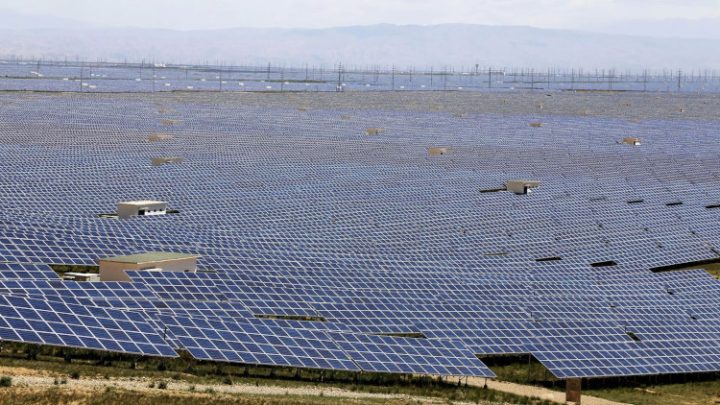
Delivering electricity less than 25% of the time, without massive subsidies we wouldn’t even be talking about solar power. By far away the most expensive way of electricity generation there is – and utterly useless from sunset to sunrise – there is no argument in favour of connecting solar panels to an integrated power grid. Period.
Now that millions of acres have been carpeted with panels around the world, the loss of the ability to use that land for any other purpose is becoming painfully obvious, even to planners and bureaucrats that were once all-in when it came to the grand wind and solar transition.
In Britain, a ministerial statement suggesting that farmland in Britain might be reserved for that purpose, has met with the usual apoplexy from those that couldn’t care less about where your food comes from, or what the countryside looks like. They care as much about those matters, as they do about where you get your power from when the sun sets.
UK warns against solar farms on farmland
Energy Live News
Dimitris Mavrokefalidis
15 May 2024
The government has issued a warning to local authorities today, urging them to refrain from granting planning permission for solar farms on high-quality farmland unless it’s deemed essential.
The move comes as part of efforts to balance food security with the need for renewable energy sources.
A written ministerial statement will be presented to the Parliament, clarifying the criteria for approving solar farm construction and emphasising the importance of considering the cumulative impact of such developments. Energy Secretary Claire Coutinho highlighted the government’s commitment to safeguarding food security while meeting the nation’s energy demands amidst global threats.
Meanwhile, the Renewable Energy Association (REA) has responded, underlining existing planning guidelines that already address concerns over the use of agricultural land for solar farms.
The REA emphasised the importance of solar energy in achieving net zero targets and called on the government to publish a Solar Roadmap outlining strategies for meeting ambitious solar deployment targets.
Dr Nina Skorupska, Chief Executive Officer of the REA, said: “Restricting further solar development would pose a serious threat to the jobs and investment created by the solar industry and the large solar farm sector that is being built now largely without public billpayers’ support.
“It would undermine the government’s ability to meet a net zero power system by 2035 and keep us locked in to expensive fossil fuels at a huge cost to households and businesses.
“Therefore we call on the government to publish their Solar Roadmap following the work of the solar taskforce as soon as possible, to outline how else we can meet their stretching but essential 70GW solar PV deployment target.”
Energy Live News
via STOP THESE THINGS
June 6, 2024 at 02:30AM
“Getting wind projects built is getting a lot harder. The low-hanging fruit, the easier access places are gone.” (Sandhya Ganapathy, EDP Renewables North America, quoted below)
The New York Times article, “As Solar Power Surges, U.S. Wind Is in Trouble” (June 4, 2024), discussed the problems of wind problems, such as site depletion. But the article has nary a quotation, much less mention, from the legion of critics of the aged, doomed technology for economical, reliable grid power.
In order of appearance, the seven chosen by authors Brad Plumer and Nadja Popovich were:
Trevor Houser, Rhodium Group; Sandhya Ganapathy, EDP Renewables North America; Matthew Eisenson, Columbia University; Ben Haley, Evolved Energy Research; Michael Thomas, energy writer; John Hensley, American Clean Power Association; Ryan Jones, Evolved Energy Research.
Where were the real critics on industrial wind’s cost, aesthetics, health, and ecological issues? Conspicuously missing was Robert Bryce, whose renewable rejection database bank lists nearly 700 delayed or cancelled wind and solar projects.
Why not include a perspective from an energy specialist at the Competitive Enterprise Institute or the Institute for Energy Research? Cato’s Travis Fisher?
At the grassroots level, why not interview Lisa Linowes, Kevon Martis, or Sherri Lang? What about the North American Platform Against Windpower or National Wind Watch. Pick just one of fifty wind-opposed organizations that represent grassroots environmentalism, not Big Green. [1]
The article talks about cost inflation, but what is the all-in cost of wind and solar versus power generated by a natural gas combined cycle plant? How much is the government subsidy? What are the costs of offshore wind versus onshore? Tell us about the avian mortality problem and the infrasound issue of ill-sited, in-service wind turbines? And what are wind subsidies adding to the federal budget deficit and need to inflate the money supply to pay for it (wind counterfeiting?)?
The gist of the article is that wind is great and Net Zero inviolate–but the industry has run into various issues that have shifted the (government-enabled) energy “transition” to solar and batteries. More government is needed, the article implies, such as building out (uneconomic) transmission. “… a growing backlash against new projects in many communities” is mentioned almost as an aside.
Some quotations from the article follow:
The country is now adding less wind capacity each year than before the [Inflation Reduction Act] was passed.
Some factors behind the wind industry’s recent slowdown may be temporary, such as snarled supply chains. But wind power is also more vulnerable than solar power to many of the biggest logistical hurdles that hinder energy projects today: a lack of transmission lines, a lengthy permitting process and a growing backlash against new projects in many communities.
If wind power continues to stagnate, that could make the fight against global warming much harder…. A boom in solar power alone, which runs only in daytime, isn’t enough.
… wind power is much more sensitive to location. Wind turbines in a gusty area can generate eight times as much electricity as turbines in an area with just half the breeze…. That means developers can’t just build wind farms anywhere.
In the United States, the best places for wind tend to be in the blustery Midwest and Great Plains. But many areas are now crowded with turbines and existing electric grids are clogged, making it difficult to add more projects.
“Getting wind projects built is getting a lot harder,” said Sandhya Ganapathy, chief executive of EDP Renewables North America, a leading wind and solar developer. “The low-hanging fruit, the easier access places are gone.”
Because they can reach the height of skyscrapers, wind turbines are more noticeable than solar farms and often attract more intense opposition from local communities. In Idaho, the entire State Legislature has opposed a new wind farm that would be visible from a World War II historic site. A few years ago, hundreds of residents were arrested on Oahu, Hawaii, for blocking the construction of a relatively small wind project.
Across the country, hundreds of local governments have restricted or banned wind or solar projects. If a county blocks a solar array, a developer might be able to move next door. But it’s not always as easy to find a new location for wind farms. [Where is Robert Bryce?]
Wind turbines are more visible than solar farms and often attract more intense opposition.
The wind industry has also been hampered by soaring equipment costs after the pandemic wrecked supply chains and inflation spiked. The cost increases have been devastating for offshore wind projects in the Northeast, where developers have canceled more than half the projects they planned to build this decade.
Wind isn’t languishing only in the United States. While a record 117 gigawatts of new wind capacity came online last year globally, virtually all of that growth was in China. In the rest of the world, developers weren’t installing wind turbines any faster than they were in 2020.
If wind power can’t expand as quickly as many proponents hope, the United States would need to rely much more heavily on other technologies that can supply carbon-free power throughout the day, such as new nuclear reactors or advanced geothermal power. But those technologies are still in earlier stages of development and are currently more expensive than wind. [Early stages of development? Just the opposite]
…some experts argue that the recent slowdown is only a temporary artifact of tax policy. It can take years to develop a wind farm and most companies had raced to finish projects by the end of 2021, which is when the last big federal tax credit for wind power was set to expire.
Many experts say federal legislation is still needed to ease the process of building high-voltage transmission lines. But that’s unlikely to happen in a sharply divided Congress.
Final Comment
Little doubt that authors authors Brad Plumer and Nadja Popovich are under pressure from the New York Times nation to put wind power in the best light possible, while gingerly pointing out its problems. But the fact is that dilute, intermittent, land/seascape intensive industry wind turbines are bad economics and bad ecology. But the narrative must not be shaken too much, particularly in an election year when “the earth hangs in the balance.”
[1] Allegheny Treasures, Keyser, W. Va.; Allegheny Front Alliance, W. Va. & Md.; Allegheny Highlands Alliance, W. Va., Va., Pa., Md., & N. Car.; Altamont Landowners Against Rural Mismanagement, Calif.; Aspen’s Horse Ranch Preserve, Cle Elum, Wash.; Barbara Durkin, Mass.; Better Plan, Wisconsin; Calhan Wind Fraud, Colo.; Canyon Country Coalition for Responsible Renewable Energy, Ariz.; Citizens Against Wind Turbines in Lake Erie (CAWTILE), N. Y.; Citizens for Clear Skies, Ohio; Coalición Pro Bosque Seco Ventanas Verraco, Guayanilla, P. R.; Coalition for the Preservation of the Golden Crescent and 1000 Islands Region, N.Y.; Coalition for Rural Property Rights, Iowa; Concerned Citizens of Branch County, Mich.; Concerned Residents of Hammond, N.Y.; Columbia Gorge Audubon Society, Wash. & Ore.; Cumberland Mountain Preservation Coalition, Tenn.; Deepwater Resistance, R.I.; El Paso County Property Rights Coalition, Colo.; Flying M Ranch, Ellensburg, Wash.; Forest Ecology Network, Me.; Friends of Beautiful Pendleton County, W. Va.; Friends of Lincoln Lakes, Me.; Friends of Maine’s Mountains; Great Lakes Concerned Citizens, N.Y.; Great Lakes Wind Truth; Greenwich Neighbors United, Ohio; Health Care Professionals Against Commercial Wind in the Appalachian Mountains; The Heart of Henderson, N.Y.; Helderberg Community Watch, N.Y.; Howard County Citizens for Safe Energy, Ind.; Ill Wind, R.I.; Industrial Wind Energy Opposition (AWEO); Indiana Wind Watch; Kansas Wind Alert; Kent Conservation and Preservation Alliance, Kent County, Md.; Keepers of the Blue Ridge, N. Car.; Know Wind Organization, Ubly, Mich.; Lake Michigan P.O.W.E.R. Coalition, Pentwater, Mich.; Lower Laguna Madre Foundation, Texas; Laurel Mountain Preservation Association, W. Va.; Lucien Rosenbloom, N. Car.; Lynn Studebaker, Ind.; Mountain Ridge Protection Act Alliance, N.Car.; National Wind Watch; Neighbors Caring About Neighbors, Wis.; New England Wind Turbine Education Center, Vt.; No Union Beach Wind Turbine!, N.J.; No Wind Farm, New Castle, Ind.; Open Water, West Olive, Mich.; Partnership for the Preservation of the Downeast Lakes Watershed, Me.; People Against the Lake Michigan Wind Farm, Mich.; People’s Task Force on Wind Power, Me.; Porter Quarter Horses, King City, Mo.; Preserve the Sandhills, Neb.; Protect Our Lakes, Me.; Saint Francis Arboreal and Wildlife Association, Fla.; Save God’s Country, Pa.; Save Coteau Prairie Landscape, N. Dak.; Save Our Allegheny Ridges, Pa.; Save Our Seashore, Mass.; Save Our Sherman, Mich.; Save Our Tehachapi Mountains, Calif.; Save Western Ohio; Save the Prairie, Woodward, Okla.; Savoy Neighbors, Mass.; Selman Ranch, Okla.; Seneca Anti-Wind Union, Ohio; Stearns Wind Truth, Minn.; Stop Ill Wind, Md.; Swanton Wind, Vt.; Vermonters With Vision; Whitley County Concerned Citizens, Ind.; Wind Energy – Concerns About Rural Environment (WE-CARE), N. Dak.; Wind Energy Is a Scam!, Wis.; Wind Power Ethics Group, Cape Vincent, N.Y.; Wind Turbine Syndrome
The post Industrial Wind Power: A Depleting Resource? appeared first on Master Resource.
via Master Resource
June 6, 2024 at 01:10AM
By David Wojick
Who would have guessed that we would be the saviors of the desperately endangered North Atlantic Right Whales? If it can be saved from extinction, which remains to be seen. But when the green left goes uselessly industrial in the name of better weather, it starts to make sense. This seeming paradox is briefly explained below.
The North Atlantic Right Whale Consortium (NARWC) has long been the leading advocate for their namesake whales. They do lots of research and have promoted both reduced ship speeds and so-called “ropeless” fishing as ways to save the endangered North Atlantic Right Whale. Sadly. when it come to offshore wind they look to have abandoned the whales in favor of green nirvana.
The tip-off came with the email announcement of their annual meeting in October. It included a number of so-called news links, two being about offshore wind, and neither was good news for the whales.
The most important was a direct attack on us for daring to try to protect the right whales. This hit-piece is from Science Friday, a radio show I used to like. It labels us as “anti-wind”, which is true enough, but they are clearly pro-wind, hence anti-whale. They say the whales are a pawns in the game, so to push the chess metaphor, it is a pawn we are trying to protect.
The URL gives the flavor of the attack: https://www.sciencefriday.com/segments/offshore-wind-misinformation-right-whale-deaths/. It is the usual Bidenesque stuff claiming there is no evidence or even reason to believe offshore wind development harms Right Whales. No mention of the thousands of federally authorized harassment takings and their potentially deadly consequences, or the strong statistical evidence, etc.
There is one interesting bit, however, namely a link to a map of some of the alleged Right Whale protection groups and people put together by students at Brown University. In addition to many friends, there are folks on there that I was not aware of and hope to contact. But it is incomplete as I am not on it.
The extreme rhetoric that comes with the map is itself revealing. They really do not like us and here is an example: “As public relations and obstruction specialists actively engage local groups to block offshore wind projects, the climate and environmental justice consequences are dire. Offshore wind projects may struggle to get off the ground, locking us into catastrophic climate consequences experienced disproportionately by Black, Indigenous, Latino, and low-income communities.”
Anyone who believes this nonsense is likely willing to sacrifice a whale species or two. This is the fanaticism we are fighting.
The second so-called news link from the Right Whale Consortium is also revealing. It is an article from NRDC about the newly announced offshore wind lease areas in the Gulf of Maine.
They say the entire Gulf is designated as critical habitat for the Right Whales under the Endangered Species Act (ESA), but we should be happy because the lease areas avoid the most sensitive parts. NRDC is another pro-wind green group that used to be environmentalists.
We are talking about a huge projected 15,000 MW of development, so I am not comforted by this news. How does ESA allow this massive development within the critical habitat of a desperately endangered critter like the North American Right Whale? I doubt it does.
Ironically, the Consortium website says these are necessary actions:
“Eliminate human-caused mortality to right whales in critical habitats and migration corridors
Assess patterns of known critical habitat use by right whales and humans and eliminate conflict.”
Apparently, they do not regard building and operating a thousand gigantic 15 MW wind turbines within designated critical habitat as a conflict.
The Consortium itself looks like a secret society. There is no information about the organization, no staff listing, no way to join. There is a list of “Partners”, including several Biden Federal agencies, but no explanation of what that means or how to become one. The only contact information is to an unnamed person at the New England Aquarium. I doubt they would have me or CFACT as members.
So there it is. The North Atlantic Right Whale Consortium has abandoned the North Atlantic Right Whale to offshore wind. Only we who value freedom are left to defend the whale. We are its best hope for survival.
via Watts Up With That?
June 6, 2024 at 12:01AM
 Iowa Climate Science Education