“I wonder if the court or a charity could provide Amy Pritchard (and other members of Extinction Rebellion) with a few books to quell her alarmism, one book being Alex Epstein’s Fossil Future: Why Global Human Flourishing Requires More Oil, Coal, and Natural Gas–Not Less.”
A UK judge has reinforced the law that has climate alarmists up in protest. His was a good decision. But on LinkedIn, Ben Tolhurst, a climate busy body, complained:
My friend Amy [Pritchard of Extinction Rebellion] was jailed for 10 months this morning by judge Silas Reid for cracking a window [no, three windows costing $350,000] of JPMorgan Chase & Co., the world’s biggest funder of fossil fuels. I had the privilege of hearing her summing up speech last week and was sure that even the most hard hearted would be moved by her account of why she took the action. [Note: “Pritchard was also jailed last year by the same judge after being found in contempt of court after breaching rulings he made that she was not to mention the climate crisis in front of the jury, in a separate case for taking part in a roadblock in the City of London in October 2021.” Financial Times]
But no! Tolhurst continues:
The judge though was unmoved. Whilst he decreed that the other 4 women would have their sentences suspended, for Amy it was an immediate custodial term – straight from the court to the prison van to prison. She will start her first night tonight locked up, probably for 23 hours a day, until she is released.
Here comes Tolhurst’s rationalization:
Whilst there was never any question that she and the others broke the windows and the jury deemed them guilty, there are 2 important points to emphasise; 1: The legal system, which has previously ruled that women should not vote, that people of colour cannot mix with white people, is not functioning at a meaningful, holistic or just level, if its really ok for a bank to finance the deaths of thousands but not ok for a group of individuals to raise the alarm by taking proportionate action. (the cost of the damage equates to less than 20 minutes profit for JPMorgan Chase & Co.). This is particularly pertinent given the famous leaked report from JPMorgan Chase & Co. which highlights that the bank knows exactly the consequences of their investment strategy but still continue with it
Secondly, it is outrageous for one man to have the power to play god over someone’s life to such an extent – Judge Reid could have chosen to give a more lenient sentence, but he chose not to, and is accountable to no one for that choice.
I am frankly outraged by the myopic outdated construct of the legal system and how people in that system use its rules to hide behind and justify their “rulings”.
I post this, not for reaction or comment, merely so people know the truth of what’s happening. All I ask is that you to spare at thought tonight and over the following weeks and months for what Amy (and indeed other “climate protestors”) have to endure whilst the agents of destruction such as JPMorgan Chase & Co. continue to operate with impunity.
Breaking a window is thuggery. Should someone break a window at your house or place of business because, say, the person disagrees with you on, say, wind/solar/battery industrialization of the pristine?
Bravo Judge Reid. The rule of law is a precious thing….
ESSEN, Germany, June 12 (Reuters) – Investor caution about hydrogen as a future source of energy to reduce emissions of greenhouse gases did not suggest slowing resolve to phase out fossil fuels, German industry executives and policymakers said on Wednesday, pleading for patience.
They told a conference organised by the Handelsblatt business newspaper that regulatory support for new value chains would bring about a large-scale switch to renewably derived hydrogen energy early next decade.
Germany wants national electrolysis capacity of 10 gigawatts (GW) by 2030. Last month, it approved an acceleration bill to help decarbonise the EU’s lead industry, whose manufacturers are key to future hydrogen consumption.
Critics say that final investment decisions on only 300 MW of projects, according to data presented by utility E.ON , indicate of possible failure, while reliance on future bulk imports is nebulous.
If Germany does not manage the move to hydrogen, it will weaken the entire bloc’s chances of adopting it and competing successfully with the United States and China.
It is a magical time, just before the Sun comes up each day – especially outside with a view to the horizon.
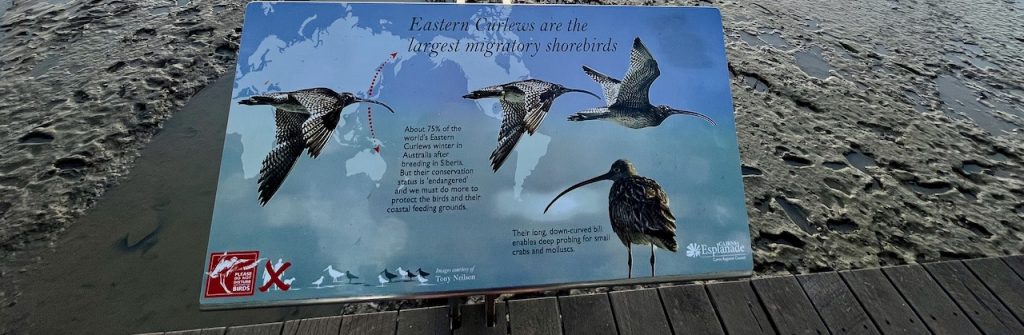
Two days ago, on Wednesday morning, I was at the Cairns foreshore just on sunrise. This mudflat is home to a great diversity of migratory birds, including the Eastern Curlew that travels back to Cairns from Siberia each year. Not all the birds migrate each year, but many do.
We can count the number of birds at the Cairns foreshore, but it is hardly the same as knowing their story. I am always in awe of these little birds, knowing how far they travel. What adventures they must have, and what fun it must be – out on the mudflats from Cairns all the way north, visiting mudflats in Indonesia, Taiwan, China, and on to Russia.
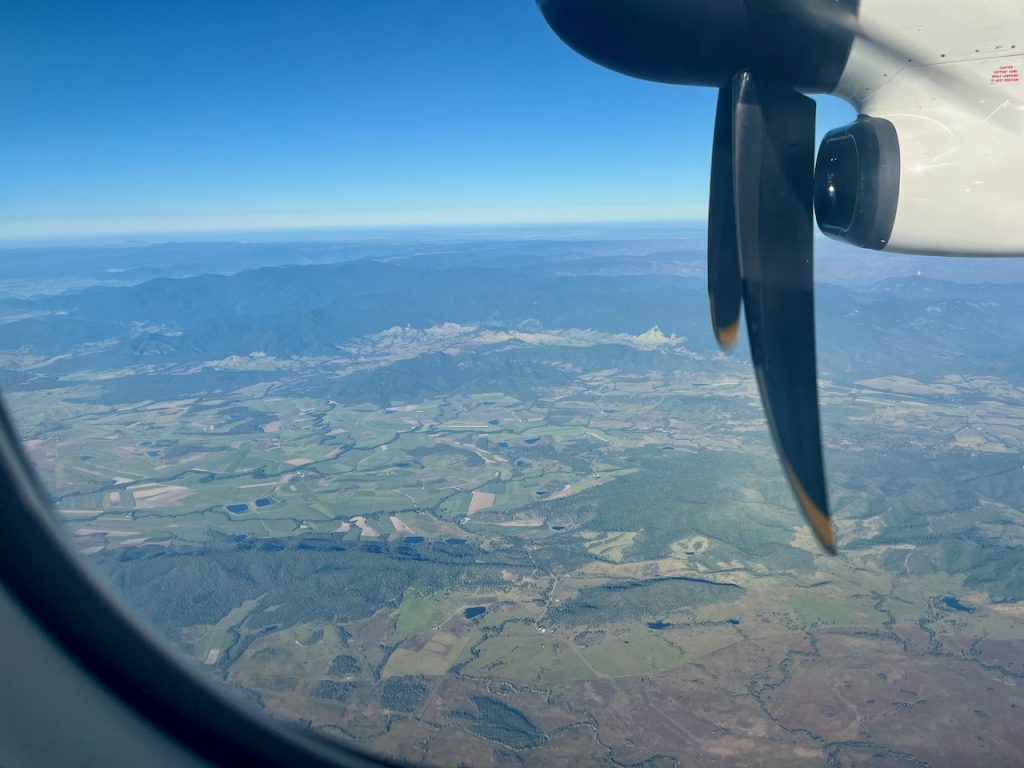
I flew back from Cairns yesterday, on what they call the ‘milk run’. This is the little aeroplane, the Dash 8-400 that stops at Townsville and Mackay before Rockhampton – where I got off.
Flying into Mackay I noticed all the sugarcane. Of course, there is also a lot of sugarcane grown to the north and south of Townsville – but Townsville itself there is no sugarcane in the catchment that drains into Cleveland Bay.
The activists variously complain that because of the sugarcane there is too much sediment along the Queensland coast effecting the Great Barrier Reef.
I can still remember where I was on Wednesday 6th June 2001, and how that day unfolded – that was the day Imogen Zethoven from the World Wildlife Fund (WWF) went on and on, and on some more about how bad the sugarcane farmers are, and how they have polluted the Great Barrier Reef with sediment – with mud from their farms. She made local, national and international headlines with her ranting that day and for the next year and some.
Imogen was making the most outrageous and untrue claims but instead of anyone calling her out, John Howard who was then the Prime Minister of Australia ensured she was given even more money – more funding, hundreds of millions of dollars followed into the coffer of the WWF after her nonsense ranting.
I have noticed that as a nation we increasingly give in to the ranting from the bullies rather than calling them out. Our leaders are not brave, not at all.
That Wednesday morning in June 2001, I was staying in a motel room in Townsville, my hire car was parked under an awning outside. I woke-up that morning to the lead news bulletin explaining how many truckloads of mud were being ‘dumped’ onto the corals of the Great Barrier Reef – by farmers, specifically sugarcane farmers.
There was Imogen Zethoven on the large screen – with her mop of brown hair, thin face, innocent eyes, small chin, hippy clothes telling us this as fact, as truth.
I knew Imogen well; she had told me about a year earlier how the World Wildlife Fund was planning a campaign to improve sugarcane growing practices.
I had taken her through the audit document and the strategy the industry was embracing. I had asked her where she thought we needed to do better, and whether perhaps timelines could be brought forward. On reflection, she seemed little interested in the details of cane growing. The industry had barred all as part of the audit process that was began five years earlier, two years before I had started with the organisation.
We were addressing the real issues as they had been detailed in that audit. We were happy to partner with WWF to fast track any issues they specifically wanted addressed. But Imogen had other plans. She and the WWF were not interested in technical detail, they wanted to tell a compelling story, even if it was a nonsense story.
Now I could see her on television, her warnings of catastrophe were accompanied by footage of her in a helicopter above Townsville harbour, pointing to a plume of sediment snaking its way out to what she claimed were the once crystal-clear waters of the Great Barrier Reef. At least that is what we were being told, by Imogen. Imogen, who as far as I knew, had never ever set foot on a cane farm or Scuba-dived the waters of the Great Barrier Reef. And didn’t see know that there was no sugarcane upstream of Cleveland Bay.
‘Snaking’. I used to sometimes have dreams with snakes. They are a potent symbol in so much mythology.
All was now sullied was how Imogen explained it, that is what we were being told by Imogen with the imagery from the helicopter on the television screen as proof – as evidence.
I could see the plume of sediment. But there wasn’t a dump truck in sight – or a sugarcane farm. There are no sugarcane farms to the west of Cleveland Bay.
The entire notion of canegrowers dumping sediment on the reef was invented, an idea Imogen had presumably come up with. Sediment runoff was not an issue identified in the environmental audit. Sediment runoff had been an issue for sugarcane farming before the advent of trash blanketing, and when farmers grew sugarcane on hillsides, which was when sugarcane was cut by hand. Over the previous twenty years the industry had changed its practices completely: there was mechanical harvesting, and what was known as ‘Green Cane Trash Blanketing’, whereby the cane was harvested green, without first burning.
Imogen’s words about the coral reef waters being polluted with mud from the farms appeared to be backed-up with the authoritative words of a journalist explaining exactly how many ‘dump truck equivalents’ of soil were coming down the rivers and streams from the sugarcane farms. None of it bared any relationship to what was documented in the technical literature or in the environmental audit of the industry.
Reference was made to a WWF ‘Great Barrier Reef Pollution Report Card’. I will tell you about this in another blog post – a future note from me, as well as a report that she got various James Cook University professors to pen, backing her up. I have been rummaging around finding these old documents lately.
That morning, my mobile phone rang out, as I got out of shower. It was Ian Ballantye, the General Manager of Canegrowers Pty Ltd. I phoned back, sitting with a towel wrapped about me on the side of the bed in that motel room in Townsville.
Ballantyne was once a Lieutenant colonel in the Australian army. He had a gravelly voice, and he still spoke like an army officer. He wanted to know, “Where the hell are you!”
“I’m in Townsville. The plan is to drive north to Ingham, to assist with the workshop for the rollout of the new bio-active organic pest control for cane grubs,” I said.
“When will you be back in Brisbane,” he asked. He started on about needing to formulate a response to this WWF campaign. “Imogen’s accusations are already making international news headlines,” he lamented.
“I want to continue on to Ingham,” I explained. “These workshops have been planned for months. Let’s just sit this one out,” I suggested. My advice was to not respond to the nonsense being promoted by Imogen.
As I checked out of the motel that morning, the balding, overweight owner made comment to me. “The farmers are going to have to finally get their act together,” he said, “There is a New Zealand bird coming after you.” He wasn’t referring to a wader.
He was referring to Imogen; he had noted her New Zealand accent. He went on about her master’s degree in environmental science.
I knew that she didn’t have one. There was no mention of that in the news reporting. It was assumed, the way she was introduced it was as though she had relevant qualification and knew a lot about sugarcane farming – in fact she has a master’s in English literature.
She had been taught how to tell a good story. She knew much less about the corals, or sediment loads or pesticides.
The owner of the motel was adding what he thought he heard to his own narrative.
It is a fact; Imogen has a degree in English literature. To repeat, she knew about storytelling, and how to run a media campaign. She knew very little about cane farming, and even less about corals at the Great Barrier Reef. Not much more than what I had told her. She had declined my invitation for us to go snorkelling together and see the corals, up close. She had also declined my invitation to visit a cane farm and a sugar mill. She had not taken any of the thick volumes of the audit document with her, or our response, our environment management strategy when she visited at my office in Brisbane a year earlier.
But from the news report it appeared she was an expert on agricultural runoff and corals. The motel owner had believed everything that he heard that morning, on the news.
“Did you know,” I began in response, to the owner of the motel, “That the Melbourne-based Australian Conservation Foundation (ACF) set a target of 50 per cent adoption of soil erosion reducing minimum-tillage, green-cane harvesting for the year 2000 for the farmers in the Mackay region?”
He didn’t reply.
“The farmers have exceeded that target,” I continued. “Over 85 per cent of Mackay farmers now green cane harvest.” I paused hoping he would look at me, “Did you know that under this green cane system, soil loss is equivalent to levels in a natural rainforest situation, that is according to research by CSIRO.”
He still had his back to me.
He was printing off my receipt; when he finally turned back around, and handed me the piece of paper, I asked, “Did you see any dump trucks on the news?”
He didn’t reply.
He was enamoured by everything Imogen had said, I could see that; on whichever news channel he had watched that morning.
Imogen not only told untruths about the sugar cane industry, and the existence of the dump trucks but she has made many Queenslanders ashamed of their environment and their farmers. It is a horrible thing, to live with shame and guilt.
WWF specialise in it. This is a multinational corporation that specialises in virtue signalling and making stuff-up.
For sure there are bad people in the world, and many of them pretend to be your friend.
What I do know is that mud, in the right place, is our friend – mudflats are a wonderful habitat including for shore birds and that some of these wadders fly a very long way, to feed at the magnificent and muddy Cairn’s foreshore.
Like Townsville, there are no sugarcane farms upstream of Cairns. But the foreshore is naturally muddy and has been for thousands of years. Wadders, including the Eastern Curlew, predate European settlement and rely on tidal mudflats for their very existence – they love mud, like mangroves love mud, and so do I.
Sugarcane farms just to the north of Mackay, photographed from the Dash8-400 yesterday. The paddocks not planted to cane are covered in a thick layer of mulch, because the sugarcane farmers in this region practice what is known as ‘Green Cane Trash Blanketing’.
I seldom use the term “socialist”, but it is the perfect word here once the concept is updated. It originally referred to government ownership of the means of production. But in today’s Regulatory State, ownership is not required for control, so it means government control of production, or more broadly, government control of both production and use.
In this case, it is government control of the production and use of what they call “the energy system.” Since everybody uses energy, this includes control of everybody. Under the proposed system, the government does not serve people; it “manages” them, or at least their energy use, which is a lot of what we do.
They are, however, rather confused about this. The very first sentences state their basic assumption, which is wildly false. They say this:
“The world is coalescing around the need to reduce greenhouse gas (GHG) emissions to limit the effects of anthropogenic climate change, with many nations setting goals of net-zero emissions by midcentury. As the largest cumulative emitter, the United States has the opportunity to lead the global fight against climate change. It has set an interim emissions target of 50–52 percent below 2005 levels by 2030 toward a net-zero goal.” (All quotes are from the Executive Summary.)
The United States has set no such targets. The US is a big country with hundreds of millions of people, so it does not set targets. Perhaps they mean the US Government, but Congress has set no such targets. In fact, these so-called targets are merely the wishful thinking of the Biden Administration and their radical net zero colleagues, which apparently include the National Academies. And if a Republican wins the next election, it will not even be a Presidential wish.
So, there is much less here than meets the eye. This tome is basically a radical socialist manifesto, and that is how it should be read.
The funding is surprising. NASEM studies used to be done at the request of Congress or Federal Agencies and funded by them since objectively advising them is supposed to be the job of the Academies. Instead, this work was funded by a collection of Foundations, presumably left-wingers. So, the National Academies are for hire by those with radical causes.
The socialist management thrust is exemplified by this topic, which is listed as a central theme: “Managing the Future of the Fossil Fuel Sector.” Only under socialism is this a government function.
That the called-for management process is also non-democratic is made clear by this segment of their lead-off discussion of risks: “In developing its findings and recommendations, the committee recognized the inherent risks and uncertainties associated with such an unprecedented, long-term, whole-of-society transition. These include … political, judicial, and societal polarization risk—that political and judicial actions or societal pressures will change the policy landscape….”
So elected officials, the Courts, or the people in general might get in the way. Their solution is not to get the support of the people; rather, it is more management. They say, “Mitigating these risks will require adaptive management and governance to coordinate and evaluate policy implementation and to communicate progress on outcomes.”
Sounds like the Plan is to manage the elections, the Courts, and the people. Sit down, shut up, and we will tell you what we have done as we go along.
For those interested in the details of the net zero wishlist, this is a grand source. Otherwise, it is just another radical manifesto to line the shelves with.
My concern is that the three National Academies have abandoned their mission and, therefore, lost their integrity. Tools of left-wing foundations are not worthy of the name National Academy.

 Iowa Climate Science Education