Apparently, you can litigate anything these days, and it’s gotten far more insidious than suing McDonald’s over hot coffee being, you know, hot. A new climate activist group called Our Children’s Trust is suing state and federal government agencies on behalf of individual children,claiming that fossil fuel regulators are negligently ruining their future.
That children should feel entitled to come of age under a specific set of favorable environmental and political circumstances — and to demand punishment for individuals they disagree with — isn’t just a testament to the egocentrism dominating the 21st Century. It also exposes our culture’s deeply warped understanding of climate science, which, surprisingly to many of us, actually shows global warming has no meaningful negative effects on our lives or our environment.
In fact, we have fossil fuels to thank for the twenty-first century being
the best time in human history to be alive.
Unfortunately, it’s the best-kept secret in our world today.
If we really want to earn “our children’s trust,” we should teach them the truth instead of foisting crippling and needless anxiety on an entire generation.
Contrary to the attention-grabbing clips of forests burning and shock-inducing statistics about record-high temperatures, modern climate science suggests that warming is likely to remain mild and manageable while our resilience continues to improve. In fact, despite average global temperatures increasing about 1° Fahrenheit and our population quadrupling in the last century, climate-related disasters claim 99% fewer lives. Our resistance to severe weather events (which actually have remained consistent or even declined in recent decades) is actually growing at a faster rate than non-weather-related natural disasters like volcanoes and earthquakes. The alarmists want you to believe a changing climate is jeopardizing human lives; however, the opposite is true.
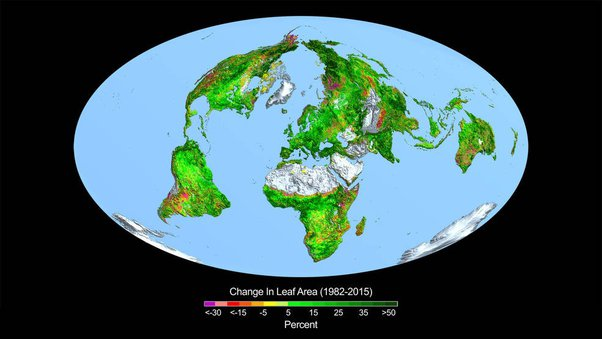
Our environment is also better than ever. The U.S. has cut air pollution by nearly 80% in the last 50 years and ranks number one in the world for access to clean drinking water. In fact, those infamous greenhouse gases may actually help the planet. Mild increases in atmospheric carbon dioxide create a “global greening” effect that stimulates plant growth, which both helps natural ecosystems and makes agricultural production more efficient.
Meanwhile, this is the best time in human history to be alive,
thanks largely to widespread access to affordable, reliable energy.
Children today have a far greater chance of living a long, healthy, fruitful life than ever before. Around the world, in both developing and developed nations, poverty has plummeted and people are enjoying the tangible, life-improving benefits of lower infant and child mortality, better nutrition, improved education, lower infectious disease rates, more economic opportunity, gender equality, and longer lives. It’s no coincidence that global quality of life spiked and has continued to improve consistently since the Industrial Revolution — or that communities without access to electricity are still plagued by poverty, danger, and disease.
For a group claiming to seek “Our Children’s Trust,” this activist group seems to be deliberately abusing children’s trust.
With nearly any factoid we could wonder about immediately accessible on our smartphones, how could we have possibly gotten it so wrong about climate change? The jury is out on whether the cultural cancer of climate alarmism is the result of a deliberate plot for political power by global elites or simple negligence by a society that accepts the claims of those in authority (or simply those who pop up in our Tik Tok algorithm) at face value.
I suspect it’s a combination of both. “Indoctrination” has become a political buzzword, and while there’s no denying there are bad actors out there in schools and governments with agendas to push at all costs, the real problem with the public’s view of climate change is far subtler — which means it’s also harder to root out.
The problem is that no political issue, including this one, is black and white, but few feel they have the time to educate themselves on the nuances and confounding variables of hundred- or even thousand-page research reports. It’s easier to accept grossly oversimplified top-line takeaways as gospel and reduce them to even less accurate headlines and soundbites. I’ve seen the consequences firsthand working with state education leaders on science curriculum standards. Few are truly setting out to put misleading or incomplete information in our classrooms, but the misinformation is pervasive and there’s simply so much information to sift through to get to the real nuggets of truth.
But we need to do better — for our children’s sake.
The fact that recently-deceased Ian Stirling was a prominent co-author should come as no surprise: his irrational promotion of the idea that future “climate warming” could doom polar bears to near-extinction – even after recording and publishing evidence to the contrary – will go down in history as an appalling violation of scientific principles.
Adding to the dubious validity of the paper: lead author Julienne Stroeve’s 2007 paper predicting summer sea ice decline by 2050 was proven wrong by actual data by the time it was published (Stroeve et al. 2007, 2014) and a more recent update failed to foresee the recent 17-year stall in decline. And co-author Steve Ferguson, a seal biologists, rashly stated in 2016 that Hudson Bay could be ice-free in winter as early as 2021 [which, needless to say, never came close to fruition].
I’d say if Southern Hudson Bay polar bears might be extirpated as soon as 2030, as the paper’s co-author Alex Crawford suggests, the global temperature and ice melt had better get a move on: a survey showed the SH population was thriving in 2021 and Hudson Bay sea ice hasn’t hit any kind of death spiral in the three years since.
The paper
A newly-released paper by Julienne Stroeve and colleagues attempted to predict future sea ice coverage of Hudson Bay based on sea ice thickness in order to correlate it with future polar bear survival. The paper is called, “Ice-free period too long for Southern and Western Hudson Bay polar bear populations if global warming exceeds 1.6 to 2.60C.”
Since no one else appears to have attempted this method of sea ice projection, it remains to be seen if it will prove any more accurate than previous failed methods based on ice extent by the same lead author (e.g. Stroeve et al. 2007, 2014).
Simplified version of Stroeve et al’s 2007 sea ice model used to get ESA listing for polar bears in 2008: the model failed to predict the 2007 decline and 2012 was even worse. Courtesy Wikipedia.
The authors admit that getting accurate sea ice thickness readings from satellite data and other sources is difficult at small scales, especially during the shoulder seasons of ice melt (early summer) and ice formation (autumn), when determining whether or not the supposedly critical 10cm of ice is present or not (i.e. enough to support an adult male bear).
Their decision to include primarily satellite-generated estimates of snow depth over sea ice in their predictive model — a critical metric for ringed seals in spring (when newborn pups are predated on by polar bears) — only adds to the potential inaccuracy of the entire endeavour. Sea ice thickness during the winter and snow depth over ice were variable factors Ian Stirling couldn’t account for in the 1980s when he was trying to figure out why cub survival was so low and bears were coming off the ice in such poor condition.
It’s questionable whether these snow and sea ice thickness data are accurate enough for the intended purpose and unfortunately, there is no way to double-check them since there are very few “ground-truth” measurements available for Hudson Bay.
Even more concerning is the basic premise of this paper which states that polar bears in Western and Southern Hudson Bay are already showing negative impacts of a longer-than-usual open water season. In short, the conclusion stated in the abstract is based on a lie: “…with longer ice-free periods already substantially impacting recruitment [not true], extirpation for polar bears in this region may already be inevitable.”
First of all, the change in the length of the open water season since 1979 happened as a “step-change” around 1998. After about 2000, the ice-free period was about 3 weeks longer than it had been before the turn of the century (Castro de la Guardia et al. 2017) but hasn’t changed since then. The implication that there has been a steady, year-after-year increase in the length of the ice-free season since 1979 in Western Hudson Bay is deliberate obfuscation.
In addition, the authors blatantly misrepresented data published in 2022 about aerial surveys conducted in 2021 for Western and Southern Hudson Bay polar bears, which I discussed previously here (Atkinson et al. 2022; Northrup et al. 2022; see also Crockford 2024). In other words, there has been no major change in sea ice coverage since at least 2001 and no change in polar bear population sizes in Western and Southern Hudson Bay since at least 2011 (and probably since 2004), so the premise of the model is false.
Moreover, for reasons that have never been adequately explained, the 1980s saw weights of polar bears and cub survival decline, with a marked increase in the loss of whole litters over what had been documented in the 1960s and 1970s (Calvert et al. 1986:19, 24; Derocher and Stirling 1992, 1995; Calvert et al. 1986:19, 24; Ramsay and Stirling 1988; Stirling and Lunn 1997).
It’s only when you start your WH data at 1980 – so that you don’t have to compare it to the two previous decades – that 1980 looks like the good old days for polar bears (Stirling and Derocher 2012; Stirling et al. 1999) and makes it appear that the step-change in the ice-free period (IFP) had a big impact.
The erroneous premise of the paper is used to justify using the time polar bears spend onshore as the only metric to correlate with sea ice thickness projections. From the Methods section: “To calibrate the IFP to the polar bear fasting period (i.e., the period of time polar bears spend onshore), we use the onshore/offshore dates for polar bears reported in Fig. 2 of Cherry et al. (2013).”
Why would they use only onshore/offshore dates from a paper using data from only 1991-1997 and 2004-2009 when more recent dates are available from on-going but unpublished tracking studies conducted by Andrew Derocher and his students?
Perhaps it has something to do with the inconvenient fact that, contrary to predictions, the ice-free periods for several of the last few years have been as short as they were in the 1980s: especially 2020 and 2022 but also 2017, 2018 and 2019.
Final Thoughts
We have a paper that uses a false premise to predict the possible extirpation of SH bears by 2030 at the earliest, based on the most pessimistic predictions of global temperature increases melting Hudson Bay sea ice, based on similarly pessimistic models of fossil fuel emissions, from which the authors conclude that fossil fuel use must be curtailed.
No discussion about SH or WH bears moving north if conditions indeed deteriorate, like they did in the Barents Sea: just death and population decline, oh my.
However, the final conclusions of this paper are revealing (note IFP = ice-free period):
“While it is difficult to provide a hard-limit of IFP before extirpation of WHB or SHB polar bear populations occurs, confronted with these threats, proactive measures are imperative.”
In other words, the authors can’t be sure when, or even if this catastrophe will happen, but they think we absolutely must rearrange society to reduce fossil fuel use just in case.
As I said, another utterly useless modelling paper. It’s certainly not science.
PS: No reports of polar bears onshore yet in WH or near Churchill despite the reduced ice on Hudson Bay caused by wind, so it looks like the movement of bears onshore will not be early again this year.
References
Atkinson, S.N., Boulanger, J., Campbell, M., Trim, V. Ware, J., and Roberto-Charron, A. 2022. 2021 Aerial survey of the Western Hudson Bay polar bear subpopulation. Final report to the Government of Nunavut, 16 November 2022. pdf here.
Calvert, W., Stirling, I., Schweinsburg, R.E., Lee, L.J., Kolenosky, G.B., Shoesmith, M., Smith, B., Crete, M. and Luttich, S. 1986. Polar bear management in Canada 1982-84. In: Polar Bears: Proceedings of the 9th meeting of the Polar Bear Specialists Group IUCN/SSC, 9-11 August, 1985, Edmonton, Canada. Anonymous (eds). Gland, Switzerland and Cambridge UK, IUCN. pg. 19-34.
Castro de la Guardia, L., Myers, P.G., Derocher, A.E., Lunn, N.J., Terwisscha van Scheltinga, A.D. 2017. Sea ice cycle in western Hudson Bay, Canada, from a polar bear perspective. Marine Ecology Progress Series 564: 225–233. http://www.int-res.com/abstracts/meps/v564/p225-233/
Cherry, S.G., Derocher, A.E., Thiemann, G.W., Lunn, N.J. 2013. Migration phenology and seasonal fidelity of an Arctic marine predator in relation to sea ice dynamics. Journal of Animal Ecology 82:912-921. http://onlinelibrary.wiley.com/doi/10.1111/1365-2656.12050/abstract
Crockford, S.J. 2024. State of the Polar Bear 2023. Briefing Paper 67. Global Warming Policy Foundation, London. Download pdf here.
Derocher, A.E. and Stirling, I. 1992. The population dynamics of polar bears in western Hudson Bay. pg. 1150-1159 in D. R. McCullough and R. H. Barrett, eds. Wildlife 2001: Populations. Elsevier Sci. Publ., London, U.K. See abstract below:
Abstract: Reproductive output of polar bears in western Hudson Bay declined through the 1980’s from higher levels in the 1960’s and 1970’s. Age of first reproduction increased slightly and the rate of litter production declined from 0.45 to 0.35 litters/female/year over the study, indicating that the reproductive interval had increased. Recruitment of cubs to autumn decreased from 0.71 to 0.53 cubs/female/year. Cub mortality increased from the early to late 1980’s. Litter size did not show any significant trend or significant annual variation due to an increase in loss of the whole litter. Mean body weights of females with cubs in the spring and autumn declined significantly. Weights of cubs in the spring did not decline, although weights of both female and male cubs declined over the study. The population is approximately 60% female, possibly due to the sex-biased harvest. Although estimates of population size are not available from the whole period over which we have weight and reproductive data, the changes in reproduction, weight, and cub mortality are consistent with the predictions of a densitydependent response to increasing population size. [my bold]
Derocher, A.E. and Stirling, I. 1995. Temporal variation in reproduction and body mass of polar bears in western Hudson Bay. Canadian Journal of Zoology73:1657-1665. http://www.nrcresearchpress.com/doi/abs/10.1139/z95-197
Northrup, J.M., Howe, E., Lunn, N., Middel, K., Obbard, M.E., Ross, T., Szor, G., Walton, L., and Ware, J. 2022. Southern Hudson Bay polar bear subpopulation aerial survey report. Final report to Ontario Ministry of Natural Resources, 29 November 2022, pdf here.
Stirling, I. and Lunn, N.J. 1997. Environmental fluctuations in arctic marine ecosystems as reflected by variability in reproduction of polar bears and ringed seals. In Ecology of Arctic Environments, Woodin, S.J. and Marquiss, M. (eds), pg. 167-181. Blackwell Science, UK.
Stirling, I., Lunn, N.J. and Iacozza, J. 1999. Long-term trends in the population ecology of polar bears in Western Hudson Bay in relation to climate change. Arctic 52:294-306. pdf here.
Stirling, I., Schweinsburg, R.E., Kolenasky, G.B., Juniper, I., Robertson, R.J., and Luttich, S. 1980. Proceedings of the 7th meeting of the Polar Bear Specialists Group IUCN/SSC, 30 January-1 February, 1979, Copenhagen, Denmark. Gland, Switzerland and Cambridge UK, IUCN., pg. 45-53.http://pbsg.npolar.no/en/meetings/ pdf of except here.
Stroeve, J., Crawford, A., Ferguson, S., Stirling, I., Archer, L., York, G., Babb, D. and Mallet, R. 2024. Ice-free period too long for Southern and Western Hudson Bay polar bear populations if global warming exceeds 1.6 to 2.60 C. Nature Communications Earth & Environment 5:296 [open access] https://doi.org/10.1038/s43247-024-01430-7
“Let’s see if Skeptical Science makes another appearance on LinkedIn. It is up to 458 follows. And see if this organization will simply prepare an entry on what ‘skeptic’ arguments are the best. With that middle ground, maybe we can have a real debate.”
On LinkedIn, the alarmist Skeptical Science posted:
Somewhat surprisingly for what is regarded as a network of professionals, climate science misinformation is getting shared on LinkedIn as well. Here is a list of some signs to be on the lookout for when reading posts or comments related to human-caused climate change or global warming:
Read the list here, but their pitch is little more than ‘trust us’ and visit the DeSmog database of “deniers” for the bad actors. (Note: DeSmog’s smear-list encyclopedia has backfired! First, there are so many excellent thinkers and influencers on the list that a new ‘majority’ has been identified. Here is my entry. Second, many folks not on the list are upset and want their non-alarmist views recognized.)
Skeptical Science’s list continued in a comment that begins: “Sometimes a commenter’s job or tagline can also give a clue. If there’s a relationship to anything having to do with the fossil fuel or mining industries, whatever is being written might need to be read with a suitably large grain of salt.”
And ends: “Reactions via the „laugh“ icon on serious topics like human-caused climate change could either have happened accidentally (unlikely) or be a sign that the commenter doesn‘t quite (want to) grasp or accept scientific findings on the topic (quite likely).”
The comments were harsh. Here are some.
Randall Utech: There are thousands of independently thinking individuals (geologists, geophysicists, astrophysicists, engineers, meteorologists, physicists, chemists) practicing science. They are not paid to confront the alarmists but merely see the climate science (a relatively immature science) as unsettled. Questioning the all-pervasive climate narrative is exactly what scientists should do. Unfortunately for many of the masses with little time to investigate on their own, the deck is stacked against them due to what is in most cases pervasive propaganda from your side of the of the arena.
You call yourself scientists but you disregard the fundamental purpose [of] science which is scientific debate. By silencing opposing viewpoints, you are no longer a scientist or providing scientific information, you are providing propaganda or misinformation. We want to have a full discourse of this topic. If you negate a viewpoint that doesn’t conform to your view, you are not a scientist you are a manipulator; you care nothing about reality and only about the viewpoint you want to provide.
Rob Bradley: So tell all of us on LinkedIn how to think and what to believe? Stay vague and invoke half-truths and strawmen/women (above) and try to get the critics to ‘lay down their arms’?
I have engaged in numerous debates on LinkedIn with climate alarmists to great profit for me and for the other readers. Why not go ahead, Skeptical Science, and list the valid points of the CO2/climate optimists?
Talk about the distribution of the enhanced greenhouse effect, time-series data on weather extremes, the saturation effect, government failure in the quest to address market failure, the role of adaptation instead of (futile) mitigation? And the ecological problems of wind, solar, and batteries?
Where’s the middle ground, Skeptical Science? If you say there is none, I rest my case.
My comment attracted 60 replies.
Daniel Gruenberg: “Skeptical Science is founded by a partisan cartoonist, author of the famous massively debunked 97% consensus article and is the king of climate disinformation.”
James Phillips (retired geoscientist): “This has to be the most ridiculous post I have seen on LinkedIn since I joined 10 years ago. Any true scientist with independent thinking should disregard this complete propaganda ‘climate religion’ post.”
Hans Wolkers (science journalist): “Great to see that skeptical science has a patent on the truth and doesn’t want any scientific debate nor critically thinking scientists. I guess 97% of readers agree and believe these wonderful statements?”
Robert Ballantyne: “Consensus is among scientist living on government largesse that agreed to ‘hide the decline’.”
Jim Ligon (geophysicist): “Oh I get it! If I agree then I am good. If I question as a true scientist should do then I am bad. This is not science it is religious dogma on par with the inquisition. So how do you know climate alarmists are a hoax? The print garbage like this.”
Graeme Morrison: “I like the rebuke of people ‘just asking questions’ as insincere. It made me laugh.”
Alexis Pilotelle: “Imagine publishing the same post with “quantum physics” or “organic chemistry” instead of “climate science”, taking one theory inside the field as the absolute not-to-be challenged truth. Not only this would create backlash but it would make highly suspicious the claim made by the only acceptable theory. Skeptical science should go back to basics and understand what science is instead of pushing propaganda.”
Well, our post seems to have hit a nerve based on the many comments exhibiting exactly the warning signs to be on the look-out for! Some people just seem to prefer that others do not know what these warning signs and red flags are.
Also note that some comments with baseless accusations and ad hominem attacks against Skeptical Science and our team have been deleted and any others will be deleted without notice. It’s our page, so our rules apply.
Ad hominem? That is what the we in the non-alarmist camp endure every minute of every day. From the above exchange one Jim Hunt could only question my credentials to engage in the physical science debate. Funny how us amateurs can pin down the weaknesses of the alarmist argument (and why WUWT, for example, is the world’s leading climate website.)
Final Comment
“Skeptical Science” is a name akin to the Inflation Reduction Act of 2022. A ploy to fool, in this case to draw in doubters to try to show that alarmist science is settled and, in fact, science. Nope, climate models and climate physics are the opposite of settled.
Let’s see if Skeptical Science makes another appearance on LinkedIn. It is up to 458 follows. And see if this organization will simply prepare an entry on what ‘skeptic’ arguments are the best. With that middle ground, maybe we can have a real debate.




 Iowa Climate Science Education