My legal background, the reason for my interest in international law and the interpretation of treaties etc., is directly related to my interest in climate issues. Although I didn’t practice law, that interest has persisted: as well as studying climate issues going back to the 1950s, I’ve followed UN climate negotiations in detail since 2007. My conclusion is simple: if global greenhouse gas emissions are to be cut substantially – as we are told is necessary if humanity is to avoid potential catastrophe – the overriding issue, far more important than any domestic concern, is whether or not the governments of major non-Western economies are willing to act accordingly. Yet they’ve shown scant in interest in so doing.
I set out the evidence and reasons for this in an essay published in 2020. Nothing that’s happened since 2020 changes my conclusion. The ‘Dubai Stocktake’ agreed at COP28 last year for example if anything reinforced it. Look at the opening paragraph of item 28 stating that Parties’ ‘global efforts’ should take ‘into account the Paris Agreement and their different national circumstances’. Then note the specific word-for-word incorporation of the Paris Agreement’s Article 4.4 in item 38, unambiguously confirming developing countries’ exemption from any emission reduction obligation. That’s a perfect example of what always happens at these conferences: words are inserted in the concluding communiques or agreements letting developing countries off the hook.
So what’s going to happen at COP29?
Well, there’ll certainly be lot of argument about how ‘rich countries’ must pay developing countries for ‘loss and damage’. But of course that’s not what matters: from the outset the whole point of these COP conferences is supposed to be the realisation of global agreement to reduce emissions. But such reduction would require major non-Western countries to completely reverse their energy policies. And after 30 years of refusal to do so, they’re obviously not going to do that now – not at COP29 nor I believe at further such conferences. It really is about time Western governments got used to it.
Two articles caught my attention by looking behind the curtain seeing intentions obscured by appeals to Zero Carbon. First Chris Talgo writes at American Thinker Climate Alarmism is the existential threat to humanity. Excerpts in italiics with my bolds and added images.
While in France observing the 80th anniversary of D-Day and honoring the thousands of brave soldiers who gave their lives fighting the existential threat that was Nazi Germany, President Joe Biden could not help himself from descending into crass political talking points by comparing the most destructive and deadly war in human history to climate change.
“The only existential threat to humanity, including nuclear weapons, is if we do nothing on climate change,” Biden declared. Due to the “existential threat of climate change, which is just growing greater, we’re working together to accelerate the global transition to net-zero. It is the existential threat to humanity,” Biden reiterated.
In reality, climate change is nowhere near an existential threat.
In fact, in many ways, the slight warming that has occurred over the past half century or so has made life better for humanity. For instance, NASA satellite data show a significant rise in global plant growth in recent decades — what some call global greening. A slightly warmer planet is also beneficial because it produces greater crop yields.
However, one can make a compelling argument that climate alarmism,
and the policies that climate alarmists support,
actually comprise an existential threat to humanity.
1. End Fossil Fuels On Which Modern Life Depends
First and foremost, climate alarmists are hellbent on ending the use of affordable and reliable energy in the form of fossil fuels. This alone is a horrendous stance that puts millions of lives at risk.
Like it or not, the advent of fossil fuels, namely oil, coal, and natural gas, has been the biggest boon for humanity in all of history. The harnessing of these resources to supply virtually unlimited energy in cost-effective terms has raised billions of people from abject poverty.
Without ample access to fossil fuels, our modern way of life would literally cease to exist. Not only do fossil fuels provide abundant and affordable energy. As the U.S. Department of Energy notes, “Petrochemicals derived from oil and natural gas make the manufacturing of over 6,000 everyday products and high-tech devices possible.”
2. Rely on Renewable Energy, A Poor Substitute
Second, climate alarmists demand that the world immediately transitions to so-called renewable energy and achieve net-zero carbon dioxide emissions. The problem is that renewable energy from solar panels and wind farms is too expensive, unreliable, and not nearly scalable. If the world were to shun fossil fuels in favor of wind and solar, the amount of energy available to use would plummet. This would result in devastation across many fronts.
3. Diminish Human Populations and Livelihoods
Third, climate alarmists constantly call for degrowth, both in terms of the economy and in terms of population. Somehow, the climate alarmists have convinced themselves that the solution to the nonexistent problem of a slightly warming planet is for humanity to cull its population growth. This is extremely short-sighted and fails to consider that many developed countries are currently experiencing a stark population decline. If this is not reversed, and soon, many of these once-thriving nations will experience severe demographic problems.
Likewise, calls foreconomic degrowth, which has been a cause célèbre among climate alarmists for many years now, would wreak havoc and would instantly result in decreased living standards for billions of people. This is especially true for several developing countries, which are banking on economic growth and increased prosperity to lift billions from poverty.
4. No More “Better Things for Better Living”
Fourth and finally, climate alarmists, whether they realize it or not, are akin to modern-day Luddites because they excoriate innovations and technological breakthroughs. In many ways, climate alarmists are the opposite of progressives because they seek to regress humanity back to a time when creature comforts and access to the latest and greatest technologies were limited to a select few rather than accessible to the masses. Even worse, by hindering the development of new technologies that could solve some of the world’s most vexing problems simply because it does not align with their worldview, climate alarmists are essentially preventing the betterment of the human experience.
Fortunately, it seems like the climate alarmists are losing ground. Polls show that more and more people are skeptical of the constant fearmongering and are becoming aware of the failed doomsday predictions. This is great news, but it is just the start. Unless and until there is a general consensus that climate alarmism is the problem and that the misguided policies supported by climate alarmists are outright rejected by an overwhelming majority, climate alarmism will remain a grave threat to the future of humanity.
The title of this 800 page tome is “Accelerating Decarbonization in the United States: Technology, Policy, and Societal Dimensions” from the US National Academies of Science, Engineering and Medicine (NASEM).
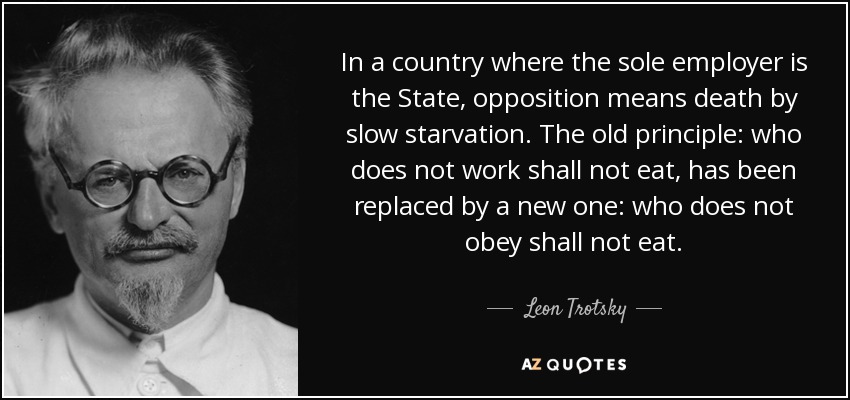
I seldom use the term “socialist” but it is the perfect word here once the concept is updated. It originally referred to government ownership of the means of production. But in today’s Regulatory State, ownership is not required for control so it means government control of production, or more broadly government control of both production and use.
In this case it is government control of the production and use of what they call “the energy system.” Since everybody uses energy this includes control of everybody. Under the proposed system the government does not serve people it “manages” them, or at least their use of energy which is a lot of what we do.
They are however rather confused about this. The very first sentences state their basic assumption which is wildly false. They say this:
“The world is coalescing around the need to reduce greenhouse gas (GHG) emissions to limit the effects of anthropogenic climate change, with many nations setting goals of net-zero emissions by midcentury. As the largest cumulative emitter, the United States has the opportunity to lead the global fight against climate change. It has set an interim emissions target of 50–52 percent below 2005 levels by 2030 toward a net-zero goal.” (All quotes are from the Executive Summary.)
The United States has set no such targets. The US is a big country with hundreds of millions of people so it does not set targets. Perhaps they mean the US Government but Congress has set no such targets. In fact these so-called targets are merely the wishful thinking of the Biden Administration and their radical net zero colleagues which apparently include the National Academies. And if a Republican wins the next election it will not even be a Presidential wish.
So there is much less here than meets the eye. This tome is basically a radical socialist manifesto and that is how it should be read.
The funding is surprising. NASEM studies used to be done at the request of Congress or Federal Agencies and funded by them since objectively advising them is supposed to be the job of the Academies. Instead this work was funded by a collection of Foundations, presumably left wingers. So the National Academies are for hire by those with radical causes.
The socialist management thrust is exemplified by this topic which is listed as a central theme: “Managing the Future of the Fossil Fuel Sector.” Only under socialism is this a government function.
That the called for management process is also non-democratic is made clear by this segment of their lead off discussion of risks: “In developing its findings and recommendations, the committee recognized the inherent risks and uncertainties associated with such an unprecedented, long-term, whole-of-society transition. These include … political, judicial, and societal polarization risk—that political and judicial actions or societal pressures will change the policy landscape….”
So elected officials, the Courts, or the people in general might get in the way. Their solution is not to get the support of the people, rather it is more management. They say “Mitigating these risks will require adaptive management and governance to coordinate and evaluate policy implementation and to communicate progress on outcomes.”
Sounds like the Plan is to manage the elections, the Courts and the people. Sit down, shut up, and we will tell you what we have done as we go along.
For those interested in the details of the net zero wishlist this is a grand source. Otherwise it is just another radical manifesto to line the shelves with.
My concern is that the three National Academies have abandoned their mission and therefore lost their integrity. Tools of left wing foundations are not worthy of the name National Academy.
Posted Mon 10 Jun 2024 at 5:23amMonday 10 Jun 2024 at 5:23am, updated Mon 10 Jun 2024 at 11:22pm
Deep in coal country, a lifelong environmentalist and one-time Greens candidate is feeling the applause.
It’s Thursday night at a Gladstone pub and Steven Nowakowski has won over sceptical locals.
His message is a simple one; he believes a wave of new windfarm developments threatens to smash hilltops and turn koala habitat into “industrial zones”.
The green movement, he says, are in “la-la land” over windfarms, a comment that draws nods and knowing smiles from the audience.
But its only when one local suggests building a new coal-fired power station does the crowd erupt in spontaneous applause.
This is the front line of Australia’s latest climate war.
Nowakowski, a nature lover who says he’s been arrested fighting for forests, shares the stage with ultra-conservative federal MP Colin Boyce, a man who claims burning fossil fuels creates “plant food”.
“We’re an odd couple,” Nowakowski admits. “I shake my head in disbelief. I cannot believe that I’m in this situation.”
…
“We’re going down the wrong path,” he says. “We can’t destroy biodiversity to save the planet.”
I applaud Steven Nowakowski’s courage breaking ranks with his friends, and standing up for what he believes – genuine measures to protect nature.
The colossal wilderness destruction wrought in the name of renewable energy was always going to be an issue.
Nobody who genuinely cares about the environment can see a devastated concrete construction zone which was once a protected wilderness, stretching as far as the eye can see, and say “see, we saved nature”.





 Iowa Climate Science Education