Month: August 2024

Dismal Failure: Wind Industry Delivers Dark-Ages (Occasional) Power Generation

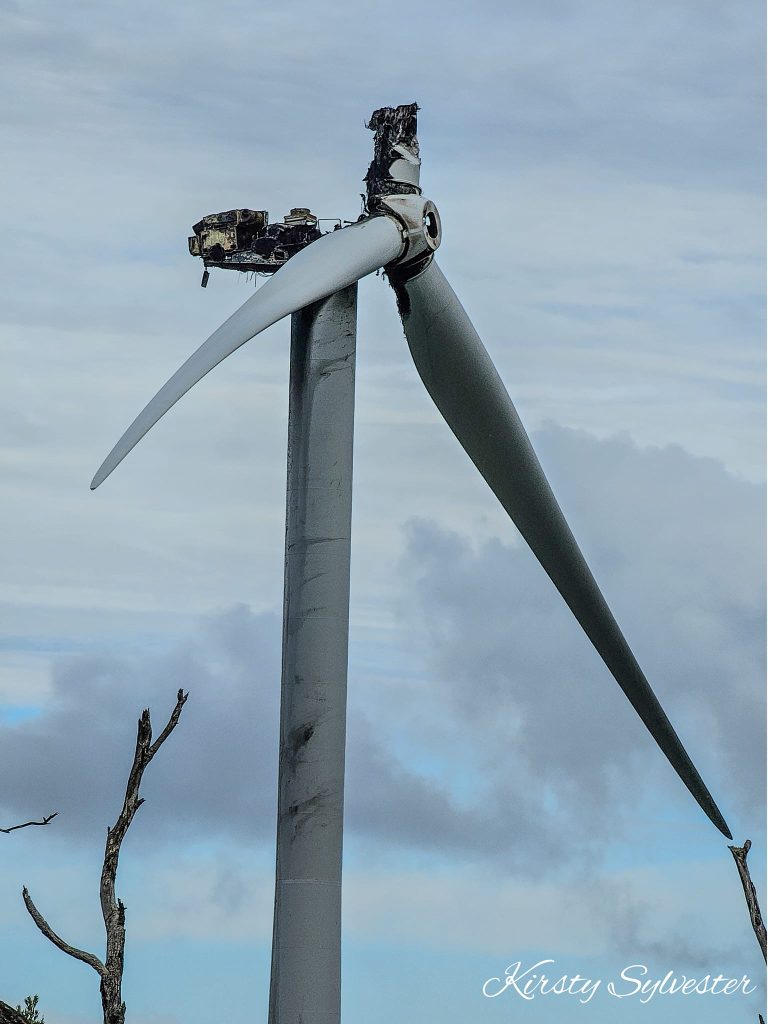
These days the dark satanic mills are scorched wind turbines with their disintegrating blades flapping aimlessly in the breeze.

Industrialising the countryside, destroying productive farming communities and wrecking the natural environment is all part and parcel of the great wind and solar ‘transition’.

Then there’s the fact that these things are lucky to deliver power more than 20% of the time. On dozens of occasions each year, Australia’s entire fleet of whirling wonders (with a notional capacity of 11,500 MW) struggles to deliver even 5% of their total capacity for days on end.

As Graham Pinn outlines below, it takes a special kind of delusion to believe our energy future lies with with the chaotic vagaries of the wind.

Tilting at windmills
The Spectator
Graham Pinn
27 July 2024

Chris Bowen’s renewable energy plans are falling into disarray. Environmental legislation, introduced to block new mining developments, is proving to be an obstacle for wind and solar farm development. The Nature Positive Plan was intended to deal with this contradiction, but delays continue and local protests are adding to green energy hold-ups. Even the hoped-for solution, offshore wind farms, are not escaping scrutiny. To these problems we can add the recent collapse of the Green Hydrogen plan.

Having blocked new gas developments, the Victorian government has doubled down on its onshore wind projects. It is one of many states making this expensive mistake.

In the famous 17th Century Spanish novel, Don Quixote is the deluded hero who believes he can save the world from imaginary disaster. With his horse and lance, he misguidedly attacks windmills under the impression that they are giants.

The phrase ‘tilting at windmills’ has become a metaphor for attacking overwhelming enemies.

In modern times, our deluded Climate Change and Energy Minister, Chris Bowen, is on a mission to save the world from his imaginary enemy … global warming. According to Mr Bowen, our saviour is the giant windmill and now it is our turn to ‘tilt at windmills’.

Under pressure from global warming activists, options for CO2-free sources of electricity are the priority for government. The relative costs or reliability are irrelevant. Decisions are made on ideological rather than practical grounds. This inner-city-elite master plan is running into trouble, with rural Aussies becoming restless, having the temerity to protest about destroying scenery, the environment, and agriculture.

Australia is fortunate to have many energy choices because of its climate, natural resources, and space. The current ideological plan is restricted to the non-fossil fuel options of solar power and wind turbines, with hydrogen an even more mythical addition. Any alternative has to also include the cost of backup power, a redesign of the electricity grid, the different life expectancy of each option, and recognition of the downsides of each system.

Fundamentally ignored is the reality that all current renewable energy options require regular renewal. This means increases to mining and problems with the disposing of their non-renewable parts.

Wind turbines require a large area of deforestation to be efficient, where a typical hilltop turbine needs 25-50 acres of clear space. Each item weighs an average of 1,700 tons, requires the construction of access roads, brand new transmission infrastructure, and extensive maintenance.

There is a real environmental problem. Some wind farms have been found to impact Brolgas and Bent-Wing bat populations, whose flight paths takes them directly into the turbines. As such, the wind farms are closed for up to five months of the year during breeding season. The same is true for other wind farms that experience extensive interruptions to protected parrots and critical water birds. Even so, large eagles, such as Wedge-Tail populations, remain vulnerable to turbines placed on mountain ranges with over 320 killed in the last 12 years. This issue is not confined to Australia. A wind farm in America has recently been fined $8 million over the death of 150 eagles.

Aside from turbines bursting into flames and suffering damage during storms, the BoM postulates that global warming will lead to more high-pressure systems, which are associated with wind droughts. No wind, no energy. This hardly makes wind farms a useful contribution.

The wind drought in the UK last winter quintupled the wholesale cost of electricity. The lack of wind could produce ‘headwinds’ for the program. For example, over the last few months, a wind drought has increased demand for gas.

In North Queensland, a review into one wind farm found that there were 63 days in 2022 where it produced no energy, 110 days where it produced less than 10 MW, an additional 36 days where it produced 12 per cent of capacity, and 32 days where it operated at less than 17 per cent capacity. This equates to inadequate output for eight months of the year.

Wind farms receive considerable subsidies from the public purse and farmers, depending on the deal they cut, receive $40,000 per year, per turbine.

From one report:

By any reckoning, the wind industry receives a substantial and generous cross subsidy from the RET. On a conservative estimate, each RET-eligible company receives in excess of $500,000 a year for each turbine. On the basis of there being 2,077 wind turbines in Australia, the RET provides $1.09 billion per annum to the wind industry. On this basis, and assuming the RET operates for another 15 years, the RET cross-subsidy for existing turbines from now until 2030 will be in the vicinity of $9.3 billion. Given that the wind industry plans significant future investment, the subsidy is likely to be considerably more than $9.3 billion.

Turbines have a limited life expectancy of around 20 years, even less when positioned offshore, after which point they are headed for landfill. They are made of energy-intensive concrete and steel (around 500 tons), also iron, fiberglass, and rare earths such as praseodymium, neodymium, and dysprosium.

Along with the renewable solar panels and batteries from solar and electric cars, an estimated 4,000 tonnes of blades a year will accumulate annually by 2034.

Tanya Plibersek, the Environment Minister, has shown some respect for her portfolio by knocking back some land wind farm developments. She has cancelled the Queensland state government approved Chalumbin development. Unchallenged by the Greens, this project, adjacent to a world heritage area, would have impacted 1,000 hectares of forest containing endangered species.

There are 130 renewable energy projects still awaiting approval. With increasing protests about native title, habitat loss, damage to farmland, and visual intrusion, the land program is way behind schedule.

The ever-imaginative Federal Climate Change and Energy Minister is trying to switch to potentially less controversial off-shore wind farms. With their even greater cost, shorter lifespan, and unreliability, they require larger subsidies. Currently, there are a total of around 300 wind farms planned where 58 are offshore projects.

Offshore turbines also have their environmental problems, with disruption to whale and dolphin migrations during their construction. The subsequent sonic and subsonic vibrations are believed to cause disorientation and beaching events. Concerns have been raised around the world following unexplained whale deaths in the areas near wind farms, dividing environmental activists between those worried about the whales and others who continue to deny any connection to the nearby wind farms.

As for Australia, Bowen is asking us to believe that 40,000 Australian whales migrating off NSW can avoid disruption from turbines if they are moved a tiny 10 kms further offshore with a slight reduction to the size of the wind farm. No extensive research has been done to confirm this assumption.

In the future, should we still have an economy, we will still need to regularly buy solar and wind replacements from China, an increasingly belligerent and unreliable provider, with the potential for cyber interference with the equipment it supplies. As the program falls further behind schedule, and electricity demand increases, alternative backup coal generation is closing, (and in Australia’s case being demolished), and new offshore gas projects are now, belatedly, approved.

Meanwhile, Minister Bowen continues to fight the impossible fight. Don Quixote was assisted by his faithful servant Sancho Panza; our Minister has summoned his faithful servant, Sancho Chalmers, who promises ‘robust interventions’ (code for even more subsidies), to assist him in his battle.

We must follow the lead of Don Quixote, take up our verbal lances to ‘tilt at windmills’, in our times these are no longer imaginary, but real and expensive giants.
The Spectator

via STOP THESE THINGS

https://ift.tt/AnoNYt5

August 13, 2024 at 02:30AM

THE DANGER OF CO2 PIPELINE LEAK

The incident I referred to in my piece yesterday about CO2 pipelines has been the subject of a number of articles and videos which can easily be found by a quick search of the internet. Below is a link to one of them:  

The Gassing of Satartia—CO2 pipeline causes mass poisoning in Mississippi (youtube.com)

What many people may not realise is the very high pressure that exists within the pipeline. It is this which gives rise to the risk, along with the massive quantity that can escape in the event of any rupture of the pipe. Without oxygen we are rendered unconscious within minutes and our petrol and diesel cars stop working, so there is literally no escape.

via climate science

https://ift.tt/wQjAaWO

August 13, 2024 at 01:30AM

Environmentalism or Individualism? (Part 3: Inhuman Rights)

Ed. Note: This is Part 3 of a six-part series on the ideology of environmentalism and its incompatibility with the foundational individualist philosophy of the United States. Parts 1 is here. Part 2 is here.

“Why is it that any touch of Man upon nature is to be regarded as a violation and desecration? What is the distinctive aspect of human nature that so offends the environmentalists?”

Today, the most consistent expression of environmentalism’s misanthropic view can be found in the so-called “animal rights movement,” which emerged with the publication in 1975 of philosopher Peter Singer’s book, Animal Liberation. “This book,” Singer wrote, “is about the tyranny of human over non-human animals.” That tyranny amounts to “speciesism,” akin to “racism.” A speciesist, Singer said, “allows the interest of his species to override the greater interest of members of other species.”1 Note the word “greater.”

As fellow philosopher Tom Regan, author of The Case for Animal Rights, put it, “the fundamental wrong is the system that allows us to view animals as our resources, here for us.”2 Instead, both Singer and Regan hold that all beings with a capacity to feel pleasure and pain have an “inherent value of their own.”

This means, say three animal-rights philosophers at Oxford, that “There can be no rational excuse left for killing animals, be they killed for food, science or sheer personal indulgence.”3 It means: no animal testing of medicines or surgical techniques; no hunting, circuses, or rodeos; no birdcages or dog pens; no leather, no meat, no milk, no eggs—no use of animals, period.

Strict observance of animal rights forbids even direct protection of people and their values from nature’s many predators. For example, in his book Returning to Eden, Michael W. Fox—then a vice-president of the Humane Society—denounced the use of bug sprays and electric “bug roasters” to zap mosquitoes; after all, he said reassuringly, “only a few of the millions you kill would have bitten you.”4

Likewise, in a 1990 fundraising letter to Humane Society members, opposing the federal Animal Damage Control program, Society president John Hoyt denounced “the killing of millions of animals—to protect American agriculture and other resources from damage caused by wildlife. This goal must be changed to one that seeks to limit losses to acceptable levels without killing or injuring wildlife.” [Emphasis in original.]

Losses to people, you see, are “acceptable”; losses to animals are not.

Radical preservationism is now enshrined in major environmental laws—such as the Endangered Species Act, which places minnows and owls above our needs for hydroelectric power and lumber; and wetlands regulations, which set aside mosquito-breeding swamps as inviolate sanctuaries for salamanders.

The federal government’s 1964 Wilderness Act defines a wilderness “as an area where the earth and its community of life are untrammeled by man, where man himself is a visitor who does not remain.”5 No roads, cabins, camping facilities, campfires, mechanized vehicles of any kind are permitted to sully these virginal expanses. This federal law, environmentalist historian Shabecoff states proudly, “threw the authority of the United States government behind the radical idea that the land and its riches have value even when left undisturbed.”6

But why?

Why is it that any touch of Man upon nature is to be regarded as a violation and desecration? What is the distinctive aspect of human nature that so offends the environmentalists?

As they make clear in virtually every utterance, it is Man’s power to reason, and everything that flows from it: abstract knowledge, science, technology, material wealth, industrial society, the capitalist system.

Why? Because reason is the tool by which Man transforms his environment for his own benefit. Therefore, to environmentalists, rationality is the mark of Cain. In the “natural order” they espouse, we humans are the second-class citizens of the universe—condemned, by our very nature as rational, creative developers, to sit at the back of the bus.

The Great Apple Scare

To define environmentalism is to damn it, which is why many movement spokesmen go to considerable public lengths to cover the naked implications of their core premises with fig leaves of respectability and moderation. One way they do it is to clothe their endless scare campaigns in the ill-fitting garb of science.

Their tactics always follow a familiar pattern. First come declarations of some new ecological “crisis,” based upon the flimsiest of evidence and perversions of the scientific method. Next are mathematical projections of catastrophic consequences stemming from the new danger, extrapolated from ludicrous worst-case scenarios. Finally, the claim is made that “we must do something immediately,” because the predicted consequences—though not provable—are just too horrible to contemplate.

Let me give you just one notorious example that I investigated personally for Reader’s Digest.7

In 1989, one of the nation’s most influential environmentalist groups, the Natural Resources Defense Council (NRDC), panicked America about Alar, a chemical growth agent then used on apples. On CBS-TV’s 60 Minutes program and later on Donahue, the NRDC—with the help of its eminent toxicological consultant, actress Meryl Streep—reported that apples treated with Alar eventually could cause thousands of lifetime cancer cases among today’s preschoolers. This carefully engineered publicity stunt terrified mothers, cost Alar’s manufacturer, Uniroyal, millions, caused over $100 million in losses to apple growers, some of whom were bankrupted—while making a fortune for the NRDC.

The Alar scare was in keeping with the NRDC’s uncompromising position that the presence of pesticide residues on food in any amount—no matter how trivial—constitutes an “intolerable risk” to human health. For example, NRDC’s Lawrie Mott wrote in 1984 that “it may be impossible to define a safe level of pesticide residues in food.”8 Mott told me that the NRDC would ban all such chemicals “no matter how great their benefits are.”9

During the 1970s, initial tests on rodents using Alar and its chemical by-product, UDMH, suggested a cancer risk. But the dose levels in those tests were so absurdly high that the animals were dying of simple poisoning. Nonetheless, the EPA used these poorly designed and monitored tests to try to ban Alar.

But in 1985, the EPA’s own independent Scientific Advisory Panel dismissed the Agency’s findings, throwing out the rodent experiments as scientifically worthless. Stung by the panel’s rejection of its evidence, the EPA retaliated by ordering Uniroyal to start another round of tests. Yet for two years, every test on Alar came back clean. And even at dose levels 35,000 times higher than the highest amount that children might ingest daily, UDMH caused no tumors in rats.

Finally, in desperation, the EPA decided to stack the deck: for a final mouse test, it ordered the laboratory to increase the UDMH dose levels four to eight times higher than independent consultants had already computed was the maximum amount the animals could tolerate. Sure enough, these grossly excessive doses at last generated the tumors that the agency had been looking for—even though 80 percent of the mice were poisoned to death. The EPA then used these deliberately manipulated results to estimate that 45 people in a million “might” get cancer from Alar. It therefore ordered all use of the product to cease.

But while Uniroyal and apple growers suffered, the NRDC prospered.

After its 60 Minutes appearance, the group dashed off a new paperback book on pesticides, titled For Our Kids’ Sake, priced at $6.95 per copy. Then they set up a 900 phone number, priced at $3.00 per call, through which to order the book. At the outset of the scare, the phone number was dutifully published on the front page of USA Today and aired on national TV commercials featuring Streep. When promoted on the Donahue show, over 90,000 copies were sold. The NRDC’s Janet Hathaway proudly told me that during the scare, NRDC phones were ringing off the hook with new members and contributors.10

This is only one of countless phony environmental scares that could be cited. Similar pseudo-scientific nonsense is also peddled over radon in homes, global warming, ozone depletion, electromagnetic fields, and much more.

____________________________

  1. Peter Singer, Animal Liberation: A New Ethics for Our Treatment of Animals (New York: Avon Books, 1975), pp. ix, 9. ↩
  2. Tom Regan, “The Case for Animal Rights,” in In Defense of Animals, ed. Peter Singer (New York: Basil Blackwell, 1985). ↩
  3. Stanley Godlovitch, Roslind Godlovitch, and John Harris, eds. Animals, Men, and Morals: An Inquiry into the Maltreatment of Non-Humans (New York: Grove Press, 1971), p. 7. ↩
  4. Michael W. Fox, Returning to Eden: Animal Rights and Human Responsibilities (New York: Viking Press, 1980), p. 232. ↩
  5. Pub. L. 85-577, 78 Stat. 890, at 891. ↩
  6. Philip Shabecoff, A Fierce Green Fire: The American Environmental Movement (New York: Hill and Wang, 1993), p. 153. ↩
  7. Robert James Bidinotto, “The Great Apple Scare,” Reader’s Digest, October 1990, pp. 53–58. Reprinted online here. ↩
  8. Lawrie Mott, “Bad Apples: Pesticides in Food,” The Amicus Journal, Summer 1984, 37. ↩
  9. Lawrie Mott, phone interview with author, June 12, 1990. ↩
  10. Janet Hathaway, phone interview with author, June 19, 1990. ↩

About the Author

Robert Bidinotto is an award-winning journalist, editor, lecturer, and novelist who reports on cultural and political issues from the perspective of principled individualism. Over three decades he has established a reputation as a leading critic of environmentalism.

As a former Staff Writer for Reader’s Digest, Bidinotto authored high-profile investigative reports on environmental issues, crime, and other public controversies—including articles on global warming and the 1989 Alar scare. His Alar article was singled out for editorial praise by Barron’s and by Priorities, the journal of the American Council on Science and Health. He authored a monograph, The Green Machine,and for several years ran a website (“ecoNOT”), both critically examining the environmentalist philosophy and movement.

Bidinotto’s many articles, columns, and reviews also appeared in Success, Writer’s Digest, The Boston Herald, The American Spectator, City Journal, The Freeman, and Reason. He served as the award-winning editor of The New Individualist, a political and cultural magazine, and as editor of publications for the Capital Research Center, a nonprofit watchdog group.

In 2011, Bidinotto began writing political thrillers. HUNTER—the debut novel in his Dylan Hunter series—soared to the top of the Amazon and Wall St. Journal bestseller lists. BAD DEEDS, the first sequel, dramatizes the evils and dangers of environmentalism. A number-one best-selling Audible political thriller, BAD DEEDS was named “Book of the Year” by the Conservative-Libertarian Fiction Alliance. Bidinotto’s thrillers are available on Amazon.

Learn more about Robert Bidinotto at his fiction website, “The Vigilante Author” and at his nonfiction blog.  

The post Environmentalism or Individualism? (Part 3: Inhuman Rights) appeared first on Master Resource.

via Master Resource

https://ift.tt/qFAHIBi

August 13, 2024 at 01:08AM

Energy should play key role in 2024 Pennsylvania (and US) elections

Don Ritter

Pennsylvania Senator John Fetterman thinks energy won’t be at the forefront of his constituents’ voting decisions this year. But he’s not accounting for the difference between 2020 and 2024, or the clear connection between energy costs, jobs and inflation.

Inflation, illegal immigration and crime are key voter concerns in the 2024 elections.

While energy may have had a marginal effect in Pennsylvania’s 2020 election cycle, it has risen in prominence because of its direct (and immutable) connection to higher prices for virtually every product and service, and because the Biden-Harris near-four-year war on fossil fuels – leasing, drilling, mining and fracking – is driving up inflation.

A recent survey of 800 registered Pennsylvania voters found that more than two-thirds named inflation as an impediment to maintaining their standard of living.

Yet, by prioritizing a debatable “climate emergency,” the Biden-Harris administration has made energy production much more difficult and costly, while injecting 400 billion borrowed Green New Deal dollars into wind, solar, battery and other “renewable” energy technologies. Add to that the (so-called) Inflation Reduction Act and its billions in new spending on “green” infrastructure. Finally, crushing regulations on the energy industry add fuel to the inflation fire.

Those actions have sent prices higher for everything we make, grow, ship, drive, eat, wear… the list of products derived from fossil fuels is nearly endless.

Donald Trump will make the opposite argument to Pennsylvania’s voters. Republican Senate candidate Dave McCormick will too, by attacking incumbent Senator Bob Casey’s support for vast Green New Deal spending and anti-fossil-fuel Biden-Harris energy policies, all driving up inflation.

Perhaps most importantly, while Bob Casey has been less than vocal on just about everything, he has been the deciding vote for a tiny Senate Democratic majority which has wholeheartedly supported the full range of inflationary Green New Deal, anti-fossil-fuel regulation and spending.

Casey’s one, tepid, politically expedient objection to his Administration’s multi- trillion dollar, fossil-fuel-killing energy agenda was a statement issued by his office – not even a vote – expressing concern about a Biden-Harris ban on new exports of liquefied natural gas, which a court later overturned. That’s it.

The McCormick campaign notes that Pennsylvania gas production has been suppressed by federal policies that impede pipeline construction. McCormick points out that, “under Biden’s energy policies, rubber stamped by Bob Casey, we haven’t been able to access clean natural gas,” because pipelines are essential for bringing fracked gas to end users. Casey, McCormick emphasizes, “supports policies that are costing us jobs and driving up energy prices even more.”

Democrat nominee for president Kamela Harris, contrary to leaks to the press from her campaign staff, has been enthusiastically vocal about her opposition to fracking and has voted for inflationary Green New Deal spending on numerous occasions.

Compounding the Casey-Biden-Harris effect in the Keystone State is Democrat Governor Josh Shapiro’s support for supposedly “green” energy. His proposals for a $499-million carbon tax and expanding expensive, weather-dependent, unreliable, part-time wind and solar energy would add to the already considerable burdens on families and businesses.

Claims that wind and solar costs are steadily falling ignore the huge costs (likely many trillions of dollars) of backing up their intermittent electricity generation with expensive coal or gas power plants (or huge banks of wildly expensive batteries) that kick in whenever the wind and sun don’t cooperate with energy needs – which notably happens some 60-70% of every month and year!

Shapiro offers “not just disastrous energy policy” but “expensively disastrous energy policy,” says David Taylor, CEO of the Pennsylvania Manufacturers’ Association, which educates and lobbies on behalf of 550,000 workers in America’s fifth largest manufacturing state.

Indeed, both state and federal policies are to blame for causing many coal-fired plants to close and coal’s share of Pennsylvania electricity generation to drop from more than half to less than on-fifth over the past decade. Pennsylvania’s largest such generator at Homer City closed a year ago, and two more have announced early retirements within a few years. Plans for natural gas power plants have been shelved.

Natural gas now produces more than half of Pennsylvania’s electricity, but gas generation and electricity affordability have also suffered under costly government regulations and the threat of more to come.

All of that adversely affects manufacturing costs, jobs, and the price of goods and services.

In the ten years prior to 2019, when a carbon tax was first proposed, $14 billion worth of gas-fired plants were built in the state, reports Shawn Steffee, a Boilermakers union business agent. However, none have been built since, and two $1-billion proposals were canceled.

“It is highly unlikely that we will build another,” says Steffee.

Whether it’s gas plants not being built or coal plants being closed, both jobs and power grid reliability take a hit. The threat of recurrent blackouts is rising, and we are getting closer than ever to having electricity when it happens to be available, instead of when we need it.

In fact, government and industry overseers of our high-voltage transmission system have warned of energy shortages resulting from ill-timed closures of fossil fuel plants that increase the share of far less reliable wind and solar. Significant regional blackouts across much of the Atlantic Seaboard are not out of the question. They would be deadly amid heat waves and deep freezes.

That would certainly dim the electoral outlook of politicians supporting green energy. Far more important, though, is what it would do to jobs, factories, hospitals, schools and families.

As for the effect of job losses, one need only read a Washington Examiner account of federal officials meeting with Homer City citizens affected by last year’s plant closing.

“The vast divide between the government’s understanding of the needs of the people they serve and the people themselves was never more excruciatingly apparent than at the meeting,” the article began. It then presented wrenching personal stories of unkept promises to furloughed workers whose lives were “uprooted forever” – and talked about a slide show at the meeting that extolled the “good intentions” of federal agencies.

That seems to be a constant refrain of politicians and bureaucrats. Good intentions drive ill-advised policies that bring the opposite of what their authors claimed would happen.

Donald Trump and Dave McCormick will make the case for redirecting federal policies and funding away from the life-changing “green” energy and economic agenda – and toward traditional abundant, reliable and affordable energy.

At stake on November 5 are the House, Senate and Presidency, and the deciding votes could well come from Pennsylvania energy consumers.

Don Ritter is a former Republican congressman from Pennsylvania’s Lehigh Valley.

via Watts Up With That?

https://ift.tt/3qOh75s

August 13, 2024 at 12:07AM