Month: September 2024

Hurricane Risk to Offshore Wind (Proceedings of the National Academy of Sciences study still relevant)

“Modern wind farms are reliable, safe, state-of-the-art power plants with well-tested technologies that meet approved standards and hundreds of thousands of hours of operating experience,” the U.S. Department of Energy states. Except when they fail under normal conditions–or abnormal ones.

Wind Turbines Destroyed by Typhoon Yagi,” read one recent headline. This (during peak hurricane season 2024) has wind power in the (not-so-good) news. Not only were older turbines destroyed by the 150 mile-per-hour typhoon (Category 4 in hurricane terms); new “more efficient typhoon-resistant versions” were leveled too. For multi-million dollar structures, the risk and the cost of insurance are major issues.

———

The U.S. offshore wind industry will be spared–but only because of projects that have been abandoned or delayed. But what would happen if such naked structures are built, particularly in the Gulf of Mexico or off the Atlantic Coast?

The Proceedings of the National Academy of Sciences research article, “Quantifying the Hurricane Risk to Offshore Wind Turbines” (February 13, 2012), remains relevant today to the energy policy debate. DOE’s recent confident statement, in fact, was pre-refuted by the five scholar authors.

The article’s conclusions follow:

“The U.S. Department of Energy has estimated that if the United States is to generate 20% of its electricity from wind, over 50 GW will be required from shallow offshore turbines. Hurricanes are a potential risk to these turbines. Turbine tower buckling has been observed in typhoons, but no offshore wind turbines have yet been built in the United States.”

“We present a probabilistic model to estimate the number of turbines that would be destroyed by hurricanes in an offshore wind farm. We apply this model to estimate the risk to offshore wind farms in four representative locations in the Atlantic and Gulf Coastal waters of the United States. In the most vulnerable areas now being actively considered by developers, nearly half the turbines in a farm are likely to be destroyed in a 20-y period.”

“Typically, wind turbines are designed based on engineering design codes for northern Europe and the North Sea, where nearly all the offshore and coastal wind turbines have been built. These codes specify maximum sustained wind speeds with a 50-y return period of 42.5–51.4 m/s (83–100 knots), lower than high intensity hurricanes.”

“Offshore wind turbines … will be at risk from Atlantic hurricanes…. Wind turbines are vulnerable to hurricanes because the maximum wind speeds in those storms can exceed the design limits of wind turbines. Failure modes can include loss of blades and buckling of the supporting tower.”

“In 2003, a wind farm of seven turbines in Okinawa, Japan was destroyed by typhoon Maemi, and several turbines in China were damaged by typhoon Dujuan. Here we consider only tower buckling, because blades are relatively easy to replace (although their loss can cause other structural damage).”

“There is a very substantial risk that Category 3 and higher hurricanes can destroy half or more of the turbines at some locations.”

Final Comment

Hurricane Category 4 and 5 winds are a threat to existing and even state-of-the-art industrial wind turbines. Category 3 (the baseline of the above article) is a real threat as far as is known. Category 6 (which climate alarmists predict is the future) will make all existing structures in hurricane prone waters susceptible.

The authors stay politically correct by looking to a new future:

Reasonable mitigation measures—increasing the design reference wind load, ensuring that the nacelle can be turned into rapidly changing winds, and building most wind plants in the areas with lower risk—can greatly enhance the probability that offshore wind can help to meet the United States’ electricity needs.

But such would increase cost, reduce output, and/or limit offshore wind below politically desired levels. All aggravate the already bad economics and poor prospects of offshore wind in the U.S.

The post Hurricane Risk to Offshore Wind (Proceedings of the National Academy of Sciences study still relevant) appeared first on Master Resource.

via Master Resource

https://ift.tt/Pzp1tZ3

September 11, 2024 at 01:13AM

Rising Runways, Sinking Narratives: Maldives Debunk Climate Fears

By Vijay Jayaraj

For decades, we’ve been told that island nations are on the brink of disappearing beneath the waves, their inhabitants destined to be victims of climate change’s catastrophic effects. Yet, developmental activity in some of these countries tell a different story.

In recent years, the Maldives have embarked on an ambitious program of developing more than a dozen new airports, a move that seems to fly in the face of dire predictions about the country’s future.

This contrast between an apocalyptic narrative and a seemingly optimistic reality raises important questions about the accuracy of doomsayers’ predictions and the actual nature of island geomorphology – the rise and fall of terrestrial features.

Maldives’ Infrastructure Boom Belie False Fears

An archipelago of 1,192 coral islands grouped into 26 atolls, the Maldives have been investing heavily in its aviation infrastructure. A 1.3 million passenger terminal is a part of the recent upgrades at Hanimadhoo International Airport, just one of the 18 airports in the country.

Another major revamp is happening at the Velana International Airport. The new expansion will meet the growing demands of tourism and trade. It is expected to accommodate 25 million passengers per year, which is almost six times the volume in 2022.

The new cargo terminal at Velana is projected to handle 100,000 metric tons by 2025 and 300,000 metric tons by 2050. The airport will also have a new runway, a seaplane terminal and storage capacity for 100 million liters of fuel.

This year, Maldives President Dr. Mohamed Muizzu announced a decree to construct additional airports across nine different islands. The decree also signaled the development of a second airport in Laamu Atoll and new airports at GA Villingili and GDh Thinadhoo.

In all, forecasts show the operation of a dozen new airports within the next 10 years, in addition to the existing 18 airports. These investments represent a significant commitment to long-term infrastructure development.

They also require substantial modifications to the islands, including land reclamation and coastal engineering works. Such projects would be difficult to justify if Maldivian leadership truly believed the nation was on the verge of inundation.

Expansion and Sinking: Island Science

The United Nation’s Intergovernmental Panel on Climate Change (IPCC) has consistently identified small island states as being at high risk from sea-level rise. The IPCC’s reports are regarded as the bible for national policymakers across the globe.

However, the reality on the ground – and in the water – is more complex than these dire predictions suggest. Islands, particularly coral atolls like those that make up the Maldives, are dynamic systems that respond to environmental changes in complex ways.

They’re not static landmasses but are constantly changing shape and size in response to waves, currents and the deposition of sediments. This dynamic nature means that islands can, under certain circumstances, grow.

A scientific study published in 2020 examined shoreline changes due to land reclamation and coastal development in 607 islands across 23 atolls in the Maldives. They found that between 2004-2006 and 2014-2016, 59% of islands remained stable, 24% expanded, and less than 17% contracted.

Similarly, there are cases of natural increases in landmass. A landmark study published in the journal Nature Communications in 2018 examined changes in 101 islands of the Pacific atoll nation of Tuvalu over a period of 40 years. Despite sea-level rise, the total land area of the islands had increased by nearly 3%. On an individual basis, 74% of the islands had grown, while only 14% had shrunk.

The rate of increase in sea level of 1.5 millimeters per year during 1958-2014 is nowhere near being dangerous. This is nothing compared to the annual 47-millimeter rise that occurred 8,200 years ago as Earth warmed following the last glaciation that covered many parts of the Northern Hemisphere with ice thousands of feet thick.

During the Medieval Warm Period 1,000 years ago, worldwide sea level was higher than it is currently and life thrived, nonetheless.

The Maldives’ remarkable investments in infrastructure and the scientific evidence of island geomorphology suggest that the only thing sinking is the fearmongering stories of nations disappearing because of climate change.

This commentary was first published at RVIVR on September 6, 2024.

Vijay Jayaraj is a Research and Science Associate at the CO2 Coalition, Arlington, Virginia. He holds an M.S. in environmental sciences from the University of East Anglia and a postgraduate degree in energy management from Robert Gordon University and, both in the U.K., and a bachelor’s in engineering from Anna University, India.

via Watts Up With That?

https://ift.tt/E8IMdn3

September 11, 2024 at 12:02AM

Return to Myrmidon, Part 1. Inaugural Megafauna Expedition, September 2024

How is it that Australia’s Great Barrier Reef is still one of the Seven Natural Wonders of the World and visible from outer space.

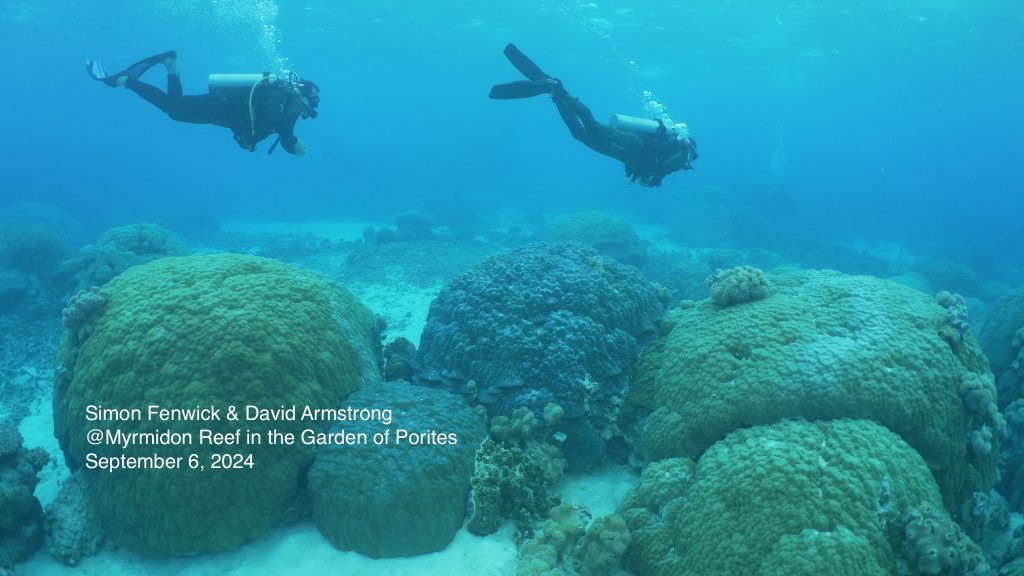
How is it that we can revisit the corals at Myrmidon Reef – an ancient, detached platform existing beyond the barrier reef proper, exposed to the full force of the Pacific Ocean – it persists, essentially unchanged season after season.

Aerial looking towards the Garden of Porites and the MV Sea Esta

Despite claims of repeated mass coral bleaching and the reality of severe tropical cyclones, this reef, Myrmidon reef is little changed.

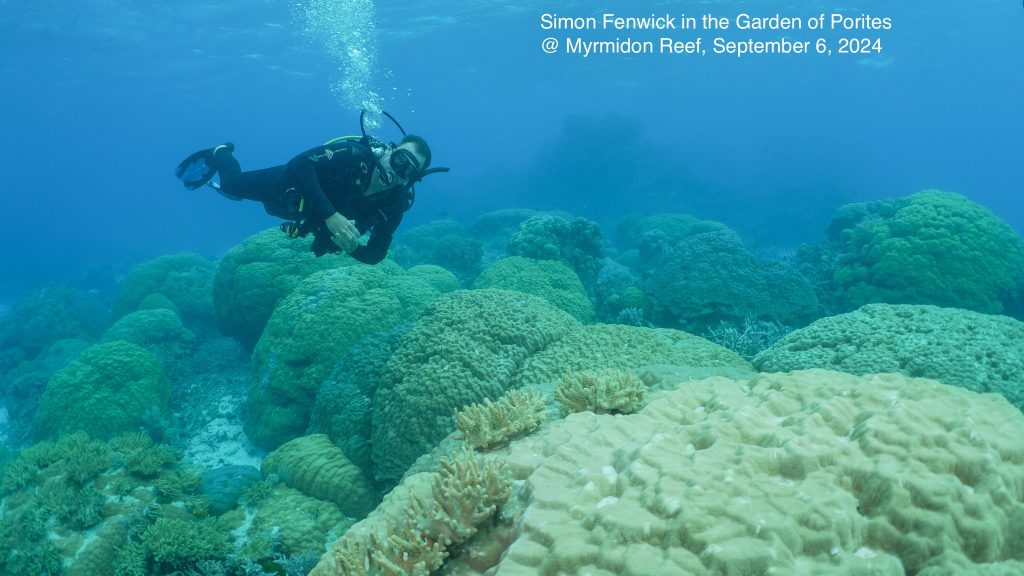
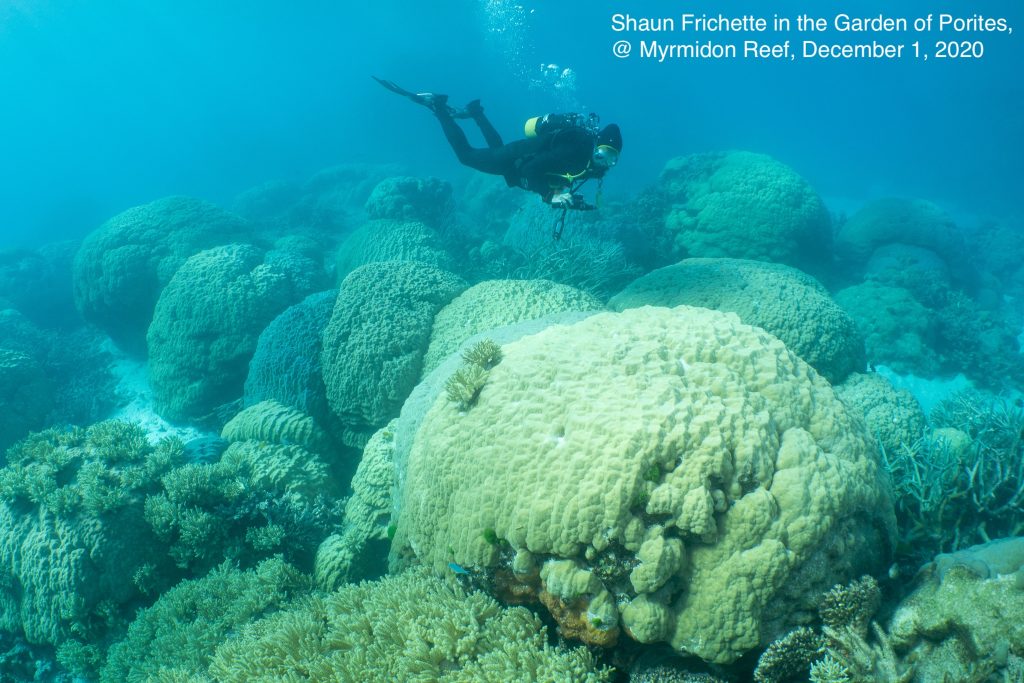
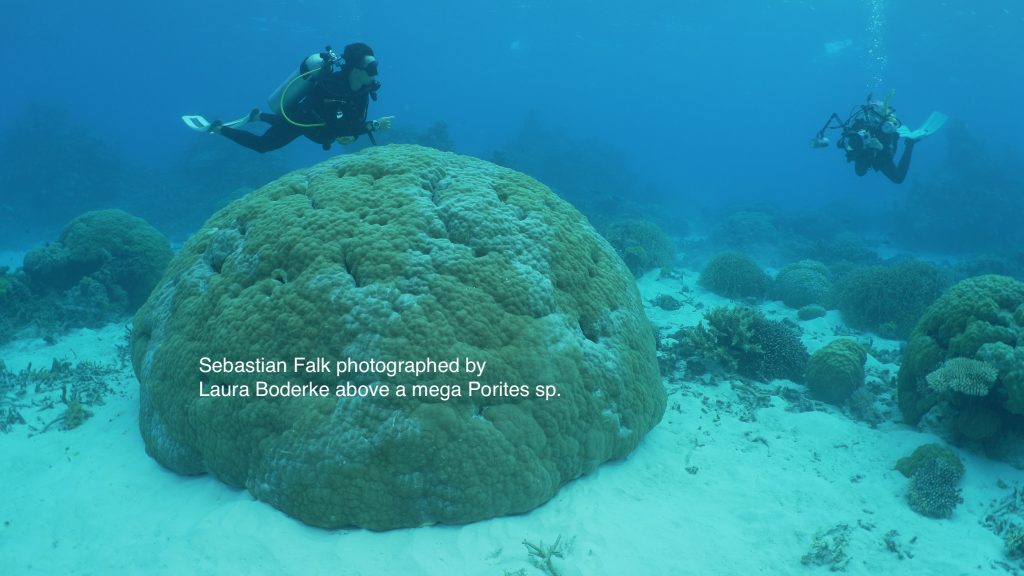
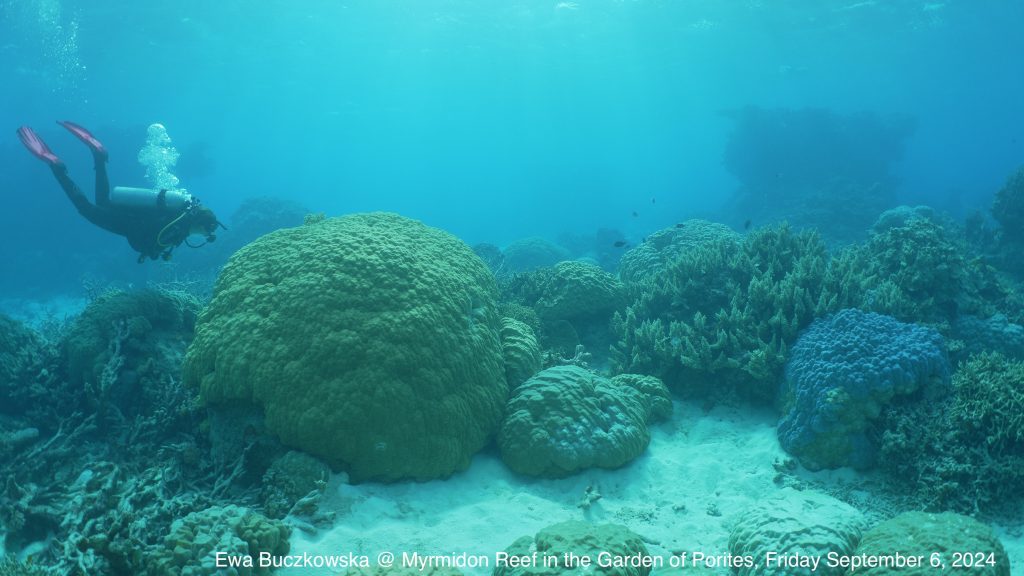
Its waters are still warm and clear – crystal clear.  In the ‘Garden of Porites’, in the back lagoon, there are still monster corals more than 3 metres in diameter.  These colonies persist as blocks, each of one colour: in olive green, or brilliant blue, while others are a golden yellow.

Can we acknowledge the size and strength of these corals.  What can we learn from them?  What makes this coral reef, and so many others at the Great Barrier Reef so resilient.

*****

After my first visit to Myrmidon Reef, on December 1, 2020 with Shaun Frichette and Stuart Ireland I penned something about that experience, and the shark, ’tis here.   That was four years ago.

All the photographs in this post were taken by Stuart Ireland.

via Jennifer Marohasy

https://ift.tt/sDmn76z

September 10, 2024 at 10:23PM

The Texas Oil Lawsuit which could Bankrupt Greenpeace USA

First published JoNova – My question, how do I donate to the lawsuit?

A Dallas energy company’s lawsuit could bankrupt Greenpeace’s U.S. operations

The pipeline company’s chairman, Kelcy Warren, is one of the richest men in North Texas.

By José Sánchez Córdova
Features Fellow

2:03 PM on Sep 9, 2024 GMT-5 — Updated at 4:17 PM on Sep 9, 2024 GMT-5

A Dallas energy company’s lawsuit against Greenpeace threatens to bankrupt the environmental group’s U.S. arm, a longtime opponent to fossil fuel interests.

Dallas pipeline company Energy Transfer is suing several Greenpeace International entities for $300 million in damages with claims relating to protests surrounding the construction of the nearly 1,200-mile-long Dakota Access Pipeline in 2016.

Greenpeace USA said in a June post on their website that a loss in the case “could threaten to put Greenpeace on the sidelines of the fight for climate justice.” The Wall Street Journal reported Sunday that the lawsuit puts the environmental group’s U.S. affiliate at risk of bankruptcy, but likely doesn’t affect Greenpeace’s international operations, based in Amsterdam.

Read more: https://www.dallasnews.com/business/energy/2024/09/09/a-dallas-energy-companys-lawsuit-could-bankrupt-greenpeaces-us-operations/

Let’s hope Texan justice is swift. Lets hope hearings into the alleged violations of the law are expedited and treated as a priority by the courts, that any court redress of any wrongs stands as a lesson to those who believe the law and respect for the rights of others does not apply to them.

via Watts Up With That?

https://ift.tt/iNdOBfJ

September 10, 2024 at 08:01PM