
Donald Trump vowed to issue a “national emergency declaration to achieve a massive increase in domestic energy supply.”
via CFACT
September 9, 2024 at 03:43AM
Donald Trump vowed to issue a “national emergency declaration to achieve a massive increase in domestic energy supply.”
via CFACT
September 9, 2024 at 03:43AM
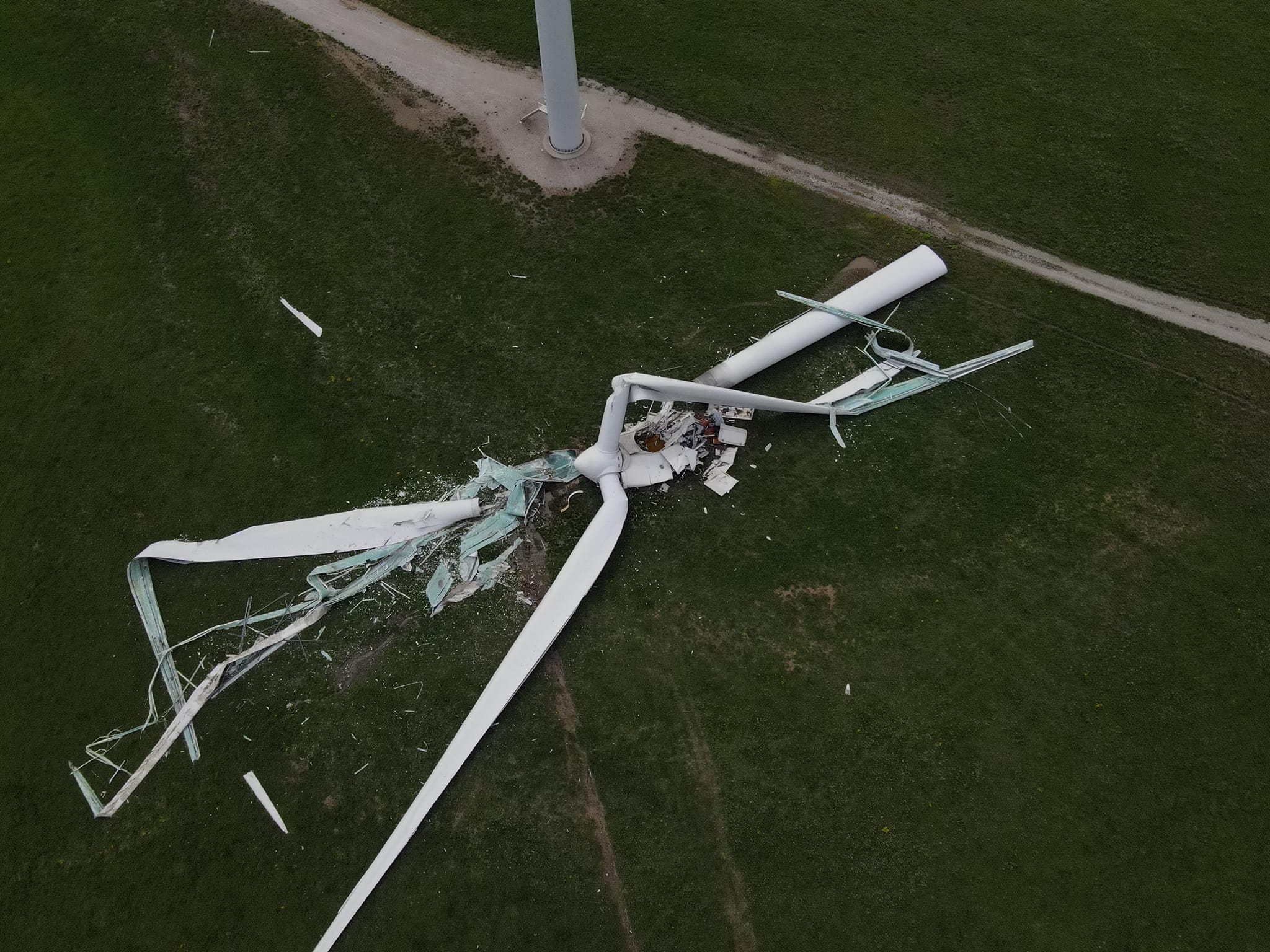
Britain’s power consumers are paying a heavy price for its maniacal obsession with intermittent wind and solar. Trashing its coal-fired power fleet and failing to keep up its nuclear plants now looks positively suicidal.
The cost of generating occasional electricity offshore is positively insane, and getting worse. And that’s just to focus on the economics. Then there’s the mounting and irreparable environmental harm – ecologically destructive and deadly to marine mammals, as well as fishing grounds and the livelihoods depend on them.
But it’s the hip pocket nerve – driven by rational self-interest – that tends to react earlier than environmental heartstrings, as the pieces below attest.
Rising prices for offshore wind warn of the mounting cost of Net Zero
Net Zero Watch
NZW Team
3 September 2024
Results for the latest auction (AR6) for renewable energy subsidies, known as Contracts for Difference (CfDs), were released this morning. The auction was the first since the humiliating 5th allocation round (AR5) in which there were no bids for new offshore wind capacity. The Government has secured 3.4GW of new offshore wind capacity by awarding a large increase in price to the technology that it regards as the cornerstone of its energy plans.
The auction had an increased budget of £1.555 billion, having been increased by Miliband. It is the largest CfD auction to date and will therefore lock in far more capacity at higher prices than the previous auction.
Flexibilities in the contracts drawn up by Government officials meant that older wind farm projects could withdraw up to 25% of contracted capacity and re-enter it into this year’s auction, allowing them to take advantage of the higher prices on offer. 1.6 GW of successful bids came from such projects – a loophole that may cost households as much as £180m each year. It’s another slip up for a Department that already allowed just one windfarm to net £647 million from delaying the start of its CfD contract.
Before the election, forecasts produced by Aurora Energy Research found that Labour’s 2030 target to decarbonise the power grid was “unfeasible”, but even these forecasts used over-optimistic numbers for renewable energy costs. These new results show costs to be rising rather than falling, vindicating warnings made repeatedly by Net Zero Watch. If Miliband’s Net Zero plans could once be regarded as unfeasible, they must surely now be seen as ruinous.
Net Zero Watch director, Andrew Montford, said:
How many times were we subjected to the chorus of ‘wind is cheap’? That refrain now rings hollow and these results show Miliband’s green utopianism to be even more costly and impractical than once feared.

This is not ‘leading the world’. It’s economic suicide
The Telegraph
Neil Record
3 September 2024
The way the system currently works is unlike normal capital investment. In almost every other large capital project, investors take the risk of the price and demand for their project. This is true when, say, a manufacturer builds a new plant, and (obviously) when a developer builds a new estate of homes – the builder has to sell the homes to householders to get their return!
Investors commit their money because they believe that they will get a good return on their investment, but they can’t be sure. So investors have to accept the risk that investing involves, and in return they sometimes, but not always, get higher returns than are available in secure investments like Government bonds.
For wind and solar powerplants in UK jurisdictions, a different regime applies. Investors are offered a guarantee from the Government of both the price, and the amount, of electricity that they will be able to sell.
How do these guarantees work?
Firstly, the amount. The amounts of electricity that wind and solar farms produce are obviously highly dependent on the wind blowing and the sun shining. This, by the way, is a major headache for the grid managers, because this is unpredictable and electricity is always needed and cannot be stored at grid scale.
So what the Government has done is insist that Grid managers must take all the electricity that renewable sources produce, whether or not there are cheaper alternatives and regardless of whether that much electricity is actually needed at the grid at the time it is generated. (If the grid literally cannot accept the renewable energy generated, the renewable powerplants turn down or shut off – but still have to be paid as if they were running as hard as possible.)
In effect, the Government has said “we will take all the electricity that you can deliver”. The loser from this is gas power stations, who are pushed aside by renewable suppliers until calm, dark or cloudy conditions return. Then they are required to replace all the missing electricity. This has the effect of making gas generation much more expensive than it should be, as there has to be a tremendous amount of gas capacity sitting unused for much of the time. Suddenly turning gas plants on and off all the time also increases maintenance costs.
Secondly, the Government guarantees the price of electricity that renewables produce. They don’t do this for gas generators, who have to live with the ‘market price’ of electricity, which is highly variable. In this latest round (called ‘AR6’), the Government secured new renewables investment at prices which for offshore wind are around 30 per cent higher than the average market prices in 2024. For floating offshore wind plant, not built on the sea bed, the price the Government has guaranteed is a staggering 200 per cent higher than the market price. Prices significantly higher than market prices were also awarded to solar and onshore wind projects.
All these extra margins get added to electricity bills. And there’s more.
Significantly, hidden in this auction was already agreed capacity which was allowed by Government to back out of prices agreed in earlier auction rounds and be awarded the much higher prices seen today.
The renewable investors have choices, and they have clearly told the Government that they won’t invest unless the returns are sufficiently high. For the investor, ironically, the risk is not that the market prices are too low (they aren’t at risk from market prices), but that the Government changes its mind about the attractiveness of renewables, and at some point in the future begins to question the enormous subsidies that renewables require.
We have consistently been told that renewables are cheaper than gas generation. That was briefly true in the Ukraine crisis when Russia closed its gas supply to the West, but is far from true now. Now, with the power of market flexibility, gas prices have fallen, while UK electricity prices continue to rise. They will keep on rising if we insist on continuing to subsidise investment in renewables, making the UK increasingly uncompetitive, and hurting consumers.
via STOP THESE THINGS
September 9, 2024 at 02:32AM
“The Master Resource people are whores of the fossil fuel industry. (Yes, that certainly includes you.)” – David Appell to author, March 5, 2014
If temperament and dramatis persona matter, the climate alarmists lose resoundingly to their scientific critics. I have gotten to know the quite reasonable, friendly Roy Spencer, John Christy, Craig D. Idso, Richard Lindzen, and other leaders of the so-called climate realist, global lukewarming school. And Marlo Lewis et al. (CEI); James Taylor, Sterling Burnett, et al. (Heartland); Craig Rucker, Marc Morano, et al. at CFACT; and many more on the advocacy side.
All of ‘us’ know the difference between straight analysis and advocacy versus ad hominem argumentation. Our side is polite … but tough on naked pleas for government authoritarianism or civil disruption by climate alarmists/forced energy transformationists.
On the other hand, by email and social-media interaction, I have encountered the quite emotional, spiteful bad apples of climate alarmism, including John Holdren, Joe Romm, Andrew Dessler, and Gunnar Schade. And remember Peter Gleick? Also, the Climategate bunch led by the wrath-warped Michael Mann?
And compare Paul Ehrlich to Julian Simon to see the difference between a scholar and a master of insults.
Appell’s Outburst
I was reminded of this with a recent post by Roy Spencer, “David Appell, Awaiting the Death of Climate Skeptics” (September 4, 2024). Spencer began: “This blog received the following comment from our alarmist friend David Appell, freelance writer.” Here is what Appell wrote:
Roy, nobody who is serious about climate change takes you seriously. You’re a denier who has made too many mistakes. No one who knows anything is going to bother commenting here–they upset you so much that all you can think to do is block them.
You long ago left the realm of science. As they say, science advances one funeral at a time. Nobody believes your time series anyway. You did that to yourself.
Spencer’s Reply
In his usual measured terms, Spencer replied:
As many here know, our UAH temperature dataset is used by researchers around the world, including those who believe the more alarmist narrative of anthropogenic climate change. It has been validated with global weather balloon data in multiple peer reviewed studies.
And I’m not sure why exactly I am a “denier”; that has always mystified me. I’m even part of the supposed 97% that believes the climate system is warming partly (maybe even mostly) from our CO2 emissions. John Christy and I even published a climate sensitivity paper that assumes ALL recent warming is from CO2 emissions.
Also, I routinely allow comments here from people who disagree with me on the science. Very few people have been blocked, and those from bad behavior.
So, I think David was just having a bad day. I imagine these are difficult times for freelance writers since everyone with internet access can now be one. He’s again talking about shutting down his pro-climate alarmism, pro-COVID vaccination blog, Quark Soup. Too bad. So, for those who might want to send wishes of moral support, he can be reached at david.appell@gmail.com.
Comment
David Appell is fighting depression, just as Spencer politely points out. “There’s no point anymore,” Appell recently wrote on his blog.
I will delete this blog in a few days. I would really like to be done with this and just stop thinking about it.
But he hedges:
I’ll get over my latest low and will post more. Not sure it will always be about climate change, though. Things I come across that I like to share.
Thanks, but I’ll probably be back. I do an “I quit” post every time I get depressed, or so. Always came back. I should delete this post but don’t want to remove the comments.
Strange. If he really has “climate anxiety,” he can cure himself by opening his mind to the positive, optimistic view of carbon dioxide enrichment in a high-energy world. He advertises himself as “always learning,” but perhaps it is a closed mind that is giving him fits.
The post David Appell: Another Bad Climate Apple appeared first on Master Resource.
via Master Resource
September 9, 2024 at 01:12AM
 Iowa Climate Science Education