
Related links: New York Times article | Science study | NRC report on pesticides in the diets of infants and children
via JunkScience.com
September 7, 2024 at 04:11AM
Related links: New York Times article | Science study | NRC report on pesticides in the diets of infants and children
via JunkScience.com
September 7, 2024 at 04:11AM
A report from Germany by KlimaNachrichten Editors
“Science is still far from reaching the end of its knowledge”
Symbol image. Source: NASA
According to the NOAA US weather agency, the hurricane season lasts from June 1 to November 30 of each year. During this time, the conditions needed for extreme areas of pressure to build up prevail. First and foremost, the water temperature of the Atlantic is decisive, but so is wind shear.
Storms were actually predicted for this year too. However, there have been almost no storms so far.
At X, US meteorologist Ryan Maue ponders the possible reasons and asks colleagues to think about why the models have failed so far this year. Some storms moved far from land to the north, where they weakened and only affected parts of the east coast of the US or Canada. At some point, they arrived in Europe as an area of low pressure.
Sahara dust
Maue suspects various reasons: The eruption of the Hunga Tonga volcano or a lot of Saharan dust over the Atlantic. Maue notes that the absence of hurricanes does not completely contradict the conventional theories on climate change. Fewer storms are expected, but possibly more severe ones. They have so far failed to materialize, which is a blessing for the people who may be affected. The Sahara itself is also currently experiencing a very rare weather phenomenon. It is raining heavily for the conditions there.
The reason for this precipitation pattern can be found in the so-called Intertropical Convergence Zone (ITCZ). An area around the equator where the trade winds from the northern hemisphere and the southern hemisphere meet. The winds are weak here, but the humidity is very high. This zone is known for its heavy rainfall and thunderstorms, which occur when the warm, moist air rises, cools and then falls back to earth as rain. The ITCZ is a kind of low-pressure trough that stretches around the globe and follows the zenith of the sun with a delay of around 3 to 4 weeks. Depending on the ratio of land and water masses, the ITCZ is deflected regionally more to the north or south. As land masses have a significantly lower heat storage capacity compared to water masses, the land warms up faster than the sea and the ITCZ meanders more strongly here.”
On the hurricanes that have failed to materialize, the site writes:
Normally, wave-like weather systems (so-called African Easterly Waves, AEW) develop at this time of year, which move from east to west and typically move from the Guinea Highlands across the equatorial Atlantic and act to spawn hurricanes. Currently, this process is somewhat suppressed, which is currently reducing tropical activity in the Atlantic. At the beginning of the hurricane season, a much more active season had been forecast for this year due to the high water temperatures and the transition to La Niña conditions.”
Both events are good evidence that science is still far from reaching the end of its knowledge in this area and that research remains important.
via Watts Up With That?
September 7, 2024 at 04:06AM
By Paul Homewood
h/t Ian Magness
So much for those vaunted green jobs!

An MP has said he is “deeply concerned” about the risk of 440 jobs being lost at a West Lothian electronics factory due to falling demand for its products.
The Mitsubishi Electric factory in Livingston, which was established in 1993, employs about 1,600 people.
However, it is reportedly looking to reduce its workforce to about 1,200 due to what Livingston MP Gregor Poynton described as “short-term economic pressures” that have seen its order book “fall away”.
via NOT A LOT OF PEOPLE KNOW THAT
September 7, 2024 at 03:28AM
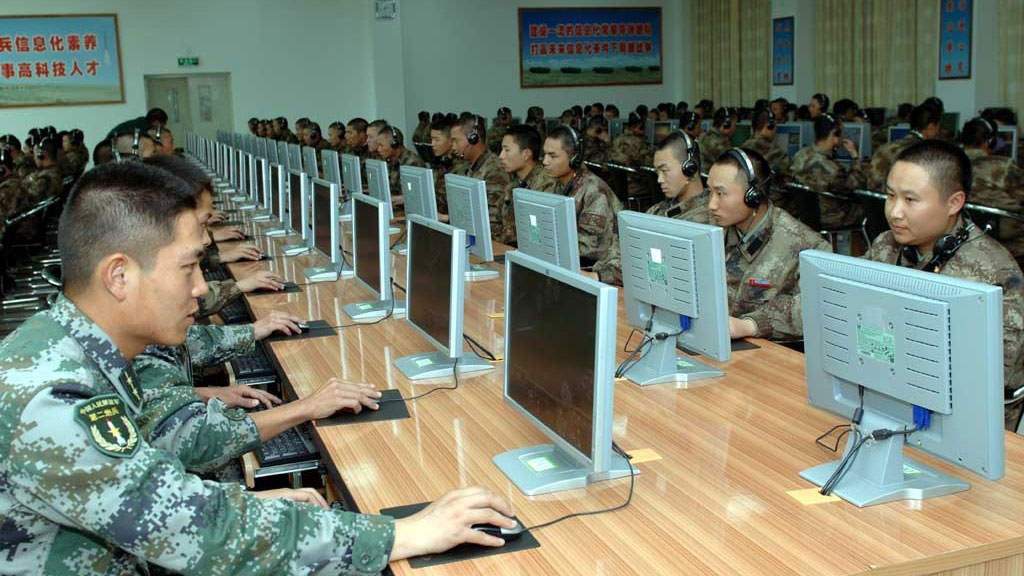
Widely distributed micro power generation using rooftop solar, only increases the vulnerability of power grids. Cyber criminals (aka hackers) often test that kind of vulnerability, as a kind of sporting challenge.
Malicious state actors are set up to do so as a prelude to war. Knockout a power grid and your (now powerless) enemy is literally floundering in the dark.
As the team from Jo Nova report below, the ability of hackers (be it nerdy loners or uniformed chaps with crew cuts) to destroy an entire electricity grid has never been easier, thanks to rooftop solar.
The Solar Panel cyber threat: Dutch hacker gets into 4 million panels in 150 countries
Jo Nova Blog
Jo Nova
20 August 2024
What if a few gigawatts of solar power disappeared without a warning or a cloud in the sky?
Imagine a hostile force had control of half your national power generation at lunchtime and could just flip a switch to bring you to your knees? Or how about a crime syndicate wanting a ransom paid by 5pm?
Steve Milloy: Communist China is setting us up for solar panel-based disaster:
“Solar panels that make the electricity suitable for the power grid and which are usually connected to the web, can be “easily hacked, remotely disabled or used for DDoS [Distributed Denial of Service] attacks.” DDoS is one of the most common types of attacks, which basically try to overwhelm a system… Solar panels were outlined as a vulnerability in several scenarios, also due to the dominance of a single country, China, in the supply chain.”
It’s only a week without electricity…
Daniel Croft, CyberDaily (October 2023)
Cyber Security CRC chief executive Rachael Falk said… that an attack on the solar grid could spark a “black start” event, which could result in the entire power grid going down. … “This could bring down an entire power grid, and it could take a week to recover,” she said.
[Falk said] the threat presented by foreign-manufactured solar inverters is a recent one, as only recent models are internet-connected due to increased interest in smart home technology.
“Traditionally, cyber risk with solar inverters was low because they were not connected to the internet,” said Falk. “However, as the popularity of smart home energy systems has boomed, this has changed, with most solar inverters now web connected.”
The EU and the US have both had a wake up call in the last few weeks
A Dutch white hat hacker got into one system a couple of weeks ago with 4 million panels in 150 countries, exposing a major flaw. That software glitch in American Enphase inverters was fixed quickly once they were aware of it, but how many other doors remain open?
Only two weeks ago another group called Bitdefender claimed that 20% of the worlds solar panels and 195 gigawatts of capacity, had been at risk of cybercrime for months. Rooftop solar management software by Solarman and Deye (both Chinese solar manufacturers) is used by 2 million “solar plants” and 10 million devices. Hackers could have been able to take control of the inverters (which could “change the way the inverters interact with the grid”. They could also steal quite a lot of data, including real time GPS locations and production. What if they could target individuals?
Apparently those issues were reported in May but are now patched too. (I guess no one would be mentioning any issues which are not patched, would they?) SecurityBrief has the gory details.
Whatever threats exist in the Netherlands, Australia is a sitting duck
Even at lunchtime in winter, sometimes half of the Australian national grid power comes from solar panels. That’s 12 gigawatts of solar power out of 25 gigawatts in toto. (And it’s similar in WA). Here in the renewable crash test dummy, fully 58% of the solar inverters that are connected in to the internet come from companies headquartered in China. (And the rest are headquartered elsewhere, but who knows, maybe they’re made in China too, where 70% of the worlds solar inverters come from?)
 Solar power is a large part of the Australian NEM, even in winter. The black line is total generation. The NEM includes NSW, QLD, Vic, Tas, SA.
So Cyber-expert Falk gave us that warning of a black start disaster in October last year, and how far have we got? By January we were redoing our cybersecurity plans, but somehow still forgetting about smart home devices like solar inverters and control of our national critical infrastructure. But, not to worry, by February we had the news that we were hiring Standards Australia, to develop “a roadmap”. (That’ll stop them!) Meanwhile we’re still going gangbusters on solar installations.
We can always rely on the government to get nothing done, help the enemy…
White hat hacker shines spotlight on vulnerability of solar panels installed in Europe
By Nikolaus J. Kurmayer | Euractiv
An ethical hack of solar panels in the Netherlands has revealed their vulnerability to cyber attacks, prompting industry calls for more rigorous safety assessments.
A Dutch white hat hacker could have gained control of millions of smart solar panel systems, reports investigative outlet FollowTheMoney, using a backdoor.
The findings confirm a 2023 report by a Dutch agency which found that converters, essential parts of solar panels that make the electricity suitable for the power grid and which are usually connected to the web, can be “easily hacked”…
A report by the EU’s own cybersecurity agency from 24 July found that the union is ill-prepared for a concerted attack on its energy infrastructure, whether by a foreign state or by malicious insiders.
How much will that cost?
We need to test and possibly replace inverters and fix the software:
A report by the Perth’s Cyber Security Cooperative Research Centre “recommends assessments be conducted on all solar inverters sold in Australia, with identified vulnerabilities requiring remediation. The report also says cyber security ratings should be introduced for solar inverters and IoT devices more generally, as well as recommending solar inverters with identified serious cyber vulnerabilities be banned from retail sale in Australia.

via STOP THESE THINGS
September 7, 2024 at 02:31AM

