Month: September 2024

Terminal Decline: China’s Double-Headed Wind Turbine Signals Industry’s Last Gasp

The wind industry started out as absurd, and only became more so over time. The turbines became bigger, the blades longer and capacities went from piddling 1.5 MW machines to 18MW monsters – albeit so large they can barely stand up against stiff breezes, let alone a full-blown hurricane.

As the blades grew, their habit of disintegrating and/or unshackling increased to the point where – these days – the blades simply shred themselves when the machines are brand-new.

Little wonder that rural and coastal communities have taken a set against these things, as The Spectator outlines below.

Wind energy enters its mid-life crisis
Spectator Australia
Editorial
12 August 2024

When I first heard that China was installing a two-headed wind turbine, I thought the Babylon Bee was having a laugh.

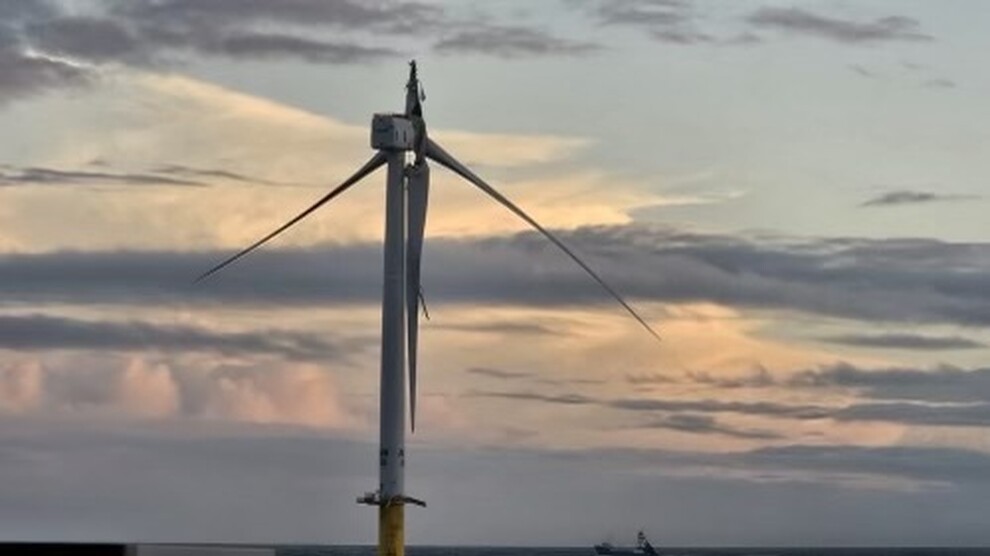
The Mingyang twin-rotor floating wind turbine platform isn’t a prank, it’s another grotesque evolution of the ‘Net Zero’ at any cost philosophy which has started creating sea monsters.

Video of OceanX being put together in Guangzhou reveals an awkward-looking creation that is supposedly able to harness typhoons when installed in deep water. We’ll see.

More likely, it’ll be a speed bump in the ocean – a metal iceberg – a bit of jetsam bobbing about while the world goes to war over wobbly lines in the South China Sea.

Articles praising the installation insist that it’s built to withstand 287 km/h winds, leaving ‘plenty’ of safety over the strongest record typhoon in the area of 260 km/h – but they add a bit of wriggle room by insisting that ‘weather systems are flying off-kilter as climate change continues to advance’.

Remember, if it ends up in bits, you gotta blame ‘climate change’.

If you’re like me and thought this green fable sounded familiar, you may remember the Donghae TwinWind Project planned for the coast of Norway in 2021. The same technology is on track for the Celtic Sea (with support from the UK government) due for completion in 2030.

There have been other designs for twin-headed rotors. A Chinese-made land-based turbine experienced a dramatic failure in which it caught fire after two months.
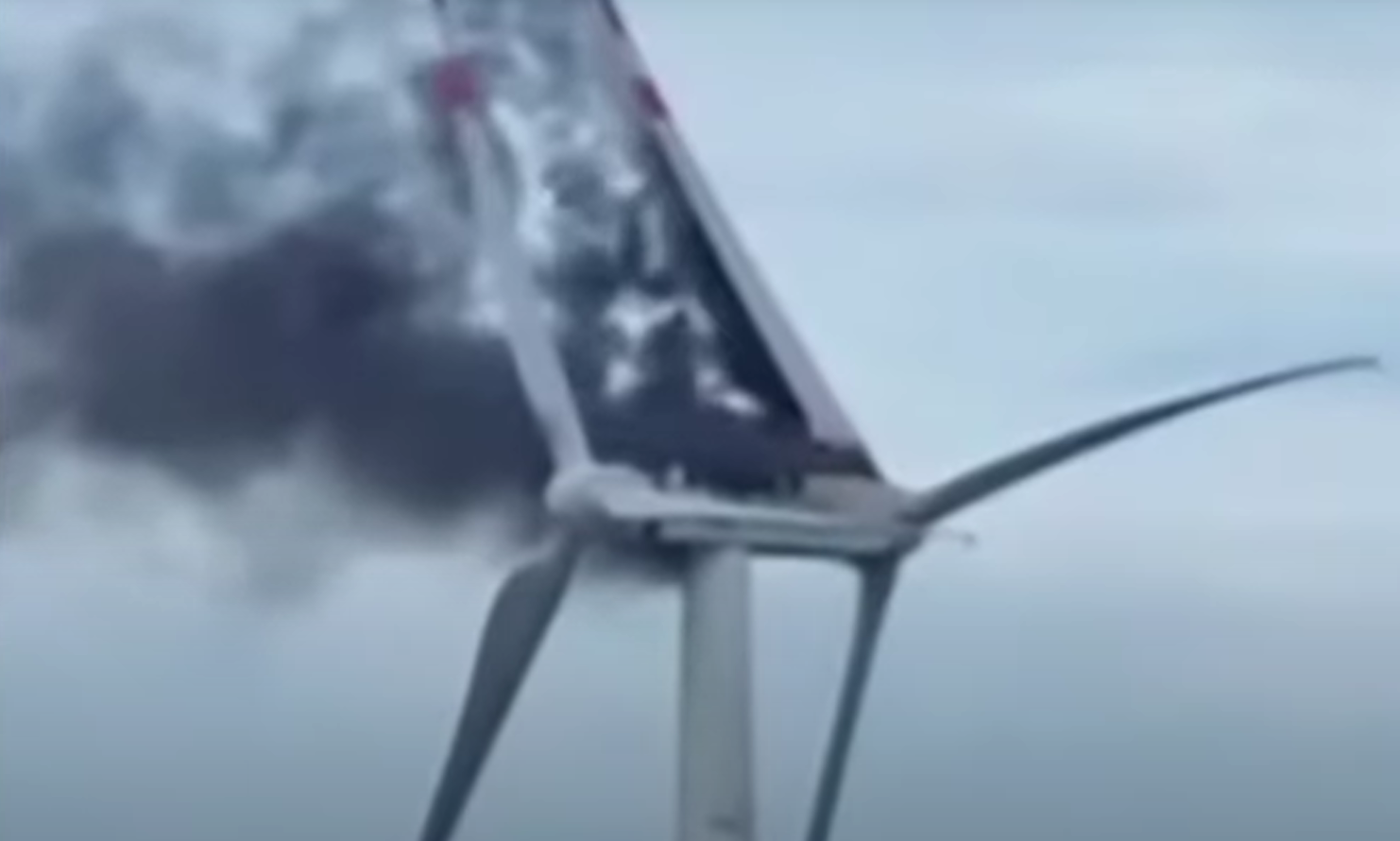
My point is not that technology is always perfect, only that I’m glad these new air-mounted machetes will be a long way out to sea and not hovering over unsuspecting cows in a paddock.

Besides, two-headed turbines are nothing compared to the ‘wall of wind turbines’ – or as I like to call it – ‘Resident Seavil’.

A Norwegian company has decided to mount 117 turbines on some scaffolding. It’s the stuff of nightmares if you identify as a seagull.

Wind Catching Systems’ wall of turbines dubbed ‘Windcatcher’ has won certification from the world’s leading technical authority on wind power – DNV. At 300 metres high and 350 metres wide, you can only imagine the engineering that will need to go into securing it to the ocean floor.

To me, it feels as if we’re entering the mid-life crisis version of wind energy where everything has to be bigger and have more sharp spinning bits. The crazier, the better. This behaviour is more common than you think. The dinosaurs entered a size-based arms race, and so do our bros at the gym when they skip leg day and end up walking around like they have implanted their girlfriend’s silicon breasts under their biceps.

Back in the real world, Australia’s previously approved wind farms are being cancelled as landholders and communities nix their support.

A 55-turbine wind farm application near Armidale tabled by Ark Energy has been withdrawn when nine landholders contracted to ‘host’ turbines changed their minds and ripped up their contracts.

The Clean Energy Council seemed surprised, saying: ‘I haven’t heard of too many instances where landholders have changed their minds.’

They might need to get used to the word ‘no’. Despite these projects paying property owners a fortune per turbine (presumed to be around $35,000 per turbine per year), the reality of these turbines is harder to live with.

Not only that, neighbouring farms get nothing despite shouldering a major imposition from wind farms – not least of all, how they look. This creates community tension.

Rural communities are being inundated with projects. Many are terrified their sleepy, pristine areas will be ripped up and industrialised by Big Green. It’s a feeding frenzy out there. The government opened the doors, removed basic landholder protections, and said have at… Suddenly mountain ranges are being interrupted by dozens of skyscraper-sized turbines.

Farmland is blanketed in solar panels. Battery farms sprawl out across the landscape. And worst of all, ugly and intrusive transmission lines are being draped across properties – not only destroying the natural beauty of these areas – but also creating a fire hazard. You remember all those little wildlife walkways draped over the freeway to help nature navigate highways? What a cruel joke these environmental projects are in light of Net Zero.

Big Wind is not fitting the Utopia of ‘green energy’ that people were promised.

With households struggling to feed their families, images of Australia’s world-leading farmland being covered in solar panels has raised questions about whether the government’s obsession with Net Zero and use of public money to prop up these projects is the right thing to do.

Shouldn’t we be helping the agricultural sector return to profitability after decades of abuse and neglect? That way they wouldn’t be tempted by Big Green barons to calve up Australia’s most important agricultural resource.

These renewable energy projects might be flashy and eye-catching, but getting the fabric of civilisation right is the most important thing.

The fat has come off the Australian economy.

There is no more room to waste public money or squander our natural resources on ‘feel good’ technology.

Cheap power, plentiful food, and a self-sufficient nation must top the list if we’re going to make it through the next century without becoming a vassal state of Pacific communists who have used the shiny lure of ‘Net Zero’ to hook our single-minded, short-sighted political class.
The Spectator
via STOP THESE THINGS

https://ift.tt/KAgN8vF

September 3, 2024 at 02:31AM

NEW ON SHORE WIND FARM PAID £2.5 MILLION CONSTRAINT PAYMENT IN FIRST MONTH

 And this is supposed to be cheap electricity!

Dr John Constable, the director of the Renewable Energy Foundation, said: “The paradoxical outcome is that wind farm developers actually make more money when they are paid to reduce output rather than when they are selling normally on the market. The British consumer is being ripped off, and developers are laughing all the way to the bank.

Miliband’s flagship wind farm paid nearly £2.5m to keep turbines switched off | NOT A LOT OF PEOPLE KNOW THAT (wordpress.com)

via climate science

https://ift.tt/gCMoDFP

September 3, 2024 at 01:34AM

Energy & Environmental Review: September 3, 2024

Ed. Note: This post excerpts energy and climate material from the Media Balance Newsletter, a free fortnightly published by physicist John Droz Jr., founder of the Alliance for Wise Energy Decisions. The complete Newsletter for this post can be found here.

Greed Energy Economics:
*** Americans’ hearts sink as electric bills nearly double, ‘green nightmare’ blamed
*** Billions paid to wind companies to stop generating electricity is scandalous waste of money

Unreliables (General):
*** Better batteries won’t save the energy grid
*** Tangled Comparisons: Renewables Versus Fossil Fuels

Wind Energy — Offshore:
*** Floating Offshore Wind – An Environmental Catastrophe
*** Looming ‘clean’ energy disasters off our coasts
*** Offshore Trojan Horses
Bad Streak for GE Vernova as Another Offshore Blade Fails
New National Offshore-wind Opposition Alliance
Maine’s mysterious floating wind research

Wind Energy — Other:
*** Taking the Wind Out of Climate Change (referencing 60± studies)
How a small Minnesota town was left with a giant pile of wind turbine blades

Solar Energy:
Why Maine businesses are facing crippling solar fees

Nuclear Energy:
*** Nuclear Symposium 2024 (NYC)
*** Trump vows to make electricity cheap with ‘hundreds of new power plants’ and modular nuclear reactors
*** Artificial Intelligence Goes Nuclear
Study Quantifies Germany’s Disastrous Switch Away from Nuclear Power
China prepares to change world with introduction of revolutionary nuclear power station: ‘This design significantly reduces the chances of meltdowns’
Can a Closed Nuclear Power Plant From the ’70s be Brought Back to Life?

Fossil Fuel Energy:
Summer Talking Points: Warm Temperatures (Alex Epstein)
Harris -Walz are oblivious that the U.S. economy can NOT exist without crude oil
India Accentuates Coal Reliance in its New Economic Policy Brief

Electric Vehicles (EVs):
Carmakers Should Have Unplugged from EVs Long Ago
Dozens of EVs Go Up in Massive Ball of Fire at Illinois Manufacturing Plant

Miscellaneous Energy News:
*** Americans deserve to know how Harris’s energy plan stacks up against Trump’s
*** Debate: Is A Net Zero Demonstration Project Really Necessary?
*** The Coming America Power Supply Crisis
On the Importance of Energy Education
Yet More Reasons Why Green Hydrogen Is Going Nowhere
Frustrated wannabe authoritarians
What’s Good For Generac Is Bad For America. We Bought One Anyway

Manmade Global Warming — Some Deceptions:
*** Tony Heller: Climate Change Indicators: Wildfires
*** So About Those Oceans That Were Just About to Boil Away…
No One Should Mistake It As Science’: NOAA Improving Key Climate Data’s Transparency After Correction Request
PBS and the False Narrative of “Slowly Dying” Coral Reefs
Royal Society understates cost of Net Zero by half a trillion pounds

Manmade Global Warming — Miscellaneous:
*** CO2 Has Been Indicted by Consensus, Not Real Science or Critical Thinking
*** Report: Most climate policies do little to prevent climate change
*** The Atmospheric Chicken-or-Egg Question
*** The Unfolding 2024 Atlantic Hurricane Season
*** Net Zero is a Zero
David Siegel: A framework for understanding climate
The Solar Control of Climate: A ReviewIowa Farmers Threatened by Climate “Solutions”

The post Energy & Environmental Review: September 3, 2024 appeared first on Master Resource.

via Master Resource

https://ift.tt/5URQ8kX

September 3, 2024 at 01:04AM

Renewables: Are They Really Cheaper?

From the MANHATTAN CONTRARIAN

Francis Menton

I have had many posts on the soaring consumer electricity costs suffered by the residents of those jurisdictions that have proceeded furthest down the road to all-renewable power. These are places like Germany, the UK, and California, where consumer electricity prices are double to triple the U.S. average. But is that difference the result of their race to convert to wind and solar electricity generation, or does it stem instead from “bad luck,” or something else? Even as electricity prices in many of these places soar, advocates of wind and solar generation continue to claim that those resources are cheaper than the hydrocarbon alternatives. Do they have a point?

The latest back-and-forth has played out on the editorial pages of the Wall Street Journal. On August 20, Republican candidate for Vice President J.D. Vance had an op-ed with the online headline “Harris Wages War on U.S. Energy.” He argued:

“The net-zero project is already stifling investment in the coal, natural gas, and nuclear plants that Americans rely on for reliable, affordable ‘base load’ electricity.”

On August 28, the Journal ran a responsive letter to the editor from a guy named Mark Z. Jacobson. Jacobson is a professor at Stanford University, and is perhaps the most prominent advocate of transition to electricity generation from entirely renewable sources, what he calls “WWS” (wind, water, solar), with some sort of energy storage thrown in as back-up. Jacobson broke onto the scene back in 2011 with a paper in an Elsevier publication called Science Direct, and followed that up with a major opus in PNAS in 2015 titled “Low-cost solution to the grid reliability problem with 100% penetration of intermittent wind, water, and solar for all purposes.”The subsequent accumulation of evidence has not at all slowed Jacobson down. For example we have this piece in the Guardian from January 2023, key quote: “The influential academic says renewables alone can halt climate crisis. . . . Wind, water and solar can provide plentiful and cheap power, he argues, ending the carbon emissions driving the climate crisis.” And if I haven’t yet mentioned it, Jacobson is the driving force behind New York’s Climate Leadership and Community Protection Act, via his acolyte Robert Howarth of Cornell.

So let’s consider Jacobson’s August 28 WSJ letter. Here is the core of it:

South Dakota, Montana, Iowa, Kansas, Oklahoma, Wyoming, and North Dakota missed that problem [of expensive renewable power]. They are, aside from Montana, powered primarily by wind and are among the 12 states with the highest percentage of their electricity demand produced by clean, renewable sources. How do the 12 highly renewable states rank in terms of electricity prices? Ten of them are among the 19 states with the lowest electricity prices. Seven are among the 10 states with the lowest prices. South Dakota, with renewables supplying 95% of demand, has the ninth-lowest electricity price. North Dakota (52% renewables) has the lowest. More renewables mean lower prices.

Is there something to that? Well, let’s look at a few states, one at a time.

Jacobson lists South Dakota as his number one example. He says that renewables “supply[] 95% of demand,” yet the state has the “ninth-lowest electricity price.” Do publicly-available data back that up?

The answer is that publicly-available data for South Dakota are quite inconsistent and contradictory, but however you look at it they don’t come close to backing up Jacobson’s claim. Here is a page on South Dakota from the Department of Energy’s Energy Information Administration, with an update date of August 15, 2024. The data:

In 2023, wind provided 55% of South Dakota’s total electricity net generation. Wind surpassed the state’s previous leading electricity source, hydroelectric power, for the first time in 2021. Hydropower accounted for 21% of the state’s generation in 2023. . . . Renewable resources generated 77% of South Dakota’s total in-state electricity in 2023, almost all of it from wind and hydroelectric power.

So according to that, “renewables” provided 77% of SD’s generation, not the 95% claimed by Jacobson; and of the 77%, 21% came from hydro from dams on the Missouri River. Sorry if you don’t have a Missouri River running through your state to replicate that. Wind generated just 55%. Yes, that is better than El Hierro does in most years, but a long, long way from zero-emissions generation.

And now let’s take a look at the very different 2023 data from the South Dakota Public Utilities Commission. These data are for electricity “consumed” in South Dakota, rather than electricity “generated” in South Dakota, which may or may not explain the gigantic discrepancy. Here is the PUC’s pie graph:

Suddenly coal is by far the largest source, at 36.13%, which puts it at more than the “renewables” wind, solar, and hydro combined (32.35%). Maybe all the rest of that wind generation gets given away to neighboring states at times of excess generation when SD can’t use it. I have no way of figuring that out.

Now, where did our friend Jacobson come up with the statistic that South Dakota supplies “95% of [electricity] demand] from renewables”? I have no idea. Most likely he is relying on the principle that leftists and climate activists don’t get fact-checked.

For what it’s worth, here is EIA’s chart of “average price of electricity to utility customers” for June 2024 (most recent month available). The states are not ranked in price order, but if I’m counting correctly South Dakota has the 16th lowest residential electricity rates among the states, and the 22nd lowest rates for “all sectors” combined. Not bad, but also not close to the “ninth lowest” that Jacobson claims.

Shall we try another state? Next in Jacobson’s list is Montana. Jacobson concedes that Montana is not “powered primarily by wind,” but then he says it is “among the 12 states with the highest percentage of their electricity demand produced by clean, renewable sources.” Take a closer look, and once again it turns out that Montana’s secret is dams on the Missouri River. The EIA (cheerleaders for “renewables” without telling you which one they are talking about) has this to say:

In 2023, Montana ranked among the top 10 states with the largest share of electricity generated from renewables, about 50%. Coal-fired power plants provided the largest share of Montana’s electricity generation in 2023, accounting for 45% of in-state generation.

But how much of that 50% from “renewables” is hydropower from the Missouri River dams, how much is wind, and how much is something else? The best source for that that I can find is this Report from the Montana legislature with an issue date of 2023, but data going only through 2021. A chart on page 24 going to 2021 shows about 40% of electricity generation from coal, another 40% from hydro, and about 10% from wind. There is a substantial unspecified “other” category.

Again, for what it’s worth, on EIA’s June 2024 chart, Montana’s electricity rates appear to be 12th lowest among the states for residential, and 11th lowest for “all sectors.”

So Jacobson’s first two examples don’t come close to supporting his case. Looking at the other states he cites, I think the one that best supports his case is Iowa. So let’s look there.

Iowa, for better or worse, has gone farther than any other state in building wind turbines to supply its electricity. According to the EIA here, wind turbines generated 62% of Iowa’s electricity in 2022, which was the highest percentage of any state. From another EIA page here, Iowans purchased 54,203,955 MWh of electricity in 2022, which would make for average demand of 6188 MW (dividing by 8760). The Iowa Utilities Commission here tells us the generating resources that Iowa has deployed to meet this demand: 12,543 MW of wind capacity, 5543 of coal, 4148 of natural gas, 5253 of petroleum, and small amounts of others. What this tells us is that Iowa had plenty of generation resources to meet demand before it started building any wind turbines. It has more than a two-times overbuild of wind turbines alone as against average demand, and it has more than a four times overbuild if you count everything. Clearly, Iowa has a lot of generation resources sitting idle most of the time. And, whatever its average rates may be, they could be a lot lower if they stopped supporting large amounts of mostly-idle capital.

So where do Iowa’s rates rank nationally? According to that same EIA chart, they are 22nd lowest for residential rates, and 10th lowest for “all sectors.”

Two comments:

(1) At a 2x overbuild of wind turbine capacity and 62% of generation from wind, Iowa has pushed up against the limit of what it can get by just building more wind turbines. As of now, it has barely dipped its toe into the world of energy storage. Going forward, it will quickly find that more wind turbines can only marginally increase the percent of its electricity from wind, and buying batteries is completely uneconomic and not a viable solution.

(2) The prices of electricity from wind are wildly distorted by the myriad of tax benefits and subsidies available to wind turbine developers. Just for starters, there is the federal investment tax credit (30% of the capital value of the investment in wind turbines) and the federal production tax credit (2.75 cents per kWh of electricity produced). Then there is the complete exemption from property taxes for five years from the state of Iowa. There are multiple federal guaranteed loan programs providing subsidized interest rates. There are handouts of every sort from the likes of the Agriculture Department and the Rural Electrification Administration.

Now, how much are all these subsidies and handouts worth in consumer electricity rates? It’s all completely opaque. There’s no way for an informed citizen to figure it out. The subsidies are easily worth 5 cents per kWh, and probably more like 10 or even 15 cents per kWh. Add in the value of the subsidies, and Iowa would not be in the lower ranks for electricity prices, but rather well toward the top.

So when Jacobson recommends building wind turbines to lower electricity prices, he’s not really saying that they are economically cheaper; he’s just saying that sufficient subsidies are available to make the consumer prices appear cheaper. He’s using gkam accounting.

Anyway, we’ll see if Iowa and its co-enthusiasts for wind power can keep marching forward to the 100% zero-emissions future. I will be the first to congratulate them if they can pull it off. But let’s face it — they can’t. And as they start adding storage, their prices are set to go through the roof.

via Watts Up With That?

https://ift.tt/qZavSxp

September 3, 2024 at 12:02AM