Month: October 2024

Advance Briefing for COP29 Baku 2024

Overview from CFR. COP29 Summit in Baku: What to Expect  Excerpts in italics with my bolds and added images.

Negotiators from across the globe will gather in Baku, Azerbaijan, for the twenty-ninth annual UN climate change conference on November 11. COP29 marks the midpoint of the “COP Presidencies Troika,” a collaborative effort between the United Arab Emirates (UAE, host to COP28) and Brazil (host to COP30 in 2025) aimed at accelerating progress toward the 1.5°C goal. Unlike COP28 in Dubai last year, which hosted a record hundred thousand attendees, COP29 will be smaller, with Baku expected to host around fifty thousand participants. 

The selection of Azerbaijan as the host country has raised concerns about the credibility and integrity of the COP process. COP29 marks the third time a significant fossil fuel-producing country has hosted the conference, and the second time in two years. Azerbaijani President Ilham Aliyev has announced plans to increase gas production in part to satisfy European Union (EU) demands and referred to the country’s oil and gas reserves as “a gift from God.” 

What’s on the Agenda–Three Pledges Are Proposed

Reducing emissions and increasing green energy. The presidency has put forward a series of commitments for investing in renewable energy, such as a Global Energy Storage and Grids Pledge, which aims to enhance energy infrastructure and storage capabilities worldwide, an ambitious Hydrogen Declaration, and a Declaration on Reducing Methane from Organic Waste. With the Green Digital Action Declaration, COP29 leadership seeks to reduce emissions in the information and communication sectors. The agenda, however, makes no direct mention of a transition from fossil fuels.

Building climate resilience. The COP presidency has put forth a climate initiative for farmers and a declaration calling for integrated approaches to combating climate threats to water basins and ecosystems. Additionally, Baku aims to present the Initiative on Human Development for Climate Resilience, which focuses on education, skills, health, and well-being, and the COP29 Multisectoral Actions Pathways (MAP) Declaration that aims to enhance urban climate resilience.  

New climate finance targets. Nations are expected to replace the previous $100 billion annual commitment to developing countries from the 2009 Copenhagen Accord. The new target, known as the New Collective Quantified Goal (NCQG), will be under discussion at November’s COP and is intended to take effect from 2025 onwards. A 2022 report [PDF] by the Independent High-level Expert Group on Climate Finance found that developing countries need around $1 trillion per year by 2025, and $2.4 trillion by 2030 to meet their climate finance needs.  Among the most contentious issues that remain are how much money developed nations will provide, and who should provide climate finance. 

My Comments

Since there is a big push on climate funding, maybe they could get to the bottom of this:

Maybe donors are put off by no one knowing who gets the money and for what it is spent.  And while they are investigating, how about understanding Energy Return on Investment (EROI): you know, the notion that an energy project is worth doing if the energy produced is greater than energy spent. The windmills in the logo at the top reminded me of this:

Why a COP Briefing?

Actually, climate hysteria is like a seasonal sickness.  Each year a contagion of anxiety and fear is created by disinformation going viral in both legacy and social media in the run up to the annual autumnal COP.  Since the climatists have put themselves at the controls of the formidable US federal government, we can expect the public will be hugely hosed with alarms over the next few months.  Before the distress signals go full tilt, individuals need to inoculate themselves against the false claims, in order to build some herd immunity against the nonsense the media will promulgate. This post is offered as a means to that end.

Media Climate Hype is a Cover Up

Back in 2015 in the run up to Paris COP, French mathematicians published a thorough critique of the raison d’etre of the whole crusade. They said:

Fighting Global Warming is Absurd, Costly and Pointless.

  • Absurd because of no reliable evidence that anything unusual is happening in our climate.
  • Costly because trillions of dollars are wasted on immature, inefficient technologies that serve only to make cheap, reliable energy expensive and intermittent.
  • Pointless because we do not control the weather anyway.

The prestigious Société de Calcul Mathématique (Society for Mathematical Calculation) issued a detailed 195-page White Paper presenting a blistering point-by-point critique of the key dogmas of global warming. The synopsis with links to the entire document is at COP Briefing for Realists

Even without attending to their documentation, you can tell they are right because all the media climate hype is concentrated against those three points.

Finding: Nothing unusual is happening with our weather and climate.
Hype: Every metric or weather event is “unprecedented,” or “worse than we thought.”

Finding: Proposed solutions will cost many trillions of dollars for little effect or benefit.
Hype: Zero carbon will lead the world to do the right thing.  Anyway, the planet must be saved at any cost.

Finding: Nature operates without caring what humans do or think.
Hype: Any destructive natural event is blamed on humans burning fossil fuels.

How the Media Throws Up Flak to Defend False Suppositions

The Absurd Media:  Climate is Dangerous Today, Yesterday It was Ideal.

Billions of dollars have been spent researching any and all negative effects from a warming world: Everything from Acne to Zika virus.  A recent Climate Report repeats the usual litany of calamities to be feared and avoided by submitting to IPCC demands. The evidence does not support these claims. An example:

 It is scientifically established that human activities produce GHG emissions, which accumulate in the atmosphere and the oceans, resulting in warming of Earth’s surface and the oceans, acidification of the oceans, increased variability of climate, with a higher incidence of extreme weather events, and other changes in the climate.

Moreover, leading experts believe that there is already more than enough excess heat in the climate system to do severe damage and that 2C of warming would have very significant adverse effects, including resulting in multi-meter sea level rise.

Experts have observed an increased incidence of climate-related extreme weather events, including increased frequency and intensity of extreme heat and heavy precipitation events and more severe droughts and associated heatwaves. Experts have also observed an increased incidence of large forest fires; and reduced snowpack affecting water resources in the western U.S. The most recent National Climate Assessment projects these climate impacts will continue to worsen in the future as global temperatures increase.

Alarming Weather and Wildfires

But: Weather is not more extreme.


And Wildfires were worse in the past.
But: Sea Level Rise is not accelerating.

post-glacial_sea_level

Litany of Changes

Seven of the ten hottest years on record have occurred within the last decade; wildfires are at an all-time high, while Arctic Sea ice is rapidly diminishing.

We are seeing one-in-a-thousand-year floods with astonishing frequency.

When it rains really hard, it’s harder than ever.

We’re seeing glaciers melting, sea level rising.

The length and the intensity of heatwaves has gone up dramatically.

Plants and trees are flowering earlier in the year. Birds are moving polewards.

We’re seeing more intense storms.

But: Arctic Ice has not declined since 2007.

But: All of these are within the range of past variability.In fact our climate is remarkably stable, compared to the range of daily temperatures during a year where I live.

And many aspects follow quasi-60 year cycles.

The Impractical Media:  Money is No Object in Saving the Planet.

Here it is blithely assumed that the UN can rule the seas to stop rising, heat waves to cease, and Arctic ice to grow (though why we would want that is debatable).  All this will be achieved by leaving fossil fuels in the ground and powering civilization with windmills and solar panels.  While admitting that our way of life depends on fossil fuels, they ignore the inadequacy of renewable energy sources at their present immaturity.

An Example:
The choice between incurring manageable costs now and the incalculable, perhaps even irreparable, burden Youth Plaintiffs and Affected Children will face if Defendants fail to rapidly transition to a non-fossil fuel economy is clear. While the full costs of the climate damages that would result from maintaining a fossil fuel-based economy may be incalculable, there is already ample evidence concerning the lower bound of such costs, and with these minimum estimates, it is already clear that the cost of transitioning to a low/no carbon economy are far less than the benefits of such a transition. No rational calculus could come to an alternative conclusion. Defendants must act with all deliberate speed and immediately cease the subsidization of fossil fuels and any new fossil fuel projects, and implement policies to rapidly transition the U.S. economy away from fossil fuels.

But CO2 relation to Temperature is Inconsistent.

But: The planet is greener because of rising CO2.

But: Modern nations (G20) depend on fossil fuels for nearly 90% of their energy.

But: Renewables are not ready for prime time.

People need to know that adding renewables to an electrical grid presents both technical and economic challenges.  Experience shows that adding intermittent power more than 10% of the baseload makes precarious the reliability of the supply.  South Australia is demonstrating this with a series of blackouts when the grid cannot be balanced.  Germany got to a higher % by dumping its excess renewable generation onto neighboring countries until the EU finally woke up and stopped them. Texas got up to 29% by dumping onto neighboring states, and some like Georgia are having problems.

But more dangerous is the way renewables destroy the economics of electrical power.  Seasoned energy analyst Gail Tverberg writes:

In fact, I have come to the rather astounding conclusion that even if wind turbines and solar PV could be built at zero cost, it would not make sense to continue to add them to the electric grid in the absence of very much better and cheaper electricity storage than we have today. There are too many costs outside building the devices themselves. It is these secondary costs that are problematic. Also, the presence of intermittent electricity disrupts competitive prices, leading to electricity prices that are far too low for other electricity providers, including those providing electricity using nuclear or natural gas. The tiny contribution of wind and solar to grid electricity cannot make up for the loss of more traditional electricity sources due to low prices.

These issues are discussed in more detail in the post Climateers Tilting at Windmills

The Irrational Media:  Whatever Happens in Nature is Our Fault.

An Example:

Other potential examples include agricultural losses. Whether or not insurance
reimburses farmers for their crops, there can be food shortages that lead to higher food
prices (that will be borne by consumers, that is, Youth Plaintiffs and Affected Children).
There is a further risk that as our climate and land use pattern changes, disease vectors
may also move (e.g., diseases formerly only in tropical climates move northward).36 This
could lead to material increases in public health costs

But: Actual climate zones are local and regional in scope, and they show little boundary change.

But: Ice cores show that it was warmer in the past, not due to humans.

The hype is produced by computer programs designed to frighten and distract children and the uninformed.  For example, there was mention above of “multi-meter” sea level rise.  It is all done with computer models.  For example, below is San Francisco.  More at USCS Warnings of Coastal Floodings

In addition, there is no mention that GCMs projections are running about twice as hot as observations.

Omitted is the fact GCMs correctly replicate tropospheric temperature observations only when CO2 warming is turned off.

Figure 5. Simplification of IPCC AR5 shown above in Fig. 4. The colored lines represent the range of results for the models and observations. The trends here represent trends at different levels of the tropical atmosphere from the surface up to 50,000 ft. The gray lines are the bounds for the range of observations, the blue for the range of IPCC model results without extra GHGs and the red for IPCC model results with extra GHGs.The key point displayed is the lack of overlap between the GHG model results (red) and the observations (gray). The nonGHG model runs (blue) overlap the observations almost completely.

In the effort to proclaim scientific certainty, neither the media nor IPCC discuss the lack of warming since the 1998 El Nino, despite two additional El Ninos in 2010 and 2016.

Further they exclude comparisons between fossil fuel consumption and temperature changes. The legal methodology for discerning causation regarding work environments or medicine side effects insists that the correlation be strong and consistent over time, and there be no confounding additional factors. As long as there is another equally or more likely explanation for a set of facts, the claimed causation is unproven. Such is the null hypothesis in legal terms: Things happen for many reasons unless you can prove one reason is dominant.

Finally, advocates and IPCC are picking on the wrong molecule. The climate is controlled not by CO2 but by H20. Oceans make climate through the massive movement of energy involved in water’s phase changes from solid to liquid to gas and back again. From those heat transfers come all that we call weather and climate: Clouds, Snow, Rain, Winds, and Storms.

Esteemed climate scientist Richard Lindzen ended a very fine recent presentation with this description of the climate system:

I haven’t spent much time on the details of the science, but there is one thing that should spark skepticism in any intelligent reader. The system we are looking at consists in two turbulent fluids interacting with each other. They are on a rotating planet that is differentially heated by the sun. A vital constituent of the atmospheric component is water in the liquid, solid and vapor phases, and the changes in phase have vast energetic ramifications. The energy budget of this system involves the absorption and reemission of about 200 watts per square meter. Doubling CO2 involves a 2% perturbation to this budget. So do minor changes in clouds and other features, and such changes are common. In this complex multifactor system, what is the likelihood of the climate (which, itself, consists in many variables and not just globally averaged temperature anomaly) is controlled by this 2% perturbation in a single variable? Believing this is pretty close to believing in magic. Instead, you are told that it is believing in ‘science.’ Such a claim should be a tip-off that something is amiss. After all, science is a mode of inquiry rather than a belief structure.
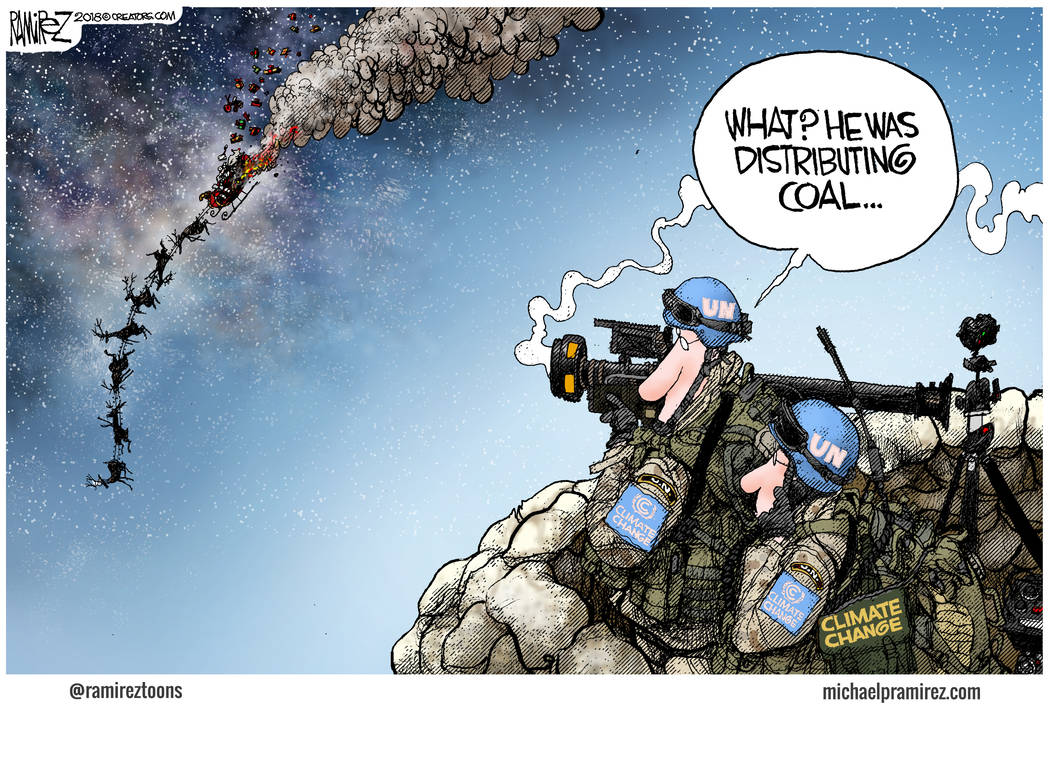
Summary:  From this we learn three things:

Climate warms and cools without any help from humans.

Warming is good and cooling is bad.

The hypothetical warming from CO2 would be a good thing.


via Science Matters

https://ift.tt/EmARPsV

October 31, 2024 at 04:44PM

Letter to Peter Kyle MP – Secretary of State for Science, Innovation and Technology.

On the 19th July 2024, following correct protocol, I emailed my constituency MP, Rosie Duffield, asking her to forward a report I had produced onto Peter Kyle MP (above) in his capacity of Secretary of State for Science, Information and Technology responsible for the Met Office. Ms Duffield confirmed this was forwarded and I also received an acknowledgement from Peter Kyle’s constituency office.

Despite further polite follow ups direct to Mr Kyle and further enquiries via the BSIT department’s Science Advisors, I have received no response from anyone whatsoever. I feel a response was warranted hence in the absence of any I publish below the full text of my original email. This is an open letter and anyone is free to draw from it or forward all or any part of it wherever they wish.

“Dear Mr Kyle

Investigation into accuracy of Meteorological Office Data

I have extensively researched aspects regarding the accuracy and scientific validity of data produced by the UK Meteorological  Office (Met Office). I have discovered significant inaccuracies and potential misrepresentation of hard data produced by the Met Office which calls into question its validity and requires an independent investigation to correct.

I precis below the main points. 

Firstly I considered how “Climate Averages” data was presented by the Met Office. 

https://www.metoffice.gov.uk/research/climate/maps-and-data/uk-climate-averages

This details 302 sites. As an example, either click on the map or type in “Dungeness”.  You will be directed to a “nearest site” called “Dungeness” giving accurate map co-ordinates, elevation and a description as “Observing Site” 

Any reasonable person viewing this (a student for example) would assume there is a site there and the 30 year rolling averages from 1960 to 2020 were both “observed” and “data” – notably quoted to the second decimal place of a degree. 

However, there is NO weather station at Dungeness – it closed in 1986 – i.e. 38 years ago. 

For these  last 38 years there have been no observations, thus no data recorded at Dungeness.  All the figures are fabricated in scientific terms. 

Through Freedom of Information request (FOI)  I obtained the details of which stations actually still exist as attached excel spread sheet. 

Of the 302 sites quoted, over one third (103) do NOT exist. The Met Office declined to advise me  exactly how or from where the alleged “data” was derived for these 102 non-existent sites.

In my home county of  Kent, 4 of the 8 sites shown are fiction (Dungeness, Folkestone, Dover, Gillingham) and all produce different “averages”. Referring back to Dungeness, the nearest open Met Office Weather Station sites are over 25 miles away.   

There is no plausible  scientific purpose in the invention of numbers for non-existent sites which are falsely posing as authentic locations.

How would any reasonable observer (i.e. the example student) know that the data was not real and simply “made up” by a government agency?

Secondly, Long term “Historic Data

https://www.metoffice.gov.uk/research/climate/maps-and-data/historic-station-data

The above indicates 37 long term sites quoting monthly  “Data”.  Note that 3 sites on the map are coloured blue with the key indicating these stations have closed, the remainder are coloured orange indicating “open” stations.

 Any reasonable person would therefore assume the orange marked sites were “open” stations as stated.

However, for example, go to Lowestoft and “view data”.  Whilst figures run from 1914, all figures from 2010 are marked with an asterisk indicating they are “Estimated” – the station closed in 2010 –  i.e.14 years ago.

What scientific organisation would continue to  “estimate”  figures for over 14 years and counting? What possible scientific purpose could such “estimation” serve?

The Met Office has again declined to advise me either how these estimates are arrived at or why they do so.

The stations at  Nairn Druim, Paisley and Newton Rigg are similarly closed but still reporting “estimated” monthly data. It should also be noted that even those stations marked as closed continued to report  “Estimated” numbers beyond their closure date.

Why would any scientific organisation feel the need to publish what can only genuinely be described as fiction? No scientific purpose can possibly be served by fabrication.

These above two issues of “Climate Averages” and “Historic Station Data” clearly demonstrate the Met Office are publishing numbers which are neither real  nor observed and thus cannot be described as data. 

This moves me onto aspects of exactly how the Met Office observes and collects its raw data.

Weather Station siting.

The World Meteorological Organisation (WMO) is part of the United Nations Organistaion (UN), to which almost all national meteorological agencies report their data for climate reporting purposes.

The WMO recently standardised the weather station location requirements for Climate data recording purposes.

The UK Met Office was a significant partner to the formulation of this standard which was ultimately codified by the International Standards Organisation as ISO/WMO standard 19289:2014(E) as detailed below.

WMO rules indicate that only sites meeting  CIMO Classes 1 or 2 should be used for Climate Reporting purposes. Class 3  sites have  known errors caused by siting of 1°C,  Class 4 sites  error margins of 2°C and Class 5 sites have known error margins up to 5° C.

Consequently, Classes 3 to 5 stations should NOT be used for climate reporting purposes. Classes 4 and 5 are generally considered to have no better than “Junk” status in climate reporting terms though quite possibly  acceptable for their original installed purposes such as immediate aviation advice, local agriculture, local transport etc.

https://www.metoffice.gov.uk/research/climate/maps-and-data/uk-synoptic-and-climate-stations

It required a Freedom of Information request for me to obtain from the Met Office the list of their Climate and Synoptic reporting weather stations by CIMO Class as attached.

This list indicates that of 384 climate reporting stations just 52 (13.7%) fall into Classes 1 & 2.  

A further 30 (7.8% of total) sites are Class 3

187 sites (48.7% of total ) are Class 4

112 sites (29.2% of total) are Class 5

Almost 85% of all Met Office sites are NOT deemed acceptable for climate data reporting purposes by the  World Meteorological Organisation and International Standards Organisation stated requirements.  

It is worth noting that the Met Office claims to use its own separate  station monitoring standards but does not give plausible reasons why these should override WMO standards. They do not demonstrate any greater level of suitability for climate reporting than the CIMO standards. 

N.B. The Met Office have confirmed the default classification on their records for  all their stations is set at Class 1 unless manually adjusted.

On receipt of the attached list I personally challenged the CIMO classification of the Hastings site. The Met Office agreed with my personal site inspection and adjusted their records to Class 4. I have subsequently challenged some of  their  CIMO ratings of other sites – unfortunately a senior Met Office manager (Karl Shephedson) has since reneged on any offer of discussions on this subject and the Met Office no longer seems willing to openly engage with me.

I have produced a dossier of exceptionally poorly sited weather stations which include (amongst other problematical issues)

Co-located with major National Grid Sub-Stations.

In walled kitchen gardens and botanical gardens specifically designed to produce artificially increased temperatures and micro climates.

In agricultural sites with continuously changing surroundings such as poly tunnels.

Surrounded by newly constructed solar farms.

In Zoological Gardens adjacent animal enclosures

In Car Parks adjacent parking bays. 

In domestic back gardens alongside sheds, barbecues and general garden paraphernalia.

Sewage and water treatment plants.

Aviation sites.

It would be overly burdensome at this stage to detail all the problem sites but, for now, here are just a few examples using google aerial imagery/META.

Bingley No 2/Bradford West Electricity Sub-Station. The weather station compound is marked by the red kite. Taking the readings downwind of the waste heat from 400kV electricity  transformers seems highly unlikely to record natural conditions.

https://www.google.co.uk/maps/place/53%C2%B048’41.1%22N+1%C2%B052’00.5%22W/@53.8109965,-1.8671107,160m/data=!3m1!1e3!4m4!3m3!8m2!3d53.8114091!4d-1.8667942?entry=ttu

Dyce, Aberdeen.  The red kite again marks the weather station compound just to the left of the Airbus A320 engine exhaust.

https://www.google.co.uk/maps/place/57%C2%B012’18.1%22N+2%C2%B012’19.4%22W/@57.2050334,-2.205367,74m/data=!3m1!1e3!4m4!3m3!8m2!3d57.2050309!4d-2.2053737?entry=ttu

As another observation here is the “Facebook/Meta” page of Floors Castle  Walled garden weather station. The principal purpose of a walled kitchen garden is to artificially create a warmer micro climate than the natural surroundings. This site was temporarily awarded the Scottish all time record high temperature in 2022 only to be beaten by a former RAF airfield site at Charterhall shortly afterwards.

https://www.facebook.com/watch/?v=1893457610801591

These above are by no means extremes. The Met Office claim all the above sites actually meet Class 4 – error margin by siting of  2°C .

Consider  just how bad the 112 Class 5 assessed sites actually must be.

NEW SITES

Whilst it may be understandable that the Met Office has some legacy old sites in locations which have become compromised over time, it should be seen as unacceptable for new stations to be poorly located from the outset.

Analysis of stations opened in the 21st century indicates a worsening of the situation with over 87% of new stations falling into Classes 3 to 5.  Worse still, of the 13 sites opened in the last 5 years, 8 fail  to make Classes 1 or 2. Thus the  proportion of “Junk” sites is actually increasing.

In 2022 the Neatishead Class 4 site was opened in the shadow of a large Radar ‘Dome. In 2023 the new Arthog site  was equally opened as a Class 4 inaccurate unit. 

This practise of opening new inadequately accurate reporting  sites must be stopped immediately or alternatively do not use their data for any form of climate reporting purposes. 

One instance of particular concern is the Hull, East Park station installed in 2011. It is a Class 5 site in a very poor position in the “Animal Education Centre”. It sits hard alongside what is now an overgrown hedge where  tour bus vehicles park. It regularly records the regional daily high temperature on the Met Office Daily listings as well as the National highest temperature on 2 occasions so far this year. An example of this listing can be viewed here.

https://www.metoffice.gov.uk/weather/observations/weather-extremes

As well as two reputable Private Weather Sites (PWS) in Hull in close proximity to the official Met Office site there is also  the Hull University Research Centre’s very well sited, equipped and maintained weather station.

https://www.hull.ac.uk/research/institutes/eei/sudslab-uk

Both the PWS sites and the very high quality University site record significantly lower temperatures than the official site. In contrast to the unhelpful and evasive responses typical of my inquiries to the Met Office, the University were exceptionally helpful and even gave me direct personal access to their live online data. Closer inspection revealed the official Met Office site to be regularly recording up to 3 degrees celcius higher.  Despite raising this issue with the Met Office they declined to answer my queries.  When asked to supply their recent data from the site, I was referred to an archive site that operates 18 months in arrears to view it presumably some time in the distant future.. 

It is not an unreasonable inference, therefore, that the Met Office are deliberately seeking to inflate the climate temperature record by installing new sites likely to record artificially raised temperatures. This leads on to the related issue below.

Closure of Rural Sites.

Listen to many weather forecasts and it is commonplace to hear along the lines of “those temperatures represent towns and cities. It will be a few degrees colder out in the countryside” and even “and there may be a frost in some rural areas” etc.

These types of weather presenter’s remarks  expressly do not mean there is some form of artificial cooling device reducing temperatures in rural areas. It means that urban temperatures are artificially elevated and are not representative of  the natural climate. 

This phenomenon is known as the “Urban Heat Island” effect.  The slew over to disproportionately  recording many more urban rather than rural sites is not just one of increased urban encroachment on the countryside. It has been primarily caused by closure of rural sites causing an unrepresentative imbalance.

Taking my home county of Kent as one example, 

150 years ago in 1874 there were 12  official Met Office stations simultaneously operating.

By 100 years ago in 1924 the number had grown to 18

By 50 years ago in 1974  there were 32 simultaneously operating official Met Office weather stations. 

Now in Kent in  2024 there are just 7 . This situation has been replicated throughout the country as a whole. 

The cause of this quite dramatic and relatively sudden reduction in measuring points was largely due to  the automation of recording.

Historically temperatures were recorded using  Liquid in Glass (LIG) thermometers – the type most of the general public are familiar with. These required human operators to visually read them and report data. A small army of volunteers and officials from various organisations fulfilled this function.  

In order to automate readings necessitated changing thermometers to electrically operated Platinum Resistance Thermometers (PRTs), These required a reliable electricity supply and  data communications (typically a landline) which were frequently not available at rural sites  in the early days of automation from the 1980s onwards. Hence many rural sites were closed down.

In Kent alone longstanding rural sites at Anvil Green, Charing, Dover/RMS Guston, Dungeness, Elmstone, Eynsford, Hadlow, Northdown, Peckham (Kent), St Margarets, Throwley, Tunstall,  Ulcombe  West Malling and Wye were all closed.  Even some well sited parkland sites on the outskirts of towns were similarly  shut down at Tunbridge Wells, Whitstable, Margate, Herne Bay and Swanley.

By eliminating cooler recording sites from the  overall data  record  left predominantly urbanised sites to cause an unrepresentative temperature uplift from slewed averaging without any genuinely significant temperature increase actually taking place. Statistical sleight of hand (however inadvertent it may have been) produced inaccurate historic misrepresentation. 

Use of Data

To demonstrate how Met Office data  is used/misused  with some quite bizarre conclusions,  consider this report following the 2022 July hot weather event. An organisation known as World Weather Attribution “analysed” data produced from 3 UK weather station sites.

https://www.worldweatherattribution.org/without-human-caused-climate-change-temperatures-of-40c-in-the-uk-would-have-been-extremely-unlikely/

They concluded  

“At three individual stations the 1-day maximum temperatures are as rare as 1 in 500 years in St James Park in London, about 1 in 1000 years in Durham and only expected on average once in 1500 years in today’s climate in Cranwell, Lincolnshire. “

 St James Park London is a Class 5 (junk for climate reporting purposes) weather site i.e hugely worse than any of the  Class 4 sites I have highlighted above. 500 years ago the population of London was just 50,000 and in the midst of the Medieval Warm Period.

Durham Observatory is also a Class 5 (junk for climate reporting purposes) weather site and similarly much worse than all those class 4 sites I highlighted above. It simply did not exist 1,000 years ago.

“Cranwell, Lincolnshire”  is not some sleepy village rural location, it is actually sited at RAF Cranwell – an RAF training site housing numerous jet aircraft. The Met Office, somewhat implausibly, declares it a Class 1 site (though I suspect this is a default error)  which is positioned close to the taxiway to the main runway and alongside what is believed to be a sewage settlement tank.

How many jet fighters were there in 522A.D.? 

It would be staggeringly difficult for any reasonable person to accept that the vicinity of  over  12,000 feet of tarmac runway plus associated taxiways, hangars, roadways and parking aprons is somehow representative of the natural environment.   The same reasonable person would likely conclude such a site would give an artificially high and unnatural reading. 

The red kite marks the point between the weather station and the sewage settlement tank just by the taxiway.

https://www.google.co.uk/maps/place/53%C2%B001’52.4%22N+0%C2%B030’13.1%22W/@53.0312203,-0.504928,327m/data=!3m2!1e3!4b1!4m4!3m3!8m2!3d53.0312187!4d-0.5036405?entry=ttu

Conclusions

I have clearly demonstrated with hard evidence that:

The Met Office is regularly fabricating data.

It is not producing reliable nor accurate data for climate reporting purposes from a network of poorly sited and inadequately maintained locations..

It is not meeting internationally recognised standards which it was itself party to establishing.

It has, over time, contributed to historic selection of unrepresentative data produced.

It is operating in a secretive, covert way and to its own regulation without independent oversight.   

It is failing to meet high standards of scientific integrity.  

It marks its own homework.

I feel it warrants independent review to:

Establish a high quality series of sites solely designed for climate reporting purposes. These should be independently overseen to ensure continued integrity of data.

An independent working group should re-analyse historic data to re-compile a historic record from only high quality sites that have been identified as not being compromised by extraneous heat sources.

An open declaration of likely inaccuracy of existing published data to avoid other institutions and researchers using unreliable data and reaching erroneous conclusions.

I await your views on this matter in your capacity of the Minister responsible for the Met Office.

Yours  Sincerely

Ray Sanders “

via Tallbloke’s Talkshop

https://ift.tt/6wFuHj7

October 31, 2024 at 04:36PM

Greens Detest ‘Little Guys’ Who Get in Their Way

Rural and coastal little guys delay and block massive ‘green’ energy projects

Paul Driessen

Environmentalists insist they love “little guys.” At least in the abstract, until those folks get in the way, raise inconvenient questions, or try to block “renewable energy” projects intended to “save the planet” from “manmade climate cataclysms.”

Then the little folks learn the environmentalists are really working with (and for) Big Wind, Big Solar, Big Utilities, Big Finance, powerful politicians and crony bureaucrats – the Climate Industrial Complex. Stand in its way, and farm families, small rural communities and even Native American groups can face protracted, expensive battles. But they often emerge victorious.

Energy analyst and journalist Robert Bryce reports that these little guys have rejected or restricted 735 US wind and solar projects since 2015, including 58 solar and 35 wind proposals so far this year. Transmission line, grid-scale battery and other plans also face growing resistance.

Rural Americas don’t want these huge installations destroying traditional ways of life, hurting property values, raising electricity rates, wrecking vital croplands and habitats, ruining scenic vistas, killing birds, bats and other wildlife – and creating serious fire and toxic gas risks from lithium-ion electricity storage batteries.

They don’t want their countryside dotted with huge landfills, piled high with billions of tons of broken, storm-destroyed and obsolete solar panels, wind turbine blades and other renewables trash.

The number and scale of many proposed projects is daunting – and the Complex’s dream of “transitioning” the entire United States from fossil fuels to an all-electric energy, transportation and industrial system would require vastly more.

Before being scaled back in a failed effort to reduce local and state opposition, the Lava Ridge Wind Project would have installed 400 huge turbines on some 200,000 acres of federal land in Idaho. That’s 310 square miles; 5.5 times Washington, DC. Most of its output would go to California, which already imports nearly one-third of its electricity.

The Koshkonong solar project near Christiana, WI would cover 6,400 acres (10 sq mi) and put a 667-MWh battery storage system near a local elementary school.

The Biden-Harris plan for 30,000 megawatts of offshore wind energy translates into 2,500 12-megawatt turbines rising 850 feet above the waves. But all those turbines wouldn’t provide enough electricity (31,541 MW) to power New York State on a hot summer day, if the wind is blowing.

The state’s plan to spend $2 billion for 24,000 MWh of backup batteries for windless/sunless days would provide enough electricity to run the state for barely 45 minutes! Sufficient batteries would cost trillions.

Each offshore blade is 350 feet long and 140,000 pounds; 2,5000 turbines would mean almost 500 miles of blades weighing 1,050,000,000 pounds! Imagine cleanup and landfill costs after a major hurricane.

And yet a 2020 Princeton University report called for massively expanding US wind and solar capacity, to fight climate change and rebuild America.

However, as Mr. Bryce points out, those plans would require solar projects blanketing an area the size of Massachusetts, Rhode Island and Connecticut combined – plus wind installations sprawling across lands equal to Illinois, Indiana, Ohio, Kentucky and Tennessee!

That’s without factoring in wind and solar power needed to charge grid-scale backup batteries to store enough electricity to power America for even a day or week of windless, sunless days.

Other projects are equally enormous, expensive and fanciful.

Summit Carbon Solutions wants to build a pipeline to carry carbon dioxide from 57 ethanol plants in five states – and inject the CO2 into geologic formations beneath North Dakota. Summit can provide no guarantees that the pressurized gas will stay in the ground, and not erupt suddenly and violently, killing wildlife and people by rapidly replacing breathable air – as a natural CO2 reservoir did at Cameroon’s Lake Nyos in 1986.

The cumulative impacts of all these wind, solar, battery, transmission line and other projects would be incalculable – on lands, wildlife, families, budgets and human health.

Adding to the cost, construction and raw material requirements, home, neighborhood and regional grids would have to be expanded and upgraded to handle the ballooning electricity demands, and the surges and plummets associated with unpredictable, weather-dependent wind and solar power.  

All this is irrelevant to Climate Industrial Complex members, who want to virtue-signal and  extol the “pivotal role” they are playing in driving America’s “renewable energy transformation,” meeting arbitrary greenhouse gas emission reduction targets, and preventing “climate catastrophes.”

Property rights advocate Tom DeWeese says concerned citizens can fight back by asking tough questions about these policies and projects. For example:

* What benefits has our community gotten from the massive solar and wind farms we already have? From the taxpayer subsidies and rate hikes we already have to pay? What benefits will we receive from the huge new projects you are promoting now?

* Why are you trying to end local land use controls, use eminent domain to take our property, and destroy small local and minority businesses to build these enormous projects?

* How will ruining our wild and agricultural areas, killing wildlife and reducing our living standards reduce global greenhouse and “save the planet,” if China and India alone emit 38% of the world’s greenhouse gases (versus 11% by the USA) and are building new coal-fired generating plants every week?

Proud, principled, vocal resistance is essential, if citizens are to defend their jobs, lands, health, living standards and freedoms.

Paul Driessen is senior policy advisor for the Committee For A Constructive Tomorrow (www.CFACT.org) and author of books and articles on energy, environmental, climate and human rights issues.

This article originally appeared in the Washington Times online (10/22/24) and print (10/23/24) editions.

https://www.WashingtonTimes.com/news/2024/oct/22/environmentalists-detest-little-guys-who-get-in-th

via Watts Up With That?

https://ift.tt/CYTh5Sb

October 31, 2024 at 04:00PM

Seven years to go! Extremely bad science is the new normal for the climate

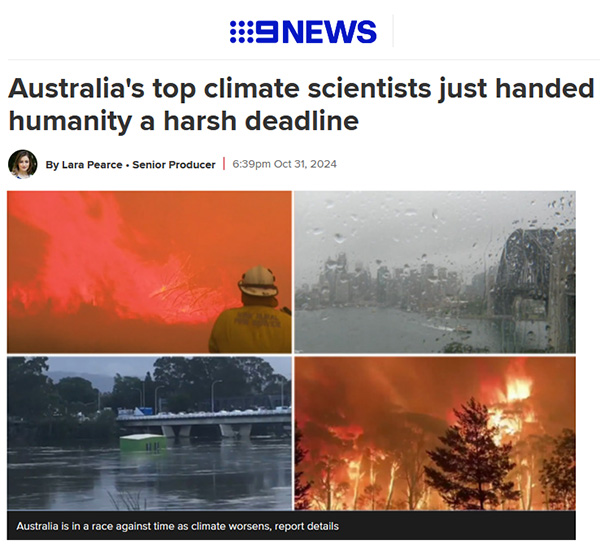
Australia's top climate scientists just handed humanity a harsh deadline. BOM-CSIRO Blob report 2024

By Jo Nova

Brave scientists at the CSIRO and BoM have dug hard through the sacred Arc of the Climate Covenant, CMIP-6,  to discover the horrible truth that we only have seven years (just seven!) until we pass through the sanctified Target-of-Paris on Halloween of 2031.

Channel Nine shares this “harsh deadline for humanity” and tells us the chance to limit global warming to the Paris Agreement goal of 1.5 degrees “will expire” then, like 2 for 1 sale coupon. They don’t quite explain what happens on November 1st, 2031 — but most people will assume it’s just like what happened after Prince Charles and Al Gore and the UN said we only had ten years to go (which was nothing).

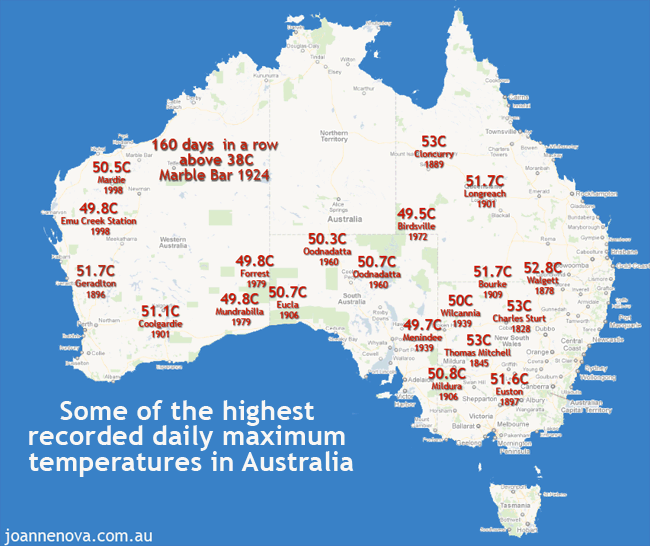
But the horror show continues, not in our climate, but in our science: where the work of past scientists is deleted, and dubious datasets get adjusted with secret algorithms and thermometers near incinerators and over hot bitumen carparks that may be 1,000 kilometers away.  The CSIRO-BOM Blob have massaged Australia’s temperature record so it can fit their favourite climate model. Dishonestly, both institutions hide the heat of the Federation Drought, where places all across Australia recorded temperatures over 50 degrees in 1896. BoM and CSIRO delete the cooling trend their own experts recorded from 1900 to 1950 in Australia. (Deacon et al).

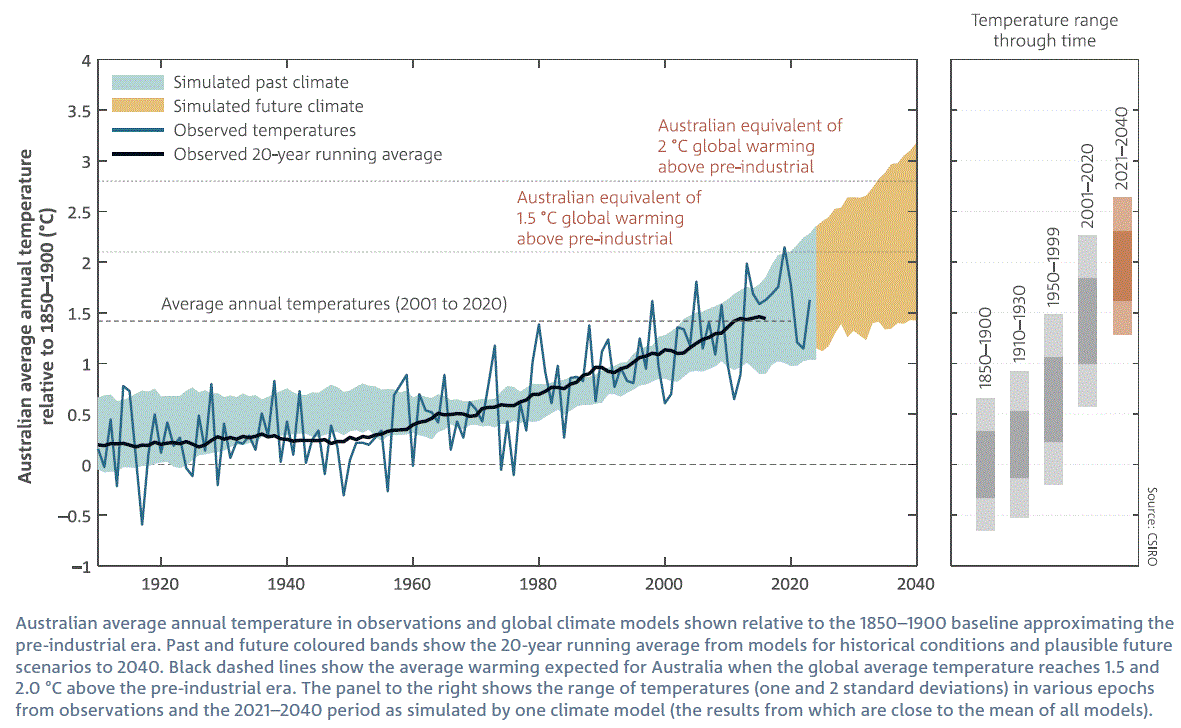
The fake rise in temperatures graphed by the BOM after adjustment.

A carefully curated curve. BOM CSIRO State of the Climate 2024.


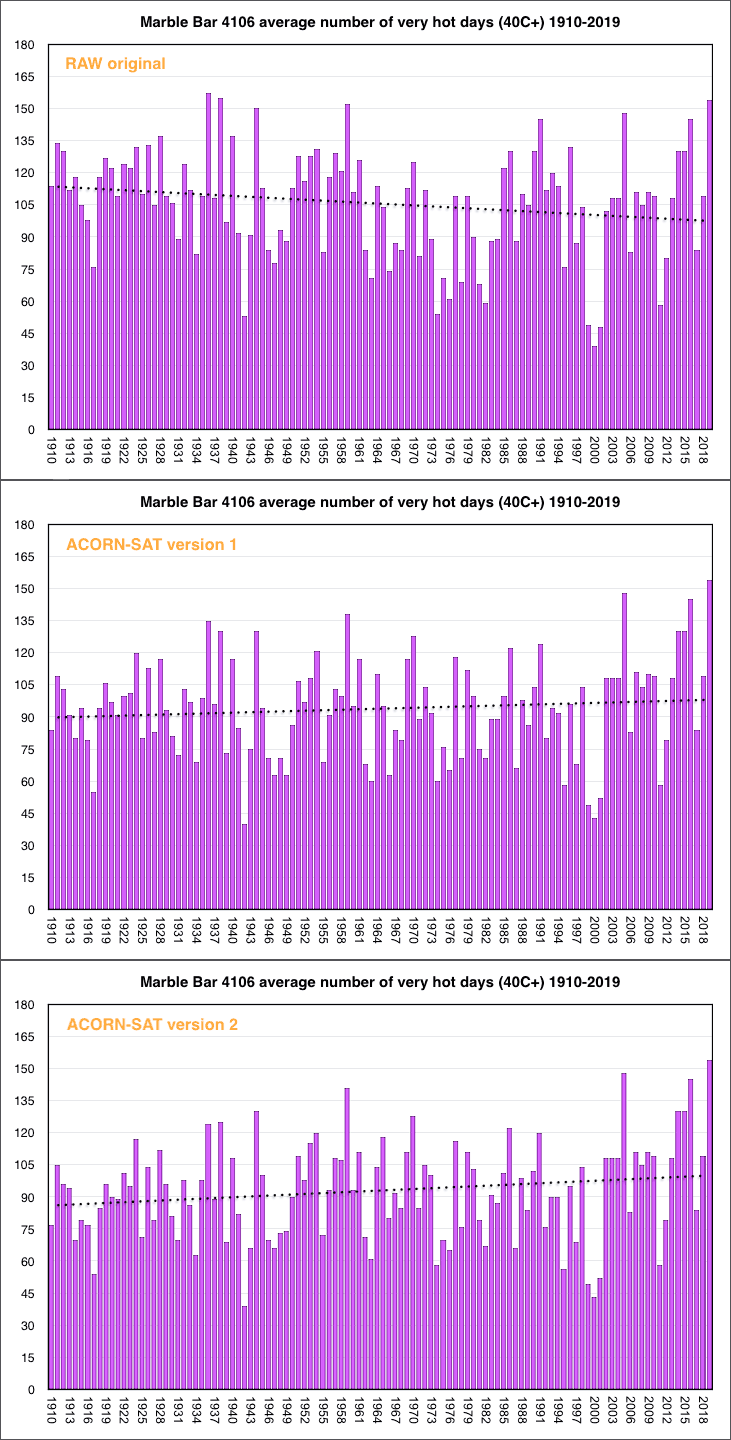
The BOM and CSIRO pretend the temperatures are accurate in the graph above. They don’t tell Australians that they keep adjusting the data, even a hundred years after it happened. Some poor towns didn’t know they were two degrees colder in World War I until the BoM “discovered” that in 2014. The people of Marble Bar thought they had the hottest heatwave in world history in 1923 until the BOM traveled back in time to delete it, I mean “correct it”. Temperatures in 1910 have fallen 22 degrees Fahrenheit in the last 10 years.

At the current rate of decline, the 1920 miners of Marble Bar will be in an ice age by the end of the century.

marble bar very hot day trends

The irony is that the BOM ignore the hot temperatures of the 1800’s because they were not in standardized modern Stevenson screens, yet the BOM is happy to take those lauded Stevenson screen measurements from 1920 and drop them in a high speed homogenization-blender to adjust them by as much as 2 degrees.

So the BOM can “adjust” the data to get any trend they want. Then there’s the added heat of a million tons of concrete and brick keeping our cities warm. And on top of that scientific hamburger, thermometers boxes shrank from 240 litres to 60 litres, and glass instruments became electronic ones. They don’t mention that their super accurate new gizmos can pick up brief changes in temperature that the old glass ones can’t. And possibly they can pick up the airport radars too.

Maximum record temperatures may be a one-second-record, literally there and gone in a moment, and if it was radar interference, not even there at all.

When asked, the BOM say they have calibrated and tested the thermometers side by side, to  but they won’t release the data. As if the thermometer readings at Canberra airport are a national security issue.

They also don’t mention that scientists in Australia were reporting that Australia was cooling from the 1890s to 1952. (Deacon et al) The ghastly heat of 1896, the Federation Drought, and the 50C record temperatures all over Australia all go down the memory hole.

Australian heatwaves, mapped, 50C temperatures, 1800, 1896. Historic heatwaves.

Historic heatwaves. 50 degree temperatures were everywhere, right across Australia in the 1800s and 1900s.|

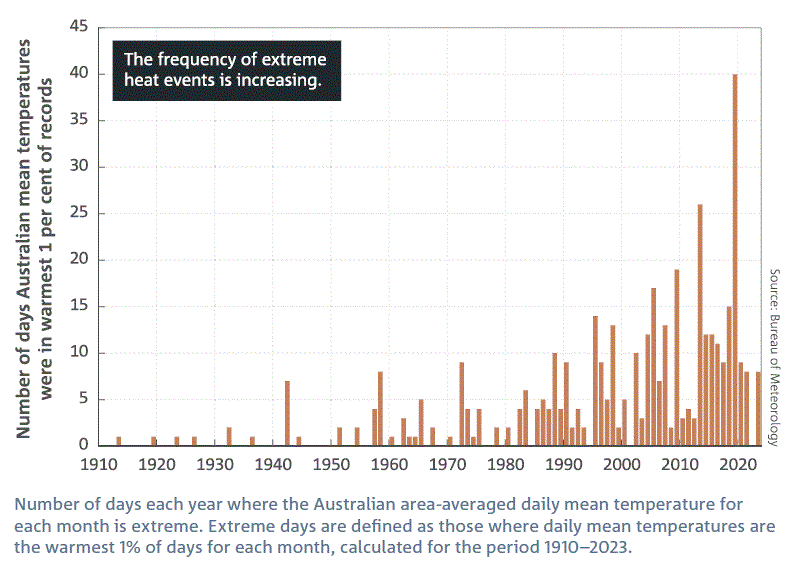
Not surprisingly, after we adjust all the records, we find extreme heat events are increasing

And this is the shocking graph the BOM-CSIRO blob gave us in 2024:

BOM CSIRO State of the Climate 2024.

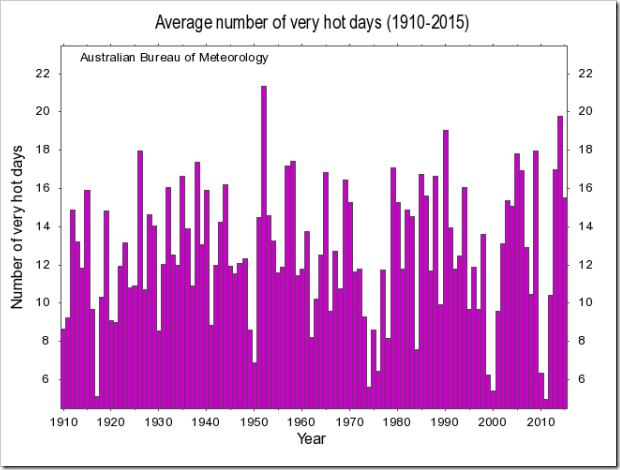
But ten years ago the BOM showed Australians a different graph, one which looked like this, til they took it off their own website. So there is bound to be some excuse. A different permutation or combination of variables, an older dataset, some plausible deniability.

But the fact remains, that the BOM-CSIRO-blob are not trying to give Australians the whole truth and nothing but the truth:

Number of very hot days in Australia up to 2016. BOM

Number of very hot days in Australia up to 2016.  It was on the BOM site…

Reading the tea-leaves on rain in Australia

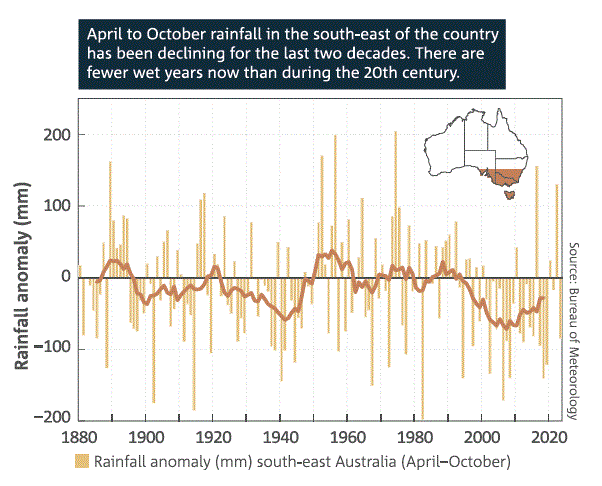
By selecting some contrived permutation the BOM-CSIRO-Blob can create the illusion that something unusual is happening. Here, they show the April to October rainfall in one particular part of the country as if this has some special meaning. (Their climate models fail on rainfall trends nearly universally).  The Blob can cherry pick permutations until they find something. But here, even the best trend they can get doesn’t resemble our CO2 emissions. Why was the winter rain almost as low in 1940? The BOM don’t know. They could make up some reason post hoc, but they can’t predict it.

Rainfall decline in SE Australia. BOM CSIRO

Rainfall decline in SE Australia. BOM CSIRO State of the Climate 2024.

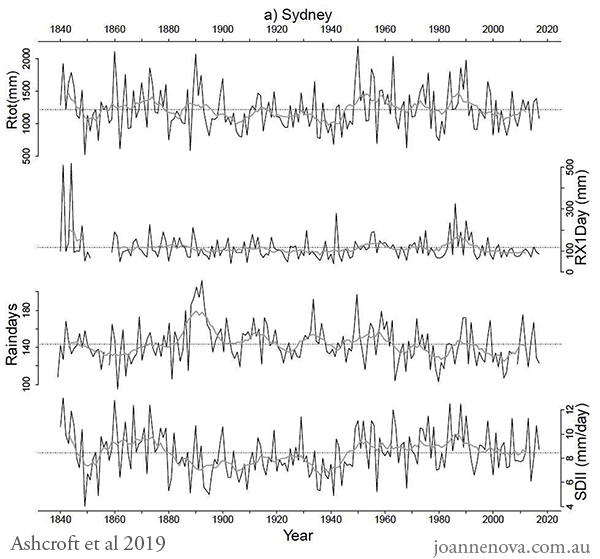
If the BOM-CSIRO-blob wanted, they could show Sydney-siders the total rainfall record for the last 130 years. But they can’t because it would be obvious to everyone that it has nothing to do with CO2. It could just be noise in the system, oceanic oscillation, or cycles controlled by the sun.

This was the total rainfall in Sydney from 1840 to 2019, and the total number of rainy days, the peak amount of rain that falls in a single day and the intensity of the downpours. Why isn’t it in the State of the Climate? Why haven’t the BOM updated this graph?  (From the Ashcroft paper of 2019).


Rainfall trends, cycles, Australia, Sydney, Graph, 2019, 1840 - 2020

Rainfall trends, cycles, Australia, Sydney, Graph, 2019, 1840 – 2020..| Abbreviations: Rainday counts (RD), monthly rainfall totals (Rtot), and highest daily rainfall (Rx1day). The Simple Daily Intensity Index (SDII): the amount of rainfall received divided by the number of raindays recorded over a month and year.

The exact same pattern is visible, by the way, in rainfall records from Melbourne and Adelaide too. But almost no one in Australia would know that. The ignorance isn’t an accident.

Thank the BOM. Thank the CSIRO. Thank the ABC.

REFERENCES

LindenAshcroftabDavid J.KarolyacAndrew J.Dowdyb(2019) Historical extreme rainfall events in southeastern Australia, Weather and Climate Extremes Available online 10 May 2019, 100210

Deacon, E.L. (1952) Climatic Change in Australia since 1880, Australian Journal of Physics, Volume 6, Pages 209-218.  [PDF]

State of the Climate 2022, Bureau of Meteorology

State of the Climate 2022, CSIRO

State of the Climate Report CSIRO 2014. CSIRO

Previous State of the Climate Reports, CSIRO

And even more droughts and trends graphs here.


0 out of 10 based on 0 rating

via JoNova

https://ift.tt/wBEqgT9

October 31, 2024 at 03:45PM