The Tennessee-BlackRock Settlement: A Win for Transparency and Investor Interests

In a high-stakes showdown that captured the attention of investors nationwide, the State of Tennessee has reached a settlement with BlackRock, Inc. regarding its use of Environmental, Social, and Governance (ESG) factors in the management of U.S. mutual funds. While skeptics might dismiss the agreement as symbolic, a closer inspection reveals an important victory for investor rights, transparency, and accountability in the financial sector.

The Allegations and Context

At the heart of this case was the assertion that BlackRock had violated Tennessee’s Trade Practices Act (TCPA) by failing to adequately disclose the role of ESG factors in its decision-making processes. ESG investing has been a polarizing topic, with proponents hailing it as a forward-thinking approach to sustainable finance and critics decrying it as a distraction from fiduciary duties. The lawsuit filed by Tennessee Attorney General Jonathan Skrmetti aimed to address these tensions, arguing that investors deserved clarity and honesty about the criteria shaping their portfolios.

What the Settlement Requires

  1. Enhanced Transparency in Proxy Voting: BlackRock has committed to casting proxy votes for “In-Scope Funds” independently, without influence from external organizations, and will disclose the rationale behind its votes on a quarterly basis. This is a significant step forward in demystifying how fund managers make decisions that directly impact shareholders’ returns.
  2. Investor-Centric Communication: The settlement mandates that BlackRock refrain from using ambiguous ESG terminology when communicating with Tennessee investors. Instead, the company must adopt clear, legally defined language such as “financial materiality” to ensure that investors can make informed decisions.
  3. Removal of ESG Ratings: Within 90 days, BlackRock must strip ESG ratings from its U.S. product pages for In-Scope Funds. This move underscores a commitment to prioritize financial performance over non-financial considerations when presenting investment options to clients.
  4. Audits and Compliance Oversight: Over the next three proxy seasons, BlackRock will undergo third-party audits of its compliance with the agreement’s terms. The audits will examine whether BlackRock is genuinely upholding its fiduciary duty to prioritize investors’ financial interests.
  5. Public Disclosure of Climate-Focused Memberships: BlackRock will publish information about its membership in climate-focused organizations on its corporate website. This measure promotes accountability and allows investors to assess whether such affiliations align with their values and financial goals.

Why This Settlement Matters

This agreement serves as a blueprint for restoring trust in financial institutions. By addressing the controversies surrounding ESG investing, the settlement strikes a balance between innovation and accountability. It neither demonizes ESG principles nor gives them free rein; instead, it holds fund managers to their core responsibility—maximizing shareholder value.

Furthermore, the settlement demonstrates the power of state-level legal actions to influence corporate governance on a national scale. As more states scrutinize the practices of financial giants, the message is clear: investors deserve honesty, transparency, and accountability.

Addressing Criticisms

Some critics may argue that the settlement lets BlackRock off the hook by dismissing the claims without prejudice. However, this overlooks the significant commitments BlackRock has made to reform its practices. The settlement includes clear mechanisms for reasserting the dismissed claims if BlackRock fails to comply, ensuring that the agreement has teeth.

Moreover, by requiring BlackRock to implement these reforms over three years, the settlement allows for meaningful, lasting changes rather than short-term fixes. The inclusion of audits and public disclosures further bolsters its enforceability.

A Step Forward for Investors

In an era where ESG controversies dominate headlines, this settlement offers a refreshing approach. It empowers investors with the information they need to make informed decisions while holding financial institutions accountable for their actions. As other states consider similar measures, Tennessee has set a precedent that balances innovation with investor protection.

While no settlement is perfect, this agreement represents a significant victory for transparency, accountability, and the integrity of financial markets. For Tennessee investors—and indeed, all investors across the country—it’s a step in the right direction.


Discover more from Watts Up With That?

Subscribe to get the latest posts sent to your email.

via Watts Up With That?

https://ift.tt/4NY0mcH

January 17, 2025 at 04:03PM

Scientists Concerned

Scientists say they are concerned about disappearing Antarctic sea ice, which is close to the 1981-2010 mean extent, and up 15% since 1997. Scientists make puzzling find while examining recent Antarctic sea-ice levels: ‘Substantially modified’ S_20250116_extn_v3.0.png (420×500) S_19970116_extn_v3.0.png (420×500) OSI … Continue reading →

via Real Climate Science

https://ift.tt/tTXVHfo

January 17, 2025 at 02:51PM

Koonin: Reckless Claim of Climate Emergency

Transcript

Hubris is a Greek word that means dangerously overconfident. Based on my research, hubris fairly describes our current response to the issue of climate change.

Here’s what many people believe:

One: The planet is warming catastrophically because of certain human behaviors.
Two: Thanks to powerful computers we can project what the climate will be like
20, 40, or even 100 years from now.
Three: That if we eliminate just one behavior, the burning of fossil fuels,
we can prevent the climate from changing for as long we like.

Each of these presumptions—together, the basis of our hubris regarding the changing climate—is either untrue or so far off the mark as to be useless.

Yes, it’s true that the globe is warming, and that humans are exerting a warming influence upon it. But beyond that, to paraphrase a line from the classic movie The Princess Bride, “I do not think ‘The Science’ says what you think it says.”

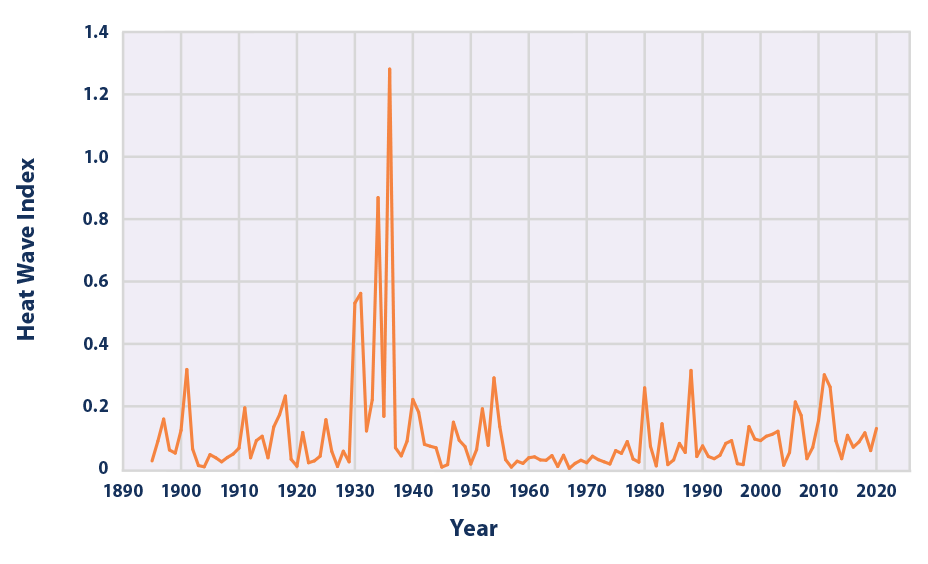
For example, government reports state clearly that heat waves in the US are now no more common than they were in 1900.

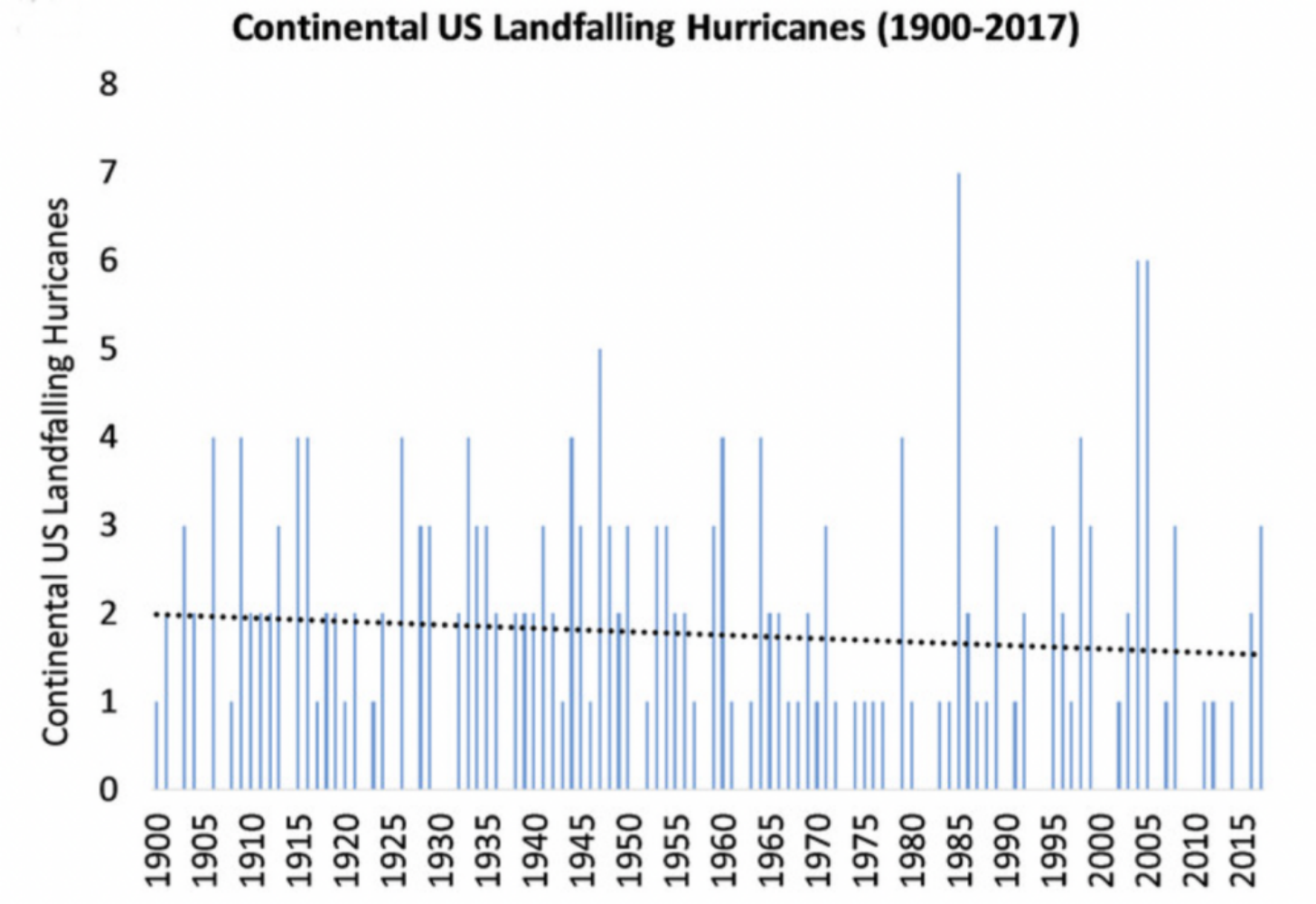
Hurricane activity is no different than it was a century ago.

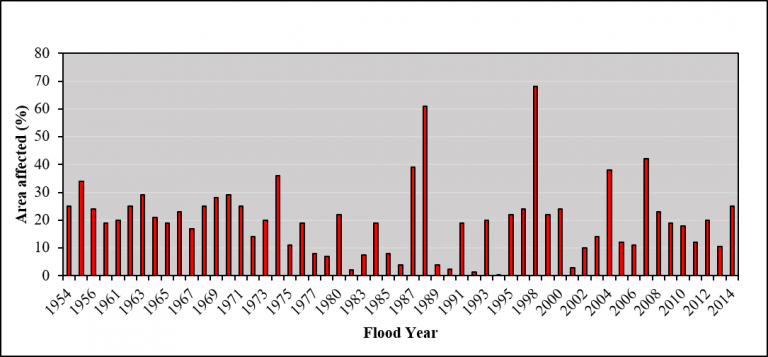
Floods have not increased across the globe over more than seventy years.

Source: Voice of International Affairs

Greenland’s ice sheet isn’t shrinking any more rapidly today than it was 80 years ago.

Why aren’t these reassuring facts better known?

Because the public gets its climate information almost exclusively from the media.

And from a media perspective, fear sells.

“Things aren’t that bad” doesn’t sell.

Very few people, and that includes journalists who report on climate news, read the actual science. I have. And what the data—the hard science—from the US government and UN Climate reports say is that… “things aren’t that bad.”

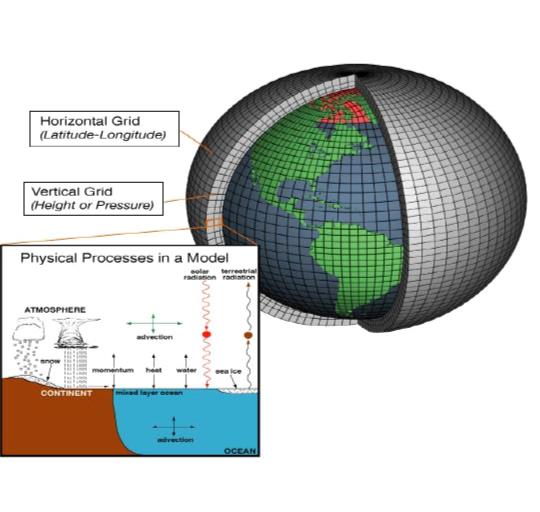
Nor does the public understand the questionable basis of all catastrophic climate change projections: computer modeling.

Projecting future climate is excruciatingly difficult. Yes, there are human influences, but the climate is complex. Anyone who says that climate models are “just physics” either doesn’t understand them or is being deliberately misleading. I should know: I wrote one of the first textbooks on computer modeling.

While modelers base their assumptions upon both fundamental physical laws and observations of the climate, there is still considerable judgment involved. And since different modelers will make different assumptions, results vary widely among different models.

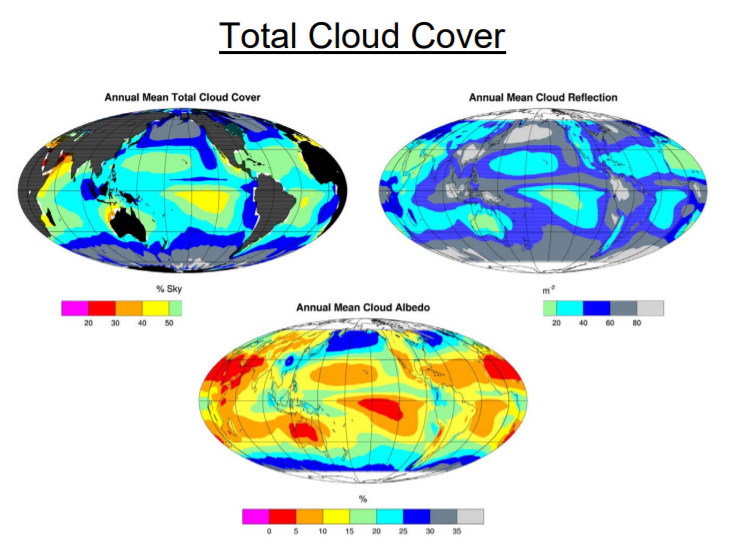
Let’s just take one simple, but significant assumption modelers must make: the impact of clouds on the climate.

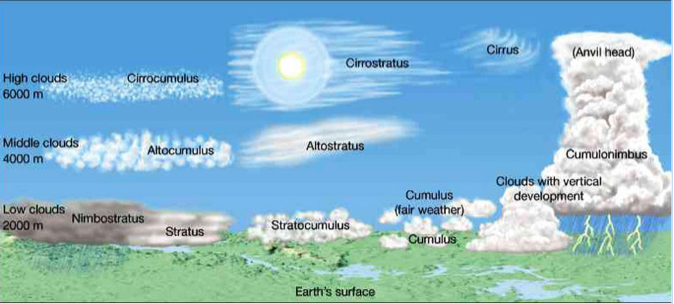
Natural fluctuations in the height and coverage of clouds have at least as much of an impact on the flows of sunlight and heat as do human influences. But how can we possibly know global cloud coverage say 10, let alone 50 years from now? Obviously, we can’t. But to create a climate model, we have to make assumptions. That’s a pretty shaky foundation on which to transform the world’s economy.

By the way, creating more accurate models isn’t getting any easier. In fact, the more we learn about the climate system, the more we realize how complex it is.

Rather than admit this complexity, the media, the politicians, and a good portion of the climate science community attribute every terrible storm, every flood, every major fire to “climate change.” Yes, we’ve always had these weather events in the past, the narrative goes, but somehow “climate change” is making everything “worse.”

Even if that were true, isn’t the relevant question, how much worse? Not to mention that “worse” is not exactly a scientific term.  And how would we make it better?  For the alarmists, that’s easy: we get rid of fossil fuels.

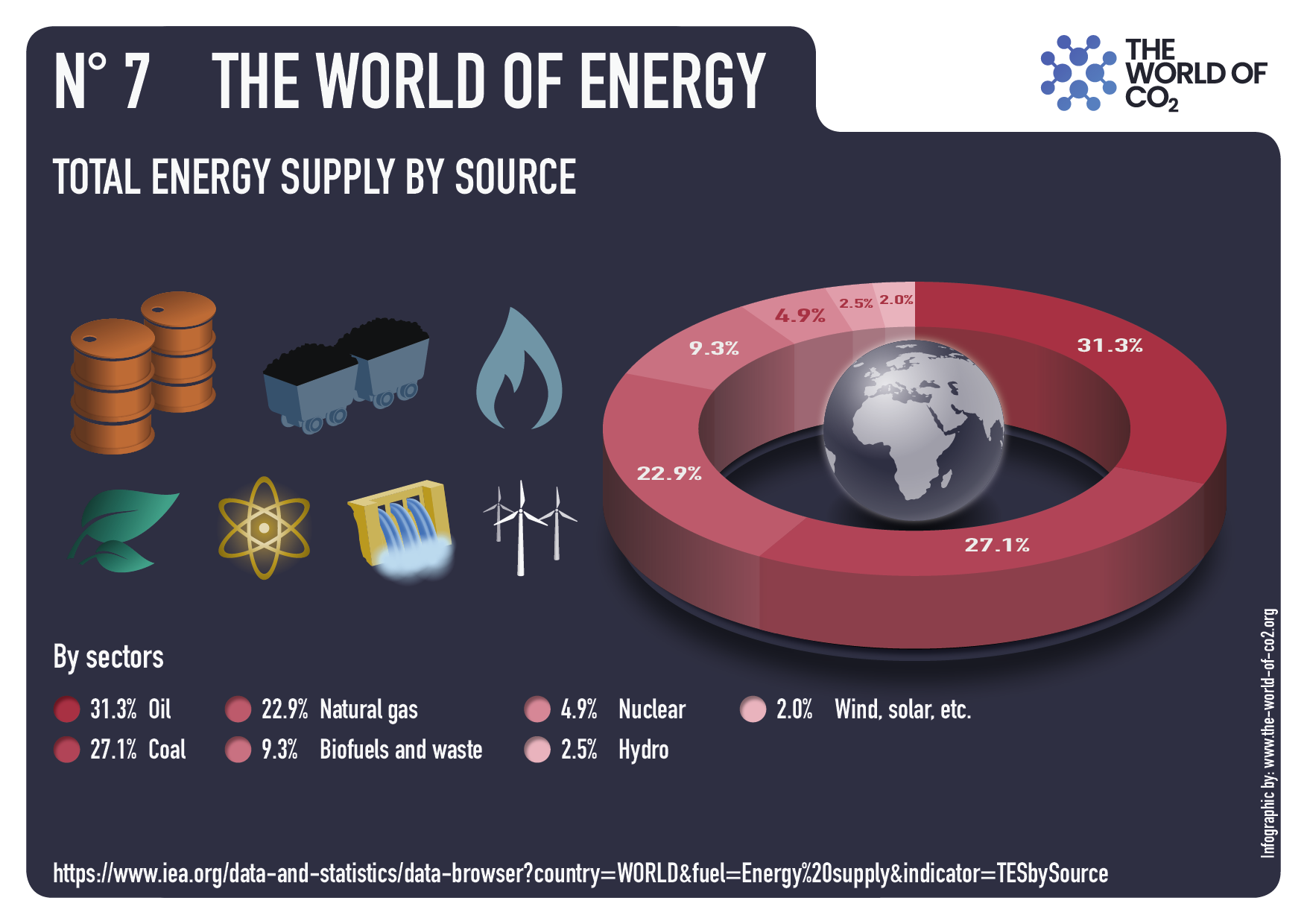
Not only is this impractical—we get over 80% of the world’s energy from fossil fuels—it’s not scientifically possible. That’s because CO2 doesn’t disappear from the atmosphere in a few days like, say, smog. It hangs around for a really long time.

About 60 percent of any CO2 that we emit today will remain in the atmosphere 20 years from now, between 30 and 55 percent will still be there after a century, and between 15 and 30 percent will remain after one thousand years.

In other words, it takes centuries for the excess carbon dioxide to vanish from the atmosphere. So, any partial reductions in CO2 emissions would only slow the increase in human influences—not prevent it, let alone reverse it.

CO2 is not a knob that we can just turn down to fix everything. We don’t have that ability. To think that we do is… hubris.

Hubris leads to bad decisions.  A little humility and
a little knowledge would lead to better ones.

I’m Steve Koonin, former Undersecretary for Science in the Obama Administration, and author of Unsettled: What Climate Science Tells Us, What It Doesn’t, and Why It Matters, for Prager University.

Addendum  Fossil Fuels and Greenhouse Gases (GHGs) Climate Science

Professors Lindzen, Happer and Koonin CO2 Coalition Paper April 2024

Table of Contents

I. THERE WILL BE DISASTROUS CONSEQUENCES FOR THE POOR, PEOPLE WORLDWIDE, FUTURE GENERATIONS AND THE WEST IF FOSSIL FUELS, CO2 AND OTHER GHG EMISSIONS ARE REDUCED TO “NET ZERO”

A. CO2 is Essential to Our Food, and Thus to Life on Earth
B. More CO2, Including CO2 from Fossil Fuels, Produces More Food.
C. More CO2 Increases Food in Drought-Stricken Areas.
D. Greenhouse Gases Prevent Us from Freezing to Death
E. Enormous Social Benefits of Fossil Fuels
F. “Net Zeroing” Fossil Fuels Will Cause Massive Human Starvation by Eliminating Nitrogen Fertilizer

II. THE IPCC IS GOVERNMENT CONTROLLED AND THUS ONLY ISSUES GOVERNMENT OPINIONS, NOT SCIENCE

III. SCIENCE DEMONSTRATES FOSSIL FUELS, CO2 AND OTHER GHGs WILL NOT CAUSE CATASTROPHIC GLOBAL WARMING AND EXTREME WEATHER

A. Reliable Science is Based on Validating Theoretical Predictions With Observations, Not Consensus, Peer Review, Government Opinion or Cherry-Picked or Falsified Data
B. The Models Predicting Catastrophic Warming and Extreme Weather Fail the Key Scientific Test: They Do Not Work, and Would Never Be Used in Science.
C. 600 Million Years of CO2 and Temperature Data Contradict the Theory That High Levels of CO2 Will Cause Catastrophic Global Warming.
D. Atmospheric CO2 Is Now “Heavily Saturated,” Which in Physics Means More CO2 Will Have Little Warming Effect.
E. The Theory Extreme Weather is Caused by Fossil Fuels, CO2 and Other GHGs is Contradicted by the Scientific Method and Thus is Scientifically Invalid


via Science Matters

https://ift.tt/3DcizNu

January 17, 2025 at 02:45PM

SpaceX flights will enable people to fly London to New York “in half an hour”

By Jo Nova

Ponder the remarkable physics

SpaceX just launched Starship Flight Test 7. As Elon Musk says “Atmospheric reentry speed is more than twice as fast as a bullet from an assault rifle and this is the largest flying object ever made“. Yet they still manage a perfect catch. The top speed on the return of the booster was 4,135 km/h. It went to space and back in just 7 minutes, reaching 90 km up.

The unmanned test rocket though, wasn’t so lucky, as SpaceX described it, suffering a ‘rapid unscheduled disassembly during its ascent’

Musk also says: You can see the much higher propellant mass fraction of the new ship design by the percentage of rocket that is frosty. As the rocket lifts off, it is so powerful it appears to create the weather around it almost, tearing through the atmosphere.


One commenter said SpaceX will change the way we fly… Elon said “Yes”.

Imagine being able to fly anywhere in the world in under an hour…

— Elon Musk (@elonmusk) January 17, 2025

…

SpaceX Earth to Earth Transport will enable:

LOS ANGELES TO NEW YORK 5 hours, 25 min —> 25 […]

via JoNova

https://ift.tt/NAVpinD

January 17, 2025 at 01:28PM