California Tipping Point

Roger Caiazza

I recently posted an article describing how the Breakthrough Journal article by Jennifer Hernandez and Lauren Teixeira entitled Time to reset California’s climate leadership was relevant to New York State Climate Leadership & Community Protection Act (Climate Act) implementation.  I agree with the authors that both states need to reevaluate their climate policies until the states can cut “emissions while assuring that home ownership, an affordable cost of living, and good jobs are available to all.”  This post highlights a remarkable description of what is needed to reduce transportation sector emissions on the way to climate nirvana. 

California Climate Leadership

California was the first in the nation legislate a “solution” to climate change with its AB32 Global Warming Solutions Act of 2006.  After fourteen years the inevitable effects of reality are getting the attention of the politicians that supported the law.  Hernandez and Teixeira’s introductory paragraph explains that:

Faced with the election of Donald Trump to a second term, soaring inequality, and a decline in support from the state’s non-white majority, California’s Democratic leaders have begun asking hard questions about the state’s vaunted climate policies. California’s Democratic Assembly leader Richard Rivas opened the new Legislative session signalling a strong focus on meeting voter concerns about housing and the state’s extraordinarily high cost of living, specifically calling out the state’s climate policies: “California has always led the way on climate. And we will continue to lead on climate,” he told his Assembly colleagues. “But not on the backs of poor and working people, not with taxes or fees for programs that don’t work, and not by blocking housing and critical infrastructure projects. It’s why we must be outcome driven. We can’t blindly defend the institutions contributing to these issues.”

Hernandez and Teixeira compared several metrics for California, Florida, Texas, and the United States to determine how successful California’s claim to lead the way on climate has been. They explained that:

California’s claims to eco-superiority long predate the passage of AB32, the 2006 law that committed the state to ambitious climate targets and established a cap-and-trade system by which to achieve them. Even before this landmark bill, the state’s per capita carbon emissions were far lower than the national average.

The authors show that a primary reason for California’s low per capita emissions was because their electric sector emissions were low to start.  Texas and Florida reduced their electric sector emissions without climate policies because generating units “transitioned from coal to natural gas for largely economic reasons”.  California’s climate policies limit future generation technologies to solar, wind, and battery storage.  The unanticipated costs associated with deploying those technologies has made California electricity prices second only to Hawaii. 

In my article I compared California to New York.  New York observed emission reductions also occurred because of natural gas fuel switching.  The deployment costs for wind, solar, and energy storage are starting to become obvious and will force rates up to compete with California and Hawaii as the most expensive.  Another similarity is that both California and New York are going to have to find emission reductions from other sectors going forward.  The sector with the most emissions in California is transportation and, because of the climate difference, the building sector has the highest emissions in New York.  Transportation emissions are only slightly lower.  This article highlights the description by Hernandez and Teixeira of what emissions reduction strategies are planned for the California transportation sector to meet their climate goals.

Transportation Sector Strategies

Hernandez and Teixeira raised an issue that has been acknowledged by New York agencies but very few understand the implications.  Future emission reductions won’t come from the electric sector because the incremental benefits are small:

The rooftop solar and other signature California climate policy choices, despite their rising cost, increasingly brought diminishing returns, as much of the easy emissions reductions had already been realized, thanks to lower baseline electricity consumption and early adoption of natural gas. Carbon emission reductions from expensive new renewable energy additions were never going to be large. The state therefore increasingly prioritized aggressively reducing emissions from the transportation sector—the state’s largest source of emissions.

In New York the building sector is the largest source of emissions because of our climate.  Nonetheless the Climate Act targets are so extreme that New York and any other jurisdiction that wants to go to net zero must eventually pursue the same aggressive transportation sector reduction strategies espoused by California:

Compared to places like Texas and Florida, California’s emissions reductions since 2006 have come disproportionately from the transportation sector, not the electricity sector. Low carbon fuel requirements, new regulations on refineries, and electric vehicle mandates, have collectively increased the cost of driving substantially. California routinely now has the second highest gas costs in the country second only to Hawaii, which must import all of its gasoline by ship. The state has mandated the phase-out of internal combustion engines in vehicles by 2035 and its gasoline prices now seems poised to surpass even Hawaii: a few days after the election, the California Air Resources Board (CARB) voted to further tighten the Low Carbon Fuel Standard, a measure that is expected to further increase gas prices by up to 85 cents per gallon.

I find it hard to believe that Californians are going to passively accept those massive increases in gasoline costs.  But that is not all.

Even more ambitiously, California’s climate regulators have demanded that even after California converts to electric vehicles, local governments and regional planning agencies should reduce automobile use by 30%—a reduction in “vehicle miles travelled” that would be 2.5 times greater than the decline in miles driven during the depths of the Covid pandemic lockdown. To achieve this objective, CARB recommends and provides funding for local governments to eliminate traffic lanes through so-called “road diets,” intended to increase drive times and traffic congestion and incentivize use of public transit, even as massive investments in public transit have failed to reverse ridership declines that began pre-COVID and have caused massive transit system operating deficits.

Discussion

The mother of all reality slaps is coming to the regulators that think that road diets will be accepted by citizens.  Public transit is fine in concept, but the reality is that our society is now dependent upon personal transportation for most of the country. One hundred years ago there was an extensive network of trolley and interurban railroads in every city and the cities were compact enough that this transit option was viable.  By viable I mean that people could get from where they lived to where they worked using transit in a reasonable amount of time.  However, one hundred years ago those trolley systems started to go out of business because relying on public transit is inconvenient.  Most of those systems are gone now.   Even when replaced by bus systems, the fact is that public transit takes more time and using it forces you into a schedule.  Over the last 100 years development has spread out and the ability for public transit to get many people from where they live to where they work is limited to major cities.  This makes personal transportation demand inelastic.  Only fools think that road diets are going to incentivize the use of public transit.  This affects the emission reduction goals because the reductions in transportation sector emissions envisioned are never going to happen.

Conclusion

Most readers here are aware of the difficulties associated with the net-zero transition plans imposed by reality.  When you are aware of the physical challenges the inevitable impacts on personal choice and quality of life of the transition policies become evident.  Unfortunately, most people are unaware of what is coming at them.

The public is faced with incessant propaganda that there is an existential climate crisis that is evident in every extreme weather event.  All they hear is the massive lie that fixing the weather is only the simple matter of stopping the use of fossil fuels which will be cheaper, more resilient, more secure, and improve the quality of life. 

Eventually the fact that these plans include policies “intended to increase drive times and traffic congestion and incentivize use of public transit” will seep into the consciousness of the public.  I cannot imagine a scenario where this will not create massive blowback.  Will the charade end when the wind and solar system causes a massive blowback or when the public is required to pay 85 cents more per gallon and give up personal transportation options?


Roger Caiazza blogs on New York energy and environmental issues at Pragmatic Environmentalist of New York.  This represents his opinion and not the opinion of any of his previous employers or any other organization with which he has been associated.


Discover more from Watts Up With That?

Subscribe to get the latest posts sent to your email.

via Watts Up With That?

https://ift.tt/xHfrZ0Q

January 8, 2025 at 08:04PM

And Then There Were NONE! JPMorgan becomes last of the Big-6 U.S. banks to quit Net-Zero Banking Alliance

From CLIMATE DEPOT

By Marc Morano

https://www.reuters.com/business/environment/jpmorgan-says-leave-net-zero-banking-alliance-2025-01-07

By Simon Jessop

  • Last of the Big-6 U.S. banks to leave the group
  • Says remains ‘focused on pragmatic’ climate solutions
  • Exit comes amid rising U.S. political pressure

LONDON, Jan 7 (Reuters) – JPMorgan (JPM.N), opens new tab said on Tuesday it was leaving the Net-Zero Banking Alliance, the latest U.S. lender to quit the sector’s biggest climate coalition amid rising U.S. political pressure.

The move means the six biggest banks in the world’s largest economy – Goldman Sachs (GS.N), opens new tab, Wells Fargo (WFC.N), opens new tab, Citi (C.N), opens new tab, Bank of America (BAC.N), opens new tab, Morgan Stanley (MS.N), opens new tab and now JPMorgan – have all left the group in the space of a month.

JPMorgan gave no clear reason for leaving the initiative, yet it comes after months of pressure from some Republican politicians who said membership of such coalitions could breach anti-trust rules.

“We will continue to work independently to advance the interests of our Firm, our shareholders and our clients and remain focused on pragmatic solutions to help further low-carbon technologies while advancing energy security,” a company spokesperson said in a statement.

“We will also continue to support the banking and investment needs of our clients who are engaged in energy transition and in decarbonizing different sectors of the economy.”

Make sense of the latest ESG trends affecting companies and governments with the Reuters Sustainable Switch newsletter. Sign up here.


Discover more from Watts Up With That?

Subscribe to get the latest posts sent to your email.

via Watts Up With That?

https://ift.tt/MVQld49

January 8, 2025 at 04:06PM

Wyoming: Make Carbon Dioxide Great Again–No Net Zero

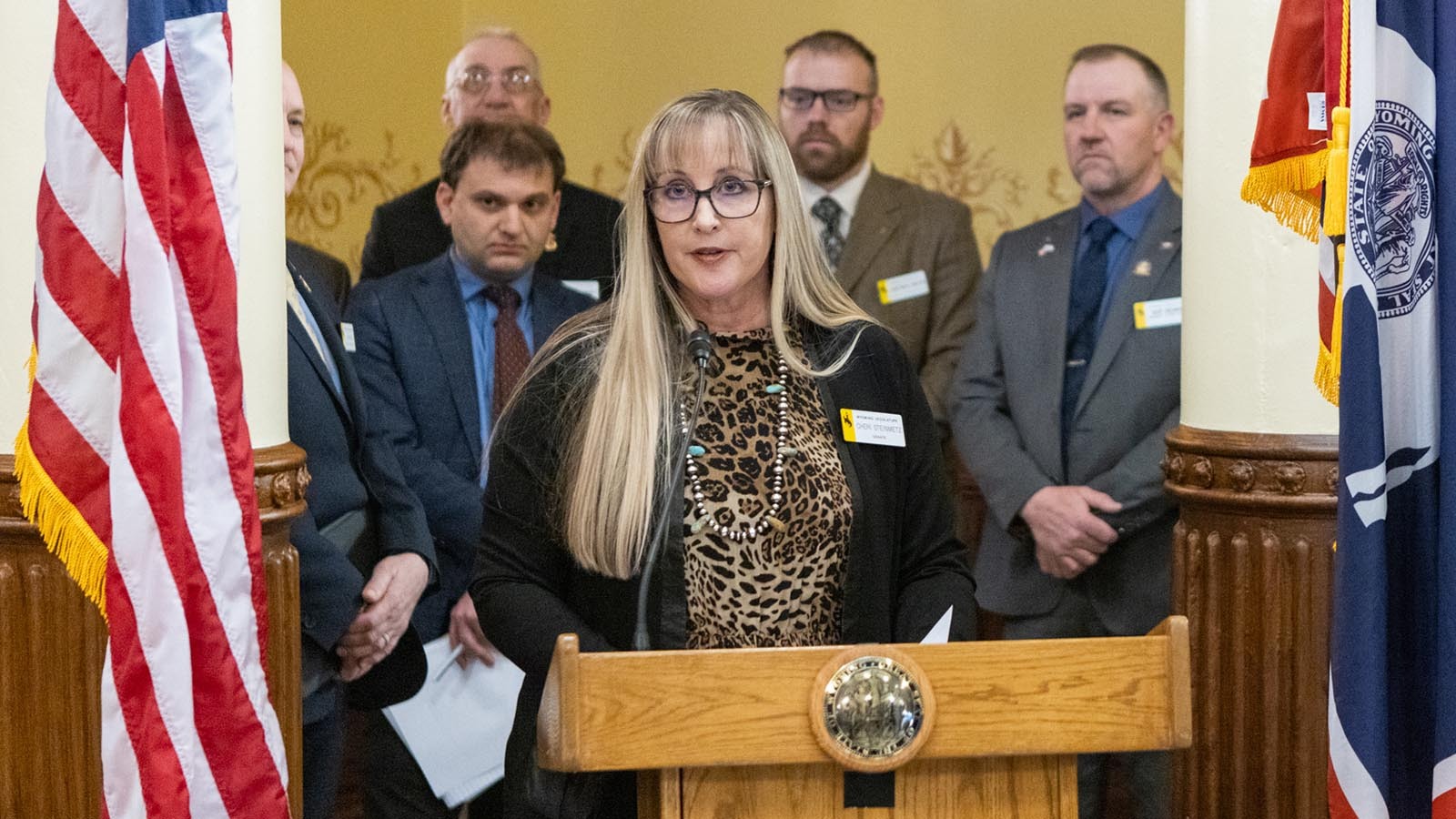
A bill is progressing through the Wyoming State Legislature, as described by the author in her op-ed Rethinking Carbon Dioxide – Wyoming’s Bold Move.  Excerpts in italics with my bolds and added images.

Torrington, WY (State Senator Cheri Steinmetz) January 7th, 2025 — The people of Wyoming have always believed in the value of questioning conventional wisdom, looking at the bigger picture and finding solutions that are possible and actually work. That’s the purpose of the bill titled “Make Carbon Dioxide Great Again”. This legislation is not about denying science, it is about applying science, thoroughly reevaluating the ‘climate change’ scientific assumptions and advocating for policies grounded in practicality, reality, and achievability – common sense.

Carbon dioxide (CO2) is vital to life on Earth.

Without it, plants could not grow, and without plants, no life would survive. Scientists and farmers alike recognize that higher CO2 levels improve agricultural productivity. Plants thrive with more CO2 – they grow faster, use water more efficiently, and are more resilient to drought. NASA’s own research shows that rising CO2 has contributed to a global “greening” effect, expanding vegetation and helping ecosystems flourish. CO2 is plant food!

Yet, despite its essential role in sustaining life,
CO2 has been demonized as a pollutant.

But what impact are human driven CO2 emissions actually capable of? We are contributing a very small part of the natural carbon cycle. Current CO2 levels are among the lowest Earth has seen over its long history. There were times in the past when ecosystems flourished under much higher CO2 concentrations. Instead of vilifying this essential gas, we should be acknowledging its role in our ecosystems and industries and protect the benefits it has in our lives.

Wyoming is uniquely positioned to lead this conversation.

Our state is vital to energy production, agriculture and food industries, transportation and energy reliability and stability. We understand the real-world importance of CO2. And we understand the benefits of CO2 used directly. Our industries already use it to enhance oil recovery, making energy production more efficient. This technology exemplifies what we are capable of when we treat CO2 as a resource rather than a liability.

The bill Make Carbon Dioxide Great Again shifts how we think about CO2.

It proposes that we stop treating the essential gas as a pollutant or contaminant. It requires a clear-eyed look at how policies aimed at eliminating CO2 emissions, such as decarbonizing the West, making Wyoming carbon negative or popular “net-zero” mandates. They may sound good on paper but often come with high economic costs and questionable environmental benefits, and clearly negative effects on our people and our industries.

Wyoming must refuse to jeopardize our economy and energy security
for initiatives that will yield – at best – questionable results.

Critics of “net-zero” strategies have highlighted the risks of pursuing policy goals without fully considering their consequences. These frequently require massive investments, disruption of reliable energy systems, and the forced undue burdens on families and businesses. Instead, Wyoming advocates for a balanced approach – one that evaluates the risks and possible rewards of any CO2 management plans that will safeguard our economic stability and way of life.

This approach challenges the status quo, and that is precisely the point. Now is the time to rethink how we talk about CO2 and climate change. This bill is not about ignoring environmental concerns; it is about addressing them with clear-eyed pragmatism and truth.

Wyoming is taking a bold step forward to lead a balanced, science-based dialogue. We all stand to benefit from this. Our energy sector, agriculture, transportation and all other industries, and even the broader environment, will gain when we use CO2 wisely.

This conversation is just beginning and must spark
a national debate about the fundamental role of CO2.

It is a debate we need to have – not just in Wyoming, with our own Governor and citizens – but across the nation and with all the organizations leading the charge to “net zero.” Let us challenge the assumptions, ask the hard questions, and make sure our policies truly serve the people, industry and the environment. After all, that is the Wyoming way.

Text of Wyoming Bill     SF0092  Make carbon dioxide great again-no net zero.

AN   ACT   relating to   environmental quality;   providing legislative findings;
specifying that carbon dioxide is not a pollutant and is a beneficial substance;
providing policy statements of the state associated with carbon dioxide;
repealing low-carbon energy standard requirements; repealing conflicting provisions;
making conforming amendments;  specifying applicability;
requiring reimbursement to utility customers as specified;
requiring rulemaking; and providing for an effective date.

Be It Enacted by the Legislature of the State of Wyoming:

Section 1.    W.S. 35-11-215 is created to read:

1             SF0092

35-11-215.     Carbon dioxide;   beneficial treatment; state policy.

(a)   The legislature finds that:

  (i)    Carbon dioxide is  a foundational nutrient necessary for all life on earth. Plants need carbon dioxide along with sunlight, water and nutrients to prosper. The more carbon dioxide available for this, the better life can  flourish;

  (ii)    The carbon cycle, where carbon dioxide is reused and transferred between the atmosphere and organisms on earth, is a biological necessity for life on earth;

  (iii)    Agricultural production worldwide is outpacing population growth and breaking production records primarily due to increasing atmospheric carbon dioxide;

  (iv)    More carbon dioxide allows plants to better resist drought by using water more efficiently;

  (v)     The national aeronautics and space administration has confirmed that global vegetation is increasing from the near-polar regions to the equator. The largest contributor to this greening of  the earth is increasing carbon dioxide;

  (vi)     Carbon dioxide levels are currently at approximately four hundred twenty (420) parts per million, which is  at near-historically low concentrations.   The current carbon dioxide levels are one-sixth (1/6) of the average of  two thousand six hundred  (2,600)  parts per million over geologic time;

  (vii)     It is estimated that carbon dioxide levels  need to exceed one hundred fifty (150) parts per million to ensure the survival of plant life on earth;

  (viii)     The earth needs carbon dioxide to support  life and to  increase plant yields,  both of     which will contribute to  the health and prosperity of  all Wyoming citizens.

   (b)     It is the policy of the state of Wyoming that:

(i)       Carbon dioxide is a foundational nutrient necessary for life on earth;

(ii)       Carbon dioxide shall not be designated or treated as a pollutant or contaminant;

(iii)       The state of Wyoming shall not pursue any targets or measures that support the reduction or elimination of  carbon dioxide,  including any  “net-zero”  targets.

          Section 2.        W.S. 37-1-101(a)(intro) and 37-2-134(a)(i)  and (iv) are amended to read:

37-1-101.       Definitions.

(a)   As used in chapters 1, 2, 3, 12, and 17 and 18 of  this title:

37-2-134.       Electric generation facility closures; presumption; commission review

(a)    As used in this section:

(i)     “Dispatchable” means as defined in W.S. 37-18-101(a)(ii) a source of electricity that is available for use on demand and that can be dispatched upon request of a power grid operator or that can have its power output adjusted, according to  market needs and includes dispatchability;

(iv)    “Reliable” means as  defined in W.S. 37-18-101(a)(iv) generated electricity that is not subject to intermittent availability.

        Section    3.    W.S.    37-1-101(a)(vi)(N), 37-18-101 and  37-18-102 are repealed.

Section    4.   Not later than sixty (60) days after the effective date of this act each public utility that recovered rates from customers under W.S. 37-18-102(c)(i) or (iii),  as repealed by section 3 of this act, shall refund those rates to customers who paid them, provided that the utility shall not be  required to refund rates recovered under W.S. 37-18-102(c)(i) and (iii) that the utility had expended for carbon capture, utilization and storage technology before the effective date of this act. Refunds required under this section shall be in a form and manner specified by the public service commission

Section    5.  The public service commission shall promulgate all rules necessary to implement this act.

Section    6.  This act is effective immediately upon completion of all acts necessary for a bill to become law as provided by Article 4, Section 8 of the Wyoming Constitution.

 (END)


via Science Matters

https://ift.tt/xEhYIGi

January 8, 2025 at 02:17PM

Los Angeles burns in winter


By Jo Nova

Something awful is going down today in California. Pray tonight for the people of the Palisades, LA. Winds are 80 to 100 mph. 30,000 people have been ordered to evacuate, so far, there are two deaths and 1,000 buildings destroyed.  It’s winter, but there is no water in the fire hydrants, hardly any firefighting planes, and “it’s like armageddon”.

One video has the sound of “popping” and we wonder about all the EV’s or home batteries that surely line the wealthy streets of the Pacific Palisades and Malibu. They surely aren’t helping. We hope everyone’s EV was fully charged before the evacuation. Imagine being told to leave your home immediately and you only needed an hour to charge…

Then there are videos like this one, or a raging inferno surrounding the house, with a thousand comments below, wondering if they survived, and asking “why are they filming”? The men sounded far too calm, saying “I’ve turned off the gas”. “Oh Shit”. The scene is so surreal I wonder if this is AI generated, but it may be people raised in Californian education, living through a moment they could not parse.

…
One comment below by Kelly Jo says “they got them out”. (We hope so.)

…
“There’s no water coming out of the fire hydrants.

You don’t see the fire fighters there, because there is nothing they can do — it looks like we’re in a third world country here.

What was your brush mitigation program. The brush up in these hills … probably have been handled, mitigated, pruned, removed for probably thirty years. It was a disaster waiting to happen.” — Rick Caruso, Real Estate Developer.

There’s been no media mention yet, but Australian gum trees arrived in Los Angeles in the 1870s and spread like weeds, with help from “over 100 companies” setting up Blue Gum plantations in a boom around 1900.  There are historic pictures of Eucalyptus trees on the hillside of the Pacific Palisades. Did the fire loving trees make the fire worse, or were they just the icing on a gargantuan multilayered cake of incompetence?

Donald Trump says “Newscum” made it dry to save a worthless fish called a smelt, by giving it less water (it didn’t work!) but didn’t care about the people…

But we know they’ll blame “climate change”.


0 out of 10 based on 0 rating

via JoNova

https://ift.tt/oF2hMCH

January 8, 2025 at 01:38PM