Season’s Greetings, from Jude and Grandma at the Great Barrier Reef

I have a grandson; not quite six weeks old.  I have been telling him – one of his names is Jude – I have been telling Jude true stories about the Great Barrier Reef. I have told him that the corals across the bay from where we live in Yeppoon, that these corals in Keppel Bay bleached stark white earlier in the year.

It was on 19th April, exactly seven months before Jude was born that I rolled backwards – scuba tank on my back – backwards off the Keppel Dive boat at Bald Rock reef into the Great Barrier Reef.  I was hoping that as with previous claims of mass bleaching, this was exaggerated.

The New York Times had featured corals from this reef in a single photograph as badly bleached.  The claim was that all the corals were badly bleached, not just at the Keppel Islands but across the Great Barrier Reef.

In the shallow waters of Keppel Bay, coral bleaching on a mass scale has been infrequent and reef recovery has usually been fast.  There was mass bleaching in Keppel Bay in 1998, 2002, 2006, 2020, with minor bleaching in between.  There are also earlier unofficial reports by local fishermen of bleaching in 1983 and 1987.

The locals will tell you that Keppel Bay’s reefs can recover rapidly from bleaching because of the fast growing dominant branching Acropora species.  After the catastrophic 2002 mass bleaching, coral cover increased rapidly, reaching 81 percent in 2004, the highest coral cover ever documented.  I am quoting a local biologist. In fact data only goes back a few years before then.

Of course, bleaching has occurred over the millennia. It is just that scuba, and more specifically underwater photography, is a recent technology and then there is the politicisation of corals.  The Great Barrier Reef is used by some to claim that we are irreversibly destroying the Earth.  By “we”, I have already explained to Jude, my grandson who is not quite six weeks old, that he would be included but not until he gets a bit older.

Then there are others who claim record high coral cover at the Great Barrier Reef as though we – to include Jude when he is older – are having no impact on the Earth.

“What is the truth”, I have already asked Jude, and does it matter?

When I ask him such questions, and also questions about the cucumbers at the bottom of the sea, he looks back at me as though I already know the answer.

His Mum and Dad, have already taken him across the bay, to Great Keppel Island, to have a look.

Jude has already been underwater at Secret Cove, with his Dad.

On 19th April, exactly seven months before he was born, I dove not only Bald Rock reef but also at Secret Cove.   The corals at Secret Cove were also all stark white back then.   Now the branching Acropora species are mostly all dead.  But there are still lots of fish and sting rays, and sponges and epaulette sharks.  This past winter, when water temperatures dropped as usual by a full nine degrees Celsius, there were also humpback whales at Secret Cove and also at Bald Rock reef.   Now these whales are underwater at the Antarctic.

His Dad after taking Jude into the water at Secret Cove on 14th December, went and caught us a fish for dinner – a sweetlip that is a fish in the genus Plectorhinchus.

His Dad has been taking Jude into the sea every afternoon for the last two weeks – into Keppel
Bay.  Jude emerges with an extraordinary calmness about him.  How I feel, when I am under the sea.

Best wishes to you for the New Year, may you find peace in nature if not in life.

 Season’s Greetings!


via Jennifer Marohasy

https://ift.tt/w4CWqVh

December 27, 2024 at 04:37PM

The Sierra Club’s Temper Tantrum

Ah, the Sierra Club. The self-proclaimed “force of nature” that now sounds more like a force of foot-stamping toddlers in its melodramatic press release, “We Will Be A Force Of Nature Defending Our Communities and Our Planet From Trump.” Brace yourselves, folks—this isn’t just virtue signaling; it’s virtue shouting, complete with a tambourine and a megaphone. Let’s break this down, shall we?

Trump, The Supervillain
The Sierra Club opens by declaring that Donald Trump is basically a climate supervillain, twirling his metaphorical oil-soaked mustache while plotting to destroy the planet. Their evidence? Well, they don’t actually provide much. Instead, we get vague claims about him prioritizing “profits over people.” Shocking, I know. Imagine a politician caring about the economy.

“Donald Trump was a disaster for climate progress during his first term, and everything he’s said and done since suggests he’s eager to do even more damage this time. Trump has put profits over people time and again, prioritizing the bottom line of the Big Oil CEOs who bought and paid for his campaign above communities across the country who face the threat of pollution and the devastating impacts of the climate crisis, and seeking to keep us hooked on fossil fuels rather than investing in a clean energy economy.  

But here’s the kicker: during Trump’s presidency, U.S. carbon emissions actually dropped. Yes, you heard that right. The dreaded fossil fuel-loving administration presided over real, measurable environmental progress, largely thanks to natural gas replacing coal. Did the Sierra Club mention this? Of course not. Facts have no place in a theatrical rant.

Litigation Addiction
The press release brags about filing more than 300 lawsuits against Trump’s administration. Three hundred. Let that sink in. This isn’t environmentalism; it’s a legal hobby gone wild.

“During Trump’s first term, we fought relentlessly to defend against his administration’s attacks on climate progress and clean air and water, and we are ready to fight again. We will challenge Trump’s dangerous proposals in court, keep the pressure on banks and big corporations to clean up their act, and mobilize our 64 chapters and millions of members and volunteers nationwide to continue to make progress at the state and local levels. 

Imagine the Sierra Club’s office: stacks of legal briefs, overpriced lattes, and interns furiously Googling “How to sue the EPA.” And for what? Many of these lawsuits were less about protecting the environment and more about grinding the gears of government. They claim credit for coal plant retirements, but those closures were driven by economics, not lawsuits. It’s like showing up to a parade, jumping in front of the band, and claiming you led the march.

Fantasy Economics 101
Let’s talk about their love affair with the Inflation Reduction Act (IRA). The Sierra Club waxes poetic about the “millions of new clean energy jobs” it’s supposedly creating. Translation: temporary gigs propped up by taxpayer subsidies. Call me cynical, but I’d prefer jobs that don’t vanish the moment Uncle Sam shuts off the cash faucet.

And about clean energy being “cheaper” than fossil fuels? Sure, as long as you ignore the subsidies and the occasional inconvenience of, say, nightfall or a calm day. Meanwhile, your utility bills are climbing, but don’t worry—that’s just the cost of saving the planet, one unreliable solar panel at a time.

“We’re Diverse, So We’re Right”
The Sierra Club couldn’t resist throwing in a bit of virtue signaling, boasting about their movement being “bigger, bolder, and more diverse.” Because nothing screams effective climate policy like a diversity statement. Look, diversity is fine, but it doesn’t make your ideas less ridiculous. You can assemble a rainbow coalition of activists to chant slogans, but that won’t keep the lights on during a windless winter night.

The Grand Finale of Overwrought Nonsense
Finally, we’re treated to the climactic rallying cry: “We will be a force of nature…to defend our democracy and critical environmental protections.” This is peak melodrama. A “force of nature”? Really? Forces of nature don’t whine in press releases or clog up courts with frivolous lawsuits. They actually accomplish things.

What we have here is not a force of nature, but a force of sanctimony—a group more interested in shouting slogans than solving problems. They’re too busy congratulating themselves on being righteous to notice that their policies are driving up energy costs, undermining reliability, and doing precious little to change the climate.

Conclusion: Less “Force of Nature,” More “Force of Nonsense”
This press release is less a call to action and more a call to fundraising. It’s a stew of hyperbole, half-truths, and empty posturing, served with a side of smug self-satisfaction. If this is the Sierra Club’s idea of fighting for the planet, we’d all be better off if they went back to their roots and just stuck to hiking​.

H/T Mike Lorret


Discover more from Watts Up With That?

Subscribe to get the latest posts sent to your email.

via Watts Up With That?

https://ift.tt/ijpMalt

December 27, 2024 at 04:06PM

Great communist successes: Cuba the “sugar bowl of the world” now has to import sugar

By Jo Nova

Things were dire in October, and they aren’t getting better:

Spare a thought for the people of Cuba.   In October, Cuba suffered through a week of extended blackouts when 7 out of 8 power plants were out of action. After power was restored it meant people in Havana, the capital city, got 4 or 5 hours of electricity a day. (So they only had 20 hour blackouts each day, instead of 24 hour ones.) According to The National, people often travel by horse-drawn carts rather than motor cars, and in the countryside, it’s a common sight to see ploughs being pulled by oxen. “Motorways connecting major cities are eerily quiet. ”

Not surprisingly, in the last few years, ten percent of the entire population has left (mostly for Florida). Unfortunately for Cuba, these were the working age adults. Predictably, the loss of productive workers and productive electricity means the loss of product, and so it has come to pass:

John Hindraker, Powerline

This is like Libya running out of sand: Cuba is now an importer of sugar:

The Cuban government acknowledged that it is “shameful” for the island, traditionally one of the leading sugar producers in Latin America, to be forced to import this product.

Cuba was once known as the Sugar Bowl of the world.

John Hindraker calculates that the current cost of a pound of sugar in Cuba is about $25 US.

Blackouts on top of Blackouts

Apparently, the Cuban grid managers were expecting to be 1,311MW short today on a grid that was theoretically 3,150 MW. The reasons being just about everything:

The power outages are primarily due to a deficit in power generation, compounded by issues such as equipment failures and maintenance at key thermal power plants, as well as fuel shortages affecting distributed generation stations.

Not surprisingly, the buzz of diesel generators, and $25-per-pound sugar means the islands other big industry — tourism — is dying aswell:

The National

One hostel owner in Old Havana, the capital’s partly-restored tourist hotspot, said that there used to be “a lot of tourists” but the situation now was “very, very difficult”.

As usual the Media is covering up for Communist dictators. Francis Menton looks at China and Venezuela as well:   End Of Year World Socialism Round-Up: Cuba, China, Venezuela

Though The NY Times has a story on Cuba — but only because they think they can blame it on Domald Trump.

Ten years ago, President Barack Obama stunned the world by restoring diplomatic relations with Cuba, ending more than 50 years of Cold War estrangement between the United States and a country with which it had once been on the brink of nuclear war.

For two and a half years, Cuba brimmed with enthusiasm amid a remarkable wave of investment and tourism,…

But a financial implosion caused by a cascade of factors — the tightening of U.S. policy by the Trump administration, Cuba’s mismanagement of its economy, the crushing effect of the Covid-19 pandemic — has kept visitors away and launched an immigration exodus of epic proportions.

Teach the children. Big Governments can wreck anything.


0 out of 10 based on 0 rating

via JoNova

https://ift.tt/Y5eWuqm

December 27, 2024 at 02:15PM

German Death Wish On Display

Tilak Doshi describes the self-inflicted German downfall in his Daily Sceptic article Germany’s Economic and Political Suicide. Excerpts in italics with my bolds and added images.
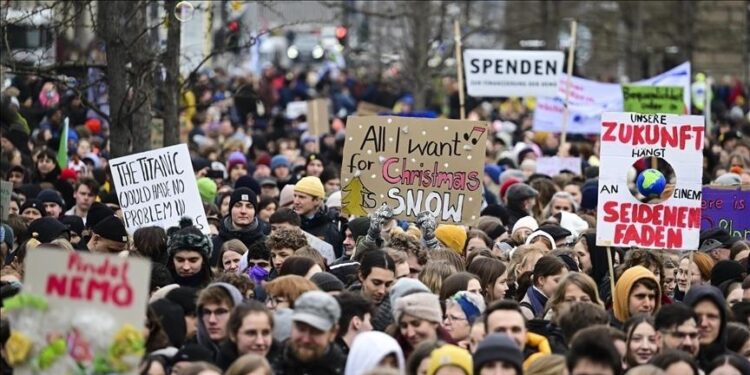
It’s that festive time of the year when interesting tales get told around a fireplace. So here goes (minus the fireplace).

Once upon a time there lived a country that was the envy of the world. It was among the world’s pre-eminent producers of manufactured goods. From chemicals and pharmaceuticals to precision engineering and the brewing of beer, it was second to none. Its people’s work skills, industriousness and discipline became the national hallmark of civilisational success. The country gained fame and fortune in bringing the luxuries of fine automobiles to the world’s rich and aspiring middle classes.

Alas, a blight visited that once great country not more than a score of years ago, though its destructive seed had been planted earlier. It was not some external force or act of God. Rather it was a sickness of the mind, a debilitating disease of the soul, that vexed that country’s ruling class. In restless search for virtue, the country’s rulers paid obeisance to the Goddess Gaia and promised the nation’s blood and treasure to satiate her inviolable sovereignty over her earthly domains.

This, then, is a tale of woe and misery. This Christmas shall not have been one of unalloyed merry times and good cheer. And while beer will have been drunk and dinners eaten in many a hearth and eating place, the lifeblood of that nation shall be constricted and its breathing blocked by a cursed phlegm as normal life resumes in the New Year.

Within the fateful score of years of becoming afflicted by the primordial cult of Gaia, the world’s envy has now become a sad basket case. Its economy has been tarnished as “the sick man of Europe”.

The beginning of the end of the German miracle

While the travails of Germany along with the economic stagnation of Europe as a whole have been apparent for some years now, the spate of dire headlines have gathered pace in recent weeks as the coalition government collapsed.

“Behind Germany’s Political Turmoil, a Stagnating Economy” — New York Times (December 17th)

“Germany Is Unraveling Just When Europe Needs It Most” – Bloomberg (December 15th)

“Europe’s Economic Apocalypse Is Now” – Politico (December 19th):

If Europe – and its economic powerhouse Germany – remains on its current trajectory, its future, Politico says, “will also be Italian: that of a decaying, if beautiful, debt-ridden, open-air museum for American and Chinese tourists”.

The economic rot induced by the adoption of Energiewende policies for the “energy transition” in 2010 resulted ultimately in the recession of the German economy in the last two years. Among the manifestations of this rot are the growth of corporate bankruptcies in double digits, soaring layoffs as the Federal Employment Agency said that the unemployment figure could exceed the three million mark for the first time in 10 years at the beginning of 2025, and the crown jewel of German industry, its automative sector, announcing massive job cuts.

According to a recent poll, 40% of industrial companies are currently considering reducing their production in Germany or relocating it abroad due to the energy situation; among industrial companies with more than 500 employees, more than half are now considering this. High labour costs, caused by the myriad regulations of a hyperactive administrative state, and among the world’s highest energy prices brought about by its Energiewende folly, have led to the nation’s de-industrialisation.

Germany’s governing coalition collapsed after Chancellor Olaf Scholz fired Finance Minister Christian Lindner, plunging Europe’s largest economy into political chaos. This occurred barely hours after Donald Trump’s U.S. election victory triggered existential questions about the future of the Continent’s economy and its energy security. Mr. Trump – a climate sceptic who has promised to bring the U.S. out of the UN’s Paris Agreement and its financial commitments for large scale transfers of funds to developing countries – will pull the rug out from under the EU’s famed if quixotic climate leadership.

Europe’s economic implosion is self-induced. Its ruling elites over-tax and over-regulate the private sector and obsess with promoting unreliable renewable energy to replace fossil and nuclear fuels in its crusade to ‘save the planet’ from an alleged impending climate apocalypse. Its attempt to blame Russia’s President Putin for high energy prices is hollow and self-serving.

Perhaps most revealing of Europe’s regulatory hubris is the Qatari Energy Minister’s recent statement that “I am not bluffing”. He warned that Qatar, one of the world’s largest natural gas suppliers, would cease gas exports to the EU if the bloc’s countries imposed penalties under recently adopted legislation on “sustainability due diligence”. For Europe to tell the world that it would punish foreign countries that did not buy into their “sustainability” beliefs might seem to most non-European observers as the height of arrogance. But such is the delusionary might of the Gaia cult.

The EU’s “Corporate Sustainability Due Diligence Directive”, which entered into force in July, allows for fines of up to 5% of a company’s annual global revenue “if the management fails to address adverse human rights or environmental impacts”. Bumptious Brussels bureaucrats seem to believe that their ideas of “sustainability” command universal acceptance. This, in a world where China, India, Indonesia, Vietnam and other populous developing countries, accounting for most of the world’s population, are busy expanding their capacity to mine coal and other fossil fuels so as to afford their citizens access to affordable and reliable energy.

Back to barbarism

“Little else is requisite to carry a state to the highest degree of opulence from the lowest barbarism but peace, easy taxes, and a tolerable administration of justice: all the rest being brought about by the natural course of things.”

So said Adam Smith, the great sage of political economy, over 250 years ago. Germany has shown that the converse may also be true. To go from opulence to poverty and potential barbarism is but a short road, assured by the burden of high taxes in service of an alleged climate crisis, and an intolerable administration of “climate justice” that demands suffocating regulations on the private sector.

via Science Matters

https://ift.tt/WY3dGRN

December 27, 2024 at 02:13PM