Internal Watchdog Urges Biden’s Green Loans Office To Stop Working On New Loans Amid Conflict Of Interest Concerns

From the DAILY CALLER

Daily Caller News Foundation

Nick Pope
Contributor

An internal federal watchdog called on the Biden administration’s green loans office to stop working on new deals in a Tuesday letter, citing concerns that the office has insufficiently managed potential conflicts of interest in its work.

Department of Energy (DOE) Inspector General Teri Donaldson wrote to Under Secretary of Energy for Infrastructure David Crane on Tuesday to inform him of preliminary findings that the Loan Programs Office (LPO) does not keep track of conflict of interest disclosures or waiver requests for its loans. Donaldson also said the LPO should “put into abeyance all loan and loan guarantee packages” until LPO can ensure that all appropriate safeguards are being observed. The LPO has been on a tear since President-elect Donald Trump won the election on Nov. 5, locking in several major loans and reportedly hustling to seal others in the transition period. This, over the protests of Republicans who believe the office’s lame duck lending bonanza flies in the face of the electorate, whose will was expressed on Election Day.

“Despite the risks and conflicts that could arise if the LPO contracts with contractors that also work for prospective borrowers, the [Office of the Inspector General (OIG)] audit team was surprised to learn that the LPO does not ensure that contracting officers and contracting officers’ representatives track third-party experts,” Donaldson’s memo states. “For example, for the 18 projects reviewed by the OIG, the LPO Technical Division was able to provide the OIG with the name of the applicant’s third-party engineering experts for only 3 of the 18 projects.” (RELATED: House Republicans Threaten To Slap Biden’s Green Energy Loan Czar With Subpoena)

The OIG’s memo also states plainly that “LPO does not track contractors who may be serving both the LPO and prospective borrowers” and that a key LPO contractor called Archetype “did not implement the organizational conflicts of interest training program required by its own Management Plan.” Its shortcomings in abiding by procedures to ensure taxpayers are protected amount to a situation in which “the LPO has functionally abandoned any responsibility for identifying, evaluating, avoiding, neutralizing, or mitigating conflicts of interest,” Donaldson wrote.

To date, LPO has finalized 15 loans, worth a combined total of $15 billion, and the office is apparently planning to cement another 13 loans worth $22 billion before the Trump administration takes office next month, according to Donaldson’s memo. The DOE OIG has previously highlighted in official documents that LPO is prone to waste, fraud and abuse of taxpayer funds, particularly given its push to finalize loans quickly.

Just days before Donaldson sent her memo to Crane, a group of House Republicans demanded that LPO stop issuing new loans in light of risks to the taxpayer posed by rushing to shovel billions of dollars out the door in a small window of time. For its part, the DOE contends that the OIG’s reporting is “unorthodox” and “filled with errors,” according to Bloomberg News.

However, Donaldson’s Tuesday memo includes a comment from the auditor hitting back at DOE’s assertions that the review never identified a specific example of a conflict of interest.

“The Department’s assertion that the OIG has not identified any actual conflicts of interests misses the point of the audit. The scope of the OIG audit is to assess the LPO’s processes and internal controls to prevent and mitigate potential conflicts of interest,” the memo states. “The scope of the audit did not include attempting to audit the entire LPO portfolio for actual conflicts of interest. Moreover, an audit to identify actual conflicts would be very difficult to perform at this time because the LPO simply does not track the information necessary to identify conflicts of interest.”

Additionally, LPO Director Jigar Shah has also attracted scrutiny from elected Republicans who have suggested he is essentially selling access to his massive LPO war chest by continuing to associate with the Cleantech Leaders Roundtable, a green energy trade group he established prior to joining the Biden administration.

The LPO was active under the Obama administration, granting a $535 million loan to Solyndra, a green company that went bankrupt approximately two years after it closed on the LPO loan. The office was not especially active during the Trump years, but the Biden administration and Congress gave hundreds of billions of dollars to LPO to loan to fledgling green companies that may otherwise struggle to secure private sector financing.

The DOE did not respond immediately to a request for comment.

All content created by the Daily Caller News Foundation, an independent and nonpartisan newswire service, is available without charge to any legitimate news publisher that can provide a large audience. All republished articles must include our logo, our reporter’s byline and their DCNF affiliation. For any questions about our guidelines or partnering with us, please contact licensing@dailycallernewsfoundation.org.


Discover more from Watts Up With That?

Subscribe to get the latest posts sent to your email.

via Watts Up With That?

https://ift.tt/jgeQu6N

December 19, 2024 at 12:04AM

‘Actually,’ MSNBC, Trump’s Energy Secretary Pick is Right, Climate Change Does Have Benefits

From ClimateREALISM

By Linnea Lueken

Chris Wright speaking at American Conservation Coalition’s 2023 Summit. Photo by Gage Skidmore from Surprise, AZ, United States of America, CC BY-SA 2.0 , via Wikimedia Commons

A recent article posted at MSNBC, written by Ja’han Jones, titled “Trump’s pick for energy secretary thinks climate change is good, actually,” claims that Trump’s energy secretary pick Chris Wright is wrong to claim that there have been positive impacts from climate change, rather than the looming catastrophe the media claims. Wright is right, and Jones at MSNBC is wrong.

Jones writes that Wright “has downplayed the risks of rising global temperatures and argued that climate change might actually be good for the world.” He goes on to quote a Wall Street Journal article that quotes Wright from an interview he did with PragerU, where the WSJ reported:

“But he also says climate change makes the planet greener by increasing plant growth, boosts agricultural productivity and likely reduces the number of temperature-related deaths annually. “It’s probably almost as many positive changes as there are negative changes,” he told conservative media nonprofit PragerU last year, referring to climate change. “Is it a crisis, is it the world’s greatest challenge, or a big threat to the next generation? No.”

Jones complains that “the things Wright lists as positives of rising atmospheric carbon — like more plant growth and a boost in ‘agricultural productivity’ — don’t always occur in climate change scenarios, and when they do, they aren’t always positive developments.”

Jones is conflating real world observations of increases in plant growth and crop productivity, which are what Wright is referring to, and climate computer model scenarios, which are not real and often don’t produce results that correspond to reality, especially but not limited to various of their projections of crop production under climate change. As Climate Realism has repeatedly discussed, here, here, and here, for example, models run way too hot, and as a result their projections about various types of impacts are way off.

Crop production has increased globally, with a large part of that increase being attributable to increased carbon dioxide and improved growing conditions. For instance, cereal crops (wheat, rice, corn, et cetera.) which make up a large percent of staple foods for people around the globe have increased massively. Data from the U.N. Food and Agriculture Organization (FAO) show that cereal yields have increased by around 52 percent, and production grew by 57 percent, between 1990 and 2022. (See figure below)

World records are set frequently, with the most recent occurring in 2022.

At Climate Realism, we have written over 200 articles going examining production and yield data various crops around the world, at local and global scales. The data show increasing trends in crop production can be found for most crops across the spectrum, from fruits to tubers to vegetables. Both production and yields have increased, and this can only be a good thing for decreasing rates of hunger and malnutrition.

It is not just cropland either. According to data from NASA, the earth has greened over the same period that the most alarming warming is supposed to have occurred, deserts are being reclaimed and wildlife habitat expanding — and no catastrophe for life has accompanied it.

Another point Jones attempts to make is that “contrary to Wright’s claim about temperature-related deaths, the Environmental Protection Agency reported this year that ‘dramatic increases in heat-related deaths are closely associated with the occurrence of hot temperatures and heat waves.’”

Jones is being deceptive. He shifted to discussing just heat-related deaths, when Wright said temperature related deaths have declined. Once again, Wright has the facts on his side.

Because of the declines in days with cold temperatures, deaths tied to suboptimal cold temperatures have declined significantly as the planet has modestly warmed. Data from a recent analysis published in the Lancet shows that cold deaths significantly outnumber heat related deaths, by almost 10 to 1, with cold killing more than 6 million people every year, and heat killing only just over 600 thousand. Between the years 2000 and 2019, an increase in heat related deaths of about 116 thousand, has been offset by a decline in cold related deaths by about 283 thousand. Cold deaths have declined by more than double any increase in heat related mortality. This means Wright was correct, there has been a net decrease in temperature related deaths.

To finish the article, Jones lists off the whole bevy of other alleged catastrophic impacts of climate change, including wildfires, droughts, insect borne diseases, and other subjects, all of which Climate Realism has discussed in detail previously, none of which are worsening.

Jones’ and others’ claims to the contrary, Wright is correct that climate change has produced substantial benefits over the past hundred-plus years, benefits that are rarely discussed by the mainstream media. By contrast, contrary to the mainstream media’s constant flow of assertions of doom, climate change has caused little in the way of proven concrete harms. Jones and MSNBC at large would do their readers a service by actually looking into the subjects that Wright and similar climate realism proponents discuss, rather than uncritically reposting canned claims climate induced disasters handed to them by alarmists.


Discover more from Watts Up With That?

Subscribe to get the latest posts sent to your email.

via Watts Up With That?

https://ift.tt/V3XSxaQ

December 18, 2024 at 08:05PM

New Mexico Should Dump Its ‘Clean Energy’ Policies

From MasterResource

By Kenneth Costello

“New Mexico has one of the highest poverty rates in the country. Higher energy prices are in effect a regressive tax that places low-income households in the state in peril.”

Energy policies that originate from a political or quasi-religious agenda—propelled by climate zealots, misinformation, and obliviousness to basic economic principles—are on trial in the new political environment. Such policies sacrifice the public good to benefit special interests wed to rent-seeking.

While this commentary focuses on New Mexico, its urgings are applicable to other jurisdictions that currently have or are considering government-driven energy policies featuring mandates and subsidies that encourage consumers to transition away from fossil fuels. 

Three Hard Truths

Three truths should determine energy policy in New Mexico.

1. No climate benefit. Whatever action the state takes to reduce greenhouse gas (GHG) emissions has a negligible effect on climate change.  Even what California does has no measurable effect.  The same is true everywhere. As noted by one analyst, “[T]he entire Paris agreement, if implemented immediately and enforced strictly, would reduce global temperatures by 0.17 degrees C by 2100, under assumptions that exaggerate the effects of reduced greenhouse gas emissions.”  This is what the climate models calculate.  

Any measurable effect on future climate change requires effective, drastic cooperation by both developed and developing countries (think of China and India).  Aggravating this problem is the fact that those countries with the most to gain from controlling climate change have the least financial capacity to do so. Wealthy countries have more resources and site-specific technology to adjust to changing climate than developing countries have.  Besides, there exists no easy way to induce cooperation from developing countries as long as they view emissions reduction as disrupting their economic growth rates.  As a rule, growth-oriented (especially developing) economies will relegate climate change to the back burner.  This has been the decades-long experience so far.

Controlling climate change in one country, state, or locality advantages jurisdictions that do not mitigate.  Nobel laureate William Nordhaus considers free riding as the main culprit for the lack of progress in climate policy.  While free riding is not uncommon, it is especially prevalent for global public goods like the atmosphere.   Aggravating this problem are the differences in the benefits individual countries receive from climate control, along with differences in the costs borne, making international cooperation difficult. The failure of both the Kyoto Protocol (1997) and Paris Climate Accord (2015) speak for themselves although hope springs eternal to the climate lobby.

2. Price Inflation New Mexico’s Energy Transition Act (ETA) and electric vehicle (EV) mandates, as well as other state and local actions to shrink GHG emissions, inevitably drive up energy prices to New Mexicans.  The ETA, which became law in March 2019 requires, among other things, generation technologies to be 50% renewable by 2030, 80% by 2040, and 100% carbon-free by midcentury.  It is understandable why environmentalists support the ETA, but so does New Mexico’s largest electric utility (Public Service of New Mexico or PNM).

The law guarantees that utilities recover their stranded costs from retiring earlier their fossil fuel plants if they comply with the act, while environmentalists achieve their paramount goal of transitioning energy away from fossil fuels to wind and solar.  The losers from this bootleggers-and-Baptists coalition are energy consumers.  The ETA weakens the long-standing authority of the Public Regulation Commission to prohibit utilities from passing through imprudent costs to their customers.  This shift toward cost-plus regulation has the undesirable effect of diminishing a utility’s incentive to economize on its operating and capital costs. The ETA has in effect created a “moral hazard” environment:  a utility has no financial risk for complying with costs imposed by the law. 

One can then portray the ETA as a Faustian bargain whereby PNM has agreed to a clean energy agenda (appeasing the state’s political elites) in return for surety of financial rewards?  Of course, the losers are PNM’s customers. 

3. Cost-Benefit Failure The third truth follows from the first two:  clean energy policies miserably fail a cost-benefit test for New Mexico, especially when subsidies like tax credits for EVs and mandates favoring renewable energy and specific technologies are major features.  Consequently, we should expect a decline in the state’s economic growth, in addition to imposing a disparate burden on low-income households (higher energy prices generally are regressive) and hurting energy consumers in general. 

Specious Reasoning, Bad Policies

New Mexico’s energy policies relegate cost-benefit analysis, sensible economic principles, and sound public policy to a subordinate if not nonexistent role.  One must then ask why New Mexico is so committed to promoting clean energy?  More than anything, it seems that these policies descend from the quasi-religious conviction that society needs to drastically reduce GHG emissions or else it will inescapably face future catastrophes (a “chicken little” mentality if you will).  We can, hence, brand New Mexico’s energy policies as a “climate first” agenda.

One problem is that the public and politicians may act on the basis of erroneous information from sensational reporting by the press on the severity and immediacy of damages from climate change – for example, likelihood-of-catastrophe inflation because of distorted media coverage of the scientific evidence, which places an excessively high chance on calamitous events and assumes that the science is settled.  The media seems to assign more precision to climate models and more accuracy to their predictions than warranted by the evidence; they omit the fact that the worst-case scenarios or disastrous outcomes are not expectations in the statistical sense.  

Put differently, while the science says that such scenarios could happen, they have a much lower probability than conveyed by the press, politicians and policymakers to the general public.  One can conclude that both the media and climate activists are misusing science for advancing their separate agendas (e.g., selling newspapers and fostering an ideology).  The hysteria (“climate change is the greatest crisis our world has ever faced; we can’t spend too much, too soon to mitigate this problem”) triggered by this misinformation has led to misguided and highly costly energy policies throughout the world, including in New Mexico.

One glaring observation stands out:  much of the active climate policies arises from what economists call rent-seeking, indicating that special interest groups are the true catalysts for these policies.  Their inherent interest encompasses only themselves – not the broader public interest.  Their vision of the future entails filling up their pockets or satisfying their dogma – for example, not aggressively tackling climate change is a social injustice.  This seems especially true in New Mexico.  Yet (in case anyone has forgotten) the job of policymakers is to balance the different interests (including energy consumers) to best serve the public good.  What an antiquated idea!

Economists consider most subsidies to be inefficient, most often politically motivated, and enduring too long.  Their preference is to have the government reallocate funds for basic research.  But political forces have prioritized existing clean technologies with their strong lobbyists more than potentially future ones.

Before adopting an energy policy, as an exercise in democracy the state should entertain the idea of polling its citizen to find out how much they would be willing to pay to have clean energy.  I conjecture that it is far less than what the clean energy policies will compel them to pay.  A surprising feature of Kamala Harris’s presidential campaign was her silence on climate change; her strategists ostensibly advised her that advocating for an aggressive and costly climate policy is a net loser:  whatever benefits Americans may perceive are more than offset by the costs, which include restricting the cars they can buy, higher electricity rates, lower economic growth, lower quality of life, and job losses in some industries.

As stated by one climate expert:

Climate policy has increasingly become a lose-lose for progressive politicians.  Mentioning climate policies alienates moderate voters who worry about their tremendous cost.  But acknowledging these downsides alienates the young voters who are enthusiastic about green ideals.  If you admit net zero could be a bit unrealistic, they feel betrayed.

EV Mandate

It is understandable why the public has become exasperated with the climate fanatics.  Behind clean energy policies is the belief that consumers can’t be trusted to behave rationally or in a socially desirable way.  The EV mandate, for example, forces consumers to do something that they otherwise would not do.  On November 16, 2023, the Governor’s appointed Environmental Improvement Board adopted a stringent clean car rule that requires 82% of all new vehicles delivered to the state to be zero-emission by 2032.  By reducing options for vehicle owners, driving will become more expensive in New Mexico.  Besides, subsidizing EVs will disproportionately benefit middle- and upper-income households over low-income households.

Perhaps the oddest part of the state’s EV agenda is that it hopes to trim the number of gasoline/diesel-powered vehicles in the state without knowing whether that is what the citizens of New Mexico want.  The agenda is saying to New Mexicans that the government knows better what types of vehicles New Mexicans should purchase than they do, ignoring the wishes of the citizenry in the process.  Today only about 1 percent of the vehicles in New Mexico are EVs.  Car owners are, with good reason, wary of EVs for various reasons, including high upfront costs, limited range, and people’s inherent skepticism of new technologies.

Both for equity and economic efficiency reasons, government inducements, whether to hasten the number of EVs or charging stations are a bad idea.  For example, purchasers of EVs are mostly in the high-income category, and that will likely hold for the foreseeable future.  What that means is that tax credits and other subsidies will benefit the well-to-do, and will be paid for by people who are less financially well-off.  One study noted that up to 90 percent of EV purchase incentives adopted by the federal government have flowed to the richest one-fifth of households. 

Do EVs have a promising future? Technological advancements in batteries, other aspects of production, and charging stations will determine consumers’ demand for EVs and manufacturers’ profits from EVs, ultimately deciding the product’s fate.  Their success is more likely if government steps out of the way and allows EV providers to address market demands to lure consumers with price reductions and better vehicle performance – not with subsidies and mandates.

Energy Efficiency

Subsidies for energy efficiency (EE), a major piece of the state’s energy policies funded by both utility customers and taxpayers, presume that energy consumers are irrational and uninformed of the benefits from EE.  The idea that markets are less than perfect does not imply that intervention in the form of utility subsidies or government mandates benefits society.  One of the major errors in government actions in many areas starts with the premise that since markets aren’t perfect, the government should intervene.  More often than not, such intervention results in a higher cost to society than the benefits received.  

The concept that often gets ignored in public policy debate is “government failure.”  The reality is that all markets are “imperfect” in the sense that consumers lack perfect information or don’t always process the information they have rationally.  If one relies on that criterion for intervention, then government meddling to refashion consumer behavior could be justified in virtually all markets.  For example, some EE advocates point to the lack of access to financing as a reason for underinvestment in EE.  They incorrectly widen the definition of market failure beyond its intended meaning.  It may very well be that energy consumers prefer investing in other things, like home repair, new cars, or college, rather than EE.  And that’s not because of market failure.

Another fact is that academic reviews of EE programs conclude that such programs are not the “low-hanging” fruit that many people believe them to be.  They show that utilities grossly overstate energy savings from EE programs because they rely on engineering estimates that fail to account for consumer behavior (the so-called “rebound effect” or price-elasticity effect) in using, say, their higher energy-efficient air conditioners and heating systems more intensively because of lower operating costs.  (Incidentally, as I was told, after California mandated low-flow toilets and low-flow showers, people started to flush two or three times and take long showers or baths.  I am sure that proponents of the mandate failed to consider these changes in consumer behavior when forecasting the water savings.). 

Studies also find “free riders” participating in EE programs.  They are individuals who would have purchased lower energy-use appliances or heating and air conditioning systems in the absence of the EE program.  It would be wrong to count their energy savings as real benefits, which can show a program as cost-effective when, in fact, it is not.  Some studies have shown that participants in utility EE programs are primarily consumers who are wealthier, own their own homes, and are better informed about and attentive to energy costs.

New Mexico at the Crossroads

We are already seeing the effect of clean energy mandates in PNM’s rate filings, which call for increasing electricity rates partly to comply with ETA’s mandates (“the chickens are coming home to roost”).  As expected, one study has shown that states with the largest increases in electricity rates in recent years have the most active climate policies, which typically include renewable-energy mandates.  Although New Mexico’s electricity rates today are below the national average, it should come as no surprise if they soar above the national average in the near future.

New Mexico is a poor state with one of the highest poverty rates in the country.  Most of the states with aggressive climate policies (largely “blue states”) are much wealthier.  They can better afford to have their citizens pay higher energy prices and tolerate lower economic growth than a state like New Mexico.  Higher energy prices are in effect a regressive tax that places low-income households in the state in peril.

Caution from California, Germany

Good energy policy recognizes that in a clean-energy world (1) there is no free lunch (look no further than the misadventures in California and Germany), (2) all costs are opportunity costs (monies spent on reducing GHG emissions could be allocated to more urgent problems such as reducing poverty and replacing old infrastructure), (3) trade-offs in a world of scarcity are inevitable (renewable energy versus reliable and low-price electricity service), and (4) benefits should exceed the costs.  One doesn’t have to dig too far to see that an aggressive climate policy like New Mexico’s, which some politicians and others want to fast-track even more, falls short in meeting these criteria.

As an example, California has traveled down a primrose path.  As reported by S&P Global, “electric rates surged 63 percent in the San Diego area, 44 percent in the San Francisco area and 39 percent in the Los Angeles area between 2020 and 2023, far outpacing the still-steep 24 percent rise in U.S. cities on average, according to data from the US Bureau of Labor Statistics.”  Another observer described the absurdity of the California energy market this way:  “In pursuit of reaching net-zero carbon emissions by 2045, the Newsom administration has given billions in subsidies to the “renewables” industry, at the same time it has relentlessly attacked producers of conventional energy.”  California has also experienced electric power reliability problems, attributed by some to the allocation of large sums of money to achieving the state’s stringent clean energy goals.  New Mexico may be taking the same inane path of diminished service reliability and swelling electricity rates.

Germany’s “Energiewende” program, which features an ambitious plan for renewable energy, has been described by one analyst as a risk “undermining [Germany’s] long-standing position as a European economic powerhouse and global leader in manufacturing.”  Another observer commented that “Energiewende has contributed to a steep drop in Germany’s industrial production and employment.”

Why Energy Politics?

Government controls over GHG emissions directly affect goods and services, such as electricity and transportation, whose costs will likely escalate.  If controls include banning or severely restricting fossil fuels like gasoline, the costs could be substantial.  We have an abundance of fossil fuels at affordable prices, which explains why over 80% of the world’s energy still comes from fossil fuels.  This raises the question of whether we want to, or even can, wean ourselves from fossil fuels over the next two or three decades without suffering severe economic consequences.  Studies and real-world experiences have shown that a hasty energy transition away from fossil fuels can be highly disruptive and costly both to energy consumers and the general economy.

One expert has succinctly depict the problem of premature renewable dependency: 

Although campaigners say solar and wind are cheaper than fossil fuels, this is only true when the sun is shining and the wind is blowing.  In reality, these renewables need massive subsidies and redistributive taxes, which have driven up electricity costs in the European Union by 50 percent since 2000, now costing each person an additional $300 annually.

From my experience working on energy policy since the 1970s, to gain political and public acceptance, advocates of a particular energy policy typically overstate the benefits and understate the costs.  After all, concealing the costs obviates the need to explain the benefits.  Government-driven energy policies inherently place more faith in the implausible benevolence and infallibility of government intervention than in the choices made by consumers and other participants in the marketplace.  These policies almost guarantee diminished economic efficiency, lower economic growth, and amplified economic inequality.  Sadly, we can expect New Mexico’s clean energy policies to drive the state down this futile, wasteful, unjust road.

—————-

Kenneth W. Costello, regulatory economist and independent consultant, has worked for the National Regulatory Research Institute, the Illinois Commerce Commission, the Argonne National Laboratory, and Commonwealth Edison Company. His specialties are energy and public utility regulation. 


Discover more from Watts Up With That?

Subscribe to get the latest posts sent to your email.

via Watts Up With That?

https://ift.tt/rj68ZOo

December 18, 2024 at 04:06PM

Blockbuster honesty: Climate models can’t predict extreme events, sea level rise, tipping points or river flows

….

By Jo Nova

The science is settled, except when they need more money

Australia’s leading climate modeler wants a big new Climate Agency, and to make the case he admits the current models really can’t predict if rivers will rise or fall, if Antarctica will get bigger or smaller, if sea levels will rise much, or if El Ninos or La Nina will be more common or  if the floods of Lismore will occur more often.

To give us some idea of how bad the current models are, he’s recommending we shift from models with 100 kilometer blocks to high resolution models with 1km cells. These new models will be at least 10,000 times bigger than current ones, and if they increase the vertical slices, they could easily be one hundred thousand or even a million times bigger. And if so, they’d need 10,000 to one million times the energy. Now that we’ve wrecked the grid, good luck running those monster data centers off sunlight and breezes.

Full credit to Tony Thomas for digging through pages of turgid text and webinars to uncover the truth.

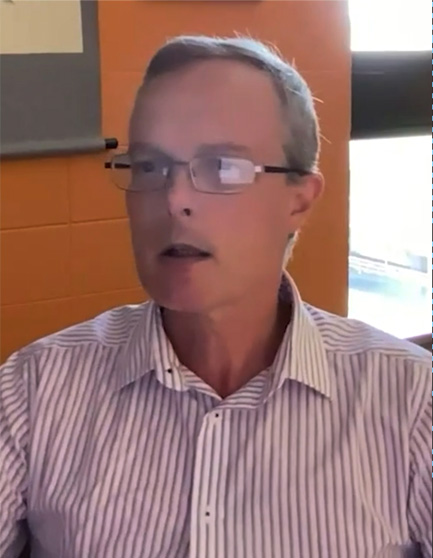
Andy Pitman

Andy Pitman, November 2024

Oh Boy it’s an eye-popping list.

In the past, Pitman has admitted climate change doesn’t necessarily cause more droughts. He’s also said he wouldn’t bet his superannuation (pension fund) on the climate models. This time Pitman admits the models are low resolution, have a lot of “critical gaps”, don’t resolve the oceans or clouds well, and that using the best CMIP6 models (the same ones the expert UN has beaten us over the head with) may risk “fundamentally wrong projections of future climate and its variability.”

Shouldn’t every Australian know this? I mean we’re spending half a trillion dollars to solve “climate change” but the models might be fundamentally wrong?  Doesn’t that matter. The seas might not swamp us, the rivers might keep flowing. Antarctica might not melt?

Where was Andy Pitman when Australia was wrecking its grid, destroying jobs and our lifestyles? Where were any of our climate academics when leaders of our political parties were telling us that every drought, fire and storm was caused by climate change and would only get worse?

The Ivory Tower elitists sat silently by when the government forces bricklayers, farmers and children to solve a climate problem that might be just a modeling error?

And now they want more money — and I would say we desperately need models that work, but what’s the point, if we can’t trust the modelers to be absolutely, scrupulously honest with us?

By Tony Thomas, Quadrant

Pitman even concedes that current climate models can’t predict whether natural disasters will become more or less common in the warming era. Remember his words when you next hear the ABC or Climate Council claiming that such-and-such storms and floods are “climate-fuelled”.

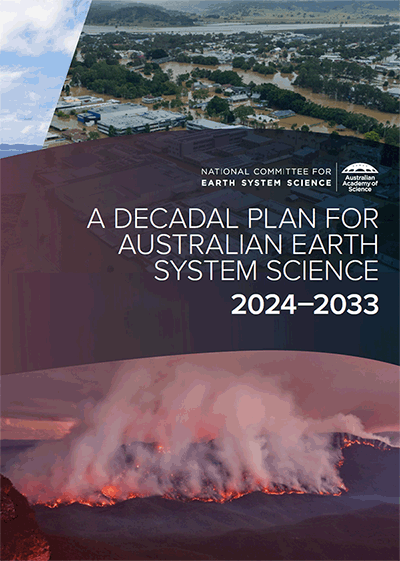
Using current CMIP models, or indeed the regional models that rely on them, therefore risks fundamentally wrong projections of future climate and its variability. — P17 of “The Decadal Plan“

Now they tell us? Modelers don’t know if we’ll get more wind droughts or cloudy days?

Right after we built 12,000 megawatts of weather dependent generators, we find out that the modelers have no idea whether we will get more long spells of cloudy windless days which cripple our grid. This new vulnerability is buried under the label “High impact weather events”. As if windless nights belong in the same category as storms and floods.

It’s hidden in one of the Five Key Questions of National Significance:

5. Where will changes in high impact weather events support and/or undermine net zero ambition and where can associated risks be managed effectively?

Like the rest of the document the language is obtuse, convoluted, and speaks with a forked tongue. They don’t want to come out and just say Australia badly needs models a million times bigger so we can predict the climate.

Tony Thomas sums it up:

He [Pitman et al] also admits that he and fellow climate alarmists have no idea:

          • when and where so-called “tipping points” might arise (wow, so honest!)
          • whether climate change will increase or decrease the Murray Darling water flows
          • whether an increase in CO2 will cause more or less rain for a given location
          • how climate change will impact cities and urban landscapes (Andy, stop upsetting the Melbourne and Sydney city councils’ climate crusaders)
          • how wind droughts and heavy clouding might undermine renewables and net-zero targeting (via week-long blackouts).

In a repudiation of the “settled science” notion the climate crowd has pushed for 25 years, Pitman now acknowledges that despite decades of study, the catastrophists still have no idea if Australia will see more El Nino, rather than La Nina, climate events, or even whether more vegetation will reduce or increase greenhouse emissions (so much for tree plantings offsetting emissions). “These are not easily solvable but offer profoundly different futures for Australia,” he admits (p13). Odd that we are to invest trillions in net zero when we have no idea what’s what.

We need models thousands of times better!

Pitman lays out many shortcomings of current “expert” climate models because he’d really like a much finer resolution models of just 1km2.

Ocean processes operate across many scales, and eddies in the Southern Ocean transfer considerable heat and nutrients14. These eddies are also crucial to the uptake, transport and storage of carbon15. Operating at scales of order 10 km, they are too fine to be resolved in ocean models used for climate projections. This means the role that oceans play in influencing climate are poorly resolved. – p17

As a result of their poor resolution, current climate models do not faithfully represent critical weather systems, and it is the amplification of extremes by weather system processes that cause the extreme events and consequential disasters we observe. For example, the Lismore (NSW) floods in 2022 were associated with multiple weather processes, initiated over the Southern Ocean and interacting with synoptic-scale processes and moist tropical air that led to a sequence of extreme weather events and catastrophic flooding. Global climate models cannot resolve these processes, and therefore cannot tell us if such events will become more common in the future. As the weather that produces extreme events is  connected globally, downscaling using high-resolution regional climate models cannot overcome the limitations introduced in the global models, as downscaling relies on the global models for information at its boundaries.-p17

These transcripts come from Andy Pitmans speech in the launch webinar 

The speech and documents make tough reading. You get the feeling they just didn’t want to tell us straight how bad the models are. I wanted to capture his exact words, for the record.

All those environmental sinks might becomes sources (so much for carbon farming, eh?) Shame about that business you set up…

7:30 [Andy Pitman] Some of these questions, you might think we have answers to….

For example, many people would recognize both terrestrial and marine as providing a critical ecosystem service, it takes up human emissions of CO2, and provides enormous support for Australians Net Zero ambitions … but there’s a little problem with this, we don’t actually know to what degree our terrestrial and marine systems will continue to support our Net Zero ambitions and positive environmental outcomes. They may turn into sources of CO2 and methane, in ways that really undermine our Net Zero ambitions.

We will definitely get more water or less water, more river, or less river, more plants, or less...

9:00 In addition Australia is demonstrably at risk of abrupt changes in weather and climate. Many of you would be familiar with tipping points… It matters a great deal if we could say things about when and where these things might be realized. At the moment we really can’t.

9:30  Water is obviously fundamental to the most arid inhabited continent on Earth. But we don’t actually know whether Climate Change will increase or decrease flows of water through systems like the Murray Darling. We don’t yet know whether changes in rainfall will be helped or hindered by the way ecosystems response under higher elevated CO2 concentration. Whether the higher water use efficiency of vegetation will help the flow of water through the Murray Darling or the vegetation will suppress the flow of water in the Murray Darling….

No we don’t know what will happen to the cities:

Urban Areas, it’ It might surprise a lot of you to know that the climate modeling systems we use internationally do not represent our urban landscapes.

Page 13: Plants, rain, El nino, who knows?

Some major challenges have been explored for decades — whether we will see a more El Nino or La Nina state in the future, or whether vegetation will help or hinder net zero ambition.

These are not easily solvable…

Page 17 We can’t predict extreme events, and they may not be getting worse, we don’t know:

The Lismore (NSW) Floods in 2022 were associated with multiple weather process, initiated over the Southern Ocean and interacting with synoptic scale processes and moist tropical air that led to a sequence of extreme weather events and catastrophic flooding. Global climate models cannot resolve these processes and therefore cannot tell us if such events will become more common in the future.

Further there is evidence the high-resolution coupled models simulate fundamentally different historical trends in tropical and Southern Ocean sea surface temperatures, reproducing recent observed changews which courses models cannot. They also exhibit greater low-frequency variability in midlatitude regions. Compare with Coupled Model Intercomparison Project (CMIP)-class models. Using current CMIP models, or indeed the regional models that rely on them, therefore risks fundamentally wrong projections of future climate and its variability.

Page 22: The current models are low resolution and can’t do sea ice, clouds, storms, ice sheets, plants, cities and farms.

Projections on timescales of decades to centuries at low spatial detail using Earth System models. The low spatial detail is balanced by large numbers of simulations. The lower computational cost means the more components can be included (e.g. Chemistry, fire, nutrients,) but some processes which may be extremely important are difficult to resolve (eh, sea ice, topographic forcing of clouds and storms, cloud processes, some ice sheet dynamics, vegetation demography, urban landscapes, agricultural areas).

Page 25 contains Antarctic surprises like how 70 billion tonnes of snowfall accumulated across East Antarctica contributing to a net gain of mass in Antarctica — which was a reversal in the mass loss trend over the preceding 20 years..

A future with more ARs [atmospheric rivers] leading to a larger accumulation of snow on the Antarctic continent would be experienced very differently in Australia to a future with fewer ARS. Specifically projections o

The modelers didn’t see that coming either.

REFERENCES

A Decadal Plan for Australian Earth System Science 2024–2033, released November 25th, 2024

— This one is for Julian. —


10 out of 10 based on 1 rating

via JoNova

https://ift.tt/8YRwOts

December 18, 2024 at 03:28PM