New: Gorilla Science!

From Tom Nelson’s Substack

Tom Nelson

Gorilla Science is the creation of Martin Durkin and Tom Nelson.

Our collaboration began when Martin appeared on my podcast in 2022; that resulted in Climate: The Movie. Now Gorilla Science is a champion of open and free scientific enquiry and debate, free speech, free thought, economic freedom and industrial (which is to say human) progress.

Please consider following Gorilla Science on X here; on YouTube here; and on Rumble here. Our Linktree is here.

Below is our first video, on heatwaves:

via Watts Up With That?

https://ift.tt/Icbitau

December 7, 2024 at 04:02PM

Storm Darragh’s Winds Were 60 mph, Not 90 mph

By Paul Homewood


 A table showing the highest winds gusts so far today (up to 16:00pm):
Berry Head - 95 mph
Capel Curig - 93 mph
Aberdaron - 92 mph
Pembrey Sands 86 mph
Aberporth - 85 mph
Valley - 79 mph


We’re beginning to get some more wind data in for Storm Darragh, so we can piece together what was actually happening in the real world, away from those fake sites peddled by the Met Office.

At Rhyl, for instance, wind gusts peaked at 60 mph, with sustained winds of 34 mph, a Moderate Gale on the Beaufort Scale. Rhyl is on the North Wales coast, and would have been amongst the parts of Wales most exposed to those NW winds.

22 miles to the east, Hawarden Airport saw slightly lower wind speeds of 56 mph. This was the part of England and Wales most affected after the initial hit on the Welsh coast – the Merseyside derby, for instance, was cancelled because of high winds, understandably so.

image

https://www.metoffice.gov.uk/weather/observations/gcmr2gmc8

image

https://www.metoffice.gov.uk/weather/observations/gcmys019j


Clearly the real world data makes a nonsense of claims of “90 mph winds”.

An accurate headline would have said “60 mph winds hit parts of the country”.

FOOTNOTE

You may have spotted that the Met Office have found another location to beat Capel Curig – Berry Head, near Torbay, which is situated on a clifftop near the Lighthouse, on the site of an Iron Age hill fort. If you thought that was a good place to measure windspeeds, think again!


Berry Head cyclist

.

The Met Office must know that wind speeds at Berry Head are meaningless, unless you were thinking of paragliding off the top, as their own weather station in Exeter just along the coast only hit 58 mph.

image

via NOT A LOT OF PEOPLE KNOW THAT

https://ift.tt/YQ13NSs

December 7, 2024 at 12:06PM

Hostile Climate

Novels that take a skeptical view of climate alarm have become an endangered species since Michael Crichton’s “State of Fear” was published 20 years ago. Most fiction that touches on the topic reinforce the misguided notion that the world is on the precipice of an apocalypse.

That’s why it’s fun and refreshing to read Jon Pepper’s latest novel, “Hostile Climate,” the fifth book in his entertaining and insightful “Fossil Feuds” series. Pepper takes aim at the topic with a piercing eye and finds plenty of room to ridicule the dominant doomsday narrative that plays out in the media, government, and popular culture.

Pepper’s story revolves around Lindsey Harper Crowe, chair of a global energy company, who becomes the target of an ambitious politician’s campaign to run for higher office. Like many large energy companies, Lindsey’s Crowe Power Company is blamed for climate change. The brutal lawfare waged against her finds enthusiastic support in New York City, where residents have no idea where heat and electricity come from.

Lindsey is put on trial, much to the delight of the activists who gather each day outside the courthouse to demonstrate their superior moral virtue. But as the story unfolds, it appears the activists’ fondest wish could become the city’s biggest nightmare—especially if Lindsey’s company assets are seized and operated by the state.

The book is topical and relevant, with an intriguing mix of humor and drama. Astute readers will notice the story is inspired by real events, presenting a chilling prospect of what can happen when climate change ideology clashes with the reality of providing essential services like heat, light, and power during extreme winter weather.

“Hostile Climate” has been enthusiastically endorsed by noted climate realists such as Judith Curry, who calls it

“clever and wickedly entertaining… a well-informed and insightful message about how the rush to shut off the use of fossil fuels without adequate replacements is the real climate crisis.”

Despite the complex issues explored in “Hostile Climate,” Pepper has created an easy-to-read page-turner that’s a welcome break from the usual dour tomes on the topic. Given the unmistakable message in “Hostile Climate,” it’s also an essential book for these times.

The book is available through Amazon and Barnes & Noble, through major booksellers in the U.K., Canada, Australia and around the world, and through independent bookstores in the U.S. For more information on the book and the author, go to  www.jonpepperbooks.com

via Watts Up With That?

https://ift.tt/bcm1wY4

December 7, 2024 at 12:02PM

False Premises for Hague Climate Reparations Hearing

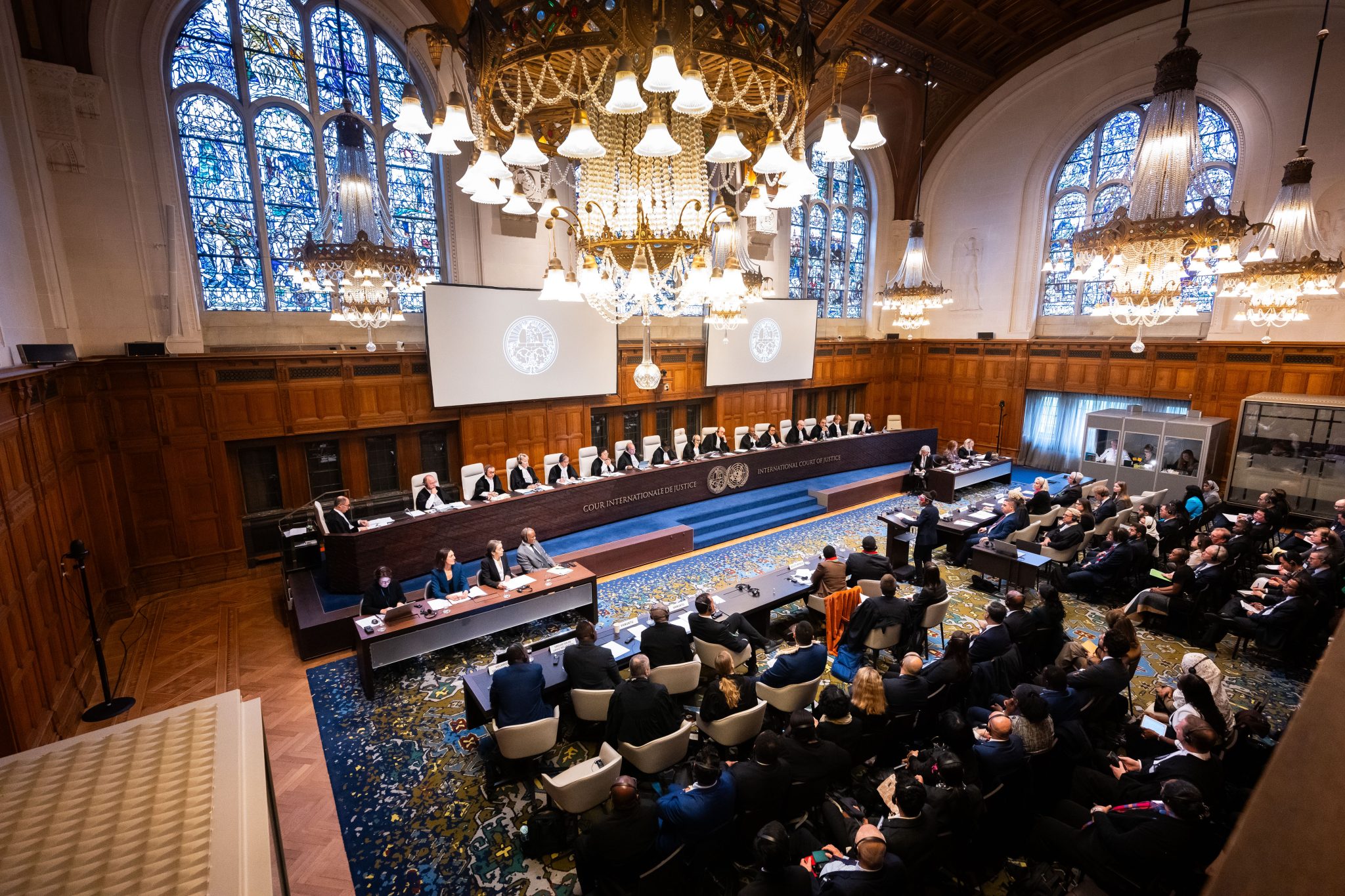
Public hearings at the International Court of Justice in The Hague on the request for an advisory opinion on the Obligations of States in respect of Climate Change, December 2024 (Photo: International Court of Justice)

After one week of the hearing at International Court of Justice (ICJ) the thrust of the event is clear.  It is an attempt to redistribute wealth from nations who developed and prospered from basing their societies on hydrocarbons to other nations who have not done so as successfully.  The “victims” claim compensation because burning hydrocarbons caused global warming which will raise sea levels and flood island nations.  This is called “Climate Justice.”

The parties, including presumably the judges, take this premise without question, so the whole proceeding is based on PR without scientific foundation.

Recently green campaigners were warning that small Pacific islands would drown as sea levels rose. In 2019 United Nations Secretary-General António Guterres flew all the way to Tuvalu, in the South Pacific, for a Time magazine cover shot. Wearing a suit, he stood up to his thighs in the water behind the headline “Our Sinking Planet.” The accompanying article warned the island—and others like it—would be struck “off the map entirely” by rising sea levels.

Earlier this year, the New York Times finally shared what it called “surprising” climate news: Almost all atoll islands are stable or increasing in size. In fact, scientific literature has documented this for more than a decade. While rising sea levels do erode land, additional sand from old coral is washed up on low-lying shores. Extensive studies have long shown this accretion is stronger than climate-caused erosion, meaning the land area of Tuvalu and many other small islands is increasing.
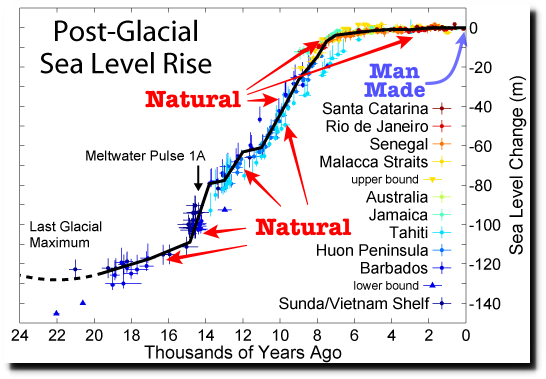
These appeals were made previously by the Maldives and Fiji, who co-hosted the Madrid COP.  But stubborn facts undermine the credibility of the premise.

It is a widely accepted climate view—based on wild speculations from some op/ed writers and partisan politicians–is that average sea levels are increasing dangerously and rationalize an immediate governmental response. But as we shall demonstrate below, this perspective is simply not accurate.

There is a wide scientific consensus (based on satellite laser altimeter readings since 1993) that the rate of increase in overall sea levels has been approximately .12 inches per year.

To put that increase in perspective, the average sea level nine years from now (in 2029) is likely to be approximately one inch higher than it is now (2020). One inch is roughly the distance from the tip of your finger to the first knuckle. Even by the turn of the next century (in 2100), average ocean levels (at that rate of increase) should be only a foot or so higher than they are at present.
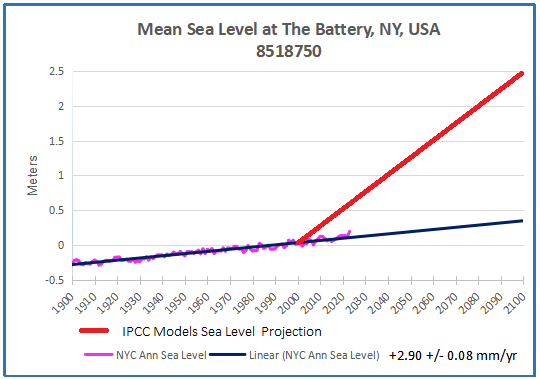
 

None of this sounds particularly alarming for the general society and little of it can justify any draconian regulations or costly infrastructure investments. The exception might be for very low- lying ocean communities or for properties (nuclear power plants) that, if flooded, would present a wide-ranging risk to the general population. But even here there is no reason for immediate panic. Since ocean levels are rising in small, discrete marginal increments, private and public decision makers would have reasonable amounts of time to prepare, adjust and invest (in flood abatement measures, etc.) if required.

But are sea levels actually rising at all? Empirical evidence of any substantial increases taken from land-based measurements has been ambiguous. This suggests to some scientists that laser and tidal-based measurements of ocean levels over time have not been particularly accurate.

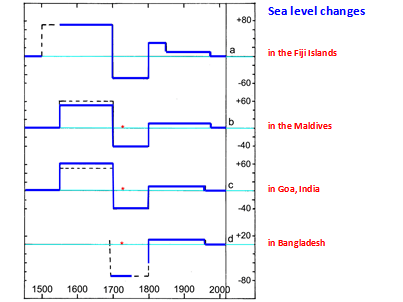
For example, Professor Niles-Axel Morner (Stockholm University) is infamous in climate circles for arguing–based on his actual study of sea levels in the Fiji Islands–that “there are no traces of any present rise in sea levels; on the contrary, full stability.” And while Morner’s views are controversial, he has at least supplied peer reviewed empirical evidence to substantiate his nihilist position on the sea-level increase hypothesis.
The world has many important societal problems and only a limited amount of resources to address them. What we don’t need are overly dramatic climate-change claims that are unsubstantiated and arrive attached to expensive public policies that, if enacted, would fundamentally alter the foundations of our economic system.
See Also:

Fear Not For Fiji

Islands Adapting to Change: Tuvalu


via Science Matters

https://ift.tt/AgyGlHP

December 7, 2024 at 11:06AM