Antarctica Sea Ice Has “Slowly Increased” Since 1979, Science Paper Finds

From THE DAILY SCEPTIC

by Chris Morrison

Sea ice around Antarctica has “slowly increased” since the start of continuous satellite recordings in 1979 with any changes caused by natural climate variation. In a paper published earlier this year, four environmental scientists further state that any sign that humans are responsible for any change is “inconclusive”. Not of course for mainstream media that have been crying wolf about the sea ice in Antarctica for decades to promote the Net Zero fantasy. Last year there was a reduced level of winter sea ice and this caused the Financial Times Science Editor Clive Cookson to exclaim that the entire area “faces a catastrophic cascade of extreme environmental events… that will affect climate around the world”.

Over the satellite record, the scientists note there was a “prolonged and gradual” expansion of sea ice to around 2014 followed by a short period of sudden decline from 2014-19. Growth was then resumed, although there was a temporary downturn around 2022. These variations, which can also be observed before 1979, were caused by a number of natural atmospheric and oceanic factors. All of this is known of course, with the EU weather service Copernicus admitting recently that sea ice extent as a whole “shows large year-to-year variability and no clear long-term trend since 1979”. At the other end of the Earth, Copernicus correctly states that the cyclical decline in Arctic sea ice “has levelled off since 2007”.

It must all be very bewildering for narrative-following journalists. Confusion no doubt reigned supreme in their unquestioning ranks when they chanced upon the comments last year of Dr. Walter Meier of the U.S.-based National Snow and Ice Data Centre. He was in full activist mode when he claimed the 2023 winter sea ice dip was “so far outside anything we’ve seen, it’s almost mind blowing”. But not perhaps as confused as Dr. Meier himself who 10 years earlier was part of a scientific team that cracked open the secrets of early Nimbus photographic data. These revealed significant Antarctica sea ice variability in the 1960s, including a high in 1964, not seen again until 2014, and a low in 1966, similar to the recent dip. At the time, Dr. Meier commented that extreme ice highs and lows “are not that unusual”.

During the Great 2023 Antarctica Ice Scare, the BBC said that it showed a worrying new benchmark for the region “that once seemed resistant to global warming”. Still does, those striving for accuracy might note. Antarctica has hardly warmed in the last 70 years.

One by one the appalling scares that have been used by Net Zero fanatics to promote mass climate psychosis in human populations are being exposed as wishful junk thinking. Over the last few decades, alarmists have taken their cue from the ozone hole scare that started in 1974. At this time, two scientists claimed that the widespread industrial use of chlorofluorocarbons (CFCs) was destroying the protective ozone layer in the atmosphere. Subsequently, an annual appearance of an ozone hole was discovered over Antarctica and CFCs were banned by international agreement in 1995. The two scientists received the Nobel prize for their work, and activists claimed it was all a great triumph showing what could be achieved when humans acted in concert to protect the planet. The Nobels were accepted and the activists moved onto other scares and proposed bans. What happened to the ozone hole, you ask? Well that kept on expanding and contracting as it has always done, and this year the hole is as large as it has been for the last 30 years. Whisper it quietly – natural variation seems to be at work here.

As readers will no doubt be aware, there is gathering excitement about the prospect of another ‘hottest year evah’ for 2024. There has been a little extra warmth recently following a near nine-year temperature pause with scientists looking at a number of natural variations seen often in the past.

Hottest year claims are produced from woefully incomplete temperature records that are barely 100 years old. In the case of sea temperatures, accurate and complete global records stretch back less than 20 years. The temperature data itself, as we have seen in many Daily Sceptic articles, have been homogenised/reanalysed/invented/adjusted on an almost constant basis. Most individual temperature recordings around the world have been corrupted by urban heat, while in the U.K. the Met Office seems inordinately proud of a national high set in 2022 as three Typhoon jets were landing at a RAF airbase. If we consider the proxy record, it seems likely that temperatures were as high in Roman and medieval times, while 8,000 years ago the great northern ice sheets started to melt helped by temperatures at least 3°C higher than those experienced today. Again it is difficult not to conclude that natural variation plays the dominant role in controlling the climate thermostat.

Thoughts and prayers are also the order of the day for those who set great store in all the coral disappearing. Three years of record growth on the huge Great Barrier Reef put an end to that headliner. Polar bears are just as bad and keep breeding to top up new Arctic highs. Satellites keep discovering vast colonies of penguins in Antarctica, and mainstream media seem shocked into complete silence to report that the eyes in the sky have detected a vast recent plant greening of the Earth.  There is a growing trend to debunk any ‘extreme’ weather claim – the great citizen journalist Paul Homewood even writes a book about the BBC’s more egregious climate howlers, every year no less, such is the volume to process.

The Net Zero project is starting to crumble around the world as citizens make their feelings known with votes, and sometimes with rocks. Nobody can or wants to live in a world without hydrocarbons. Crucial to this trend is an emerging understanding that the scientific process when it comes to climate has been trashed for decades and replaced with an increasingly laughable junk ‘settled’ science narrative.

Chris Morrison is the Daily Sceptic’s Environment Editor.

via Watts Up With That?

https://ift.tt/9GjTAMl

November 16, 2024 at 12:06PM

Trump WH Focuses Energy Governance

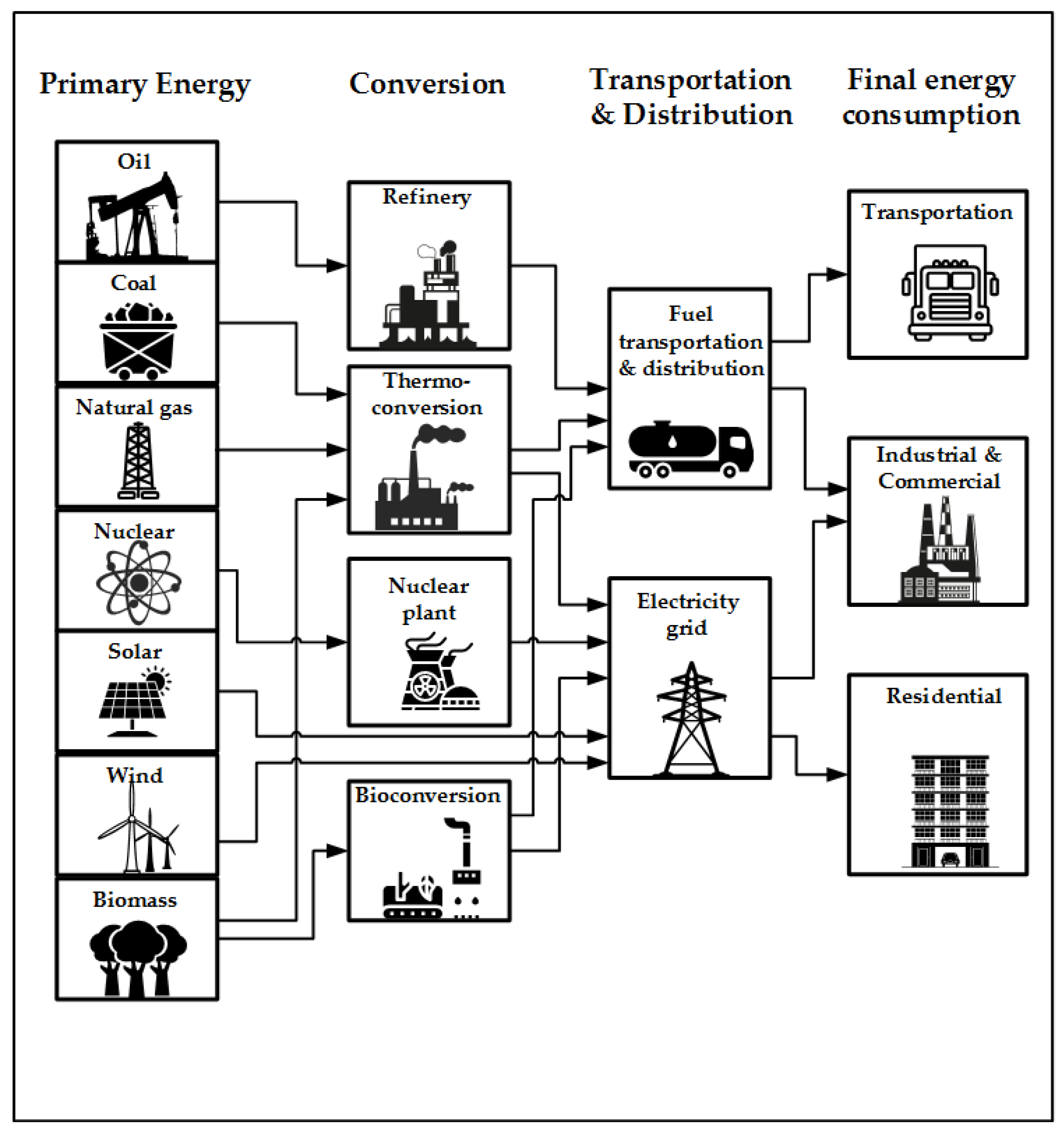
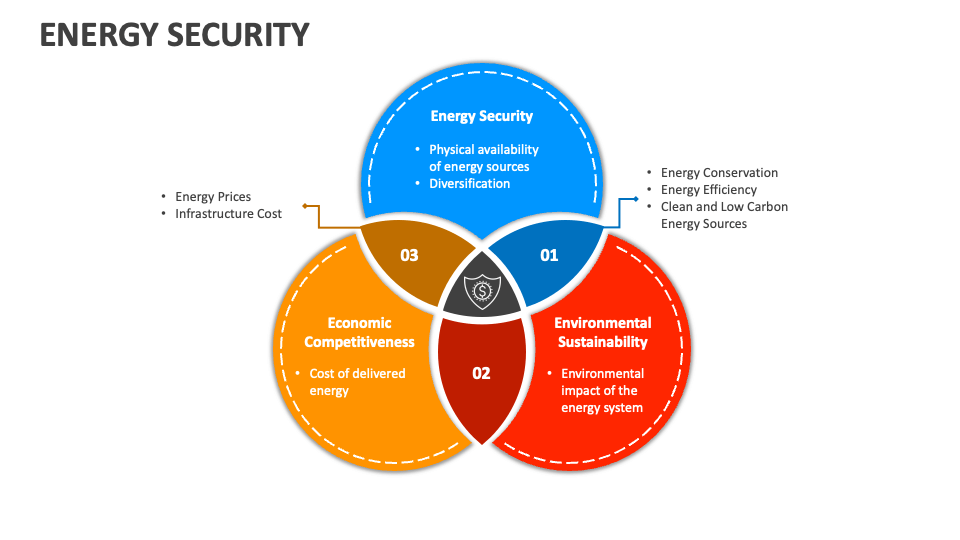
Yesterday I posted on Repurposing US Energy Agencies. Today comes the news of Trump announcements consolidating energy governance in a WH National Energy Council chaired by the newly appointed Secretary of the Interior, ND Governor Doug Burgum.  While there is not yet much detail on how this will function, some reports suggest the organizing logic of this approach. This article is from the North Dakota Monitor Trump names North Dakota Gov. Burgum to combined Interior, energy role.  Excerpts in italics with my bolds and added images.

North Dakota Gov. Doug Burgum will serve as Interior secretary and chairman of the newly formed National Energy Council, President-elect Donald Trump announced Friday.

The new council will consist of all departments and agencies involved in the permitting, production, generation, distribution, regulation, transportation of “ALL forms of American Energy,” Trump said in the announcement.

“This Council will oversee the path to U.S. ENERGY DOMINANCE by cutting red tape, enhancing private sector investments across all sectors of the Economy, and by focusing on INNOVATION over longstanding, but totally unnecessary, regulation,” Trump wrote.

Burgum, who is completing his second term as governor, has railed against what he sees as government overreach and bureaucracy under the Biden administration, especially on energy policy. He frequently calls for industry innovation rather than more regulation. Burgum said at an energy industry conference in Bismarck in May:

“We have to turn this around, not just for this industry, not just for North Dakota, but for national security, for peace in the world,”

Trump also said in his statement that his administration will “undo the damage done by the Democrats to our Nation’s Electrical Grid, by dramatically increasing baseload power.”  In addition, Trump said Burgum will have a seat on the National Security Council.

The $18 billion Department of the Interior manages federal natural and cultural resources, with about 70,000 employees.

The department includes 11 agencies: the National Park Service, U.S. Fish and Wildlife Service, U.S. Geological Survey, Office of Surface Mining Reclamation & Enforcement, and the bureaus of Indian Affairs, Indian Education, Land Management, Ocean Energy Management, Reclamation, Safety & Environmental Enforcement, and Trust Funds Administration.

“Serving as Interior Secretary is an opportunity to redefine and improve upon the federal government’s relationship with tribal nations, landowners, mineral developers, outdoor enthusiasts and others, with a focus on maximizing the responsible use of our natural resources with environmental stewardship for the benefit of the American people,” Burgum said.

North Dakota is the nation’s third largest oil producing state, with some of the production coming from federal lands on the Fort Berthold Indian Reservation. North Dakota also has large amounts of coal, wind energy and biofuel production.

When asked Tuesday about the potential for an “energy czar” position, Burgum told North Dakota reporters that the nation needs a more coordinated approach to energy policy.  He said an “energy czar” would be able to do more than a lone Cabinet secretary because other agencies, such as the U.S. Army Corps of Engineers, Environmental Protection Agency and Bureau of Land Management, among others, all affect the nation’s energy policies.

U.S. Sen. Kevin Cramer, R-N.D., acknowledged that some environmentalists will not be happy with the direction the Trump administration’s policies on federal lands. Cramer said having Burgum in that role should ease some concerns.

“Doug’s a good conservationist,” Cramer said. “It’s not a ‘Drill, baby, drill’ attitude, it’s a, ‘Utilize the resources of the federal government for the benefit of the country and its people,’” Cramer told the North Dakota Monitor. “He delivers the message beautifully and I think he can go a long ways in sort of calming people down.”

An article at Politico explores how this structure might function Interior nominee Burgum to head new National Energy Council.  Excerpts in italics with my bolds.

Burgum, a self-made multimillionaire, had been wary of taking on a role of “energy czar,” according to people familiar with his thinking, and instead had sought a position that came with formal power. This role atop the new council will combine the authority of the cabinet position with the broad reach across the top other agencies.

David Goldwyn, chair of the energy advisory group at the Atlantic Council think tank and a former State Department official in the Obama administration, said combining the two roles for Burgum showed how much influence he would have in the administration, but it could also could stretch him across the broad energy portfolio.

The energy council could be a more institutionalized version of initiatives by earlier White Houses to create an all-of-government approach to coordinating policy, but it could also lead to tension between Burgum and other department heads.

“Anytime you establish a policy coordination body at the White House, there will be natural tension with principles in agencies,” Rapidan’s McNally said. “It’s like herding cats a little bit, but it should minimize tensions so you either get to consensus or tee up pros and cons for the president to make a decision.”

The dual role idea won plaudits from North Dakota GOP Sen. Kevin Cramer, a Burgum ally, who said he had been wary of limiting him to a czar position.  “But when you have a council made up of confirmed people and one of those confirmed people heads it, … it’s a brilliant idea,” Cramer said. “There is a synergy you gain by organizing it this way that you don’t get if you have a bunch of silos.”

Trump has made clear that a focus of his second administration would be to complete permitting reform that has struggled to gain bipartisan traction in Congress during the Biden administration. Fossil fuel companies and renewable energy companies alike have complained that critical infrastructure they need to get fuel and electricity to market takes too long to win federal approval.


via Science Matters

https://ift.tt/Ow6WdXL

November 16, 2024 at 11:35AM

Watch: Morano in heated TV debate at COP29 in Baku with two climate activists

‘Trump is bailing the U.S. out of this UN process & it’s glorious.’

via CFACT

https://ift.tt/AcZafLb

November 16, 2024 at 11:12AM

COP 29: Finance monster grows many optional heads

The amount of our money the UN wants is staggering.

via CFACT

https://ift.tt/DHNSaYc

November 16, 2024 at 10:50AM