False Dawn: Big Talk About Millions of Groovy ‘Green’ Jobs Evaporates

The Neo-Marxists driving the energy agenda are always quick to promise a workers’ paradise, lined with millions of groovy jobs that are meant to fall like fruit from trees as part of the grand wind and solar transition.

The problem with Utopia, of course, is that it’s always over the horizon and always just out of reach.

A generation on and the few jobs that were briefly generated plastering the country with wind turbines and solar panels, pale into insignificance when compared to the thousands of jobs lost in energy hungry industries, like mineral processing and manufacturing, where crushing power prices have destroyed businesses and whole industries. Gutting economies, like Germany and Australia.

Chris Morrison takes a look at the experience in the UK, where the Utopian dream has turned economic nightmare.

ONS Reveals the Pitiful Number of New Green Jobs Being Created in the U.K. Economy
The Daily Skeptic
Chris Morrison
30 September 2024

The problem with the green U.K. economy, and its associated destruction of the hydrocarbon environment, is that there are very few jobs being created. The few remaining ‘workers’ in the ruling Labour party are starting to rumble all the luxury boondoggles that are set to further decimate well-paid jobs in their communities. The figures compiled by the Office for National Statistics (ONS), trying to estimate the actual number of green jobs, are always a highly creative hoot, and the latest batch are no exception.

Many jobs identified are simply displacement activity, with one repair or maintenance occupation taking over from another. Around 6% of the total are to be found in ‘environmental charities’, an interesting way to describe elite billionaire political funding to push the Net Zero fantasy. Such is the seeming desperation to rustle up a green job, the ONS even includes repairing home appliances, controlling forest fires and separating hydrogen by carbon dioxide-producing electrolysis.

The latest ‘estimates’ from the ONS cover 2021 and 2022, and they are said to show an increase in both years. But as the graph below reveals, the rises are pitiful over a decade, and the 2022 estimate of 639,000 is less than 2% of jobs in the economy as a whole.
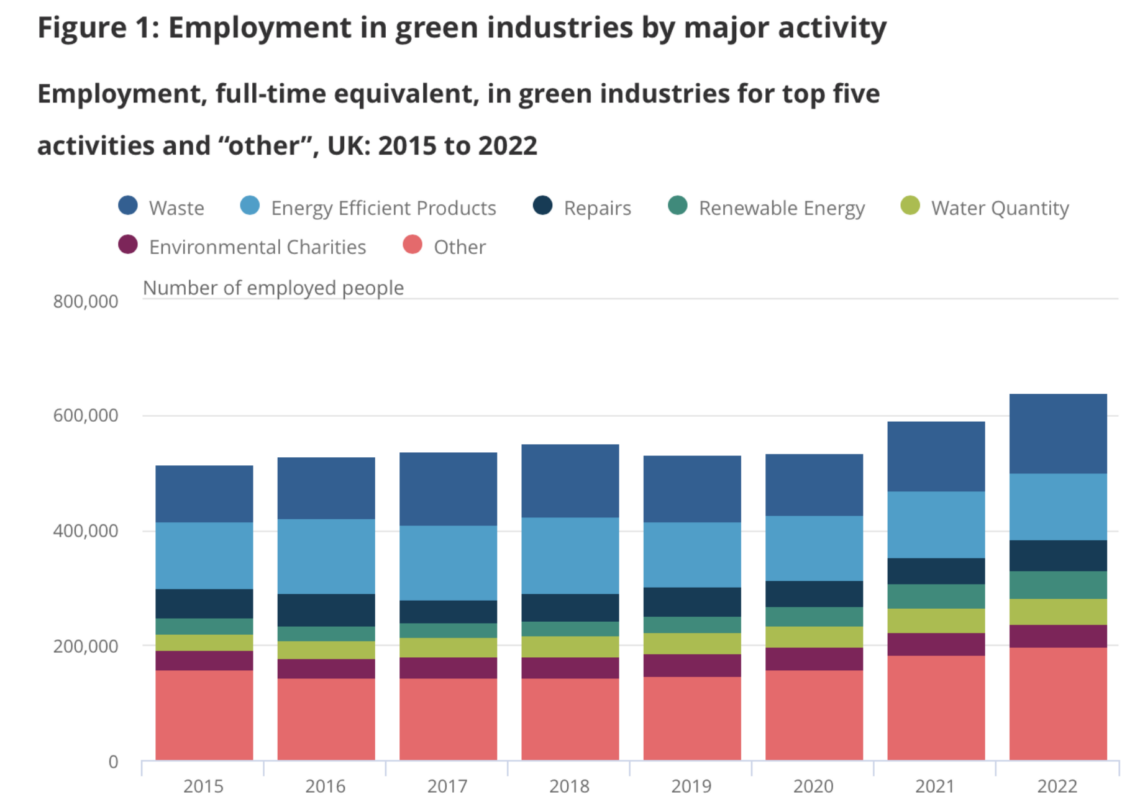
As can be seen, environmental charities employ 40,000 people, almost as many as the 47,000 that work in renewable energy. But the charities figure does not include all those make-work jobs in environmental consultancy and education or what is described as in-house environmental activities.

If all the displacement, invented or re-badged jobs in repair, electric vehicles, waste disposal, water treatment, energy efficiency, Net Zero promotion, teaching and the ubiquitous bureaucracy are rightly ignored, it is unlikely that more than 150,000 new jobs have been created. Fairly small pickings, it might be thought, from all the cash sprayed at subsidy-hunting chancers over at least two decades. Even worse, any new jobs are easily offset by the occupations being destroyed in steel making, refining hydrocarbons, coal mining and oil and gas exploration.

Fracking for gas would transform a number of deprived areas in the U.K. at little environmental cost, as it has done in the U.S. Energy security would likely be achieved, and the tax take would be considerable. But fracking is anathema to the major political parties in the U.K., except the emerging Reform party.

Last week saw some real push back on the madness of Net Zero and the so-called green economy. The boss of GMB, the third largest trade union in the country, told the annual Labour party conference that its plans to decarbonise the energy network by 2030 will cost up to one million jobs, decimate working communities and push up bills for the poorest.

According to Smith, Government’s plans for Net Zero were “bonkers” and “fundamentally dishonest”. In a week when it was revealed that British consumers, both industrial and private, had some of the highest electricity prices in the developed world, he charged that current energy policy amounted to virtue signalling by politicians. He accused them of exporting jobs and importing virtue because the jobs were being created abroad rather than in the U.K.

Meanwhile, a recent paper published in Science came to a damning conclusion that will not surprise sceptics, namely that 96% of climate policies over the last 25 years, ultimately designed to reduce carbon dioxide emissions, have been a waste of money. “That’s where green spin has got us,” writes George Monbiot, although these days the Guardian’s extremist-in-chief seems to have given up on all life enhancing processes that run the risk of disturbing anything on the planet. “Finally, 15 years and a trillion dollars too late, George Monbiot says what sceptics have been saying all along,” observes the sceptical journalist Jo Nova. “Nearly every single carbon reduction scheme is a useless make-work machination that creates the illusion that the government is doing something,” she says.

As we can see, the ONS survey is full of these make-work schemes providing jobs that can only exist by rigging free markets and providing eye-watering subsidies from consumers and taxpayers. As the more concerned trade unionists can see, much of the cost of these fantasy ventures falls on the poorest members of society forced to pay higher prices for many of the basic essentials of life.

In addition, as we have observed, most green schemes make mugs of the wider investing public, with the RENIXX, a stock capitalisation global index of the 30 largest renewable industrial companies, showing near zero growth since it was started in 2006.

None of this matters, of course, to the Mad Miliband and his weird wonks at the U.K. Department of Energy, who are ramping up ideological plans to hose cash at daft ideas like carbon capture, battery energy storage and hydrogen production.

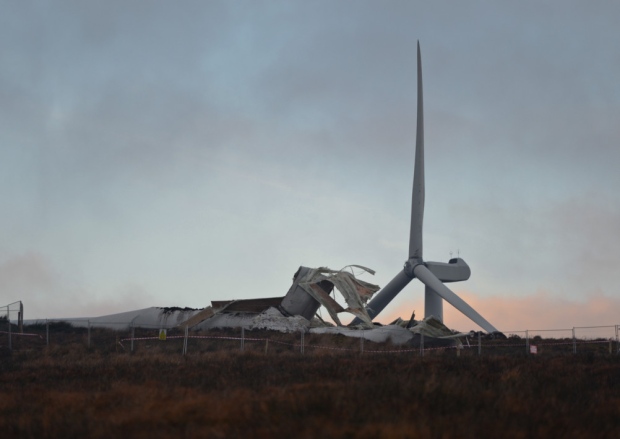
But all is not lost on the jobs front – opportunities must be taken when they occur. Earlier this year, Gary Smith was able to point to some new employment clearing away the animal casualties of wind farm blades. “It’s usually a man in a rowing boat, sweeping up the dead birds,” he observed.
The Daily Skeptic
via STOP THESE THINGS

https://ift.tt/rGKqIAc

October 25, 2024 at 01:31AM

Industrial Wind Turbine Noise: A Summary

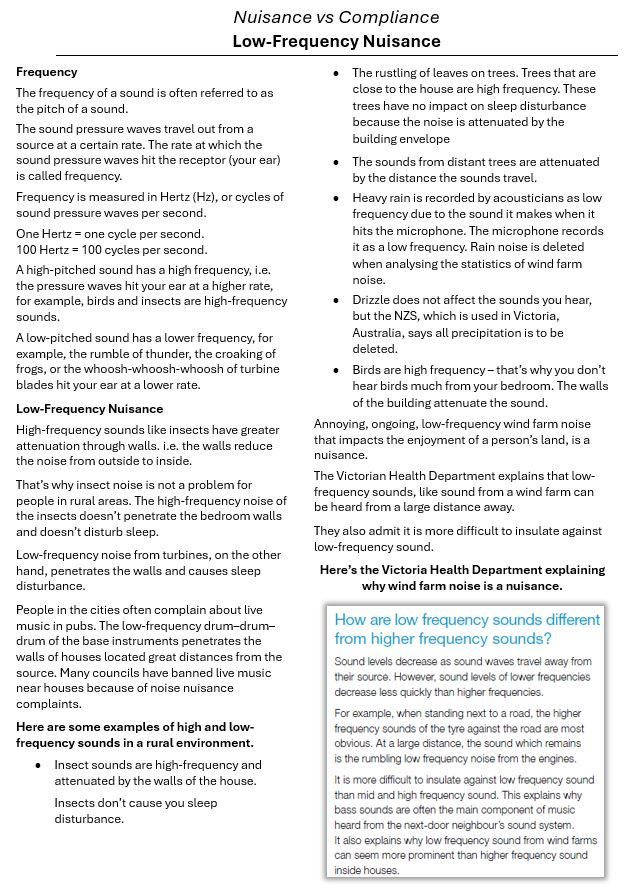
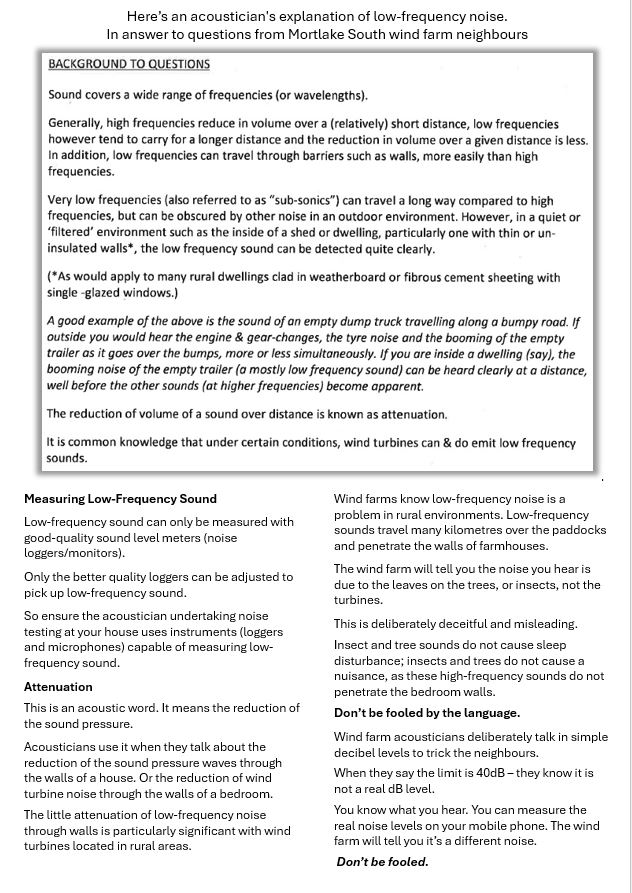
The Facebook website Wind Farm Living published this explainer on noise from industrial wind turbines. (Click on the illustration for more visual clarity)

…

The post Industrial Wind Turbine Noise: A Summary appeared first on Master Resource.

via Master Resource

https://ift.tt/C6Qalfz

October 25, 2024 at 01:13AM

How EU Carbon Border Adjustment Mechanisms Expose FALSE Cheap Green Energy Claims

Essay by Eric Worrall

If Renewables are the cheapest form of energy, why does the EU need a carbon border tax to protect EU based industries?

Q&A: Can ‘carbon border adjustment mechanisms’ help tackle climate change?

The EU’s carbon border adjustment mechanism (CBAM) has been touted as a key policy for cutting emissions from heavy industries, such as steel and cement production.

By taxing carbon-intensive imports, the EU says it will help its domestic companies take ambitious climate action while still remaining competitive with firms in nations where environmental laws are less strict.

There is evidence that the CBAM is also driving other governments to launch tougher carbon-pricing policies of their own, to avoid paying border taxes to the EU.

It has also helped to shift climate and trade up the international climate agenda, potentially contributing to a broader increase in ambition.

However, at a time of growing protectionism and economic rivalry between major powers, the new levy has proved controversial.

…

Analysis also suggests that the EU’s CBAM, in isolation, will have a limited impact on global emissions. 

…

If nations lose carbon-intensive businesses because they close down or choose to do business elsewhere, this could harm the economies of nations trying to implement carbon pricing. At the same time, it could increase global emissions, if domestic manufacturing is simply replaced by more carbon-intensive imports.

…

Read more: https://www.carbonbrief.org/qa-can-carbon-border-adjustment-mechanisms-help-tackle-climate-change/

The hallmark of cheap energy is you can manufacture products at a lower cost than other people. Why would anyone need a carbon tax on imports if their goods were already cheaper than everyone elses?

China dominates global manufacturing, because their low cost coal powered economy gives them a competitive edge.

If the cost of manufacturing an energy intensive product is 50% energy + 25% materials + 25% labor, halving the cost of energy reduces the manufacturing cost by 25%.

No such transformation is occurring in the EU. The EU is an economic hellscape, a place where ordinary consumers are punished with legally mandated higher prices thanks to carbon border adjustment taxes. The need for such a border adjustment tax is all the evidence anyone should need that renewables are a horribly expensive form of energy.

If renewables truly were delivering cheap energy to the EU, the EU would not need a border tax to prevent cheap imports from undercutting and wrecking EU based manufacturing. If renewable energy had any capacity to deliver cheap energy, renewable powered manufacturing hubs would be springing up across the EU, flooding the world with low cost energy intensive goods which even China would be unable to undercut.

Any day now, right? Do I need a /sarc tag?

via Watts Up With That?

https://ift.tt/F2W7bMt

October 25, 2024 at 12:01AM

Supposed Guardians of Rhode Island’s Waters Sell Out to Big Wind

From Legal Insurrection

Posted by Jody Stone

Once considered Rhode Island’s most esteemed environmental Non-Profit, Save the Bay Rhode Island is now failing to operate in accordance with its mission. With the nation’s first offshore turbine farms, one of the largest marine construction projects in history, going live in waters just 12- 24 miles off the Rhode Island coasts – locals, preservationists, fisherman, and boating enthusiasts are asking, “Where is Save The Bay?”

Since the 1970’s, when citizens came together to fight an oil refinery proposed in Tiverton, Save The Bay has been considered the leader of environmental stewardship in Rhode Island. For over forty years, Save the Bay has “worked to protect, restore, and improve the ecological health of the Narragansett Bay.”

They honor that legacy by claiming to serve, “as the eyes, ears and voice for Narragansett Bay.” Overseen by a board of directors and a board of trustees, as an organization, Save the Bays daily operations are run by Executive Director Topher Hamblett. The board of trustees, appointed Hamblett to his position last January.

A quick review of their website revealed that this project, one that will have implications for the State of Rhode Island, Narragansett Bay, its watershed and adjacent coastal waters for generations to come – is not mentioned. It is not mentioned in their advocacy work or in their legislative agendas. In a web tab titled BAY ISSUES , the organization reminds us that, “Narragansett Bay is truly an environmental treasure that connects communities in Rhode Island and Southeastern Massachusetts with the Atlantic Ocean.

It is our greatest public asset and the symbol of the region’s history and culture.” Why then, is the largest ocean industrialization project in this nation’s history, a project using Narragansett Bay as its electromagnetic cable route, as a wind vessel refuge, and as a cargo lane from shore to farm, not even listed as a bay issue?

To recap, in an auction bidding process, close to one Million acres of Rhode Island and Massachusetts ocean was leased to 9 separate wind companies. These companies have been selected to develop wind farms off the coast of Rhode Island. Upon completion, along with hundreds of miles of cables running up Narragansett bay, 1,000 turbines standing btw 800-1300 feet tall, covering over a million acres of ocean, along with five Substations (with living quarters and helicopter pads for maintenance) will be erected within this lease area.

According to an  April 26, 2024 TAX FILING , the organization’s mission and most significant activities include, “the protection, restoration, and improvement of the ecological health of the Narragansett Bay region, including its watershed and adjacent coastal waters…” With the sonar, ship traffic and construction of these projects levying severe adverse impacts to our fisheries, marine life, habitats and ecosystems, where is the concern from Save The Bay?

Since submitting testimony in 2021, on proposed construction in the critical habitat known as Coxes Ledge, Save the Bay has remained oddly silent. With cable lay preparation currently taking place in the bay, and with the federal government suspending the Vineyard Wind project after the now infamous July 13th blade failure, caused by a manufacturing issue that left Nantucket, Cape Cod and Rhode Island beaches littered with fiberglass and styrofoam, many are concerned.

The blade incident, coupled with sharks, whales and dolphins washing up on both Rhode Island and Massachusetts shores, has many asking – where is the concern of our “ocean watchdog group”? 

The organization’s ‘strategy of silence’ when it comes to offshore wind is even more surprising when comparing the issues they do speak vocally about. This past May, Save the Bay joined forces with the Rhode Island Attorney General’s office to rally the public against a small stone wall erected at a local country club.

With fanfare, Save the Bay and the Rhode Island Attorney General’s office held a seaside press conference where they invited local leaders and the public to share in the outrage. Save the Bay has dedicated an entire webpage to educating the public on this illegal golf course wall which was erected at Quidnessett Country Club . 

They partnered again with the Rhode Island Attorney General’s office in its attempt to change the structure of the RI Coastal Resource Management Council (CRMC). In a May 22nd  Press Release from the Attorney General’s office, Topher Hamblett, Executive Director of Save The Bay said,  “Narragansett Bay is the heart of Rhode Island,” he continued, “Important decisions impacting our coastal resources should not be left in the hands of a council of volunteer political appointees.

No one person, nor the council as an entity, is accountable for bad decisions and overriding expert staff recommendations.” This comment is especially interesting when you consider that Sandra Thornton Whitehouse, wife of our most vocal environmentalist, Senator Sheldon Whitehouse, chaired this board for over four years. Save The Bay has added a page for legislative activism, against CRMC, to its website.

Save The Bay and the RI Attorney General’s office partnered again with efforts to take on metal recyclers issuing a RI Recycled Metals Press Statement stating, “For over a decade, Rhode Island Recycled Metals has shown a blatant disregard for environmental laws that protect our right to clean air and water.”

This is important work but these actions only highlight the organizations silence on the recycling needs of Off Shore Wind materials. Thousand’s of steel monopolies, weighing in at 2,000 tons a tube, are being hammered 200 ft deep into our seabeds, covering an area larger than the entire State of Rhode Island.

There has been no press statement by Save The Bay on how 1,000’s of these monopiles will be decommissioned at their end of life (10-15yrs.). The amount of steel used in an offshore wind turbine’s monopile can vary depending on the depth of the water and other factors, but it can be as much as 2,500 tons per turbine. Each Monopile is 40 ft in diameter with a 5 inch thick wall​.

Wind Turbine Blades Not Recyclable

There has also been no concern raised over turbine blades themselves. These blades are not recyclable nor are they biodegradable. They are made up of a composite of very fine strands of plastic and glass, which is extremely difficult to process at the point of recycling. According to Cleanpower.org,  “The blades are made of composite materials (e.g., Fiber-Reinforced Plastics, mostly fiberglass and carbon fiber) and pose a more significant recycling challenge to the wind industry and the composite materials sector. As Fiber-Reinforced Plastics (FRPs) are complex to recycle, the majority of rotor blades are currently going to either landfills or incineration facilities.”

In its 2022 fact sheet, Solid Waste Management officials reminds us that, “ most wind turbine blades are landfilled when decommissioned because as noted above, the materials used to manufacture wind turbine blades render them difficult to recycle or repurpose.”

They did however hold a press conference a few weeks ago with Governor Dan McKee pushing for a $53 million dollar Green Bond that will be on the ballot this November. This is in addition to the $50 million dollar Green Bond voted on two years ago in 2022. A major chunk of these new bonds are for Offshore wind cable infrastructure where the cables come ashore.

From what we can gather, the most significant shift in Save The Bays’ operational actions, going from ocean watchdog to State policy lapdog, align with the 2019 expansion of the organization’s advocacy wing. In April of 2019, Save The Bay hired Jed Thorpe as their first ever Advocacy Coordinator. For the last five months he has served as the organization’s new Director of Advocacy.

In discussing his work with the organization Mr. Thorpe explains, “I’ve always followed the theory that there are two forms of power in politics: money and people.”  “Ultimately, Save The Bay’s political strength comes from the people who support our work and our policy proposals. My role will be to translate our existing “people power” into “political power.” He continues, “I see a huge amount of latent political power out there that can be thoughtfully and strategically mobilized to advance our agenda to protect and improve Narragansett Bay. I love working with and empowering people and helping them engage in the political process. Many folks think “politics” is a dirty word, but politics is simply the process of deciding who gets what, when and how.”

In response to our questions about why Save The Bay has not made OffShore Wind concerns a priority Mr. Thorpe responded,  “So, it’s not that we don’t think offshore wind is a legitimate concern. But, most of the activity is well outside of the Bay.”  But, offshore wind electromagnetic cable lay is currently happening in the heart of Narragansett Bay through November 6, 2025.

With cable routes being dredged up the bay, the unprecedented number of marine life strandings we have seen and the Nantucket turbine debris still washing up, the lack of public concern for our bay and adjacent waters is surprising.

“We hold state and federal agencies accountable for enforcing the laws that protect Narragansett Bay. We are the citizens’ watchdog—and the eyes, ears and voice—for Narragansett Bay.”  – Jed Thopre, Director of Advocacy Save The Bay

With politics, Orsted money and energy market agendas infusing environmental organizations up and down the East Coast, is it a coincidence that they are remaining silent about the adverse impacts we are seeing? Does the ‘strategy of silence’ come from the top? Is the Board of Trustees aware of its fiduciary responsibility to the organization and of their charge to ensure the organizations actions align with their stated mission?

The people of Rhode Island have lost their seat at the table

Save The Bay was founded on the community’s desire to protect our most precious resource — Narragansett Bay (and adjacent waters). While much remains in question, the organization that once spoke for the people of Rhode Island seems to have abandoned its grass root community in favor of political action and agendas.

With its mission in question and its priorities now laser focused on agenda driven, government political action work — does Save The Bay RI deserve to hold its title as the state’s leading environmental watchdog any longer?

via Watts Up With That?

https://ift.tt/DStBhql

October 24, 2024 at 08:07PM