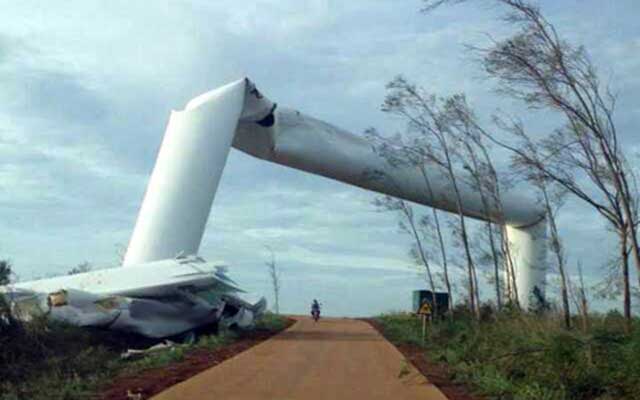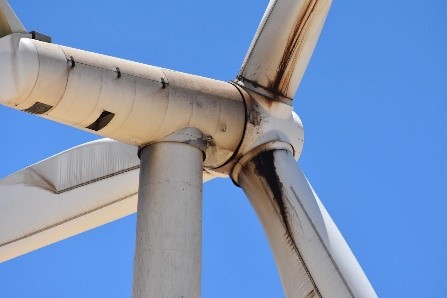
Millions of ageing wind turbines and solar panels have passed their use by dates and are on their way to landfills near you. While steel, aluminium, copper and other metals can be scavenged from what’s left of a wind turbine carcass, the 10-30 tonne blades (filled with toxic Bisphenol-A) are simply cut up, crushed and dumped (often illegally). Solar panels get the same treatment, despite wild claims about panels being recycled (they never are).
The pathetic life expectancy of a wind turbine or solar panel compares miserably with the multigenerational life expectancy of a coal-fired or nuclear-powered plant.
And even that implicitly flatters wind and solar, which can never looked deliver power on demand and only ever do so, at best, around 30% of the time, on average. Whereas a coal-fired or nuclear plant delivers power on demand, around-the-clock.
In this piece, Isaac Orr and Mitch Rolling run the numbers and demonstrate, without doubt, they are clearly stacked against wind and solar.
Disposable Power Plants: Wind and Solar Are the Single-Use Plastic of the Power Plant World
Substack
Isaac Orr and Mitch Rolling
24 August 2024
On a recent podcast, Robert F. Kennedy Jr. said that once we build wind and solar facilities, they provide free electricity forever. We’ve written several articles debunking the myth that wind and solar are free or cheaper than other forms of energy, but RFK Jr. was also wrong to use the word forever.
In fact, wind and solar facilities degrade faster than coal, natural gas, and nuclear facilities, as output declines annually, particularly after ten years of operation. Compared to these other power plants, which can last 40 years or more, wind and solar need to be repowered – or rebuilt – within 20 years of operation for wind and 25 years for solar, and often sooner, making them the single-use plastic of the power plant world.
The fact that wind, solar, and battery storage facilities are essentially disposable power plants has important implications for the cost of electricity that American families and businesses will be forced to pay for in the future, as we will demonstrate below.
Wind, Solar, and Batteries Have Short Useful Lives
Wind turbines
Wind turbines are supposed to last for 20 years, according to sources like the National Renewable Energy Laboratory (NREL), but the turbines show a considerable decline in output after ten years. The foundations, towers, and grid infrastructure can last longer, but the blades, gearboxes, generators, and other smaller hardware often need replacement after the 20-year useful lifetime.
As we described in The Death of a Wind Farm, an increasing number of wind facilities are being refurbished, or “repowered” in the industry lingo, after just 9 to 16 years in operation.
Wind turbines can either be fully repowered, with completely new turbines, or partially repowered, which, according to the Department of Energy (DOE):
upgrades the blades, gearboxes, hubs, main shafts, main bearing assemblies, or other internal nacelle components with new technology while continuing to use the existing towers and foundations.
The 2023 U.S. Department of Energy Annual Land-Based Wind Report indicates nearly 2,000 MW were repowered in 2022, and the trend is accelerating.

Everus Research estimates that 7,000 megawatts (MW) of wind will be repowered in 2024, representing half of the wind being constructed nationwide this year.
The median age of repowering a wind facility was just 11 years in 2022. While repowering allows the project owner to become eligible once again for tax incentives, it also allows utility companies in vertically integrated markets to reinstate massive utility profits they receive on the capital costs they spend on new power plants.
Solar Panels
Similarly, solar panels are expected to last 25 years, albeit with annual degradation factors ranging from 1.2 percent to 2 percent, which means panels will have output closer to 60 percent of their initial generation at the end of their useful lifetimes.
The inverters on solar panels are another story, which last 10 to 15 years. Many of the inverters used at older solar installations are no longer manufactured. Unfortunately, the cost of a replacement inverter is often not factored into the original system cost.
Solar, too, could become a candidate for repowering after ten years because utility companies are now weighing their options between the Investment Tax Credit and the Production Tax Credit. If solar facilities are financed with the PTC, we can expect more projects to repower after ten years to obtain more subsidies.
Batteries
Battery energy storage has a relatively short lifespan compared to other peaking technology. The lifespan of a battery is variable depending on its thermal environment and how they are charged and discharged, ranging from approximately 8 to 20 years.
NREL generally evaluates battery storage facilities using just a 15-year expected lifetime, the near median of the published values. This comports with reports from the industry, as representatives we spoke to at a rural electric co-op said the expected lifetime of a battery facility is 20 years, with the batteries being replaced at around year ten.
Thermal Plants Have Longer Lives
Natural Gas Plants
Natural gas plants in the United States had a capacity-weighted average age of 22 years in 2017, which is older data than we would prefer, but it is what was readily available at the time of this writing. The average age may have gone down over this time due to a large buildout of new plants or increased as existing plants have aged.
The U.S. EIA data indicate that a natural gas plant can operate for 40 years, which is more or less consistent with estimates in the utility sector of 35 years for combustion turbines.
Nuclear Plants
Unlike wind, solar, and battery facilities, nuclear plants can last a long time. The U.S. Nuclear Regulatory Commission (NRC) licenses new commercial nuclear reactors to operate for 40 years initially. Before the expiration of the original license, licensees can apply for a 20-year operating license extension. The NRC may subsequently grant a third 20-year operating license extension for a total operational life of 80 years.
According to the U.S. Energy Information Administration, the average age of the U.S. nuclear fleet is 42 years old. Power Magazine notes as of June 15, 2023, 87 of the 92 commercially operating nuclear reactors in the U.S. have had their licenses extended to 60 years.
Furthermore, 16 reactors have applied for subsequent license renewal (SLR), which would authorize units to operate for another 20 years beyond the 60 years of the initial license and the first renewal. Six of these SLRs have been issued to the plant owners, although some were rescinded based on a technicality, and owners of nine other plants have informed the NRC they intend to submit SLRs allowing them to run their plants for 80 years.
The long, useful lifetimes of nuclear plants make them the Methuselahs of the generation fleet. Of course, thermal plants also require the replacement of parts, but all machines have parts that wear out, and the expenditures needed to upkeep nuclear plants don’t approach the cost of repowering our disposable wind, solar, and battery storage facilities.
Case Example: Replacing a Coal Plant
The short useful lifespans of these disposable power plants mean they will have to be replaced every few decades.
In the long run, the short lifespan of wind and solar will lead to far higher capital costs for ratepayers than if they built new natural gas plants. Nuclear provides mixed results. EIA cost estimates show lower capital expenditures for nuclear, but wind and solar have fewer capital expenses than Plant Vogtle.
We can see how this works by looking at the capital costs needed to theoretically replace the energy produced by a 1,000 megawatt (MW) coal plant operating at a 90 percent capacity factor with wind, solar, and nuclear power over 80 years.
In New Mexico, wind facilities had a capacity factor of 39 percent in 2023, making this fleet the most productive in the country, and solar facilities had capacity factors of 28.4 percent through 2022. Nuclear power plants in the United States generally operate above a 90 percent capacity factor, and high-functioning natural gas plants can operate at this level depending on electricity needs.
This means that generating the same amount of electricity generated by the coal plant on an annual basis would require 2,308 MW of wind, 3,250 MW of solar, 1,000 MW of natural gas, or 1,000 MW of nuclear, which you can see in the graph below.

For upfront costs, nuclear is much more costly than wind or solar.
Based on data from the Capital Cost and Performance Characteristics of Utility-Scale Electric Power Generating Technologies report published by EIA, building one MW of new nuclear capacity costs 5.2 times more than solar and 5.7 times more than wind. For Vogtle, the numbers jump to 10.45 times more for solar and 10.55 times more for wind. Natural gas combined cycle units are more affordable than any other option.

Repowered solar was calculated as 80 percent of the initial investment.
This cost advantage erodes when we consider the need to build more wind and solar capacity to generate the same amount of power as the nuclear and natural gas plants, and the subsequent repowering of the facilities over time.
Natural gas is by far the cheapest option, even when including fuel costs. Additionally, by year 60, wind and solar are more expensive than the EIA’s estimate for new nuclear capital costs—assuming average ongoing capital expenses from 2002-20022 from the Nuclear Energy Institute of $8.20 per megawatt hour. However, capital costs for Plant Vogtle would still exceed wind and solar in year 80 – but not by much.
It’s important to note that these calculations are favorable to wind and solar for several reasons.
First, they only account for the capacity needed to replace the electricity generated on an annual basis, which is not the same as generating enough electricity to serve demand every hour of every day. We could have also chosen capacity values for this experiment, which would have been much less favorable to wind and solar.
Second, this analysis also does not account for transmission costs, which are larger for wind and solar assets because they are often located further away from population centers, and it excludes the cost of backup natural gas or battery storage facilities that are not necessary to incur with nuclear power plants.
Third, the numbers for wind could jump substantially if wind facilities are repowered sooner than 20 years, which most are.
Where Do We Dispose Them?
The labeling of wind and solar energy as “renewable” is misleading. When the useful lifespan of wind turbines and solar panels comes to an end, the majority of them are not recycled – they end up in landfills.
According to a CNBC article, “Currently, about 90 percent of end-of-life or defective solar panels end up in landfills, largely because it costs far less to dump them than to recycle them.”
Wind turbines weren’t any different. According to CNBC, “The lifespan of a wind turbine is around 20 years, and most decommissioned ones have joined retired solar panels in landfills… By 2050, 235,000 blades will be decommissioned, translating to a cumulative mass of 2.2 million metric tons — or more than 60,627 fully loaded tractor trailers.”
Sometimes, the blades don’t even make it to a landfill. The Minnesota Star Tribune recently ran a story of Grand Meadow residents who are livid that wind turbine blades have been stacked up for four years after recycling the blades fell through.
Conclusion
The same people who scold others for using single-use plastic are essentially mandating the energy equivalent onto the U.S. electric grid. The constant treadmill of capital expenditures after wind and solar reach the end of their short useful lifetimes means Americans will pay far more in capital costs for these resources than natural gas.
Nuclear also has the potential to yield lower capital costs than wind and solar, but to do so, the industry will need to do much better than Plant Vogtle.
Substack