Trump’s New Nuclear Policy About Making Energy Reliable & Affordable Again

That prosperous economies depend upon reliable and affordable energy, is no secret. Indeed, the destruction of the West is predicated on the destruction of our energy supplies, dressed up in cynical claims about ‘climate action saving the planet’.

The United States didn’t become the world’s leading superpower by using sunshine and breezes. It led the world in the development and exploitation of hydrocarbons; it led and still leads the world in nuclear power generation.

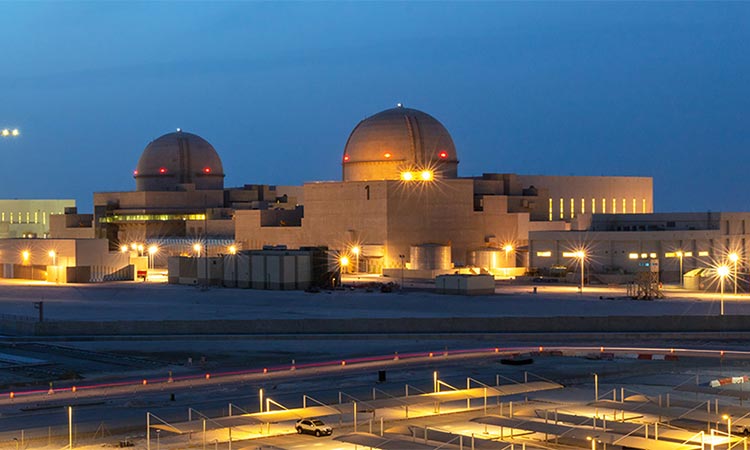
Presidential hopeful, Donald J Trump is obviously aware of those great advantages and promises to deliver cheap and reliable energy to all Americans, by shutting down the wind and solar scam and amping up nuclear power generation. All sensible stuff, as the New Your Post details below.

Trump vows to make electricity cheap with ‘hundreds of new power plants’ and modular nuclear reactors
New York Post
Steven Nelson and Ryan King
29 August 2024

Former President Donald Trump touted plans Thursday to reduce electricity costs by quickly approving the construction of new power plants and spurring the deployment of small modular reactors for nuclear energy — saying it would unleash an economic boom.

Trump, 78, said that more electricity would tame inflation and meet the future energy needs of artificial intelligence.

“To achieve this rapid reduction in energy costs, I will declare a national emergency to allow us to dramatically increase energy production, generation and supply, which Comrade Kamala has destroyed,” the Republican presidential nominee said at a rally in Potterville, Mich.

“Starting on day one, I will approve new drilling, new pipelines, new refineries, new power plants, new reactors and we will slash the red tape. We will get the job done. We will create more electricity, also for these new industries that can only function with massive electricity.”

Former Interior Secretary David Bernhardt previewed the plans on a morning press call, saying, “In the future, every manufacturing plant, every data center, every semiconductor facility and assembly line will want to be built in America — because America will be the place where the cost of energy is lower than anywhere else on Earth.”

The 45th president laid out his energy vision — including tapping domestic reserves of oil and gas and easing regulation of vehicle efficiency — in a swing-state area where cars are made while slamming Democratic nominee Kamala Harris’ record as vice president.

“Between soaring demand and retiring coal, we are facing a great capacity shortfall of at least 30% by 2032,” Bernhardt said. “You should ask Harris [and Tim] Walz how they are going to make up for that shortfall under their net zero vision. I submit to you they can’t.”

One new aspect of the Trump energy plan is the boost to nuclear energy, which currently makes up 18.6% of US electricity production — far behind natural gas (43.1%), and only narrowly ahead of coal (16.2%) and wind (10.2%).

Trump will “support nuclear energy production by modernizing the Nuclear Regulatory Commission, working to keep existing power plants open and investing in innovative small modular reactors,” Bernhardt said.

“President Trump will fully modernize the electric grid to prepare it for the next 100 years, implement rapid approvals for energy projects, and greenlight the construction of hundreds of new power plants to pave the way for an enormous growth in American wealth,” he added.

Billionaire-led nuclear boom
Small modular nuclear reactors (SMRs) are not currently in commercial use in the United States and none are scheduled to open before 2030 — though advocates of the technology, including billionaire Bill Gates, whose company TerraPower is behind that inaugural facility in Wyoming, think they can reshape the industry.

The current timeline means that — at least as of now — no small modular reactors would be in commercial use until after a second Trump term, said Daniel Kammen, a professor of nuclear engineering at the University of California at Berkeley.

“Nuclear SMR proponents will say this is the brave, bright new wave for nuclear power and these private sector operators are going to essentially do for nuclear what they seem to have done for space launches,” Kammen said.

Still, “the number of barriers in design to protect public safety that the Nuclear Regulatory Commission runs means even a massively pro-nuclear president would have a hugely difficult time stepping through those,” the prof said.

Advocates believe modular technology could pave the way to faster and cheaper deployment of nuclear power as an environmentally friendly alternative to high-emissions sources — and outgoing President Biden also has supported research into SMR use.

The major differences between conventional nuclear power plants and SMRs is the power-production capacity — with “small” facilities with cores roughly the size of an 18-wheeler truck generating less electricity.

“There are effectively SMRs operating around the world. Russia delivers nuclear-powered icebreakers to its Arctic cities and then they take the power directly off of that boat. We have nuclear aircraft carriers,” Kammen said.

“The technology of this size has existed for decades,” Kammen said. “These are just machines that are tailored for commercial use.”

Steve Milloy, a senior fellow at the Energy & Environment Institute who previously served on Trump’s Environmental Protection Agency (EPA) transition team, said the 45th president seems to be putting “more emphasis now on nuclear” than during his term of office.

“More work is going to be needed than just that [with] the Nuclear Regulatory Commission. He’s also going to have to change how EPA regulates radiation exposures. So I think all that stuff is doable,” he told The Post.

Milloy posited that Republicans have warmed up to nuclear power because it could help counter Democrats on the issue of climate change.

“They want to dodge talking about climate, which I think is ridiculous,” he said. “I mean, they should beat Harris-Walz over the head with climate, especially in Pennsylvania. So they talk about energy solutions [instead],” he said.

Reversing green policies
The former president’s campaign also restated a raft of familiar pro-fossil fuel policies — including easing domestic production of oil, natural gas and coal while trashing policies intended to phase out vehicles that use gasoline and diesel fuel.

Milloy contended that one of Trump’s most significant energy proposals is his mantra of “drill baby, drill,” which he argued would “unleash the US oil and gas industry.” He also cautioned that Trump could run into roadblocks with the EPA.

“EPA is famous for its resistance that developed during the Trump administration — the first one. Those guys slow up things, sabotage them, and Trump’s going to have to appoint strong agency leaders that understand the resistance, and know how to combat the resistance,” he said.

Under the Harris-Biden administration, the federal government imposed a moratorium on new oil and gas leases on federal land, axed construction of the KeyStone XL oil pipeline from Canada and forbade drilling in Alaska’s Arctic National Wildlife Refuge.

Harris, 59, has not laid out her energy policies in detail but previously supported bans on fracking and a complete phase-out of new gas-powered cars by 2035. Her aides have distanced her from both of those pledges, though the veep has yet to do so herself.

Trump has vowed to claw back at least some of the $369 billion in environmental funding included in Biden’s 2022 Inflation Reduction Act, which Republicans argue has contributed to inflation — which has surged 20% since Biden took office in January 2021.

“Energy isn’t part of the economy, it’s the heart of the economy, and if the energy costs increase, everything increases,” American Energy Institute CEO Jason Isaac told The Post.

Democrats have defended themselves from blame over energy prices by pointing out that domestic crude oil production hit an all-time high last year.

“Go back and look at [Energy Information Administration] projections well before the Biden administration took office,” Bernhardt said in pushing back. “What you would see is that the projections far exceeded today’s current production. And so, while production has increased, the reality is that’s actually below what would have occurred under the policies of President Trump.

“So they can take credit for missing the mark.”
New York Post
Meanwhile, the German intelligentsia have managed to further embarrass themselves with ludicrous claims about being a ‘renewable energy superpower’, that long ago ditched reliance on coal and gas and even nuclear power. As Eric Worall outlines below, their attempt to fact check Trump following his debate with Kamala Harris merely highlighted the depth of their self-inflicted energy disaster and the inherent impossibility of their grand wind and solar transition aka the Energiewende.

German Trump Debate Fakecheck: “Germany’s energy system is fully operational”
Watts Up With That?
Eric Worall
12 September 2024

“Operational” in the sense that high costs and annual winter shortages are shutting down the German economy.

German Gov’t Flops Attempting to Fact-Check Trump on Green Energy Debacle

KURT ZINDULKA
11 Sep 2024

Germany attempted to defend its disastrous energy policies in a fact-check-style response to former President Donald Trump who held up Berlin as a warning to the American public in Tuesday’s debate with Vice President Kamala Harris.

Mr Trump urged U.S. voters to reject the green agenda favoured by the Democrats and Harris, noting that even Germany has had to walk back its Energiewende transition as evidence of the foolhardy nature of the green agenda.

“You believe in things that the American people don’t believe in,” Trump said towards Harris. “You believe in things like, we’re not gonna frack. We’re not gonna take fossil fuel,” referencing her long-standing opposition to fracking, a position she has attempted to flip-flop on.

“Germany tried that and within one year, they were back to building normal energy plants,” Trump continued. “We’re not ready for it.”

…

Read more: https://www.breitbart.com/europe/2024/09/11/german-govt-flops-attempting-to-fact-check-trump-on-green-energy-debacle/

It’s difficult to know where to begin. The German political class is delusional if they truly believe their green energy achievements are an aspirational success.

Study Quantifies Germany’s Disastrous Switch Away From Nuclear Power

Botched Green New Deal: Business Sentiment In Germany Is Now Free-Falling, “On The Brink”

As Volkswagen weighs its first closure of a German auto plant, workers aren’t the only ones worried

BY  DAVID MCHUGH Updated 5:24 PM AEST, September 8, 2024

FRANKFURT, Germany (AP) — Volkswagen is considering closing some factories in its home country for the first time in the German automaker’s 87-year history, saying it otherwise won’t meet the cost-cutting goals it needs to remain competitive.

…

Higher costs outweighed a modest 1.6% increase in sales, which reached 158.8 billion euros but were held down by sluggish demand. Blume called it “a solid performance” in a “demanding environment.” Volkswagen’s luxury brands, which include Porsche, Audi and Lamborghini, are selling better than VW models.

…

Read more: https://apnews.com/article/volkwagen-germany-factory-closure-jobs-7f1877be05dae990da7f27e92cbdc3a4#

From January this year;

Germany To Rely on Coal to Avoid Blackouts

I suspect Germany is still feeling the pain of President Trump humiliating their green political class back in 2018, by correctly predicting that German reliance on Russian gas and failure to develop domestic fossil fuel resources would undermine their energy security.

The German political class laughed at Trump back then. The climate obsessed German bureaucrats with ring fenced government provided incomes are still trying to laugh. But no German who has to make a living in the real economy is laughing.

If Germany continues with the green madness, the entire nation is on a one way trip to Venezuelan levels of national destitution, or worse – except for the privileged bureaucrats and politicians of course.

Some Germans are trying to fight back. Parties like AFD did very well in recent elections, though likely this was more to do with AFD’s immigration policies than their climate policies. But AFD also emphatically rejects climate action, which appears to make AFD Germany’s best hope for righting Germany’s energy policy train wreck.

As for the dog eating comment, Trump as far as I know never accused Germans of eating their dogs.

But Germany has a long cultural tradition of eating dogs in times of hardship. Dog meat provided by government owned suppliers was openly served in restaurants in Munich until 1985, within living memory.

Fast forward to today, and we see that millions of Germans, an estimated 45% of Germans are currently suffering energy poverty and financial hardship, thanks to failed German green energy policies. And now it seems likely that imminent large scale job cuts are about to add to the pain of the German people.

Given that level of desperation, anything seems possible.
Watts Up With That?

via STOP THESE THINGS

https://ift.tt/vpJs9bT

September 15, 2024 at 02:32AM

2-Minute Junking: No Evidence Emissions Caused Greenland Glacier Collapse

Related links: Washington Post article | Science study

via JunkScience.com

https://ift.tt/lbEL9Bk

September 15, 2024 at 12:48AM

Steel Giant May Have to Bail On $500 Million Biden-Harris Admin Green Grant, CEO Says

From the DAILY CALLER

Daily Caller News Foundation

Nick Pope
Contributor

The Biden-Harris administration gave a major steel producer $500 million to go green in March, but the company may have to walk away from the handout, its CEO told Politico.

The Department of Energy (DOE) announced in March that Cleveland-Cliffs was selected for receipt of half a billion dollars to help the company produce “green,” low-carbon steel. However, CEO Lourenco Goncalves told Politico that his company may have to forego the funding because buyers are seemingly not interested in paying more to buy the company’s “green” steel and because Cleveland-Cliffs still has to front more than $1 billion to convert one of its coal-powered facilities to hydrogen-powered.

“There are only two ways to fix that: One is they change their minds and pay. So far, not very successful. The other way is for me to go back to what I was before and emit more,” Goncalves told Politico, referencing buyers’ unwillingness to pay a premium for more eco-friendly steel. “That’s a decision that I’m going to have to make very soon.” (RELATED: Biden Vowed To Protect American Steel — But Another Effort Of His Could Destroy It)

The DOE has also named Cleveland-Cliffs as the recipient of a different $75 million grant meant to help the company replace two of its natural gas-powered furnaces at its facility in Butler, Pennsylvania, according to Politico. The $500 million grant is intended to cover some of the costs of converting to hydrogen power at a plant in Middletown, Ohio.

However, even with the $500 million infusion from the government, the economics of the Middletown conversion still may not make sense for the company, Goncalves told Politico. Cleveland-Cliffs is one of the top suppliers of steel to the auto industry, which has also faced its own green troubles as automakers lose considerable sums of money on increased electric vehicle (EV) production that the Biden-Harris administration has effectively mandated with stringent regulations.

“I’m still trying to figure out if it even makes sense with the grants because the grant is $500 million, the entire project is $1.6 billion. I still have to pony up $1.1 billion,” Goncalves told the outlet. “I’m not going to do it if the government and the general public are not really supportive of that.”

Goncalves added that he is concerned that his company will lose market share to competitors in India and China, where production is comparatively inexpensive and environmental standards are not as rigorous, according to Politico. To date, purchasers have demonstrated that they would rather buy cheaper, less environmentally-friendly steel than pay a premium for a “green” product.

It is unclear exactly how much more the company’s “green” steel costs buyers, but one estimate from BloombergNEF pegs the premium at about 40%, according to Politico.

The company has already received a portion of the $75 million grant, and it is still negotiating with the DOE over the terms of the $500 million grant for the Middletown facility, Politico reported. If the company ultimately decides to walk away from the Middletown grant, it would be a major setback for the administration’s wider push to make the industrial sector of the U.S. economy more climate-friendly.

Neither Cleveland-Cliffs nor the DOE responded immediately to the Daily Caller News Foundation’s requests for comment.

All content created by the Daily Caller News Foundation, an independent and nonpartisan newswire service, is available without charge to any legitimate news publisher that can provide a large audience. All republished articles must include our logo, our reporter’s byline and their DCNF affiliation. For any questions about our guidelines or partnering with us, please contact licensing@dailycallernewsfoundation.org.

via Watts Up With That?

https://ift.tt/0pqPos6

September 15, 2024 at 12:04AM

Thrown To the Wind

Environmental Progress

The wind industry says it isn’t killing whales, but it is. New boat traffic is colliding with whales. And high-decibel sonar is separating whale mothers from their calves, sending them into harm’s way. Our new documentary, which lays out the evidence, is now free to watch.


Transcript:

Endangered whales washed up on New York and New Jersey beaches. Was this activity related to Offshore wind energy Farms such as surveying? Could dirt from 23 dead whales have washed up on the East Coast Shore since December?

[Music]

“I did stop and I mean that’s the ship you wanted to see too.”

“Yeah it is. That ship has been noticed in roughly the same time period that there have been beachings.”

“I saw this Captain post something. He said his 20 to 25 years on the ocean, he’s only seen one dead whale. I think it was like two months ago you saw three in the same day.”

“Three in the same day.”

[Music]

“Come on bud.”

[Music]

“So living in Southern New Hampshire, or the Forest Area directly in back of my home was raised to make Rave for homes and I wanted to be closer to Nature so now we’re living in Northern New Hampshire, much smaller population, less development and when I walk outside my door I’m in the middle of nature with all of the beauty and all of the quiet and it’s not reproducible in many places. This is unique and this is what I love.”

[Music]

“So 20 years ago when I became involved with wind energy debate I was not in the minority. I, along with all the environmentalists that I was aware of and conservationists, were very concerned that the precautionary principle was the priority when it came to building any kind of development whether it was a subdivision or a power plant or anything. It was the burden of the developer to make sure that whatever work was being done, the environment was considered and the harms associated with that development were avoided or minimized.”

“Hey guys, good to see you. Thank you for joining the call. Rob, nice to meet you. Eric, Lisa. Lisa, do you want to just kick us off?”

“Yeah, absolutely. Thanks Michael. Thank you everyone for being here. What I want to do is introduce the team that’s been working on investigating whale deaths and activity related to Offshore winds and Rob and you and I have worked together for a long time. You, if you could tell us a little bit about yourself.”

“My name is Robert Rand. I’m an environmental scientist specializing in Acoustics. I’ve been working in that field since 1980 and have provided input to an RDC on Naval low frequency sonar and also worked with the ocean mammal Institute.”

“Rob Iran is going to be conducting noise studies out there actually collecting the sonar coming off these boats. Thanks Rob. So you guys finished the research, is done?”

“The research is done and just to give everyone an understanding of where we’re coming from, the Genesis of this whole study dates back to several months ago in December and January. There was a significant and uptick in whale deaths occurring in New Jersey and New York and the public started to become very concerned that there was a relationship between those deaths and offshore wind activity that was happening in that same ocean area. Roughly 350 whales have died along the east coast since 2016, including humpbacks, Mickey and North Atlantic white whales and what’s happening with the wind industry is they are conducting high resolution geophysical studies to map the land under the water in preparation for projects. The uptick truly happened beginning in 2016. It was a slight dip in deaths in 2022 and in the first six months of 2023, so just half the year, we’ve had roughly 40 plus whales have died.”

“It’s amazing and and depressing. Here we are 20 years later, a massive shift in thinking. The precautionary principle is no longer the priority especially when it comes to wind energy and renewable energy. The priority has been overwhelmed by the urgency to resolve the climate change issue. We want to get to the point where get this Steel in the ground, get the turbines up and running, get the power plant built and off of fossil fuel so that we can save the planet but in the process the natural environment is being sacrificed. We’re never going to get those areas back if we’re allowed to proceed and that’s just untenable to me. I don’t know what it will take to change but that’s where we are and I don’t know if the public generally knows that but that is what’s happening right now.”

[Music]

“So if we look at early part December 2016 through six months later into May of 2017, as you can see there’s like traffic a few whales here and there but as you can see in this lease area south of Martha’s Vineyard there’s really no traffic at all. If we go now this is January instead of May 2019 and boom this is the whole New York bite all the way out as you can see lots of traffic lots of whale strandings and death or whale deaths. It’s only when they started going into the windlease areas that we believe that the whales are dying.”

“So those red dots aren’t whale deaths right?”

“Precisely. So finally this is the one that is from the the most recent so we just compared same times year over year so this is October 21 to February of 2022 and then when we switch we see all this lease area traffic and we’ve got all of these wild deaths. These are the ones that just happen and like Lisa said precipitated this study.”

“What a scandal. I mean just appalling Behavior by many many people that knew better or should have known better. I just I appreciate your caveat that we’re gonna have you know they’re not suggesting causality but it’s impossible to look at these correlations and not imagine there’s some connection. Fantastic work guys that your your labor is really evident and it’s really paid off. I’m so happy and grateful that you guys did this.”

“Awesome this is exciting.”

“Yeah, very good work.”

“I love you guys, appreciate this.”

“Thanks.”

“Thank you, very appreciate it.”

“Good to meet you all.”

“Thank you.”

“You play always.”

“Yes, yeah but one of the things working on noise especially with wind turbines is it’s driven me into a spiritual practice. This is a CD. It’s a deep relaxation CD and I made it after a meditation Vision in my studio back in early 2008. I was wondering what would the sound be like that would help people get more relaxed and then I had a meditation vision and when the vision was done I grabbed my gear and I went out to record sound, the sound of surf because I heard a very slow sound of surf would sound like breathing and recorded that and then I made the other sounds that I’d heard during the vision and combine them.”

“And do you remember the sounds?”

“Oh I’m very distinctly. I still remember them. I still remember the vision. I I got imprinted it was wild. These are things that are they’re not explainable.”

“Wow. So have you done anything else since this?”

“Oh I’ve done a whole all kinds of things but I’ve got a whole I’ve got a new CD that I’m just about ready I have to master it.”

“So this is a reed State Park yeah.”

[Applause]

[Music]

“Okay yeah I mean they’re all out there too I mean yeah they’re all out there’s a number yeah they’re just we’re looking for a unicorn yeah as soon as there’s a few.”

[Music]

It’s amazing this is exactly where we catch tuna fish in the summer. Yeah, there’s a lump here the whales, the birds, the sand eels stack in here. It’s all, I mean, it’s like Sea World. Yeah, we’re about 28 nautical miles east of Barnegat Light. We saw a couple whales breach, just a handful of them here in different sizes. We noticed them right now we’re about five miles, six miles from two different survey ships that are right in this direction here and there. And as a whale just breaches in there, another whale right there, two just preached just a few degrees this way is one survey ship and whatever maybe 40 some degrees get another service ship there, uh both five six miles away.

You’re gonna put these wind turbines in, it’s going to disrupt the bottom. No matter what kind of marine life you affect, it’s going to all affect it all together because they’re all intertwined. Marine biologists that I’ve talked with over the years talk about avoidance and aversion and that doesn’t seem to be accounted for in the NOAA and Bone paperwork that I’ve seen so far. They don’t make the connection between a loud noise in the water and the species moving away from that noise and that’s a problem because they don’t have the fat stores to run around forever trying to get away from the noise.

If the calf gets separated from the mother, what I understand is both of them start stressing a lot and it doesn’t take long for them to die. It’s a very deadly situation. The calf needs the mother for food, the mother’s trying to raise the calf so the mother will expand energy, try to find the calf or raise the vocalization level. We’ll look around for the calf, it’ll swim to its last position. All of these things have been documented but at some point both the mother and the calf run out of energy. At that point if they’re close enough to shore maybe they beach and you find them. If they’re out here they die and they sink.

There’s certain personalities, they’re like all in or all out. I tend to be that kind of person where it’s like keep doing it until you’re done, don’t stop. That gets a little bit obsessive. Believe I was, I was leave that the environmental movement was always there, their first priority was protecting wildlife and what we see is they’re right there ready to protect the wildlife and have successfully stopped gas pipelines from being built. They’ve successfully stopped power plants from being built but when it comes to Offshore wind renewable energy in general they’re not stepping up for the Wildlife.

Officials at Robert Moses Beach are trying to handle a situation when they beached a whale this morning. This is an area just off of field number five and see the whale on the beach, official officials on the scene. So NOAA has a network of organizations that have responsibility for going on investigating any kind of marine mammal stranding or death and when we were investigating and looking into the money trail, we found that members of that Network are actually taking money directly from the wind industry.

The Atlantic marine conservation Society caught our attention. So Atlantic marine conservation Society is working with New York state parks, the New York State DEC and NOAA Fisheries to examine a humpback whale that washed ashore. Humpback whale is approximately 28 feet long and it is a juvenile male and our team is doing an exam so we record any evidence of human interaction, any evidence of infectious disease to determine why it might have died.

That organization sometime around 2020, 2021 they had a change in their board of directors and it went from a few people that seemed dedicated to the effort to the president of the board Paul Tana is the lead lobbyist for Ecuador, a wind developer. You go down the list further you come to Sammy Chu, he is a distributed energy developer. Jennifer Dupont, strategic environmental Affairs manager Ecuador, she is the government Affairs person for advocating for Ecuador in front of federal and state governments. It goes on and on, about half of the board of the Atlantic marine conservation Society appears to benefit from the development of offshore wind and this is the organization that is responsible for investigating whale deaths that have been happening off the coast of New York.

Atlantic marine conservation Society has responded to 85 whales since we started in 2017. Energy surveys and projects being sure of New York and some are in development right now. All I can really say is that right now the examinations that we’ve done haven’t brought any evidence forward that there’s no connection between the two. Climate change is going to be one of the biggest issues these animals are facing as the oceans warm and you know things change. We need to make sure that we’re continuing to document what happens to these animals when they Strand and make sure that the renewable energy in any form is at a Forefront because that will help climate change.

Thank you thousand percent that is the boat you’re gonna put the drift sock in try here you want to go a little closer let’s bring it to a dead stop well they’ll come right in front so we’ll just sit right here holy [ __ ] man are you kidding me it sounds like they’re like oh it’s on my pile driving and he’s not proud of him boom boom boom boom boom it’s like a drum beat huh yeah so they can just like measure the bottom right yeah so they sent out a pulse and they get a reflection back I think is now much like rock dust and stuff like that and setting it in the bottle for them yeah I think the three layers you can see the top top of the mud or whatever’s down there and then they can see down through it they’re getting uh Peak greetings of about 150 decibels or so it’s it’s very loud is very very loud once 160 is roughly a hundred give or take on on land so if you had 100 DB coming onto your property at your house you’d be a there’d be a lawsuit so fast it would make their heads I mean that’s that’s loud and it’s 24 hours a day so it’s day and night if I can just start playing this so this is off of Maui about uh two-thirds of a mile I think we were out that far and hundreds of whales hundreds hundreds of whales so that’s a whole civilization of Wales versus the skew North Atlantic right whales yeah. [Music]

“So this is a healthy population they’re all communicating lots of communication going on these are these are right whale calls let’s see if I can get into this this area here you could play it please yeah I think we can and now we’ll we’ll hear a whale in a second this is going to make a call that’s the fundamental and those are the harmonics of the call the whale’s about a mile away.”

[Music]

“Yeah but they’re very sparse compared to adult humpbacks in Hawaii this is a critically endangered species very few of them we were very fortunate we get out there there were 12 whales in in the vicinity where we went and we were able to make some recordings I don’t see where the North Atlantic right whale Will Survive offshore wind with 300 less than 350 on the planet today and this tremendous industrialization of their area what I’ve got in my report is a description of the survey it’s just the general interest in going out to see if we can measure exploratory sonar vessel and so there’s a picture of the vessel there we had a calibrated hydrophone that we would drop into the water first we went to two nautical miles and then to one out of command then to a half nautical can you imagine in each one of those occasions in each one as soon as I get the hydrophone in the water at two nautical miles I could hear the ship I could hear banging I could hear the ship noise I think I can play that.”

[Music]

Wow that is louder than I thought it would be. That’s amazing. Yeah, that is no, no one can survive in that. You’re not, you’re gonna run away from that half a nautical mile away from a sound source and if this were in air it would be equivalent to roughly 90. 90 decibels it’d be like a loud weapon, uh, to hear it at 90 DB at a kilometer that’s a loud weapon.

And what I’m seeing is troubling. What I’m seeing are levels that are above the limit which NOAA itself set to be protective at distances which are much higher than were granted in the incidental harassment authorization. So to me it looks like an absolute breakdown of regulatory protection for the right whale and we only looked at one vessel. There are many vessels out there.

Foreign chief of protected species, gentleman by the name of Sean Hayes, had sent a letter to BOEM. He expresses significant concern over the development of offshore wind in the southern New England Waters. In his letter in particular pertains to the North Atlantic right whale and the risk there. So this is May 13, 2022. He expresses a number of reasons but one that he really focuses on is the wave effect of the turbine. So when the turbines are spinning it creates a turbulence on the back end of it. The concern is that it’s going to destroy the plankton which is what the whales feed on. If that dies off that area is not a feeding ground anymore for the North Atlantic right whale, which right now it’s estimated at less than 340 individuals remaining on the planet. There aren’t many places where the North Atlantic right whale can go and when there’s so few left on the planet it’s, it’s dust into extinction.

But then he makes a statement that is so extraordinary. Unlike vessel traffic and noise which would be related to the construction work which can be mitigated to some extent, I think impacts from installed and operating turbines cannot be mitigated for the 30-year lifespan of the project unless they are decommissioned. And yet here we are moving forward with building the projects.

So according to Sean Hayes, he makes a very clear statement that we need to impose a buffer area, no turbine zone around the Nantucket Shoals in order to protect the North Atlantic right whale. And BOEM has said no, they have made a decision that the priority is the economics of the project over protecting the right whale. And NOAA apparently it does not have the teeth to stop that. If BOEM chooses to look past the requirements under the Endangered Species Act and how these projects be built, it would appear that they’re in violation of the Endangered Species Act. [Music]

“Thank you.”

[Music]

“In the period between August 2017 and August 2018 seven North Atlantic right whales died around Martha’s Vineyard in in that area in Southern New England Waters this is roughly equivalent to two percent of the population of the right whale Which is less than 350 remaining if we were talking about humans two percent of the human population will represent 160 million people so it’s a huge dent on a very small population of critically endangered species thank you.”

[Music]

“All righty.”

[Music]

“Let’s see if we can move our boat out of the way so these guys can help.”

“Okay we’re good so where’s the open ocean there it’s straight out that way you see them oh yeah yeah that’s open ocean right there we’ve got Harbor porpoise we get a minky whale.”

[Music]

“Yeah see how this water is all flat let’s see the bubbles right yeah yeah there’s probably a whale under there giveaway is a bird say that they they love them what the United States is looking at is thousands of wind turbines standing one thousand feet tall the massive blade spinning in an area that where the whales our whales our Dolphins our marine life where they live where they migrate where they breed it’s at a level that we can’t even understand now what the impacts will be and when we’re dealing with a critically endangered whale that is on the verge of Extinction which is the North Atlantic right whale our laws do not support the level of development that’s going to happen within the right whales habitat the whale lives nearly full time you know they do migrate but many of them do stay in Southern New England Waters year round and that’s a problem problem for the whales problem for the wind Developers but apparently it’s more a problem for the whales.”

This video is archived on our ClimateTV Page

via Watts Up With That?

https://ift.tt/DdNUlbQ

September 14, 2024 at 08:05PM